

The Tri-Cities Foundation Challenge
If you are reading this, you might have noticed some lines on your basement walls or along the base of your house. We know exactly how it feels to find these cracks. It is more than just a house. It is your sanctuary. It is where you raise your family and where you should feel the most secure. Seeing foundation cracks can feel like a direct threat to that peace of mind.
Living in the Tri-Cities area, whether you are in a classic home in Kingsport or a newer build in Johnson City, means dealing with some very specific local challenges. We live in a beautiful place, but our red clay soil is famous for a reason. It loves to soak up water and swell, then dry out and shrink. This constant tug of war puts a lot of stress on our homes. When the ground moves, the concrete has to go somewhere. That is usually when foundation cracks start to show up.
Maybe you noticed a small leak after a heavy spring rain. Or perhaps you were moving some boxes in the garage and saw a gap that was not there last year. Ignoring these signs is the most expensive thing a homeowner can do. I often tell my clients that a small crack today is a big bill tomorrow. But here is the good news: we have some amazing technology to fix these issues.
The two main ways we handle these problems today are with epoxy and polyurethane. Both are great, but they do very different jobs. Our goal today is to walk you through everything you need to know about these two methods. We will look at how they work, which one is best for your specific situation, and how to make sure your home stays solid for years to come. By the time we are done, you will feel like an expert on foundation cracks and be ready to make the best choice for your family.
Understanding the Mechanics: Epoxy Resin Injections
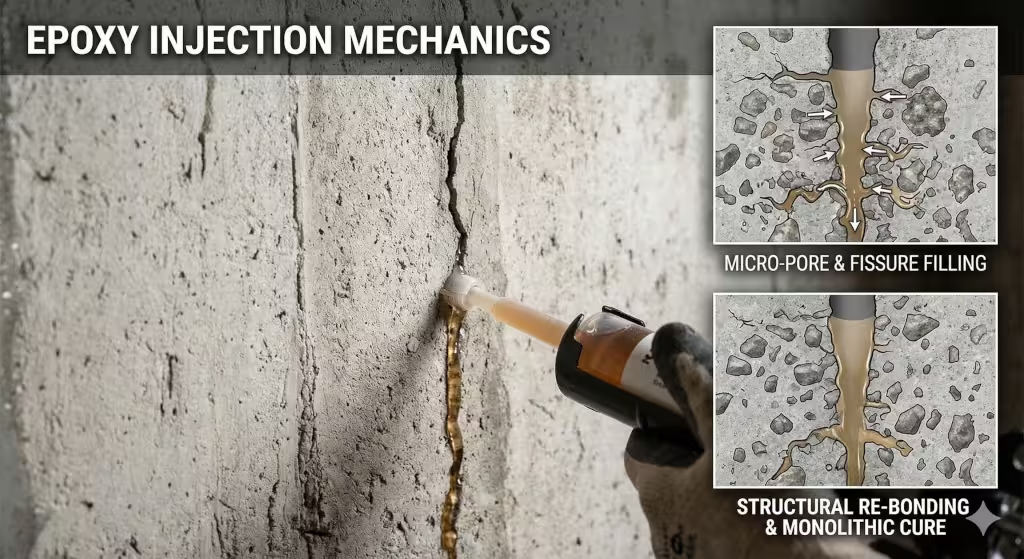
When we talk about fixing foundation cracks using epoxy, think of it like a super strength glue for your house. Epoxy is a material that has been used in heavy construction for a long time because it is incredibly strong. When we use it for your home, we are not just trying to stop water. We are trying to make the wall as strong as it was the day it was poured.
Epoxy starts as two separate liquids. When a pro mixes them together, a chemical reaction starts that turns the liquid into a very hard solid. This is not a quick process. Epoxy cures slowly, which is actually a good thing. It gives the resin time to seep into the tiny, tiny pores of the concrete. Because it moves so deeply into the foundation cracks, it creates a bond that is often stronger than the concrete itself.
In the industry, we call this a structural weld. If you have a crack that is causing the wall to lose its strength, epoxy is usually the answer. It is best used in dry environments. If the crack is actively leaking water while the repair is happening, the epoxy might not stick as well. That is why we usually wait for a dry spell to perform this kind of work.
One thing to remember about epoxy is that it is rigid. Once it hardens, it does not like to move. If your foundation cracks were caused by a one time event, like a very heavy truck driving too close to the house, epoxy is perfect. But if the ground is still moving a lot, a rigid fix might not be enough on its own. It is a permanent bond, but it requires the right conditions to be the perfect solution.
The Water-Stopper: Polyurethane Foam Injections
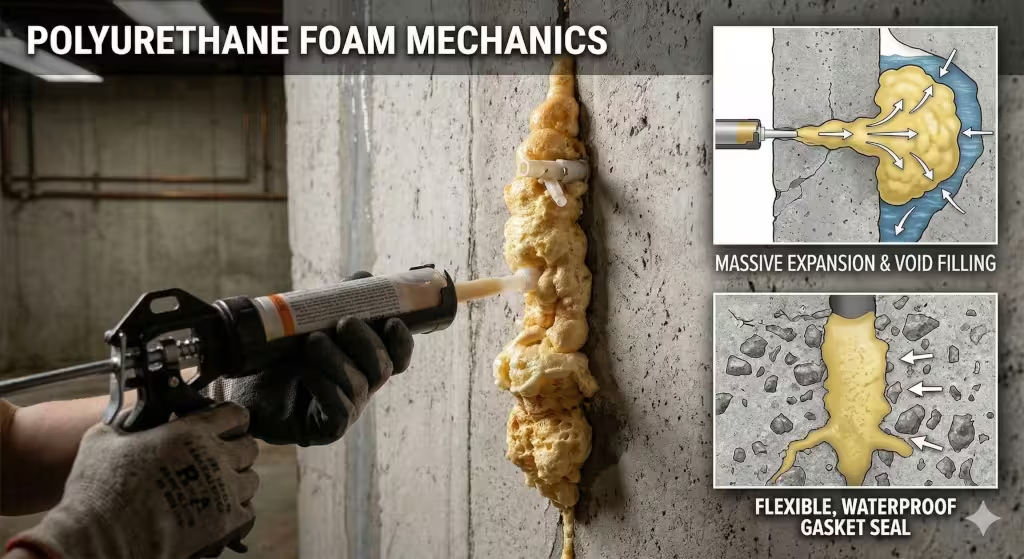
Now, let’s talk about the other heavy hitter: polyurethane. If epoxy is the “super glue” of the industry, polyurethane is the “expanding foam gasket.” This material is a favorite for many homeowners because of how it reacts to water. When polyurethane meets moisture, it starts to foam up and expand.
This expansion is a huge benefit when dealing with foundation cracks that are letting water into your basement. As the liquid is injected into the gap, it can grow up to twenty times its original size. This means it fills every little nook and cranny inside the wall that you cannot even see. It even moves through the wall to the outside soil, forming a big “plug” of foam that keeps water from ever reaching the concrete again.
Polyurethane is fantastic because it stays flexible. Even after it cures, it feels a bit like a hard rubber. This is very important for us here in the Tri-Cities. Since our soil moves so much with the seasons, our homes need to be able to breathe and shift just a tiny bit. If you have foundation cracks that are purely for keeping water out, and you know the house might settle a little more, polyurethane is a great choice.
Even better, you can use it even when the wall is wet. In fact, some polyurethane products need water to start the chemical reaction. This makes it the go-to choice for emergency repairs during a rainy week. It cures very fast, often in just a few minutes, so you can stop a leak and get back to your life much quicker than with other methods.
Head-to-Head Comparison: Sealing Foundation Cracks Epoxy vs Polyurethane
Choosing between these two can feel like a big decision. Let’s look at them side by side so you can see the differences clearly.
When we look at structural integrity, epoxy is the clear winner. If your wall is bowing or the foundation cracks are very wide, you need the strength that epoxy provides. It actually holds the house together. Polyurethane, on the other hand, is not meant to hold weight. It is meant to be a barrier. It is like the difference between a steel bolt and a rubber seal.
When we look at moisture tolerance, polyurethane takes the lead. If you have water actively dripping through your foundation cracks, epoxy will struggle to bond. Polyurethane loves water. It uses that moisture to expand and create a tight seal. This makes it much more reliable for waterproofing.
What about flexibility? This is where polyurethane really shines. Because it stays rubbery, it can handle the small shifts that happen when the ground freezes in the winter or dries out in a hot Tennessee summer. Epoxy is very stiff. If the wall moves again after an epoxy repair, a new crack might form right next to the old one.
Lastly, we should think about how long the job takes. Polyurethane is very fast. A technician can often be in and out of your house in a few hours. Epoxy takes longer to set up and cure. It requires more careful preparation of the foundation cracks to make sure the resin stays put while it hardens.
| Feature | Epoxy Resin | Polyurethane Foam |
| Primary Goal | Restore Strength | Stop Water Leaks |
| Flexibility | Rigid / Stiff | Flexible / Rubbery |
| Best Environment | Dry Walls | Wet or Dry Walls |
| Cure Time | 12 to 24 Hours | 5 to 15 Minutes |
| Expansion | Does not expand | Expands up to 20x |
Common Concerns about Sealing Foundation Cracks
There are often a lot of questions from folks who are worried about their foundation cracks. It is completely normal to feel a bit overwhelmed. Let’s look at some of the most common things people ask regarding foundation cracks.
One big question is: Can I DIY foundation crack repair? I know how tempting it is to head to the hardware store and grab a kit. And for very small, cosmetic hairline cracks, a DIY kit might be okay. But for anything deeper, I really recommend a professional. The kits you buy at the store often do not have the same pressure behind the injection.
If you only fill the surface of the foundation cracks, you are leaving a big hollow space inside the wall. Water can still get in there, freeze, and make the crack even bigger over time. It is much safer to have someone with the right tools make sure the material goes all the way through the wall.
Another common concern is the cost. People often ask: Is epoxy or polyurethane more expensive? Usually, they are pretty close in price for a standard repair. However, epoxy can sometimes cost more because it takes more time and skill to apply. If the foundation cracks are very complex, the labor costs for epoxy will go up. On the other hand, if you only need a quick waterproof seal, polyurethane is often the more budget-friendly choice. But remember, the real cost is what happens if the repair fails. Investing a bit more in the right method for your specific house is always the smarter move.
Finally, how long do these repairs last? This is the million dollar question! If done correctly, both epoxy and polyurethane can last for decades. Epoxy is technically a permanent part of the wall once it cures. Polyurethane is also very durable, though in some cases, the foam can degrade over many, many years if it is exposed to certain chemicals in the soil. In our area, both are considered long-term solutions for foundation cracks.
The Tri-Cities Perspective: Regional Soil and Climate Factors
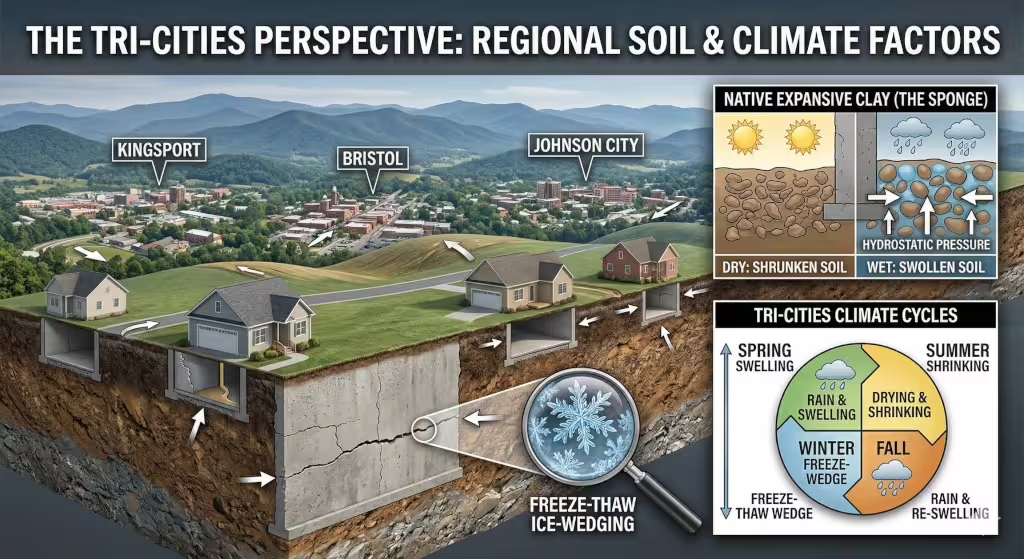
We always tell people that a house in Tennessee is not the same as a house in Florida or Arizona. Our local geology plays a huge role in why we see foundation cracks in the first place.
In the Tri-Cities, we have a lot of what we call “expansive clay.” If you have ever tried to dig a garden in Johnson City, you know exactly what I am talking about. That thick, heavy clay is like a sponge. When we have our big spring rains, that clay swells up. It pushes against your basement walls with incredible force. This is called hydrostatic pressure. It is one of the main reasons foundation cracks form in our region.
Then, we have our summers. It can get very dry and hot here. When that happens, the clay shrinks and pulls away from the house. This leaves your foundation without the support it needs, causing it to settle. This “see-saw” effect of the soil is very hard on concrete.
We also have to think about the “freeze-thaw” cycle. In the winter, water gets into small foundation cracks and then freezes. When water turns to ice, it expands. This acts like a tiny wedge, pushing the crack open just a little bit more every year. This is why it is so important to seal foundation cracks before the winter hits. Even a tiny gap can become a major problem after a few cold nights in the Appalachian mountains.
How to Diagnose Your Crack
Not all foundation cracks are created equal. Knowing what you are looking at can help you stay calm and make a plan.
First, look at the direction. Vertical cracks, which go straight up and down, are usually the least worrying. They often happen because the concrete shrunk a little bit as it dried when the house was first built. While you should still seal them to keep out moisture and bugs, they usually are not a sign that your house is falling down.
Diagonal cracks are a bit more serious. They often show that one side of your house is sinking faster than the other. This is common on hillsides, which we have plenty of in East Tennessee! If you see diagonal foundation cracks that are wider at the top than the bottom, it is a sign that the house is “tilting” away from that point.
The ones that really get my attention are horizontal cracks. If you see a line running sideways along your basement wall, that is a big red flag. It usually means the soil outside is pushing the wall inward. This is a structural emergency. If you see this, you definitely need epoxy and likely some extra reinforcement like carbon fiber straps.
You can also try the “quarter test.” If you can fit a quarter into any of your foundation cracks, it is time to call a pro. Anything smaller than that might be a cosmetic issue, but once a crack gets that wide, it is definitely letting in water and air.
Professional Process: What to Expect
When a professional comes to your home to fix foundation cracks, they follow a very specific set of steps to make sure the repair lasts.
The first step is always preparation. They will clean the area around the crack to make sure there is no dust or loose concrete. This is vital because the epoxy or polyurethane needs a clean surface to stick to. They might use a wire brush or even a vacuum to get everything perfectly clean.
Next, they install “injection ports.” These look like little plastic nozzles that are glued directly over the foundation cracks every few inches. Once the ports are in place, they cover the rest of the crack with a special paste. This paste acts like a dam. It makes sure that when they inject the liquid, it stays inside the wall and doesn’t just leak out the front.
Then comes the injection itself. Starting at the bottom, the technician will pump the epoxy or polyurethane into the first port. They keep pumping until they see the material coming out of the port above it. This tells them that the wall is completely full. They repeat this process all the way to the top. This ensures that the foundation cracks are filled from front to back and top to bottom.
Once everything is cured, they will snap off the plastic ports and sand down the surface paste. If you plan on painting your basement walls, you can usually do that right over the repair. When it is finished, the area will be smooth and, most importantly, completely sealed against the elements.
Making the Right Choice for Your Home
We have covered a lot of ground today! From the heavy red clay of our Tri-Cities soil to the science behind expanding foam, I hope you feel more confident about your home. Foundation cracks can be scary, but they are a solvable problem.
If your main goal is to make your walls strong again, epoxy is the way to go. It is the gold standard for structural repair. If you are mostly worried about water leaks and want a fix that can handle a little bit of movement, polyurethane is likely your best friend.
Remember, your home is your biggest investment. Taking care of it now prevents much bigger headaches down the road. You deserve to have a basement that is dry and a foundation that is solid. Whether you are in Kingsport, Bristol, or Johnson City, keeping an eye on your foundation cracks is the key to a long-lasting, healthy home.
We always recommend getting a professional opinion if you are unsure. Every house is different, and a quick inspection can give you the specific answers you need for your situation. Stay proactive, and don’t let a little crack steal your peace of mind.