A home is only as good as its heart. For most of us, that heart is the kitchen. When we talk about building for the future, we aren’t just talking about choosing the right shingles or siding. We are talking about how a home cares for its owners as they get older. You need to be competent in your choices today so you can stay in your home tomorrow. One of the most important parts of this plan is choosing the right accessible kitchen appliances.
The goal here is simple. We want to keep people safe and independent. In our area, we call this “aging in place.” It means your home grows with you instead of becoming a set of hurdles you can’t jump. When we look at accessible kitchen appliances, we are looking for tools that are easy to use, safe to touch, and placed where you don’t have to strain your back or knees. Whether you are building a new custom home or fixing up the one you have lived in for thirty years, these choices will define how much you enjoy your space.
Safe Cooking Surfaces: Why Induction is King
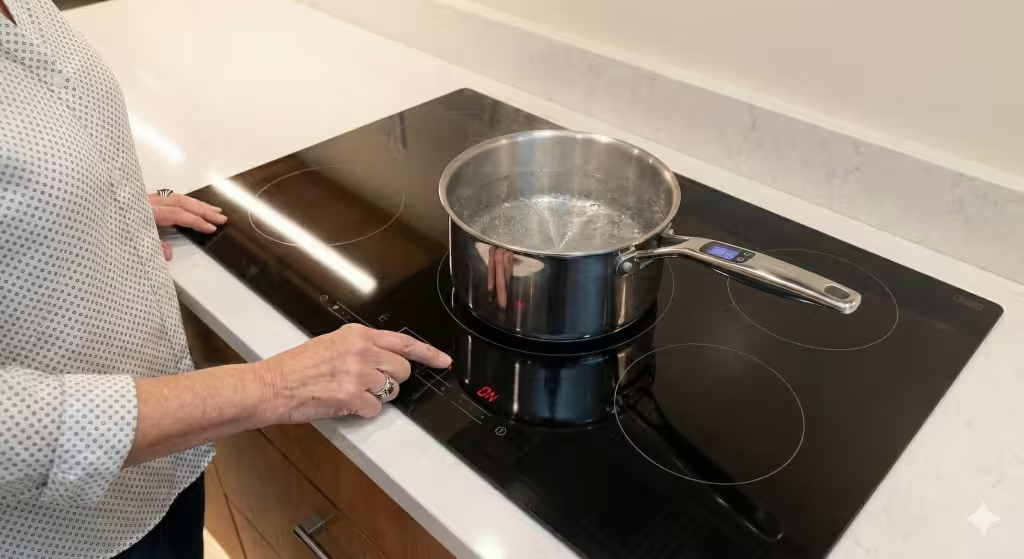
In the Tri-Cities, many of our older homes still use gas or traditional electric coils. While these have worked for a long time, they come with risks as we get older. A gas flame can be hard to see. An electric coil stays hot for a long time after you turn it off. This is why we always suggest looking into induction technology when searching for accessible kitchen appliances.
Induction is different from any other way of cooking. It uses magnets to heat up the pot itself, not the stove surface. This means if you accidentally touch the glass around the pot, you won’t get a nasty burn. For someone with slower reflexes or failing eyesight, this safety feature is a game changer. Most of these units also have an automatic shut-off. If you walk away and forget to turn it off, the stove knows. If there is no pan on the burner, it simply stops heating.
When we install these in custom homes, we look for models with touch controls on the front. This is a key part of choosing accessible kitchen appliances. You don’t want to reach over a hot pot to turn a knob in the back. That is how sleeves catch fire and accidents happen. Models like the GE Profile or Frigidaire Professional series offer flat surfaces that are also very easy to clean and are examples of accessible kitchen appliances. Since the food doesn’t burn onto the glass, a simple wipe does the trick. This is a big win for anyone dealing with arthritis who might struggle with heavy scrubbing.
Ovens and Microwaves: Eliminating the Reach
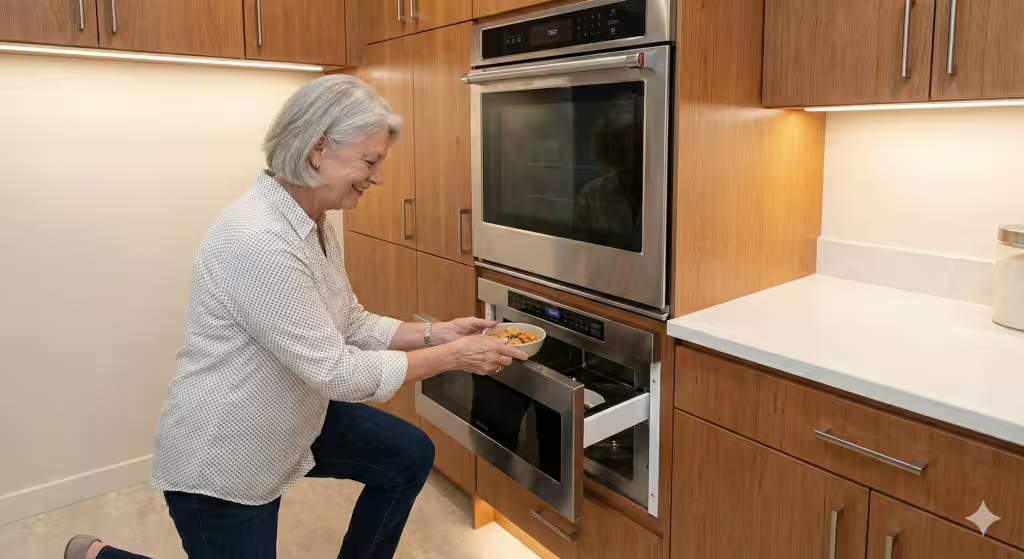
Bending down to pull a heavy turkey out of a low oven is a recipe for back pain. In the world of accessible kitchen appliances, we solve this by using wall ovens. By placing the oven at counter height, you can slide a tray out without having to crouch. It makes the whole process of baking much safer and more comfortable.
One of the best inventions for seniors is the side-swing oven door. Most ovens have a door that drops down. This creates a barrier between you and the food. You have to lean over the hot door to reach inside. With a side-swing door, the oven opens like a cabinet. You can walk right up to the opening. This is perfect for anyone using a walker or a wheelchair. It is a precise way to make your kitchen more usable.
We also have to talk about microwaves. For a long time, the trend was to put them over the range. That is the worst place for them as we age. Reaching high over a hot stove to pull out a bowl of hot soup is dangerous. Instead, I recommend microwave drawers. These are accessible kitchen appliances that sit under your counter. You press a button, and the drawer slides out. You look down into it, place your food, and it slides back in. No reaching up, no reaching over, just easy access.
Refrigeration: The Side-by-Side Advantage
Choosing a refrigerator seems easy until you realize how much bending and stretching it usually requires. Many people love the look of a bottom-freezer model, but for seniors, this often means digging through a deep drawer for frozen peas. That is why side-by-side models are often the top choice for accessible kitchen appliances.
A side-by-side fridge has a vertical freezer on one side and the fridge on the other. This allows you to place the items you use most at eye level in both sections. You can put your milk and eggs at waist height and your frozen dinners right next to them. This design is very helpful for people with limited mobility. You don’t have to reach high or low to get what you need.
We also look for features like through-the-door water and ice. Lifting a heavy pitcher of water can be hard on the wrists. An automatic dispenser is a small but vital part of the accessible kitchen appliances toolkit. I also tell my clients to look for “D-shaped” handles. These are easier to grab than round knobs or sleek, flat bars. If you have arthritis, being able to hook your hand through a handle to pull it open makes a big difference.
Dishwashing Without the Strain
A standard dishwasher requires a lot of bending. You have to lower the door to the floor and then lean over to fill the bottom rack. For many of my clients in Johnson City, this is the one chore they hate most. This is where dish drawers come in. These are fantastic accessible kitchen appliances that function just like a kitchen drawer.
Instead of one big machine, you have two separate drawers. You can mount the top drawer at a height where you never have to bend down. It is much easier to load a few plates and glasses when they are right in front of you. You can run one drawer at a time, which also saves water if you are living alone or with a partner. Brands like Fisher & Paykel have led the way here, making these units both stylish and highly functional.
If you prefer a standard dishwasher, look for ones that are “raised.” In custom builds, we can build a platform for the dishwasher so it sits about 6 to 12 inches higher than usual. This is a simple trick in the world of accessible kitchen appliances that saves your back and makes the kitchen much more friendly for daily use.
Small Appliances and Arthritis-Friendly Gadgets
The big machines get all the glory, but the small accessible kitchen appliances do a lot of the heavy lifting. If you have trouble with your hands, simple tasks like opening a can of soup or a jar of pickles can feel impossible. I always suggest investing in automatic versions of these tools.
An electric jar opener or a hands-free can opener can keep you independent. There are also kettles that sit on a “tipper.” This means you don’t have to lift the heavy pot of boiling water to pour your tea. You just tilt the cradle. These are the kinds of precise tools that show you have put thought into your home.
Lighting is another small but huge factor. You can’t use your accessible kitchen appliances if you can’t see what you are doing. Under-cabinet LED lights are a must. They brighten the workspace and help you see the dials and buttons on your equipment. In my building experience, good lighting is just as important as the appliances themselves. It prevents accidents and makes the room feel much more welcoming.
The Smart Kitchen: Voice Control and Monitoring
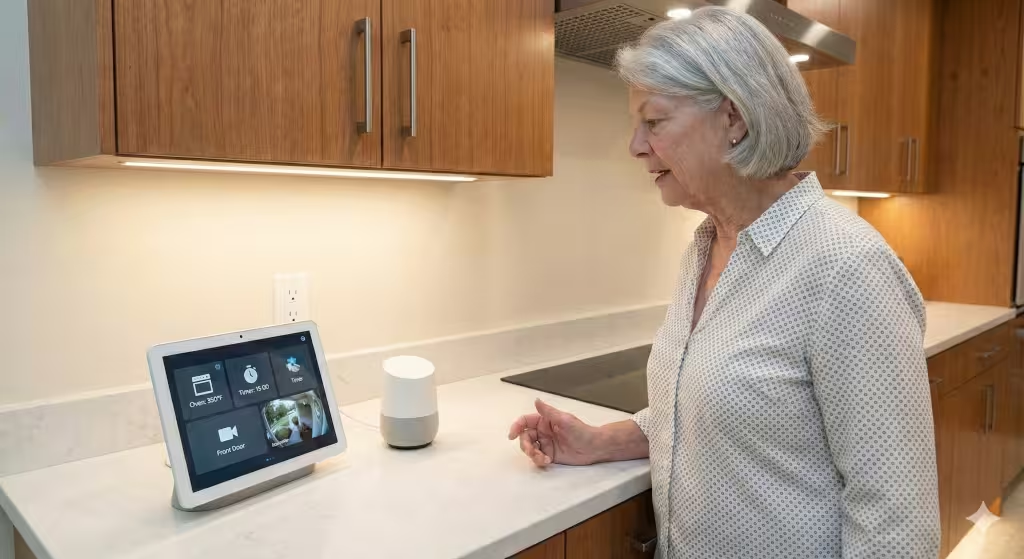
Technology has come a long way since I started in the building industry. Today, “smart” tech is a huge part of accessible kitchen appliances. Imagine being able to tell your oven to “preheat to 350 degrees” without having to walk across the room. For someone who moves slowly or uses a wheelchair, voice control is a blessing.
Smart refrigerators can now tell you if the door was left open. They can even show you what is inside on a screen so you don’t have to stand there with the door open while you decide what to eat. Some ovens have sensors that can tell when your food is cooked perfectly and turn themselves off. This prevents fires and keeps your dinner from burning.
We also recommend smart sensors for the stove. These can detect if a burner has been left on for too long without any movement in the room. They can automatically cut the power to the unit. This gives families great peace of mind. Knowing that their loved ones are using safe, accessible kitchen appliances makes a huge difference.
Local Perspective: Building for the Future in TN
In the Tri-Cities, we have a lot of beautiful land and many people moving here to retire. When I talk to folks in Kingsport about their new homes, I emphasize that the kitchen is an investment. Choosing accessible kitchen appliances today means you won’t have to remodel your house again in ten years. It is about being precise with your budget and your design.
When we plan a kitchen, we make sure the electrical work is ready for these machines. Induction stoves need a specific type of power outlet. Smart homes need a strong Wi-Fi signal in the kitchen. As an engineer by training, I look at these technical details so my clients don’t have to. We want a home that is competent and reliable.
The trends I see in Johnson City are all about blending style with function. You don’t want your kitchen to look like a hospital room. The great thing about modern accessible kitchen appliances is that they look beautiful. They come in stainless steel, matte black, and other modern finishes. You can have a kitchen that looks like it belongs in a magazine while still being the safest room in the house.
Questions Answered about Accessible Kitchen Appliances
When people search for accessible kitchen appliances, they often have the same questions. One big one is: “Are induction stoves safe for people with pacemakers?” The answer is generally yes, but you should always stand about a foot back and check with your doctor. The magnetic field is very small and stays close to the pot.
Another common question is: “What is the best fridge for someone in a wheelchair?” As I mentioned, the side-by-side is usually the winner because it offers the most reach-range options. You also want to look for “shallow depth” or “counter-depth” models. These don’t stick out as far, which makes it easier to navigate a wheelchair around them.
Lastly, people ask if accessible kitchen appliances cost more. Sometimes they do, but you have to look at the value. An oven that prevents a burn or a dishwasher that saves you from a fall is worth every penny. In the Tri-Cities market, these features also add to the resale value of your home because more and more buyers are looking for these exact things.
Investing in Independence
At the end of the day, building or renovating a home is about people. It is about making sure you can stay in the place you love for as long as possible. By choosing the best accessible kitchen appliances, you are taking a big step toward that goal. It shows integrity to care for yourself and your family by planning ahead.
A well-designed kitchen with accessible kitchen appliances can change a person’s life. It isn’t just about cooking; it’s about feeling capable and safe in your own space. Whether it’s the precision of an induction cooktop or the convenience of a dish drawer, these accessible kitchen appliances are the tools of a modern, independent life.
If you are looking to build or remodel in the Tri-Cities, take the time to look at these options. Think about how you will use your kitchen in ten, twenty, or thirty years. If you choose wisely now, your home will be a place of comfort and joy for a long time to come. It’s been a pleasure sharing these insights with you.
Bonus: A Checklist of What to Look for in Accessible Kitchen Appliances
Taking the time to be precise with your choices now is a mark of true competence in home planning. A checklist is the best way to ensure nothing gets overlooked during the busy building process.
This checklist is designed to help you evaluate accessible kitchen appliances whether you are shopping at a local showroom in Johnson City or browsing options online.
The Accessible Kitchen Appliances Checklist
Cooking & Ranges
[ ] Induction Technology: Does the cooktop use induction to keep the surface cool and prevent accidental burns?
[ ] Front-Mounted Controls: Are the knobs or touchpads located at the front so you don’t have to reach over hot burners?
[ ] Auto-Shutoff: Does the unit turn off automatically if a pan is removed or if a timer ends?
[ ] Tactile Indicators: If the unit has touch controls, are there raised ridges or audible beeps to confirm your settings?
[ ] Bridge Elements: Does it have burners that can link together to support larger, heavier pans that are easier to slide than lift?
Ovens & Microwaves
[ ] Side-Swing Door: Does the oven door open like a fridge instead of dropping down? This allows for a closer, safer approach.
[ ] Counter-Height Installation: Is the oven installed between 30 and 34 inches from the floor to prevent bending?
[ ] Microwave Drawer: Is the microwave installed in a base cabinet or under the counter for top-loading access?
[ ] Telescopic Racks: Do the oven racks glide out fully and smoothly so you don’t have to reach into a hot oven?
[ ] Voice Integration: Can the appliance be started or monitored via voice commands or a smartphone app?
Refrigeration
[ ] Side-by-Side Design: Does it offer both fresh and frozen storage within the 15 to 48-inch reach range?
[ ] Through-the-Door Access: Does it have an external water and ice dispenser to reduce the need to lift heavy pitchers?
[ ] D-Shaped Handles: Are the handles easy to hook a hand through, even for those with limited grip strength?
[ ] Pull-Out Shelving: Do the interior shelves slide forward so you can reach items at the back without straining?
[ ] High-Contrast Lighting: Is the interior brightly lit with LEDs to help those with low vision see all items clearly?
Dishwashers
[ ] Drawer Design: Would a double-drawer system be easier to use than a large, drop-down door?
[ ] Raised Installation: If using a standard dishwasher, is it installed on a 6 to 12-inch platform to reduce bending?
[ ] Front Controls: Are the buttons easily visible and operable with a single hand without requiring a tight grip?
[ ] Lightweight Racks: Are the racks easy to pull out and push in when fully loaded?
Layout & Safety Essentials
[ ] Knee Clearance: Is there open space under the cooktop or sink for a seated user to pull up closely?
[ ] Under-Cabinet Lighting: Is there dedicated task lighting over the primary work surfaces?
[ ] Non-Slip Surfaces: Are the areas in front of the accessible kitchen appliances covered with slip-resistant flooring or mats?
[ ] Rounded Corners: Are the countertops near the appliances rounded to prevent injury from accidental bumps?
This list covers the technical and professional standards I look for in every senior-friendly build. It’s about more than just buying a machine; it’s about ensuring that machine works for you, not against you.