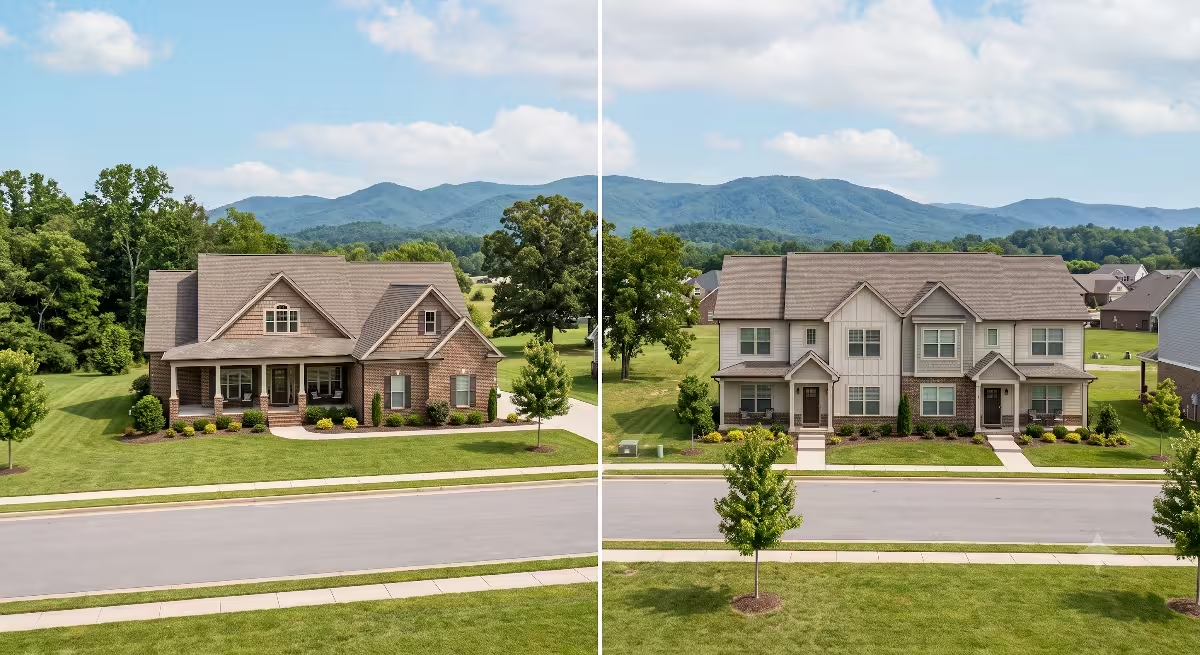


Imagine a landowner named Elizabeth, standing on a beautiful ridge in Johnson City one crisp October morning. Elizabeth, had just bought ten acres overlooking the mountains. She was glowing with excitement. She had her floor plans in a binder. She had her kitchen cabinets picked out. She even knew where the Christmas tree would go in the great room. However, her builder who had spent years in the dirt of East Tennessee, was not looking at the view. They were looking at the ground. He asked her if she had budgeted for residential soil testing. She looked at them like they was speaking a foreign language.
To her, dirt was just dirt. She thought the land was perfect because the grass was green. But in our part of the state, dirt is a complex story of ancient rock and hidden water. The builder had to explain that residential soil testing is the only way to know if her dream home would stay standing for fifty years. They walked the property together, and he showed her why the slope and the rock outcrops mattered. That day, she learned that the ground beneath us is the most important part of any custom home.
Why Your Dirt is Your Most Important Investment
When you decide to build a custom home in the Tri-Cities, you are doing more than just buying a house. You are building a sanctuary for your family. Whether you are looking at land in Kingsport, Bristol, or Johnson City, the beauty of our hills is undeniable. However, those hills hide secrets. Our region is famous for what we call karst topography. This is a fancy way of saying that our limestone bedrock can dissolve over time. This creates caves, underground streams, and the dreaded sinkholes.
If you skip residential soil testing, you are essentially gambling with your life savings. I tell every woman I work with that she needs to be the CEO of her home build. A CEO makes decisions based on data. Residential soil testing gives you that data. It tells you if the ground can support the weight of a heavy brick house. It tells you if the soil will expand and shrink when it rains, which can crack your foundation. Most importantly, it gives you peace of mind. You want to sleep soundly knowing your home is on solid ground.
Building a home is an emotional journey. It is easy to get caught up in the tile samples and the paint colors. But as any competent builder will tell you, the pretty things do not matter if the foundation fails. Residential soil testing is the first step in making sure your investment is safe. It is not just a technical requirement for a permit. It is a protective shield for your family and your future.
Breaking Down the Residential Soil Testing Cost Per Acre
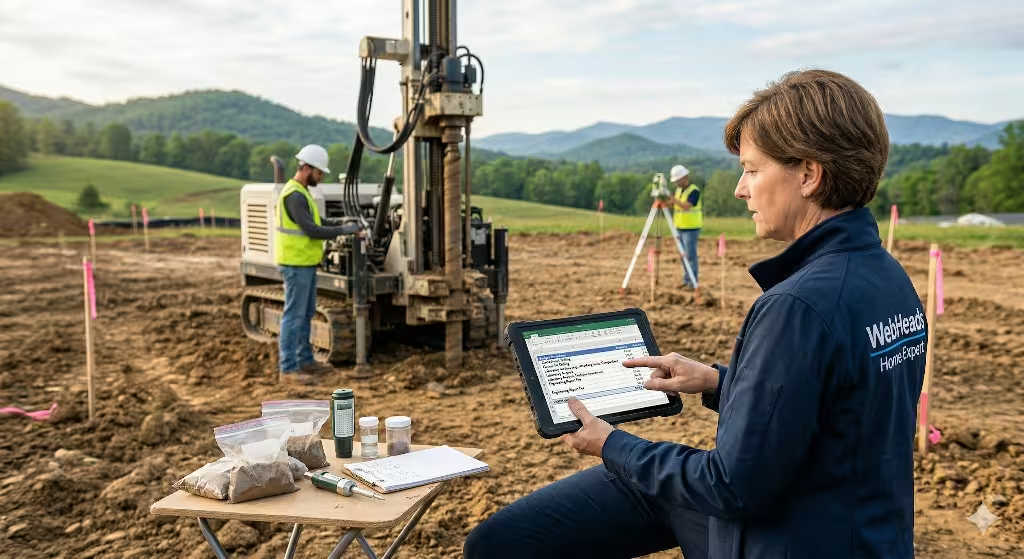
One of the most common questions about residential soil testing is about the budget. People want to know the cost per acre. This is a tricky question because every piece of land in Tennessee is different. If you are buying a small lot in a developed neighborhood in Sullivan County, your needs will be different than if you are buying a twenty acre farm in Washington County.
For a standard residential soil testing project on a single acre, you might see a wide range of prices. Basic testing for nutrients might only cost fifty dollars, but that is not what you need for building. For a real geotechnical survey, you should expect to pay between one thousand and five thousand dollars. When we look at the residential soil testing cost per acre for larger tracts of land, the price per acre often goes down as the size of the land goes up. If you have ten acres, the engineer might not test every square inch. They will focus on the area where the house and the driveway will sit.
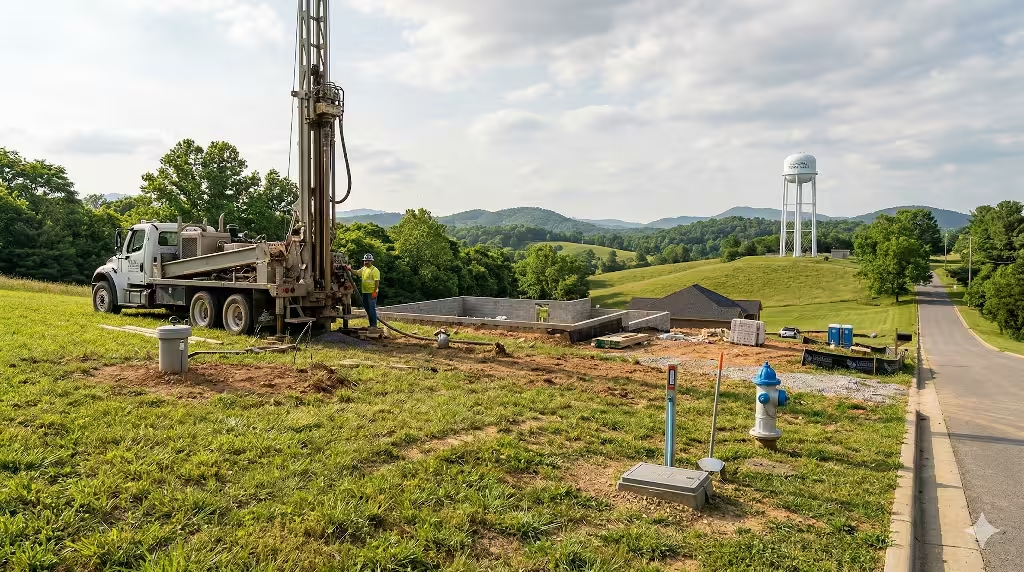
The residential soil testing cost per acre covers several things. First, it covers the labor of the crew who comes out to your land. They bring a large truck with a drill on the back. This is called a soil boring rig. Second, it covers the lab fees. The samples they take must be sent to a lab to be tested for things like moisture content and bearing capacity. Third, it covers the time of a professional engineer. This person looks at all the data and writes a report.
This report is what your builder and the local building department will use to make sure your home is safe. Understanding the residential soil testing cost per acre helps you plan your budget so there are no scary surprises later.
The Tri-Cities Special: Karst and Sinkhole Evaluations
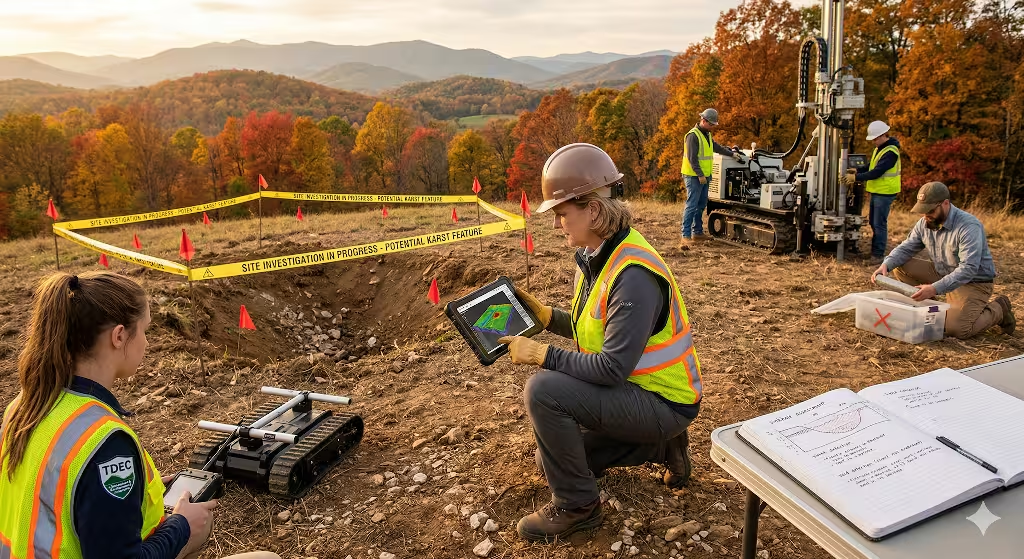
In our corner of East Tennessee, we have a unique challenge. The limestone under our feet is beautiful, but it can be a problem. This is why residential soil testing in the Tri-Cities often includes a sinkhole evaluation. If you are looking at the residential soil testing cost per acre, you need to make sure this is included if you are in a high risk area.
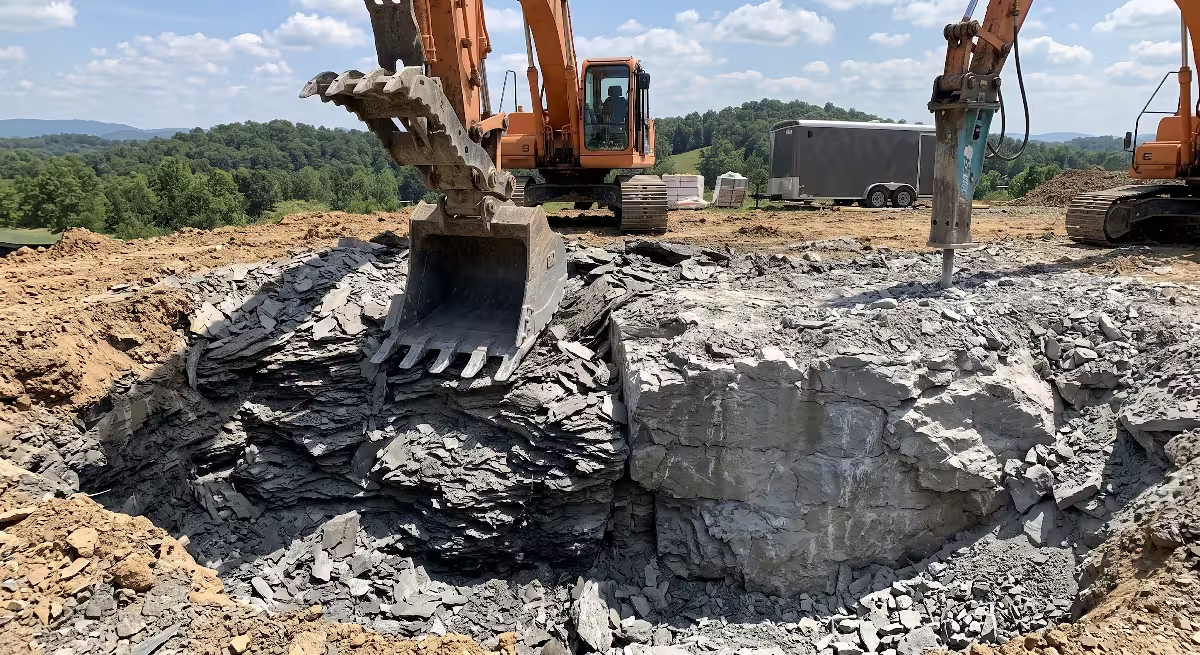
Limestone is a soft rock that dissolves when it meets acidic rainwater. Over thousands of years, this creates holes underground. Sometimes, the dirt on top of these holes stays put for a while. Then, someone builds a heavy house on top of it. The added weight causes the dirt to collapse into the hole. This is a sinkhole. It can happen slowly, or it can happen all at once. Neither is good for your home.
When you invest in residential soil testing, the engineer will look for signs of these underground voids. They might use special tools like ground penetrating radar. This can increase the residential soil testing cost per acre, but it is worth every penny. In cities like Johnson City, where we have many underground springs, this is a vital step. Homes have had to be torn down because they were built over a hidden sinkhole. Do not let that be your story. Make sure your residential soil testing covers the specific geology of the Appalachian region.
Perc Tests: The Make or Break for Rural Builds
Many people moving to our area want a bit of land for privacy. If you are building outside of the city limits where there is no public sewer, you will need a septic system. To get a septic system, you must have a percolation test, or a perc test. This is a specific type of residential soil testing. It measures how fast water moves through your soil.
If the water moves too fast, it will not be cleaned before it hits the groundwater. If the water moves too slow, your yard will stay wet and your toilets will not flush. Neither of these is acceptable. The residential soil testing cost per acre for a perc test is usually between six hundred and fifteen hundred dollars. This is separate from the geotechnical testing for the foundation.
In the Tri-Cities, our soil is often full of red clay. Clay is very dense and does not let water through easily. If your residential soil testing shows that your dirt has too much clay, you might not be able to have a standard septic system. You might need an alternative system, which can cost three times as much. This is why people should never buy land without a successful residential soil testing report for the septic system. You do not want to own five acres of land that you can never build a bathroom on.
Common Questions about Residential Soil Testing
Landowners often have the same questions over and over. They are often worried about the red clay, mentioned earlier. They ask if they can even build on it. The answer is yes, but your builder needs to know it is there. Residential soil testing will tell the builder how much the clay will swell when it gets wet. This allows them to design a foundation that can handle that movement.
Another big question is about how long the process takes. People are always in a hurry to start their home. Typically, residential soil testing takes about two to four weeks. The crew has to schedule a time to come out, and then the lab needs time to process the samples. The engineer then needs a few days to write the final report. I always tell my clients to be patient. You are building a home that should last a hundred years. Waiting an extra two weeks for residential soil testing is a small price to pay for safety.
Builders also get asked if residential soil testing is required by law. In many parts of Sullivan and Washington County, the building department will require a soil report before they give you a permit. Even if they do not require it, I believe it is a moral requirement for any responsible homeowner. You are the one who will be living there. You are the one paying the mortgage. You deserve to know that the ground is safe.
The Expert Guide Checklist: What to Ask Your Engineer
When you start looking for a firm to handle your residential soil testing, you should be prepared. I like to be precise and competent in my work, and I expect the same from the experts I hire. When you are talking to an engineering firm about the residential soil testing cost per acre, you should have a list of questions ready.
First, ask them if they are licensed in the state of Tennessee. This sounds simple, but it is very important. You want someone who understands our local laws and our local dirt. Second, ask if the residential soil testing will include a recommendation for the foundation type. You want them to tell you exactly what kind of footings you need. Third, ask if they will handle the permits with the Tennessee Department of Environment and Conservation if you are building a septic system.
Another good question is to ask about their experience with karst topography. You want an engineer who has seen sinkholes before and knows how to spot the warning signs. Finally, ask for a clear breakdown of the residential soil testing cost per acre. Make sure there are no hidden fees for travel or lab work. Being direct and professional in these conversations will help you get the best service. It also shows the engineer that you are an informed homeowner who cares about quality.
Soil Compaction and Site Preparation
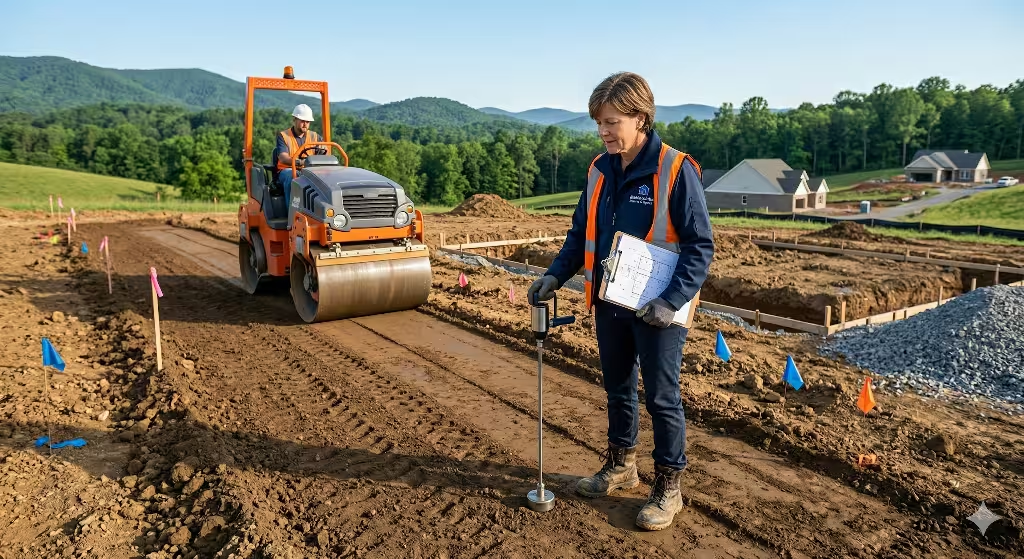
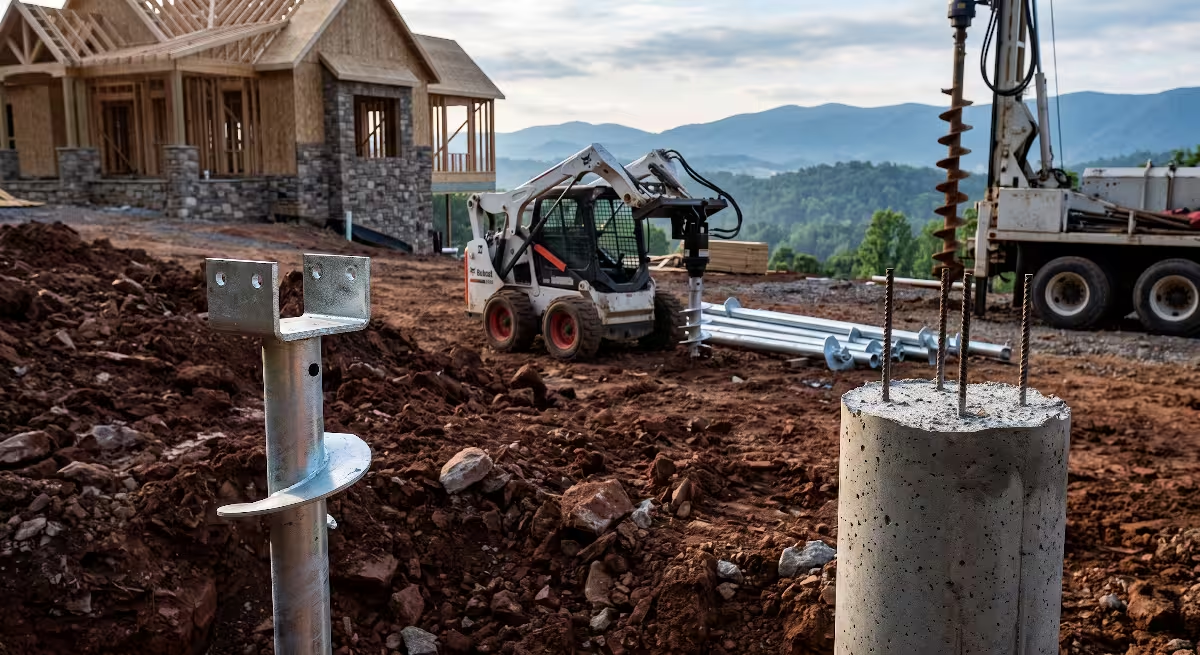
Once your residential soil testing is done, the work is not over. The report will give instructions on how to prepare the site. Sometimes, the dirt on your lot is too loose. If you build on loose dirt, the house will settle and the walls will crack. The report might say that you need to do soil compaction. This means using heavy machines to press the dirt down until it is very hard.
Residential soil testing is what tells the tractor operators how much they need to compact the soil. It is a very technical process. They use the data from the residential soil testing to make sure the ground is as solid as a rock. This is especially important if you have to bring in extra dirt to level out a sloped lot. New dirt, which we call fill dirt, must be compacted in layers. If you skip this, or if you do not have residential soil testing to guide you, your driveway or your garage floor might sink over time.
Many beautiful homes in Johnson City have cracked driveways within two years. Usually, this is because the owner did not want to pay the residential soil testing cost per acre for the driveway area. They thought it was just a driveway. But now, they have to pay thousands of dollars to tear it out and start over. Doing things right the first time is always cheaper and less stressful.
The Role of Moisture Content in Your Foundation
Water is the enemy of a good foundation. In the Tri-Cities, we get plenty of rain. We also have high humidity in the summer. Your residential soil testing will look closely at the moisture content of your soil. If the soil is too wet, it cannot hold weight. If it is too dry, it might soak up water later and expand.
The engineers use a test called the Atterberg limits during their residential soil testing. This sounds like a scary science term, but it is just a way to measure when soil turns from a solid to a liquid. Knowing these limits helps the engineer decide how deep your foundation needs to be. In East Tennessee, we have to worry about the frost line too. This is the depth where the ground freezes in the winter. Your residential soil testing will help ensure your footings are deep enough so that the freezing and thawing of the ground does not move your house.
The foundation is like the shoes of the house. If you are going hiking on Buffalo Mountain, you do not wear high heels. You wear sturdy boots. Residential soil testing helps us design the right “boots” for your house based on the moisture and the type of dirt on your land. It is all about choosing the right tool for the job.
Understanding Subsurface Investigation
When the engineers come to your property for residential soil testing, they are performing a subsurface investigation. This means they are looking at what is happening under the surface where you cannot see. They use soil boring to take samples from deep in the earth. Sometimes they go down ten, twenty, or even fifty feet.
This is an interesting part of the residential soil testing. They pull out long tubes of dirt that show the history of the land. You can see the different colors of the soil layers. You can see where the rock starts. This information is put into a geotechnical report. This report is a long document full of charts and numbers. Even though it looks technical, your builder will find it very useful. It tells them exactly what tools they need to use to dig your foundation.
The residential soil testing cost per acre usually includes several of these borings. The more borings they do, the more accurate the report will be. If you are building a very large home, you might want more samples taken. This ensures there are no hidden surprises right under where your master bedroom will be. It is better to find a buried log or a soft spot during residential soil testing than when the walls are already going up.
Working with Local Health Departments
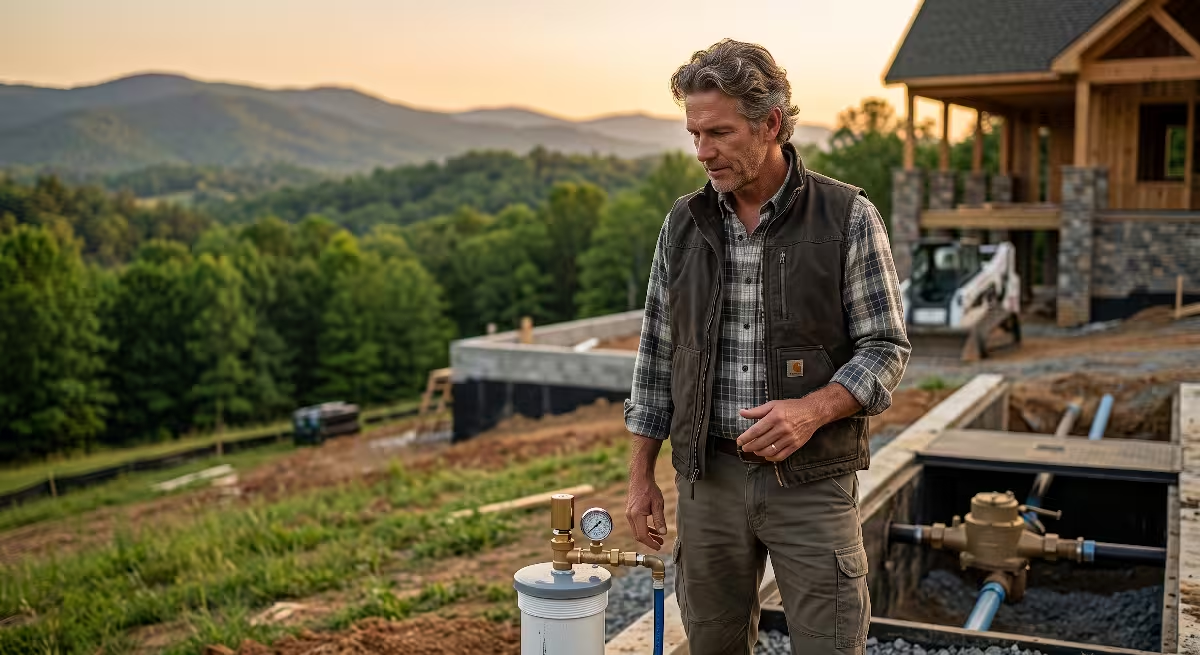
In the Tri-Cities, we work closely with the Sullivan County Health Department and the Washington County offices for residential soil testing. These agencies are responsible for making sure that our water stays clean. When you do residential soil testing for a septic system, you are following their rules.
They will often send an inspector out to watch the perc test. They want to see for themselves how the water drains. I have spent many mornings standing in a field with a health department official, talking about soil types. They are good people who want to protect the community. Following their rules for residential soil testing is a part of being a good neighbor. It ensures that your home does not cause problems for the people living nearby.
The residential soil testing cost per acre for these inspections is usually quite low, often just a small permit fee. However, the value is high. Having that official approval means you can move forward with your build with confidence. It is one more box to check on your way to your dream home.
Dealing with Slopes and Erosion
We love our mountain views, but building on a slope adds another layer of complexity to residential soil testing. When land is steep, the soil can move. We call this erosion or soil creep. If you build a house on a hill without proper residential soil testing, the whole house could slowly slide down the hill over many years.
The engineers will look at the stability of the slope during their residential soil testing. They will decide if you need a retaining wall. A retaining wall is a strong wall that holds the dirt in place. These can be very expensive, so you want to know if you need one before you start. The residential soil testing cost per acre might be higher for a steep lot because it is harder to get the equipment up the hill. But again, this is about safety.
Do not be the owner on South Holston Lake who wanted to build right on the edge of a bluff. The residential soil testing showed that the rock was not as stable as it looked. We had to move the house back thirty feet. The owner was disappointed at first because she lost a little bit of her view. After the builder explained the risks of the cliff crumbling, she was grateful. Residential soil testing saved her from a disaster.
The Importance of Bearing Capacity
The most technical part of residential soil testing is determining the bearing capacity. This is a measure of how much weight the soil can hold per square foot. Imagine putting a heavy chair on a soft rug. The legs of the chair will sink in. Now imagine putting that same chair on a hardwood floor. It stays on top. Soil is the same way.
A large custom home can weigh hundreds of thousands of pounds. All that weight is concentrated on the footings of the foundation. Residential soil testing tells the engineer if the dirt will act like a soft rug or a hardwood floor. If the bearing capacity is low, the engineer will design wider footings to spread the weight out. This prevents the house from sinking unevenly.
Uneven sinking, which we call differential settlement, is what causes the most damage to homes. It makes doors stick, windows leak, and large cracks appear in the drywall. You can avoid all of this by investing in residential soil testing before you pour a single drop of concrete. It is the most logical and precise way to build.
Managing the Residential Soil Testing Process
As a homeowner, you might feel overwhelmed by all of this. Most builders suggest you act like a project manager. Keep a folder with all your residential soil testing documents. Write down the names of everyone you talk to at the engineering firm. Ask for a schedule and follow up if things are running late.
When you receive your residential soil testing report, sit down with your builder and your architect. Have them explain the findings to you in simple terms. A good builder will welcome the data from residential soil testing. It makes their job easier because they don’t have to guess what is underground. It also protects them from liability.
If the residential soil testing cost per acre seems high, remember that you can shop around. Get quotes from two or three different firms in the Tri-Cities. Ask them to explain why their prices are different. Sometimes the cheapest option is not the best if they don’t include a full geotechnical report. You want quality and integrity in your residential soil testing, just like you want it in your home.
Long Term Benefits of Soil Knowledge
Knowing your soil does not just help during construction. It helps for as long as you own the home. Your residential soil testing report will tell you about the drainage on your property. This is helpful when you start landscaping. You will know where to plant trees that like wet feet and where to put your rose bushes.
It also helps if you ever decide to add on to your home. If you want to add a sunroom or a garage in ten years, you already have the residential soil testing done. You can show that report to the new contractors. It also adds value if you ever sell your home. Being able to show a prospective buyer a professional residential soil testing report proves that the home was built with care and precision. It gives them the same peace of mind that you had.
Generally, you will never meet a homeowner who regretted doing residential soil testing. But you will meet many who regretted skipping it. In the Tri-Cities, where our land is as varied as our people, knowing your dirt is the key to a successful build.
Buying Peace of Mind
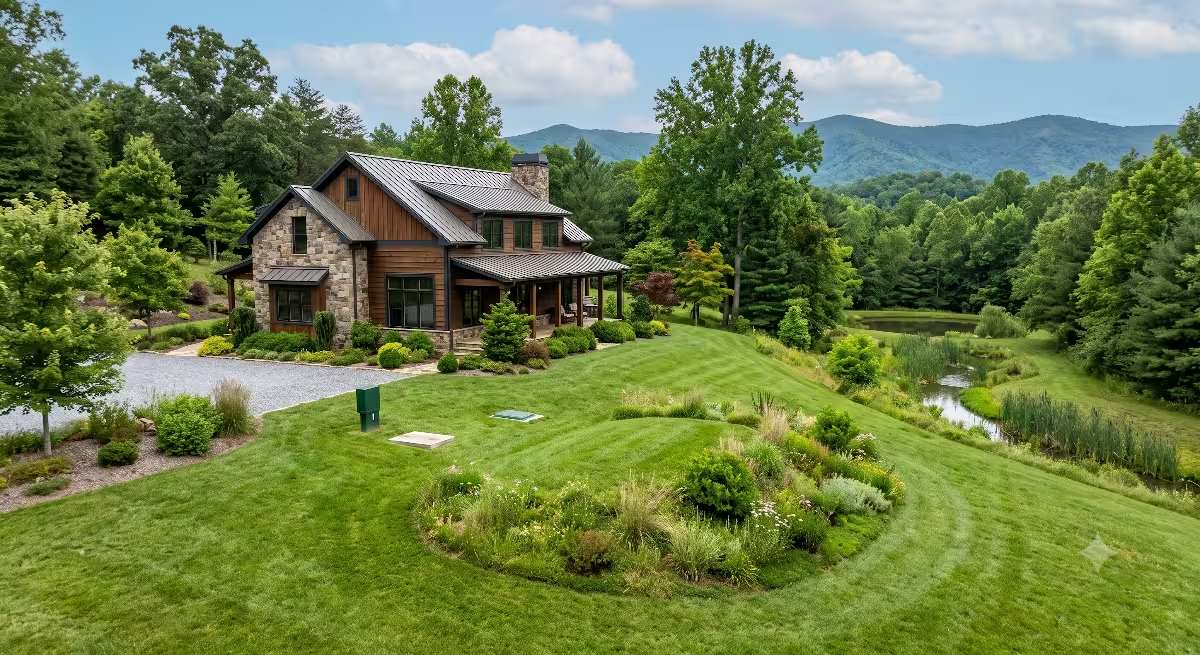
Building a custom home is one of the biggest achievements of your life. It is the place where you will raise your children, host Thanksgiving dinners, and enjoy your retirement. In a place as beautiful as Johnson City or Kingsport, it is easy to focus only on the scenery. But as we have discussed, the true foundation of your happiness starts deep underground.
Residential soil testing is the tool that turns a piece of land into a home site. It takes away the mystery and replaces it with facts. When you understand the residential soil testing cost per acre, you are taking control of your budget and your safety. You are ensuring that your home is a place of security, not a source of stress.
So, as you look at those mountain views and plan your dream kitchen, don’t forget the dirt. Talk to a local engineer. Ask about residential soil testing. Take the time to do it right. Your future self will thank you every time there is a heavy rain or a cold winter night. You will know that your home is standing on a solid foundation, built with competence, precision, and integrity. That is the best feeling in the world.