There are a lot of houses in the Tri-Cities of Tennessee where the energy bills go up because of things we cannot see with the naked eye. In our neck of the woods, the weather likes to keep us on our toes. We get those humid summers and those crisp, biting winters. If your home is not sealed up tight, you are basically throwing money out the window.
When people explore building a custom home, they often think about the pretty stuff like granite counters or hardwood floors. But they also need to think about the “bones” and the “skin” of the house. That is where a thermal camera comes in. It is a tool that lets us see heat. Using a thermal camera is the smartest way to stop guessing where your home is losing air. It turns an invisible problem into a clear picture.
In this guide, we are going to show you the most common air leak locations thermal camera scans reveal, so you can make your home more comfortable and save some hard-earned cash.
The Science of Seeing Heat
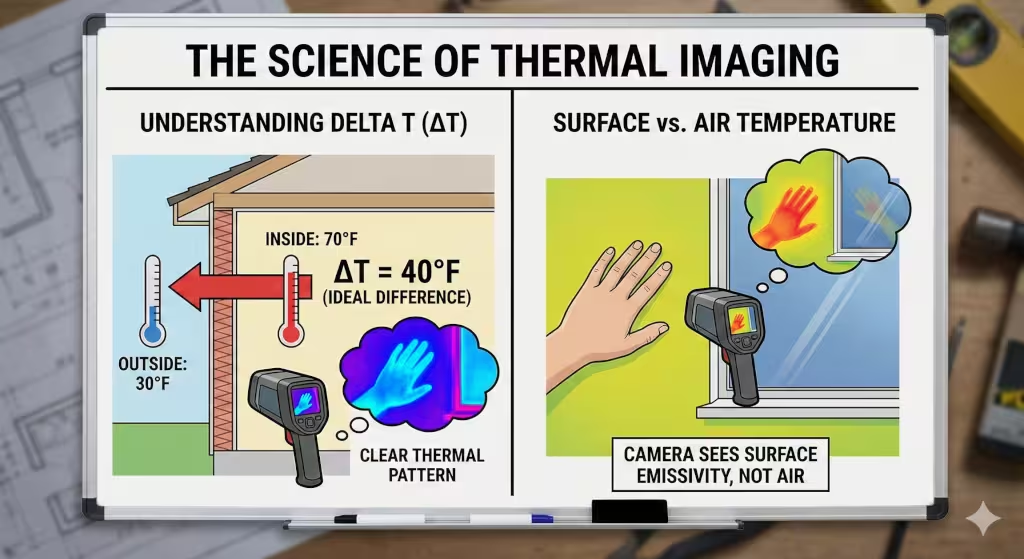
Before we go hunting for an air leak, we need to understand how the camera works. A thermal camera does not actually see air. It sees the temperature of surfaces. Imagine you have a straw blowing cold air onto your hand. Your hand gets cold where the air hits it. The camera sees that cold spot on your hand.
In the building industry, we talk about something called “Delta T.” This is just a fancy way of saying the difference in temperature. For a thermal camera to give you a good picture of an air leak, you usually need at least a 20 degree difference between the inside of your house and the outside. If it is 70 degrees inside and 70 degrees outside, the camera won’t show you much. But if it is a cold Tennessee morning and it’s 30 degrees outside, an air leak will show up as a bright blue streak on the screen.
You also have to be careful with shiny things. Materials like glass or polished metal can act like a mirror for heat. If you point the camera at a window, you might just see a reflection of your own body heat. As an expert, I always tell people to look for patterns. Air moving through a crack usually looks like a “bloom” or a “feather” of color spreading out from a single point.
Attic Access and Pull-Down Stairs
The attic is often the biggest source of an air leak in a home. Think of your house like a giant chimney. Warm air wants to rise. This is called the “stack effect.” In the winter, all that expensive warm air you paid for rises to the top of your house and looks for a way out.
The attic hatch or the pull-down stairs are like a big hole in your ceiling. Even if the door is closed, if it isn’t sealed with weatherstripping, it is a major air leak. When I run a thermal camera over an attic stairs cover, I often see a dark ring of cold air (in the winter) leaking in around the edges.
To fix this, you don’t just need a latch; you need a gasket. You can also buy insulated “tents” that sit over the stairs in the attic. This stops the air leak and keeps your living space much more comfortable.
Recessed Can Lighting
We love the look of recessed lighting, but these lights are notorious for causing an air leak. Most older recessed lights are like little buckets with holes in them. They are installed right into the ceiling, which is the boundary between your warm house and your cold attic.
Heat from the light bulb rises through the fixture and pulls air from the room with it. This creates a constant air leak. On a thermal camera, these lights often look like glowing hot spots in the summer or cold dark circles in the winter.
If you are building a custom home, look for “IC-rated” and “Airtight” fixtures. These are designed to be covered with insulation and prevent an air leak. If you already have old lights, you can seal them with special fire-rated covers in the attic. Just be sure to use the right materials so you don’t create a fire hazard.
Electrical Outlets and Switches
This one surprises a lot of people. If you walk over to an outlet on an outside wall on a windy day, you might actually feel a draft. This is a common air leak because when the house was framed, holes were drilled through the wood studs and plates to run wires.
Those holes are rarely sealed. Air travels from the crawl space or attic, down through the wall cavity, and right out of the outlet. With a thermal camera, an outlet with an air leak will look like a cold purple smudge on your wall.
The fix here is very simple and cheap. You can buy foam gaskets that fit right behind the plastic cover plate. You can also use a little bit of clear caulk around the edge of the electrical box. It is a small job, but when you do it to every outlet, it really helps stop the air leak problem.
Baseboards and Floor-to-Wall Junctions
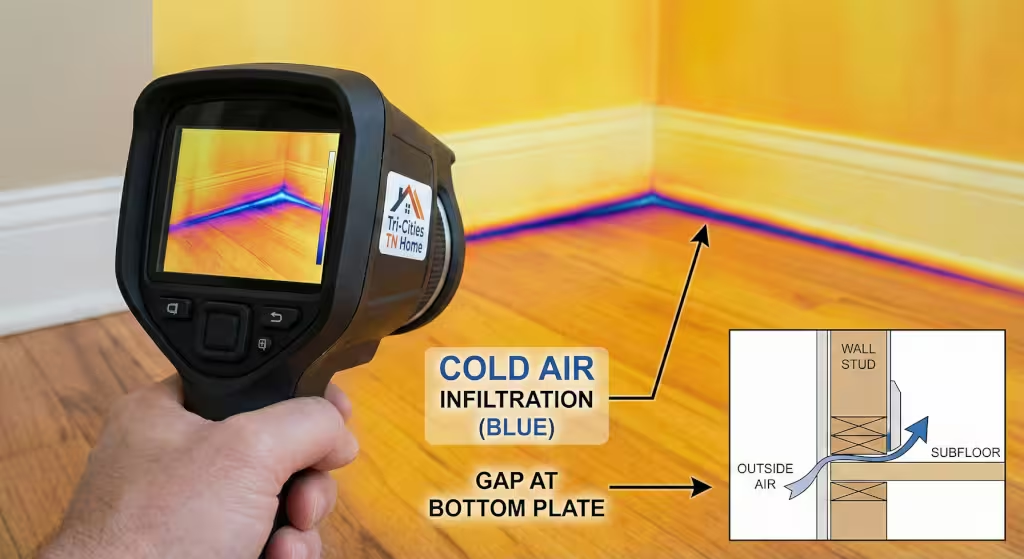
When we build a house, the walls sit on a piece of wood called a “bottom plate.”4 Even though we use nails and bolts, there is often a tiny gap between that wood and the floor. This is a perfect place for an air leak.
In many Tri-Cities homes with crawl spaces, cold air gets sucked up under the baseboards. If you move your thermal camera along the floor where it meets the wall, you might see a continuous line of cold. This air leak can make your floors feel freezing even if the thermostat is turned up high.
To stop this air leak, you can run a thin bead of clear caulk between the baseboard and the floor. If you are doing a big remodel, we usually use a special “sill sealer” foam under the wood when we first frame the walls to prevent this air leak from the start.
Plumbing Penetrations
Every time a pipe comes through a wall, there is a hole. Think about under your kitchen sink or behind your toilet. Most plumbers cut a hole that is much bigger than the pipe itself. This creates a direct air leak to the inside of your walls.
Because these areas are usually hidden inside cabinets, we don’t notice the air leak. But a thermal camera will show a big splash of cold air coming from under the sink. This air leak also allows bugs and moisture to move into your home.
You can fix this air leak easily with a can of expanding spray foam. Just a little bit around the pipe will seal the hole. It makes the cabinet less drafty and helps stop the overall air leak in your house.
Windows and Doors
Everyone knows that windows and doors are places for an air leak. But most people focus on the glass. While “low-e” glass is important, the real air leak often happens around the frame.
When a window is installed, there is a gap between the window unit and the wood framing of the house.5 This gap is usually covered with trim. If that gap wasn’t filled with foam or backer rod, you have a massive air leak hidden behind your beautiful trim.
A thermal camera will show you if the air leak is coming from the window seals (where the window opens) or from the trim (where it meets the wall). If it is the trim, you might need to use some caulk. If it is the window itself, you might need new weatherstripping to stop the air leak.
Fireplace Dampers
A fireplace is a wonderful feature in a Tennessee home, but it is also a giant hole in your roof. Even when the damper is closed, it is rarely a perfect seal. A metal damper sitting on metal will almost always have an air leak.
On a thermal camera, a fireplace often looks like a giant blue (cold) area in the winter. That air leak is pulling the warm air out of your living room and sending it right up the chimney.
If you don’t use your fireplace often, you can use a “chimney balloon” or a “top-sealing damper” to stop the air leak. This can save a lot of money on your heating bill because it stops the chimney from acting like a vacuum for your indoor air.
Rim Joists and Sill Plates
If you have a basement or a crawl space, the rim joist is the area where the house frame sits on the foundation. This is one of the most common places for an air leak. There are many joints here where wood meets concrete and wood meets wood.
Using a thermal camera in a basement, you will often see the rim joists glowing with outside temperatures. This air leak brings in cold air and often dampness from the ground.
Sealing this air leak usually involves using rigid foam board and spray foam. By sealing the rim joist, you stop the air leak at the very bottom of the house, which helps break the “stack effect” we talked about earlier.
Exhaust Fans
Bathroom and kitchen exhaust fans are designed to move air out of your house. They have a little flap called a damper that is supposed to close when the fan is off. However, these flaps are often cheap and get stuck or don’t fit right, leading to a constant air leak.
In the winter, you can use a thermal camera to look at the fan grill on your ceiling. If you see a lot of cold air, that is an air leak. It means the outside air is blowing right back into your bathroom.
Sometimes you can clean the flap to help it close. Other times, you might need to install a better “backdraft damper” in the ductwork to stop the air leak for good.
HVAC Boot-to-Drywall Connections
Your heating and cooling system moves air through ducts. Those ducts end at a metal box called a “boot,” which is where your floor or ceiling vent is located. There is almost always a gap between the metal boot and the drywall or flooring.
This gap is a hidden air leak. When the fan is off, air can leak from your attic or crawl space into your room. When the fan is on, some of the air you paid to heat or cool escapes into the floor or ceiling instead of coming into the room.
A thermal camera will show a ring of color around the vent register if there is an air leak. The fix is to remove the vent cover and use a special “mastic” or HVAC tape to seal the metal boot to the drywall. This ensures that all the air goes exactly where it is supposed to go.
Can a Thermal Camera See Through Walls?
This is a common question in Johnson City. The answer is no. A thermal camera cannot see through walls like X-ray vision. It only sees the temperature of the surface it is looking at.
However, if there is a big air leak behind the wall, it will change the temperature of the drywall. If there is a missing piece of insulation, the wall will be colder in that spot. So, while we aren’t seeing through the wall, we are seeing the “ghost” of what is happening inside the wall.
This is why the camera is so powerful. It tells us there is a problem without us having to tear down the drywall to find it. It turns a guessing game into a precise repair job.
Is it Better to Find an Air Leak in Summer or Winter?
You can find an air leak in both seasons, but winter is usually easier. In the winter, the temperature difference between the cold outside air and your warm inside air is very high. This makes every air leak stand out very clearly on the camera screen.
In the summer, the air leak will show up as heat coming in. If you have the air conditioning running, the hot Tennessee air will look like yellow or red “flames” coming through the cracks. The main thing is to make sure your house is at a steady temperature before you start your scan.
Using a Smartphone Thermal Attachment
Technology has come a long way. You used to have to spend thousands of dollars on a thermal camera. Now, you can buy an attachment for your smartphone. These are great for homeowners who want to do a quick check for an air leak.
They are not as sensitive as the professional cameras I use, but they are plenty good for finding the major stuff. If you want to be precise, a professional-grade camera has better resolution. This means it can see a smaller air leak that a phone attachment might miss. But for a DIY project, a phone attachment is a great way to start.
The Blower Door Strategy
If you want to be a real pro at finding an air leak, you use a blower door. This is a big fan that we fit into your front door frame. It sucks air out of the house and lowers the pressure inside.
When the pressure is low, the outside air tries to rush in through every tiny hole. This makes even a small air leak very easy to see with a thermal camera. If there is a crack you couldn’t see before, the blower door will pull air through it so fast that it will show up on the camera immediately.
This is the “gold standard” for finding an air leak. It is how we test our custom homes to make sure they are built to the highest standards of quality and integrity.
Interpreting the Colors
When you look at a thermal camera, the colors can be confusing. Usually, the camera is set so that purple and blue are cold, while yellow, orange, and red are hot.
If it is winter and you see blue streaks around a window, you have found an air leak. If it is summer and you see red spots around your ceiling lights, you have found an air leak where attic heat is coming in.
Sometimes you might see a solid block of color. This usually isn’t an air leak; it’s a “thermal bridge.” This happens because wood and metal conduct heat faster than insulation. Seeing the studs in your wall is normal, but seeing a “feathered” edge of color usually means moving air, which is an air leak.
Terms Related to Air Leaks and Thermal Cameras
When we talk about an air leak, we use a lot of specific terms. For example, the “building envelope” is the outer shell of your home that keeps the weather out.12 We also talk about “infrared energy audits,” which is the formal name for what we are doing with the camera.
Other terms like “convective loops” describe how air moves in a circle inside a wall. “Thermal bypass” is another word for a shortcut that heat takes to get out of your house. We often use “polyurethane spray foam” to fix an air leak because it sticks to everything and expands to fill the gap. All of these things are part of “weatherization,” which is just the process of making a home more energy-efficient.
Practical Fixes for Tri-Cities Homeowners
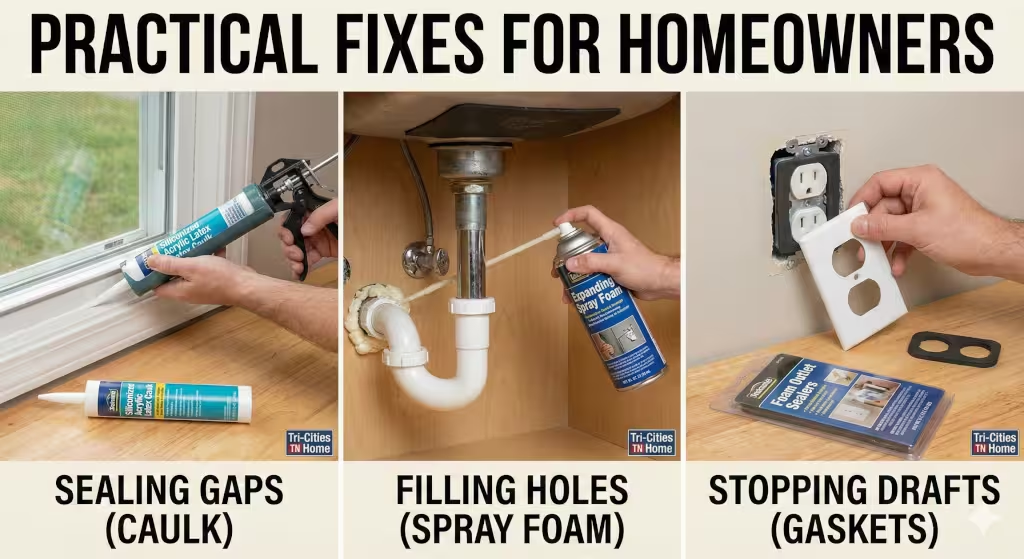
Most of the time, fixing an air leak is something you can do yourself. Caulk is your best friend. A good high-quality caulk can seal a small air leak around windows, baseboards, and door frames.
For a bigger air leak, like the holes around plumbing pipes, use expanding spray foam. Just be careful! That stuff is sticky and expands more than you think.
For your attic, look for “fire-rated” sealants. Since the attic can get very hot, you want to use materials that are safe. Sealing the air leak in your attic is usually the best way to see a big drop in your power bill.
When to Call a Professional
While DIY project are good, sometimes you need a pro. If you have a large air leak that you can’t find, or if your energy bills are still high after you’ve done the basics, call an expert.
A professional will provide a full report. This is great if you are trying to sell your home in Johnson City or Kingsport. It shows the buyer that the home is well-maintained. Also, some utility companies offer rebates if you have a professional audit done and then fix the air leak issues they find.
Precision Leads to Comfort
Building or maintaining a home is about competence and precision. You want to know that your home is protecting your family and your wallet. An air leak is a small problem that adds up to a big expense over time.
By using a thermal camera, you take the guesswork out of the equation. You can see exactly where the air leak is and fix it with confidence. Whether you are in a historic home in Kingsport or a brand new custom build in Johnson City, stopping an air leak will make your home quieter, cleaner, and much more comfortable.
We hope this guide helps you understand how to use technology to better your home and have a more comfortable experience.