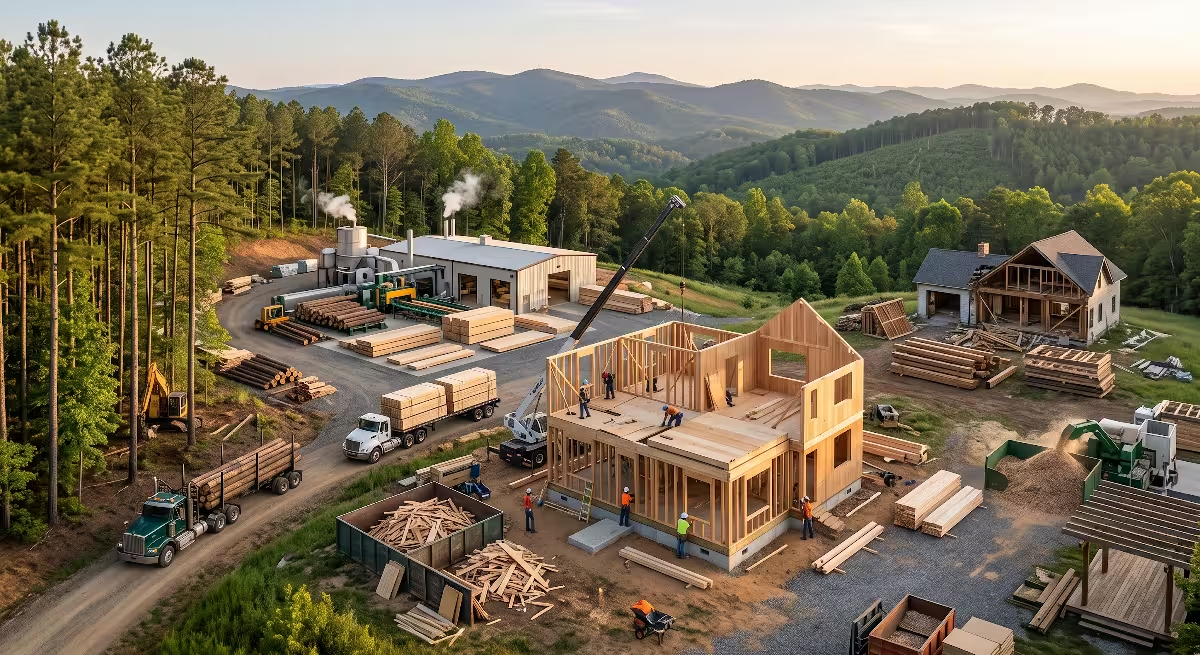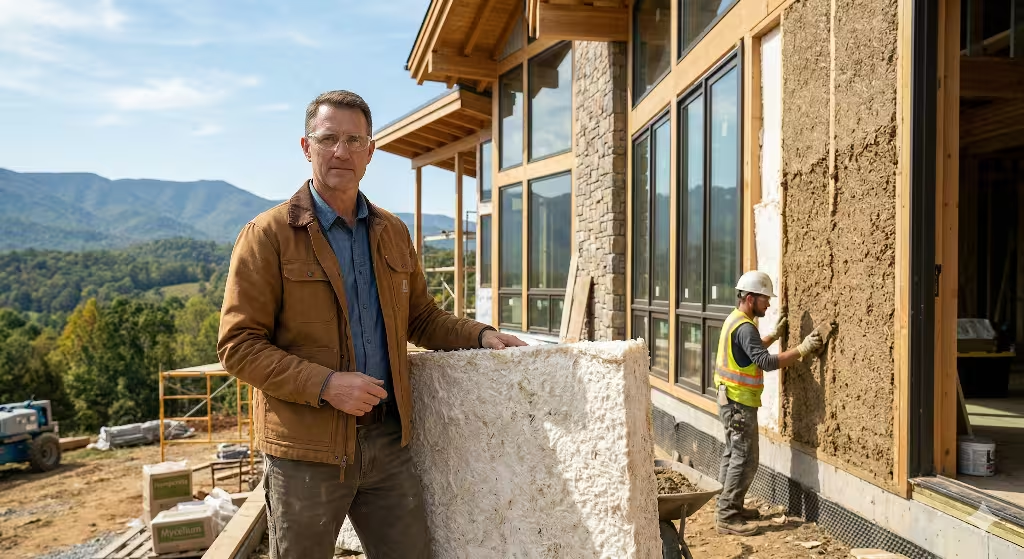

Building a home is one of the biggest choices you will ever make. It is about more than just picking paint colors or floor tiles. It is about how your home feels when you wake up on a cold morning in Kingsport. It is about how much you pay the power company every month in Johnson City.
When a builder sits down with a family to plan their custom home, they look at the land first. They look at where the sun sits in the sky. If we do not get the start right, the rest of the house will never be as good as it could be. Our goal is to help you build a home that works with nature instead of fighting against it.
In the Tri-Cities area of Tennessee, we have beautiful seasons. We have cold winters and hot, sticky summers. To keep a home comfortable, most people just turn up the heat or the air conditioning. But there is a better way. We can use passive solar design to let the sun do the work for us. This is not about fancy machines or expensive solar panels on the roof. It is about how we place the house on the dirt. It is about where the windows go. It is about using the very shape of the building to catch heat when we want it and block it when we do not.
The Science of Finding True South
When we talk about how to orient a house for passive solar gain, the first thing we have to find is true south. This is not the same as what a cheap compass tells you. A compass points to magnetic south. In our part of Tennessee, there is a difference between magnetic south and true south. This is called magnetic declination. If you build your house facing the wrong way by even a few degrees, you lose out on free heat.
A lot of builders use a solar compass or a specialized tool to find the exact spot where the sun is highest at noon. This is the 0 degree solar azimuth. Think of your house like a giant solar collector. If the collector is pointed the right way, it drinks in the sun. If it is turned too far to the east, you get too much morning sun and not enough in the afternoon. If it is turned to the west, your house will bake in the late evening heat. For passive solar to work its best, the long side of your home should face true south.
The 15 Degree Rule for Passive Solar
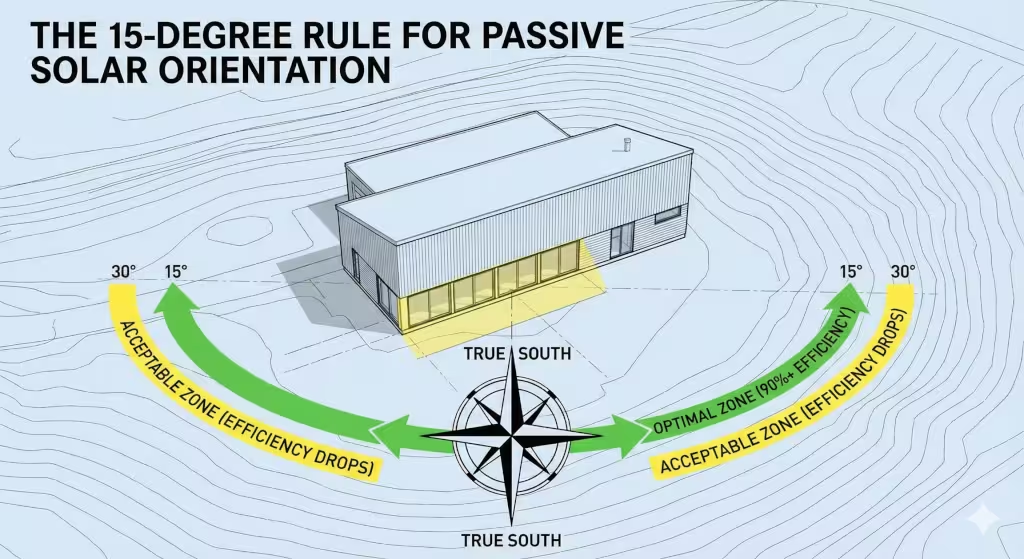
You might think that you have to be perfectly straight to get the benefits of passive solar energy. In a perfect world, that would be true. But land is not always perfect. Sometimes there is a big rock in the way. Sometimes the road is at an angle. The good news is that you have a little bit of room to move. We call this the 15 degree rule.
As long as your south facing windows are within 15 degrees of true south, you will still get about 90 percent of the potential heat gain. Even if you have to go up to 30 degrees away from south, you can still make passive solar work. You just have to be more careful with how you design the windows. If you go past 30 degrees, the efficiency starts to drop fast. Precision in the planning phase saves thousands of dollars over the life of the home.
The Five Pillars of Passive Solar Design
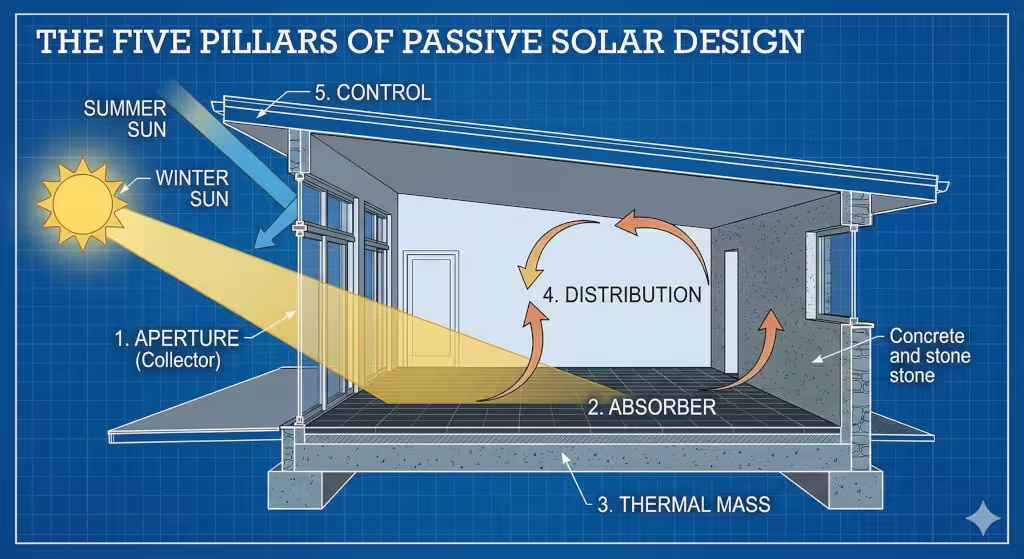
To really understand how to orient a house for passive solar gain, you have to look at five main parts. These parts work together like a team. If one part is missing, the system does not work.
The first part is the aperture. This is just a fancy word for the windows. This is the “collector” that lets the light in. In a passive solar home, we want most of the glass to be on the south side. The second part is the absorber. This is the surface that the sunlight hits. It might be a dark tile floor or a stone wall. The third part is the thermal mass. This is the material behind the absorber that holds onto the heat. Think of it like a battery for warmth.
The fourth part is distribution. This is how the heat moves from the sunny rooms to the dark rooms. We use things like open floor plans and vents to let the air flow. The fifth part is the control. This is how we stop the house from getting too hot. We use roof overhangs and shades to block the sun in the summer. When all five parts are in place, your passive solar home becomes a living machine that keeps you comfortable.
Choosing the Best House Shape
If you look at old farmhouses in East Tennessee, you will notice something. Many of them are long and skinny. They did this for a reason. To get the most from passive solar heating, you want a house that is shaped like a rectangle. You want the long side of the rectangle to face the south.
This shape allows the sun to reach deep into the rooms. If the house is too deep from front to back, the middle of the home stays dark and cold. By making the house long on the east west axis, we create a large “face” for the sun to look at. This is a core part of passive solar strategy. It also makes for better natural light in every room. Nobody likes a dark house, and with this layout, you rarely have to turn on lights during the day.
Designing the Inside for Passive Solar Gain
Once we know which way the house faces, we have to decide where the rooms go. In a passive solar layout, we put the rooms where people spend the most time on the south side. This includes the living room, the kitchen, and the dining area. These rooms stay bright and warm all day long.
We put the rooms that do not need as much heat on the north side. This includes the garage, the laundry room, the bathrooms, and the closets. These rooms act as a buffer. They protect the living spaces from the cold north winds that blow down from the mountains in the winter. This kind of planning is what makes a custom home feel smart. Every square inch has a purpose in the passive solar plan.
Understanding Thermal Mass in Tennessee
In the Tri-Cities, our nights can get very cold, even if the day was sunny. This is where thermal mass becomes important for passive solar success. If you just have a lot of windows but no way to store the heat, the house will get hot during the day and freezing at night.
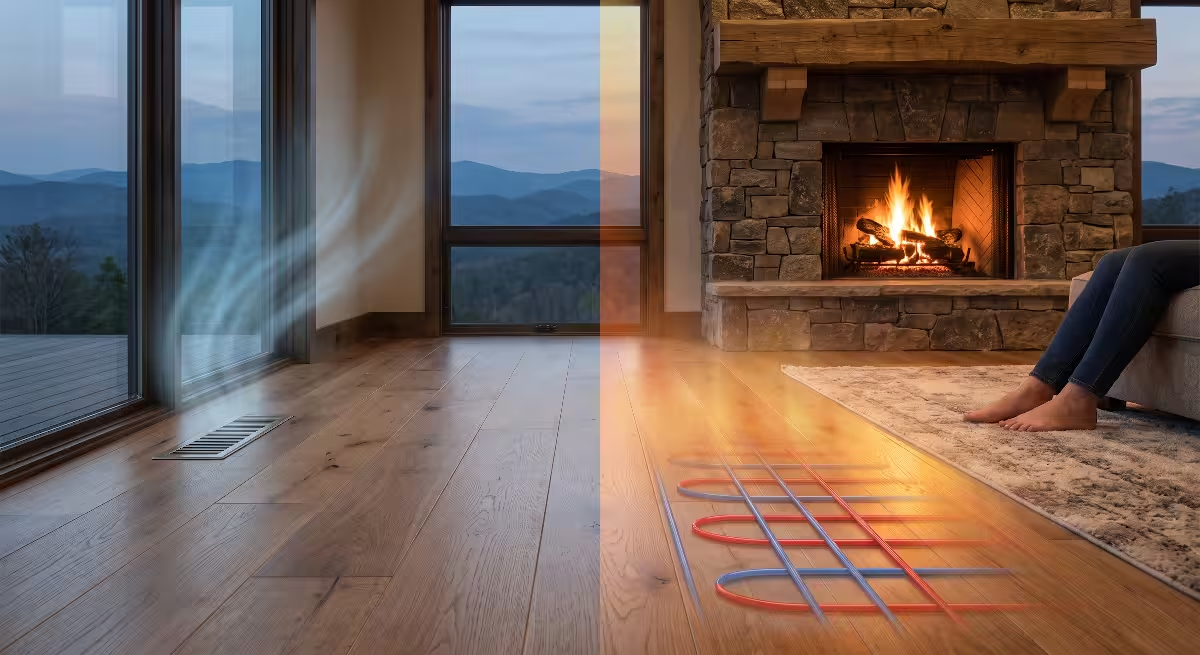
We use heavy materials like concrete, brick, or stone inside the house. When the sun shines through the windows, it hits these heavy materials. They soak up the heat slowly. Then, when the sun goes down, they slowly release that heat back into the room. It is a natural way to level out the temperature. We often suggest a beautiful stone fireplace or a stained concrete floor for this. It looks great and helps the passive solar system do its job.
The Power of the Roof Overhang
One of the biggest worries people have with passive solar design is getting too hot in the summer. Tennessee summers are no joke. But the sun is clever. In the winter, the sun sits low in the sky. In the summer, the sun sits very high overhead. We can use this to our advantage.
By building a roof overhang of the right size, we can block the high summer sun completely. The windows stay in the shade, and the house stays cool. But in the winter, because the sun is lower, it shines right under the overhang and into the house. This is the “control” part of the passive solar system. Calculating the exact depth of these overhangs is something I do for every project. We look at our latitude here in Johnson City to get the math just right.
Site Obstructions and the Solar Window
Before you pour any concrete, you have to look at what is around the house. A giant tree to the south might be beautiful, but it will block your passive solar gain in the winter. However, if it is a deciduous tree, it might actually help. Deciduous trees lose their leaves in the winter. This lets the sun through when you need it. In the summer, the leaves come back and provide shade.
We also have to look at the hills. In Kingsport and Bristol, we have a lot of ridges. If your lot is on the north side of a big hill, you might be in the shade for half the day. I always check the “solar window” from 9 a.m. to 3 p.m. This is when the sun provides the most energy. If that window is blocked by a mountain or a neighbor’s house, we have to adjust our passive solar plans.
Windows and the Solar Heat Gain Coefficient
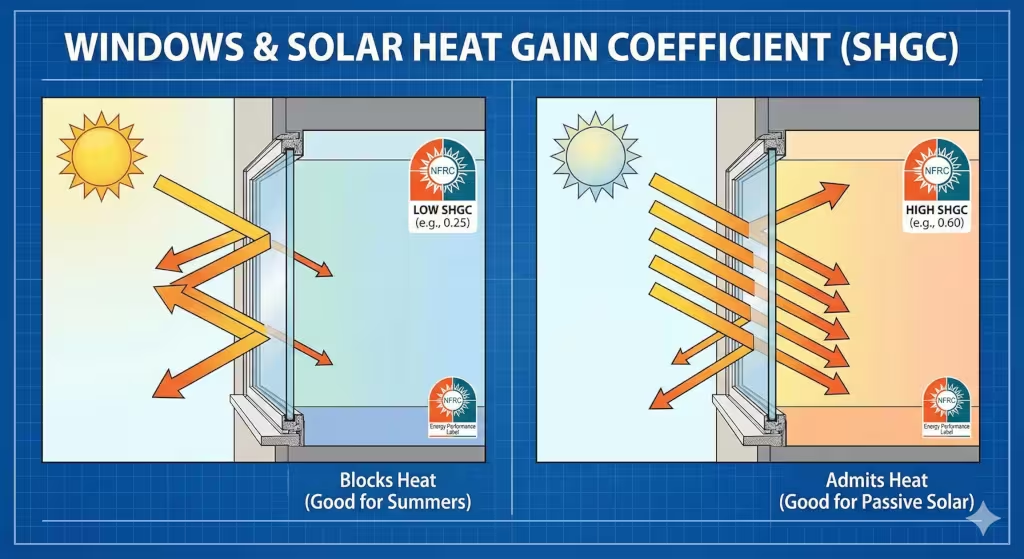
Not all windows are the same. When we talk about passive solar energy, we have to look at the labels on the glass. There is a number called the Solar Heat Gain Coefficient, or SHGC. This tells us how much of the sun’s heat can pass through the window.
For the south side of the house, we want a high SHGC. We want that heat to come in. But for the east and west sides, we want a low SHGC to keep the summer heat out. Most modern windows are made to block heat, which is usually good. But if you buy the wrong windows for a passive solar home, you are basically putting a coat on the house that stops the sun from helping you. I make sure we pick the right glass for each side of the building.
Managing Humidity and Air Flow
Passive solar is great for heat, but we also need to think about air. In Tennessee, the humidity can make a house feel much hotter than it really is. We design the house to use cross ventilation. By placing windows on opposite sides of the house, we can catch the summer breezes.
We also use the “stack effect.” Since warm air rises, we can put small windows high up in the house.24 When you open them, the hot air escapes out the top and pulls cool air in from the bottom. This works perfectly with a passive solar setup. It keeps the air fresh and reduces the need for the air conditioner. It is all about making the building envelope work for you.
Common Questions About Passive Solar Design
One common question is: “Does passive solar work on cloudy days?” The answer is yes, but not as well. Even on a grey day in Bristol, there is still some solar energy coming through. A well insulated house with good thermal mass can stay warm for a couple of days even without direct sun.
Another question is: “Is a passive solar home more expensive to build?” Not really. It is more about where you put the money. You might spend more on south facing windows, but you can spend less on a smaller heating and cooling system. The real cost is in the planning. You need someone who knows how to orient a house for passive solar gain from the very start.
The Role of Insulation and Sealing
You can have the best passive solar design in the world, but if your house is leaky, it won’t matter. I always tell my clients that insulation is the partner of the sun. The sun brings the heat in, and the insulation keeps it there. We use high quality materials to seal every crack.
We also look at thermal bridging. This is when heat escapes through the wooden studs in your walls. By using better building techniques, we can stop this “bridge” and keep the solar heat inside. A tight building envelope is the secret to making passive solar gain last all night long.
Legal and Development Trends in the Tri-Cities
In our area, more people are starting to care about energy. Local building codes are changing to require more efficiency. When I look at new developments in Johnson City, I see more builders thinking about site orientation. It is not just a trend; it is the future of home building.
There are also legal aspects to consider. Sometimes, there are “solar easements” that protect your access to the sun. This means a neighbor cannot build a giant wall that blocks your south facing windows. Understanding these rules is part of my job. I want to make sure your investment in passive solar stays protected for years to come.
The Engineering of the Trombe Wall
For some of my more technical clients, I talk about the Trombe wall. This is a very cool passive solar feature. It is a thick masonry wall painted a dark color, with a layer of glass in front of it. The sun heats the air between the glass and the wall. This heat then slowly moves through the wall into the house.
It is a great way to provide steady heat throughout the night. It is a bit more complex to build, but for a custom home in the Tennessee mountains, it can be a game changer. It shows how precision engineering can create a very comfortable living space using nothing but the sun.
Avoiding Glare and Overheating
One thing people worry about with a passive solar home is the light being too bright. If you have a huge wall of windows, you might get glare on your TV or computer screen. We solve this by using interior design. We use light shelves to bounce the light up to the ceiling. This spreads the light out and makes it soft.
We also make sure we have good control over the heat. If a day is unusually warm, you need to be able to close the shades or open a vent. A good passive solar design is flexible. It should give you the heat you want when you want it, and stay out of the way when you don’t.
Creating a Healthy Home Environment
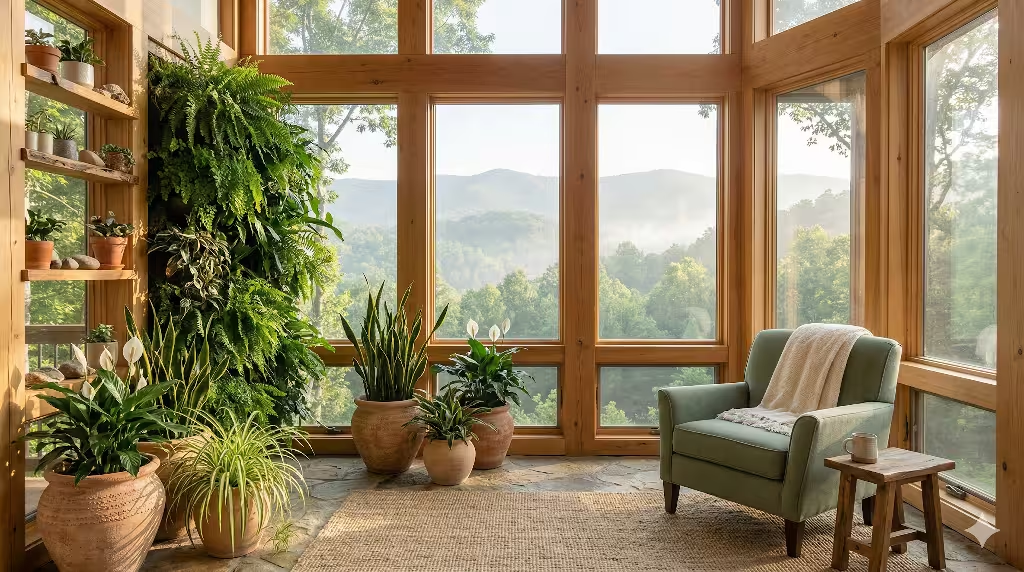
Beyond saving money, passive solar homes are just healthier to live in. Natural sunlight is good for your mood and your health. It helps your body keep a natural rhythm. When you live in a house that is filled with light, you feel more connected to the world outside.
A house designed for passive solar gain lets you do that. You can watch the sun move across the floor and feel the warmth of the day. It makes a house feel like a home.
The Technical Checklist for Your Builder
If you are ready to start your build, here is a simple checklist. First, ensure your lot allows for a long east west axis. Second, find true south using a professional tool. Third, plan for most of your windows to be on the south side. Fourth, choose materials that have good thermal mass for your floors or walls. Fifth, calculate your roof overhangs based on the latitude of the Tri-Cities.
Don’t just guess where south is. Don’t just pick any windows. If you follow these steps, your passive solar home will be a success. It is about being competent and having integrity in the building process. We do it right the first time so you can enjoy it for a lifetime.
Final Thoughts on Passive Solar Success
The homes that people love the most are the ones that feel “right.” Usually, those are the homes that have good light and steady temperatures. That is the power of passive solar design. It is a quiet way to make a big difference.
It doesn’t take much more work to do it right. It just takes someone who cares about the details. We want everything to be perfect. From the first shovel in the ground to the last piece of trim, every choice matters. Choosing to use passive solar gain is one of the smartest choices you can make.
Questions Answered About Solar Orientation
Does the color of my floor matter for passive solar gain? Yes, a darker color will absorb more heat. However, it doesn’t have to be black. A medium brown or grey tile works very well.
How many windows do I need for passive solar to work? A good rule of thumb is that your south facing windows should be about 7 to 12 percent of your total floor area. If you go higher than that, you might need extra thermal mass to keep the house from getting too hot.
Can I add passive solar features to an existing home? It is much harder to change the orientation of a house that is already built. But you can add a sunroom or change your windows to help. The best time to think about passive solar gain is when you are still in the design phase.
What happens if I have a great view to the north? You can still have windows on the north side for the view. But we try to keep them smaller or use very high quality glass to stop the heat from escaping. We balance the beauty of the view with the efficiency of the passive solar plan.
Technical Entities and Concepts
In the world of home building, we use many specific terms. We talk about the building envelope, which is the shell of your house. We talk about fenestration, which is just a fancy word for windows and doors. We look at the diurnal temperature swing, which is the change in temperature from day to night.
All of these things matter for passive solar design. We also look at low-e coatings on glass. These coatings are like a thin, invisible layer of metal that reflects heat. In a passive solar home, we use these coatings very carefully to make sure they are helping us and not hurting us. It is all part of the engineering that goes into a high performance home.
Your Path to a Passive Solar Home
We hope this guide has helped you understand how to orient a house for passive solar gain. It is a journey that starts with the land and ends with a home that is warm, bright, and efficient. It is about using your head and your heart to build something that lasts.
If you are building in the Tri-Cities, you have a great opportunity. Our climate is perfect for this kind of design. You can save money, help the planet, and live in a beautiful space all at the same time. It just takes a bit of planning and a lot of integrity.