

In recent years, people are moving away from the sprawling multi-story “McMansions” of the past and toward more precise, intentional, and high-functioning architecture.
The New Standard for Appalachian Luxury
The idea of a one-story house is changing fast in East Tennessee. In the past, people thought of ranch houses as small, simple homes from the 1950s. Today, that has flipped. In 2026, single-level home designs are the top choice for luxury buyers. People in Kingsport, Johnson City, and Bristol want homes that are easy to live in but still look amazing. We are seeing a shift where “high-end” means “high-functioning.” You do not need three floors to show success. Instead, you need a home that fits the land and your life perfectly.
A great house should work like a fine machine. It should be built with integrity and strong materials. In our part of the state, we have beautiful mountains and rolling hills. Building a single-level home here allows you to stay close to the ground and enjoy those views from every room. It is about a calm, easy way of life that still feels very professional and polished.
The Core Architectural Elements of Single-Level Home Designs
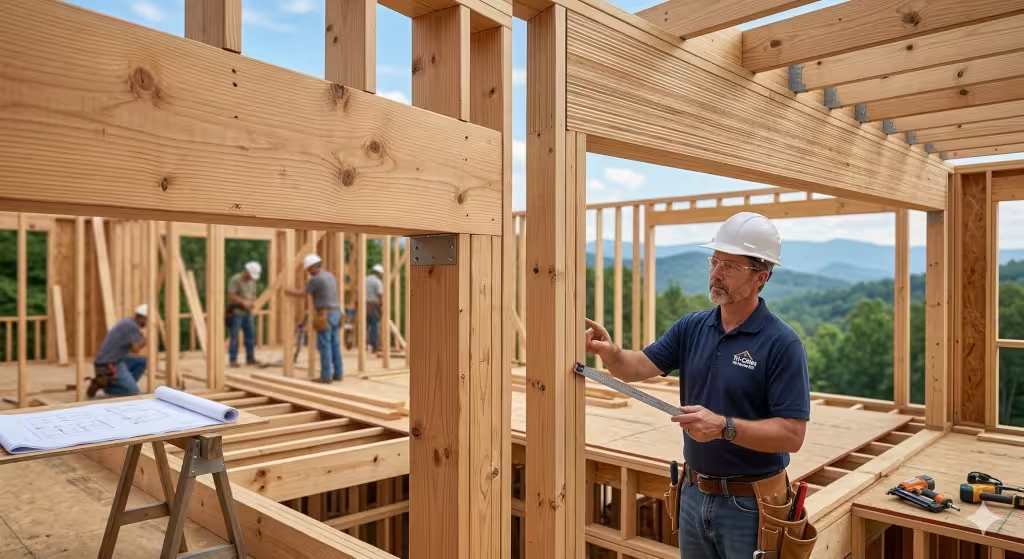
When we discuss the architectural elements of single-level home designs, we aren’t just talking about where the walls go. We are talking about the structural integrity and the mathematical precision required to make a large, one-story footprint feel cohesive rather than cavernous.
In the Tri-Cities, where the wind can pick up across the ridges and the humidity fluctuates, how we engineer these elements matters for the long-term health of the home. Here is a deeper look at the core components that define a high-end, single-story residence.
Engineering the Great Room: The Central Hub
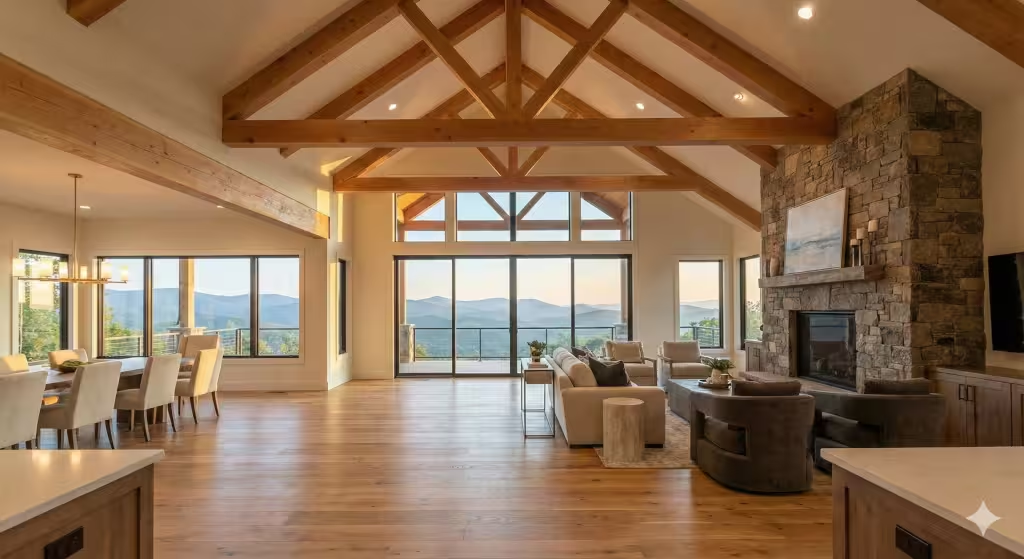
In a multi-story home, the “Great Room” is often restricted by the floor above it. In professional single-level home designs, the sky is literally the limit. Without a second floor to support, we can use advanced roof trusses to create massive, open spaces without the need for unsightly support columns.
Structural Volume: We often design these rooms with a “king post” truss system. This allows for a cathedral ceiling that can reach 20 feet in height. This verticality is what prevents a single-story home from feeling “squat” or dark.
The Sightline Strategy: A precise design ensures that from the moment you walk through the mahogany front door, your eye travels through the Great Room and directly out to the backyard or the mountain view. This is achieved by aligning the entry, the center of the living area, and a large bank of windows on a single axis.
The Split-Bedroom Layout: A Study in Privacy
One of the most requested features I see in custom building is the split-bedroom plan. This layout is a hallmark of sophisticated single-level home designs.
The Primary Wing: Usually located on the left or right rear of the home, the primary suite is treated as its own “zone.” It often has its own hallway to buffer noise from the living area. This is where we integrate luxury “quiet tech” insulation in the walls to ensure the owner’s suite remains a sanctuary.
The Guest/Family Wing: The secondary bedrooms are placed on the opposite side of the house. This is ideal for families with teenagers or for homeowners who host guests from out of town. It provides everyone with their own “territory,” which is a key psychological motivator for luxury buyers.
High-Volume Ceilings and Natural Light
If you have lived in a standard ranch home built in the 1970s, you know they can feel a bit cramped because of 8-foot ceilings. In modern single-level home designs, we use “high-volume” architecture to change that feeling entirely.
Tray and Coffered Ceilings: To add elegance without losing the cozy feel, we often use coffered ceilings in the dining room or primary bedroom. These are recessed panels that add depth and allow for hidden LED “cove” lighting.
Clerestory Windows: Because there is no second floor, we can place windows high up near the roofline. These are called clerestory windows. They let in natural light throughout the day while maintaining total privacy from neighbors. This is a very competent way to brighten a home in wooded areas like those near Warriors’ Path State Park.
The Foundation and Footprint
From an engineering standpoint, the foundation of single-level home designs is more complex than a standard two-story.
Slab-on-Grade vs. Crawl Space: In East Tennessee, the soil can be rocky or clay-heavy.1 We often recommend a “conditioned crawl space.” This means the area under your floor is sealed and climate-controlled. It protects the integrity of your hardwood floors and keeps the home more energy-efficient.
Roof Pitch and Drainage: A larger footprint means more rainwater runoff. We precisely calculate the “pitch” (the angle) of the roof to ensure water moves quickly away from the foundation. We use oversized 6-inch gutters and underground drainage systems to keep the site dry. This is the kind of technical detail that separates a “builder-grade” home from a custom luxury home.
The Kitchen: The Command Center
In single-level home designs, the kitchen is almost always open to the living area. This requires a high level of precision in the ventilation system.
The Hidden Scullery: Since the kitchen is visible from everywhere, we often build a “working pantry” or scullery. This is where the dishwasher, toaster, and coffee maker live. It allows the main kitchen island—often a massive 10-foot slab of granite or quartz—to remain a clean, beautiful space for entertaining.
The Double Island: In very large one-story plans, we sometimes install two islands. One is for “prep” (chopping and cooking) and the other is for “socializing” (seating and serving).
Materials that Go into a Luxury Home
Choosing the right materials is a big consideration for high quality homes. When you build single-level home designs, you want materials that look great but also stand up to our East Tennessee weather. In 2026, we have some amazing options that combine old-fashioned strength with new-age technology.
Locally Sourced Stone: The Foundation of Beauty
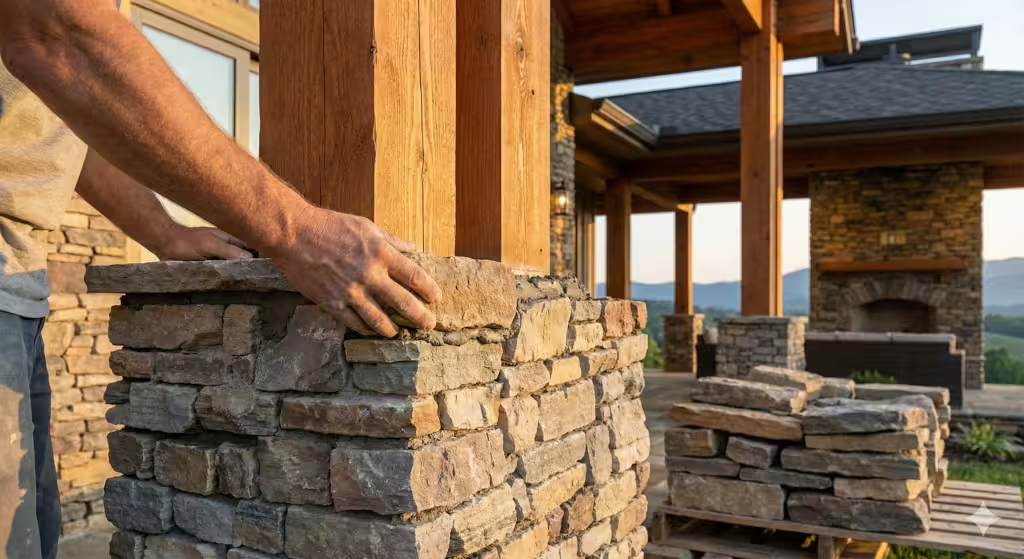
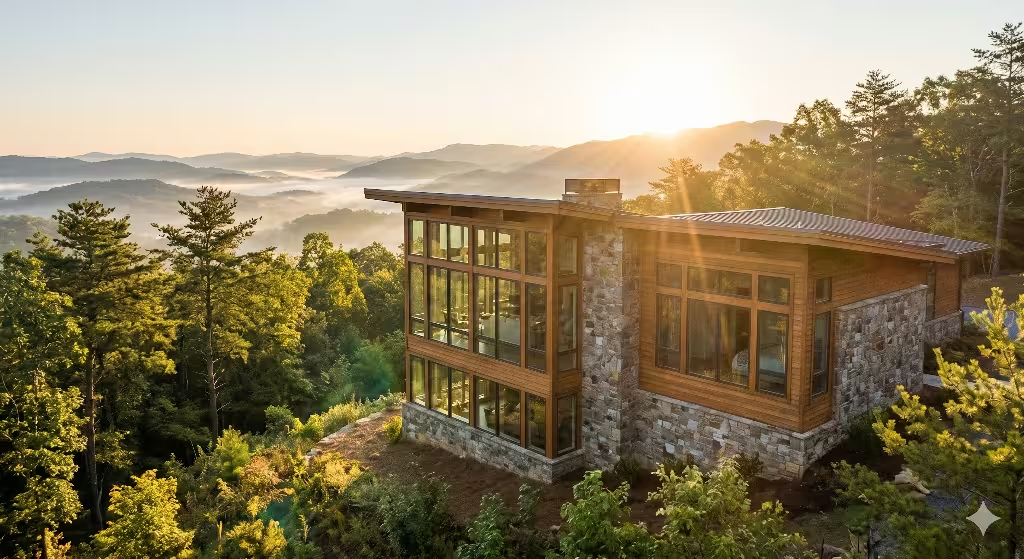
One of the first things builders often look at is what is right under our feet. Using local stone is a hallmark of the best single-level home designs in the Tri-Cities. We have beautiful limestone and sandstone that come right from our region. Companies like Zion Stone offer manufactured and natural options that perfectly match the gray and tan colors of our mountains.
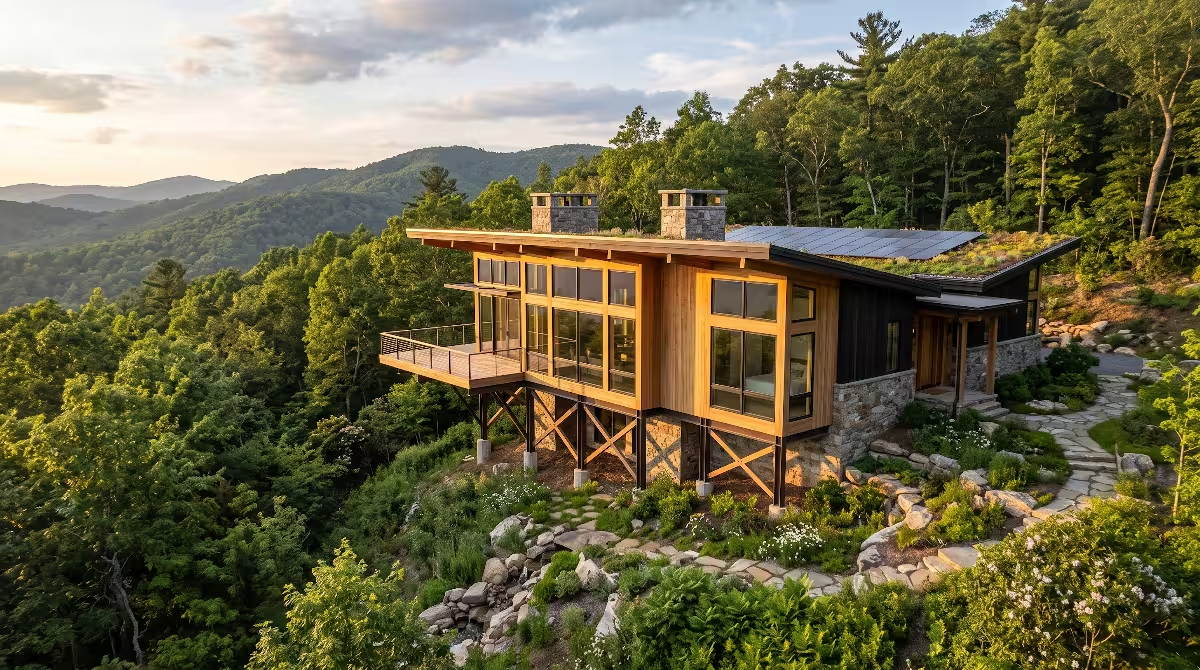
Using stone on the exterior does more than just look pretty. It provides a “thermal mass.” This means it helps keep your home cool in the summer and warm in the winter. For single-level home designs, we often use stacked stone around the base of the house and for the large outdoor fireplaces that are so popular right now. It makes the house feel like it grew right out of the Appalachian soil.
Appalachian Hardwoods: Strength from the Forest
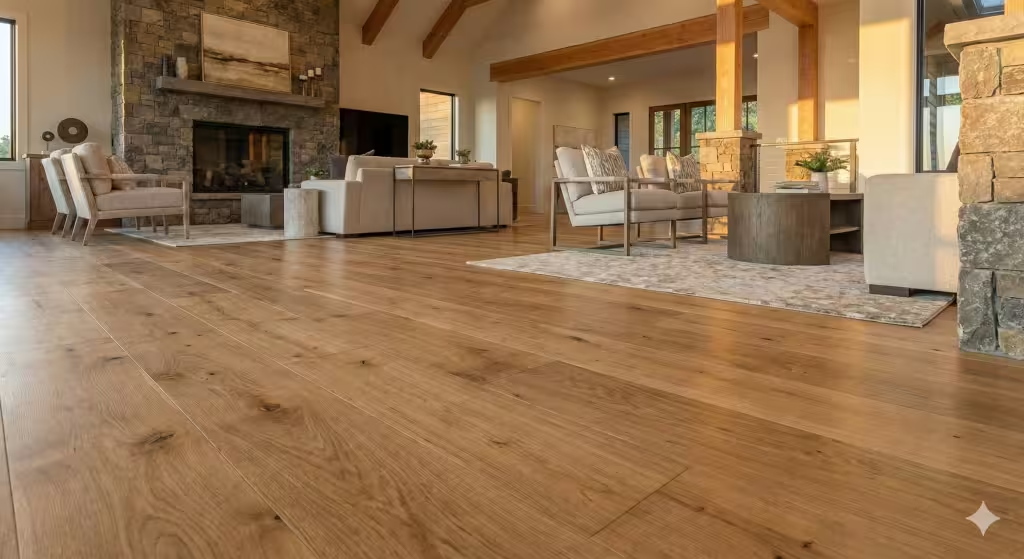
Inside the home, the flooring is the star of the show. Because single-level home designs have so much floor space on one plane, you want a material that is durable and warm. In 2026, we are seeing a huge return to Appalachian hardwoods like white oak and hickory.
Builders often recommend “engineered hardwood” over solid wood for our area. Tennessee can get very humid, and solid wood likes to expand and shrink. Engineered wood is built in layers that resist this movement. This is vital for single-level home designs where you might have one long run of flooring going from the kitchen all the way to the master bedroom. You don’t want to see gaps or “cupping” in your beautiful floor.
Modern Brick and the General Shale Legacy
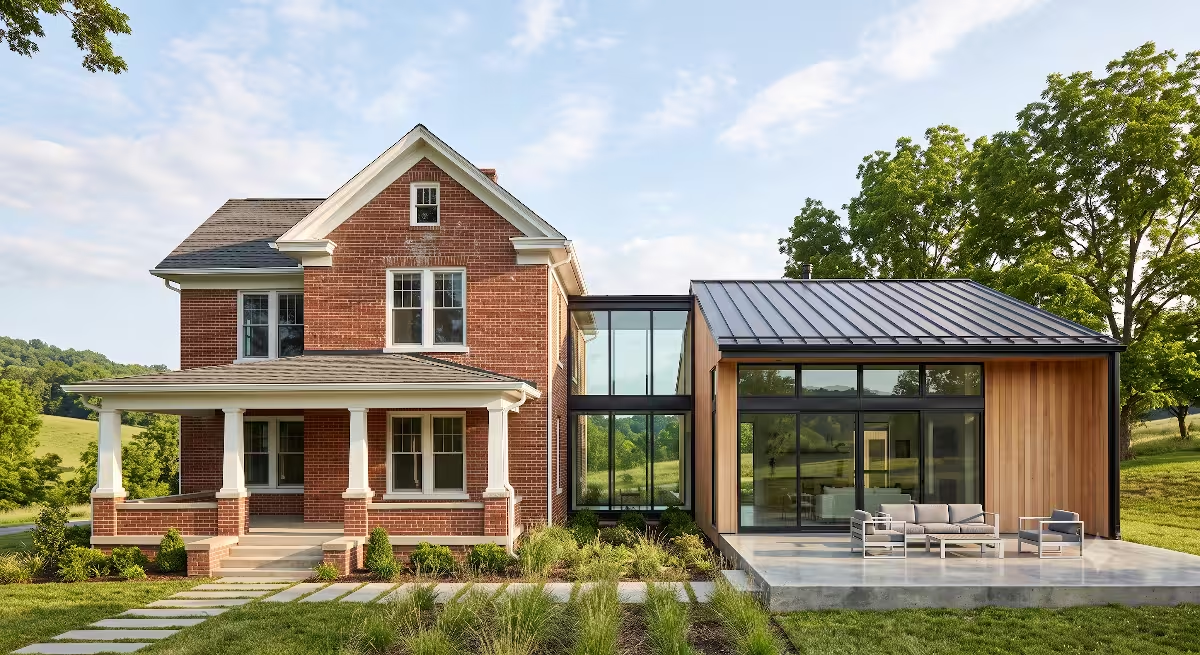
We can’t talk about the Tri-Cities without mentioning brick. We are home to General Shale, one of the biggest brick makers in the country. In 2026, we aren’t just using standard red brick. Many single-level home designs now use “thin brick” for interior accent walls or “Artisan” bricks that are meant to be painted with mineral-based paints.
Brick is a very competent material. It is fireproof, pest-proof, and it lasts for centuries. When we design single-level home designs with a brick exterior, we are building a legacy. It is a precise choice for someone who wants low maintenance and high resale value.
The 2026 Movement Toward Wellness Materials
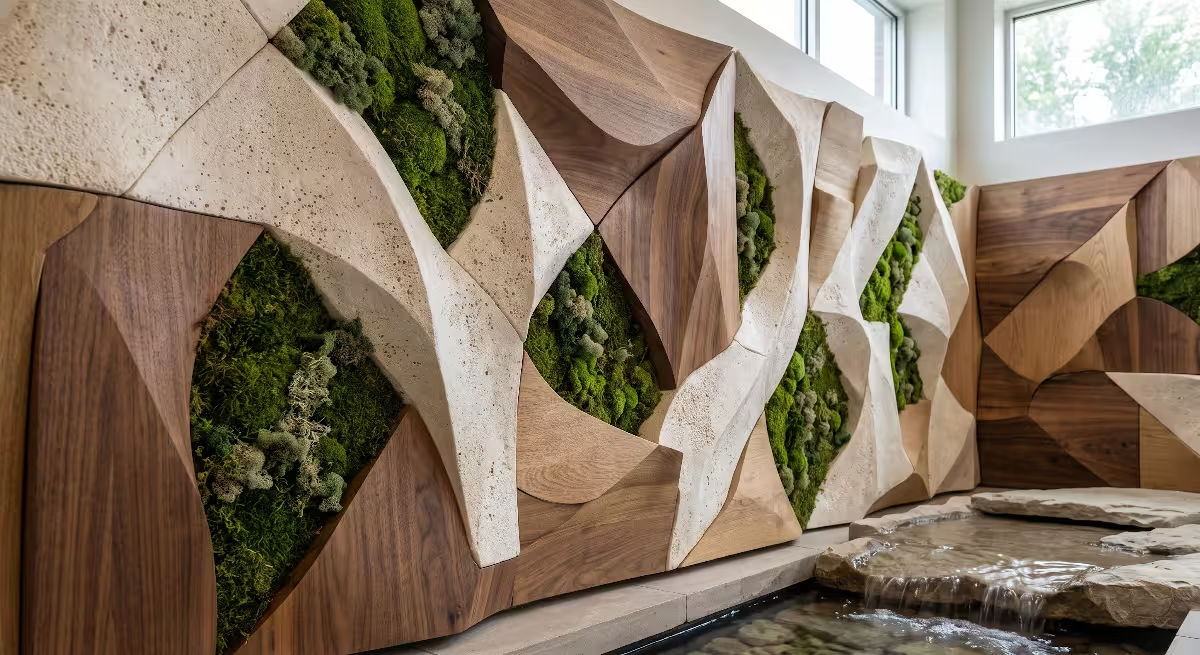
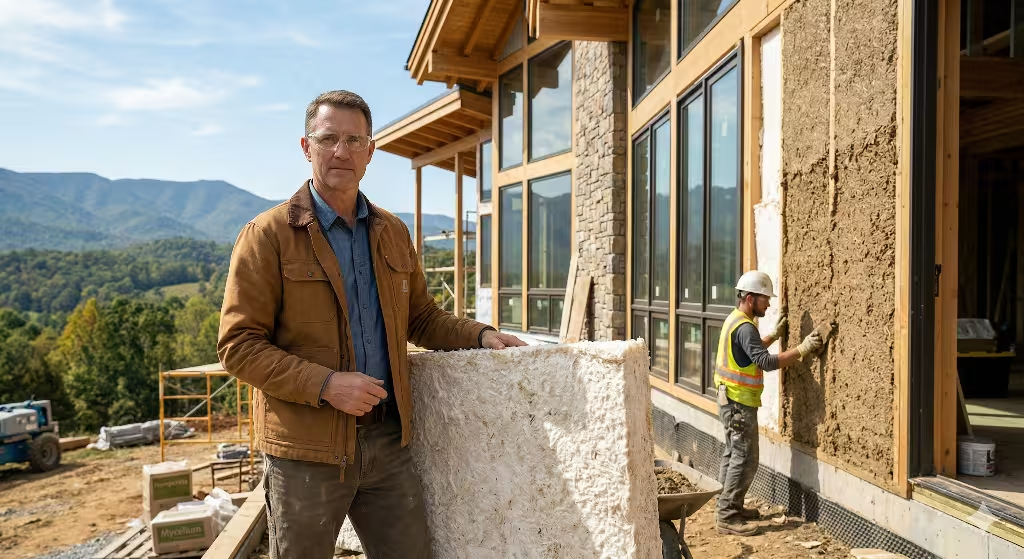
In the last few years, we have seen a big shift toward “wellness” in single-level home designs. This means using materials that don’t have “VOCs” or bad chemicals that can off-gas into your air. We are using natural clay plasters on the walls and plant-based stains on the wood beams.
For the bathrooms, we are seeing a lot of 3cm thick Carrara marble. This stone is timeless. It stays cool to the touch and has a calming effect. In single-level home designs, we often use this marble for “curbless” showers. These are showers where the floor of the bathroom just keeps going right into the shower area. It is safe, clean, and looks like a high-end spa.
High-Performance Glass and Metal Accents
To get that “Mountain Modern” look that everyone loves in 2026, we use a lot of black metal and glass. For single-level home designs, the windows are the most important investment you can make. We use “triple-pane” glass that is filled with argon gas. This keeps the Tennessee heat out and the cool air in.
We also use matte black steel for the roof accents and the window frames. This creates a sharp contrast with the natural wood and stone. In single-level home designs, these metal accents help define the “lines” of the house. They make it look like a professional, well-engineered piece of architecture.
The Technical Side: Insulation and Quiet Tech
Since I have a background in engineering, I always care about what you can’t see. In modern single-level home designs, we use “Rockwool” insulation. This is made from actual rock and is much better at stopping sound than the old pink fiberglass stuff.
Because everyone is on one floor, you don’t want to hear the dishwasher running while you are trying to sleep in the next room. We use “quiet tech” insulation in the walls between the living areas and the bedrooms. It is a precise way to ensure that your home is as quiet as it is beautiful.
Expanding the Vision: Outdoor Living Areas
In the Tri-Cities, we live for the outdoors. Whether it’s fishing on the South Holston or hiking near Elizabethton, we love nature. That’s why single-level home designs always include massive outdoor living spaces.
We use “composite decking” for the porches. This material looks like wood but never needs to be stained and won’t rot. For the ceilings of the covered porches, we use tongue-and-groove cedar. It smells great and keeps the space feeling warm. These outdoor rooms are a key part of the best single-level home designs because they effectively double your living space for a fraction of the cost of “heated” square footage.
Precision in the Kitchen: Slabs and Surfaces
The kitchen is where materials really get tested. In single-level home designs, the kitchen is often the visual center of the whole house. We use “waterfall” islands where the stone countertop continues down the side all the way to the floor.
Quartzite is a favorite material in 2026. It is a natural stone that is as hard as granite but looks like marble. It is very resistant to stains and scratches. For someone who loves to cook and entertain, it is the most competent choice for a high-use area.
Understanding the Cost of Quality
I know that choosing these high-end materials can feel expensive. But as an engineer, I look at the “lifecycle” of the home. When you use cheap materials in single-level home designs, you end up paying for them twice—once when you build and once when you have to fix them ten years later.
By choosing Tennessee stone, Appalachian wood, and high-performance glass, you are building a home that will be just as strong and beautiful in fifty years as it is today. That is what integrity in building is all about.
Would you like me to create a table that compares the different siding options for single-level home designs so you can see the pros and cons of each?
Indoor-Outdoor Fusion: Living with the Landscape
One of the best things about single-level home designs is how they connect to the outdoors. In 2026, we use something called “biophilic design.” This is a fancy way of saying we bring nature inside. We use huge glass walls that can slide open. When you open them, your living room and your back porch become one big space.
In the Tri-Cities, we have great stone and wood. We use local limestone and cedar to make the home look like it belongs on the hillside. We also focus on “zero-entry” transitions. This means there is no step between the inside floor and the outside patio. It is smooth and safe. It makes the home feel even bigger because your eyes don’t stop at the wall. You look all the way out to the trees and the mountains.
Are Single-Level Homes More Expensive to Build?
This is a question builders get all the time. The short answer is that the cost per square foot can be a bit higher. This is because a single-level home needs a bigger foundation and a bigger roof than a two-story home of the same size. Builders have to account for more concrete and more shingles.
However, you save money in other places. You do not have to build expensive staircases. You do not need as much structural steel to hold up a second floor. Also, you only need one main HVAC system in many cases, rather than two. In the long run, many people find that single-level home designs are a better investment. They are easier to maintain as the years go by. You don’t have to climb a tall ladder to clean the gutters or paint the siding.
What Defines a Luxury Single-Level Home?
Luxury is not just about being big. It is about the quality of the materials. In modern single-level home designs, we use things like “smart glass” that tints itself when the sun is too hot. We use “quiet tech” like invisible speakers hidden in the ceiling.
A luxury home also has a “scullery.”4 This is a second, smaller kitchen hidden behind the main one. You do the messy cooking and cleaning there. This keeps your main kitchen looking like a piece of art. It is all about precision and keeping the “public” parts of your home beautiful at all times. This is the kind of detail that makes a home feel high-end.
Is a Ranch-Style Home Good for Resale Value in 2026?
Yes, it is. In fact, single-level home designs are some of the most popular houses on the market right now. Many people are looking for their “forever home.” They want a place where they can live for 30 or 40 years without worrying about stairs.
Young families like them because they can keep an eye on their kids more easily. Older buyers like them for the ease of movement. Because so many people want them, they hold their value very well. If you build a high-quality single-level home in a good neighborhood like North Johnson City, it will always be a strong asset.
Luxury Features and Modern Tech
In 2026, we are seeing a big move toward “wellness” in single-level home designs. This means having a dedicated room for a sauna or a cold plunge pool. We also focus on “Net-Zero” building. This means the home produces as much energy as it uses. We do this with solar panels and very thick insulation.
We also use “invisible technology.” You won’t see big wires or clunky boxes. Everything is controlled by your phone or your voice. Even the lights change color during the day to help you sleep better at night. It is a very technical way to create a very calm environment.
Designing for the Future: Universal Design and Longevity
As we get older, our needs change. But a luxury home should still look like a luxury home. We use “Universal Design” in our single-level home designs. This means making hallways wider (48 inches) and doorways larger. We use lever-style handles instead of round knobs.
These things look like high-end design choices, but they also make the home easier to use for everyone. Whether you are carrying a heavy grocery bag or using a walker, the house works with you. It is a sign of a competent and precise builder to think about these things before the foundation is even poured.
Navigating the Development Landscape in East TN
Building in the Tri-Cities has its own challenges. The land is not always flat. To build great single-level home designs, you need a lot that is wide enough. Sometimes this means we have to do extra “site work” to level the ground.
You also have to follow local rules. Kingsport and Johnson City have different zoning laws. You want to make sure your home fits the “deed restrictions” of your neighborhood. This protects your investment and ensures the whole area stays beautiful.
Precision Meets Comfort
Building a home is a big job. It takes integrity and a lot of hard work. I believe that single-level home designs offer the best balance of style and function for life in Tennessee. They are easy to live in, beautiful to look at, and built to last.
When you focus on the details, like the height of the ceilings, the flow of the rooms, and the quality of the stone, you create something special. You create a home that is not just a building, but a sanctuary.