From the rolling hills of Kingsport to the bustling streets of Johnson City, there has been a change in the way we build homes. Today, we build houses that are very tight. This is great for keeping your power bill low, but it creates a big problem for your home office. When you seal a room to keep the heat in, you also seal yourself in with stale air. If you have ever felt sleepy or got a headache after a few hours of work, you are likely feeling the effects of poor air quality.
Our goal today is to show you exactly how to improve ventilation in a sealed home office so you can work better and feel healthier. We are going to look at this like engineers and builders, but I will keep it simple and direct.
Understanding the Mechanics of Air Exchange
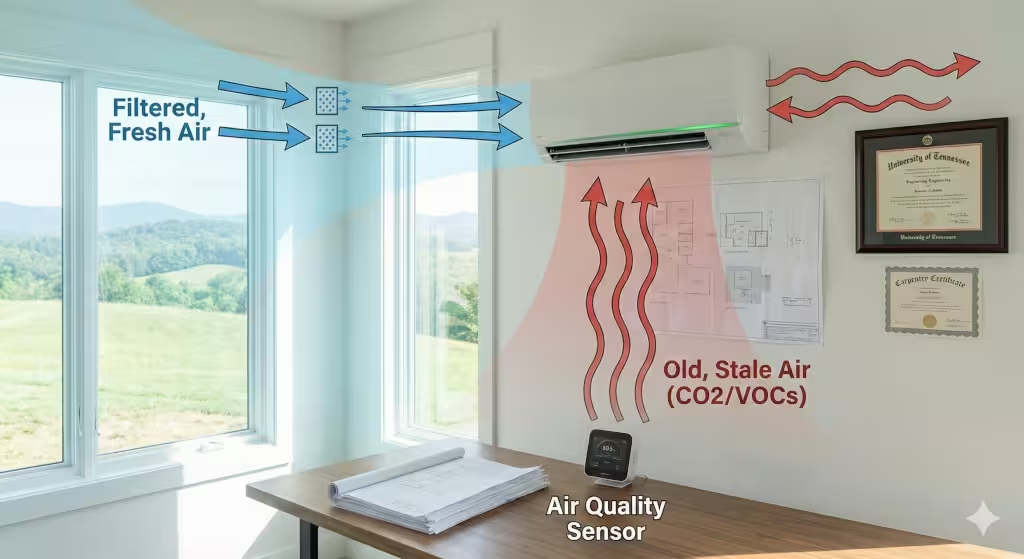
When we talk about how to improve ventilation in a sealed home office, we have to understand one big rule. Moving air around is not the same as bringing fresh air in. A desk fan just stirs the same old air. To have real ventilation, you need to swap the old air for new air. In the world of building, we call this the “air exchange rate.”
Think of your office like a glass of water. If the water is dirty, you can stir it all you want, but it stays dirty. To make it clean, you have to pour out the dirty water and pour in fresh water. In 2025, the building rules have become even more strict. The experts at ASHRAE, which is a group that sets the rules for air systems, say we need more fresh air than ever before.
For a small office, you want to make sure the air changes at least a few times every hour. This keeps the CO2 levels low. When CO2 gets too high, your brain slows down. You might find it hard to focus on your screen. By focusing on proper ventilation, you are giving your brain the fuel it needs to work at its best.
Primary Strategy: Mechanical Ventilation (The Gold Standard)

If you really want to fix the problem, you need a machine to do the work. The best tool for our area is called an Energy Recovery Ventilator, or an ERV. For home office workers in the Tri-Cities an ERV is the “Gold Standard” for ventilation.
Why do we suggest an ERV over other systems? It comes down to our Tennessee weather. We have very humid summers. If you just pull in outside air with a basic fan, you are also pulling in all that sticky humidity. An ERV is smart. It uses two air paths that pass by each other. The old air going out “gives” its coolness or heat to the fresh air coming in. Most importantly, it also swaps moisture. This means the fresh air coming in is already dehumidified and tempered.
In 2025, new models like the Broan AI series have come a long way. They have sensors built right in that can tell when the air is getting stale. They adjust themselves without you ever touching a button. For a sealed home office, you can even get a ductless ERV. This is a smaller unit that goes right through your exterior wall. It looks like a small vent on the outside and a clean panel on the inside. It provides constant ventilation without needing to run big pipes through your whole house. This is a precise way to handle a single room that feels “stuffy.”
Secondary Strategy: Enhancing Natural and Passive Airflow
Sometimes you do not want to install a big machine. If that is the case, you have to use “passive” ventilation. But you have to do it right. Many people think just cracking a window is enough. However, a cracked window only works if the air has somewhere else to go.
I use the “Two-Point Rule” for ventilation. Air needs an entry point and an exit point. If you open a window in your office, you should also open a door or another window across the house. This creates a “draft” or a “breeze.” This is called cross-ventilation.
Another trick is to use what we call “transfer grills” or “jump ducts.” If your office is sealed tight with a heavy door, the air from your main HVAC system can’t get in or out easily. A transfer grill is a vent in the wall or above the door. It lets air move from the hallway into your office. It’s a simple way to use the ventilation that is already happening in the rest of your house. In 2025, we are seeing more people use “louvered doors” for offices. These doors have slats that let air through even when the door is closed for privacy.
Common Challenges to Ventilation
There are a lot of questions from folks who are stuck with a tough room. One common question is: “How do I ventilate a room with no windows?” This is a big challenge. If you are in a basement or a room in the middle of the house, you can’t just open a window. For these rooms, I suggest an “inline fan.” This is a powerful fan hidden in the ceiling or attic. It pulls air from your office and pushes it all the way outside through a pipe. It is much stronger than a bathroom fan and very quiet.
Another question is: “Can air purifiers replace ventilation?” The short answer is no. Air purifiers are great for catching dust and pollen. They use HEPA filters to clean the air. But they do not remove CO2. You can have the cleanest air in the world, but if the CO2 is high because you are breathing in a sealed room, you will still feel tired. You need ventilation to bring in oxygen and push out the CO2.
Lastly, people often ask about “renter-friendly” ways to get better ventilation. If you can’t cut holes in the walls, look for a “window vent kit.” These are panels that fit into your window frame. They have two hoses. One pulls air in and one pushes it out. It is a temporary way to get mechanical ventilation without making permanent changes to the building.
Smart Monitoring and Automation
We live in a high-tech world now. In 2025, we don’t have to guess if our ventilation is working. We can measure it. I recommend every home office worker get a smart air quality monitor. These devices measure CO2, humidity, and chemicals called VOCs. VOCs come from paint, carpet, and even your office furniture.
You can set these monitors to talk to your phone. If the CO2 goes above 800 parts per million (ppm), it can send you an alert. Even better, you can link the monitor to your ventilation system. When the air gets bad, the monitor tells the ERV or the exhaust fan to turn on. This is called “demand-controlled ventilation.” It is the most efficient way to run your home because the fans only work when they need to. This saves energy and keeps the air fresh exactly when you are in the room.
Tri-Cities Regional Considerations
Our home here in East Tennessee has its own unique needs. When you are looking at how to improve ventilation in a sealed home office in our area, you have to think about the humidity. We live near the mountains and the rivers. Our air is often very damp.
If you use simple “supply ventilation” where you just pump outside air in, you might end up with mold issues in the summer. The hot, wet air hits the cool walls of your air-conditioned office and turns into water. This is why I really push for the ERV systems I mentioned earlier. They are built to handle our specific mix of hot summers and cool winters.
Also, we have a lot of pollen in the spring and fall. If you rely on open windows for ventilation, you are also letting in all those allergens. For folks in Kingsport or Bristol who struggle with allergies, mechanical ventilation with high-quality filters is much better than opening a window. It gives you the fresh air you need without the sneezing.
Maintenance and Filter Logic
Proper ventilation is not a “set it and forget it” thing. You have to take care of the system. The filters are the most important part. In the past, people used cheap filters just to keep dust out of the machine. But in 2025, the standards have changed. We now suggest using filters with a MERV 11 or MERV 13 rating.
A MERV 13 filter is strong enough to catch very small particles, including some viruses and smoke. If you have a ventilation system, check the filters every three months. If you live near a busy road or in a dusty area, you might need to change them more often. Clean filters keep the air flowing easily. If a filter is clogged, your ventilation system has to work harder, which uses more power and moves less air.
Summary and Maintenance
Improving the air in your office is one of the best things you can do for your work life. We have talked about how to improve ventilation in a sealed home office using both big machines and simple tricks. Whether you choose a high-end ERV system or just use the “Two-Point Rule” with your windows and doors, the key is to be consistent.
Don’t just hope the air is good. Measure it with a sensor. If the numbers look bad, take action. A well-ventilated office will keep you sharp, healthy, and ready to tackle your day. Remember, the goal of ventilation is to make sure the air you breathe is as fresh as the air outside, but as comfortable as the air inside.
Designing Your Perfect Airflow Plan
Let’s get into the nitty-gritty of how you can build a plan for your specific room. Every home in the Tri-Cities is a little different. Some of you are in older brick homes in Kingsport, and some are in brand-new builds in Johnson City. The way you handle ventilation will depend on how your house was built.
If you are in an older home, your house might be “leaky.” This means air naturally moves through small gaps around windows and doors. You might not need a huge ventilation system. However, these gaps often let in “bad” air from the crawlspace or attic. In this case, you want to seal those leaks first. Once the room is tight, you then add “controlled” ventilation. This way, you know exactly where your air is coming from, and you can make sure it is filtered and clean.
For those of you in new, high-efficiency homes, your office is likely very sealed. You probably have thick insulation and high-quality windows. In these homes, mechanical ventilation is a must. Without it, the air will get stale very quickly. If you have a central HVAC system, check to see if it has a “fresh air intake.” Some modern systems have a small pipe that pulls in a bit of outside air every time the fan runs. This is a basic form of ventilation that can help a lot.
The Physics of Air Pressure
Here, I have to mention air pressure. It plays a huge role in ventilation. There are three types of pressure systems: positive, negative, and balanced.
Positive Pressure: This is when you push more air into the room than you pull out. It’s like blowing up a balloon. This is good because it pushes old air out of cracks and prevents “bad” air from leaking in.
Negative Pressure: This is when you pull more air out than you push in. Think of a bathroom fan. It sucks air out. This can be risky because it might pull air in from “dirty” places like your garage or attic.
Balanced Pressure: This is what an ERV does. It pushes in the same amount of air it pulls out.11 This is the best way to maintain good ventilation without messing with the pressure in the rest of your house.
In a sealed home office, a balanced system is always the best choice. It keeps the room comfortable and ensures the ventilation is working exactly as it should.
Creating a Healthier Workspace
Beyond the machines and the vents, there are other small things you can do to help. Avoid using “plug-in” air fresheners or scented candles. These release chemicals into the air that can build up quickly in a sealed room. If you want the room to smell fresh, the best way is through ventilation, not by adding more chemicals.
You can also add some plants. While plants don’t provide a ton of ventilation on their own, they can help clean small amounts of chemicals from the air. Plus, they look great and can make your office a more pleasant place to be. Just don’t rely on them as your only source of fresh air!
Final Thoughts on Office Comfort
I have seen many people spend thousands of dollars on fancy chairs and big monitors, but they forget about the air they breathe. If you are serious about your work, you have to be serious about your ventilation. It is an investment in your health and your productivity.
In the Tri-Cities, we value hard work and doing things the right way. Taking the time to set up proper ventilation is doing things the right way. It might take a bit of effort or a small investment, but the payoff is worth it. You will feel better at the end of the day, and you will get more done.
If you are ready to start, I recommend calling a local HVAC expert who understands modern ventilation standards. Tell them you want to look at an ERV or a ductless ventilation solution for your office. They can help you pick the right size for your room and make sure it is installed according to the 2025 codes.
Key Takeaways for Improved Airflow
To wrap things up, let’s look at the most important points we covered. If you remember nothing else, keep these in mind:
Ventilation is the act of swapping old air for fresh, outdoor air.
An ERV is the best tool for the humid climate of Tennessee.
Air purifiers clean the air but do not provide ventilation.
You need two points of airflow for passive ventilation to work.
Smart sensors take the guesswork out of maintaining air quality.
High-quality MERV 13 filters are the 2025 standard for clean air.
By following these steps, you can turn your sealed home office into a powerhouse of productivity. You won’t have to deal with that mid-afternoon “brain fog” anymore. Instead, you will have a constant stream of fresh, filtered air to keep you going.