
When you build a custom home in our beautiful part of Tennessee, you want a place that feels like a sanctuary. But lately, for many of us, the home has also become the office. This makes the job of leaving work behind much harder than it used to be. You do not just need a room with a desk. You need a home that is designed to help your brain switch gears. Through smart engineering and precise planning, we can use architecture to build a bridge between your career and your family life.
The High Cost of the Open Door Policy
For a long time, people thought that having an open floor plan was the only way to build a modern home. They wanted big, wide spaces where the kitchen flowed into the living room and the living room flowed into every other nook. While that looks great in a magazine, it creates a real problem for people who work from home. If your desk is in the corner of your living room, you are never truly leaving work behind. You see your computer while you are eating dinner. You hear the ping of an email while you are trying to relax with your spouse.
In our area, we are seeing a shift. People are realizing that “open” often means “always on.” When work is visible from every corner of the house, your brain never gets the signal that the day is done. This leads to burnout and stress. It makes you feel like you are always at the office, even when you are wearing your slippers. To fix this, we have to look at the psychology of space. A home should be a tool that helps you manage your energy. If you do not have a physical way of leaving work behind, your mind will stay stuck in “work mode” all night long.
Creating Physical Thresholds
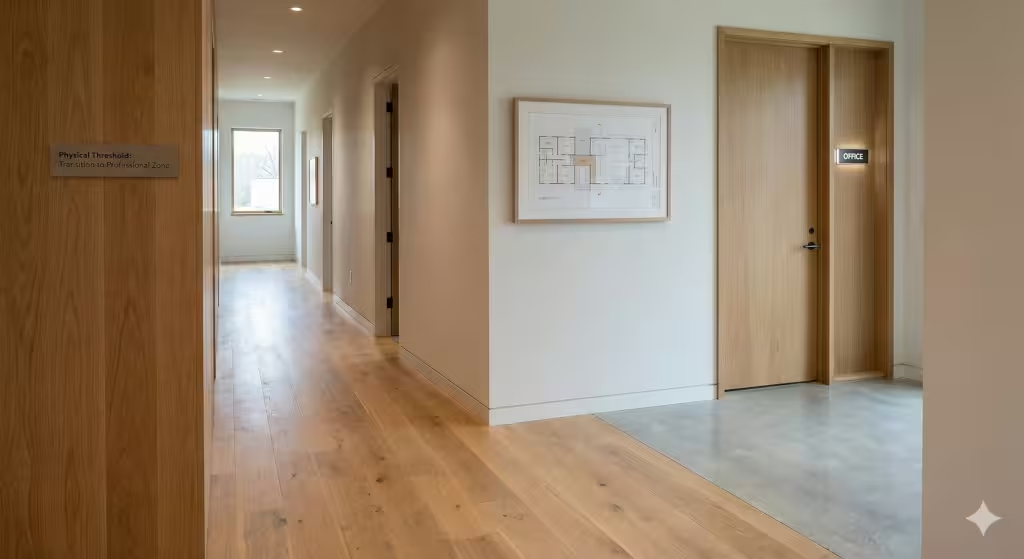
One of the best architectural tips for leaving work behind at home is the use of a physical threshold. In the old days, the “commute” was the threshold. You drove from your office to your house, and that twenty-minute drive gave your brain time to reset. When you work from home, that commute is gone. You need to build a new one into your floor plan.
In the Tri-Cities, we are starting to design homes with what I call “The Commute Hallway.” This is a longer, slightly narrower hallway that leads only to the office. As you walk down this hall at the start of the day, you are preparing for work. When you walk back through it at 5:00 PM, you are leaving work behind.
Another great idea is a dedicated entrance. I have worked on several custom homes in Bristol where the office has its own door to the outside. This is a game-changer. You can walk out your front door, take a few steps on your porch, and enter your office from the outside. When the day is over, you walk back outside and enter your “home” through the main door. This small physical act tells your nervous system that the professional day is over. It is the ultimate way of leaving work behind because you are literally exiting one building and entering another, even if they are attached.
The Power of the Pocket Office and the Retreat
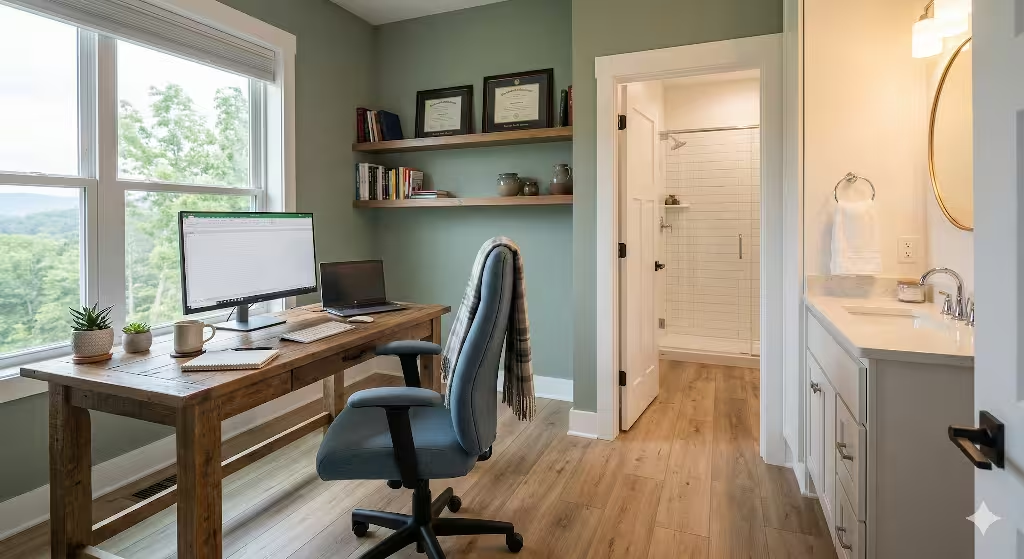
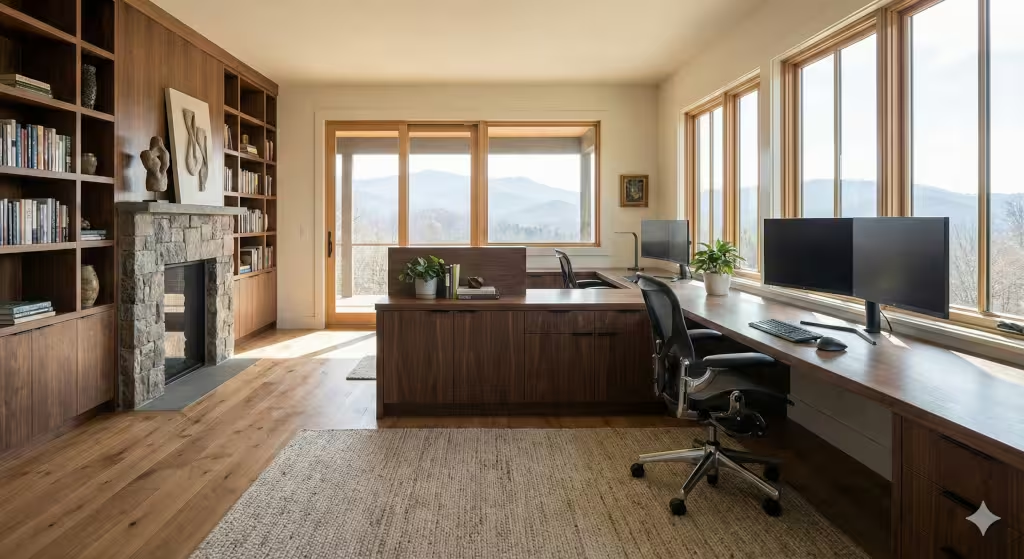
Many people think they can just convert a spare bedroom into an office. That is a fine start, but it often lacks the separation needed for truly leaving work behind. A better architectural choice is the “Retreat” style office. This is a room located in a quiet wing of the house, far away from the kitchen and the television.
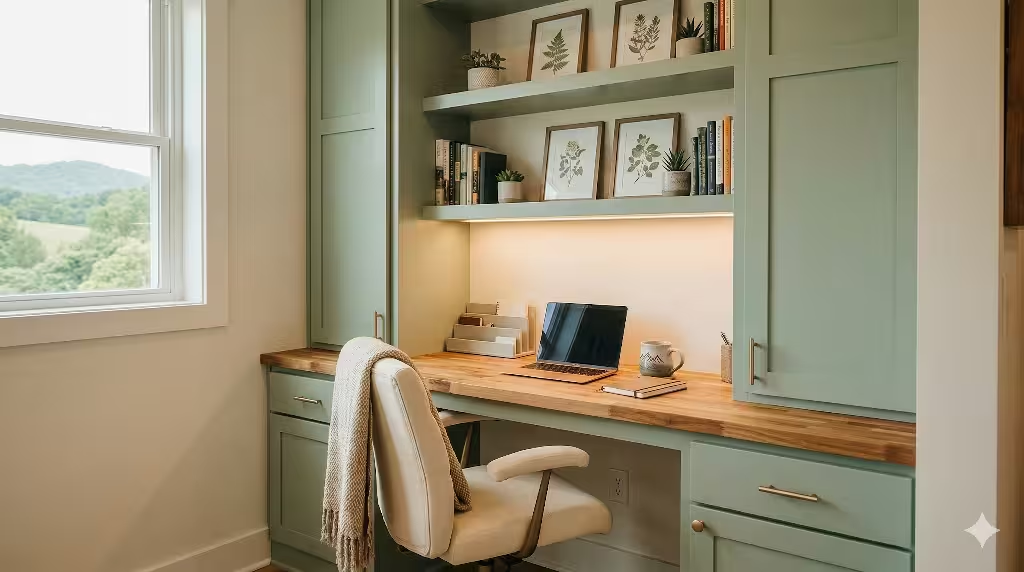
If you have a smaller footprint, we use “Pocket Offices.” These are small, highly efficient spaces that can be completely hidden when not in use. Imagine a small office nook tucked behind a set of beautiful wood panels. When you are working, the panels are open. When you are done, you close the panels, and the office disappears. If you can’t see the desk, you are much more likely to succeed at leaving work behind. It is about out of sight, out of mind.
In our local builds, we often use materials like white oak or local stone to make these panels look like part of the wall. This adds beauty to the home while serving a very important job. It keeps the “office vibe” from leaking into your living room.
Visual and Acoustic Delineation
If you want to be successful at leaving work behind, you have to think about your ears and your eyes. Light and sound carry information. If you can hear the dishwasher running while you are on a conference call, you are distracted. But if you can hear your work phone ringing while you are trying to watch a movie, you are not truly leaving work behind.
We use soundproofing as a major architectural tool. This is not just for recording studios. In a custom home, we put extra insulation in the walls of the office. We use “solid core” doors instead of the hollow ones you find in big-box stores. A solid door can block a huge amount of noise. We also look at the “gap” under the door. Using a drop-seal can make the room almost silent.
Visually, we use things like barn doors or pocket doors. These are great because they don’t take up much room, but they provide a very clear visual signal. When the barn door is shut, the office is gone. You are now in “home mode.” This visual “wall” is a vital part of leaving work behind.
Lighting and Environmental Modes
Lighting is one of the most powerful ways to change how a room feels. Have you ever noticed how a restaurant changes the lights when the sun goes down? They are shifting from “day mode” to “evening mode.” You can do the same thing in your home to help with leaving work behind.
We recommend using smart lighting systems. During the day, your office should have “cool” light. This is a blue-toned light that mimics the sun and keeps you alert. But once you finish your tasks, the rest of your house should have “warm” light. This is an amber-toned light that helps your body produce melatonin so you can sleep.
When you step out of your office and into a home filled with warm, soft light, your brain gets a chemical signal that it is time to relax. This makes the process of leaving work behind feel natural rather than forced. If the whole house has the same bright, fluorescent light, your brain stays in “emergency mode” all night.
Biophilic Integration and Perspective
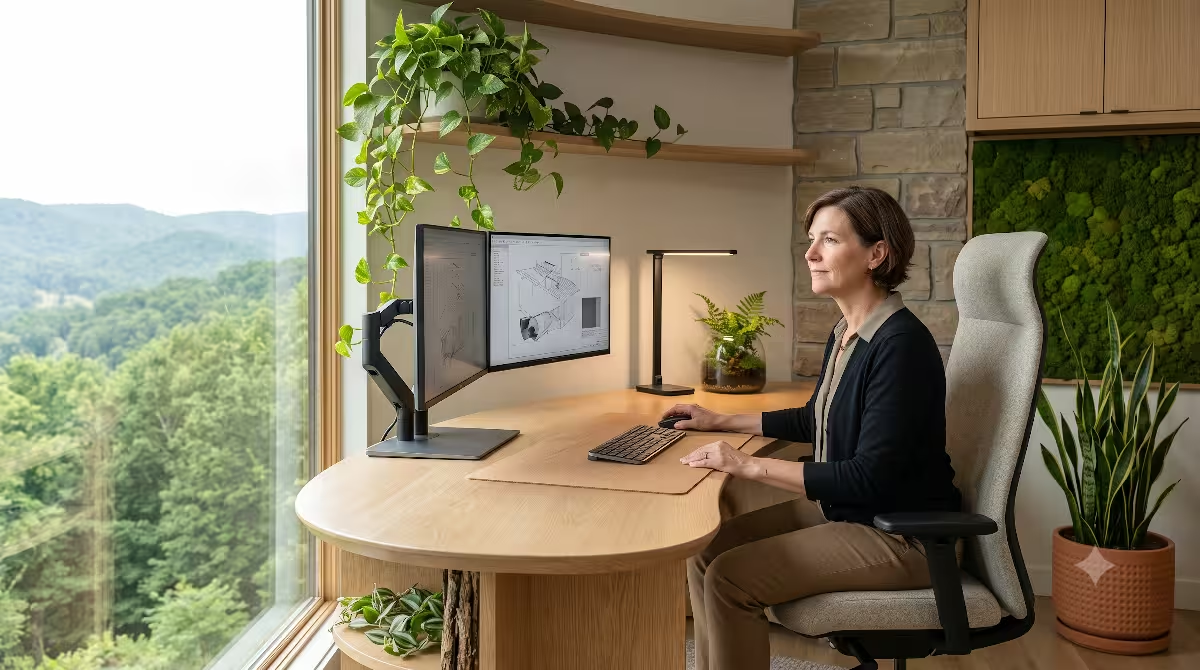
Biophilic design is just a fancy way of saying we bring nature into the home. In the Tri-Cities, we are surrounded by some of the best views in the world. We should use them.
When we design an office, we try to give it a specific view. Maybe the office looks out over a small, private “Zen garden” or a stone wall. This gives you a place to focus. But when you move to the living room, we want the view to be different. Maybe the living room has big windows that look out at the Holston River or the mountains.
This change in perspective helps you with leaving work behind. When your eyes see a different part of the world, your mind starts thinking different thoughts. It is like traveling to a new place. By using different windows for different activities, you create “scenes” in your life that help you separate your job from your joy.
Building for the Tri-Cities Topography
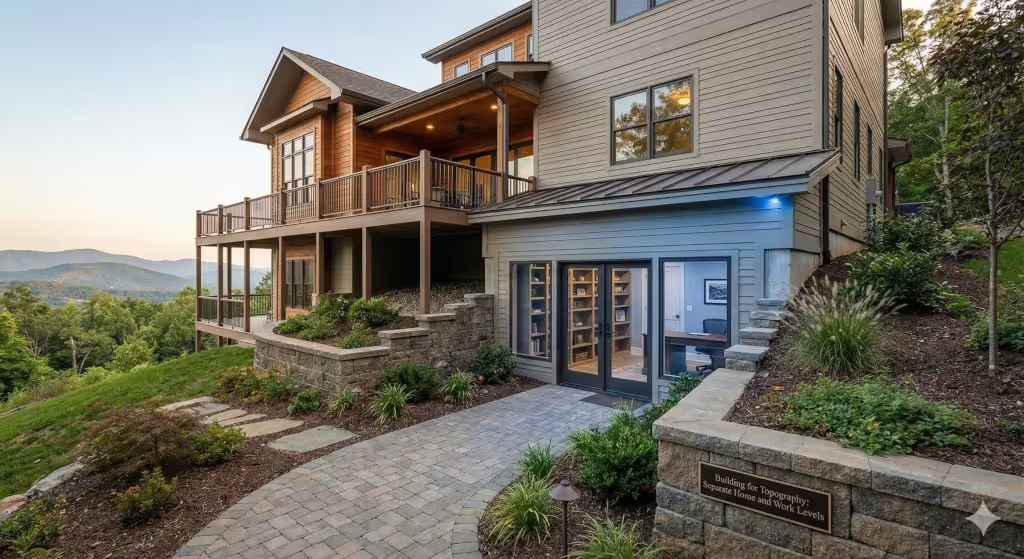
Because we live in East Tennessee, we have lots of hills. A smart builder uses those hills to help you with leaving work behind. One of my favorite designs is the “Walk-Out Basement Office.”
In this setup, the main living areas are on the top floor. You have your kitchen, your bedrooms, and your family room up where the light is bright. The office is located downstairs in the walk-out basement. Because the house is built on a slope, the office still has windows and a door to the backyard.
When you go downstairs to work, you are physically “descending” into your professional zone. When you come back upstairs for dinner, you are rising back into your family life. This physical change in elevation is a fantastic architectural trick for leaving work behind. It makes the two worlds feel miles apart, even though they are in the same house.
Common Questions About Leaving Work Behind
Buyers often wonder, “How do I mentally separate work and home?” My answer is always to look at your environment first. If your environment is messy and blended, your mind will be messy and blended. You need to create a “closing ceremony.” This could be as simple as turning off your office light and closing a heavy door. The architecture provides the stage for this ceremony.
Another question is, “Where should an office be in a new home build?” Well buyers should avoid the “Danger Zones.” The kitchen is a danger zone because it is too loud. The bedroom is a danger zone because it should be for rest. If you work in your bedroom, you will start thinking about emails while you are trying to sleep. This is the opposite of leaving work behind. The best place is a corner of the house that doesn’t have much “traffic.”
Some people ask, “How can I hide my office when I am not working?” This is where custom cabinetry comes in. We can build desks that fold up into the wall, or “cloffices” that look like a normal closet until you open the doors. This is a great way to ensure you are leaving work behind because you can’t see the “clutter” of your job once the doors are shut.
Materials and Transitions
The materials we use under your feet also play a role in leaving work behind. We often use different flooring to mark the boundaries of a workspace. In the office, you might have a low-pile carpet or a sleek tile. This feels professional and “tight.”
When you step out of the office, you might transition to wide-plank hardwood or a plush rug. The change in texture is something your feet notice immediately. It is a subtle cue that tells you that you are now in a different “zone.” These small details are what make a custom home feel special and help you in leaving work behind.
We also think about the air. In a custom build, we can give the office its own ventilation system. This means you can keep the office at a different temperature. It also means the “smell” of the office, which might just be the smell of paper and electronics, doesn’t drift into the kitchen where you are cooking dinner. Keeping the senses separate is the key to leaving work behind.
The Detached Office: The Ultimate Solution
For some people, the only way to truly succeed at leaving work behind is to get out of the house entirely. We call these “backyard studios” or “accessory dwelling units.”
In places like Jonesborough or the outskirts of Johnson City, people have enough land to build a small, separate structure. It doesn’t have to be big. A 10×12 foot room is plenty. This gives you the ultimate physical barrier. You have to put on a coat, walk across the yard, and unlock a door.
When you finish your work and walk back across the lawn to your house, you are leaving work behind in the most literal way possible. You can see your home waiting for you. It looks warm and inviting. By the time you reach the back door, you have already transitioned from “Manager” to “Dad” or “Mom.” This is the gold standard for anyone who struggles with work-life balance.
The Psychology of the “Mudroom” Transition
In the Tri-Cities, mudrooms are very popular because we love the outdoors. But a mudroom can also be a “transition chamber” for work.
If your office is near the back of the house, you can pass through the mudroom on your way to the living area. This gives you a place to “drop” your work bag, your laptop, and your stress. We can build custom lockers or cubbies specifically for work gear.
By having a place where your work items “live,” you ensure they don’t migrate into the rest of the house. If your laptop stays in its locker in the mudroom, you are much more likely to succeed at leaving work behind. It becomes a ritual. You put your tools away, and you enter your home “clean” from the day’s tasks.
Why Precision and Competence Matter in Design
A home shouldn’t just be pretty; it should work for you. When a builder is precise, they think about things like where the outlets go so you don’t have cords trailing across the floor. Cords are visual clutter, and clutter makes it hard to feel like you are leaving work behind.
A competent builder looks at the “flow” of the house. They ask, “How will this person move through their day?” If the path from the office to the kitchen takes you right past the laundry room, you might stop to do a load of clothes. Now you are doing “home work” during “office time.” This blends the two together.
A well-designed home keeps these paths separate. It allows you to focus when you need to and relax when you want to. This is why leaving work behind is an architectural challenge as much as a mental one. You need a space that supports your goals.
Trends in Wellness Architecture for 2025
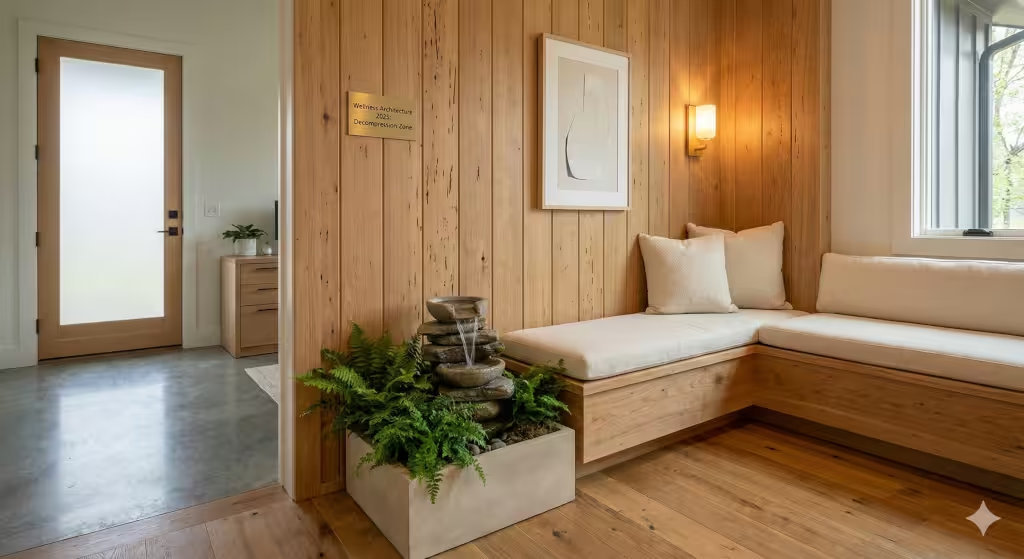
As we look toward the future of building in Tennessee, wellness is at the forefront. People are tired of being stressed. They want homes that act like a “reset button.”
One trend we are seeing is the “Decompression Zone.” This is a small area between the office and the main house. It might have a small bench, a piece of art, or a water feature. It is a place where you sit for just one minute before entering the main house.
This is a very intentional way of leaving work behind. It forces you to pause. In our busy lives, we often rush from one thing to the next without thinking. A decompression zone gives you the space to take a breath. It is a vital part of modern home design for those who value their mental health.
Legal and Development Aspects of Home Offices
When you are building a custom home with a separate office or a detached studio, you have to think about the rules. In the Tri-Cities area, different towns have different “zoning” laws.
For example, if you want to build a detached office in Johnson City, you need to make sure you follow the rules for “accessory structures.” You have to think about how far it is from the property line. You also have to think about the electrical codes.
As a builder with a background in engineering, I make sure all these details are handled. You don’t want to build your dream office only to find out it isn’t “to code.” Having a professional who understands these legal aspects ensures that your journey toward leaving work behind is smooth and stress-free. We handle the paperwork so you can handle your life.
The Importance of Integrity in Building
When I build a home, I do it with integrity. This means using the right materials even in the places you can’t see. It means making sure the soundproofing is actually there, not just promised.
If a builder cuts corners, you will feel it later. You will notice that the “quiet office” isn’t actually quiet. You will notice that the “separate zone” feels connected because of poor air flow.
When you have a home built with integrity, it functions exactly how it was designed to function. It becomes a partner in your quest for leaving work behind. You can trust the walls to hold the sound. You can trust the doors to provide the privacy you need. This trust allows you to relax and enjoy your home.
Networking with the Best
Building a home that helps you with leaving work behind requires a team. It is imperative to work with the best architects, interior designers, and landscape artists in the Tri-Cities.
We talk about things like “spatial planning” and “circadian rhythms.” We work together to make sure the lighting matches the architecture, and the landscape supports the views. This collaborative approach is the only way to get a home that truly works for a modern lifestyle.
If you are thinking about building, you should look for a team that understands these concepts. Don’t just settle for a standard plan. Ask for a home that is customized to your needs. Ask for a design that prioritizes leaving work behind.
Conclusion: Your Home is Your Sanctuary
At the end of the day, your home should be the place where you feel most like yourself. It shouldn’t be a place that reminds you of your to-do list or your boss. By using these architectural tips, you can create a clear boundary between your career and your life.
Whether it is a walk-out basement in Kingsport or a detached studio in Bristol, the goal is the same. You want to be successful at leaving work behind so you can focus on what really matters; your family, your hobbies, and your peace of mind.
With a little bit of planning and a lot of precision, your home can become the perfect tool for a happy, balanced life. Leaving work behind isn’t just a dream; it is something we can build together, one brick at a time.
Summary of Key Entities and Concepts
| Category | Elements for Success |
| Architectural Features | Commute Hallways, Separate Entrances, Pocket Offices, Walk-out Basements. |
| Environmental Controls | Smart Lighting (Circadian), Soundproofing, Independent HVAC. |
| Psychological Cues | Material Transitions, Closing Ceremonies, Visual Barriers (Barn Doors). |
| Local Geography | Johnson City, Kingsport, Bristol, Tri-Cities TN Area. |