People who livie in the Tri-Cities of TN have seen how the air affects everything from the foundation to the roof. Many people move here from Florida thinking they are escaping the wet air. While our mountains offer a break, the reality of summer humidity levels in Tennessee vs Florida is often a surprise.
In this article, we will explain the science of the air. We will look at why some homes feel sticky and others feel crisp. I will share how we build homes to stand up to the local weather. My goal is to help you understand what to expect when you build a custom home in our beautiful corner of the world. We will cover technical facts, building trends, and the legal side of land development. Let’s look at how humidity shapes the way we live and build.
The Science of Sticky Air: Relative Humidity vs. Dew Point
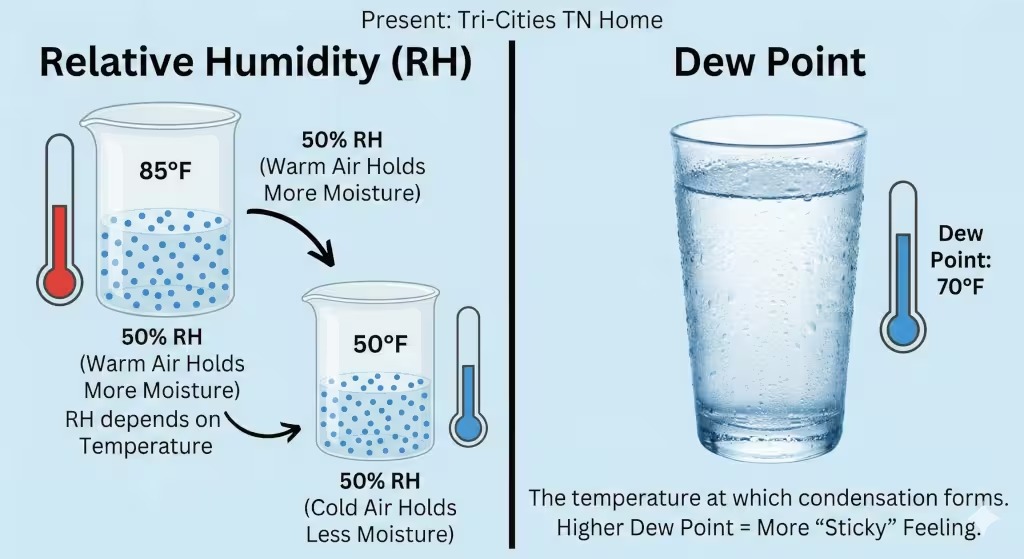
To understand summer humidity levels in Tennessee vs Florida, we have to talk about how we measure moisture. Most people look at the relative humidity. This is the percentage of water the air can hold at a certain temperature. However, this number can be tricky. Warm air can hold a lot more water than cold air. This means 70 percent humidity at 90 degrees feels much wetter than 70 percent humidity at 60 degrees.
It is helpful to look at the dew point. The dew point is the temperature where the air becomes saturated. If the dew point is 70 degrees, the air is holding a lot of water. You will feel sticky the moment you walk outside. In Florida, the dew point stays very high all summer long. In the Tri-Cities area of Tennessee, our dew point can also get high, but it often drops at night. This is a big difference for your home.
When we talk about humidity, we are talking about water vapor. This vapor wants to move from wet areas to dry areas. In the summer, the outside air is wet. The inside of your air-conditioned home is dry. This creates a force called vapor pressure. This pressure tries to push moisture through your walls. If your home is not built right, this moisture can get trapped. This is where the real trouble starts for a custom home buyer.
Comparing Summer Humidity Levels in Tennessee vs Florida
When we look at the data for summer humidity levels in Tennessee vs Florida, we see two different stories. Florida is like a long-distance run. The moisture is constant. It stays high from May until October. The average relative humidity in Florida is around 74 percent. Because it is surrounded by water, the air never really dries out. The dew point in places like Orlando or Miami often stays above 72 degrees for weeks.
Tennessee is more like a series of sprints. We have periods of very high humidity. In July and August, the Tennessee Valley can feel just as thick as the Gulf Coast. Our average relative humidity is around 69 percent. However, we have a secret weapon. Because we have higher elevations, our temperatures drop more at night. This cooling helps the air shed some of its moisture.
In the Tri-Cities, we might see a day where the humidity hits 90 percent in the morning. By the afternoon, the sun heats things up and the percentage drops. But the total amount of water in the air stays high. This is why your air conditioner has to work so hard. It is not just cooling the air. It is pulling gallons of water out of the sky. In Florida, the system never gets a break. In Tennessee, we get occasional dry fronts that give our homes a chance to dry out.
Why Mountains and Oceans Matter
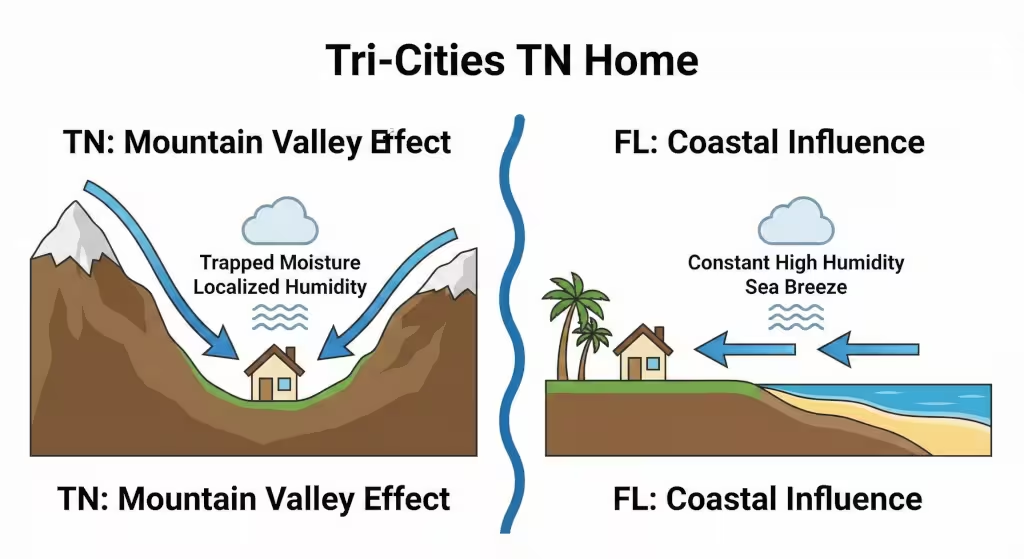
The geography of where you live changes the humidity you feel. Florida is flat and close to the ocean. The sea breeze brings in wet air every single day. There are no mountains to block the moisture. This creates a very stable and very wet environment. This is why Florida homes often use stucco or concrete. These materials do not mind the wet air as much as wood does.
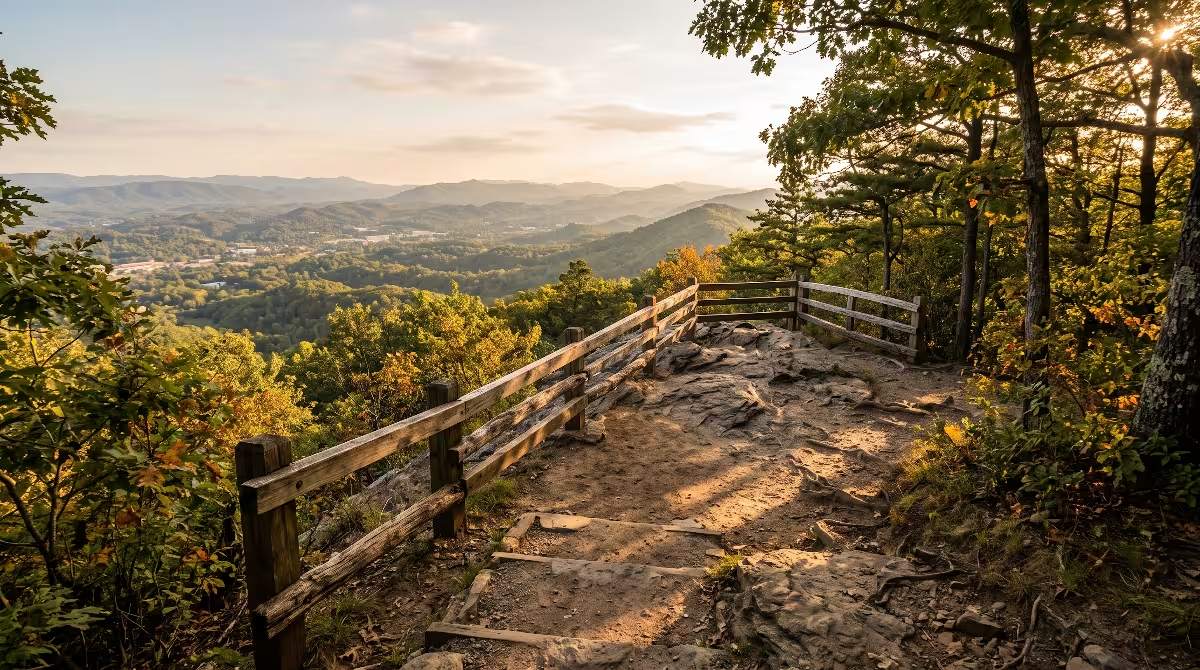
In the Tri-Cities, we are shaped by the Appalachian Mountains. These mountains act like a giant wall. They can trap moisture in the valleys, creating a local humidity effect. If you are building in a low spot near a creek in Johnson City, you will feel more moisture than someone on a ridge in Kingsport. We call these microclimates. When looking at a property, it is advisable to look at the specific plot of land. Is there good airflow? Does the morning sun help dry the dew?
The mountains also create something called orographic lift. As air moves up the mountains, it cools and drops its water as rain. This means the windward side of a mountain might be very wet, while the leeward side is dryer. When we plan a development, we look at these trends. We want to make sure your home is not sitting in a bowl of wet air. Understanding these local patterns is a key part of looking at your custom home location.
Building a Home That Lasts in the Humidity
Building a custom home in a wet climate requires precision. We cannot just use standard methods and hope for the best. We have to think about the building envelope. This is the “skin” of your house. It includes the walls, the roof, and the foundation. Its job is to keep the humidity outside where it belongs.
We start with the framing. In Tennessee, we use a lot of wood. Wood is like a sponge. It grows when it gets wet and shrinks when it gets dry. If we build a house with wet wood, and then turn on the air conditioner, the wood will shrink. This can cause cracks in your drywall or gaps in your floors. We use kiln-dried lumber and check the moisture content with a meter. We want the wood to be stable before we finish the house.
The vapor barrier is another critical piece. This is a special layer that stops water vapor from moving through the walls. In the South, we put the vapor barrier on the outside of the insulation. We want to stop the wet summer air before it reaches the cold interior walls. If wet air hits a cold wall, it turns into liquid water. This is called condensation. If this happens inside your walls, you will have a mold problem. We use high-quality house wraps that allow the house to “breathe” while blocking liquid water.
The Floors and Walls: Choosing the Right Materials
When people think about humidity, they often think about their comfort. But as a builder, I think about your hardwood floors. Solid hardwood is beautiful, but it is very sensitive to moisture. In a climate with high humidity, solid wood can “cup.”4 This is when the edges of the boards lift up. It happens because the bottom of the board is wetter than the top.
A lot of builders in Tennessee, recommend engineered hardwood for custom homes. Engineered wood is made of layers. These layers are glued together in different directions. This makes the wood much more stable. It does not expand and contract as much as solid wood. It can handle the summer humidity levels in Tennessee vs Florida much better. If you must have solid wood, we have to be very careful. We let the wood sit in the house for weeks to get used to the air before we nail it down.
For the walls, we look at paint and drywall. In very wet areas, we use mold-resistant drywall. This is especially important in basements or bathrooms. We also use high-quality paints that act as a final barrier. On the exterior, we choose materials like fiber cement siding. This material looks like wood but is made of cement and sand. It does not rot, and it does not move when the humidity changes. It is a great choice for the Tri-Cities weather.
Keeping the Air Dry Indoors: The HVAC System
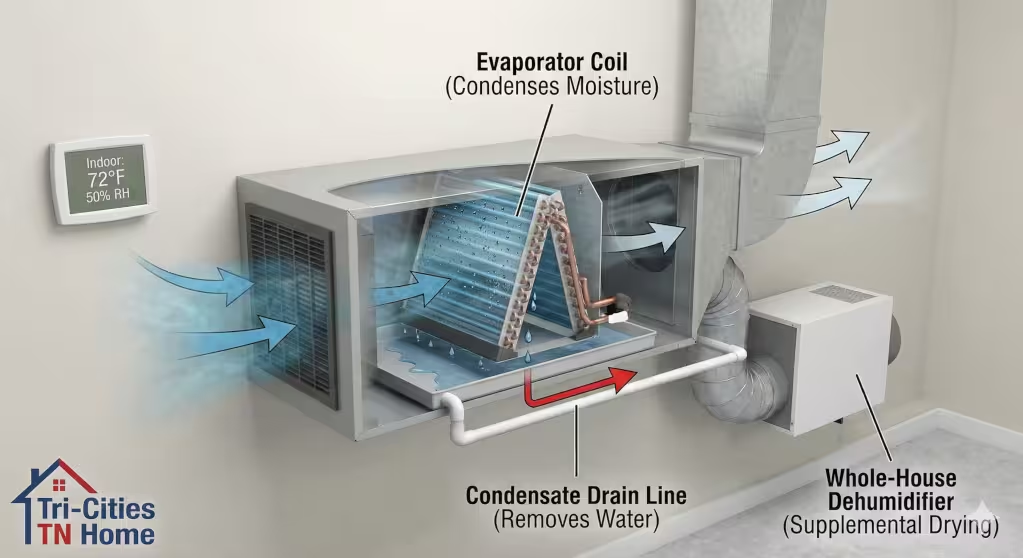
The most important tool for fighting humidity is your HVAC system. HVAC stands for heating, ventilation, and air conditioning. Many people think the “AC” is just for making the house cold. But in Tennessee, the “D” for dehumidification is just as important. Your air conditioner has a coil that gets very cold. As warm air passes over it, water condenses on the coil and drains away.
In a custom home, we have to size the system perfectly. If the system is too big, it will cool the house too fast. It will turn off before it has a chance to pull the water out of the air. This leaves you with a house that is cold but “clammy.” We use engineering formulas to make sure the system runs long enough to dry the air. This makes the home much more comfortable.
I also recommend whole-house dehumidifiers for many of my clients. This is a separate unit that works with your HVAC. It can run even when the house is at the right temperature. This is great for those spring and fall days where it is not hot, but it is very humid. It keeps your indoor humidity at the perfect level, which is between 30 and 50 percent. This protects your wood floors and keeps dust mites and mold away.
Common Questions About Southern Summers
Many people who move to the Tri-Cities have questions about how our air compares to other places. Here are some of the most common questions.
Is Tennessee as humid as Florida in the summer?
In the peak of July, it can feel very similar. However, Florida has a much longer season. In Tennessee, we might have two months of heavy humidity. Florida has five or six. Also, our nights are usually cooler and dryer. This gives your body and your home a break that you don’t get in the deep South.
Which part of Tennessee has the lowest humidity?
Generally, the higher you go, the dryer the air feels. The Cumberland Plateau and the higher ridges of East Tennessee often feel better than the low-lying parts of Middle or West Tennessee. In the Tri-Cities, being near the mountains helps. The air moves more, and the temperatures are slightly lower than in Memphis or Nashville.
Does high humidity affect health?
Yes, it can. High moisture in the air allows mold and dust mites to grow. These can cause allergies and breathing problems.7 Keeping your indoor air dry is one of the best things you can do for your health. A well-built custom home is a healthy home. It keeps the pollutants out and the air fresh.
What is the best way to monitor humidity at home?
We suggest every homeowner buy a simple tool called a hygrometer. It is like a thermometer, but it measures moisture. You can put one in your living room and one in your basement. If the reading stays above 60 percent, you need to check your HVAC or look for leaks. It is a cheap way to protect your big investment.
The Tri-Cities Advantage: Why We Build Here
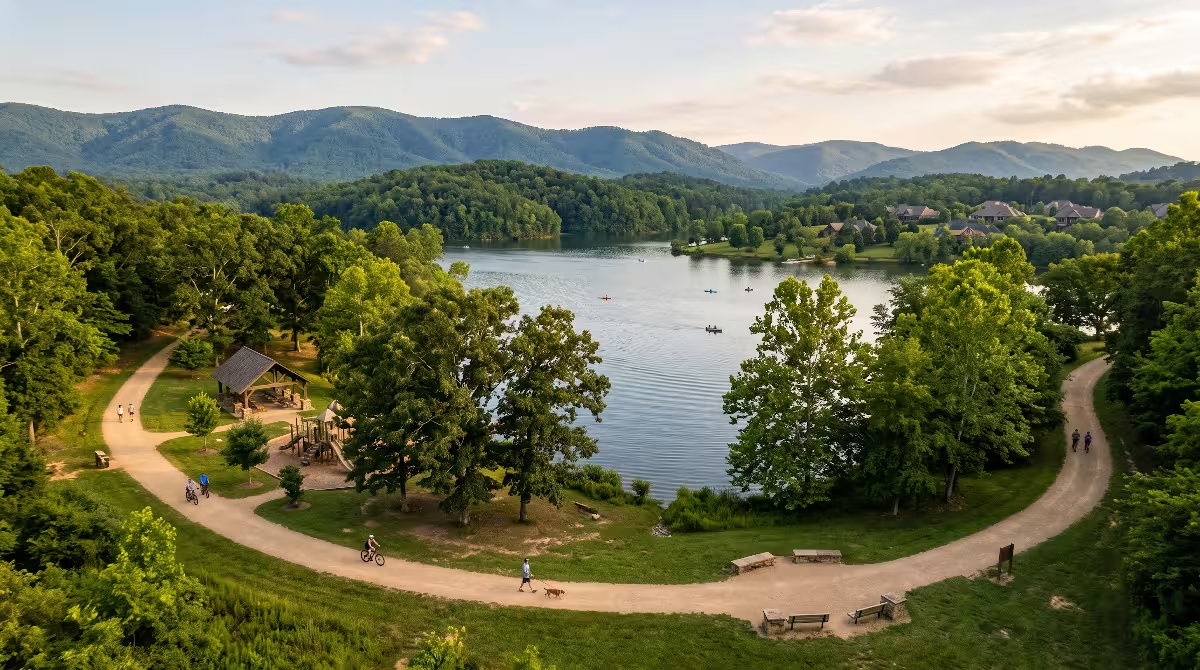
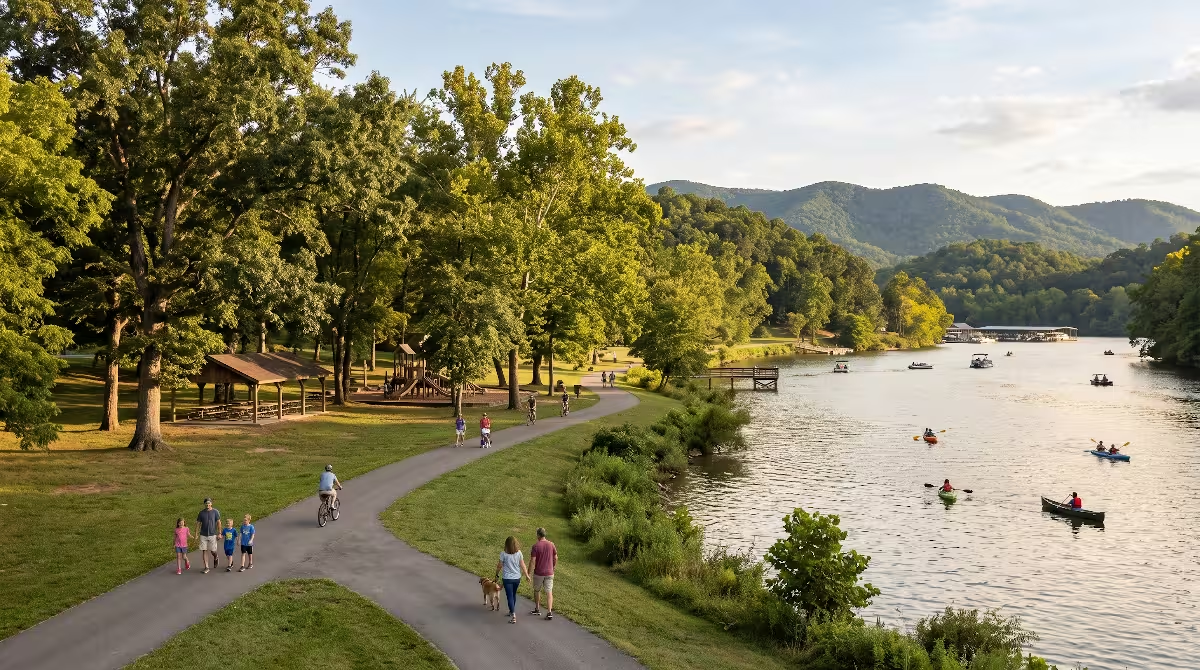
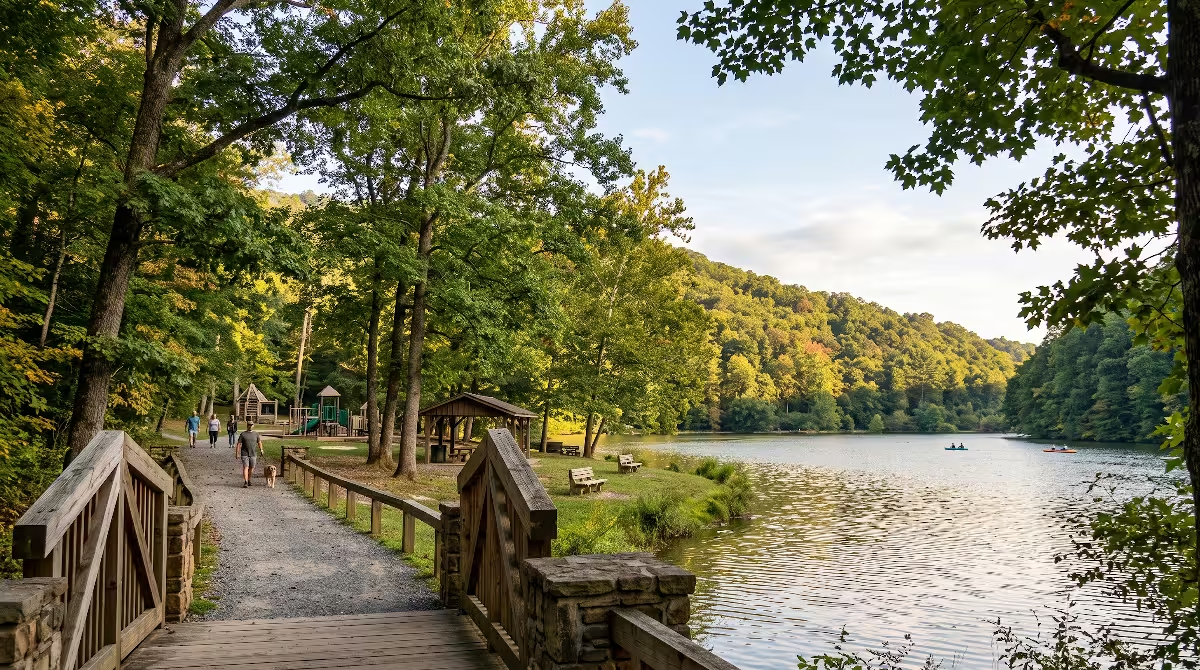
Even with the humidity, the Tri-Cities area is a wonderful place to build a home. We have a balance that is hard to find elsewhere. We get four distinct seasons. Our spring is full of flowers, and our fall is famous for the changing leaves. The summer humidity is a small price to pay for the beauty of the mountains.
Here in east Tennessee, we have rolling hills and deep forests. This allows us to create homes that are tucked into nature. We can use the trees to provide shade, which helps lower your cooling costs. We can design porches that catch the mountain breeze. In Florida, you are often fighting the sun and the salt.8 Here, we are working with a landscape that wants to be lived in.
By understanding the summer humidity levels in Tennessee vs Florida, we can build homes that stay comfortable and strong for generations.
Legal Aspects and Development Trends
When we look at developing land in the Tri-Cities, we have to think about water. Humidity is just water in the air, but it also falls as rain. In Tennessee, we have rules about how we handle water on a building site. We have to make sure that the water from your roof and driveway doesn’t cause problems for your neighbors. This is part of the legal side of development.
We also see trends in how people are building. Many buyers now want “smart homes” that can monitor the air. They want systems that tell them if the basement is getting too damp or if the air filter needs changing. We are also seeing a move toward more energy-efficient homes. A home that is “tight” and well-insulated is easier to keep dry. It costs less to run and is better for the environment.
Spray foam can change the game by sealing every crack and keeping the humid air out. It is more expensive than old-fashioned fiberglass, but it is much better at controlling moisture. These are the kinds of details that a precision builder focuses on.
Understanding Equilibrium Moisture Content
One technical term we want you to know is Equilibrium Moisture Content, or EMC. This is the point where wood stops gaining or losing moisture. It has reached a balance with the air around it. Every geographic area has a different EMC. In Florida, the EMC is very high because the air is always wet. In a desert, it is very low.
In Tennessee, our EMC changes with the seasons. This is why wood moves. In the summer, the EMC goes up, and the wood swells.10 In the winter, when you turn on the heater, the air gets very dry. The EMC goes down, and the wood shrinks. This is why you might see small gaps in your wood floor in January that disappear in July.
When building a house, we don’t fight nature; we work with it. We use gaps called expansion joints in large areas of wood or tile. We choose finishes that can stretch. We make sure your kitchen cabinets have enough room to move so the doors don’t stick. Precision in building means knowing how much a piece of wood will move before you ever pick up a hammer.
Foundation and Crawl Space: The Hidden Humidity
The most common place for humidity problems is under your house. Most homes in the Tri-Cities are built on a crawl space or a basement. The ground is naturally wet. If you have an open crawl space, that moisture will rise up into your home. It can rot your floor joists and make your house smell musty.
In the old days, we thought we should vent crawl spaces to let them dry out. But we learned that in a humid summer, those vents actually let wet air in. Today, the best practice is called encapsulation. We wrap the entire crawl space in a heavy plastic liner. We seal the vents and add a small dehumidifier. This creates a clean, dry space under your home. It keeps the humidity from ever entering your living area.
This is a big part of the “best home building experience.” It might not be as exciting as picking out granite counters, but it is much more important for the health of your home. If you are building a custom home, insist on a sealed crawl space. It will save you thousands of dollars in repairs down the road. It also makes your floors feel warmer in the winter.
The Importance of Proper Grading
Humidity isn’t just about the air; it starts on the ground. If water pools around your foundation, it will eventually turn into vapor and rise. Proper grading is the process of sloping the land away from the house. It is one of the first things we do on a job site. We want every drop of rain to move quickly away from the structure.
In our area, we have a lot of clay in the soil. Clay holds onto water like a sponge. This means we have to be extra careful with our drainage. We use gravel and perforated pipes, called French drains, to move water away. We also make sure the gutters and downspouts are working perfectly. If a downspout dumps water right next to your foundation, your basement will be humid no matter how big your AC is.
Many homes have mold problems that were caused by bad grading. It is a simple thing to get right, but it requires competence and precision. A dry foundation is the start of a great home.
Interior Design and Humidity
The way you decorate your home can also help or hurt with humidity. Some materials trap moisture, while others let it pass through. For example, heavy carpets can hold a lot of dust and moisture. In a very humid climate, I often suggest hard surfaces like tile or hardwood. They are easier to keep clean and dry.
Even your choice of furniture matters. Natural fibers like cotton or wool can breathe, but they also absorb moisture. Synthetic materials might stay dryer but can feel “plastic” against your skin. In the Tri-Cities, we have the luxury of using a wide range of materials because we can control our indoor air so well. But it is still something to think about.
We always suggest using exhaust fans in the kitchen and bathrooms. These fans should always vent to the outside, never into the attic. When you boil water for pasta or take a hot shower, you are adding a lot of humidity to the air. You want to get that wet air out of the house as fast as possible. It is a small habit that makes a big difference in how your home feels.
Living with the Seasons in Tennessee
One of the joys of living in Johnson City or Kingsport is the variety of the weather. We don’t have the constant “sun and steam” of Florida. We have days in the spring where the air is so clear you can see for miles. We have winter mornings with a crisp, dry frost. This variety is what makes our area so special.
The humidity of summer is just a part of the cycle. It brings the deep green to our forests and the afternoon thunderstorms that cool things down. Because we have these seasons, our homes have to be versatile. They have to keep us warm in the winter and dry in the summer. This is why I love being a home building expert here. Every house is a puzzle that has to work in every kind of weather.
When you move here, you will learn the rhythm of the air. You will know when to open the windows to let in the mountain air and when to close them and turn on the dehumidifier. You will see how the dew sits on the grass in the morning and how the fog rolls off the Holston River. It is a beautiful way to live.
Final Thoughts on Humidity and Home Building
In the end, the summer humidity levels in Tennessee vs Florida are a factor we must respect. Florida is a land of constant moisture, requiring specific building styles. Tennessee is a land of shifting air, requiring a more flexible and precise approach. Both can be great places to live if the home is built for the environment.
In the Tri-Cities, we have the advantage of beautiful terrain and a climate that gives us a break from the heat. By using modern building science, we can create homes that are dry, healthy, and comfortable. We can protect our beautiful wood floors and keep our energy bills low. It all comes down to planning, precision, and a deep understanding of the local air.
We hope this guide has helped you understand what goes into building a home that stands up to the southern summer. Whether you are just starting to look at land or you are ready to pick out your finishes, remember that the air around you is just as important as the ground beneath you.