

When “Life Proof” Meets Real Life
Home builders, from the riverbanks of Kingsport to the rolling hills of Johnson City, have seen a lot of trends come and go. We have seen shag carpet rise and fall. We have seen parquet wood make a brief, confusing return. But the one thing that never changes is the need for a home to actually work for the people living in it.
A lot of builders look at a house as a system. It is a machine for living. However, they also know that a house is where life happens. And life, frankly, is messy.
If you have toddlers, you know the sound of a plastic toy truck being ground into the floorboards. If you have pets, you know the sound of claws scrambling for traction when the doorbell rings. Here in our corner of Tennessee, we have an extra challenge that folks in other parts of the country might not understand. We have red clay mud. We have humidity that swings wildly from July to January. We have an outdoor lifestyle that tracks grit, gravel, and debris right into our foyers.
When a prospective buyer asks to build a custom home, or when advising a family on a renovation, the conversation eventually turns to the floors. They want something beautiful. They want that farmhouse look or that modern sleekness. But deep down, what they really need is the best scratch resistant flooring for toddlers and pets. They need a floor that can survive the chaos of raising a family without looking like a disaster zone in two years.
This problem is approached not just with an eye for design, but with a dose of realism. We need to look at tensile strength. We need to look at abrasion coefficients. We need to understand moisture resistance. Our goal is to help you find that sweet spot where durability meets beauty. We want to help you find a floor that stands up to the “Toddler and Terrier” stress test while still adding value to your home.
Let’s look into the details and find the right solution for your family.
The Science of Durability: Terms You Need to Know
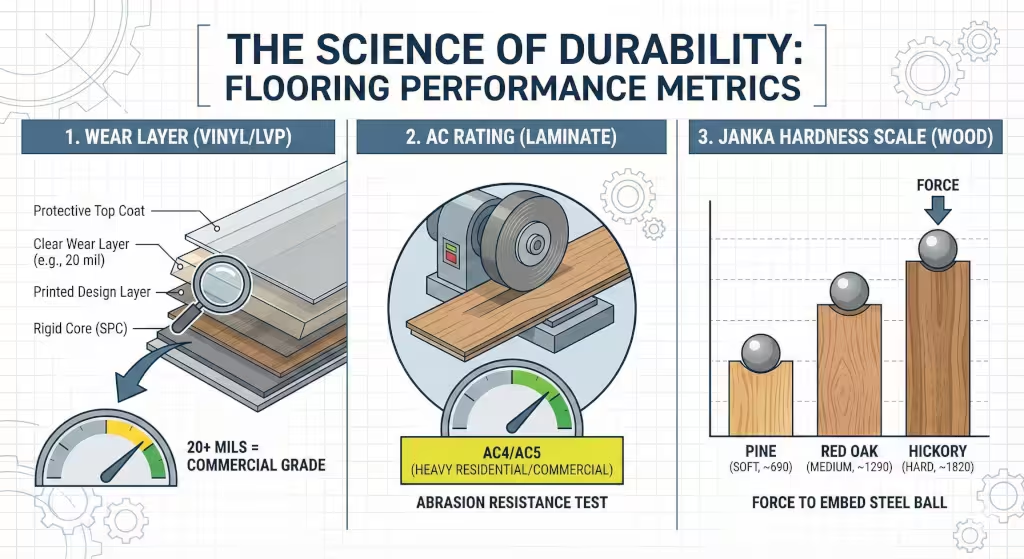
Before we start picking out colors and patterns, we have to speak the same language. In the building industry, marketing terms often get thrown around to confuse buyers. You might see boxes labeled “durable” or “tough,” but those words do not mean much without the data to back them up. To find true scratch resistant flooring, you need to understand three specific measurements: the Wear Layer, the AC Rating, and the Janka Hardness Scale.
The Wear Layer (Vinyl and LVP)
When we talk about Luxury Vinyl Plank (LVP), which is incredibly popular right now, the most important spec is the wear layer. This is the clear, protective coating on top of the printed design. It is measured in “mils.” A mil is one-thousandth of an inch.
Many box stores sell vinyl flooring with a 6-mil or 12-mil wear layer. In my professional opinion, those are not sufficient for a house with active kids or dogs. A 6-mil layer might work in a guest closet, but in a hallway with a Labrador Retriever, it will show wear very quickly.
For a family home in the Tri-Cities, it is generally recommended to have a minimum of a 20-mil wear layer. This is often considered “commercial grade.” If you want the best scratch resistant flooring performance, look for products that go even higher, up to 30 or 40 mils. The thicker that clear layer is, the longer it will take for scratches to penetrate down to the color layer.
AC Rating (Laminate)
If you are looking at laminate flooring, you won’t see mils. You will see an AC Rating. This stands for Abrasion Class. It is a standardized test where they literally rub the flooring with abrasive sandpaper machines until it fails.
The scale goes from AC1 to AC5.
AC1 and AC2: These are for light use, like bedrooms. Avoid these for main living areas.
AC3: This is the standard for residential use. It is okay, but it might not hold up to heavy pet traffic.
AC4 and AC5: These are rated for commercial use. An AC4 rated laminate is incredibly tough. If you have big dogs and active toddlers, an AC4 rating is a great target for finding scratch resistant flooring that lasts.
Janka Hardness Scale (Wood)
Here at Tri-Cities TN Home we love real wood. There is nothing like the feel of solid oak or walnut. But wood is a natural material, and it obeys the laws of physics. We measure the hardness of wood using the Janka Hardness Scale. This test measures the force required to embed a small steel ball halfway into the wood.
If you are dead set on real hardwood, you have to choose a species with a high Janka score.
Pine: Very soft. It will dent if you look at it wrong.
Red Oak: The industry standard. It is decently hard (around 1290 on the scale).
Hickory: This is a favorite for Tennessee homes. It scores around 1820. It is much harder than oak and hides scratches well due to its grain.
Understanding these numbers is the first step in filtering out the cheap stuff from the high-quality scratch resistant flooring that will actually serve your needs.
Top Contender 1: Luxury Vinyl Plank (LVP)
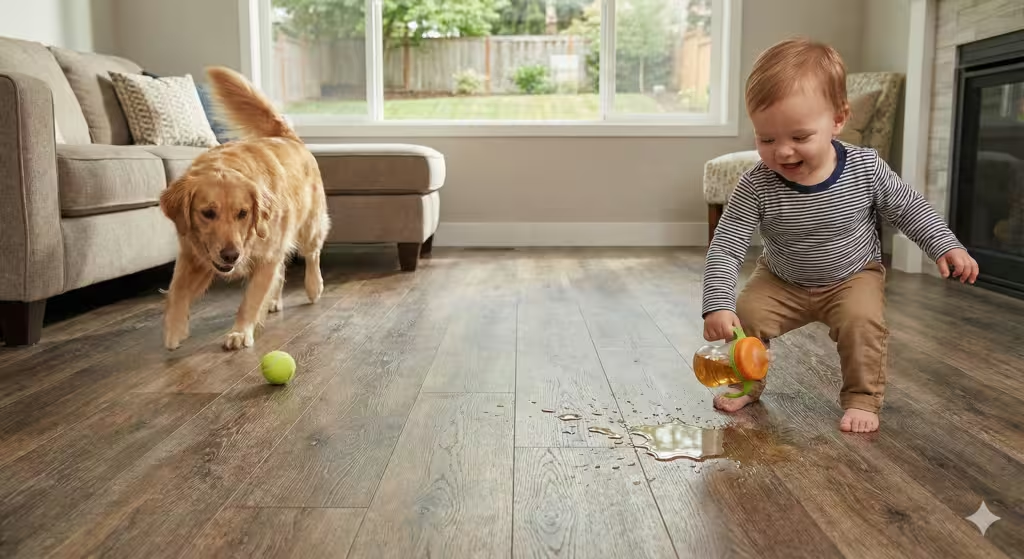
Currently, a lot of customers are choosing Luxury Vinyl Plank, specifically Rigid Core or SPC (Stone Plastic Composite). In the battle for the title of best scratch resistant flooring, LVP is currently the heavyweight champion.
Why It Wins
LVP has taken over the market because it solves the two biggest problems for families: water and scratches. Toddlers spill juice. Puppies have accidents. LVP is 100% waterproof. You can let a puddle of water sit on it for hours, and it will not swell or buckle.
But beyond water, the scratch resistance on high-end LVP is phenomenal. This goes back to that wear layer we discussed. A 20-mil wear layer on an SPC vinyl plank is incredibly tough. It resists the white scratch marks that you often see on older wood floors.
Technical Specs
The “Rigid Core” or SPC aspect is vital. Older vinyl was soft. If you dropped a heavy can of beans, it would dent. SPC has a core made of limestone and plastic. It is dense and hard, almost like tile, but with a vinyl top. This density prevents heavy furniture or dropped toys from leaving permanent indentations.
Also, many LVP options come with a built-in texture. From an engineering standpoint, friction is important. You do not want a floor that is basically an ice rink for your socks. A textured surface provides grip for toddler feet and dog paws, and that texture also helps hide any micro-scratches that might occur over time.
Aesthetic Versatility
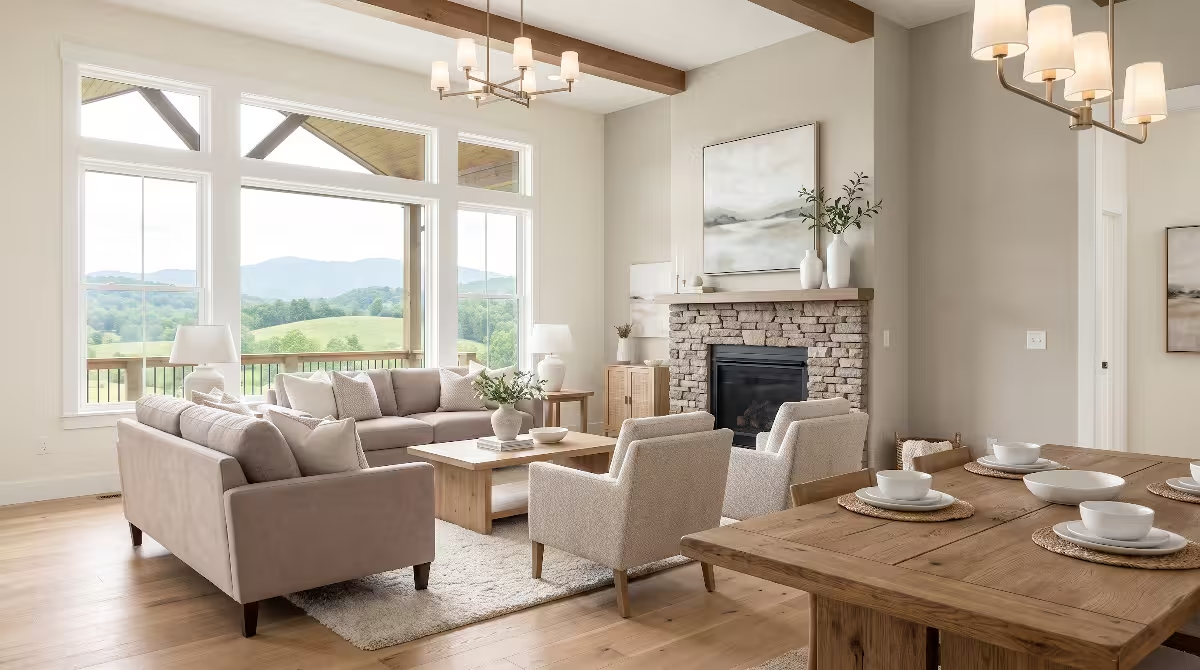
One reason we love using this in custom homes in Johnson City is that the visuals have gotten so good. Ten years ago, vinyl looked fake. Today, high-quality LVP looks exactly like White Oak, Hickory, or Walnut. We can achieve that high-end, rustic Tennessee aesthetic without the worry. You get the warmth of wood visuals with the armor of plastic.
Maintenance
Cleaning LVP is simple. It handles our local red clay mud very well. You can mop it without worry. It withstands standard cleaners better than wood, which requires special soaps. For a busy parent, low maintenance is just as important as durability.
Top Contender 2: Porcelain Tile
If we are talking strictly about physics and material hardness, nothing beats stone or fired clay. Porcelain tile is arguably the most scratch resistant flooring material in existence.
The “Invincible” Option
Porcelain is fired at extremely high temperatures. This process vitrifies the clay, turning it into a glass-like substance that is harder than granite. A dog’s claws cannot scratch porcelain. A toddler dragging a metal truck cannot scratch porcelain. You could practically drive a car onto it.
Porcelain vs. Ceramic
It is important to distinguish between porcelain and regular ceramic. Porcelain is denser and absorbs less water. This is crucial if you are tiling a sunroom or an entry that might get very cold in the winter. Ceramic is more porous and can crack if it freezes or if something heavy is dropped on it. Porcelain is the superior choice for durability.
The Downside
So, why doesn’t everyone use tile? It comes down to comfort. Tile is hard. If a toddler falls on tile, it hurts. If you drop a glass on tile, it shatters. It is also cold. In our Tennessee winters, a tile floor can be chilly on bare feet.
Mitigation
If you choose tile for its superior scratch resistant flooring qualities, I recommend using large area rugs to soften the room. We also install a lot of radiant floor heating systems under tile in bathrooms and kitchens. This adds a level of luxury that offsets the cold nature of the material.
Top Contender 3: Rigid Core Hybrid / Waterproof Laminate
Laminate flooring has made a massive comeback in recent years. For a long time, laminate was seen as a cheap, noisy option that would bubble up if it got wet. That has changed.
The Comeback Kid
Modern “Waterproof Laminate” or “Hybrid” flooring is a serious competitor. In fact, when it comes to pure abrasion resistance, high-end laminate can actually be more scratch resistant than vinyl.
The top layer of laminate is made with aluminum oxide. This is the same mineral used in sandpaper. It creates an incredibly hard surface. While vinyl is tough, plastic can still be gouged by a sharp enough object. The aluminum oxide layer on laminate is much harder to gouge.
Waterproof Technology
The old weakness of laminate was water. If water got into the seams, the fiberboard core would swell. New technology has solved this. Manufacturers now coat the locking mechanisms with water-repellent sealants, and they use denser cores. This means you have a window of time, sometimes 24 to 72 hours, to clean up spills before any damage occurs.
Pros and Cons vs. LVP
So, which is the better scratch resistant flooring? If your main concern is big dogs with sharp claws running down the hall, laminate might actually be slightly better at resisting those surface scratches. However, if your main concern is potty training accidents or moisture from the bathroom, LVP is still the safer bet because it is waterproof by nature, not just by treatment.
Flooring Types to Approach with Caution
For some flooring options, we have to be honest about materials that might not fit the “toddler and pet” lifestyle, even if they are popular.
Solid Hardwood
We love solid hardwood. It adds value to a home, and in our area, a solid Oak floor is a classic. But, it is not the most scratch resistant flooring. It will scratch. It will dent.
If you choose wood, you have to accept the “patina.” You have to accept that over time, the floor will tell the story of your life, dents and all. If you are a perfectionist who hates seeing scratches, solid hardwood might drive you crazy.
Carpet
Carpet is comfortable, but for pets and toddlers, it is a hygiene challenge. It traps dander, dust mites, and spills. It is not scratch resistant because it doesn’t scratch, it tears, stains, and holds odors. If you must have carpet, keep it in the bedrooms and use high-performance nylon fibers.
Bamboo
There is a myth that bamboo is super strong. This is only half true. Traditional bamboo is actually a grass, and it can be very soft and dent easily. However, “Strand Woven” bamboo is very hard. It is made by shredding the bamboo and compressing it with resin. If you want bamboo, you must verify it is Strand Woven. Otherwise, it will not perform well as scratch resistant flooring.
The Tri-Cities Context: Mud, Hills, and Humidity
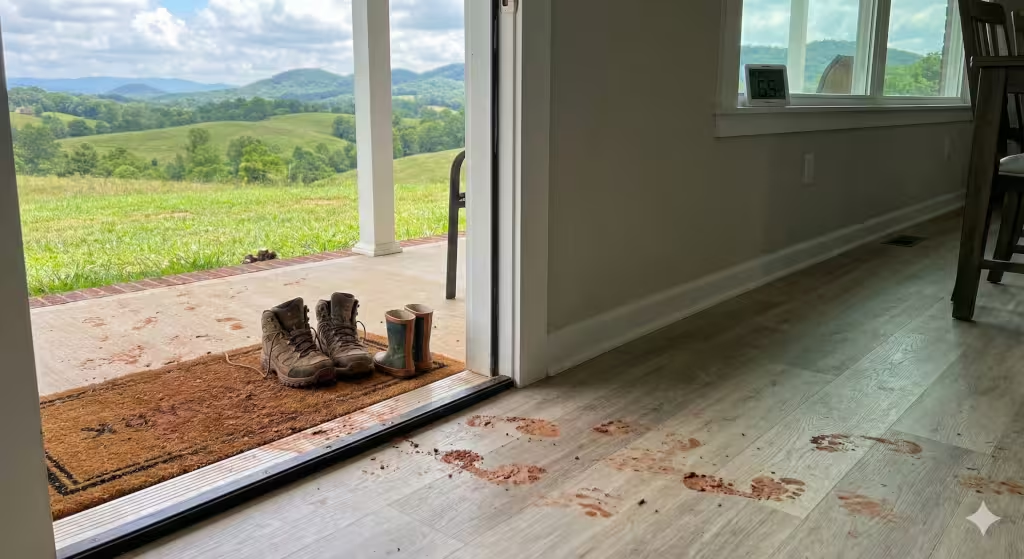
We have to talk about where we live. Building a house in Arizona is different than building one in Tennessee. Our environment plays a huge role in how your floor performs.
The Red Clay Factor
Anyone who has tried to garden in Kingsport or Johnson City knows about our soil. It is heavy, sticky red clay. When this clay dries, it turns into a fine, abrasive grit. If this grit gets tracked onto your flooring, it acts like sandpaper.
Every time you walk across your floor with red clay dust on your shoes, you are grinding that grit into the finish. This is the number one enemy of any scratch resistant flooring. It dulls the shine and creates traffic patterns.
Humidity Control
We also have high humidity in the summer and dry air in the winter. Wood is hygroscopic, it absorbs and releases moisture. This causes it to swell and shrink. If you install solid wood or even some laminates without letting them “acclimate” to the house’s temperature first, you will get gaps between the boards in the winter or buckling in the summer.
LVP is more stable, which makes it a great choice for our climate. It doesn’t react to humidity changes as drastically as wood does.
Entrance Matting
Because of our red clay and gravel driveways, the best thing you can do for your floors is to stop the dirt at the door. The solution? Invest in high-quality walk-off mats. Put a coarse mat outside to scrape the mud, and a softer mat inside to catch the dust. This simple step will double the life of your scratch resistant flooring.
Maintenance Tips for Longevity
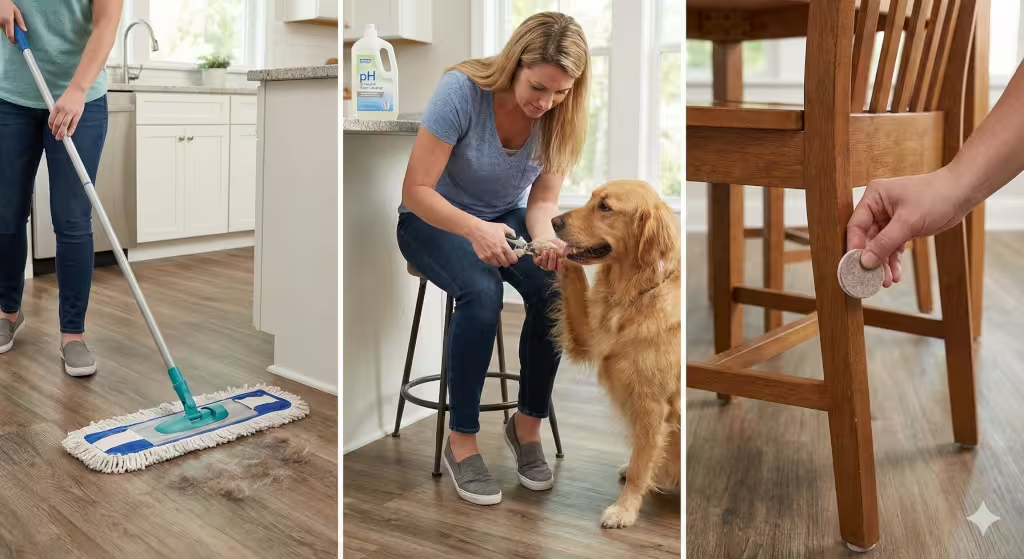
Even the best scratch resistant flooring needs care. You cannot install it and forget it. Here is how to keep those floors looking new.
Routine Care
Sweep or vacuum daily. I know, that sounds like a lot. But remember the red clay? You need to get that grit off the floor. Do not use a vacuum with a “beater bar” (the spinning brush roll) on hard surfaces, as the bristles can actually cause scratches over time. Use a vacuum meant for hard floors or a simple dust mop.
The Chemistry of Cleaning
Use a pH-neutral cleaner on your flooring. Avoid harsh chemicals like bleach or ammonia, and never use wax or oil soap on vinyl or laminate. These products leave a residue that attracts more dirt. For LVP, warm water and a tiny bit of dish soap often work wonders, or a dedicated vinyl floor cleaner.
Pet Care
This is a big one. Keep your dog’s nails trimmed. I don’t care if you have industrial-grade concrete floors, long, sharp nails will eventually do damage. If you can hear your dog’s nails clicking on the floor, they are too long.
Furniture Protection
Put felt pads on everything. Dining chairs are the worst offenders. Every time a child scoots a chair back to leave the table, that friction digs into the floor. Felt pads are cheap, easy to apply, and essential for preserving your scratch resistant flooring.
Questions about Scratch Resistant Flooring
Buyers of flooring often ask the same questions. Here are some of the most common ones regarding durable floors.
Is vinyl or laminate better for dogs?
This is a tight race. If your dogs are prone to accidents (urine) or sloppy drinking, vinyl (LVP) is better because it is 100% waterproof. If your dogs are house-trained but very active runners, laminate (specifically AC4 rated) often has a harder surface shell that resists claw scratches slightly better. For most people, LVP is the safer all-around choice.
Does dog urine ruin vinyl plank flooring?
High-quality LVP is very resistant to urine. It won’t soak in like it would with wood or carpet. However, urine is acidic. If you let it sit for days, it could potentially dull the finish. But generally, if you clean it up within a reasonable time, your scratch resistant flooring will be fine.
What is the most durable flooring that looks like wood?
If you want the absolute highest durability with a wood look, Wood-Look Porcelain Tile is the winner. It is virtually indestructible. However, if you want something that feels like wood (warm and softer), SPC Luxury Vinyl Plank with a 20+ mil wear layer is the best balance of durability and realism.
How do I protect my floors from heavy dogs?
Start by choosing a floor with a textured or wire-brushed finish. Smooth, high-gloss floors show every single scratch. A textured floor hides imperfections. Second, ensure you have a thick wear layer (20 mil+). Third, keep those nails trimmed!
Conclusion
Building a home is about balancing dreams with reality. We all want the magazine-cover home, but we also want a place where our kids can play and our dogs can nap without us hovering over them with a repair kit.
When you are searching for the best scratch resistant flooring for toddlers and pets, you have to look past the marketing. You have to look at the engineering.
For the majority of families in the Tri-Cities area, we believe SPC Luxury Vinyl Plank offers the best return on investment. It handles our humidity, it resists our red clay, and it laughs at spilled juice boxes. It gives you the look of those beautiful Tennessee hardwoods without the heartache of maintaining them.
However, if you want true armor plating, do not rule out Porcelain Tile, especially for mudrooms, bathrooms, and high-traffic kitchens. And if you want a scratch-shield that rivals diamonds, look at the new generation of Waterproof Laminate.
Your home should be your sanctuary, not a source of stress. Choosing the right scratch resistant flooring is the foundation, literally, of a happy, low-maintenance home.
Places to Get Flooring For Your Custom Home in the Tri-Cities, TN
Yes, absolutely. Since I’ve been working on projects in the area, I know exactly what you’ll find on the shelves at the big box stores here in the Tri-Cities, as well as what the specialty shops like Providence Flooring (in Kingsport), Shelton Tile & Flooring (Johnson City), or Deel’s Floorcoverings (Kingsport) might carry.
Here is a breakdown of the specific brands I trust for scratch resistance, categorizing them by where you can find them and how they stack up against our “Toddler and Terrier” test.
The “Big Box” Heavyweights
Available at Lowe’s (Johnson City/Kingsport) and Home Depot (Bristol/Kingsport)
These are the most accessible options for DIYers or those working with a general contractor who buys locally.
1. SmartCore Ultra (Lowe’s Exclusive)
Type: LVP (Luxury Vinyl Plank)
The Verdict: This is a solid “entry-level” rigid core option. It is built by COREtec (a premium brand), but branded for Lowe’s.
Scratch Specs: It typically features a 12-mil wear layer.
Tri-Cities TN Home Take: Ideally, for big dogs, I prefer 20-mil. However, SmartCore Ultra is widely available and budget-friendly. It will handle toddlers fine, but if you have a 90lb Boxer, you might see some surface scratches over 5-10 years.
Tri-Cities, TN Note: They have a “Blue Ridge Pine” color that is very popular here because it hides the red clay dust well.
2. LifeProof (Home Depot Exclusive)
Type: LVP
The Verdict: This is arguably the most popular DIY floor in America right now.
Scratch Specs: Most LifeProof lines have a 6-mil to 22-mil wear layer, depending on the specific “series.” You must check the box. The standard $3/sqft option often has a thinner wear layer (6-12 mil).
Tri-Cities, TN Home Take: Only buy the “LifeProof Commercial” or the higher-end lines that explicitly state a 22-mil wear layer. The standard stuff is too soft for heavy pet traffic. It is comfortable and waterproof, but I have seen claws mark up the cheaper versions.
3. Pergo Outlast+ / TimberCraft (Home Depot/Lowe’s)
Type: Waterproof Laminate
The Verdict: The “original” laminate brand has reinvented itself.
Scratch Specs: These are usually AC4 rated. The surface is incredibly hard—harder than the vinyl options above.
Tri-CIties TN Home Take: If your main concern is scratches (not puddles), this beats LifeProof. A dog can drift around a corner on this and not leave a mark. The “Waterproof” claim is valid for spills, but I still wouldn’t put it in a basement that floods.
The “Pro-Grade” Selections
Available at Specialty Flooring Stores (e.g., Shelton Tile, Deel’s Flooring, Providence Flooring, Winegar & Sons)
If you go to a dedicated flooring showroom in the Tri-Cities, you will pay a little more, but you are getting access to “specification grade” materials that generally outperform the big box brands.
4. COREtec (The Original)
Type: LVP (WPC or SPC)
The Verdict: This is the brand that invented waterproof vinyl flooring.
Scratch Specs: The COREtec Pro Plus line is what I use in rental properties and high-traffic homes. It has a 20-mil wear layer and a very dense SPC core.
Tri-Cities TN Home Take: This is the gold standard for a reason. It is quieter than other SPC floors (better for second-floor playrooms) and tough as nails. The “cork backing” is also great for uneven subfloors, which we have a lot of in older Kingsport homes.
5. Mohawk RevWood Plus / Premier
Type: Hybrid / Waterproof Laminate
The Verdict: This is currently my #1 recommendation for scratch resistance.
Scratch Specs: This is an AC4/AC5 rated product. It is a “Hybrid” because the top layer is so fused it’s almost like a countertop for your floor.
Tri-Cities TN Home Take: I have seen installers take a key to this stuff and fail to scratch it. It looks more like real wood than vinyl does because it uses a high-definition print. If you have a Golden Retriever who sheds, the texture on the “Premier” line is fantastic for hiding fur until you can vacuum.
Tri-Cities Home Comparison Summary
| Brand | Best For… | Scratch Rating (1-10) | Water Rating (1-10) | Where to Find in Tri-Cities |
| Mohawk RevWood Premier | Maximum Scratch Resistance (Big Dogs) | 10 | 8 (Spill proof, not flood proof) | Specialty Stores (Deel’s, Shelton) |
| COREtec Pro Plus | Balance (Comfort + Waterproof) | 8.5 | 10 (Totally waterproof) | Specialty Stores |
| Pergo TimberCraft | Budget Scratch Protection | 8 | 7 | Home Depot / Lowe’s |
| LifeProof (22-mil) | DIY Installation | 7 | 10 | Home Depot |
Our Professional Advice:
If I were building a custom home in Jonesborough today for a family with two kids and a dog, I would spec Mohawk RevWood Premier. It captures that “Tennessee Farmhouse” oak look perfectly, and it is frankly harder to scratch than the vinyl options. Just keep a good mat at the door for that red clay!