The Intersection of Fenestration and Plant Morphogenesis
Every plant lover eventually faces a familiar challenge inside their home. You start with a few potted plants on a windowsill, and soon you find yourself taking stem cuttings from your favorite specimens. Before long, clear plastic cups, damp paper towels, and glass jars crowd your kitchen counters, coffee tables, and bathroom ledges. What started as a peaceful hobby begins to look like an untidy science experiment.
Many homeowners dream of building a dedicated space where they can multiply their plant collection without turning their living quarters into a sterile commercial laboratory. This is where a well planned sunroom greenhouse changes everything. By bringing together the beauty of residential architecture with the functional performance of a working plant nursery, you can enjoy a bright living space that also serves as a high performance root nursery.
To understand why this hybrid room works so well, we must first look at the differences between standard glass additions. A traditional unconditioned greenhouse is built purely for horticulture. It often stands separate from the primary residence, features single pane glass or corrugated polycarbonate panels, and experiences wide swings in temperature between midday sun and midnight frost. It is a workhouse structure, not a space where you would comfortably sit with a morning cup of coffee in January.
On the other hand, a typical solarium or four-season living room focuses entirely on human comfort. These spaces use standard residential double pane glass, conditioned air ducts, and decorative drywall finishes. However, standard residential living areas usually lack the drainage systems, moisture barriers, and humidity levels necessary to root delicate plant cuttings reliably.
A true residential sunroom greenhouse combines the best elements of both worlds. It integrates insulated double or triple pane fenestration, meaning the custom arrangement of windows and glazed openings, with the thermal mass and environmental controls required by living organisms. It functions as an active four-season room that protects both human occupants and tender plant tissue.
The main biological value of a sunroom greenhouse lies in how it manages light, heat, and humidity to drive plant morphogenesis. Morphogenesis is simply the biological process that causes an organism to develop its shape and structure. When you take a cutting from a parent plant, that severed stem has lost its root system. It can no longer draw water or mineral nutrients from the soil, yet its leaves continue to lose moisture to the surrounding air.
To survive and strike new roots, the cutting requires a gentle, balanced environment. By taking advantage of passive solar heat gain, carefully managed daily light cycles, and targeted microclimates, a home sunroom greenhouse creates the exact physical conditions needed for softwood and semi-hardwood cuttings to develop vigorous adventitious roots. In this space, architecture and botany work side by side.
Environmental Engineering: Microclimate Management for Cuttings
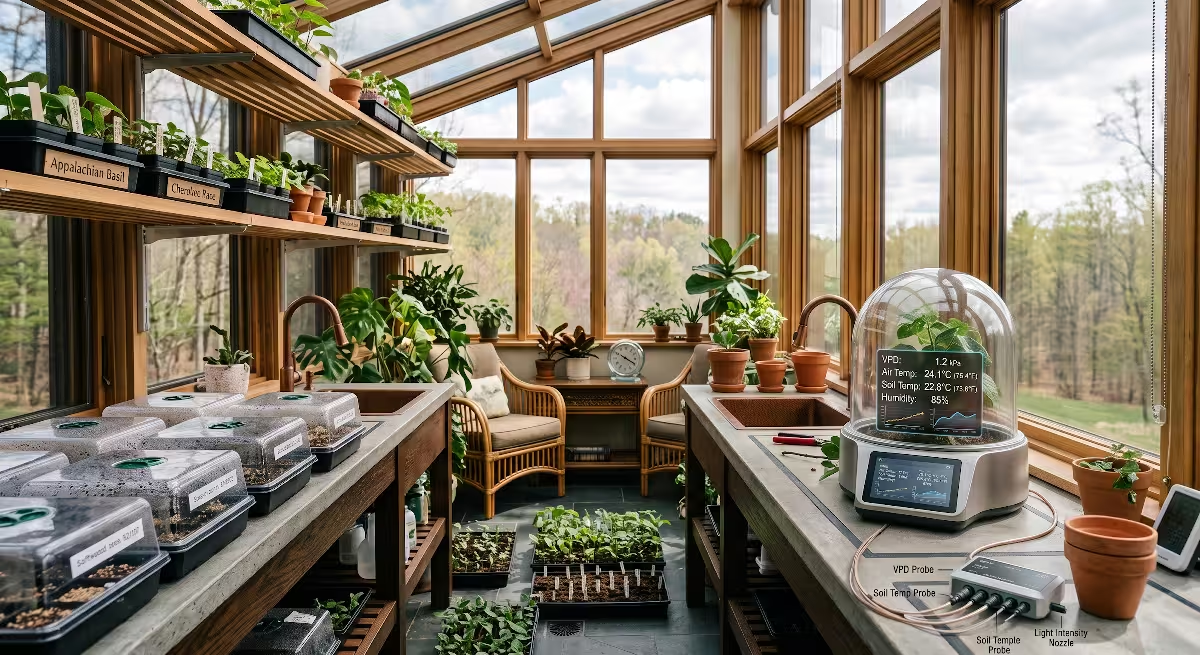
Vapor Pressure Deficit and Relative Humidity
Rooting plant cuttings is fundamentally a race against desiccation. When you cut a stem from a mother plant, you interrupt the continuous hydraulic column that pulls water from the root tips up through the xylem to the leaves. Until that cutting generates callus tissue and new adventitious roots, it relies entirely on the moisture stored inside its tissues and whatever water it can absorb through its stem cut.
In a normal living room, central heating or air conditioning dries the atmosphere, lowering the relative humidity to between 30 percent and 40 percent. In that dry air, the leaves of a cutting transpire rapidly. Transpiration is the evaporation of water from plant leaves through tiny pores called stomata. If the air pulls water out of the leaves faster than the rootless stem can take it up, the cutting wilts, collapses, and dies within days.
In a sunroom greenhouse, you can manage what plant scientists call Vapor Pressure Deficit, or VPD. Vapor pressure deficit is the difference between the pressure exerted by the water vapor inside the moist leaf and the pressure exerted by the water vapor in the surrounding room air. When the deficit is large, meaning the air is dry, water escapes the leaf rapidly. When the deficit is low, meaning the air is moist, water loss slows down to a steady, safe trickle.
For successful propagation in a sunroom greenhouse, you should aim for a relative humidity between 70 percent and 85 percent directly around your cutting trays. At this level, the leaves stay turgid and hydrated without drying out, allowing the plant to redirect its biochemical energy toward cell division and root initiation.
Achieving this target does not mean your entire sunroom greenhouse must feel like a damp swamp. Instead, you can create graduated humidity zones. Use ultrasonic humidifiers tied to digital hygrometers to maintain a baseline room humidity of roughly 55 percent to 60 percent. This level is healthy for tropical houseplants and pleasant for people, while remaining safe for residential building materials.
Then, create localized microclimates directly over your propagation benches. Wide pebble hydration trays filled with water and river stone provide a steady upward plume of clean evaporation. Clear propagation domes, ventilated acrylic cloches, or modular glass bell jars can be placed directly over individual trays. These enclosures raise the localized humidity to the critical 80 percent threshold right where the cuttings live, leaving the rest of the sunroom greenhouse comfortable for reading, lounging, or working.
Solar Geometry and Radiation Dynamics
Light is the driving engine of plant life, but unrooted cuttings have very different solar needs than established, mature plants. Many people assume that putting cuttings in blazing direct sunlight will speed up their growth. In reality, strong direct sun often kills tender cuttings.
When an unrooted cutting sits in strong midday sun, the radiant energy overheats the leaf surface. Because the stem cannot draw up cool ground water to cool the foliage through transpiration, the leaf tissues cook. At the same time, excessive sunlight triggers photoinhibition, a state where the photosynthetic machinery becomes overloaded and damaged by excess light energy.
In a sunroom greenhouse, managing solar radiation requires a careful understanding of solar geometry, daylight angles, and glass specifications. Light intensity is measured in foot-candles or, more accurately for plants, Photosynthetically Active Radiation (PAR). While mature flowering plants might thrive under 3,000 to 5,000 foot-candles of direct light, unrooted cuttings generally perform best under a steady canopy of 800 to 1,500 foot-candles of bright, indirect, diffused light.
The orientation of your sunroom greenhouse plays a decisive role in how this light enters the space:
- East-facing installations: An east-facing sunroom greenhouse captures gentle morning sun when ambient temperatures are cool. This morning light provides high photosynthetic value with minimal risk of thermal leaf burn.
- South-facing installations: A south-facing sunroom greenhouse offers the highest total solar exposure throughout the entire year. However, it requires active glare reduction and shading strategies during long summer afternoons.
- West-facing installations: A west-facing sunroom greenhouse receives intense late afternoon sun when indoor temperatures are already peaked, demanding robust ventilation and solar shades.
- North-facing installations: A north-facing space provides uniform, soft sky light with no scorching rays, but it will frequently need supplemental LED grow lights during the darker winter months.
To regulate light successfully in a south-facing or west-facing sunroom greenhouse, install internal automated fabric shades made from woven solar screen materials that block 40 percent to 60 percent of direct solar radiation. These screens break harsh beam light into soft, omnidirectional ambient light.
Furthermore, pay close attention to the glass specified in your sunroom greenhouse. Modern residential windows often feature heavy Low-E (low-emissivity) coatings designed to reflect solar heat. While high efficiency glass is vital for human energy bills, certain coatings block significant portions of the blue and red spectrums that drive vegetative growth. Look for spectrally selective glass that blocks infrared thermal heat while permitting high visual light transmission (VLT) across the 400 to 700 nanometer PAR range.
Thermoregulation and Basal Heat
Temperature controls the rate of biochemical reactions inside plant cells. In propagation, there is an important physiological rule that every successful grower follows: warm roots, cool shoots.
When the foliage of a cutting is kept relatively cool, around 65 degrees to 68 degrees Fahrenheit, its respiration rate stays low. It does not burn through its stored carbohydrate reserves quickly, and its water loss stays minimal. Meanwhile, if the base of the stem where root cells must form is kept consistently warm, between 72 degrees and 78 degrees Fahrenheit, cellular division and callus formation speed up dramatically. This targeted warmth stimulates endogenous auxins, which are natural plant growth hormones that migrate downward through the stem to trigger root primordia.
In a standard sunroom greenhouse, room air tends to layer thermally, with warmer air rising toward the glass ceiling and cooler air resting along the floor and lower benches. If your propagation flats sit on an unheated bench in winter, the substrate can easily drop to 55 degrees Fahrenheit, even if the sunroom greenhouse feels warm to you. In cold, wet potting media, stem cuttings do not form roots. Instead, their cellular walls break down, leaving them vulnerable to anaerobic fungal attack and stem rot.
The solution is the integration of basal bottom heat into your sunroom greenhouse setup. Waterproof propagation heat mats fitted with digital probe thermostats should be set directly beneath your seed flats and rooting trays. Insert the temperature sensor directly into the center of your rooting medium, not in the ambient air. When the soil medium dips below 74 degrees Fahrenheit, the thermostat clicks on, delivering gentle, conductive warmth straight to the base of the stems.
For a cleaner, more integrated look in a custom sunroom greenhouse, you can build low-voltage heating cables directly into sand-filled propagation benches or cast concrete potting surfaces. The sand or concrete acts as a thermal battery, soaking up steady warmth, smoothing out hot spots, and releasing uniform conductive heat upward into the trays all day and night.
Biophilic Spatial Planning: Dedicated Propagation Stations
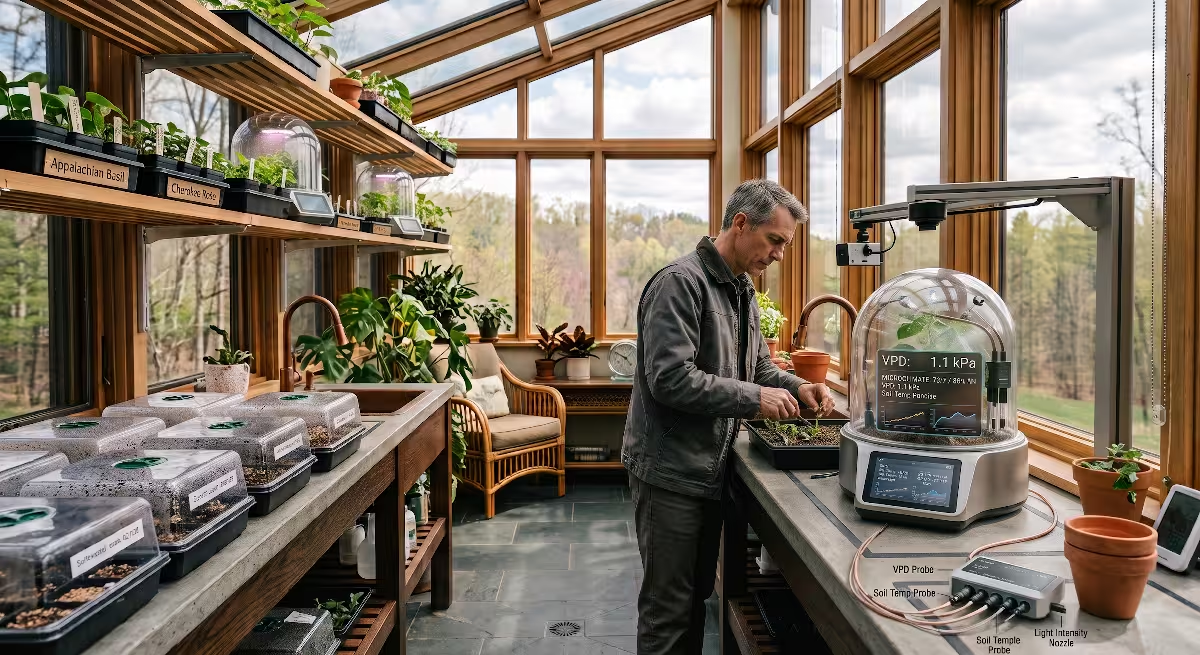
Modular Vertical Shelving and Plant Towers
Spatial planning in a working sunroom greenhouse must balance two competing goals. You want to maximize the horizontal and vertical surfaces available for flats, pots, and jars, but you also want to keep the room feeling open, uncluttered, and welcoming for people. If every flat surface is covered in plastic trays, the space loses its biophilic charm and feels cramped.
Vertical zoning is the most effective way to organize a sunroom greenhouse. By moving propagation up the vertical plane, you free up floor space for comfortable seating and larger feature plants.
When choosing shelving materials for a sunroom greenhouse, standard particle board, untreated pine, or cheap thin metal units will fail quickly. The high humidity and constant exposure to water will cause cheap wood to swell and warp, while bare steel will rust and flake within a couple of seasons. Instead, prioritize these durable, biophilic materials:
- Powder-coated architectural aluminum: Lightweight, completely rustproof, and available in clean, modern architectural finishes.
- Marine-grade stainless steel: Industrial strength, sleek, and impervious to moisture, perfect for minimalist designs.
- Naturally rot-resistant native hardwoods: Species like white oak, black locust, eastern red cedar, and bald cypress contain natural tannins that resist rot and fungal decay without chemical pressure treatments.
Design your vertical shelving tiers with staggered depths. If every shelf is 24 inches deep from top to bottom, the upper shelves will cast a harsh shadow over the lower tiers. By designing a stepped ladder profile, with an 8-inch top shelf, a 14-inch middle shelf, and a 20-inch bottom shelf, natural downwelling light from the sunroom greenhouse windows reaches every single tier evenly.
Furthermore, fit the undersides of intermediate shelves with recessed, water-resistant full-spectrum LED light strips. This ensures that even during extended stretches of rainy weather, every cutting in your sunroom greenhouse receives its required daily light integral without needing unsightly hanging lamps.
Hydro-Zoning and Water Supply Mechanics
Water is the lifeblood of plant propagation, but carrying dripping watering cans across hardwood floors or living room rugs quickly becomes a chore. A well designed sunroom greenhouse integrates water delivery and drainage straight into the architectural floor plan.
Start by planning a dedicated wet zone within the sunroom greenhouse layout. This work area should feature a deep utility sink crafted from hammered copper, stainless steel, or durable soapstone. Copper is a wonderful biophilic choice because it patinas naturally with age and possesses natural antimicrobial properties that help suppress pathogens. Equip the sink with a high-arc gooseneck faucet and a pull-out spray wand for washing gritty containers, rinsing perlite, and soaking rooting plugs.
Water quality matters deeply when dealing with delicate root primordia. Municipal tap water often carries dissolved mineral salts, chlorine, and chloramines that can burn fragile new root hairs and leave cloudy lime scale on glass propagation vessels. Integrating a small reverse osmosis (RO) filter or a carbon block filtration unit under your sunroom greenhouse potting bench provides clean, dechlorinated water for your misting bottles, humidity reservoirs, and water culture vessels.
Flooring inside your sunroom greenhouse wet zone must be both non-porous and slip-resistant. Avoid smooth ceramic tile, which becomes treacherous when wet, and skip wall-to-wall hardwood, which buckles under standing water. Instead, look to natural cleft slate, flamed granite, bluestone, or sealed polished concrete.
Pitch the floor slightly toward a recessed trench drain hidden along the outer wall. If you accidentally spill a tray of water or want to wash down the flagstones with a hose, the water flows smoothly to the drain rather than pooling on the floor or seeping into the adjacent living spaces of your house.
The Cabinet-Within-a-Room Approach
Not every plant has the same environmental tolerances. While common plants like pothos, mint, and spider plants will strike roots in almost any corner of a sunroom greenhouse, rare tropical aroids, sensitive cloud forest ferns, and slow-rooting woody ornamentals demand specialized conditions.
If you attempt to heat and humidify your entire sunroom greenhouse to 90 percent humidity and 80 degrees Fahrenheit for the sake of two rare cuttings, you will create a space that is uncomfortable for people and dangerous for standard residential structural framing.
The most elegant architectural solution is the cabinet-within-a-room concept. By retrofitting a freestanding glass curio cabinet or building a custom double-glazed glass vitrine into the cabinetry of your sunroom greenhouse, you create an isolated micro-climate chamber.
Inside this dedicated glass case, you can run automated micro-misting nozzles, concealed computer circulation fans, and targeted heat mats. The sealed environment locks in moisture and warmth effortlessly, allowing delicate cuttings to root inside a miniature tropical ecosystem.
Because the exterior of the cabinet is crafted from finished timber, brass trim, and clean glass panels, it looks like a museum display case within your sunroom greenhouse. You can observe root emergence through the transparent vitrine walls while your main room stays at a comfortable human humidity level of 50 percent to 60 percent.
Substrate Selection and Rooting Mediums
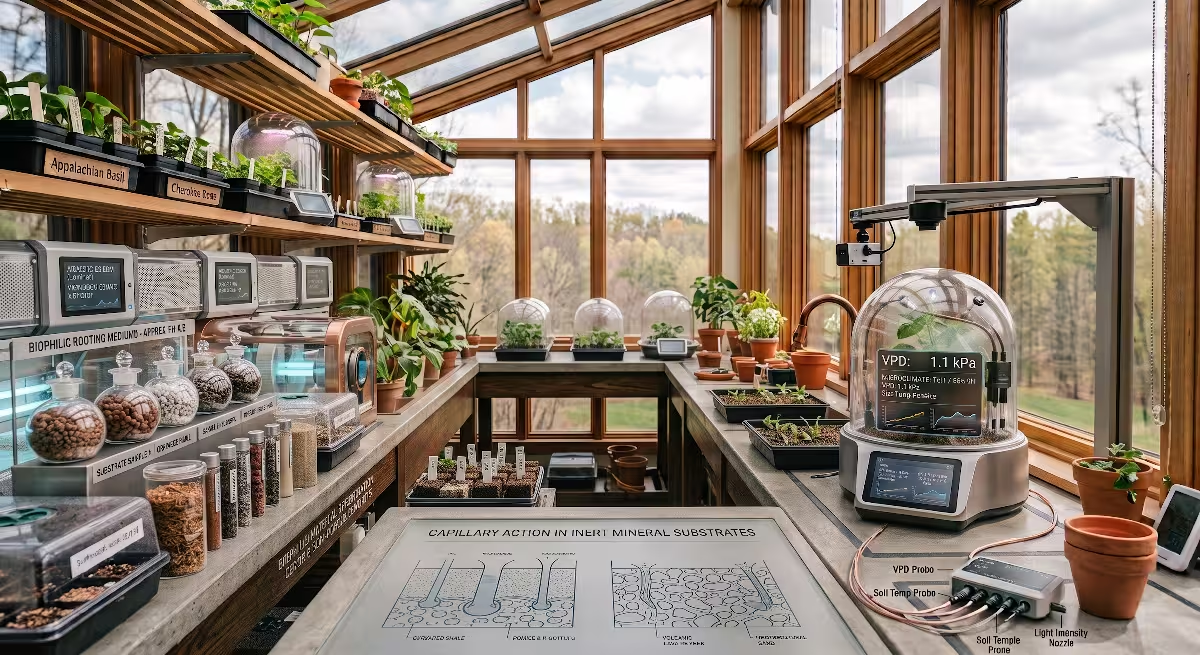
Inert Versus Biologically Active Media
Choosing the right rooting substrate is one of the most critical decisions you will make in your sunroom greenhouse. The ideal medium must do two contradictory things at once: it must hold enough moisture so the stem never dehydrates, yet it must hold enough oxygen so the developing root cells do not drown.
Plant roots do not just absorb water; they respire, taking in oxygen and expelling carbon dioxide. If you pack a cutting into dense, heavy garden soil, the soil particles cling together, filling all the microscopic air pores with water. Deprived of oxygen, the cells at the cut base suffocate and rot.
In a sunroom greenhouse propagation bench, growers balance their media between inert materials and biologically active organic components:
| Medium Type | Material Name | Air-Filled Porosity | Water Retention | Primary Benefits | Key Considerations |
| Inert Mineral | Coarse Horticultural Perlite | Very High (40% to 50%) | Moderate | Sterile, highly aerated, lightweight, will not decompose | Floats in water; creates nuisance dust when handled dry |
| Inert Mineral | Horticultural Pumice | High (30% to 40%) | Moderate to High | Stable weight, holds mineral structure, excellent drainage | Heavier than perlite; can be harder to source locally |
| Inert Clay | LECA (Expanded Clay Balls) | High | Low to Moderate | Reusable, prevents compaction, clean aesthetic | Dries out quickly if reservoir drops; requires pre-washing |
| Organic Fiber | Long-Fiber Sphagnum Moss | Moderate | Very High | Natural mild antifungal qualities, pliable structure | Can retain too much water if packed tightly; acidifies over time |
| Organic Blend | Coco Coir and Perlite (50/50) | High | Balanced | Renewable peat alternative, easy to hydrate, soft texture | Must be flushed to remove natural sodium salts |
Horticultural perlite is an expanded volcanic glass. When heated rapidly to over 1,600 degrees Fahrenheit, it pops like popcorn, creating microscopic cellular cavities that hold air and water. It is sterile and chemically inert, making it an exceptional base medium for soft cuttings inside a sunroom greenhouse.
Pumice, another volcanic rock, performs similarly to perlite but is denser. Its weight keeps top-heavy cuttings from tipping over in your trays.
Long-fiber sphagnum moss is a favorite for rooting climbing plants, monsteras, and philodendrons in a sunroom greenhouse. The moss holds up to twenty times its weight in water while maintaining loose air channels. It also naturally produces mild organic compounds that inhibit the growth of common root rots.
The secret to using sphagnum moss in your sunroom greenhouse is packing density: keep it light, fluffy, and spongy. Squeeze out all excess dripping water before placing it around the stems. If you compress it into a dense, sodden ball, it acts like a wet sponge and starves the root tips of oxygen.
Water Propagation Versus Solid Substrate Station Setup
Water propagation, often called water rooting, is easily the most popular propagation method for casual indoor gardeners. It is visually stunning, remarkably simple, and endlessly fascinating. By placing cuttings in clear glass test tubes, vintage carafes, or glass flasks mounted on an open wall of your sunroom greenhouse, you turn plant development into living art. You can watch the first white root nubs push through the stem nodes without disturbing the plant.
However, from a botanical standpoint, water propagation comes with specific challenges that every sunroom greenhouse grower should understand:
- Lower Dissolved Oxygen: Standing water contains far less oxygen than an airy mineral mix. Unless you change the water every three to four days, the oxygen depletes, slowing root emergence.
- Morphological Differences in Aquatic Roots: Roots formed directly in liquid water develop differently than roots formed in solid soil. They lack abundant microscopic root hairs, and their vascular tissues are thin and fragile. When you finally pot a water-rooted plant into soil, those aquatic roots often go through severe shock as they struggle to adapt to the physical friction and weight of a dense potting mix.
- Algae Growth: Clear glass exposed to the bright light of a sunroom greenhouse will quickly bloom with green algae. Algae competes with the cutting for nutrients and oxygen, turning the water murky and green.
To overcome these issues in your sunroom greenhouse water station, you can employ a few smart techniques. First, use dark amber, cobalt blue, or smoked glass bottles instead of clear glass. Colored glass blocks the specific wavelengths of light that algae need to photosynthesize, keeping the root reservoir clean and clear while still allowing you to check water levels.
Second, for high-value cuttings, consider integrating a micro-aquarium bubbler into your water bench. A quiet air pump driving a tiny porous air stone introduces continuous streams of dissolved oxygen into the water bath. Cuttings rooted in oxygen-rich bubbler water develop stronger, thicker root systems twice as fast as cuttings placed in stagnant jars.
When it is time to transition water-rooted plants to solid media, do not move them directly into dense potting soil. Instead, transition them gradually in your sunroom greenhouse. Move them first into a loose slurry of half water and half coarse perlite or LECA. Allow them to grow in this semi-hydroponic mix for two weeks so their roots develop the mechanical strength needed to thrive in normal potting soil.
Materiality, Airflow, and Pathogen Prevention
Boundary Layer Air Movement
High humidity and warm temperatures are ideal for rooting plant cuttings, but they are also the exact environmental conditions favored by fungal and bacterial pathogens. The most feared affliction in any propagation setup is damping off, a fungal disease typically caused by organisms like Pythium, Rhizoctonia, or Botrytis cinerea. These fungi attack tender stems right at the soil line, turning firm green tissue into soft, brown mush overnight.
Fungal spores require a film of still, stagnant moisture resting on the leaf surface for several continuous hours to germinate and penetrate the plant tissue. In a tightly sealed sunroom greenhouse with no air movement, a microclimate known as the boundary layer forms directly against the leaves.
The boundary layer is a thin envelope of motionless, saturated air that clings to the leaf surface. When the air remains still, this boundary layer traps humidity against the plant cuticle, inviting fungal spores to take hold.
The antidote to damping off in a sunroom greenhouse is gentle, continuous, non-chilling air movement:
- Avoid Direct High-Speed Fans: Never point a powerful, high-velocity fan directly at unrooted cuttings. The strong wind will increase the transpiration rate rapidly, blowing away the boundary layer entirely and drying out the unrooted leaves before they can adapt.
- Use Low-Sone Brushless Fans: Install whisper-quiet, low-sone oscillating fans or small computer-style brushless fans positioned to blow air above and across the propagation trays, rather than directly down on them.
- Promote Gentle Convection: The goal is to keep the entire ambient air mass inside the sunroom greenhouse slowly rolling. You should see the very tips of the leaves trembling almost imperceptibly, which confirms that the stagnant boundary layer is being broken without stressing the plant.
- Automated Roof Transom Vents: Warm air naturally rises to the peak of the sunroom greenhouse. Installing motorized awning windows or ceiling transom vents linked to a thermostat allows superheated air to escape during hot afternoons, pulling cool, fresh outdoor air in through lower window vents by passive convection.
Non-Toxic, Moisture-Resistant Finishing
Designing a sunroom greenhouse that lasts decades requires selecting building materials that handle high ambient moisture without rotting, corroding, or off-gassing harmful chemicals. Many conventional building products used in interior home remodeling are unsuitable for a high humidity growing environment.
Standard drywall or sheetrock will absorb ambient water vapor, causing the paper backing to bubble, sag, and develop toxic black mold behind the walls. If you finish any non-glazed walls in your sunroom greenhouse, use water-resistant cement backer boards or magnesium oxide boards.
Coat the walls with mineral silicate paints or breathable lime plasters. Unlike standard acrylic latex paints, which form a plastic film that traps moisture inside the wall stud cavities, mineral paints soak into the substrate and chemically bond with it. They allow moisture vapor to pass back and forth naturally without peeling or trapping water, and their high alkaline pH naturally prevents mold and mildew growth.
Wood brings irreplaceable warmth, texture, and biophilic beauty to a sunroom greenhouse, but it must be chosen and finished with extreme care:
- Avoid Pressure-Treated Wood: Avoid using standard construction lumber pressure-treated with copper azole or other heavy chemical preservatives in your indoor sunroom greenhouse. These treatments can slowly off-gas chemical vapors inside a warm, closed space.
- Select Naturally Durable Species: Choose timber that is naturally rich in protective heartwood oils, such as western red cedar, northern white cedar, cypress, or locally harvested black locust.
- Apply Hardwax Oil Finishes: Treat decorative wood with natural hardwax oils made from plant oils and carnauba wax, or use pure polymerized tung oil. These finishes penetrate deep into the wood grain, forming a water-repellent, durable surface that enhances the natural visual character of the wood while remaining completely non-toxic to sensitive seedlings.
Architectural Integration: Merging Human Living Space with Propagation Labs
A frequent mistake when setting up a propagation area at home is treating the plants and the architecture as two separate things. People build a sunroom greenhouse with beautiful trim, and then they clutter it with cheap plastic shelving, tangled orange extension cords, and messy plastic trays. This clashes with the rest of the home and ruins the restful quality of the space.
Successful biophilic design is based on the idea that humans have an innate need to connect with nature, and that our built environments should support this bond. A sunroom greenhouse should be designed to soothe the human mind while providing an optimal habitat for plant life.
Begin by planning clean architectural concealment for all technical infrastructure:
- Concealed Wire Chases: Build electrical wire chases and recessed power strips directly into the backs of your potting benches and vertical display shelves.
- Hidden Timers and Ballasts: Mount heavy LED driver units, automated interval timers, and heating mat thermostats inside vented wooden cabinetry beneath the work benches.
- Slatted Timber Accent Walls: Install a vertical slatted timber wall across an interior structural wall. The slatted gaps act as a flexible French cleat hanging system for propagation jars, brass misters, and pruning shears, while the wood slats hide water lines and low-voltage electrical cords behind them.
Once the technical clutter is neatly concealed, balance the visual and tactile qualities of the sunroom greenhouse. Pair smooth, precise glass propagation vessels with rough, earthy textures:
- Natural Stone Surfaces: Incorporate raw, rough-faced stone ledger panels or warm river rock floor trims along the base of your glazed window walls.
- Living Moss Accents: Add vertical living wall panels planted with preserved sheet moss or hardy epiphytic ferns to absorb sound, reducing harsh glass echoes and giving the sunroom greenhouse quiet, acoustic comfort.
- Comfortable Human Seating: Place an inviting upholstered chair, a natural rattan daybed, or a simple solid oak bench right in the center of the room, positioned so you can sit at eye-level with your developing cuttings.
When you sit in your sunroom greenhouse surrounded by clean, filtered sunlight, listening to the gentle hum of circulating air and the quiet trickle of water, the room becomes more than an indoor plant nursery. It becomes a peaceful sanctuary where you can pause, breathe, and witness the regenerative cycles of nature up close.
Frequently Asked Questions about Sunroom Greenhouses
Can you turn an existing sunroom into a functional greenhouse?
Yes, you can convert an existing residential sunroom into a functional sunroom greenhouse, provided you make a few strategic modifications to handle increased moisture and light levels:
- Flooring Evaluation: If your existing sunroom features carpet or hardwood flooring, you must replace it with a waterproof flooring material such as porcelain tile, slate, or sealed concrete.
- Moisture and Condensation Control: Standard residential sunrooms may not have vapor barriers behind the drywall. Applying a vapor-barrier primer and finishing with an antimicrobial, breathable mineral paint prevents moisture from penetrating the wall framing.
- Air Circulation Upgrades: Standard HVAC vents are rarely enough to move moist air properly in a sunroom greenhouse. You will need to add small, dedicated wall-mounted oscillating fans to prevent air stagnation and mold growth.
- Window Insulation and Glazing: If your current room features single pane glass, you will struggle with extreme winter cold and summer heat. Adding interior thermal storm windows or retrofitting modern double pane glass ensures your sunroom greenhouse maintains the stable temperatures required for tender plant roots.
What plants root best inside a sunroom greenhouse?
A home sunroom greenhouse offers an adaptable environment that accommodates a wide variety of plant species across different taxonomic categories. Softwood cuttings from tropical houseplants and seasonal garden starts root the fastest and most reliably:
- Aroids and Tropical Vining Plants: Species such as Monstera deliciosa, Epipremnum aureum (Pothos), Philodendron, and Syngonium root with exceptional speed in high humidity, often pushing visible adventitious roots within 7 to 14 days.
- Woody Softwood and Semi-Hardwood Cuttings: Plants like Ficus elastica, Ficus lyrata, Hibiscus, and garden hydrangeas strike roots steadily in a sunroom greenhouse when given consistent basal heat from underneath.
- Succulents and Epiphytes: Rhipsalis, Hoya, and Christmas cactus (Schlumbergera) take readily to loose pumice and perlite mixes in bright, indirect light zones.
- Culinary Herbs and Perennials: Soft vegetative tip cuttings of rosemary, lavender, basil, and scented geraniums root cleanly in aerated water tubes or sand benches, provided they receive adequate airflow to prevent foliar rot.
How do you keep a sunroom greenhouse warm enough for propagation in winter?
Maintaining adequate propagation temperatures during freezing winter months requires combining passive solar heating design with efficient mechanical supplemental heating:
- Incorporate Thermal Mass: Place dense materials like dark bluestone pavers, solid concrete countertops, or even painted black water drums inside the direct sun path of your sunroom greenhouse. These materials absorb thermal energy from the sun during the day and slowly radiate that stored heat back into the room all through the night.
- Target the Root Zone with Heat Mats: Heating an entire room to 75 degrees Fahrenheit in the dead of winter is expensive and unnecessary. Keep the room air at an economical 62 to 65 degrees Fahrenheit, and use thermostatically controlled electric heat mats to warm the soil trays directly to 75 degrees.
- Install Cellular Insulating Shades: Up to 40 percent of a sunroom greenhouse room heat can escape through wide glass windows at night. Installing multi-cell honeycomb blinds that pull down along tight side tracks creates a dead-air insulating barrier that locks heat inside the room after dark.
- Radiant Floor Heating: If you are building a new sunroom greenhouse from the ground up, installing an electric or hydronic radiant floor heating loop under the stone tiles delivers gentle, steady, upward heat that keeps both plants and human feet comfortable.
Do cuttings need direct sunlight to propagate?
No, plant cuttings do not need direct sunlight to root. In fact, placing unrooted stem cuttings in strong, unfiltered direct sunlight is one of the most common reasons propagation attempts fail.
When a cutting sits in direct sun, radiant solar heat raises its leaf temperature quickly. Because the severed stem has no root system to drink up water and cool its foliage, the cutting experiences severe water stress and wilts. Furthermore, high light levels overload the leaf chloroplasts, causing cellular damage through photoinhibition.
For optimal propagation in a sunroom greenhouse, keep your cuttings in bright, indirect, or filtered light. You want between 800 and 1,500 foot-candles of soft, diffused illumination. This light level provides plenty of energy to fuel photosynthesis and drive root production without overheating the plant or drying out its delicate leaves.
Strategic Takeaway and Action Plan
Transforming a dream of indoor plant propagation into a high-performing sunroom greenhouse does not have to happen all at once. By approaching the project in clear, logical phases, you can build a resilient, beautiful space that fits your lifestyle, your home architecture, and your botanical interests.
Phase 1: Planning and Assessment
├── Evaluate solar exposure (measure seasonal light angles and foot-candles)
├── Inspect glazing, seals, and insulation values of existing windows
└── Identify plumbing lines, electrical supply, and floor drainage routes

Phase 2: Infrastructure and Material Prep
├── Install non-porous, slip-resistant flooring with adequate slope
├── Apply breathable, moisture-resistant mineral finishes to interior walls
└── Run dedicated electrical circuits for heat mats, lighting, and ventilation

Phase 3: Work Station and Microclimate Buildout
├── Erect stepped, rot-resistant hardwood or aluminum propagation shelving
├── Set up dedicated hydration trays, heat mats, and digital thermostats
└── Mount low-sone circulation fans to maintain continuous boundary air movement

Phase 4: Plant Integration and Operational Tuning
├── Establish your water propagation glassware and sterile mineral rooting benches
├── Group incoming cuttings into graduated humidity zones based on species needs
└── Calibrate automated shading and venting to balance seasonal temperatures
By following this balanced, methodical approach, your sunroom greenhouse will become one of the most rewarding and productive spaces in your home. You create an environment where architecture protects life, where botany guides design, and where you can experience the quiet joy of propagation through every season of the year.