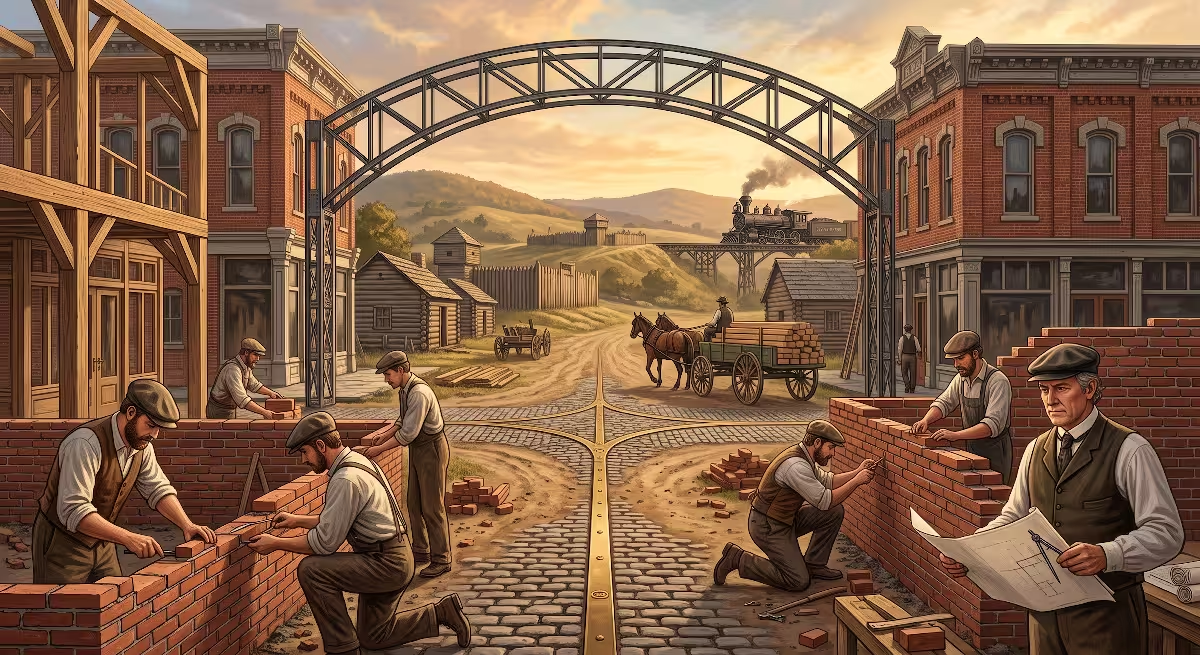


Roan Mountain, Tennessee
The story of Roan Mountain, TN is not just a collection of dusty dates. It is an extraordinary record of human determination, rugged geography, and changing industry. In this article, we will examine the complete historical evolution of Roan Mountain, TN from its ancient roots to modern times. On this journey we explore the massive rock formations and open meadows that crown the peaks, walk through the ancient hunting grounds of the Cherokee and Catawba nations, and retrace the steps of the Overmountain Men who camped at Shelving Rock before fighting for American independence.
Then we review the travels of early botanical explorers who discovered rare mountain plants, examine how iron mining and heavy timber harvesting shaped the economy of Roan Mountain, TN, and tour the grand Cloudland Hotel built by General John T. Wilder during the late nineteenth century. We will listen for the distant whistle of the narrow-gauge Tweetsie Railroad that carved its path through the Doe River Gorge.
Lastly, we will study the master carpentry of the historic Miller Farmstead to learn how early settlers survived harsh winters, and see how conservation programs and the state park system preserved Roan Mountain, TN for generations to come, wrapping up with answers to the most common questions people ask about this historic highland community.
The Geological Foundation and the Enigma of the Grassy Balds
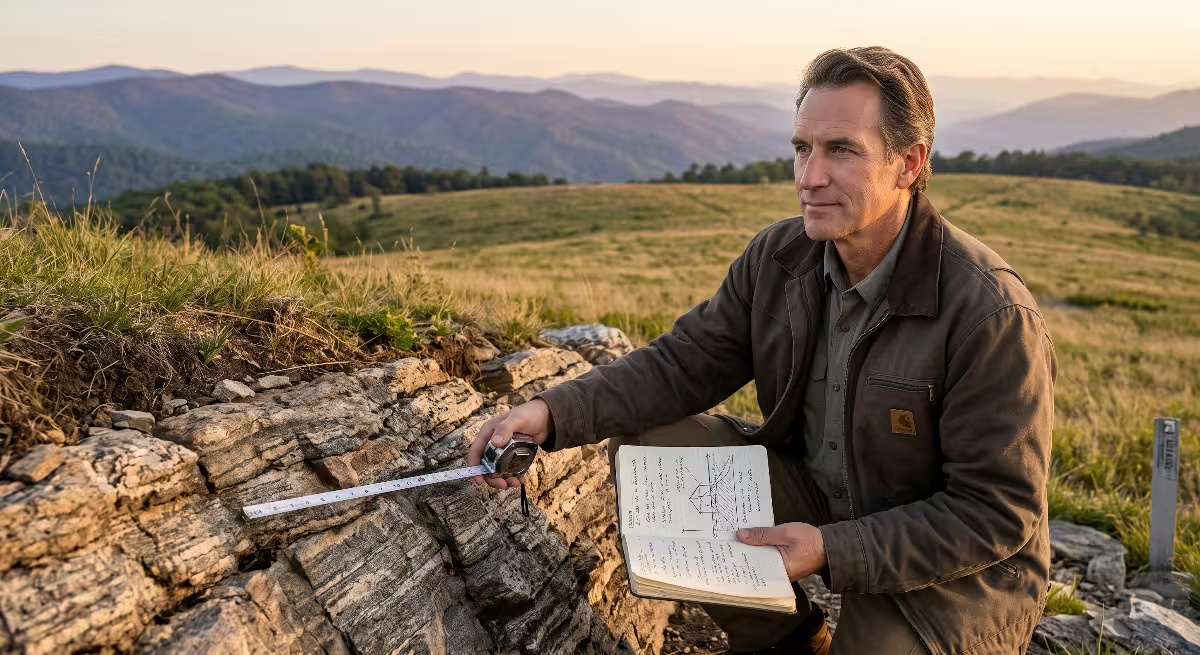
To understand Roan Mountain, TN, you must begin with the rock and the soil. The Roan Massif is one of the oldest and most rugged mountain chains on the North American continent. The mountain rises to an elevation of 6,285 feet at Roan High Knob, with nearby Roan High Bluff standing tall across the gap. These peaks are composed of ancient Precambrian crystalline metamorphic rock, mainly granite and gneiss, formed more than one billion years ago. These rock ledges have withstood hundreds of millions of years of wind, rain, and shifting weather patterns. The elevation creates a severe sub-alpine climate in Roan Mountain, TN that matches the weather of southern Canada. The average temperatures, frost depths, and persistent winds mean that anything built or growing here faces extreme natural forces.
Elevation Profile & Natural High Points
============================================================
Roan High Knob:    6,285 feet (Highest point on the massif)
Roan High Bluff:   6,267 feet (Overlooks Doe River valley)
Carvers Gap:       5,512 feet (Major pass between TN & NC)
Town Center:       2,560 feet (Community along Doe River)
============================================================
The most famous geological and ecological features in Roan Mountain, TN are the high-elevation grassy balds. Peaks such as Round Bald, Jane Bald, and Grassy Ridge Bald feature vast open grasslands instead of dense hardwood forests. For centuries, scientists and visitors have wondered why thick forests stop growing on these summits. Normal Appalachian peaks at six thousand feet are covered in red spruce and Fraser fir trees. Yet the balds above Roan Mountain, TN roll like green ocean waves beneath the open sky.
Several scientific theories attempt to explain why these balds exist in Roan Mountain, TN. One popular theory suggests that during the last Ice Age, extreme periglacial winds and constant freezing prevented tree seedlings from establishing roots on the ridges. Another theory points to large prehistoric grazing mammals, such as ancient bison and mastodons, that cleared the mountaintops. Later, Native American hunting parties and early European settlers grazed cattle, sheep, and horses across the meadows, keeping brush from reclaiming the soil. For anyone studying modern home foundations and site grading around Roan Mountain, TN, understanding this soil structure, high wind load, and steep frost penetration remains essential.
Indigenous Crossroads and Ancient Appalachian Lore
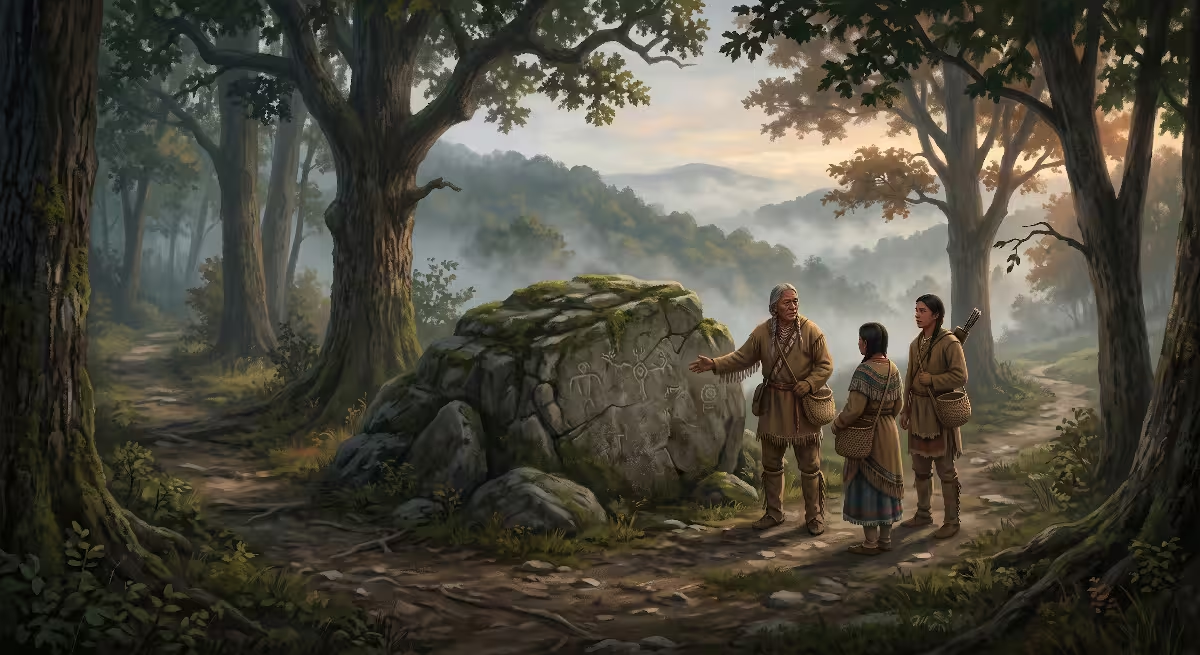
Long before European wagons crossed into upper East Tennessee, the high ridgelines around Roan Mountain, TN served as an active crossroads for Native American nations. The land surrounding the Doe River and the high balds formed a natural border zone between the Cherokee people to the west and the Catawba people to the east and south. Neither nation built permanent, large-scale stockade towns on the high summits because of the harsh winter conditions. Instead, Roan Mountain, TN was an important seasonal territory for summer hunting, trading, foraging, and gathering medicinal mountain herbs.
Native hunters followed game trails through Carvers Gap and across the high saddles. Deer, elk, black bear, and wild turkey traveled these ridges to escape biting insects in the hot lowlands. For the Cherokee, the high country of Roan Mountain, TN carried spiritual significance. High mountain peaks were viewed as places where the physical world touched the sky world. The Cherokee held deep reverence for the weather spirits that generated sudden lightning storms, thick cloud banks, and torrential rain across the peaks.
Local folklore preserves vivid stories that originated from early contact between Native Americans and settlers in Roan Mountain, TN. One famous legend explains the brilliant crimson blooms of the Catawba rhododendron. According to the tale, a great battle took place between rival tribal forces upon the summit balds. The conflict lasted for days, and the earth drank the blood of the fallen warriors. The legend says the Great Spirit caused the red and purple rhododendron blossoms to cover the mountaintop each spring as an eternal memorial to their bravery. Another piece of Appalachian mountain lore tells of the Ghost Choir, an unusual singing sound heard when high winds sweep through the narrow gaps and dwarf trees on Roan Mountain, TN. While modern science identifies this sound as wind whistling through spruce needles and rocky crevices, early inhabitants believed the mountain held voices from the past.
The Revolutionary Turning Point: Shelving Rock and the Overmountain Men
The community of Roan Mountain, TN holds a proud place in the birth of the United States. In the late summer of 1780, the southern colonies faced desperate times during the Revolutionary War. British Major Patrick Ferguson had established a garrison in western North Carolina and sent an arrogant warning across the mountains. He told the frontier settlers that if they did not lay down their arms and pledge loyalty to the King, he would march his army over the mountains, hang their leaders, and lay waste to their settlements with fire and sword.
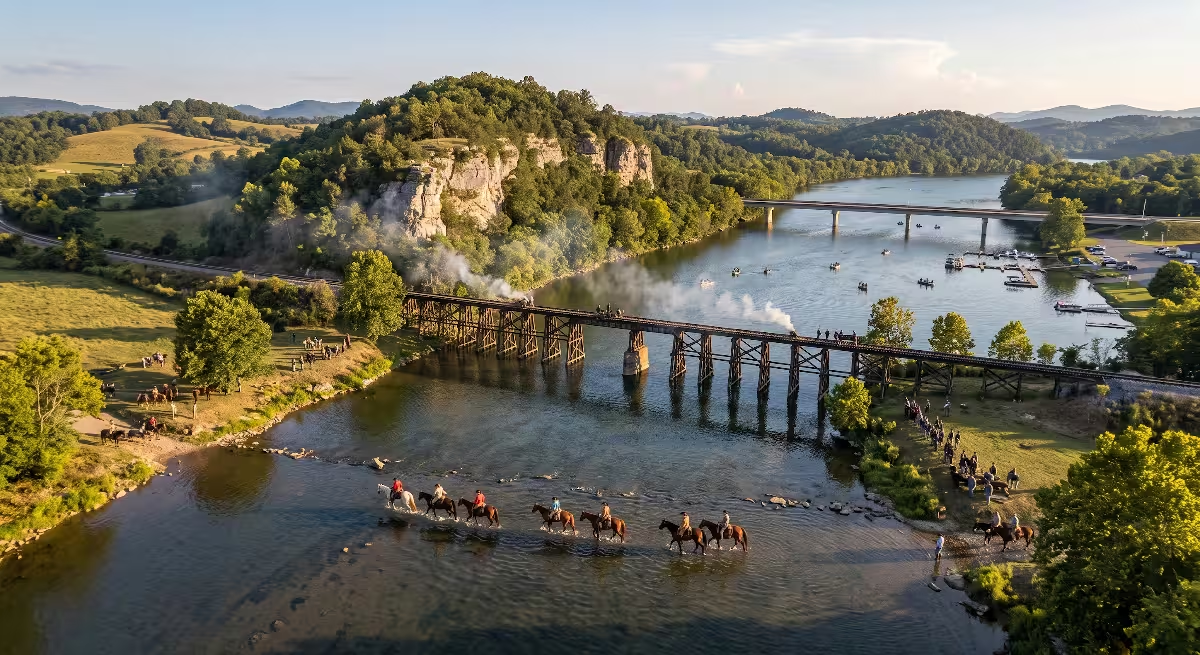
Those independent frontiersmen, known as the Overmountain Men, refused to submit. In late September 1780, over one thousand militia members assembled at Sycamore Shoals along the Watauga River. Led by Colonel John Sevier, Colonel Isaac Shelby, and Colonel William Campbell, these riders began an urgent trek toward the Carolina piedmont. Their route took them directly up the Doe River valley through the present-day boundaries of Roan Mountain, TN. On the evening of September 26, 1780, the militia paused their march to make camp at a geological overhang known as Shelving Rock in Roan Mountain, TN.
Timeline of the 1780 Kings Mountain Campaign
----------------------------------------------------------------------
September 25, 1780: Muster of over 1,000 militia at Sycamore Shoals
September 26, 1780: Encampment at Shelving Rock in Roan Mountain, TN
September 27, 1780: Crossing Yellow Mountain Gap in heavy snow
October 7, 1780:    Total Patriot victory at the Battle of Kings Mountain
----------------------------------------------------------------------
Shelving Rock was an ideal site for this historic encampment. The limestone and sandstone ledge provided natural shelter along the riverbank. More importantly, it offered dry storage for their most vital supply: black powder. The autumn air was cold and damp, with rain threatening to ruin their supplies. By stacking their powder horns and casks beneath the overhang of Shelving Rock in Roan Mountain, TN, the soldiers kept their ammunition dry.
The next morning, the Overmountain Men climbed out of the Doe River basin and crossed through Yellow Mountain Gap in early mountain snow. Just eleven days later, on October 7, 1780, they surrounded Major Ferguson’s Loyalist force at the Battle of Kings Mountain. The Patriots achieved a decisive victory, destroying Ferguson’s command and forcing British General Cornwallis to abandon his northern advance. Thomas Jefferson later described this victory as the joyful turn of the tide for American freedom. Today, visitors in Roan Mountain, TN can visit Shelving Rock along Tennessee State Route 143, where a historical marker and quiet park honor those brave frontier soldiers.
The Botanical Frontier: Eighteenth and Nineteenth-Century Naturalists

During the late eighteenth century and throughout the nineteenth century, Roan Mountain, TN became a magnet for world-renowned botanists. The unusual elevation and distinct microclimates created a haven for rare plant species. European scientists traveling to America heard reports of a massive southern peak where northern plants grew in abundance. These early naturalists endured steep climbs, mud roads, and wild terrain to catalog the plant life of Roan Mountain, TN.
One of the earliest scientific explorers was the French botanist André Michaux, who traveled to Roan Mountain, TN in the summer of 1794. Michaux was amazed by the diversity of high-elevation mosses, shrubs, and wildflowers. When he reached the rocky peak of Roan High Bluff, he was so overwhelmed by the vast panorama that he reportedly sang the French national anthem in celebration. A few years later, in 1799, Scottish botanist John Fraser explored the mountain. Fraser discovered and classified the Fraser fir tree, scientifically named Abies fraseri, which dominates the upper slopes of Roan Mountain, TN. Fraser also collected specimens of the Catawba rhododendron, shipping plants back to European botanical gardens where they became prized landscape shrubs.
Notable Early Naturalists at Roan Mountain
========================================================================
Botanist / Scholar    Year Visited    Primary Contribution
------------------------------------------------------------------------
André Michaux         1794            Cataloged alpine mosses & flora
John Fraser           1799            Classified Fraser Fir & Rhododendron
Dr. Elisha Mitchell   1830s           Measured elevations & surveyed peaks
Asa Gray              1840s           Extensive alpine plant mapping
========================================================================
In the 1840s, famous American botanist Asa Gray from Harvard University led multiple research expeditions up Roan Mountain, TN. Gray documented numerous endemic species, which are rare plants that grow nowhere else in the world except on these southern Appalachian balds. These discoveries helped scientists understand how plant species survived the retreat of Ice Age glaciers by finding refuges on cold mountain summits.
Historical accounts also debate how Roan Mountain, TN earned its unusual name. One popular story credits Daniel Boone, claiming the famous frontiersman once grazed his roan-colored horse on the open high balds. A roan horse has a coat with mixed red and white hairs. However, many historians believe the name came from the appearance of the mountain itself. In early summer, the vast fields of Catawba rhododendron paint the ridges in purple and red hues. In late autumn, red mountain ash berries cover the slopes. Viewed from the valleys below, the summit takes on a roan or reddish-gray color. Regardless of which story is true, the botanical heritage of Roan Mountain, TN remains famous around the globe.
Industrial Extraction: Cranberry Iron Ore, Mining, and Logging
While botanists admired the plant life, industrial investors saw valuable natural resources in the earth and timber of Roan Mountain, TN. During the nineteenth century, the Appalachian mountains became an engine for American manufacturing. The region contained thick deposits of high-grade magnetic iron ore, as well as dense stands of virgin hardwood and softwood timber. The quiet hollows of Roan Mountain, TN soon echoed with the sounds of pickaxes, dynamite, and steam saws.
The Cranberry Iron Works operated nearby, drawing iron deposits along the state line. Within the immediate Doe River valley around Roan Mountain, TN, local miners opened sites like the Peg Leg Mine. Workers dug deep into hillsides to extract raw ore, which was loaded into wagons and hauled down rough roads to local smelters. The iron produced from this ore was known for its exceptional strength and purity, making it ideal for rail wheels, boilers, and machinery parts.
Industrial Eras in Roan Mountain, TN
--------------------------------------------------------------------
Early 1800s to 1880s: Small-scale charcoal blooms & local iron mining
1880s to 1920s:       High-output iron operations & railroad freight
1890s to 1930s:       Industrial logging, steam skidders & clear-cutting
1930s to Present:     Transition to public conservation & state parks
--------------------------------------------------------------------
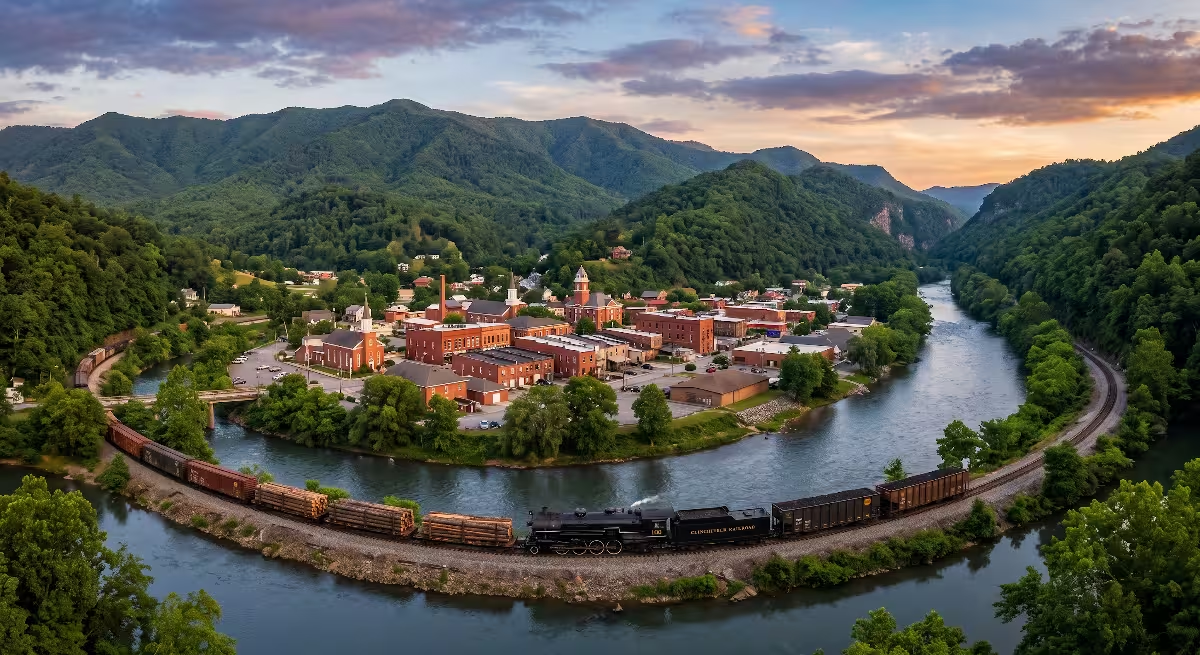
By the 1890s, the timber boom reached Roan Mountain, TN with incredible force. National logging syndicates purchased large tracts of virgin forest. Companies targeted red spruce, Fraser fir, American chestnut, oak, and yellow poplar. To harvest trees from the steep ridges, loggers brought heavy machinery into the high mountain gaps. At Engine Gap, located between Round Bald and Jane Bald in Roan Mountain, TN, companies set up large steam-powered skidders and winches. Heavy steel cables pulled giant logs up steep ravines so they could be loaded on timber flumes or narrow-gauge train cars.
From an engineering view, the scale of this extraction was impressive, but the environmental cost was severe. Vast mountainsides around Roan Mountain, TN were clear-cut, leaving exposed ground vulnerable to soil erosion. Without tree canopies to slow down heavy rains, rainwater rushed into mountain streams, causing severe flooding in the valleys. Forest fires broke out across leftover logging slash. Fortunately, this era of heavy extraction eventually sparked a powerful public conservation movement that helped restore the green forests we see in Roan Mountain, TN today.
The Gilded Cloudland Era: General John T. Wilder’s High-Elevation Vision

The late nineteenth century brought an unexpected chapter of luxury and grand resort living to the summit above Roan Mountain, TN. The central figure behind this golden era was General John T. Wilder. Wilder was an industrialist and former Union officer who commanded the famous Lightning Brigade during the Civil War. After the war, Wilder recognized the great economic potential of East Tennessee and invested heavily in iron manufacturing, real estate, and mountain tourism.
During the 1870s, Wilder visited the high balds and fell in love with the cool mountain air and panoramic views. He noticed that the high elevation provided complete relief from hay fever and respiratory troubles. In 1877, Wilder built a modest twenty-room log hotel at Tollhouse Gap. The retreat quickly became popular with wealthy travelers seeking escape from hot summer cities. Driven by this success, Wilder designed an ambitious project: a grand luxury resort perched directly on the mountain crest near Roan Mountain, TN.
The Cloudland Hotel: Key Facts & Structural Details
========================================================================
Construction Year:   1885 (Expanded from earlier 1877 log lodge)
Elevation:           6,200 feet above sea level
Total Rooms:         166 guest rooms with wide verandas
Materials Used:      Locally sawn fir & spruce, stone hearths, plate glass
Unique Feature:      White state line painted through the dining room
Operational Period:  1885 to 1910
========================================================================
Opened in 1885, the four-story Cloudland Hotel featured 166 guest rooms and wrapped verandas offering views across two states. Building a hotel of that size at 6,200 feet was an incredible construction feat. Teamsters drove horse and mule teams up narrow mountain switchbacks, hauling finished lumber, plate glass, iron bed frames, and Victorian furniture. Guests arrived by train at the valley station in Roan Mountain, TN and took a scenic four-hour hack ride up the mountain road.
The Cloudland Hotel became legendary for its unique geographic location. The state boundary between Tennessee and North Carolina ran straight through the main building. Wilder’s staff painted a bright white stripe across the dining room floor to mark the state line. At the time, North Carolina enforced strict alcohol prohibition laws, while Tennessee permitted alcohol sales. Guests wanting an evening glass of wine or whiskey simply shifted their dining chairs across the painted stripe into Roan Mountain, TN to stay within the law.
Despite its initial glamour, the Cloudland Hotel could not survive the brutal weather of Roan Mountain, TN. Freezing winter gales, heavy ice, and deep snow damaged the wooden structure year after year. Maintenance costs soared, and summer seasons were short. By 1910, the hotel was abandoned to the elements. Today, nothing remains of the grand building except scattered foundation stones, old photographs, and historical markers at the site near Roan Mountain, TN.
Steel Rails Through the Gorge: The Tweetsie Railroad Era
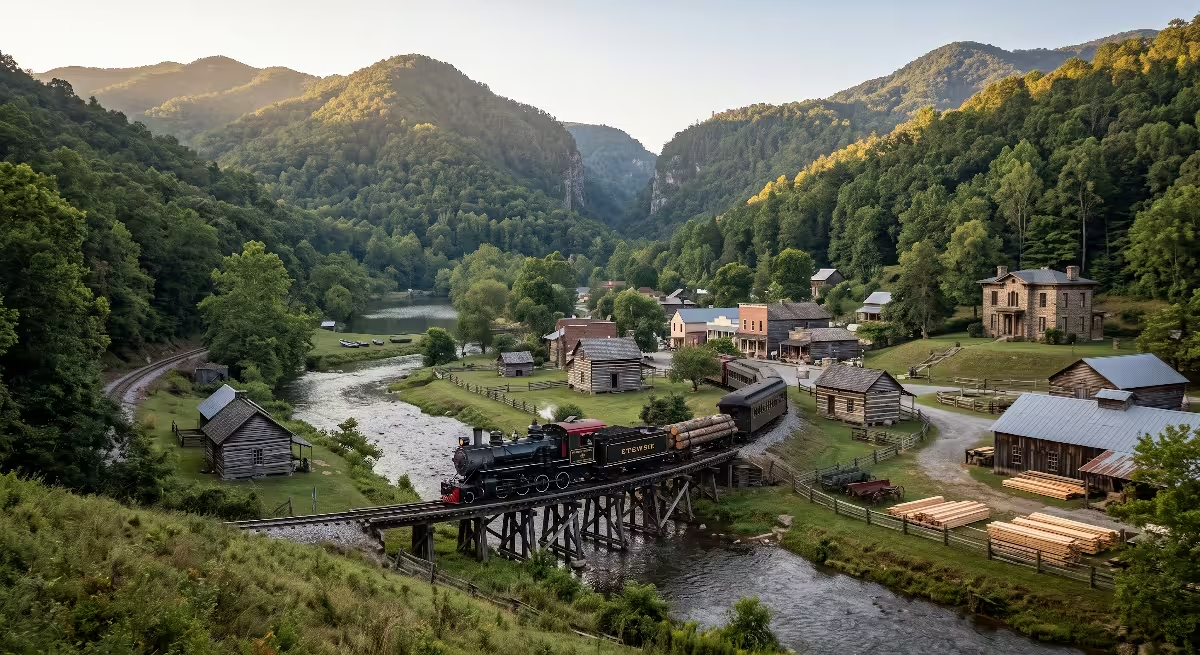
No single engineering project influenced life in Roan Mountain, TN more than the construction of the East Tennessee and Western North Carolina Railroad, known fondly as Tweetsie. Chartering in the late nineteenth century, this narrow-gauge railway connected the iron mines of Cranberry, North Carolina, with the growing manufacturing centers of Johnson City, Tennessee. The train route carved a dramatic path directly through Carter County and stopped in Roan Mountain, TN.
Building the railroad through the Doe River Gorge was a monumental achievement for civil engineers. The gorge was a narrow canyon lined with steep cliffs of solid granite. Labor crews worked with hand drills, black powder, and early dynamite to blast ledges along the river walls. They constructed covered wooden trestles across the rushing Doe River and drove tunnels through solid rock. When the narrow-gauge tracks reached the valley settlement of Roan Mountain, TN in the early 1880s, the isolated mountain community changed almost overnight.
Role of the "Tweetsie" Railroad (ET&WNC)
------------------------------------------------------------------------
1. Industrial Freight: Hauling high-grade Cranberry iron ore to foundries
2. Timber Shipping:    Carrying spruce, oak, & chestnut lumber to mills
3. Passenger Travel:   Bringing tourists & resort guests to Roan Mountain, TN
4. Postal Connection: Delivering regular mail, goods, & regional news
------------------------------------------------------------------------
The railroad brought steady commerce to Roan Mountain, TN. The depot area became known as Roan Mountain Station, featuring general stores, hotels, blacksmith shops, and freight warehouses. Farm families brought timber, apples, and livestock to the depot to sell in regional markets. The train carried thousands of vacationers each summer on their way to General Wilder’s mountain resorts.
The narrow-gauge train earned its nickname from the high-pitched chime of its steam whistles, which echoed through the river gaps around Roan Mountain, TN. The railroad served the region loyally for decades, but severe mountain weather proved challenging once again. In August 1940, a catastrophic storm dropped record rain over the Blue Ridge. Massive flash floods ripped down the Doe River, washing away miles of track, bridges, and roadbeds. Rebuilding the narrow-gauge line through the rugged gorge proved too expensive, and passenger rail service through Roan Mountain, TN came to an end. Today, portions of that old railbed serve as popular walking trails, preserving the memory of the steam era.
Mountain Homesteading and Vernacular Architecture: The Miller Farmstead
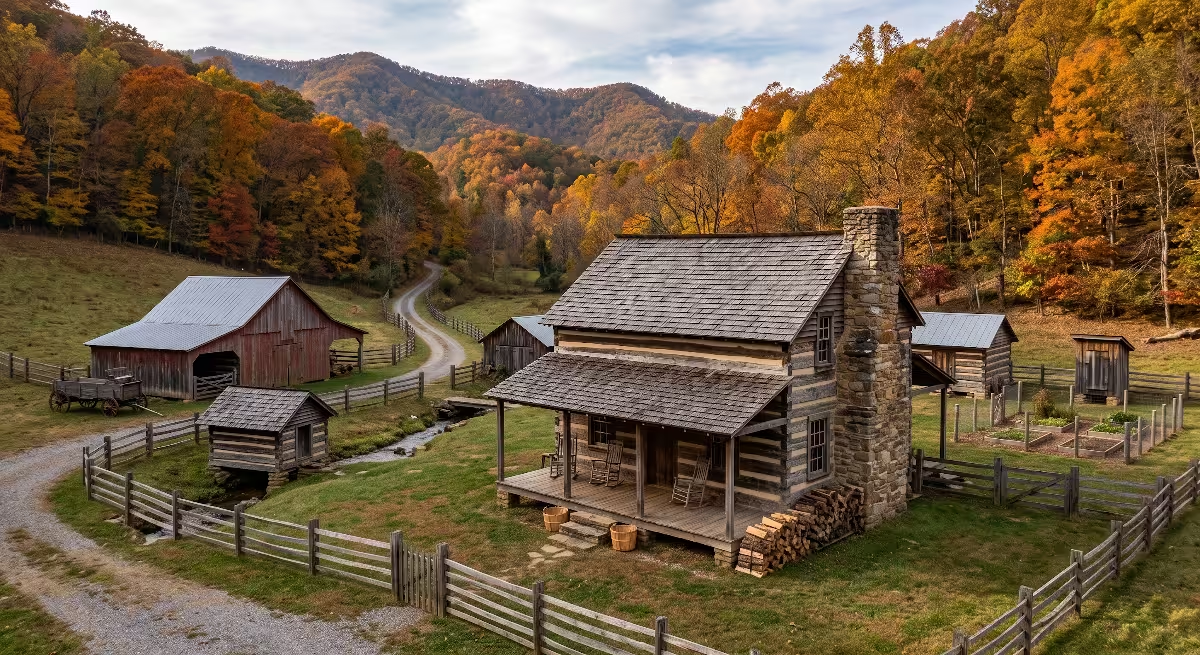
While grand resorts and rail lines grabbed newspaper headlines, the true backbone of Roan Mountain, TN was its self-sufficient mountain homesteaders. Life in these Appalachian hollows required discipline, resourcefulness, and deep practical knowledge of woodcraft and construction. Families had to build their own homes, grow their own food, and maintain their tools without depending on distant towns.
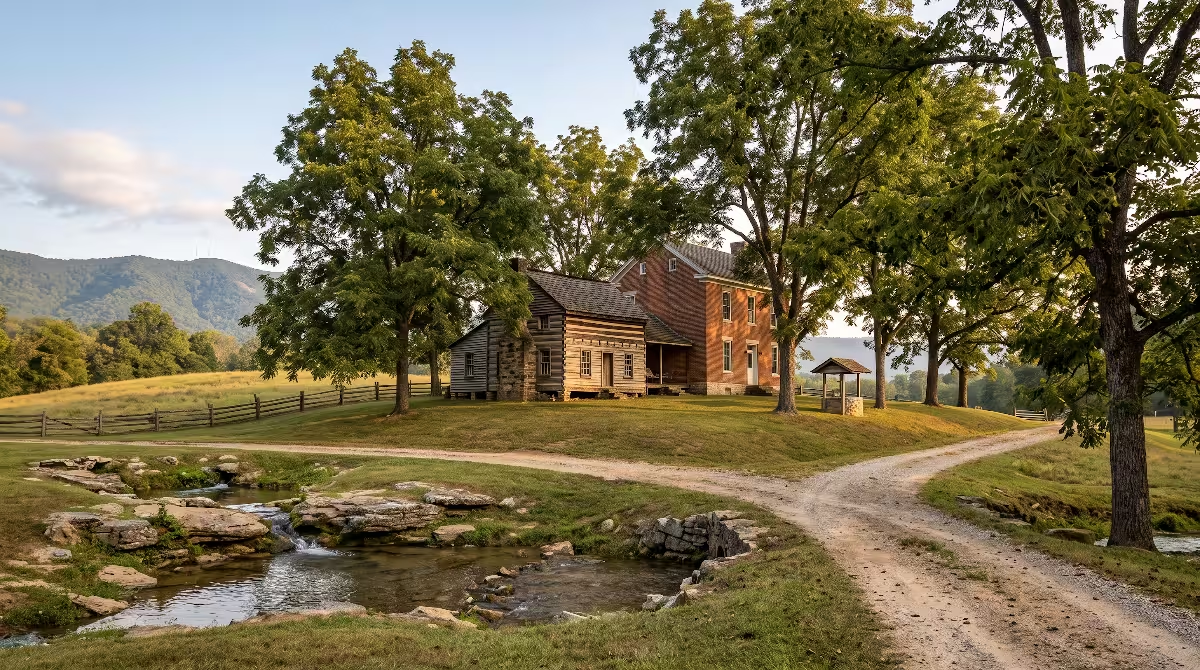
A prime example of this mountain craftsmanship is the historic Miller Farmstead, located on Strawberry Mountain within Roan Mountain, TN. Settled around 1870 by the Miller family, this preserved mountain farmstead provides modern builders with a valuable lesson in vernacular architecture. Vernacular building means designing structures to fit local weather, topography, and native materials without formal architectural blueprints.
Vernacular Building Analysis: The Miller Farmstead
========================================================================
Architectural Element    Traditional Method         Practical Benefit
------------------------------------------------------------------------
Main Walls               Hand-hewn chestnut logs    Rot-resistant, strong
Corner Joinery           Half-dovetail notching     Locks tight, sheds water
Foundation System        Dry-stack fieldstone piers Elevates wood off damp dirt
Chinking & Daubing       Clay, mud, & horsehair     Seals out cold winter drafts
Orientation              South-facing home facade   Maximizes winter sunlight
Food & Water Systems     Gravity-fed springhouse    Natural refrigeration
========================================================================
It is hard to not admire the joinery used by the early settlers in Roan Mountain, TN. The builders used American chestnut logs because the wood was strong, straight-grained, and naturally resistant to rot and insects. They shaped each log using a broadaxe, leaving flat surfaces on the interior and exterior walls. At the building corners, they cut half-dovetail notches by hand. This interlocking joint pulled the logs tighter as the structure settled, directing rainwater outward rather than letting it soak into the wood.
The placement of the Miller Farmstead in Roan Mountain, TN demonstrates excellent passive design. The house was built facing south to capture solar heat during freezing winter months. The family built a stone springhouse over a cold mountain spring, using flowing mountain water to chill fresh milk, butter, and eggs. Nearby root cellars protected potatoes, apples, and canned goods from winter freezes. Today, the Miller Farmstead is listed on the National Register of Historic Places, welcoming visitors who want to see how early families lived and built in Roan Mountain, TN.
20th-Century Conservation: The CCC, Forest Service, and State Park Creation
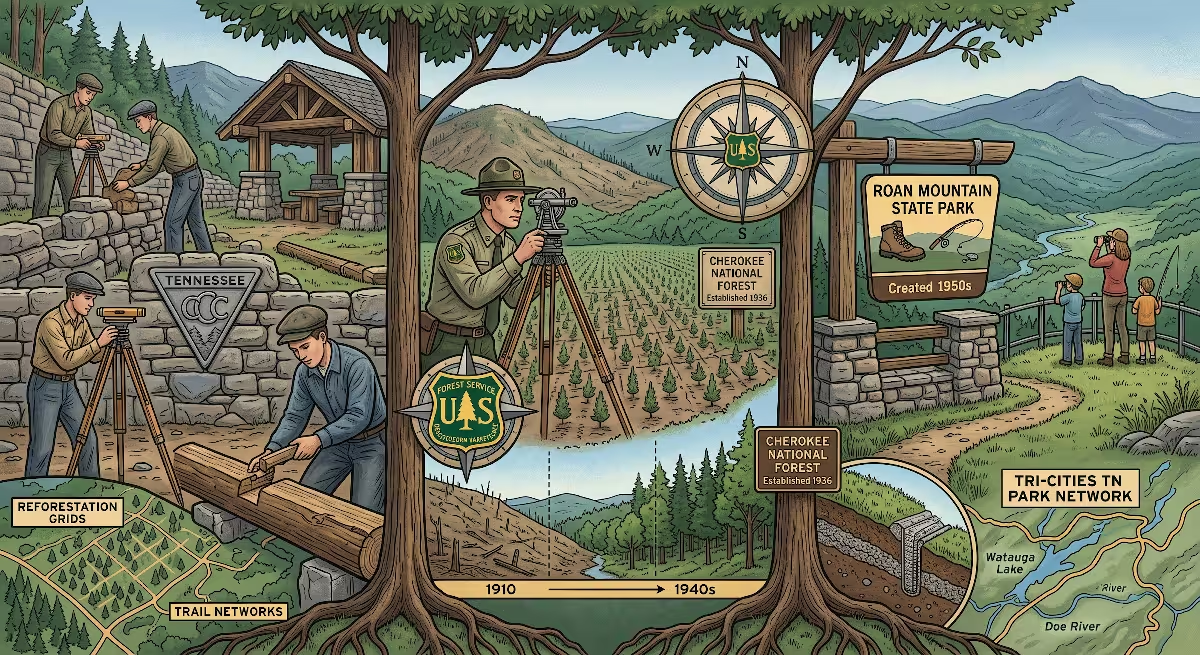
By the early decades of the twentieth century, thoughtful citizens recognized that the natural beauty of Roan Mountain, TN required permanent protection. Decades of heavy logging, mining, and uncontrolled forest fires had taken a toll on the mountainsides. The Great Depression of the 1930s sparked important federal relief programs that helped rebuild the land around Roan Mountain, TN.
The Civilian Conservation Corps, established under President Franklin D. Roosevelt, brought hundreds of young workers to Carter County. These crews built roads, constructed stone culverts, cleared dead timber, planted thousands of trees, and constructed durable hiking trails across the ridges around Roan Mountain, TN. Their masonry and carpentry work can still be seen in stone walls and trail bridges throughout the area.
Milestones in Modern Conservation
------------------------------------------------------------------------
1930s: Civilian Conservation Corps restores forests and builds trails
1941:  U.S. Forest Service purchases mountain balds for public land
1947:  First annual Roan Mountain Rhododendron Festival is held
1959:  Roan Mountain State Park is officially established by the state
1970s: Southern Appalachian Highlands Conservancy protects open balds
------------------------------------------------------------------------
During the 1940s, the United States Forest Service purchased thousands of acres along the mountain crest, incorporating the high summits into the Cherokee National Forest and Pisgah National Forest. This federal purchase ensured that the wild grassy balds and Catawba rhododendron gardens above Roan Mountain, TN would remain open for public enjoyment rather than private commercial development.
In 1947, local civic leaders organized the first annual Rhododendron Festival, celebrating the spring blooming season with traditional Appalachian music, food, and craft demonstrations in Roan Mountain, TN. In 1959, the State of Tennessee took an important step by creating Roan Mountain State Park. Spanning more than two thousand acres along the Doe River, the park offers modern campgrounds, rental cabins, hiking trails, and educational programs. Non-profit conservation groups, including the Southern Appalachian Highlands Conservancy and local Appalachian Trail maintaining clubs, continue working with park staff to protect fragile meadows, control encroaching brush, and maintain the open views that make Roan Mountain, TN a treasure for outdoor lovers.
Frequently Asked Questions About Roan Mountain History
Why is it called Roan Mountain?
The most common historical explanation connects the name to the appearance of the mountain summit. In late spring, purple and red Catawba rhododendron blooms paint the high ridges. In early autumn, bright red mountain ash berries stand out against the rocky ledges. Viewed from the valley floor in Roan Mountain, TN, these colors give the peaks a roan, or reddish-gray, hue. Another regional legend claims that explorer Daniel Boone grazed his roan horse on the high balds, though most historians prefer the botanical color explanation.
What is Roan Mountain famous for?
The area is famous for several natural and historical highlights:
- The world’s largest natural garden of Catawba rhododendrons, blooming every June.
- The expansive grassy balds along the Appalachian Trail, providing 360-degree views.
- The historic 1780 encampment of the Overmountain Men at Shelving Rock in Roan Mountain, TN.
- The historic ruins of General John T. Wilder’s four-story Cloudland Hotel.
- Excellent trout fishing, camping, and hiking within Roan Mountain State Park.
Quick Reference: Top Points of Interest in Roan Mountain, TN
========================================================================
Site Name               Location                     Key Historic Attraction
------------------------------------------------------------------------
Shelving Rock           TN Route 143                 1780 Overmountain Men Camp
Miller Farmstead        Roan Mountain State Park     1870s Traditional Homestead
Carvers Gap             TN / NC State Border         Appalachian Trail Access
Rhododendron Gardens    Forest Service Rec Area      World-Famous June Blooms
Cloudland Hotel Site    Summit Trail System          Late-1800s Grand Resort Site
========================================================================
Is Roan Mountain in Tennessee or North Carolina?
Roan Mountain encompasses territory in both states, but the specific community structure is clearly divided. The town of Roan Mountain, TN, the valley business district, and Roan Mountain State Park are located entirely inside Carter County, Tennessee. However, the high mountain massif and the Appalachian Trail cross along the state border between Carter County, Tennessee, and Mitchell and Avery Counties, North Carolina.
What happened at Shelving Rock in Roan Mountain, TN?
On September 26, 1780, the Overmountain Men made camp at Shelving Rock during their march toward the Battle of Kings Mountain. The Patriot militia stacked their black powder under the dry stone ledge to keep their ammunition safe from rain and dampness. That protection allowed their rifles to fire reliably eleven days later, securing a major victory against the British army.
Who built the Cloudland Hotel on Roan Mountain?
Union General and industrialist John T. Wilder built the Cloudland Hotel. He constructed a modest log lodge in 1877 and expanded it into a four-story, 166-room resort hotel in 1885. The hotel catered to guests seeking cool mountain breezes and relief from summer hay fever until harsh winter conditions forced its closure around 1910.
Why are there no trees on Roan Mountain’s grassy balds?
Scientists continue to study why the highest balds lack thick tree canopies. The leading explanations include severe Ice Age winds that prevented initial forest growth, grazing by ancient Ice Age mammals, controlled seasonal burning by Native American hunters, and decades of livestock grazing by early settlers in Roan Mountain, TN. Today, conservation managers use controlled grazing and hand-clearing to keep brush from overtaking these rare open meadows.
How can visitors explore historic sites in Roan Mountain, TN today?
Visitors can tour historic sites throughout the valley and mountains:
- Visit the Shelving Rock historical marker on State Route 143 in Roan Mountain, TN.
- Walk the grounds and outbuildings of the historic Miller Farmstead in Roan Mountain State Park.
- Hike through Carvers Gap along the Appalachian Trail to experience Round Bald and Jane Bald.
- Drive up to the rhododendron gardens and view historical markers where the Cloudland Hotel once stood.
- Attend the annual Rhododendron Festival held each June in Roan Mountain, TN.
Practical Building Lessons from Roan Mountain’s Architectural Past
The history of Roan Mountain, TN offers valuable insights for anyone planning to build or purchase mountain property today. The pioneers, industrial engineers, and resort builders who came before us learned difficult lessons about this terrain. When we study their successes and their failures, we become smarter homeowners, builders, and land stewards.
First, consider the lesson of the Cloudland Hotel. General Wilder had a bold vision and deep financial resources, but his construction methods failed to account for the brutal weather on the summit. When you build above three thousand feet in Carter County, moisture management, wind loads, and freeze-thaw cycles are your primary engineering challenges. Modern builders working near Roan Mountain, TN must specify commercial-grade flashing, impact-resistant roofing, continuous air barriers, and high-performance insulated windows. If you cut corners on the building envelope in this climate, mountain wind and ice will exploit every gap.
Second, consider the lasting success of the Miller Farmstead. The Miller family had no modern power tools, concrete trucks, or fiberglass insulation, yet their home stood strong for over a century. They succeeded because they respected the natural landscape of Roan Mountain, TN. They used decay-resistant native timber, elevated their wood framing above damp soil using dry-stack stone foundations, and oriented their living spaces toward the winter sun. Modern custom home builders can use these same principles by integrating passive solar design, proper site drainage, and heavy-timber structural elements that blend into the Appalachian surroundings.
Builder's Checklist for Mountain Construction in Carter County
========================================================================
Design Consideration    Historical Insight         Modern Best Practice
------------------------------------------------------------------------
Soil & Bedrock          Granite & gneiss ledges    Engineered geo-tech testing
Wind Resistance         High bald wind shear       Engineered hurricane ties & clips
Moisture Management     Heavy rain & winter ice    Vapor barriers & rainscreens
Thermal Efficiency      Extreme winter freezes     Continuous exterior insulation
Site Orientation        Pioneer passive solar      South-facing glass & rooflines
========================================================================
Third, never underestimate the legal and environmental considerations of mountain building. Just as early loggers caused unintended erosion across the Doe River watershed, modern land grading in Roan Mountain, TN can quickly cause stormwater problems if not engineered properly. Siting a driveway on a steep slope requires careful culvert placement, retaining wall engineering, and erosion control blankets. Understanding local zoning rules, Carter County building codes, and environmental protections ensures that your dream home respects the natural beauty that drew you here in the first place.
Whether you are looking to build a custom cabin tucked away in a quiet hollow, purchase a retirement home near the state park, or simply walk the historic paths of the Overmountain Men, Roan Mountain, TN stands as a living testament to Appalachian endurance. Its deep history is written in its ancient rocks, preserved along its mountain streams, and carried on the clean mountain breezes that sweep across the high balds. As we continue building communities across East Tennessee, we carry forward the duty to honor and protect the remarkable story of Roan Mountain, TN for many years to come.