

The dream of working from home is a powerful one. It promises flexibility, comfort, and an end to the daily commute. But for many, the reality has become something different. The lines have blurred. The dining room table has become a boardroom, the bedroom a call center, and the workday never seems to truly end. You find yourself living at the office instead of working from your home. When working from home, the physical environment, the very structure of your home, is the most critical foundation for establishing the psychological boundaries you need. A well designed space makes a well defined life possible. Without a solid foundation and clear structure, any building is unstable.
The same is true for your daily life. Achieving genuine work-life separation is not about a single trick. It is about building a complete system. This article is your guide to effective work-life separation. We will explore how to construct robust boundaries by focusing on the interplay between your physical space, your daily schedule, and your professional mindset. This is how you reclaim your home and achieve a sustainable work-life separation.
The Foundation: Architecting Your Physical Workspace

Before you can build anything lasting, you must lay a proper foundation. In the context of remote work, your physical workspace is that foundation. Ignoring it is like trying to build a house on sand. It is the most common mistake people make, and it is the primary reason they struggle to achieve work-life separation. Your brain is wired to make associations. When you repeatedly perform an activity in a certain place, your mind links the two. If you work everywhere in your house, your entire home becomes the office. Let’s pour the concrete for a better system.
The Non-Negotiable: A Dedicated Workspace
The single most important step you can take to improve your work-life separation is to designate a specific spot in your home that is used only for work. This is not a suggestion; from a structural standpoint, it is a requirement. When you have a dedicated workspace, you create a powerful psychological trigger. Entering that space signals to your brain that it is time to focus and be productive. More importantly, leaving that space signals that it is time to stop.
This does not mean you need a massive corner office with a view. It simply means you need a corner of your world that is exclusively professional. This physical separation is the first and most crucial element in building your overall work-life separation. It is the wall that divides your role as an employee from your role as a spouse, parent, or individual. Without this wall, those roles will constantly bleed into one another, causing stress and burnout. Creating this space is the first practical step toward a better work-life separation.
The Custom Build: Designing the Ideal Home Office
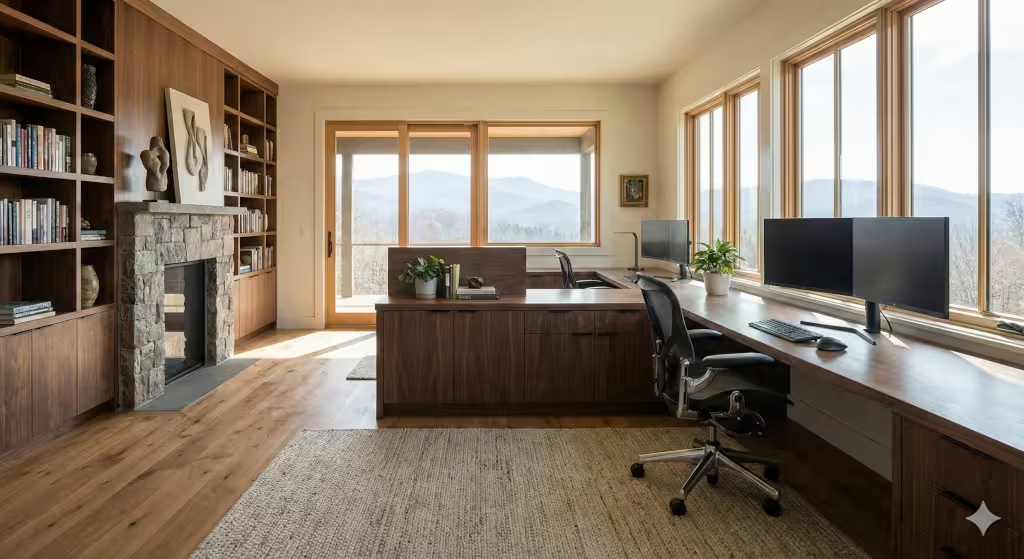
If you have the luxury of a dedicated room, you have the opportunity to custom build an environment perfectly suited for productivity and work-life separation. Think of it like designing a custom home. Every choice you make can support your goal.
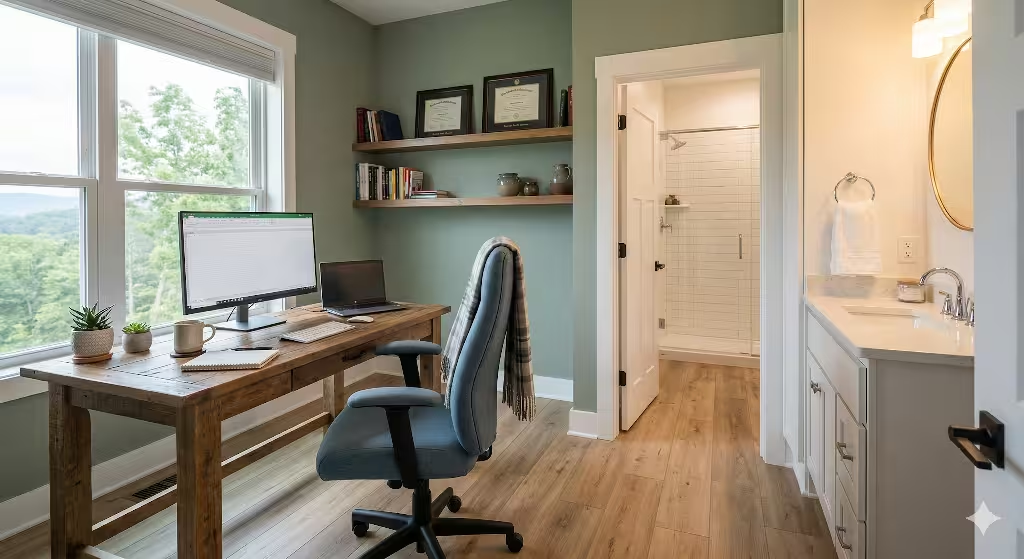
Location is Key: Where you place your office in your home’s floor plan matters immensely. An office near the front door can be ideal if you ever have clients or colleagues visit. It keeps business traffic separate from your family’s living areas. However, this location can also be noisy and full of distractions. For deep, focused work, a room in a secluded corner of the house, perhaps upstairs or in the back, is far better. Consider the flow of your home and choose a location that minimizes unwanted interruptions.
Sound Control: Noise is a major enemy of focus and a key stressor that blurs boundaries. When you can hear your family and they can hear your conference calls, the lines are not clearly drawn. Fortunately, sound control can be built in. A simple upgrade from a hollow core door to a solid core door can make a significant difference. For more advanced soundproofing, we can add acoustic panels to the walls, use special sound-dampening drywall, or install insulation specifically designed for noise reduction. These structural choices create a true sanctuary for work, reinforcing your work-life separation.
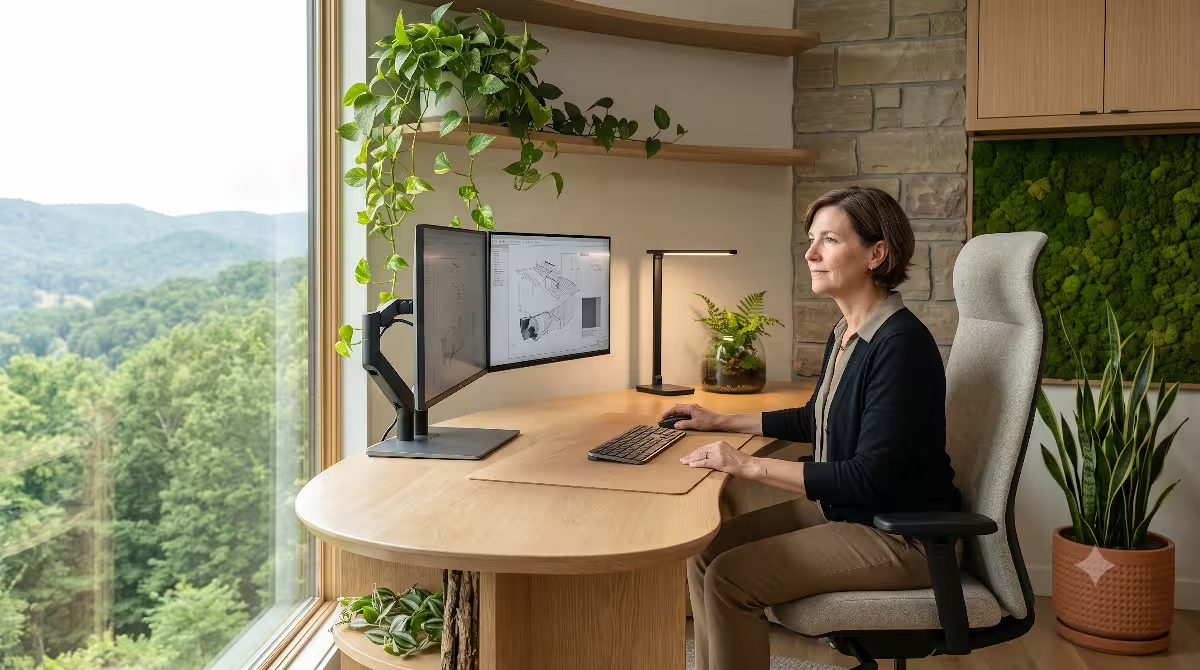
Lighting and Views: Never underestimate the power of light. Natural light is proven to boost mood and regulate your body’s internal clock. If possible, position your desk to face or be adjacent to a window. However, avoid placing it where glare on your screen will be an issue. Beyond natural light, use layered lighting: a main overhead light, a task light for your desk, and perhaps a softer lamp. This allows you to adjust the environment for different needs.
A concept we are using more in modern home building is Biophilic Design. This is a simple idea: connect your workspace with nature. A view of trees, placing plants in your office, or using natural materials like wood can measurably reduce stress. A less stressful workday is one that is easier to leave behind, which is essential for a healthy work-life separation.
The Renovation: Creating a Work Zone in a Multi-Use Area
What if you do not have a spare room? Do not worry. You can still create the dedicated space needed for work-life separation. We just need to approach it like a smart renovation project, maximizing the space you have. The goal is to create a distinct zone for work.
Visual Delineation: You need to create clear visual boundaries. Place your desk in the corner of a living room or bedroom. Use a decorative, foldable screen to physically hide the workspace when you are not using it. “Out of sight, out of mind” is a powerful principle. Placing your desk setup on a distinct area rug also works well to visually define the space. The moment you step off that rug, you have left the office.
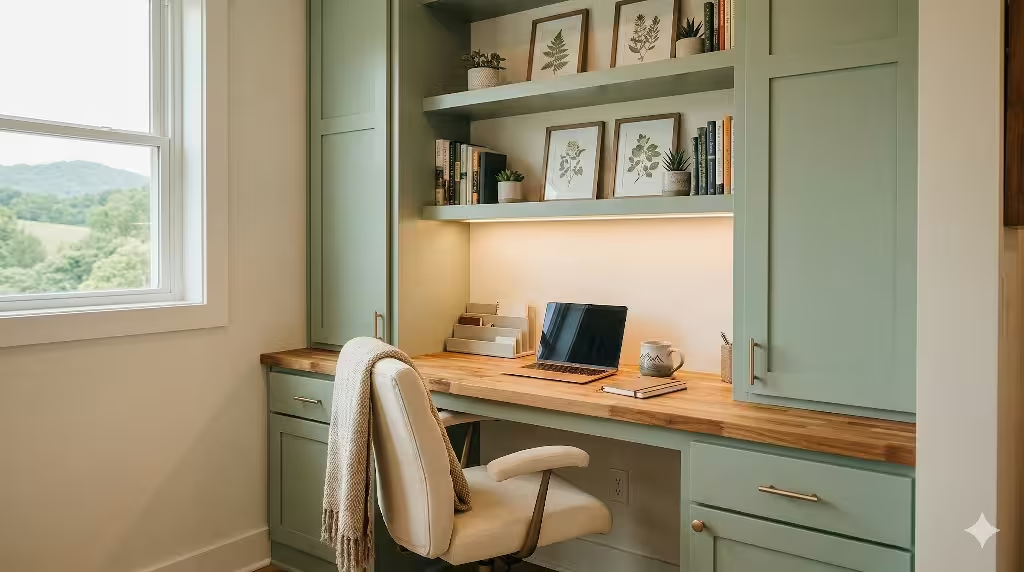
The “Cloffice”: A popular and highly effective trend is the “cloffice”, or closet office. By removing the doors from a little used closet and building in a desk and shelving, you create a compact, self contained office. The best part? At the end of the day, you can literally shut the doors and your office disappears. This is an incredibly effective tool for enforcing work-life separation.
Ergonomics as Structure: Just as a house needs good structure to avoid falling down, your body needs good structure to avoid breaking down. Ergonomics is the science of fitting a job to the person. A painful back or sore neck does not stay in the office when you log off. It follows you into your personal time.
A proper ergonomic setup is a key, if underrated, part of good work-life separation. Ensure your chair provides good lumbar support. Your feet should be flat on the floor, and your knees should be at a 90 degree angle. Your desk should be at a height where your elbows are also at a 90 degree angle when you type. Your monitor should be at eye level. These adjustments prevent physical strain that contributes to overall fatigue and burnout.
Framing the Day: Time Management and Rituals
Once your physical foundation is set, you need to build the frame. In a house, the frame dictates the shape of the rooms and the flow of the structure. In your workday, your schedule and rituals serve the exact same purpose. When you worked in an office, the building provided this frame for you. The commute, the scheduled lunch break, the act of leaving the building, these were all external signals that structured your day. At home, you must build this frame yourself. This internal structure is vital for a strong work-life separation.
The “Morning Commute”: Bookending Your Workday
The commute to work served a hidden purpose. It was a transitional period. It gave your brain time to switch from “home mode” to “work mode.” You need to recreate this. Your new commute might be a 15 minute walk around the neighborhood before you start your day. It could be the ritual of making a specific cup of coffee that you only drink right before you start working. It could even be changing from your pajamas into work clothes. It does not matter what the ritual is, but it matters that you have one.
The “evening commute” is even more critical for your work-life separation. You need a clear ritual that signals the end of the workday. This is your transition back to home life. It could be another walk, changing your clothes again, or a specific activity like listening to a podcast or spending ten minutes tidying your workspace. This bookend tells your brain, definitively, that the professional part of the day is over.
Architecting Your Schedule: Time Blocking and Task Management
Working from home offers flexibility, but that flexibility is a trap without discipline in your work-life separation. The best way to create discipline is to architect your day. Treat your calendar as the official blueprint. Use a technique called Time Blocking. Instead of just having a to do list, assign every single task to a specific block of time on your calendar. Schedule everything, including lunch, short breaks, and your hard stop time.
Another powerful technique is the Pomodoro Technique. This is a simple but effective method for managing focus. You work in an uninterrupted 25 minute block, then take a 5 minute break. After four of these cycles, you take a longer 15 to 30 minute break. This method prevents burnout and keeps your mind fresh. By structuring your day with these intentional methods, you stay in control. You are building the day, not just letting it happen to you. This control is fundamental to maintaining a healthy work-life separation.
The “Closing Bell”: Enforcing a Hard Stop
This is the most difficult but most important part of framing your day. You must have a non negotiable end time. When that time arrives, you stop. It does not matter if you are in the middle of an email. It does not matter if you have one more small task. You stop. Just like a factory has a closing bell, you need one too.
Set an alarm on your phone for your end time. Then, set a second alarm 15 minutes before that. Use that 15 minute window to perform your shutdown sequence. Review your plan for the next day. Tidy your desk. Write down any lingering thoughts so you can forget them overnight. Then, when the final alarm goes off, you walk away. This single habit will do more for your work-life separation than almost anything else. Having a planned activity right after work, like going to the gym or cooking dinner with your family, can provide the pull you need to step away consistently. A strong work-life separation depends on this discipline.
Installing the “Firewall”: Digital and Mental Boundaries

With the foundation laid and the frame built, it is time to install the systems that protect the structure. In a home, this means wiring, plumbing, and insulation. In your work from home life, it means installing the digital and mental “firewalls” that keep work from creeping into every corner of your existence. Technology is a wonderful tool, but it is also the primary vehicle through which your work-life separation is eroded.
Taming Your Technology
Your laptop and phone are the open doors that allow work to invade your personal time. You need to install some locks. A simple and powerful technique is to use separate user profiles on your computer. Have one profile for work and one for personal use. Your work profile has your work email, work bookmarks, and work software. Your personal profile has none of that. When you log out of your work profile, you are digitally leaving the office.
The same goes for your phone. Turn off all work related notifications after your designated stop time. No email pings, no Slack notifications, no Teams messages. The urge to “just quickly check” is a powerful one. The only way to consistently beat it is to remove the trigger completely. If you can, avoid using your personal phone for work at all. Having a separate work phone that you can physically turn off and put in a drawer is the ultimate digital boundary and a powerful enforcer of work-life separation. A proper work-life separation requires you to be in control of your technology, not the other way around.
The Mental Shutdown Sequence
Even after you have physically and digitally left the office, your mind can still be there. You might find yourself thinking about a difficult project while you are trying to enjoy dinner with your family. This is a breach in your mental firewall. You need a process for clearing your mental cache at the end of the day.
The best method is a “brain dump.” Keep a notebook on your desk. In the last five minutes of your workday, write down everything that is on your mind related to work. Every unfinished task, every worry, every idea for tomorrow. The act of writing it down transfers it from your mind onto the paper. You have captured it, so your brain gets the signal that it is okay to let go for the night. You know you will not forget it because it is written down. This simple habit is incredibly effective for achieving mental work-life separation.
A brief mindfulness exercise can also help. Take just three to five minutes after you shut down your computer to sit quietly and focus on your breath. This acts as a reset button, helping you transition from a state of high mental activity to a state of rest and presence.
Communicating Boundaries with Clarity and Integrity
The final piece of your firewall is how you interact with other people. Your boundaries will only be respected if you communicate them clearly and professionally. This is not about being unhelpful or rigid. It is about setting predictable expectations.
In your email signature, you can include a line like, “My working hours are 9 AM to 5 PM. I will respond to messages received outside of these hours on the next business day.” Use the status features in apps like Slack and Teams to show when you are available and when you are offline.
When a colleague sends you a request late in the day, it is okay to respond with, “I have received this and will make it a priority tomorrow morning.” This shows that you are responsive, but it also reinforces your work hours. You are teaching people how to interact with you. Clear communication is a sign of a competent professional and is absolutely essential for maintaining a long term, healthy work-life separation. Your colleagues will learn to respect your time, but only after you have demonstrated that you respect it first. True work-life separation is a team effort, and it starts with your own professional integrity.
Conclusion: Your Home is a Sanctuary, Not Just a Workplace
We have laid out the blueprint for a better way to work from home. Building an effective and lasting work-life separation is not a mystery. It is a construction project. It is built upon three strong pillars: a dedicated and well designed physical space, a structured and disciplined approach to time management, and a protected and intentional set of mental boundaries. Each piece reinforces the others, creating a structure that can withstand the pressures of an always on work culture.
Investing your time and effort to construct these boundaries is one of the most important investments you can make in your long term health and career sustainability. A well built home is more than just a structure; it supports and enhances the life that is lived within it. Your goal should be the same. Your home must first be a sanctuary for your personal life. By building these clear and sturdy walls between your personal and professional worlds, you ensure that it remains one. You are not just building a better way to work; you are building a better life.