

When you walk down the tree-lined streets of Johnson City, Bristol, or Kingsport in the fall, there is something truly special about an authentic Craftsman bungalow. The low roofs, exposed rafters, sturdy porch posts, and rich stone foundations speak directly to honest craftsmanship. As an engineer and carpenter who has managed home builds across East Tennessee for decades, I always tell custom home buyers that true curb appeal is built from the outside in. Every element on the exterior of a bungalow should look intentional, balanced, and structurally sound.
Window boxes offer one of the most rewarding ways to celebrate your home’s historic roots while welcoming the crisp autumn season. Yet, an authentic Craftsman home demands a bit more thought than just hanging a generic plastic planter under a window. The weight of the planter, the choice of materials, how air moves behind the box, and the textures of the plants all matter.
When you plan thoughtful autumn window box arrangements, you connect the clean lines of timber construction with the wild, earthy tones of our mountain landscape. Let us walk step by step through how to build, secure, style, and care for autumn window box arrangements that honor your bungalow and protect your exterior walls for years to come.
The Craftsman Connection: Architecture and Nature in Harmony
The American Craftsman movement grew out of the Arts and Crafts philosophy of the late nineteenth and early twentieth centuries. It was an intentional reaction against the mass production and fussy ornamentation of the Victorian era. The founders of this movement believed in simple forms, visible structural joints, natural materials, and an organic connection between a house and its site.
In a Craftsman bungalow, the house is designed to sit low to the ground. Deep eaves and wide front porches help the structure blend into the surrounding hills. Window boxes play a major role in this visual grounding. When placed beneath wide double-hung or casement windows, a window box emphasizes the horizontal lines of the facade. It anchors the window openings, drawing the eye down and across the home rather than straight up into the roofline.
Window boxes also soften the transition between hard building materials and living landscapes. A bungalow often features rough river rock piers, heavy cedar shake siding, or smooth clapboard. By installing autumn window box arrangements, you bring living elements right up onto the walls. The arrangement acts as a natural bridge between your foundation plantings and your architecture.
For female homeowners and custom home buyers, this architectural connection often feels intuitive. A house should never feel like a cold box dropped onto a cleared lot. It should feel rooted in its environment. When your autumn window box arrangements echo the surrounding landscape, the whole property feels cohesive, inviting, and secure.
The Autumn Opportunity: Tying Fall Color to Bungalow Exterior Palettes
Autumn in Southern Appalachia brings a dramatic shift in natural light and color. The bright green canopy turns to rust, russet, ochre, gold, and deep wine. This seasonal shift presents an incredible design opportunity for Craftsman homeowners.
Historic bungalows almost always feature warm, earthy exterior paint palettes. Common traditional colors include:
- Earthy olive and moss greens
- Rich mission browns and bark grays
- Warm ochre, mustard, and burnt sienna
- Cream and off-white trim colors
- Deep slate and dark bronze accents
During the summer months, bright pink petunias and vibrant red geraniums can sometimes clash with these muted earth tones. But fall is the season where a bungalow truly shines. The natural color spectrum of autumn window box arrangements complements the organic exterior materials of a Craftsman home better than any other season.
When you design autumn window box arrangements for this style of home, you are not simply gathering flowers. You are building a live color study. The rich coppery orange of an ornamental sedge, the deep eggplant purple of winter kale, and the warm bronze of coral bells mirror the stains on your porch posts and the warm undertones of fieldstone masonry.
Planning autumn window box arrangements during this transitional window lets you highlight architectural trim work. When cool breezes arrive, a well-planned box creates a comforting, welcoming visual entry point before guests even step up onto your porch stairs.
Engineering First: Weight Distribution, Moisture Control, and Wall Safety
As a builder and project manager, this is where I share my strongest professional advice: never hang a planter box on your home without thinking like an engineer first.
A well-crafted window box filled with damp potting soil, root balls, and heavy decorative elements is not light. A standard 48-inch window box that is 9 inches wide and 9 inches deep holds roughly two cubic feet of soil. Dry potting mix weighs around 20 to 25 pounds per cubic foot. But when that soil is thoroughly watered, it can easily weigh 50 to 60 pounds per cubic foot. Add the weight of the box itself, the plants, and any pumpkins or branches you include, and your window box can easily weigh 120 to 150 pounds.
If you hang that weight from simple siding nails or hollow wall anchors, you are setting yourself up for structural failure. Over time, that load will pull away from the wall, crack your siding, and tear open points where rainwater can enter.
Moisture control is an even bigger concern. If you mount a flat-backed wooden box directly flush against wood or fiber-cement siding, rainwater will get trapped in the seam. The siding cannot dry out. Within a couple of seasons, the wood behind the box will soften, rot, and invite wood-boring insects.
Before we think about the flowers in our autumn window box arrangements, we must make sure the box is safely supported and properly separated from the home. Every single lag screw must bite deep into a solid wall stud, not just exterior sheathing. Spacers must be installed behind the box to maintain a continuous air gap so rainwater can run down the wall and dry out completely. Good curb appeal never compromises the structural integrity of your building envelope.
Scale and Sizing Rules: Getting Proportions Right for Bungalow Windows
One of the most frequent mistakes I see on home remodels is an undersized window box. Someone buys a generic 30-inch planter from a big box store and centers it beneath a 40-inch window. An undersized box looks like an afterthought. It floats awkwardly on the wall and disrupts the visual balance of the facade.
In Craftsman architecture, trim casings are deliberately wide, bold, and substantial. The window sills are thick and prominent. Your window box must match that scale.
Width Guidelines
Your window box should span the full width of the window frame, including the exterior side trim casings. If your window glass is 32 inches wide, but the outer edges of the wood trim measure 40 inches across, your window box should be exactly 40 inches wide. In some designs, extending the box one inch past the trim on each side can provide an even more anchored, custom built-in look. It should look like a permanent carpenter-built architectural feature, not a temporary basket.
Depth and Height Proportions
For successful autumn window box arrangements, the interior dimensions of the box are critical:
- Depth (Front to Back): Aim for an interior measurement of at least 8 to 10 inches. Anything narrower dries out far too quickly in dry autumn winds and restricts root growth.
- Height (Top to Bottom): The face of the box should generally measure between 8 and 11 inches tall. This hides the plastic nursery pots inside and provides enough vertical surface area to balance the height of the window above it. A box that is too shallow looks flimsy underneath heavy bungalow windows.
Maintaining these proportions gives you enough soil volume to insulate plant roots when nighttime temperatures drop toward freezing in late October and November.
Material Selection: Wood, Metal, and Composite Options for Window Boxes
The materials you choose for your boxes should honor the handmade aesthetic of the bungalow while standing up to rain, frost, and soil moisture.
+-------------------+-----------------------+---------------------+-----------------------+
| Material          | Durability & Lifespan | Aesthetic Match     | Maintenance Level     |
+-------------------+-----------------------+---------------------+-----------------------+
| Western Red Cedar | High (15-20+ years)   | Authentic Craftsman | Low to Moderate       |
| White Oak / Pine  | Low to Moderate       | Historic look       | High (Needs paint)    |
| Cellular PVC      | Very High (25+ years) | Crisp, paintable    | Very Low              |
| Copper Liners     | Exceptional (Decades) | Classic Arts/Crafts | Zero (Ages naturally) |
+-------------------+-----------------------+---------------------+-----------------------+
Natural Cedar and Cypress
Western Red Cedar, Redwood, and Cypress are traditional choices for good reason. They contain natural oils, tannins, and resins that resist decay, rot, and fungal growth. Cedar takes solid-color exterior stains and paints cleanly, but it also looks gorgeous when treated with a clear exterior penetrating oil that lets the warm wood grain show. For authentic Craftsman styling, rough-sawn cedar brings wonderful natural texture to your facade.
Cellular PVC (Polyvinyl Chloride)
If you want a box that will never rot, crack, or split, modern cellular PVC boards are an exceptional building material. Unlike standard hollow plastic, cellular PVC has the density, weight, and working qualities of real white pine. You can cut, rout, drill, and screw it using standard carpentry tools. It comes in a matte white finish that holds 100% acrylic exterior paint better than real wood because moisture cannot migrate through the board to push the paint off. If your bungalow has painted exterior trim, a painted PVC box offers incredible longevity with very little upkeep.
Copper and Metal Liners
Installing a custom-bent sheet copper or zinc liner inside your wooden box creates an ultimate luxury finish. Copper develops a rich green-brown patina over time that matches the Arts and Crafts philosophy of aging materials with grace. A metal liner acts as an impenetrable shield, keeping wet soil completely isolated from the outer wooden box structure.
Hardware and Accents: Brackets, Corbels, and Fasteners
In Craftsman architecture, structural supports are rarely hidden. Instead, they are celebrated and turned into decorative art. You can lean into this tradition with the hardware you select to support your autumn window box arrangements.
Mission Corbels and Timber Brackets
Rather than hanging a box solely from hidden fasteners, consider installing structural timber corbels or decorative brackets directly beneath the box. Look for brackets with clean, geometric 45-degree angles, gentle cloud-lift cuts, or simple stepped details typical of the Greene and Greene architectural style.
These brackets visually explain how the heavy box is supported. They tie the planter into the exposed rafter tails under your roofline and the stout posts supporting your front porch. When crafting wooden brackets, make sure they are made from the same rot-resistant timber as the box and finished with matching exterior paint or stain.
Wrought Iron and Metal Straps
Black powder-coated iron straps, corner braces, and decorative clavos (decorative iron nails) can add a bold historical touch to your wooden boxes. Hand-hammered iron accents highlight the craftsmanship of your home. If you add metal corner brackets, verify they are made of stainless steel or hot-dipped galvanized steel with an exterior powder coat to avoid rust stains running down your siding.
Fastener Engineering
Never use interior drywall screws or standard zinc-plated wood screws to mount exterior boxes. Always use heavy-duty structural exterior wood screws or 3/8-inch hot-dipped galvanized or stainless-steel lag bolts. The fastener must penetrate the exterior siding, pass through the exterior wall sheathing, and bite at least two inches deep into solid framing lumber.
Wall Attachment & Moisture Barriers: Step-by-Step Wall Mounting
To protect your home while keeping your autumn window box arrangements stable, use this safe mounting procedure.
Step 1: Locate the Framing Studs
Exterior walls are framed with 2×4 or 2×6 studs spaced every 16 or 24 inches on center. A window opening is flanked by heavy king studs and jack studs that carry the window weight. Use a quality deep-scanning stud finder from the interior of your home, or measure from window trim edges to locate the studs along the exterior wall. Mark these locations beneath the window sill with painter’s tape.
Step 2: Establish the Air Gap with Spacers
To keep moisture from getting trapped against your siding, you must leave a 1/2-inch to 3/4-inch space between the back of your window box and the home. The easiest way to create this space is by using composite deck board off-cuts, marine-grade polymer washers, or thick rubber spacers.
Slide these spacers over your mounting bolts between the rear wall of the box and the siding. This air gap allows rainwater, morning dew, and fallen leaves to drop cleanly behind the planter, allowing the siding to dry quickly in the sun.
[ Exterior Wall Stud ]
        ||
[ Exterior Sheathing ]
        ||
[ Housewrap / WRB   ]
        ||
[ Siding Plank      ]
        ||  <-- 1/2" Air Gap (Maintained by Rubber/Composite Spacer)
[ Back of Window Box]
        ||
[ Heavy Lag Bolt & Washer ]
Step 3: Drilling and Sealing
Hold your box level beneath the window trim. Mark your bolt hole locations into the siding where the structural studs are located. Drill pilot holes slightly smaller than the diameter of your lag bolts through the siding and into the studs.
Before driving in the bolts, pump a generous amount of high-grade 100% exterior silicone or polyurethane sealant into each pilot hole. When you drive the lag bolt through the box, through the spacer, and into the wall, the bolt carries that sealant deep into the wood fibers, creating a watertight seal that keeps driving rain out of your wall cavity.
Soil Mechanics: Creating the Ideal Soil Mixture for Fall Planters
One of the quickest ways to ruin good autumn window box arrangements is by using heavy garden topsoil. Soil dug straight from your yard compacts tightly inside a container. It holds too much water, suffocates roots, and becomes heavy when wet. In the cool days of autumn, dense soil stays soggy, chilling the roots and causing root rot.
For healthy autumn window box arrangements, you need a lightweight, well-drained potting mix designed specifically for container gardening.
The Ideal Recipe for Autumn Boxes
- 60% High-grade peat moss or coconut coir: Provides a lightweight base that holds just enough moisture while staying fluffy.
- 25% Coarse perlite or pumice: Creates air pockets throughout the root zone. Good drainage is vital in the fall because cooler temperatures slow down water evaporation.
- 15% Clean organic compost or worm castings: Supplies a gentle release of organic nutrients without pushing aggressive, tender green growth right before freezing weather arrives.
Drainage Prep Inside the Box
Every window box must have sufficient drainage holes. Drill 1/2-inch to 3/4-inch holes along the bottom of the box every six to eight inches.
To keep soil from washing out of these holes, do not use gravel. Gravel does not improve drainage; it actually raises the water table inside the soil column, leaving less room for healthy roots. Instead, place a flat layer of permeable landscape fabric or small fiberglass window screen mesh over the bottom holes before pouring in your soil mix. Water will drain freely, but the soil stays neatly inside the box.
Designing for Impact: Understanding the “Thriller, Filler, Spiller” Concept
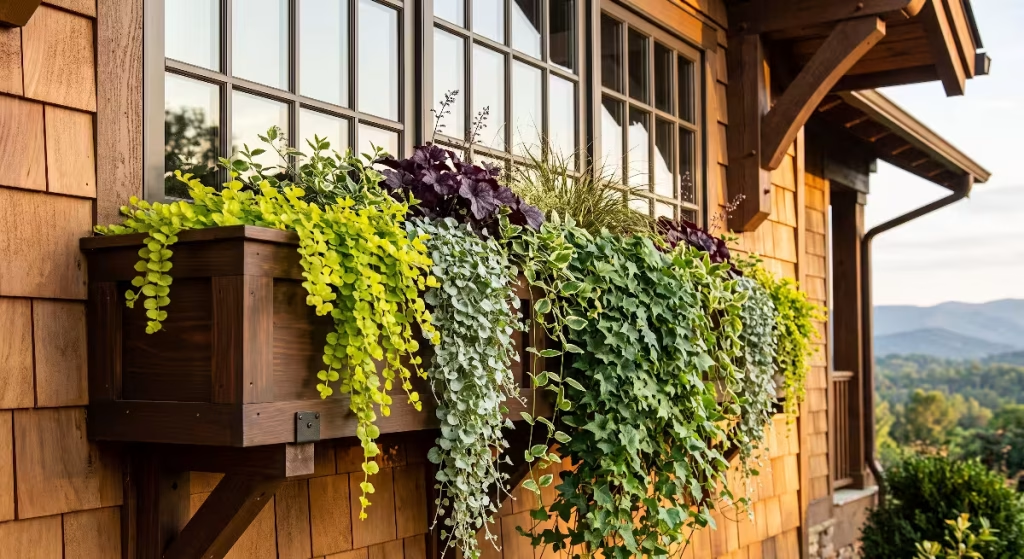
Creating professional, full autumn window box arrangements relies on a classic container design formula known as “Thriller, Filler, and Spiller.”
+-----------------------------------------------------------------+
|                         THRILLERS                               |
|        (Upright, bold vertical forms: grasses, kale, twigs)     |
+-----------------------------------------------------------------+
|                         FILLERS                                 |
|       (Mid-height, dense mass: mums, heuchera, peppers)         |
+-----------------------------------------------------------------+
|                         SPILLERS                                |
|        (Trailing over edges: ivy, creeping Jenny, pansies)      |
+-----------------------------------------------------------------+
This simple framework helps you build depth, contrast, and balance. In a Craftsman window box, this formula works exceptionally well because it balances the rigid, horizontal woodwork with soft, flowing organic shapes.
- Thrillers are your statement plants. They provide height, architectural structure, and vertical lines that draw the eye up toward the window glass.
- Fillers are medium-height, rounded plants that pack the middle of the box with vibrant color and dense texture. They bridge the gap between tall grasses and trailing vines.
- Spillers are tumbling, trailing plants positioned along the front edge and corners of the box. They soften the hard front lip of the woodwork, creating a lush, mature look that spills downward toward the ground.
By balancing these three roles, your autumn window box arrangements will look thoughtfully designed, abundant, and balanced from every angle on the street.
Thrillers for Craftsman Boxes: Verticality, Structure, and Architectural Grasses
For your thriller elements in autumn window box arrangements, focus on plants and botanical cuttings that echo the rugged mountain setting of East Tennessee.
Ornamental Grasses
Ornamental grasses fit the Craftsman aesthetic naturally. Their fine, linear leaves contrast beautifully against heavy timber trim and stone foundations.
- Purple Fountain Grass (Pennisetum setaceum ‘Rubrum’): Offers rich burgundy foliage with feathery, arching seed heads that catch late-afternoon autumn sunlight. Treat it as an annual in our region, as it fades after hard freezes, but its structural seed heads remain attractive long into winter.
- Dwarf Switchgrass (Panicum virgatum): A native North American grass that transitions from soft green to brilliant amber and orange tones in October. Its airy seed heads add gentle movement in the autumn breeze.
- Northern Sea Oats (Chasmanthium latifolium): Another native grass that features distinctive, drooping flat seed pods. These pods turn an attractive bronze in late fall and hold their shape through wind and rain.
Architectural Foliage
- Upright Ornamental Kale and Cabbage (Brassica oleracea): Cultivars like ‘Redbor’ develop tall, frilled stems with ruffled foliage in shades of deep purple and slate blue. These plants love cool temperatures; in fact, their colors intensify and turn more vibrant as nighttime temperatures drop into the thirties.
- Swiss Chard (Beta vulgaris ‘Bright Lights’): With bold, upright stems in bright orange, crimson, and golden yellow, chard provides both vertical interest and rich color that pairs naturally with Craftsman trim.
Fillers for Craftsman Boxes: Rich Color, Foliage Texture, and Mountain Hues
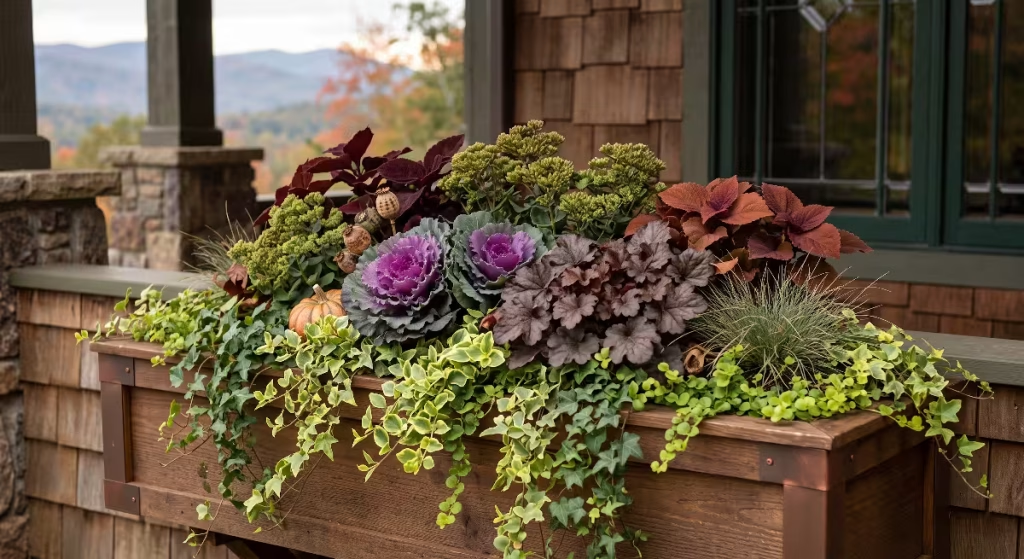
Fillers make up the heart of your autumn window box arrangements. Rather than relying solely on flowers, combine cold-hardy blooming plants with foliage options that stay attractive even when blooms slow down.
+-----------------------------------------------------------------------------+
| PLANT PROFILE: HEUCHERA (CORAL BELLS)                                       |
| Role: Exceptional foliage filler for autumn window box arrangements.        |
| Foliage: Broad, scalloped, semi-evergreen leaves in deep, earthy shades.    |
| Hardiness: USDA Zones 4-9 (Fully cold-hardy through Southern winters).      |
| Water Needs: Low to moderate; thrives in well-drained autumn soil mix.      |
| Top Cultivars: 'Caramel', 'Obsidian', 'Autumn Leaves', 'Peach Flambé'.     |
+-----------------------------------------------------------------------------+
Heuchera (Coral Bells)
Heuchera is a standout plant for Craftsman arrangements. Their scalloped leaves look like small works of art, and modern varieties come in rich, warm shades that feel custom-tailored to Craftsman homes:
- ‘Caramel’: Dusty apricot and honey tones with rose-colored undersides.
- ‘Obsidian’: Deep, near-black purple that provides incredible contrast against lighter woodwork.
- ‘Autumn Leaves’: Foliage that shifts from ruby red to golden bronze as the weather cools.
Best of all, Heuchera is fully perennial. When you take apart your autumn window box arrangements in late November or early spring, you can transplant them directly into your shady garden borders.
Compact Hardy Garden Mums (Chrysanthemum)
Mums are an autumn classic, but for an authentic Craftsman look, skip the harsh neon purples and bright yellows. Instead, choose heirloom and designer cultivars that feature muted, earthy shades:
- Burnt copper and terracotta
- Dusty rose and wine red
- Warm honey and antique bronze
Look for compact, mounding varieties with plenty of unopened buds when purchasing. This ensures your autumn window box arrangements bloom steadily across several weeks rather than fading all at once.
Ornamental Peppers (Capsicum annuum)
Ornamental peppers produce upright clusters of small, glossy fruits in shades of black, purple, orange, and red. Varieties like ‘Black Pearl’ or ‘Chilly Chili’ bring glossy, bright textures into the arrangement, contrasting against the broad, velvety leaves of surrounding plants.
Spillers for Craftsman Boxes: Softening Hard Edges with Cascading Foliage
To keep your window box from looking like a rigid wooden trough, you need spillers that cascade gracefully over the front and sides. These trailing plants soften the hard carpentry lines while drawing the eye downward.
Trailing Pansies and Violas (Viola cornuta)
Violas and trailing pansies (such as the ‘Cool Wave’ series) are tough, dependable fall additions. They do not mind chilly nights, and a light frost simply encourages more blooms. Their cheerful, face-like flowers come in rich shades of velvety plum, burnt orange, golden yellow, and deep navy. Let them trail over the front corners of your box to create a soft, welcoming look.
Creeping Jenny (Lysimachia nummularia ‘Aurea’)
With round, trailing leaves of bright chartreuse, Creeping Jenny provides a clean, bright contrast against dark cedar or painted woodwork. It handles cooler autumn temperatures gracefully, cascading down the front of the planter like a living ribbon.
English Ivy (Hedera helix) and Bronze Wire Vine (Muehlenbeckia axillaris)
Ivy brings a timeless, historic character that feels right at home on an older bungalow. Variegated cultivars with cream and sage-green leaves help brighten shady spots under deep porch eaves. Bronze Wire Vine offers tiny, glossy bronze-green leaves on thin, dark, wire-like stems, giving your autumn window box arrangements a subtle mountain texture.
Natural Accents: Integrating Pumpkins, Gourds, Branches, and Seedpods
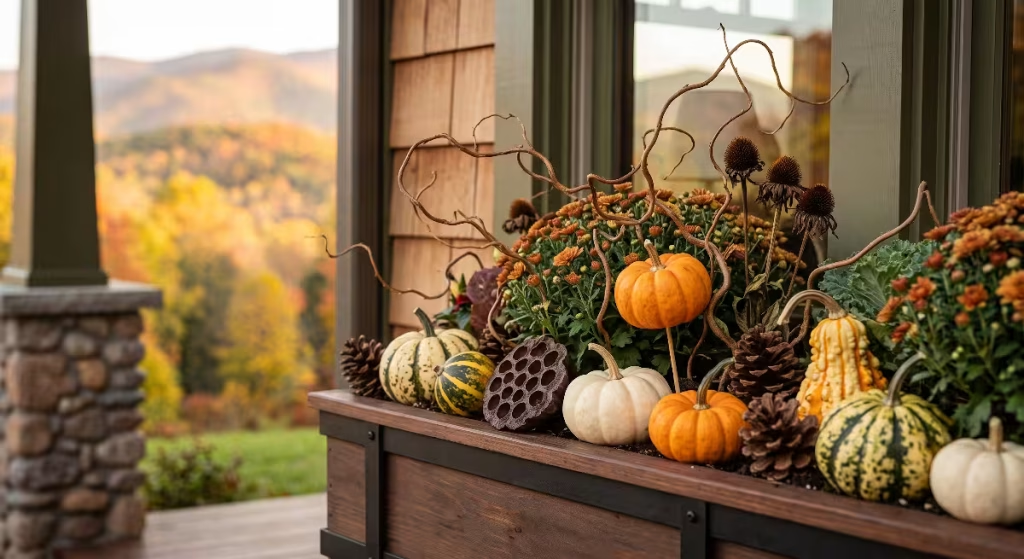
A truly eye-catching window box goes beyond nursery plants. Integrating natural, foraged, and harvested accents brings an earthy, seasonal character that fits the Craftsman style.
+-----------------------------------------------------------------------------+
| FORAGING GUIDE: CRAFTSMAN AUTUMN TEXTURES                                   |
| • Curly Willow & Red Twig Dogwood: Tall, sculptural architectural branches. |
| • Oak & Beech Foliage: Russet, weather-resistant dried leaf clusters.       |
| • Lotus Pods & Teasels: Geometric, honeycomb shapes with historic charm.   |
| • White Pine & Magnolia Cones: Scaled, earthy elements that ground boxes.   |
| • Heirloom Squashes: Muted pale greens, creams, and ribbed slate grays.     |
+-----------------------------------------------------------------------------+
Heirloom Pumpkins and Specialty Gourds
Leave the bright orange carving pumpkins on the front porch steps. For your autumn window box arrangements, seek out miniature heirloom varieties with subtle colors, deep ridges, and unique textures:
- ‘Baby Boo’: Small, creamy-white pumpkins that contrast beautifully against dark foliage.
- ‘Jack Be Little’: Classic small, ribbed orange pumpkins that tuck neatly between larger plants.
- ‘Sweet Dumpling’: Striped squashes in cream and dark forest green.
- Cinderella / Fairytale Gourds: Flat, deeply ribbed squashes in muted sage, slate blue, and dusty peach.
The Skewer Anchoring Trick
Wind gusts can easily roll a round pumpkin out of a window box, sending it crashing down onto the porch or into your foundation shrubs. To keep them securely in place, use this simple carpenter’s trick:
Take a sturdy wooden craft dowel or heavy bamboo skewer. Sharpen one end and gently push it two inches into the base of the pumpkin or gourd. Leave about four to six inches of the skewer exposed. Push the exposed dowel firmly into the potting soil between your plants. The skewer locks the pumpkin in place, keeping it steady through wind and heavy rain.
Architectural Cuttings and Branches
Incorporate sculptural branches directly into the back and corners of the box to add height and structure:
- Curly Willow: Twisted, curling stems that bring organic, flowing lines to your arrangement.
- Red Twig Dogwood (Cornus sericea): Smooth, upright stems that turn brilliant crimson in the cold, mirroring the colors of fall foliage.
- Dried Lotus Pods and Coneflower Seed Heads: Distinct geometric shapes that complement Craftsman woodwork.
The Planting Strategy: Why Fall Requires Denser Spacing Than Summer
When planting containers in the spring or early summer, the general rule is to leave plenty of space between plants so they have room to grow. In warm weather, a tiny four-inch perennial can easily triple in size over eight weeks.
Fall container gardening is completely different. As day lengths shorten and temperatures drop, plants shift their energy away from rapid top growth and focus on root establishment. A plant placed in a box in late September will not grow substantially larger before winter.
If you space your plants several inches apart, your autumn window box arrangements will look sparse, unfinished, and bare through the entire season.
The “Instant Fullness” Technique
For fall containers, pack your plants closely together:
- Place root balls almost shoulder to shoulder, leaving only an inch or two of space between plants.
- Gently loosen the outer root fibers on each nursery plant so they can establish contact with the surrounding potting soil.
- Fill in all gaps between root balls with your lightweight potting mix, pressing the soil down gently with your fingers to eliminate air pockets.
- Keep the soil level about one inch below the top rim of the box. This prevents soil and water from spilling over the front face of the woodwork during watering.
Packing your autumn window box arrangements tightly gives them an abundant look the moment you finish planting, while the dense leaf canopy protects the soil surface from drying out quickly in the wind.
Step-by-Step Tutorial: Assembling Your Window Box Arrangement
Follow this practical assembly process to bring your autumn window box arrangements together cleanly and efficiently.
1. Inspect and Prep the Empty Box
Clean out any spent summer potting soil. Discard old root balls, as they can harbor pests and fungal spores. Wipe down the interior surfaces of your wood or PVC box. Check all bottom drainage holes to confirm they are clear of debris. Lay down your permeable landscape fabric or mesh screen over the drainage holes.
2. Add Your Base Soil Layer
Pour your fresh, lightweight potting mix into the box until it is about half full. Lightly mist the soil with water so it is slightly damp, but not dripping wet.
3. Place Your Thrillers First
Set your tall thriller plants (such as Purple Fountain Grass or upright kale) toward the back of the box, centered beneath the window panes. If your window box is viewed primarily from the front, setting the thrillers slightly toward the rear wall leaves plenty of room for fillers and spillers in front.
4. Arrange Your Fillers
Place your rounded, blooming fillers around the base of the thrillers. Alternate colors and leaf shapes: set a fine-textured copper mum next to a broad, dark purple Heuchera leaf, followed by a cluster of upright ornamental peppers. Keep plants balanced across the box so the weight and color feel even from left to right.
5. Tuck in Your Spillers Along the Front Lip
Angle your trailing plants (like ivy, pansies, or Creeping Jenny) slightly outward toward the front and sides of the box. Tease their trailing stems gently so they drape naturally over the wooden lip.
6. Fill Gaps and Water Thoroughly
Scoop fresh potting mix around all the root balls, firming it gently with your fingertips. Soak the entire box thoroughly with a gentle spray nozzle until water flows freely from the drainage holes beneath. Allow the soil to settle, adding another small handful of soil if any roots become exposed.
7. Insert Seasonal Accents and Gourds
Once the plants are settled, press your skewered heirloom pumpkins, gourds, and architectural branches into the spaces between the foliage. Adjust your plant leaves so they wrap gently around the pumpkins, making the gourds look like an organic part of the planting rather than loose items resting on top.
Color Palettes That Complement Craftsman Architecture
Choosing the right color combinations ensures your autumn window box arrangements feel right at home against your bungalow’s exterior finishes. Here are four reliable color concepts:
+-----------------------------------------------------------------------------+
| PALETTE 1: APPALACHIAN HARVEST (Warm & Inviting)                            |
| Best With: Olive green siding, cedar shingles, warm river rock.             |
| • Thriller: Bronze Switchgrass or Amber Sedge                               |
| • Fillers: Terracotta mums, 'Caramel' Heuchera, orange ornamental peppers   |
| • Spillers: Golden Creeping Jenny, warm orange violas                       |
| • Accents: Miniature white 'Baby Boo' pumpkins, curly willow stems          |
+-----------------------------------------------------------------------------+

+-----------------------------------------------------------------------------+
| PALETTE 2: MISSION TWILIGHT (Moody & Dramatic)                              |
| Best With: Dark stone foundations, slate gray trim, dark chocolate stain.   |
| • Thriller: 'Redbor' purple kale, Purple Fountain Grass                     |
| • Fillers: 'Obsidian' Heuchera, deep burgundy mums, black pearl peppers     |
| • Spillers: Variegated English ivy, dark navy violas                        |
| • Accents: Bumpy slate-gray Hubbard squashes, dried dark lotus pods        |
+-----------------------------------------------------------------------------+

+-----------------------------------------------------------------------------+
| PALETTE 3: WOODLAND RUSTIC (Natural & Grounded)                             |
| Best With: Natural cedar shake, timber posts, mossy stone porches.          |
| • Thriller: Northern Sea Oats, red twig dogwood cuttings                    |
| • Fillers: Flowering white cabbage, dwarf sweet flag, sage-green gourds     |
| • Spillers: Bronze wire vine, trailing maidenhair ivy                       |
| • Accents: Foraged white pine cones, birch twigs, small Cinderella gourds   |
+-----------------------------------------------------------------------------+

+-----------------------------------------------------------------------------+
| PALETTE 4: COPPER & STONE (Warm Contrast)                                   |
| Best With: Rich brown bungalow siding, exposed cream brick, black trim.     |
| • Thriller: Dwarf Fountain Grass, upright Tuscan dinosaur kale              |
| • Fillers: Copper-bronze mums, orange-red pansies, 'Peach Flambé' Heuchera  |
| • Spillers: Trailing ivy, deep plum violas                                  |
| • Accents: Striped 'Sweet Dumpling' gourds, dried coneflower seed heads     |
+-----------------------------------------------------------------------------+
Water and Moisture Maintenance: Managing Soil Through Cooler Days
Caring for window boxes in the fall requires a very different approach than in mid-summer. In July, a sunny window box might need watering every single morning. In October and November, overwatering is a much more common danger.
As ambient air temperatures drop and the sun sits lower in the sky, soil moisture evaporates much more slowly. In addition, fall plants are not pulling up gallons of water to cool their foliage. If you keep pouring water into the box on a strict summer schedule, the soil stays cold and saturated. This drowns the root systems, turns foliage yellow, and causes root rot.
How to Check Moisture Accurately
Before adding water, use the knuckle test. Push your index finger two inches down into the potting mix:
- If the soil feels damp and cool to the touch, leave it alone.
- If the soil feels dry, crumbly, and warm at that depth, water the box thoroughly until you see water run out of the bottom drainage holes.
Watch the Eaves
Remember that many Craftsman bungalows feature wide roof overhangs. These deep eaves can prevent natural rainfall from ever reaching your window boxes.
A heavy autumn rainstorm might roll across the mountains, leaving your lawn soaked while the soil inside your window boxes remains bone dry. Never assume a rainy afternoon watered your boxes for you; always check the soil directly beneath the window sill.
Sun Exposure Challenges: Deep Eaves, Southern Exposures, and Light Angles
The iconic wide eaves of a Craftsman bungalow do a wonderful job of shading interior living spaces from harsh summer heat. However, they also create specific lighting challenges for exterior autumn window box arrangements.
North and East-Facing Windows
Windows on the north side of the home, or under deeply covered front porches, receive little to no direct sunlight in the fall. For these locations, avoid sun-loving grasses and mums, which will stretch toward the light and stop blooming.
Instead, focus your design around shade-tolerant foliage plants:
- Heuchera cultivars (they keep their vibrant color even in low light)
- Hardy evergreen ferns (such as Autumn Fern, Dryopteris erythrosora, which displays coppery-bronze young fronds)
- English ivy and creeping wire vine
- Flowering kales, which tolerate partial shade very well
South and West-Facing Windows
South-facing window boxes receive intense, low-angle autumn sunshine that can dry out the front face of the box quickly. These warm microclimates are ideal for ornamental grasses, flowering mums, and ornamental peppers.
Check soil moisture more frequently on south-facing walls, particularly on windy mountain afternoons when breezy conditions pull moisture from the foliage.
Frost Protection and Cold Snap Care: Extending the Season
In the Appalachian foothills and valley regions, our first light frosts typically arrive in mid to late October. A light frost rarely harms hardy autumn window box arrangements, but an early, unexpected hard freeze (with temperatures dipping below 28 degrees Fahrenheit for several hours) can damage tender blooms.
With a little forethought, you can protect your plantings and keep your boxes looking fresh well into the late fall season.
1. Water Before a Freeze
If the local weather forecast calls for freezing temperatures overnight, check the soil in your boxes during the afternoon. Moist soil holds and radiates heat much better than dry soil. Giving your plants a gentle drink a few hours before the temperature drops insulates the root systems and protects them from frost shock.
2. The Burlap Tent Method
Avoid throwing thin plastic trash bags over your planters during cold snaps. Plastic conducts cold directly into any plant tissue it touches, causing black, damaged foliage.
Instead, drape natural breathable burlap, an old cotton bedsheet, or floating row cover fabric loosely over the entire window box. Use wooden clothespins to pin the fabric securely to the back casing or tuck it under the base of the box. This fabric traps radiant heat rising from the home and the soil, keeping the plants several degrees warmer through the coldest morning hours. Remove the cover as soon as the sun comes up the next morning so the plants can receive fresh air and light.
3. Replacing Sensitive Elements
If a sudden hard freeze eventually finishes off your blooming mums or ornamental peppers, do not throw out the entire box. Simply snip the spent plants off at soil level. Replace them with fresh cold-hardy violas, cut evergreen boughs, or another attractive heirloom pumpkin.
The Winter Transition: Shifting into Holiday Greens and Pine Cones
One of the greatest benefits of learning to build and care for autumn window box arrangements is that the transition into winter curb appeal becomes straightforward and natural.
As November comes to a close and Thanksgiving approaches, the colorful mums and grasses will naturally finish their seasonal cycle. Instead of leaving empty, frozen boxes under your windows all winter, you can use the established soil base as a foundation for a winter display.
+-----------------------------------------------------------------------------+
| WINTER TRANSITION CHECKLIST                                                 |
| 1. Remove faded mums, grasses, and squash (compost them).                   |
| 2. Leave perennial Heucheras and trailing ivy in place.                     |
| 3. Harvest fresh conifer boughs (Fraser fir, White Pine, Eastern Redcedar).|
| 4. Push cut branch ends 4-6 inches deep into the damp, firm soil.          |
| 5. Add vertical birch logs, red twig dogwood stems, and winterberry holly.  |
| 6. Finish with large pine cones and battery-operated warm fairy lights.     |
+-----------------------------------------------------------------------------+
Cut conifer boughs do not need active root systems in the winter. The cold outdoor air and consistently damp soil act like a natural outdoor refrigerator, keeping cut evergreen boughs fresh, fragrant, and vibrant right through the New Year.
This winter transformation keeps your Craftsman bungalow looking cared for, festive, and architecturally complete through the coldest months of the year.
Frequently Asked Questions about Autumn Window Box Arrangements
How long do autumn window boxes last?
When planted in mid-to-late September with cool-hardy plants, healthy autumn window box arrangements typically look vibrant for eight to ten weeks. With careful watering, deadheading, and light frost protection during sudden cold snaps, cold-hardy elements like ornamental kale, Heuchera, ivy, and violas will hold their color and structure straight through Thanksgiving. Once winter arrives, you can easily swap spent flowers for cut evergreens.
What are the best frost-hardy plants for fall window boxes?
The top frost-hardy plants for fall planters include flowering kale and cabbage, violas, trailing pansies, and Heuchera (coral bells). These plants do not just survive light frosts; cool temperatures actually enhance their pigmentation, turning the purples, pinks, and bronzes richer and more vibrant. Trailing English ivy and perennial sedges also withstand repeated freezes without losing their foliage.
How often should you water window boxes in the fall?
Water needs drop considerably during the autumn months. Most autumn window box arrangements need water only once or twice a week, compared to daily watering during the summer. Always test the soil with your finger first. Water thoroughly only when the top two inches of potting mix feel dry to the touch. Keep in mind that wide bungalow eaves can block rainfall, so check your soil even after a rainy day.
Can you build a Craftsman window box without damaging siding?
Yes, you can safely mount a window box without damaging your siding by using proper fasteners and standoffs. Never use small nails or mount the box directly flush against the wall. Instead, drill through the siding into the structural wall studs, using heavy-duty exterior lag bolts. Place 1/2-inch composite or rubber spacers over the bolts between the siding and the back of the box to create an air gap. Seal each hole with 100% exterior silicone to keep moisture out of your home.
How do you prevent fall window boxes from rotting wooden window sills?
To protect your window sills from moisture rot, never attach a window box directly to the window sill itself. Always mount the box to the structural wall siding a few inches below the sill. Maintaining a 1/2-inch air gap behind the box prevents standing moisture, while lining the box interior with a zinc or sheet copper liner keeps wet soil from contacting the wood.
Bringing It All Together: The Enduring Value of Craftsman Curb Appeal
When you step back to look at your finished work, a well-built window box should feel like an organic part of the house. The sturdy cedar construction, clean geometric corbels, and rich mountain plants all work together to celebrate the character of the Craftsman style.
Taking the time to anchor the box securely into structural wall studs, protect your siding with a proper air gap, and blend textures thoughtfully gives you more than seasonal decorating. It is an investment in your home’s architectural charm and curb appeal.
Whether your bungalow is an original 1920s build in an established neighborhood or a modern custom home inspired by Arts and Crafts traditions, these autumn displays bring warmth, craft, and seasonal life right to your front door. Grab your tools, pick out a few cold-hardy plants and heirloom gourds, and enjoy creating an exterior display that welcomes the autumn season to our Tennessee hills.