


You that unsettling feeling of hearing a torrential downpour start in the middle of the night is something every homeowner in the Tri-Cities has experienced. Especially in the wake the wake of Helene. As the rain hammers down, you’re not just hearing a storm; you’re subconsciously asking, “Is my home secure? Is my family protected from the elements?” That sense of security, the peace of mind that your home is a true sanctuary, is priceless. It’s the silent promise a good roof makes to the family living beneath it.
My name is Hephaestus, and for years, my work in the home building industry here in the Tri-Cities has been centered on ensuring that promise is kept. I’ve seen firsthand how a well-chosen roof provides decades of unwavering protection, and conversely, how a poor choice can lead to anxiety and costly problems down the road. My goal is to give you the clarity you deserve, cutting through the noise and high-pressure sales tactics.
This guide is designed to be a precise, no-nonsense resource for homeowners in Johnson City, Kingsport, Bristol, and the surrounding areas. We will systematically compare the roofing materials best suited for our unique Northeast Tennessee climate, break down the real costs you can expect, and empower you to make an informed, competent decision. Because when you understand your options, you’re not just buying a roof; you’re investing in your home’s long-term safety and your own peace of mind.
A Head-to-Head Comparison of Roofing Materials for Northeast Tennessee
Choosing a material is the most significant decision you’ll make in this process. It dictates cost, longevity, and aesthetics. Here in the Tri-Cities, we need to account for high humidity in the summer, heavy rain, and the potential for everything from high winds to the occasional snow load. Let’s be precise and break down each viable option.
Asphalt Shingles (The Standard)
This is the most common roofing material you’ll see from Johnson City to Kingsport, and for good reason. It represents a balance of affordability and reliability.
- Types: The primary distinction is between standard 3-Tab Shingles and the superior Architectural (or Dimensional) Shingles. A 3-tab shingle is a flat, single layer, making it cheaper but more susceptible to wind damage. Architectural shingles are thicker, with multiple layers bonded together, creating a textured look that not only has better curb appeal but also offers significantly more durability and wind resistance. For our region, the upgrade to architectural shingles is almost always a wise investment.
- Pros: Their main advantage is the low upfront cost. They are available in a vast array of colors to match any home style, and virtually every local roofing contractor is experienced in their installation and repair, making “asphalt shingle repair” a widely available service.
- Cons: Asphalt has the shortest lifespan of the materials we’ll discuss. Our high humidity can also lead to issues with algae growth, which causes unsightly black streaks. While algae-resistant shingles are available, it’s a key consideration in our climate.
- Estimated Lifespan: 15-20 years for 3-Tab; 25-30 years for Architectural.
Metal Roofing (The Durable Choice)
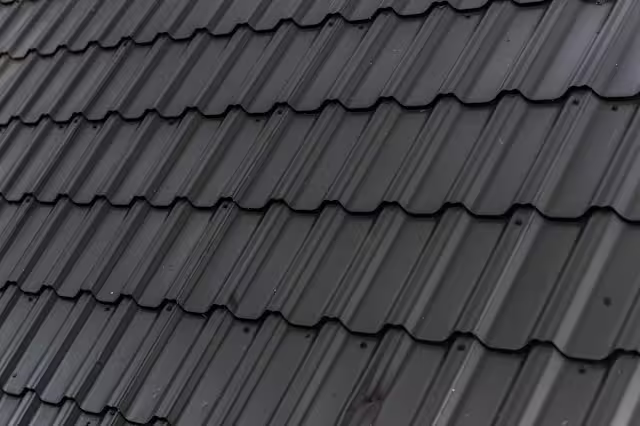
Once relegated to barns and commercial buildings, metal roofing has become a premier choice for residential homes in East Tennessee due to its incredible resilience and evolving style.
- Types: The two you’ll encounter most are Standing Seam and Exposed Fastener (often called Ag-Panel). An exposed fastener roof is more economical as the screws are visible and go through the face of the panel. Standing seam is a premium system where the panels are interlocked, and the fasteners are concealed, providing a sleek, modern look and superior protection against leaks.
- Pros: Durability is its defining feature. A properly installed metal roof can easily last over 50 years. It’s fire-resistant, sheds snow and rain exceptionally well, and is highly effective against wind. Modern metal roofs with specific coatings are also highly energy-efficient, reflecting solar heat to potentially lower your cooling costs in the summer.
- Cons: The primary drawback is the higher upfront investment. While a “standing seam metal roof cost” is significant, many homeowners find it pays for itself over the long run by avoiding replacement costs. Some worry about noise, but with proper attic insulation, this is largely a non-issue.
- Estimated Lifespan: 50+ years.
Slate and Synthetic Slate (The Lifetime Roof)
For those seeking the ultimate in longevity and a timeless, elegant aesthetic, slate is in a class of its own.
- Types: You have Natural Slate, quarried directly from the earth, and Composite/Synthetic Slate, an engineered product made from polymers and recycled materials.
- Pros: Natural slate can last over a century. It’s completely fireproof, waterproof, and resistant to rot and insects. Its beauty is unmatched. Synthetic options provide a very similar look and excellent durability (often with 50-year warranties) at a lower cost and significantly less weight, meaning they don’t typically require structural reinforcement of your roof deck.
- Cons: Natural slate is, by a wide margin, the most expensive roofing material. It is also extremely heavy and requires installers with highly specialized skills. One broken slate must be repaired by a true craftsman.
- Estimated Lifespan: 75-200 years for Natural Slate; 50+ years for Synthetics.
Wood Shakes (The Rustic Look)
For certain home styles, particularly rustic or historic ones, nothing compares to the natural beauty of wood.
- Types: In our area, this typically means Cedar Shakes.
- Pros: They offer a distinct, beautiful aesthetic that changes in character over time. They also provide a degree of natural insulation.
- Cons: Wood is the most high-maintenance option for the Tri-Cities. Our humidity makes them prone to moss, mildew, and rot if not meticulously maintained. They are susceptible to insects and have a lower fire rating unless chemically treated. The cost is also significantly higher than asphalt.
- Estimated Lifespan: 20-30 years, but only with consistent maintenance.
Decoding the Costs: A Transparent Look at Your Roofing Investment

Understanding a roofing estimate requires looking beyond the final number. A low bid isn’t a good deal if it uses inferior materials or cuts corners on safety and installation. Here are the factors that will determine your final bill.
- Factors That Influence Your Final Bill:
- Roof Size & Pitch: The total square footage is the primary driver. A steeper roof (higher pitch) is more dangerous and labor-intensive, increasing the cost.
- Complexity: A simple gable roof is far less expensive to cover than one with multiple valleys, dormers, hips, and skylights, which all require precision cutting and flashing.
- Material Selected: As detailed above, the cost per square foot of materials varies dramatically from asphalt to slate.
- Labor & Contractor Choice: A highly-rated, insured, and experienced contractor will command a higher labor rate than a handyman. This is the cost of competence and peace of mind.
- Tear-Off and Disposal: The cost of removing your old roof and legally disposing of the debris is a significant line item.
- Permit Costs: Your contractor will need to pull a permit from your local government (e.g., Johnson City, Kingsport) to ensure the work is done to code.
- Estimated Cost Comparison Table (Installed Price Per Square Foot in the Tri-Cities):
| Roofing Material | Relative Cost |
| 3-Tab Asphalt Shingles | $ |
| Architectural Asphalt Shingles | $$ |
| Exposed Fastener Metal | $$$ |
| Standing Seam Metal | $$$$ |
| Composite/Synthetic | $$$$ |
| Wood Shake | $$$$$ |
| Natural Slate | $$$$$$ |
(Disclaimer: This table is for general comparison only as of mid-2025. Material and labor costs fluctuate. The only way to get a precise figure for your home is to secure a detailed, written quote from a reputable local contractor.)
Your Questions Answered

In my conversations with homeowners, the same crucial questions come up time and again. Let’s address them directly.
- What is the most popular roofing material in the Tri-Cities?Architectural asphalt shingles are the most common choice, striking a very practical balance between upfront cost, style, and reliability for most homeowners. However, standing seam metal roofing is the fastest-growing segment. More people are choosing to make the larger upfront investment for a roof they will likely never have to replace again.
- How long does a typical roof last in East Tennessee?This depends entirely on the material and the quality of the installation. A basic 3-tab asphalt roof might fail in as little as 15 years. A well-installed architectural shingle roof will reliably last 25-30 years. A standing seam metal roof should be considered a 50+ year product. It’s a classic case of getting what you pay for.
- Do I need a permit to replace my roof in Johnson City, Sullivan County, or Washington County?Yes, without question. A building permit is a legal requirement for a roof replacement in all major jurisdictions in our area. Both Washington County and Sullivan County operate under the 2018 International Residential Code (IRC), which has specific requirements for roofing. Any contractor who says a permit isn’t needed should be avoided. The permit ensures the job is inspected for safety and compliance, protecting you and your investment.
- How do I choose a trustworthy roofing contractor in the Tri-Cities?Integrity is key. First, verify they hold a current Tennessee state contractor’s license and carry both general liability insurance and workers’ compensation. Ask for local references—and actually call them. Check their reputation with organizations like the Better Business Bureau or the Home Builders Association of Northeast Tennessee. Finally, insist on a detailed, written contract that specifies the exact materials to be used, the scope of work, the payment schedule, and the warranty information.
Important Local Entities & Considerations
A successful roofing project doesn’t happen in a vacuum. It involves a network of codes, suppliers, and professionals that ensure quality.
- Building Codes (The Rulebook): As mentioned, the 2018 IRC is the law of the land for construction in our area. This code dictates everything from the type of underlayment required to the specific nailing patterns for shingles in high-wind zones. A competent contractor doesn’t just know these codes; they treat them as the minimum standard for a quality job.
- Reputable Material Suppliers (The Source): Professional contractors don’t buy their materials from big box retail shelves. They have long-standing relationships with dedicated local suppliers like ABC Supply Co. Inc. or Builders FirstSource with locations right here in our area. This ensures they get high-quality, non-damaged materials and, critically, it provides a clear chain of custody for warranty claims should a material defect ever arise.
- Established Local Contractors (The Professionals): Choosing a contractor with deep roots in the Tri-Cities is invaluable. Companies that have been here for years have a reputation to protect. They understand the nuances of our local climate and have a proven track record. While I don’t endorse specific companies, you should look for contractors with a physical office in the area and a portfolio of completed local jobs.
Conclusion: Making a Competent Choice for Decades to Come
We have broken down the materials, decoded the costs, and answered the critical questions. The decision ultimately boils down to a balance of three factors: your immediate budget, your desired aesthetic, and how long you plan to live in your home. There is no single “best” roof, only the roof that is best for you.
My final recommendation is a simple one, based on decades in this industry: invest in the best quality material and, more importantly, the most competent installation you can comfortably afford. A well-installed, higher-quality roof will always be a better value over its lifetime than a cheaply installed, economy-grade product. It’s the difference between a roof that protects your home and one you have to protect yourself from.
Use this guide to narrow down your options and prepare your questions. Your next step should be to contact at least two, preferably three, established and well-regarded local roofing contractors. Have them provide a detailed, written estimate based on a thorough inspection of your home. This is a major investment in the security and value of your property—approach it with the precision and diligence it deserves.


