

We all dream of building more than just a house. We want to build a future, a place of permanent safety and stability for our families, a place to put down roots that will hold firm for generations. But those roots, both figurative and literal, can only be as strong as the ground they’re set in. The beautiful frame, the welcoming front door, the warm fireplace… none of it matters if the unseen, unsung hero beneath it all is not chosen with competence and precision. That hero is the foundation.
The purpose of this guide is to give you clarity on this critical first step. We will have a straightforward, technical discussion about the primary residential foundation types used in Johnson City, Kingsport, and Bristol. My goal is to equip you with the knowledge to understand why a basement might be perfect for one lot on a rolling hill while a crawl space is the wiser choice for another. We’ll examine how our specific clay soil and Appalachian topography demand more than just a one-size-fits-all solution, ensuring the bedrock of your family’s future is as solid as it can possibly be.
Understanding the Ground Beneath Our Feet: Soil & Topography in Northeast Tennessee
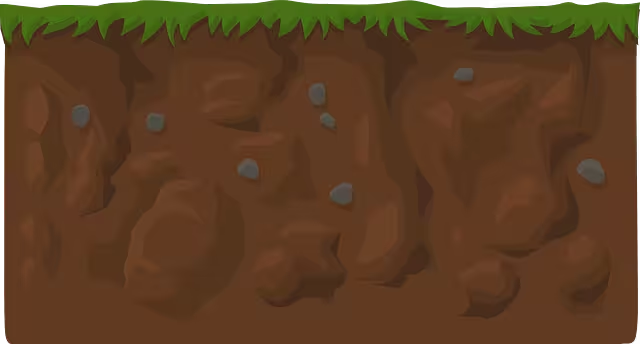
Before a single ounce of concrete is poured, a competent builder must first understand the ground they are building on. Here in the Tri-Cities, we don’t have the luxury of perfectly flat, stable, sandy soil. Our regional geology presents specific challenges that dictate proper foundation design.
- The Challenge of Clay-Based Soil: The dominant soil type throughout Northeast Tennessee is a heavy, reddish clay. Clay is what engineers call an “expansive” soil. During our wet seasons, it absorbs a tremendous amount of water and swells, exerting immense inward and upward force, known as hydrostatic pressure, on anything embedded in it. Conversely, during dry spells, it shrinks and pulls away. This constant cycle of swelling and shrinking can cause improperly designed foundations to shift, settle, and crack over time.
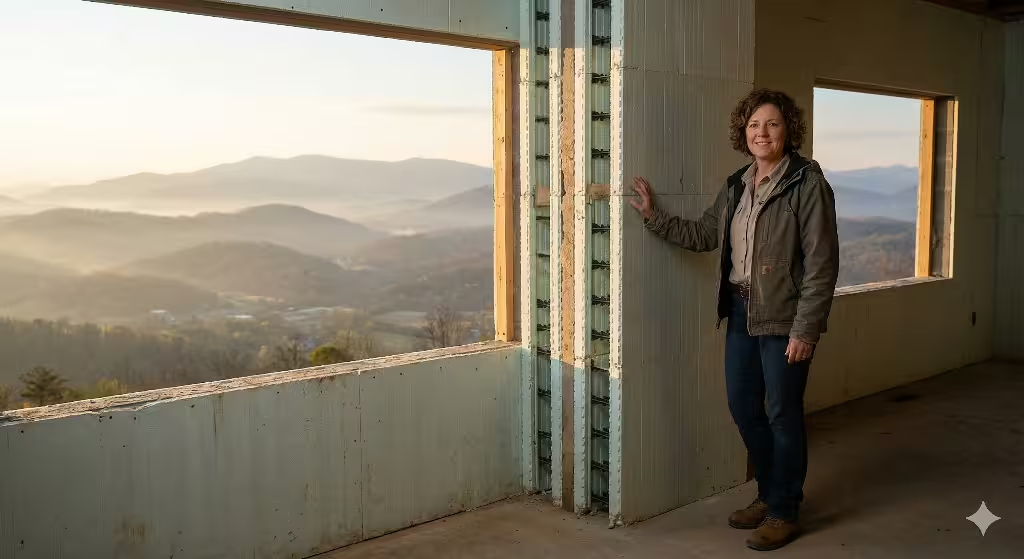
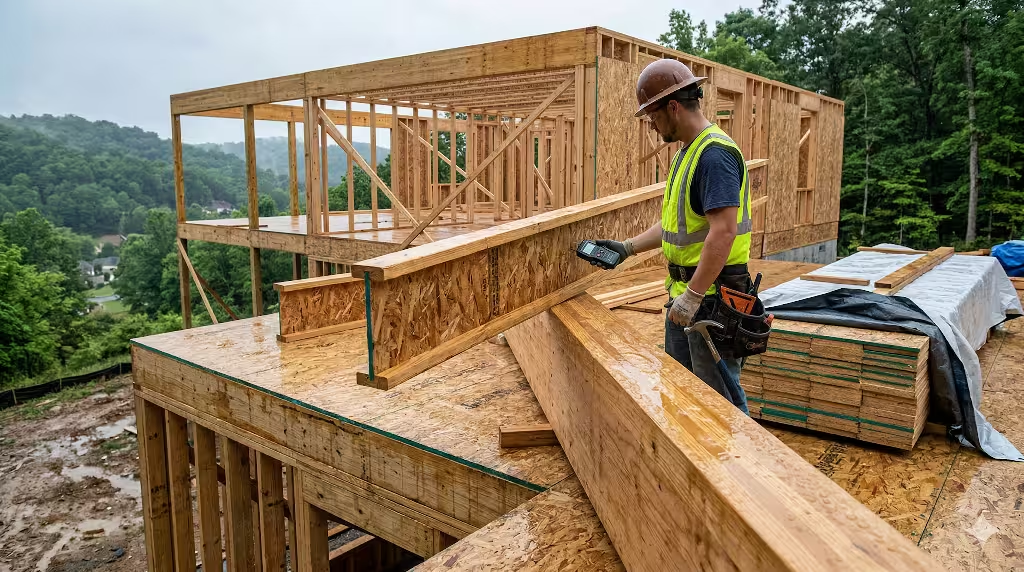
- The Opportunity of Hilly Terrain: Our position in the foothills of the Appalachian Mountains means that perfectly flat lots are the exception, not the rule. The rolling hills and slopes that give our region its beauty are a primary factor in foundation selection. A slope that might seem like a challenge is often the perfect opportunity for a specific foundation type, like a walk-out basement, which can add significant value and utility to a home.
Understanding these two factors is not merely academic. It is the key to preventing future problems. A foundation chosen without accounting for expansive clay soil and the specific grade of your lot is a foundation that is being set up for a long-term struggle against the forces of nature.
The Three Main Residential Foundation Types: A Tri-Cities Comparison
With our local geology in mind, let’s analyze the three primary foundation types. Each has a place, but each comes with a distinct set of trade-offs in terms of cost, utility, and long-term performance in our area.
Crawl Space Foundations (The Regional Standard)
A crawl space is the most traditional and common foundation in our region. It involves constructing short foundation walls (typically of concrete masonry units, or CMU blocks) that elevate the home’s structure a few feet off the ground.
- Pros: This elevation is its chief benefit, keeping the home’s wood framing away from ground moisture. It is generally less expensive than a full basement and allows for straightforward access to plumbing, HVAC ductwork, and electrical wiring for future maintenance and repairs.
- Cons: The primary drawback of a traditional, vented crawl space is its tendency to become a damp, humid environment. This can lead to issues with mold, mildew, wood rot, and pest infestations, which can compromise your home’s air quality and structural integrity.
- The Modern Solution: Because of these cons, the practice of crawl space encapsulation in the Tri-Cities has become the modern standard for quality construction. This involves sealing the vents, isolating the space from the earth with a heavy vapor barrier, and conditioning the air with a dehumidifier. It turns a liability into a clean, dry, and healthy part of the home.
Basement Foundations (Full & Walk-Out)
A basement is a full-height foundation, creating an entire additional level of the home below ground. Given our topography, the “walk-out” basement, where one or more walls are exposed on the downhill side of a slope, is an extremely popular and practical variation.
- Pros: The obvious benefit is a massive increase in square footage, which can be finished into living space or used for storage and a workshop. It also provides an excellent storm shelter. A walk-out basement feels less subterranean, offering natural light and direct access to the yard.
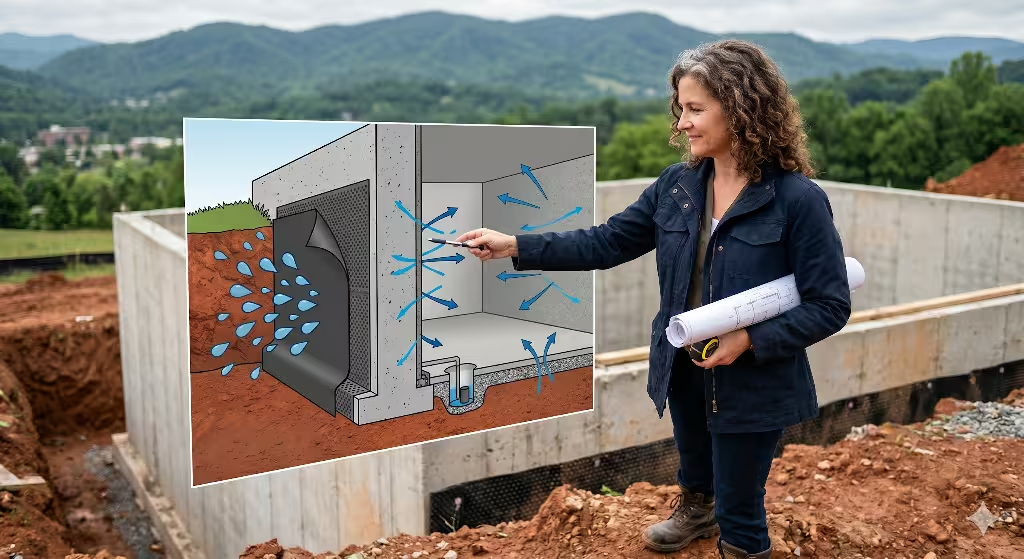
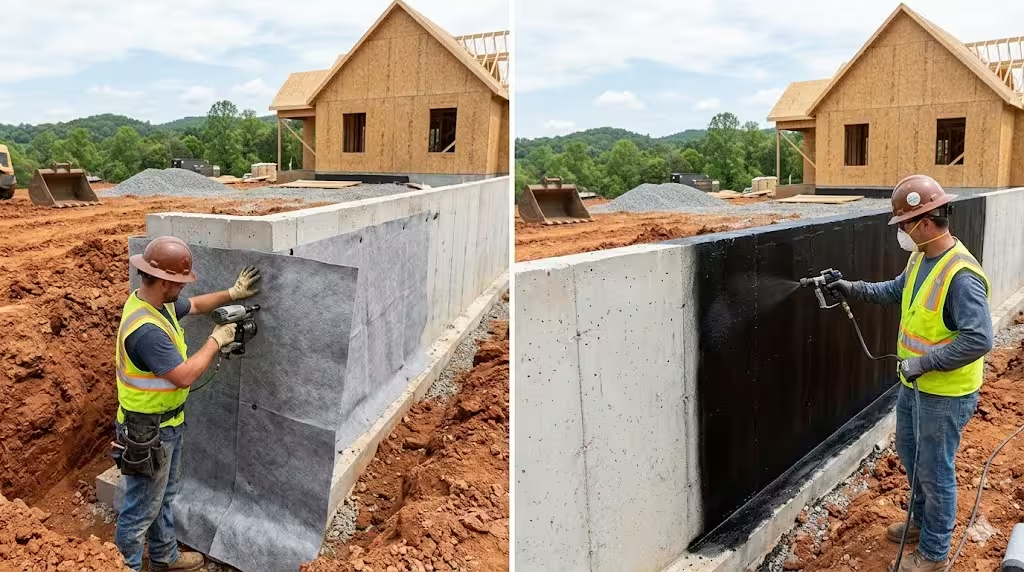
- Cons: A basement is the most expensive foundation type due to the extensive excavation, concrete work, and robust water management systems required. In our clay soil, a basement must be protected by a superior drainage and waterproofing system to have any chance of staying dry long-term. Neglecting this is a recipe for disaster.
- A Note on Cost: When considering the “cost to build a basement in TN,” remember that effective basement waterproofing in Johnson City, TN, and the surrounding areas isn’t an optional add-on; it is an essential, core component of the initial construction cost.
Slab-on-Grade Foundations (The Simple Approach)
This is the simplest foundation type, consisting of a single, monolithic slab of poured concrete that rests on a prepared bed of gravel directly on the ground.
- Pros: The “slab foundation cost in TN” is the lowest of the three options, and it is the fastest to install. With no space underneath, it eliminates concerns about mold or pests in a crawl space.
- Cons: Simplicity comes at a cost. All plumbing and electrical conduits are embedded within the concrete. A future leak or repair can mean an expensive and disruptive process of jackhammering through your floor. A slab offers zero storm protection and is unforgiving on unprepared ground. If the soil underneath is not perfectly compacted and graded, our expansive clay soil can cause the slab to shift and crack. It is generally best suited for very flat lots and smaller structures like garages.
Frequently Asked Questions
Below are answers to commonly asked questions.
- What is the most common type of foundation in Tennessee?In Northeast Tennessee, the crawl space remains the most common foundation type due to its cost-effectiveness and adaptability to moderately sloped lots. However, as land is developed on steeper grades, walk-out basements are becoming increasingly prevalent.
- How does the clay soil in the Tri-Cities affect my foundation?The shrink-swell cycle of our clay soil is a foundation’s primary enemy. It can exert enough pressure to bow basement walls inward and can cause slab or crawl space foundations to settle unevenly. This is why proper site grading and water management (French drains, robust gutter systems, etc.) are arguably as important as the foundation itself.
- “Is a basement a good idea in East Tennessee?”Yes, a basement can be an excellent choice, but with a major condition: it must be engineered and built correctly from day one. This means a design that accounts for soil pressure and a multi-layered waterproofing and drainage system. A poorly executed basement is one of the biggest liabilities a homeowner can have; a well-executed one is a tremendous asset.
- What are the first signs of foundation problems?Be vigilant. Look for stair-step cracks in your exterior brick or block walls. Inside, check for doors that “stick” or don’t latch properly, drywall cracks extending from the corners of doors and windows, and noticeably sloped floors. If you see any of these, it’s time to consult a professional.
Important Local Entities & Regulatory Considerations
Building a foundation is not a freelance activity. It is governed by strict codes and requires a network of professionals to ensure it is done with integrity.
- Building Codes and Permits: Both Washington County and Sullivan County, along with their respective municipalities, have adopted and enforce the 2018 International Residential Code (IRC). This extensive codebook has specific requirements for things like footing depth (to get below the frost line), concrete strength (measured in PSI), and steel reinforcement (rebar). Your builder must pull a permit, and the work will be inspected by a local code official to verify compliance. This is your assurance that minimum safety standards are being met.
- The Role of a Structural Engineer: For lots with very steep grades, poor soil quality, or a highly complex home design, your builder may recommend hiring a local structural engineering firm. An engineer can perform soil tests and design a foundation with precise specifications that go above and beyond the minimum code requirements, providing an extra layer of security.
- Professional Foundation Companies: The Tri-Cities area is served by a number of specialized, reputable companies (such as Master Services, ’58 Foundations & Waterproofing, and Olshan Foundation Repair) that deal exclusively with foundations. While your home builder will handle the initial construction, these entities are crucial resources for ongoing maintenance like crawl space encapsulation or for addressing issues in older homes, demonstrating the professional support network available in our region.
Conclusion: Building Your Home on a Foundation of Competence
We have established the challenges of our local soil, compared the core foundation types, and outlined the regulatory framework. The final decision rests on a precise evaluation of your specific building site, your budget, and your family’s needs.
The crawl space offers a solid balance for most, the basement provides valuable space at a higher cost, and the slab offers simplicity where appropriate. My final recommendation, based on years of experience, is this: do not economize on the foundation. The money you might “save” by cutting a corner on waterproofing, drainage, or proper soil compaction will be spent ten times over on future repairs.
Treat your foundation as the single most important investment in your home’s structure. Discuss these options at length with your builder. Ask them why they are recommending a certain type for your lot. A competent professional will have clear, confident answers rooted in the principles we’ve discussed today. This initial decision, though soon to be hidden beneath your beautiful home, will be the bedrock of your family’s security for decades to come.