

When the Pantone Color Institute announces its Color of the Year, homeowners across East Tennessee and the rest of the country take notice. For 2026, Pantone selected PANTONE 11-4201 Cloud Dancer, a soft, balanced, warm white that feels calm and grounded. Many homeowners love the fresh look of a trending shade, yet they hesitate before putting an annual color on the outside of their house. Painting or replacing home exterior siding is a major investment, and nobody wants their front porch to look outdated three years down the road.
From a builder’s point of view, the secret to using any color trend is proper architectural placement. The right shade in the right spot turns a passing trend into a classic home upgrade. A trendy color only looks like a fad when it fights the architecture of the house or ignores the surrounding landscape. When you respect the lines of your roof, the texture of your walls, and the natural light in your yard, a current color choice becomes timeless.
In this guide, we will walk you through a clear, step by step framework for bringing PANTONE 11-4201 Cloud Dancer to the outside of your home. You will learn how to match this specific shade in durable exterior paints, how to test samples on different materials, and how to apply the color across your home exterior siding, trim boards, and front entry accents with confidence.
Decoding PANTONE 11-4201 Cloud Dancer for Exterior Substrates
Before you buy a single gallon of paint or order new cladding, you need to understand what makes Cloud Dancer tick in natural daylight. Unlike stark, bright whites that can look sterile or blinding under the afternoon sun, PANTONE 11-4201 Cloud Dancer sits in the warm off-white family. It carries a soft, creamy undertone with a Light Reflectance Value, often called LRV, of roughly 88. In plain terms, LRV measures how much light a color bounces back on a scale from zero to one hundred. A score of 88 means the color reflects plenty of sunlight to keep your home feeling bright and airy, while its gentle warm base keeps it from glaring like a sheet of copy paper.
Because Pantone creates color standards rather than house paint, you cannot walk into a hardware store and buy a can of Pantone exterior latex. Instead, you cross-match the Pantone specification to trusted architectural paint brands. For Cloud Dancer, several major paint lines offer close equivalents that hold up well outdoors:
- Sherwin-Williams: Alabaster (SW 7008) and Snowbound (SW 7004) sit right in the same warm white neighborhood, offering soft undertones that stay pleasant in bright sun.
- Benjamin Moore: Simply White (OC-117) and White Dove (OC-17) capture that clean, slightly creamy balance without turning yellow on south-facing walls.
- Behr and Valspar: Valspar Bistro White and Behr Swiss Coffee provide similar warmth and high light reflection for homeowners shopping at big-box home centers.
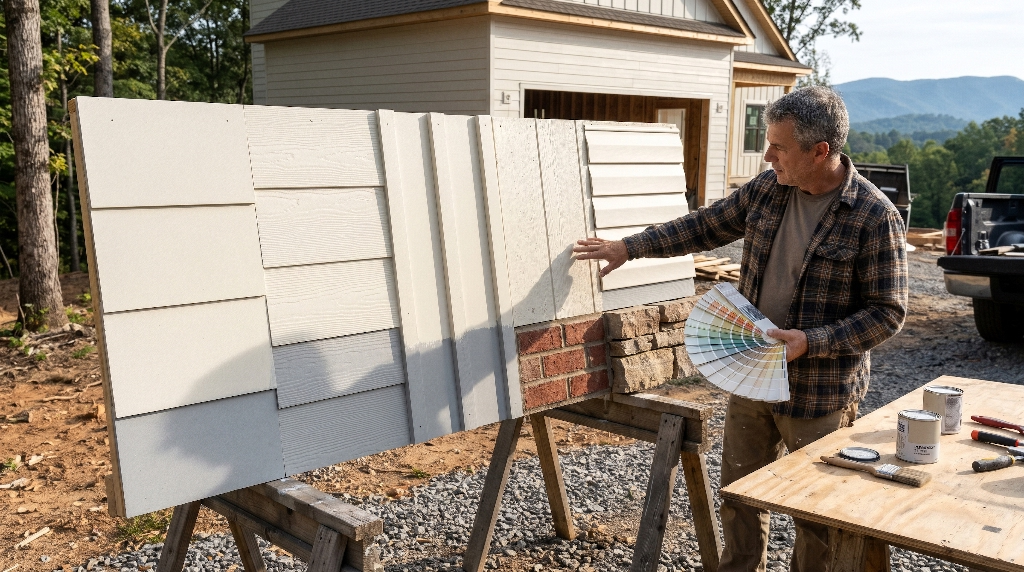
Once you pick a paint match, you have to think about the physical material on your walls. Different building products absorb and reflect light in very different ways, which changes how home exterior siding looks from the street.
Fiber Cement Siding
Fiber cement boards, such as James Hardie plank, are a staple in modern home building because they resist rot, fire, and insects. You can buy fiber cement with a smooth finish or a stamped cedar wood-grain texture. Smooth boards reflect light evenly and make Cloud Dancer look crisp and modern. Wood-grain boards cast tiny shadows inside the grooves, which makes the same warm white look slightly deeper and softer. You can either order factory-baked finishes like Arctic White for maximum durability or have your painting crew apply two coats of high-grade acrylic paint over primed boards in the field.
Engineered Wood Siding
Products like LP SmartSide give you the warmth of real wood with added protection against moisture and termites. When applying a light shade like Cloud Dancer to engineered wood, primer and edge sealing are critical. Every cut end must be sealed with exterior primer before installation so moisture cannot wick into the wood fibers. Because engineered wood has a subtle texture, it holds warm white paint beautifully and gives home exterior siding a rich, traditional look.
Vinyl Siding
Many homeowners ask if they can paint existing vinyl home exterior siding in a trending color. With Cloud Dancer, the answer is generally yes, because it is a light shade. Dark paint colors absorb too much solar heat and cause vinyl panels to warp or buckle. A high-LRV white reflects heat away from the wall. However, you must still use a paint labeled as vinyl-safe so the chemical bond stays flexible as the vinyl expands and contracts with seasonal temperature swings.
Natural Brick and Stone
If your house has a brick foundation, a stone chimney, or a masonry lower level, Cloud Dancer acts as a natural bridge between the stone and the upper walls. Cool, bluish whites often clash with warm red clay bricks or tan Tennessee river rock. Because Cloud Dancer has a gentle warm base, it sits comfortably next to earth tones and makes natural masonry look intentional rather than dated.
Application Strategy 1: Using Cloud Dancer as the Primary Siding Color
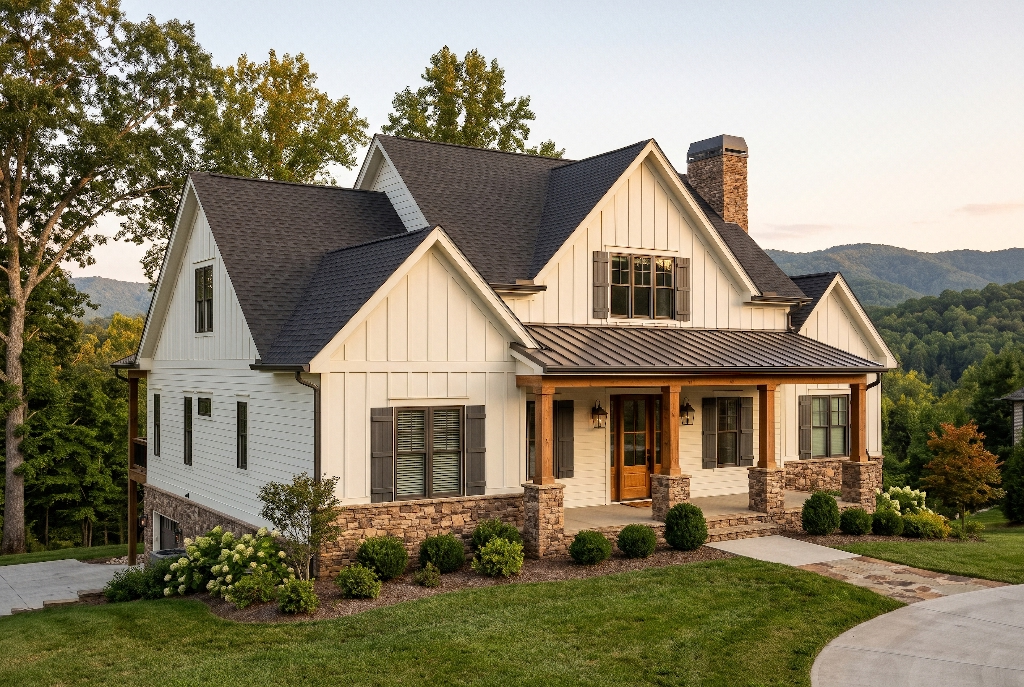
If you are building a new home or replacing worn-out cladding, wrapping the main body of the house in Cloud Dancer creates a clean, welcoming presence. Warm white home exterior siding fits seamlessly onto Modern Farmhouse designs, classic Craftsman bungalows, traditional Colonial homes, and relaxed coastal cottages. It gives a house strong curb appeal without screaming for attention.
The biggest mistake builders see with all-white exteriors is the flat facade effect. When every square foot of wall uses the exact same board profile and the exact same color, the house can look like a giant white box from the road. To avoid this, you need to build shadow lines into your home exterior siding using different board shapes and directions:
- Horizontal Lap Siding on the Main Walls: Classic horizontal planks with a six-inch or seven-inch exposure create clean horizontal shadow lines across the first and second stories.
- Vertical Board and Batten in the Gables: Switching to vertical boards and narrow battens inside the roof peaks draws the eye upward and breaks up large expanses of wall.
- Cedar Shake Accents in Dormers: Adding scalloped or straight-edge shake shingles around attic dormers adds rich texture that catches the morning and evening sun differently than flat planks.
When Cloud Dancer covers the main home exterior siding, your trim and accent colors do the heavy lifting to frame the house. You can keep the trim in the exact same warm white for a soft, unified look, or step slightly deeper with a warm putty or light taupe trim so the window frames stand out. For shutters, window sashes, and the front entry door, pair Cloud Dancer with grounded, earthy tones. Deep espresso brown, muted sage green, warm khaki, and dark bronze hardware all look sharp against a soft white backdrop.
Application Strategy 2: Using Cloud Dancer on Exterior Trim, Fascia, and Millwork
You do not have to repaint your entire house to take advantage of the 2026 Pantone Color of the Year. Using Cloud Dancer strictly on your architectural trim is a low-risk, high-impact strategy. This approach works especially well if your current home exterior siding is already in good shape and features a mid-tone or dark color, such as forest green, slate blue, warm charcoal, earthy brown, or unpainted red brick.
Exterior trim acts like the picture frame around a painting. When you apply Cloud Dancer to your trim boards, you highlight the craftsmanship of your roofline and windows. Key areas to include in your trim package are:
- Window and Door Casings: Wide, flat trim boards around windows give the facade strong structure and make glass panes look larger.
- Corner Boards: Vertical trim pieces at the outside corners of the house create crisp vertical boundaries where horizontal home exterior siding meets.
- Fascia and Soffits: Painting the horizontal fascia boards along the roof edge and the underside soffits in Cloud Dancer brightens the overhang and lifts the roofline visually.
- Porch Columns and Railings: Front porch posts, balusters, and ceiling beams painted in a warm white make the entry feel open, clean, and inviting.
- Gable Pediments and Brackets: Decorative trim details up in the roof peaks pop cleanly against darker siding when coated in a luminous off-white.
Why choose Cloud Dancer over a standard builder white for trim? Standard bright white often looks too harsh next to natural, earthy siding colors. It creates a jarring border that cuts the house into choppy pieces. Cloud Dancer softens that transition. Its subtle warmth blends smoothly with dark greens, browns, and natural brick, giving you crisp architectural definition without looking sterile.
The 60-30-10 Exterior Color Rule in Practice

When homeowners struggle to pick exterior colors, it is usually because they are guessing at proportions. In both engineering and residential design, balance comes from clear ratios. The 60-30-10 rule is a reliable formula that keeps your home exterior siding, trim, and accents in harmony.
Under this rule, 60 percent of the visible exterior belongs to your dominant field color, which is your primary siding or brick. 30 percent belongs to your secondary color, which covers architectural trim, secondary gable siding, dormers, or garage doors. The final 10 percent is reserved for your boldest accent color on the front door, shutters, and light fixtures.
Here are three complete exterior palette formulas using PANTONE 11-4201 Cloud Dancer that you can adapt to your own home:
Palette 1: The Timeless Warm Farmhouse
- 60% Dominant Field: Cloud Dancer applied to horizontal lap home exterior siding and vertical board-and-batten gables.
- 30% Secondary Elements: Warm greige or soft khaki (such as Sherwin-Williams Universal Khaki) on wide window trim, porch columns, and carriage-style garage doors.
- 10% Accent Details: Deep espresso brown or charcoal bronze on the front entry door, metal porch roof, and exterior lantern sconces.
- Roof and Masonry Pairing: Weathered wood architectural asphalt shingles and a stacked natural limestone foundation.
Palette 2: The Grounded Woodland Craftsman
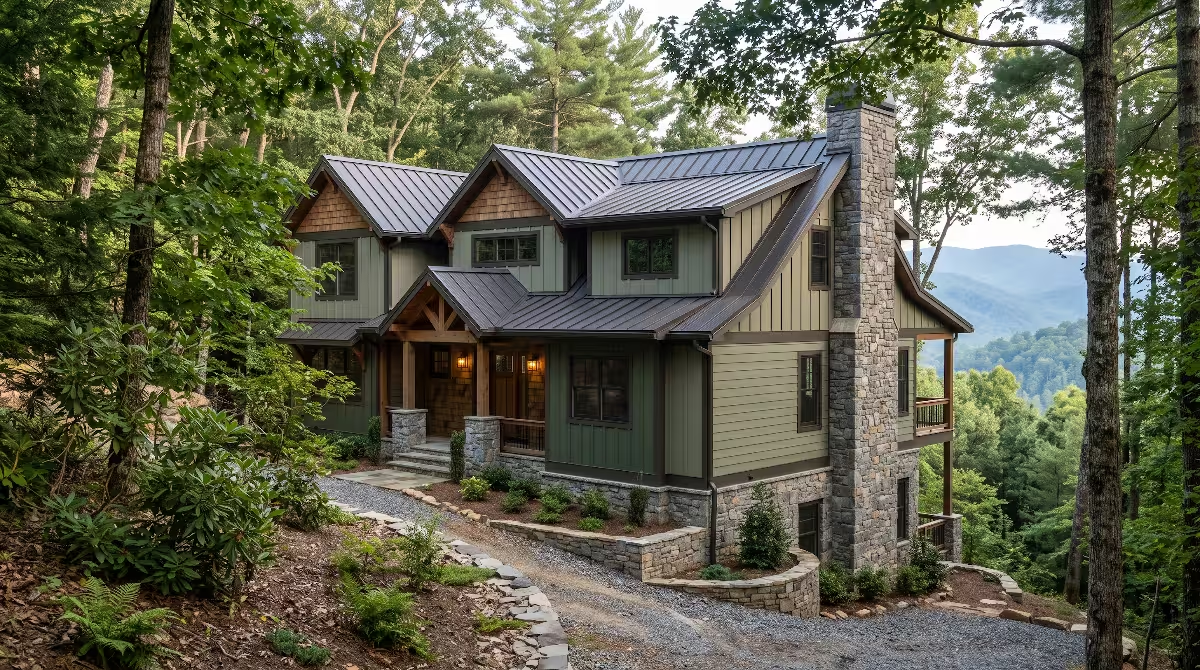
- 60% Dominant Field: Muted olive or earthy sage green on lap and shake home exterior siding.
- 30% Secondary Elements: Cloud Dancer on heavy tapered porch columns, wide window casings, knee braces, fascia, and soffits.
- 10% Accent Details: Stained natural walnut or warm terracotta on a solid wood Craftsman front door with frosted glass panels.
- Roof and Masonry Pairing: Dark brown architectural shingles and warm river-rock column bases.
Palette 3: The Classic Southern Brick Colonial
- 60% Dominant Field: Traditional red and tan tumbled clay brick across the main two-story elevation.
- 30% Secondary Elements: Cloud Dancer on dentil crown molding, corner pilasters, dormer home exterior siding, and multi-pane window trim.
- 10% Accent Details: Deep forest green or classic black on paneled wood shutters and a glossy front door.
- Roof and Masonry Pairing: Slate-gray roof shingles and warm mortar joints that echo the creamy undertone of the trim.
Step-by-Step Field Testing and Application Best Practices
Even the best color plan on paper can surprise you once it goes up on a full wall. Sunlight shifts dramatically from morning to evening, and nearby trees or grass bounce green and blue reflections onto light-colored walls. Following a disciplined field process protects your budget and ensures a lasting paint job.
1. Paint Large-Scale Sample Boards
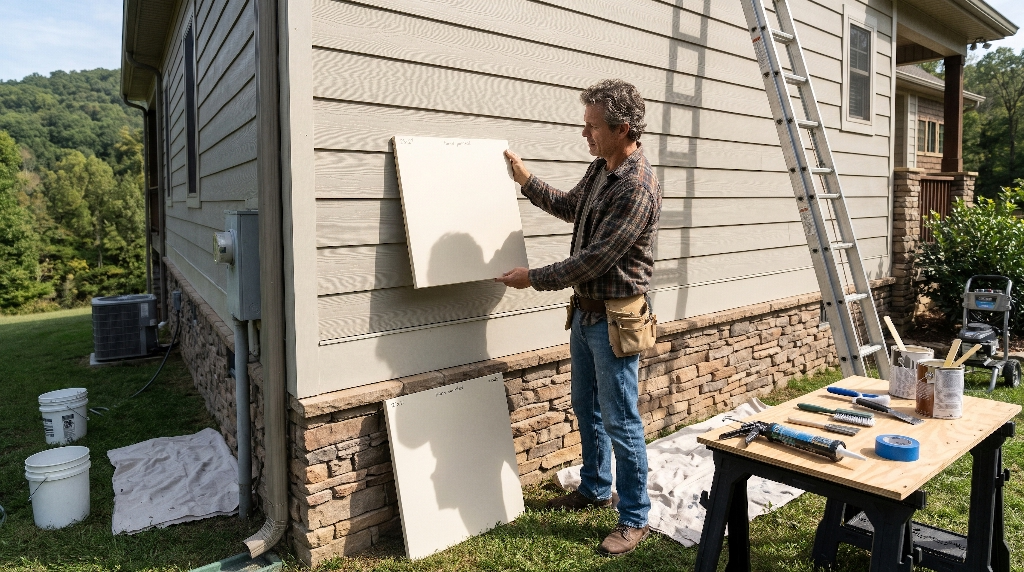
Never judge an exterior color from a two-inch paper swatch inside a brightly lit store. Buy quart samples of your top two Cloud Dancer paint matches and paint them onto two-foot by two-foot pieces of spare siding or primed fiber cement board. Apply two full coats so the true color shows through. Move those sample boards around all four sides of your house, North, South, East, and West, and look at them at eight in the morning, noon, and six in the evening. You will quickly see whether a shade looks too creamy in direct sun or too gray in deep shade.
2. Prepare the Surface Thoroughly
A paint job is only as strong as the surface underneath it. Start by washing your home exterior siding with a low-pressure rinse and a mild mildewcide cleaner to remove dirt, pollen, and chalky residue. Let the walls dry completely for at least forty-eight hours. Next, scrape away any loose or peeling paint, sand rough edges smooth, and fill nail holes with exterior wood filler. Walk the entire perimeter and seal every seam where siding meets trim using a high-grade, paintable siliconized acrylic or elastomeric caulk. Keeping water out of those joints prevents rot and paint failure.
3. Choose the Right Paint Grade and Sheen
Always invest in top-tier, 100 percent acrylic latex exterior paint. Cheaper vinyl-acrylic blends break down faster under ultraviolet rays and lose their color within a few years. Match your paint sheen to the building component:
- For Primary Siding: Choose a flat or satin (low-luster) finish. Flat finishes hide small dents, waves, and lap marks on older home exterior siding, while satin offers a slight sheen that sheds rain and dirt easily.
- For Trim, Doors, and Shutters: Choose a satin or semi-gloss finish. The higher resin content creates a harder shell that resists scuffs, makes cobwebs easy to wipe away, and gives architectural millwork a clean highlight.
4. Respect Weather and Cure Windows
Check the forecast before opening a paint can. Most modern exterior acrylic coatings require air and surface temperatures between fifty and eighty-five degrees Fahrenheit during application and for at least four hours afterward. Avoid painting walls in direct afternoon sun, which flashes the water out of the paint too fast and causes brush marks or blistering. Stop painting by mid-afternoon if heavy evening dew is expected, because moisture settling on fresh paint causes dull spots and surfactant leaching.
Expert Answers on Home Exterior Siding Color Trends
Homeowners often bring the same practical questions to my desk when planning an exterior remodel. Here are straight answers to the most common questions about using Pantone colors on the outside of a house.
Can you buy Pantone paint for the exterior of your house?
Pantone does not manufacture retail cans of house paint, so you cannot buy a bucket labeled Pantone off the shelf. However, major paint retailers like Sherwin-Williams, Benjamin Moore, and PPG maintain digital color databases that cross-reference Pantone codes. You can bring the code PANTONE 11-4201 Cloud Dancer to the paint counter, and the technician can either pull up the closest official brand formula or scan a Pantone swatch with a spectrophotometer to tint a custom exterior base.
What trim color goes best with warm white exterior siding?
When your primary home exterior siding is a warm white like Cloud Dancer, you have three strong options for trim. First, you can use the exact same color in a higher sheen (satin siding with semi-gloss trim) for a clean, monochromatic look. Second, you can choose a warm greige, putty, or soft khaki trim to outline your windows gently. Third, you can go bold with dark bronze or espresso brown trim on modern homes. Avoid pairing warm white siding with cool, bluish-gray trim, because the cool gray will make the warm siding look dingy or yellow by comparison.
Does white exterior siding get dirty easily or show mildew?
Modern exterior paints are engineered much better than the oil and early latex paints of decades past. Top-grade acrylic exterior paints contain dirt-pickup-resistant resins that cure to a tight, smooth film, meaning dust and pollen wash away during a normal rainstorm instead of embedding into the paint. They also include built-in mildewcides to fight algae growth. While shaded north-facing walls in humid climates will eventually collect some green pollen or mildew regardless of color, washing your home exterior siding once a year with a garden hose and soft brush keeps warm white looking fresh for ten to fifteen years.
How do you keep a trending exterior paint color from hurting resale value?
Real estate buyers love homes that look fresh and well-maintained, but they get nervous when an exterior color feels loud or experimental. The beauty of PANTONE 11-4201 Cloud Dancer is that it bridges the gap between current style and broad buyer appeal. Warm white is a classic architectural neutral that satisfies strict Homeowners Association guidelines and fits nearly every neighborhood style. By keeping the bright or bold trend colors limited to easily repainted items like your front door, you protect your home equity while still enjoying a current look.
Should exterior trim be lighter or darker than siding?
Historically, most American homes used trim that was lighter than the main body color, such as white trim framing blue, green, or gray home exterior siding. Lighter trim draws attention to window proportions and rooflines. In recent years, reverse-trim designs using dark charcoal or bronze trim against warm white siding have grown popular on modern farmhouses and contemporary builds. Either approach works well as long as you keep the undertones consistent, pairing warm whites with warm darks, and cool whites with cool darks.
Conclusion and Next Steps for Homeowners
Bringing PANTONE 11-4201 Cloud Dancer to the outside of your home does not require a leap of faith. When you understand its warm undertones, match it to the right exterior paint base, and balance it across your home exterior siding, trim, and accents using the 60-30-10 rule, you get an exterior that feels both current and built to last. Good home design is never about chasing every passing fad. It is about picking durable materials and honest colors that make you proud every time you pull into the driveway.
Before you schedule a painting crew or place an order at the lumberyard, walk through this quick action checklist:
- Check Your HOA Covenants: Review your neighborhood guidelines to make sure warm off-whites and your chosen accent colors meet local approval rules.
- Gather Physical Samples: Pick up quart samples of your top paint matches along with actual samples of your roofing shingles, brick, or stone so you can view all materials together outdoors.
- Inspect Your Substrate: Walk around your house and check your existing home exterior siding for soft wood, failing caulk, or peeling paint that needs repair before coating.
- Consult a Local Pro: Talk with an experienced exterior painter or custom home builder in your area about the best primer and acrylic topcoat system for your specific climate and wall material.