

When we build custom homes here in the Tri-Cities, we often focus on the beautiful finish of a cherry cabinet or the grain of a white oak floor. However, there is a hidden side to this work that every builder and homeowner needs to understand. Today we want to talk to you about the health effects of inhaling fine wood dust.
It is easy to think of sawdust as just a mess to clean up at the end of the day. In reality, the smallest particles, the ones you can barely see, are the most dangerous. This dust can hang in the air for hours, waiting to be breathed deep into your lungs. Whether you are building a new house in Tennessee or doing a small weekend project in your garage, knowing the risks is the first step to staying safe. Our goal is to explain these risks clearly so you can protect yourself and your crew.
Respiratory Consequences: The Short and Long-Term View
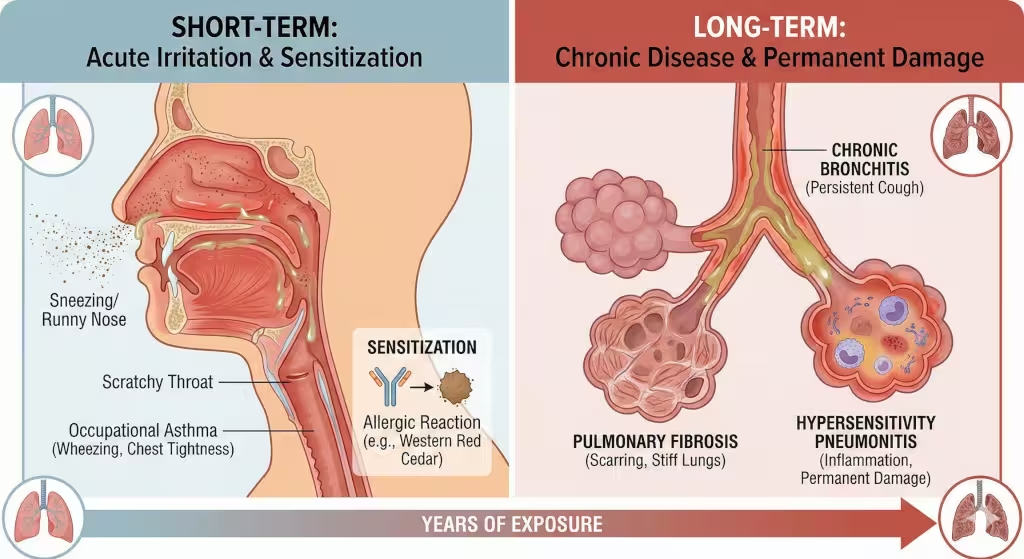
When we talk about the health of our lungs on a job site, we are really talking about the long-term viability of our careers. The respiratory consequences of breathing fine wood dust are split into two categories: the immediate reactions your body has today, and the permanent changes that happen over decades.
Short-Term Respiratory Irritation
In the short term, your body tries its best to get rid of fine wood dust. Think of your nose and throat as a filter system. When you are sanding a piece of trim, you might start sneezing or notice that your nose is running. This is not just an allergy; it is a physical reaction to the dust. The particles irritate the “mucosa,” or the soft lining inside your nose.
This irritation often leads to what we call “rhinitis.” It feels like a common cold, but it goes away once you leave the shop. You might also experience a scratchy throat or a dry cough. While these symptoms seem minor, they are early warning signs. They mean your body is struggling to manage the volume of fine wood dust in the air. If you ignore these signs and continue to work without a mask or a vacuum system, you are setting the stage for more serious damage.
Occupational Asthma and Sensitization
One of the most specific short-term risks in our industry is occupational asthma. This is a condition where your airways swell up and narrow in response to breathing fine wood dust. Some woods are “sensitizers,” which means your body becomes allergic to them over time. Western Red Cedar is the most famous example of this in the building world.
Once you become sensitized to a specific type of fine wood dust, even a tiny amount can trigger a major asthma attack. You might feel a tight sensation in your chest or find yourself gasping for air. This is a very serious situation for a builder because it can mean you can no longer work with certain materials at all. Protecting yourself from the dust early on is the only way to prevent your immune system from overreacting this way.
Long-Term Effects: Chronic Bronchitis and Fibrosis
The real danger of fine wood dust shows up after ten or twenty years of exposure. When you breathe in these tiny particles every day, they travel deep into the “alveoli,” which are the small air sacs in your lungs where oxygen enters your blood. It is often sharp and jagged at a microscopic level. These particles cause tiny “micro-traumas” or small cuts inside your lung tissue.
Over time, your body tries to heal these tiny cuts by creating scar tissue. This process is called fibrosis. Unlike your skin, which can stretch, scar tissue in the lungs is stiff. If enough scar tissue builds up because of fine wood dust, your lungs lose their ability to expand and contract. This leads to chronic bronchitis, a condition where you have a “smoker’s cough” even if you have never touched a cigarette. You will find yourself getting out of breath just walking across a job site or climbing a ladder.
Hypersensitivity Pneumonitis
Another long-term risk is a condition called hypersensitivity pneumonitis. This is an inflammation of the lungs caused by an allergic reaction to fine wood dust or the fungi and molds that sometimes grow on damp wood. It often starts with “flu-like” symptoms, fever, chills, and a dry cough, that happen a few hours after work.
If you keep breathing in fine wood dust while having this condition, it can lead to permanent lung damage. In the Tri-Cities, where humidity can be high, we have to be especially careful about wood that has been sitting out, as the combination of mold and fine wood dust is a “double hit” to your respiratory system.
Summary of Respiratory Impact
| Timeframe | Common Condition | Typical Symptoms |
| Immediate | Acute Irritation | Sneezing, runny nose, scratchy throat |
| Short-Term | Occupational Asthma | Wheezing, chest tightness, shortness of breath |
| Long-Term | Chronic Bronchitis | Persistent cough, heavy mucus production |
| Permanent | Pulmonary Fibrosis | Stiffening of lungs, permanent loss of breath |
It is important to remember that fine wood dust is not just “dirt.” It is a biologically active material that your body has to fight. Our advice is to treat every particle as a potential threat to your retirement. If you can’t breathe, you can’t build.
The Carcinogenic Link: Hardwoods and Nasal Cancer
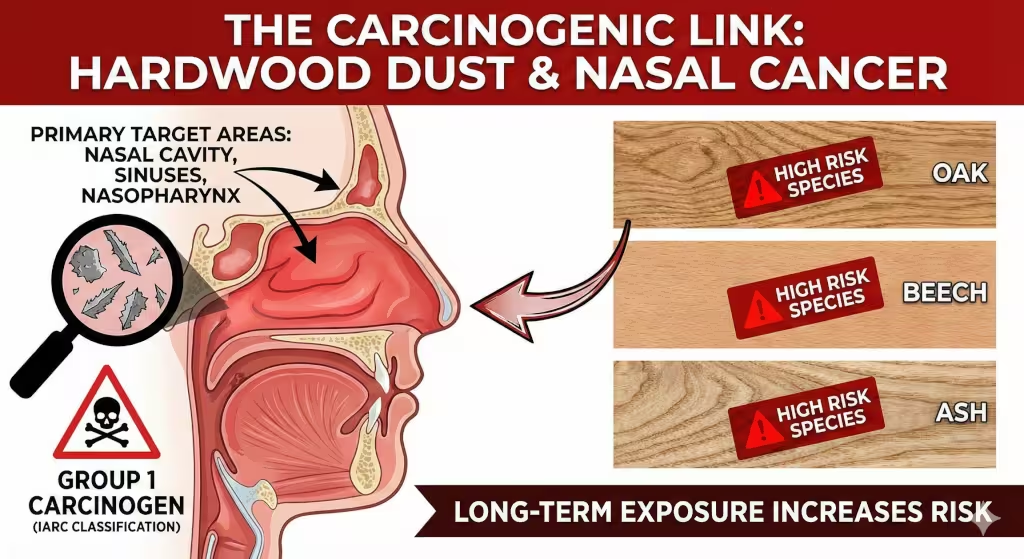
Most people are surprised to learn that fine wood dust is officially listed as a “Group 1 Carcinogen.” This is the same category as asbestos or tobacco smoke. Health experts around the world have found a very strong link between breathing fine wood dust and developing rare types of cancer, especially in the nose and sinuses.
Hardwoods like oak, beech, and ash are the most dangerous when it comes to cancer risks. Because these woods are very dense, they produce a much higher amount of fine wood dust when they are sanded or cut. These tiny particles get trapped in the curves of your nasal cavity. Over many years of exposure, the irritation from the fine wood dust can cause the cells in your nose to change and become cancerous.
This risk is why many builders in the Tri-Cities are now moving toward better dust control systems. We aren’t just trying to keep the house clean for the customer; we are trying to make sure our craftsmen don’t get sick years down the road. Even if you only work with wood as a hobby, you should treat fine wood dust with the same respect you would give to any other hazardous chemical.
Beyond the Lungs: Systemic Health Effects
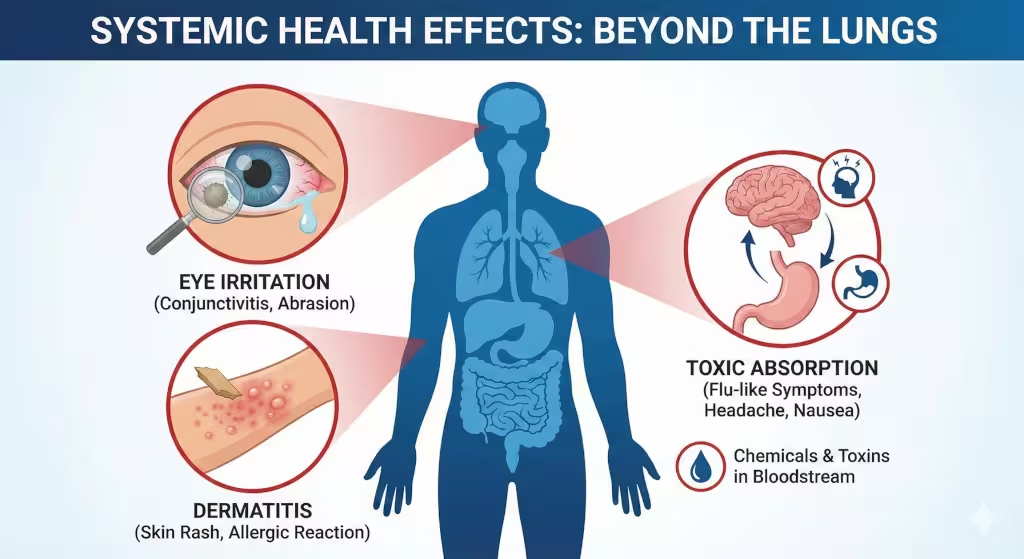
The damage from fine wood dust does not always stop at your lungs. Many types of wood contain natural oils and chemicals that can cause “dermatitis,” which is just a fancy word for a skin rash. If fine wood dust sits on your skin, especially when you are sweating, it can cause red, itchy patches or even blisters.
Your eyes are also at risk. Fine wood dust can get under your eyelids and scratch the surface of your eye. This leads to redness and pain. Furthermore, some woods like oleander or certain tropical hardwoods are actually toxic. If you breathe in the dust from these trees, the toxins can enter your bloodstream through your lungs. This can cause symptoms that feel like the flu, such as headaches, nausea, or feeling dizzy.
If you are working with “manufactured” wood like MDF or plywood, the risk is even higher. These products are held together with glues that often contain formaldehyde. When you cut them, you aren’t just making fine wood dust; you are also releasing chemical vapors into the air. This combination is much harder on your body than just pure wood alone.
Common Questions about Fine Wood Dust
Many people ask, “Is inhaling a little sawdust once bad for you?” The truth is that a single exposure is usually not going to cause long-term damage. Your body is pretty good at cleaning out a one-time mess. However, the real danger is “chronic exposure.” This means breathing in fine wood dust every day for months or years. That is when the serious health problems start to build up.
Another common question is, “Can your lungs clear wood dust?” Your lungs have tiny “fingers” called cilia that move mucus and dust up and out of your body. But if there is too much fine wood dust, these fingers get overwhelmed and stop working. When that happens, the fine wood dust stays in your lungs forever.
People also want to know, “Which wood dust is the most toxic?” In general, hardwoods are more dangerous than softwoods like pine. However, Western Red Cedar is very famous for causing asthma. If you are working with exotic woods from other countries, you need to be extra careful because we don’t always know what chemicals they might naturally contain.
Mitigation: Engineering Controls vs. PPE
Protecting yourself from fine wood dust is all about layers of safety. The best way to stay safe is to stop the fine wood dust from ever reaching your face. We call this “Engineering Controls.” The gold standard for this is a “Local Exhaust Ventilation” system. This is a powerful vacuum that is attached directly to your saw or sander. It sucks up the dust the very second it is created.
You should also use a vacuum with a HEPA filter. A regular shop vacuum might pick up the big chunks, but it often blows the fine wood dust right back out the exhaust and into the air you breathe. A HEPA filter is designed to catch 99.97% of those tiny particles.
If you cannot suck up all the fine wood dust at the source, you must use “Personal Protective Equipment,” or PPE. A simple paper mask from the hardware store is usually not enough for fine wood dust. You should look for a respirator rated as “N95” or “P100.” These masks are designed to filter out the microscopic particles that do the most damage. Just remember, a mask only works if it fits tightly against your skin with no gaps.
Legal and Safety Standards in the Tri-Cities
In Tennessee, we follow the rules set by OSHA to keep workers safe. OSHA has specific limits on how much fine wood dust can be in the air during an eight-hour workday. For softwoods, they allow a bit more, but for hardwoods, the rules are much stricter because of the cancer risk.
In the custom home building industry, we aim for even higher standards. Groups like NIOSH recommend keeping fine wood dust levels as low as possible, much lower than what the law strictly requires.
If you are a business owner in the Tri-Cities, you are required by law to tell your workers about the dangers of fine wood dust. This is part of what we call “Hazard Communication.” It’s not just about following the law; it’s about making sure everyone who helps build a home can go home healthy to their family at night.
Protecting your health is the most important part of any building project. Whether you are cutting a 2×4 or sanding a fine piece of walnut, always remember that the fine wood dust you can’t see is the part that can hurt you the most.
Bonus: A Checklist of HEPA Vacuum Systems and Respirators
Hello there. As we discussed, keeping your air clean is the most critical part of building for the long term. Based on my experience with custom sites across Tennessee, I’ve put together a checklist of the most reliable HEPA vacuum systems and respirators to protect you from the health effects of inhaling fine wood dust.
HEPA Vacuum System Checklist
When choosing a vacuum, don’t just look for “suction.” For fine wood dust, you need a true HEPA-certified extractor that captures 99.97% of particles. Here are the features and top models to check for:
HEPA Certification: Ensure the filter is rated for particles down to 0.3 microns.
Tool Activation: Look for a built-in power outlet so the vacuum turns on automatically when you start your saw or sander.
CFM Rating: For sanding, look for at least 130–150 CFM (Cubic Feet per Minute) to move enough air.
Self-Cleaning Filters: High-end models pulse the filter to prevent fine dust from clogging it and reducing suction.
Recommended HEPA Vacuums
Best for Professional Shops: The Festool CleanTEC Hepa Dust Extractor is the gold standard. It is quiet, connects to almost any tool, and uses a manual filter cleaning feature to keep suction high. It’s built for those who value precision and a clean workspace.
Best for Construction Sites: The DEWALT 10 Gallon Dust Extractor DWV015 is a rugged workhorse. It features an automatic filter cleaning system that pulses every 30 seconds, making it perfect for heavy-duty jobs like floor sanding or drywall.
Best Value for Home Workshops: The Rockler Dust Right Tool Activated Hepa Dust Extractor offers excellent tool-activated convenience and a HEPA cartridge filter at a more accessible price point for a local hobbyist or small contractor.Respirator Checklist
A mask only works if it fits and filters. For custom woodworking, I generally recommend moving beyond basic paper masks to something with a better seal.
N95 vs. P100: N95 filters 95% of non-oil particles. P100 filters 99.97% and is oil-proof. For the fine dust from hardwoods like oak, P100 is the professional’s choice.
Exhalation Valve: Essential for preventing your safety glasses from fogging up.
Quick Latch: Allows you to drop the mask down without taking off your hard hat or headgear.
Top-Rated Respirators
Best Reusable Option: The GVS Elipse P100 Half Mask Respirator is incredibly lightweight and has a low-profile design that won’t get in the way of your safety glasses. It’s my go-to for long days in the shop.
Best Professional Multi-Purpose: The 3M Multi-Purpose Reusable Respirator (P100) features a Quick Latch system, making it easy to talk to your crew without removing your entire head harness. It protects against dust and organic vapors from stains or paints.
Best Disposable Option: If you prefer disposables, the 3M Aura N95 Particulate Respirator is widely loved for its three-panel design that moves with your face as you talk, providing a much better seal than standard cup-style masks.
Final Expert Summary
If you are working with hardwoods or doing a lot of sanding, I recommend the Festool extractor paired with the GVS Elipse P100. This combination provides the best “at-source” collection and the highest personal protection for your lungs.