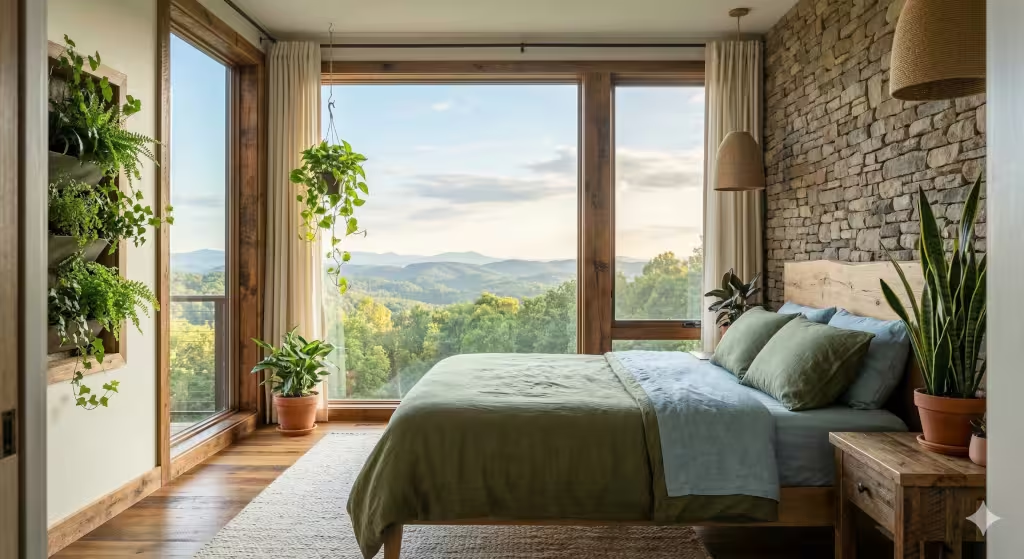


Introduction to Dappled Lighting Ideas for Your Mountain Great Room
Living in the mountains of East Tennessee gives us a front row seat to how sunlight moves through wild spaces. When you hike along the trails of Roan Mountain or walk beneath the hardwood ridges of the Cherokee National Forest, the light above you is never still. Sunlight filters through layers of oak, maple, and tulip poplar leaves. It creates soft pools of warmth, shifting shadows, and glowing edges across the forest floor. In the science of building design, we call this natural visual pattern dynamic and diffuse light. It is one of the most calming visual experiences found in nature.
When many homeowners build a mountain home in our region, they design a great room with soaring cathedral ceilings, massive timber framing, and two-story glass walls. These grand rooms are meant to celebrate the surrounding mountain views. Yet, when the sun sets behind the ridges, these massive spaces often develop serious lighting problems. Builders often place simple floodlights or basic downlights in the ceiling beams. This creates what I call the stadium effect. The room is blasted with harsh, flat light from twenty feet in the air. Other times, builders use fixtures that are far too weak. This creates the cave effect, where heavy shadows pool in the upper rafters and corners feel cold and gloomy.
To solve these problems, we need smarter lighting ideas that borrow wisdom from the forest itself. By studying the natural layers of a mountain forest understory, we can bring the beauty of shifting outdoor light inside our living spaces. These specialized lighting ideas do more than just help you see at night. They support your body clock, reduce eye strain, and make a massive vaulted room feel comfortable, welcoming, and grounded. In this guide, we will explore the science of forest canopies and how to use practical, proven lighting ideas to transform your mountain great room into a comfortable sanctuary.
The Photobiology of the Forest Canopy: Why Dappled Light Calms the Nervous System
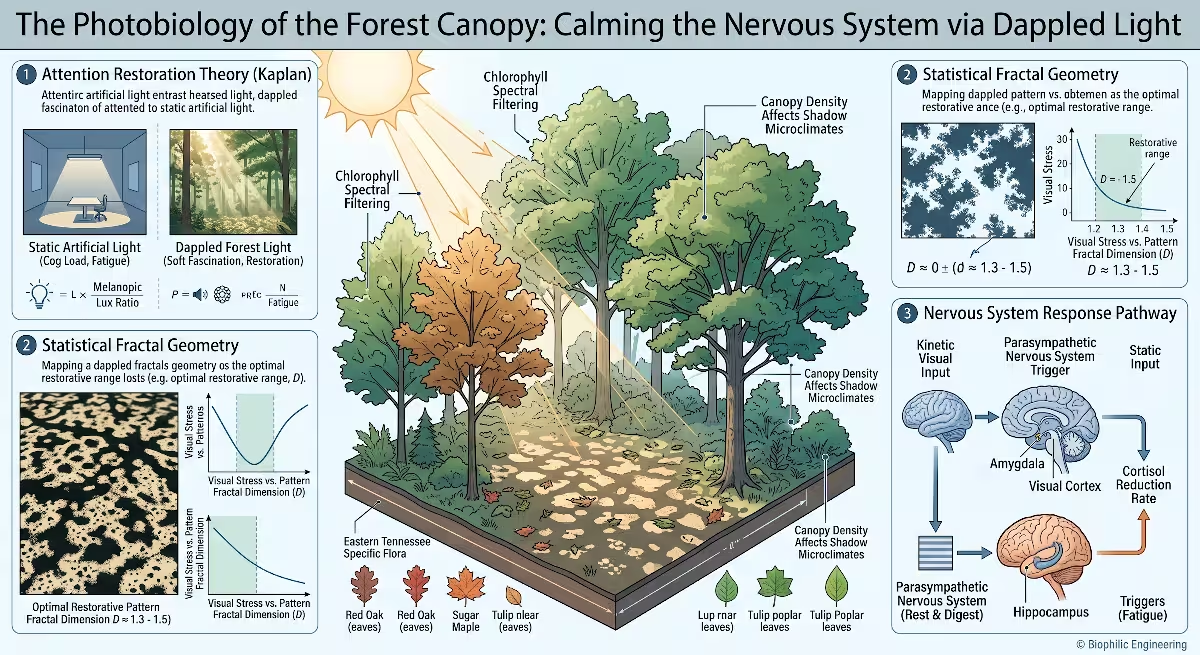
To understand why dappled forest illumination feels so right in a mountain home, we have to look at human biology. Our eyes and brains did not evolve under static light bulbs or bare fluorescent tubes. For hundreds of thousands of years, humans lived, worked, and rested under the open sky and beneath tree canopies. Because of this long history, our nervous systems are hardwired to respond to the natural patterns of sunlight filtering through branches. When we build modern living spaces, using nature-based lighting ideas helps recreate those comforting conditions.
       NATURAL FOREST CANOPY                 ENGINEERED MOUNTAIN GREAT ROOM
  +-------------------------------+         +-------------------------------+
  | Upper Canopy (Direct Sunlight)|         | High Vault / Concealed Up-Glow|
  |     Leaves & Moving Branches  |  ====>  |     Laser Screens & Pendants  |
  | Mid-Canopy (Filtered Rays)    |         | Mid-Level Sconces & Hearth    |
  | Forest Floor (Soft Understory)|         | Low-Level Plinth & Reading    |
  +-------------------------------+         +-------------------------------+
When you look at sunlight through trees, you see gentle brightness changes without harsh glare. Modern lighting ideas should capture this exact balance. If your great room lighting is completely flat and uniform, your mind interprets the space as sterile or unnatural. On the other hand, if your lighting ideas introduce soft transitions and gentle shadow movement, your body recognizes the space as a safe haven. Bringing these organic lighting ideas indoors transforms how you feel in your home every evening.
Terrapin Pattern 6: Dynamic and Diffuse Light
In the study of biophilic architecture, experts organize nature-based design into clear principles. One of the most famous frameworks comes from Terrapin Bright Green, which identifies fourteen distinct patterns of biophilic design. Pattern number six is called Dynamic and Diffuse Light. This pattern describes how light and shadow change naturally over time, just like sunlight moving through a grove of trees or across passing clouds.
When we create modern lighting ideas for great rooms, this sixth pattern is our guiding rule. Dynamic light means the illumination has variety. It is not a single, frozen wash of white light across the entire floor plan. Diffuse light means the light is softened by bouncing off organic surfaces or passing through semi-transparent barriers. When you apply these biophilic lighting ideas to a great room, you eliminate direct glare. Instead of staring directly into bare bulbs, your eyes encounter soft glow, gentle gradients, and natural shadow play that feel completely familiar to the human eye.
Applying these natural lighting ideas also helps your body stay in tune with the time of day. In nature, dynamic daylight changes its color and intensity from dawn to dusk. Morning sunlight has cool, blue tones that wake up your brain. Evening light shifts to deep ambers and warm reds that prepare your brain for sleep. By incorporating dynamic lighting ideas into your home, you mimic these natural cycles indoors. Your mountain great room becomes an active partner in your daily health and wellness.
Soft Fascination and Fractal Geometries
Two environmental psychologists named Rachel and Stephen Kaplan developed a famous concept known as Attention Restoration Theory. They discovered that modern life demands directed attention. When you work on a computer screen, drive through traffic, or read detailed documents, your brain works hard to ignore distractions. Over many hours, this constant focus causes mental fatigue.
The Kaplans found that nature restores our mental energy through something called soft fascination. Soft fascination happens when you watch things like moving clouds, rolling river water, or sunlight filtering through leaves. These gentle movements hold your attention effortlessly without requiring active concentration. By using creative lighting ideas that cast organic leaf patterns and gentle shadow movement, we can bring soft fascination directly into your living room. Sitting in a room filled with these restful lighting ideas helps your brain relax and recover from daily stress.
+-------------------------------------------------------------------------+
|                  ATTENTION RESTORATION IN THE HOME                      |
+-------------------------------------------------------------------------+
|  DIRECTED ATTENTION (Mental Fatigue):                                   |
|  - Staring at computer monitors, typing, focused task work              |
|  - Harsh, uniform commercial overhead lights                            |
|                                                                         |
|  SOFT FASCINATION (Mental Recovery):                                    |
|  - Looking at organic tree branches and moving leaf patterns            |
|  - Gentle shadow play from layered, nature-inspired lighting ideas      |
|  - Dappled pools of light that mimic the forest understory              |
+-------------------------------------------------------------------------+
A big reason soft fascination works so well has to do with fractal geometry. A fractal is a repeating geometric pattern that looks similar whether you zoom in close or view it from far away. Tree branches, fern leaves, and river systems are all natural fractals. Research shows that human brains are uniquely tuned to view natural fractals with a statistical dimension between 1.3 and 1.5. When our eyes view these specific fractal patterns, our brain waves show lower stress levels. When we select lighting ideas that project organic, branch-like patterns onto floors and walls, we are introducing healthy natural fractals into the built environment.
The Mountain Great Room Dilemma: Volumetric Scale vs. Visual Warmth
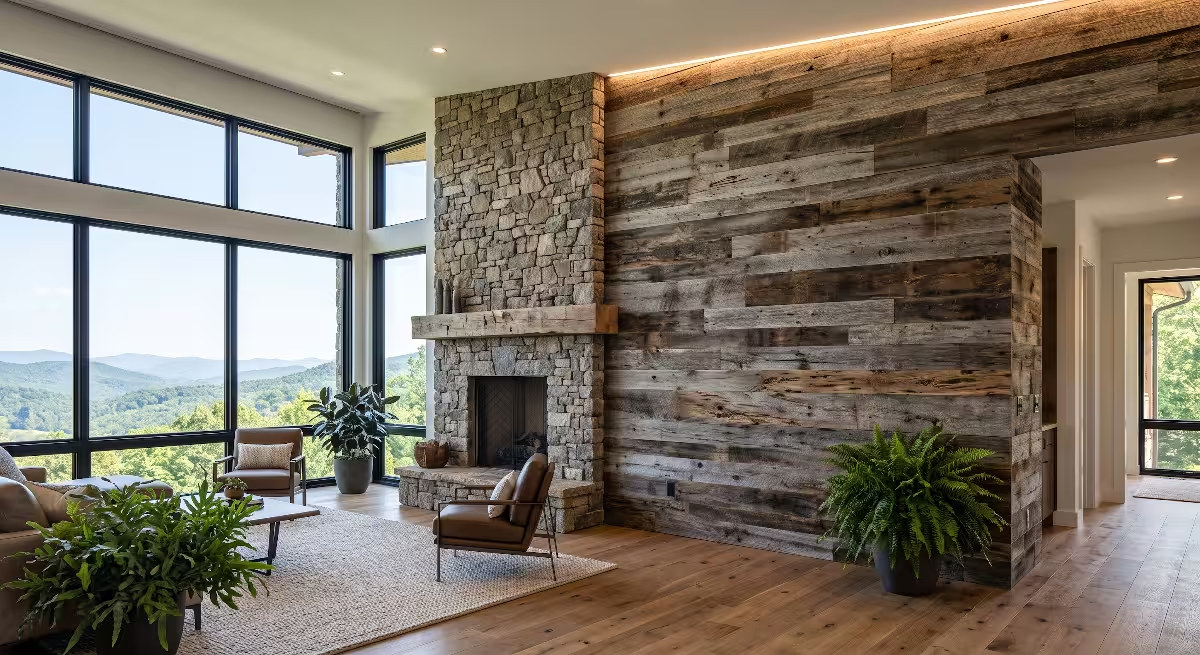
Mountain great rooms present unique structural challenges that traditional suburban homes simply do not have. These rooms often feature twenty-foot ceilings, steep roof pitches, large exposed timber trusses, and enormous stone fireplaces. While these architectural features look breathtaking during the day, they create difficult lighting problems at night. Without carefully planned lighting ideas, these large spaces end up feeling cold, drafty, and uninviting.
       COMMON LIGHTING TRAPS IN MOUNTAIN HOMES

       THE STADIUM EFFECT                  THE CAVE EFFECT
  +--------------------------+        +--------------------------+
  |  [X]   [X]   [X]   [X]   |        |  . . . (Dark Rafters)    |
  |   |     |     |     |    |        |                          |
  |   V     V     V     V    |        |                          |
  | Harsh, glaring downwash  |        | Dim pools, lost details, |
  | Washes out timber warmth |        | cold unwelcoming corners |
  +--------------------------+        +--------------------------+
The secret to success is learning how to balance high volume with human scale. When a person sits on a sofa, their field of view is mostly horizontal. If all your lighting ideas place fixtures high up in the rafters, the room lacks warmth at the seating level. Conversely, if you only place table lamps around the floor, the massive timber ceiling disappears into total darkness. Winning lighting ideas must address the entire height of the room by creating visual bridges between the high ceiling and the living area below.
The Inverse-Square Law in Vaulted Volumes
To design effective lighting ideas for tall spaces, you must understand a basic physical rule called the inverse-square law. This scientific law states that the intensity of light drops dramatically as distance increases. Specifically, if you double the distance between a light source and a surface, the surface receives only one-quarter of the original light.
Here is what that means in a real home. If a builder installs a downlight in an eight-foot ceiling, plenty of usable light reaches the floor. But if that exact same light fixture is moved up into a twenty-four-foot mountain ceiling, the light must travel three times farther. Because of the inverse-square law, the illumination that actually reaches your living room floor drops to one-ninth of its original strength.
Distance from Light Source (d)    Light Intensity at Surface (1 / d^2)
---------------------------------------------------------------------
1x (Standard 8-ft ceiling)        100% of baseline illumination
2x (Medium 16-ft ceiling)         25% of baseline illumination
3x (High 24-ft vaulted ridge)     11.1% of baseline illumination
Many builders try to fix this drop-off simply by installing high-powered commercial floodlights. This is a big mistake. Blasting intense beams from high above creates harsh shadows under tables, causes uncomfortable glare when you look up, and flattens the natural texture of your room. Smart lighting ideas avoid this brute-force method. Instead of relying on a few massive overhead fixtures, good lighting ideas use suspended pendants, mid-level wall fixtures, and low-level accent lights to place comfortable illumination exactly where your eyes need it.
Balancing Regional Materials: Timber, Stone, and Glass
Great rooms in the Appalachian region are celebrated for their authentic, heavy building materials. We love using thick white oak timbers, dark-stained pine ceiling boards, and rugged Crab Orchard stone fireplaces. While these materials give a home rustic strength and charm, they also absorb huge amounts of light. Light-colored drywall bounces light around a room easily, but rough dark stone and rich wood swallow light rays.
When planning your lighting ideas, you must account for these regional materials:
- Dark Timber Beams: Stained wood trusses absorb light rather than reflecting it. If you do not include dedicated lighting ideas that graze along the wood surfaces, your expensive timber framing will look like heavy black silhouettes after dark.
- Crab Orchard Sandstone: Regional stone has wonderful natural texture, mineral veins, and warm earth tones. If you hit stone walls with flat, straight-on light, you wash out all of its natural beauty. Effective lighting ideas position fixtures at sharp, side angles to reveal the stone’s three-dimensional character.
- Expansive Glass Windows: High-elevation great rooms often feature floor-to-ceiling windows to frame mountain vistas. However, at night, clear glass turns into a dark, reflective mirror. If your indoor lighting ideas produce bright hot spots, you will see distracting reflections on the glass instead of the outdoor night sky.
+-------------------------------------------------------------------------+
|                  MATERIAL REFLECTANCE IN MOUNTAIN HOMES                 |
+-------------------------------------------------------------------------+
|  White Drywall: Reflects 70% to 80% of light (Bounces light easily)     |
|  Light Poplar or Maple: Reflects 40% to 50% of light                    |
|  Aged White Oak: Reflects 25% to 35% of light                           |
|  Crab Orchard Stone: Reflects 20% to 30% of light                       |
|  Dark Walnut / Charred Cedar: Reflects only 10% to 15% of light         |
|  Nighttime Window Glass: Reflects zero interior light outward           |
+-------------------------------------------------------------------------+
5 Engineered Dappled Forest Lighting Ideas for Mountain Great Rooms
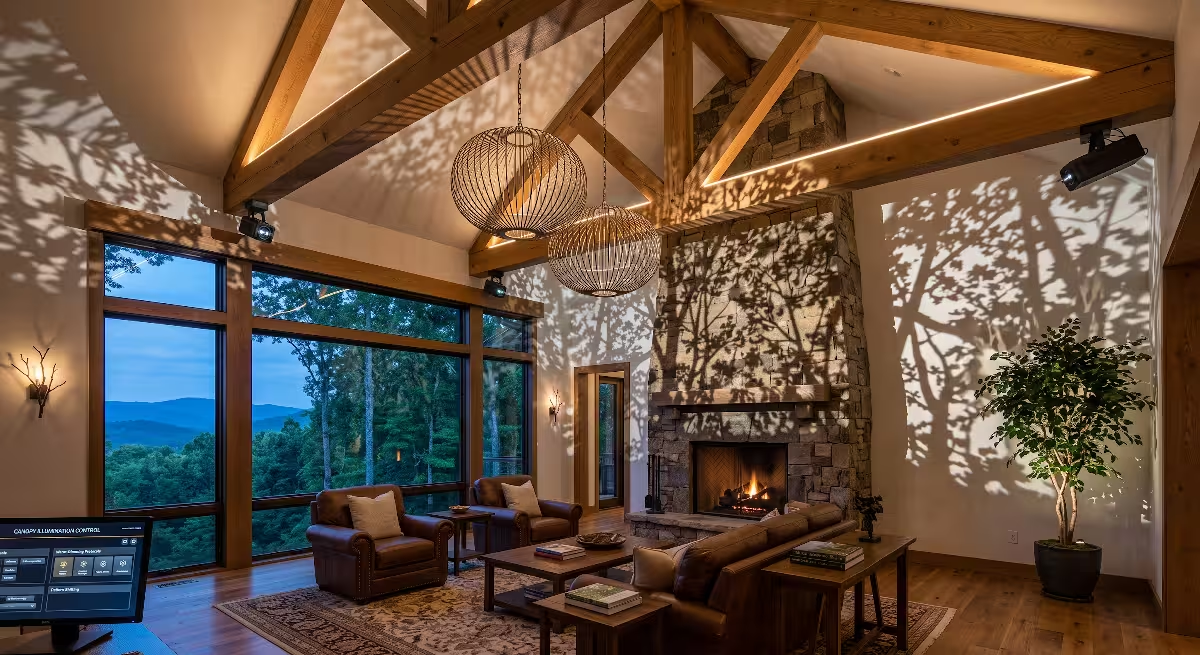
To solve the challenges of scale and materials, we look to the physical layers of the forest. In nature, sunlight travels through multiple zones: the upper canopy of treetops, the mid-level branches, the small understory saplings, and finally the leaf-covered ground. We can use these same physical levels to organize our interior lighting ideas.
Here are five engineered lighting ideas designed specifically to bring the warm, filtered magic of the forest understory into your mountain home.
                  5 DAPPLED FOREST LIGHTING STRATEGIES

 [Strategy 1: Structural]    Laser screens & brise-soleil at clerestories
 [Strategy 2: Kinetic]       Biomorphic skeletal pendants casting shadows
 [Strategy 3: Optic]         Concealed gobo projectors on heavy timber beams
 [Strategy 4: Botanical]     Floor uplights shining through indoor trees
 [Strategy 5: Circadian]     Warm-dim technology tracking the evening sun
Strategy 1: The Architectural Brise-Soleil and Perforated Ceiling Screens
Our first lighting strategy works with both daytime sunlight and nighttime fixtures. A brise-soleil is an architectural screen originally invented to block direct solar heat. In our biophilic lighting ideas, we adapt this concept by placing decorative, perforated wood or metal screens directly beneath high clerestory windows and skylights.
During the middle of the day, strong mountain sunlight streams through the high windows and passes through these patterned screens. As the light passes through the openings, it naturally breaks into dancing, dappled patterns that drift across your timber posts and wide-plank floors. As the sun shifts across our Southern Appalachian sky, the patterns stretch, twist, and travel across the room just like shadows beneath a canopy of leaves.
       SUNLIGHT / CLERESTORY FIXTURE
                    |
                    V
       [### PATTERNED WOOD SCREEN ###]  <- Perforations cut in fractal shapes
              /     |     \
             /      |      \
            V       V       V
     DAPPLED LIGHT POOLS ON GREAT ROOM FLOOR
To make this concept work after dark, we mount narrow-beam LED downlights directly above the perforated screens. When you turn on these fixtures at night, they push light through the exact same cutouts. This projects clean, organic patterns onto the living space below. When choosing these lighting ideas, look for screen patterns cut with organic leaf, vine, or branch geometries rather than cold, repeating checkerboards.
Strategy 2: Biomorphic Skeletal Pendants with Internal Point Sources
Pendant lights are common in large rooms, but standard pendant designs often fail in mountain settings. Solid fabric drums trap light inside and project it only up and down. Frosted glass globes create flat, milky illumination that lacks depth. For truly dramatic lighting ideas, look for large skeletal pendants inspired by natural, organic forms.
Biomorphic pendants are made from open framework materials such as woven rattan, steam-bent white oak strips, or laser-cut curved aluminum. These fixtures are shaped like seed pods, bird nests, or branching twigs. Because the fixture body is open and airy, it does not block sightlines across your great room or hide your mountain views.
       FROSTED GLOBE PENDANT                 SKELETAL BIOMORPHIC PENDANT
  +-----------------------------+       +-----------------------------+
  | Milky, flat glow            |       | Open framework (Wood/Metal) |
  | Diffuse, blurry illumination|       | Clear filament point source |
  | No shadows cast             |       | Crisp, organic shadow play  |
  | Blocks visual sightlines    |       | Preserves scenic view       |
  +-----------------------------+       +-----------------------------+
The true secret to making these lighting ideas work is the light bulb inside the pendant. If you use a frosted, milky light bulb, the shadows cast by the pendant will be soft, blurry, and hard to see. To create crisp, dramatic dappled patterns across your ceiling and walls, you must install a clear filament LED bulb. A clear bulb acts as a tiny point source of light. When light radiates from that single small point, it casts distinct, sharp-edged shadows through the pendant’s frame, turning the surrounding room into a forest canopy.
Strategy 3: Architectural Gobo Projectors Concealed on Exposed Beams
One of the most exciting commercial lighting ideas now entering high-end custom homes is the architectural gobo projector. The word gobo stands for “goes before optics.” In theater and museum design, a gobo is a small, precision-cut steel or glass template placed inside a specialized spotlight. The template shapes the beam of light into specific images, such as tree leaves, rippling water, or dappled forest branches.
In a mountain great room, exposed structural timber beams provide the perfect hiding place for these compact fixtures. We can mount miniature framing projectors along the tops or sides of upper beams, completely out of normal sightlines. The projector aims down toward a wide stone fireplace, an open sitting area, or an accent wall.
[Timber Truss Beam]
    \
     +-- [Miniature Concealed Gobo Projector]
              \
               \ Narrow, calibrated optical beam
                \
                 V
    [Crab Orchard Stone Fireplace with Dappled Canopy Shadow]
Advanced architectural projectors can do things simple light fixtures could never dream of:
- Soft-Focus Calibration: You can adjust the projector lens to make the dappled leaf shadows look razor-sharp or softly blurred, matching your exact preference.
- Slow Kinetic Movement: Some projectors feature slow internal motors that turn two patterned glass discs at less than one revolution per minute. This produces a gentle, drifting movement that mimics a light breeze rustling the treetops outside.
- Precise Framing Shutters: You can adjust internal metal blades to crop the light pattern perfectly, ensuring the dappled light stays on your stone fireplace without spilling onto television screens or artwork.
These sophisticated lighting ideas create pure magic in a mountain lodge. They allow you to transform a massive, plain vertical surface into a living canvas of light and shadow at the flick of a switch.
Strategy 4: Living Tree Silhouetting via Well-Placed Uplighting
Another wonderful way to bring forest lighting ideas into your home is by working with real indoor plants. Mountain great rooms often have plenty of floor space and tall vertical volume, making them ideal places to showcase large indoor trees. Species such as the fiddle-leaf fig, black olive tree, indoor citrus, or weeping fig thrive in bright mountain rooms.
Instead of lighting the plant from above, place low-profile spotlight fixtures on the floor directly behind or underneath the foliage. Aim the light upward through the branches toward a light-colored wall or a wood-planked ceiling vault.
                                  Vaulted Wood Ceiling
                                      /          \
                       [Enlarged Branch Shadows Cast Upward]
                                    ^              ^
                                   /                \
                             (Tree Foliage & Leaves)
                                       |
                                       | (Trunk)
                                      / \
                   [Low-Voltage Recessed Floor Uplight]
When you direct light upward through living branches, several wonderful things happen:
- Kinetic Shadow Play: Whenever your heating and air system gently moves the air, or when an overhead ceiling fan turns on low, the living leaves flutter. This movement casts shifting, dancing shadows across your high ceiling.
- Dramatic Scale: Shining light upward through the plant magnifies the leaves and branches, projecting large organic shapes that make tall ceilings feel cozy and connected.
- Hidden Fixtures: Because the light source is hidden behind the plant container or recessed into the floor, you never see an exposed bulb. You only see the beautiful glowing leaves and the soft shadows they create.
These living lighting ideas celebrate real natural materials while adding warmth and depth to empty corners.
Strategy 5: Dynamic Circadian Spectrum Tuning (Warm-Dim to Amber Understory)
The color of light matters just as much as where you place it. In the field of illumination, we measure the color appearance of white light using Correlated Color Temperature, which is expressed in degrees Kelvin. High numbers like 5000K represent cool, bluish-white daylight. Low numbers like 2200K represent warm, golden-amber firelight.
In standard homes, most LED bulbs stay at one static color temperature no matter how low you dim them. If you dim an ordinary 3000K LED bulb, it does not get warmer; it just turns into a dull, flat gray. This looks unnatural and unappealing in a rustic mountain setting. Nature does not behave this way. When the sun dips toward the horizon, its color temperature naturally warms up from crisp white to deep amber and red.
TIME OF DAY     LIGHT LEVEL / KELVIN             BIOLOGICAL EFFECT
-----------------------------------------------------------------------------
12:00 PM (Noon) High Output / 3000K to 4000K     Promotes alertness and focus
 6:00 PM (Dusk) Medium Output / 2700K Warm       Signals the start of evening
 9:00 PM (Night) Low Output / 1800K Amber Glow   Protects natural melatonin
To solve this, modern biophilic lighting ideas use warm-dim technology. Warm-dim LED fixtures automatically shift their color temperature as you slide your dimmer switch down. At full brightness, they provide clean 2700K or 3000K illumination for cleaning, reading, or entertaining. As you dim the fixtures down for a quiet evening, their internal circuitry seamlessly transitions down to 2200K, 2000K, or even 1800K.
At 1800K, the light matches the warm, soothing glow of a crackling wood fire or wax candles. This deep golden light eliminates harsh blue wavelengths that disrupt your sleep cycles. By incorporating warm-dim lighting ideas across your great room, your home naturally encourages deep rest and relaxation every night.
The Three-Tier Photometric Blueprint for Great Rooms
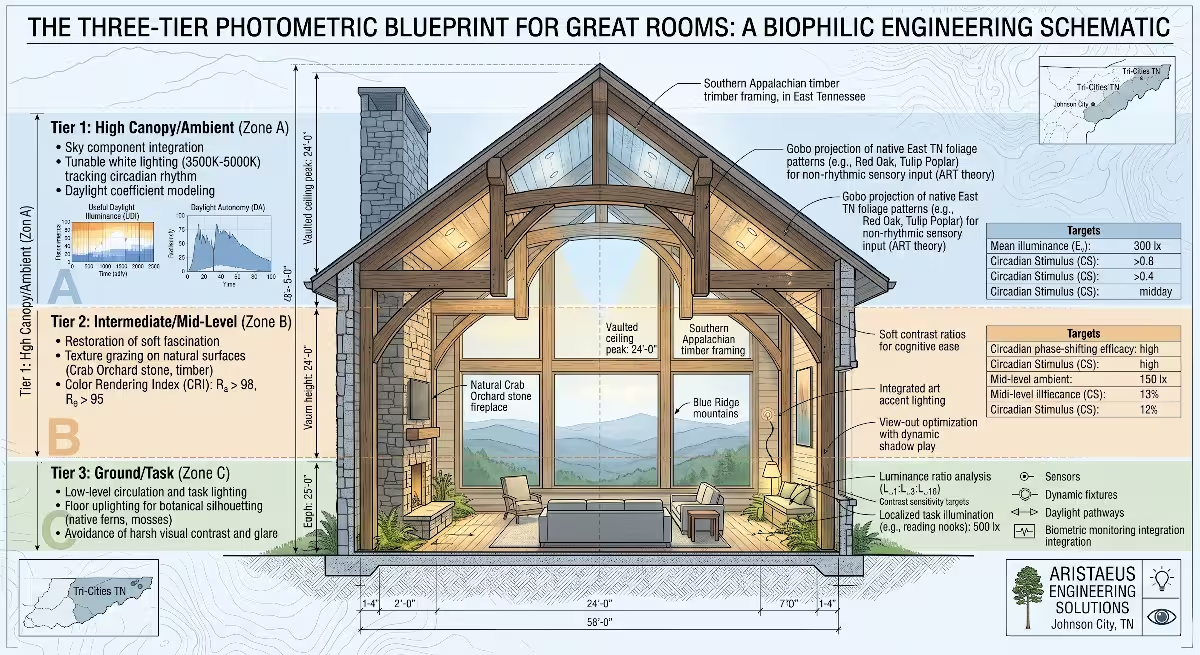
To make all these different fixtures work together in harmony, professional designers use a layered approach. You cannot expect a single set of fixtures to handle all the visual demands of a twenty-foot room. Instead, we divide the vertical space into three distinct zones: the upper canopy, the mid-level understory, and the lower forest floor.
Organizing your lighting ideas into these three tiers ensures that light is balanced from the peak of your roof down to the rugs beneath your feet.
=============================================================================
                      THE THREE-TIER LIGHTING BLUEPRINT
=============================================================================

 TIER 1: UPPER CANOPY (Ceiling Ridge to 14 Feet)
 - Hidden cove uplights on top of beams
 - Clerestory window accent fixtures
 - Large biomorphic open pendants
 - Purpose: Bounces soft light off ceiling boards; prevents dark rifts.

 TIER 2: MID-LEVEL UNDERSTORY (14 Feet down to 4 Feet)
 - Wall sconces on stone chimney columns
 - Directional art lights on timber posts
 - Architectural gobo framing projectors
 - Purpose: Fills the normal field of view; highlights stone textures.

 TIER 3: FOREST FLOOR (4 Feet down to the Floor)
 - Reading lamps next to armchairs
 - Under-bench plinth lighting and step lights
 - Floor uplights behind potted interior trees
 - Purpose: Delivers task light for living; creates warm pools of rest.
=============================================================================
By controlling each tier on separate dimmer circuits, you gain complete mastery over the mood of your home. During a lively family gathering, you can bring all three tiers up to provide bright, cheerful illumination. Later in the evening, you can turn off the upper canopy tier entirely, leaving only the mid-level stone grazing and the low-level floor glow to create an intimate, fireside atmosphere.
Calculating Lumens Across Complex Geometry
When planning your overall budget and electrical plans, you need to know how much total light your space requires. In the lighting industry, light output is measured in lumens. A lumen measures the total amount of visible light produced by a bulb or fixture.
In standard homes with eight-foot flat ceilings, designers typically recommend providing twenty to thirty lumens per square foot of floor space. However, high-volume mountain great rooms require more power because so much light is absorbed by high ceilings and rustic wood finishes. For a vaulted mountain room, we generally recommend thirty to forty lumens per square foot.
STEP-BY-STEP GREAT ROOM LUMEN CALCULATION:

1. Measure Floor Area:
   Example: 24 feet wide by 30 feet long = 720 square feet.

2. Select Base Requirement:
   Standard vaulted mountain room = 35 lumens per square foot.
   Calculation: 720 sq. ft. x 35 lumens/sq. ft. = 25,200 base lumens.

3. Adjust for Dark Materials:
   Dark stained wood ceiling: Add 15% (+3,780 lumens)
   Massive stone fireplace:   Add 10% (+2,520 lumens)

4. Total Recommended System Lumens:
   25,200 + 3,780 + 2,520 = 31,500 total lumens.
Once you calculate your total lumen requirement, you distribute those lumens across your three physical tiers. Never try to push all thirty thousand lumens through a handful of bright ceiling fixtures. Instead, divide them thoughtfully:
- Upper Canopy Tier: Allocate roughly 40% of your total lumens (about 12,600 lumens in our example) to soft ceiling uplights and decorative suspended pendants.
- Mid-Level Understory Tier: Allocate roughly 35% of your lumens (about 11,000 lumens) to stone wall sconces, gobo projectors, and art accent lights.
- Forest Floor Tier: Allocate the remaining 25% of your lumens (about 7,900 lumens) to floor lamps, table reading lights, and low botanical uplights.
Distributing your lighting ideas across these multiple levels ensures balanced illumination without harsh glare or dark pockets.
East Tennessee Vernacular: Anchoring Biophilic Light in Southern Appalachian Heritage
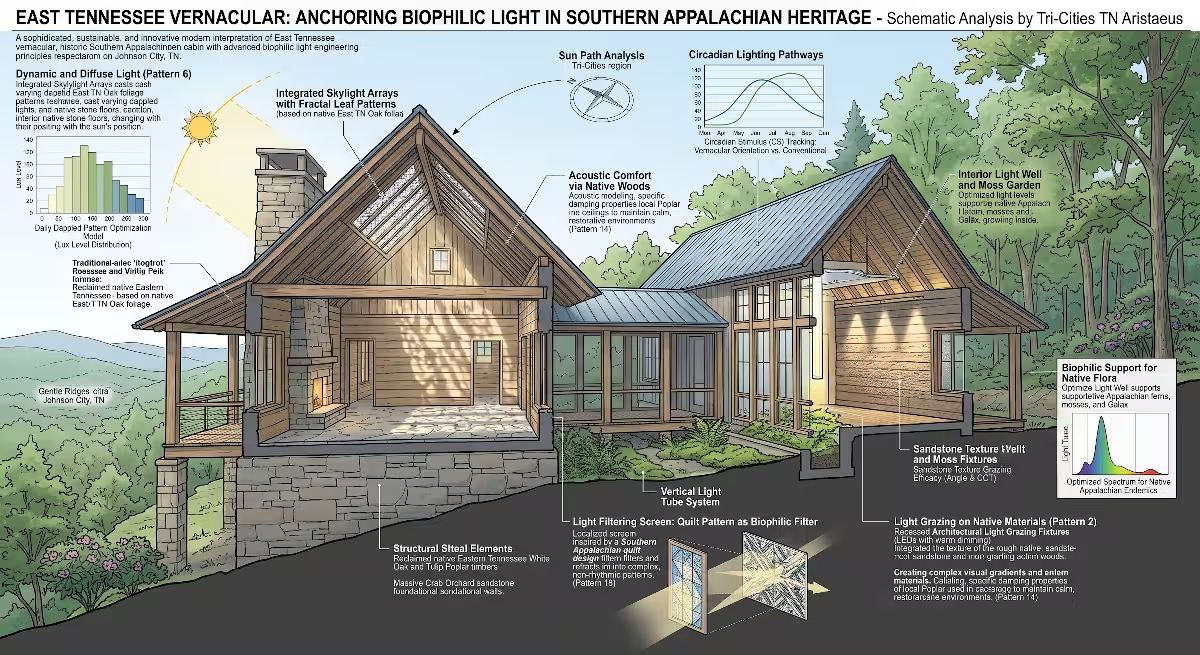
Here in the Tri-Cities region, our architectural traditions run deep. From historic log structures in Carter County to modern timber estates overlooking Boone Lake or the Holston River, our homes celebrate the natural resources of our mountains. Great design should always honor its home landscape. When creating regional lighting ideas, we must pay close attention to how light interacts with our native Appalachian materials.
       SOUTHERN APPALACHIAN BUILDING MATERIALS AND LIGHT INTERACTION

   Native White Oak                Crab Orchard Stone          Tulip Poplar
  +--------------------------+    +--------------------------+ +-------------------+
  | Warm, golden reflection  |    | Mineral veins & textures | | Silky, honey tone |
  | Benefits from 2700K CCT  |    | Requires 10-degree graze | | Highly reflective |
  | Enhances grain depth     |    | Reveals iron & rust lines| | Softens overheads |
  +--------------------------+    +--------------------------+ +-------------------+
Selecting Regional Timber Species for Light Diffusion
Different wood species handle light in completely different ways. When you choose interior wood for your great room ceiling, walls, or trusses, you are also choosing how light will bounce around your living space.
- Tulip Poplar (Liriodendron tulipifera): As the state tree of Tennessee, tulip poplar has long been a staple of local builders. When clear-coated or lightly sealed, poplar has a gentle, creamy tone with subtle green and honey undertones. Poplar reflects light cleanly and evenly, making it an outstanding ceiling wood that prevents vaulted spaces from feeling heavy or dark.
- Appalachian White Oak: White oak is world-renowned for its incredible strength and rich, ring-porous grain patterns. When illuminated by warm 2700K lighting ideas, the natural tannins in white oak produce a deep, glowing warmth that feels grounded and timeless.
- Eastern White Pine: Common in rustic log and heavy timber construction, white pine contains prominent knots and deep grain swirls. Direct, flat lighting can make knotty pine look visually busy and distracting. However, using soft, diffuse lighting ideas smooths out the high contrast between the wood grain and knots, creating a calm, cohesive surface.
Always test your proposed lighting ideas against real samples of your finished timber before final installation. Look at the wood under both daytime sunlight and your chosen nighttime LED fixtures to verify that the wood tones look rich and vibrant.
Pairing Light with Johnson City Stonework
Few building elements make a bolder statement in a mountain home than a massive, floor-to-ceiling stone hearth. In our part of East Tennessee, stonemasons frequently work with Crab Orchard sandstone, a unique quartzite stone quarried along the Cumberland Plateau. Crab Orchard stone is celebrated for its incredible durability, natural cleft surfaces, and beautiful palette of tan, buff, gray, and reddish-brown mineral ribbons.
To showcase this remarkable local stone, your lighting ideas must employ a technique called surface grazing. Surface grazing means placing a linear light fixture or adjustable directional spotlight close to the stone surface (usually six to twelve inches away) and aiming the light beam almost parallel along the face of the wall.
                      SURFACE GRAZING THE HEARTH

       [Ceiling Surface]
          |
          |-- [Adjustable Grazing Fixture (6" to 12" away)]
          |      \
          |       \ Tight 10-degree to 15-degree beam
          |        \
          |         V
       [==================]  <- Crab Orchard Stone Face
       [   Rough Cleft    ]  <- High-contrast micro-shadows reveal
       [ Mineral Swirls   ]     natural ridges, fossils, and mineral depth
       [   Iron Veins     ]
When light strikes the stone at a tight, steep angle, every natural ridge, chip, and mineral contour casts a tiny shadow behind it. This creates breathtaking depth and texture, highlighting the skilled work of the local mason. If you make the mistake of using flat, distant lighting ideas, the light hits the stone straight on. This washes away the natural shadows, making your expensive stone look flat and two-dimensional. Thoughtful lighting ideas celebrate the rugged beauty of our local materials.
Common Questions About Mountain Great Room Lighting Ideas
When homeowners and builders visit Tri-Cities TN Home to discuss great room lighting ideas, they often bring common questions about how to handle tall ceilings, dimming systems, and biophilic designs. Here are direct answers to the questions people search for most frequently.
How do you create dappled lighting indoors?
To create dappled lighting indoors, you direct a concentrated light source through an organic, perforated barrier. You can accomplish this in several practical ways:
- Hang an open-weave or skeletal pendant light made of woven wood, rattan, or laser-cut metal, and power it with a clear filament LED bulb to project crisp shadow patterns.
- Install an architectural gobo projector on an upper ceiling beam and fit it with a foliage or tree branch template to project leaf patterns onto a stone fireplace or floor rug.
- Place a low-profile floor uplight underneath a large indoor potted tree, shining the light upward through the living leaves onto your walls and ceiling.
- Install laser-cut architectural screens beneath high skylights or clerestory windows to break incoming daylight into shifting pools of light.
Using any of these lighting ideas breaks up flat, boring surfaces and introduces natural, dynamic beauty into your living space.
How do you light a vaulted ceiling in a mountain great room without glare?
To light a tall vaulted ceiling without creating uncomfortable glare, you must avoid bare bulbs and direct downward floodlights. Instead, rely on indirect uplighting and deeply recessed, adjustable fixtures.
       GLARE-FREE VAULTED CEILING LIGHTING

               / \  <- High Vaulted Peak
              /   \
             /     \
            /  [U]  \  <- [U] Hidden linear uplights on top of exposed beams
           /    |    \     bounce diffused light off ceiling wood planks
          /     |     \
         /      V      \
        /               \
       /   [R]     [R]   \ <- [R] Recessed sloped-ceiling gimbals with 40-degree
      /                   \    deep baffles hide the bare bulb from sightlines
First, install concealed linear LED light strips along the top surfaces of your structural timber trusses or ceiling beams. Aim these lights upward toward the ceiling planks. The light bounces off the wood and reflects softly back down into the room, creating an even, warm glow without exposing your eyes to a single bare light source.
Second, if you need downward task lighting, use specialized sloped-ceiling recessed gimbal fixtures. These fixtures feature deep internal baffles that tuck the bulb far up inside the ceiling trim. The deep baffle shields the light source from your field of view, allowing you to walk across the great room without ever looking directly into a blinding bulb.
What is dynamic and diffuse lighting in biophilic design?
Dynamic and diffuse lighting is the sixth principle in the widely recognized 14 Patterns of Biophilic Design developed by Terrapin Bright Green. It refers to interior lighting conditions that naturally change in color, intensity, and direction over time, while remaining soft and comfortable to the human eye.
In natural outdoor environments, sunlight is constantly altered by clouds, time of day, and tree canopies. It is never static, flat, or harsh. Dynamic and diffuse lighting ideas capture these natural qualities indoors through the use of moving shadows, layered light sources, organic filtering screens, and automated circadian dimming controls. Incorporating these lighting ideas into homes helps reduce mental fatigue, supports healthy natural body clocks, and creates an emotional connection to the outdoor environment.
What Kelvin temperature is best for mountain lodge great rooms?
The best overall color temperature for a mountain lodge great room is a warm-dim range that transitions from 2700K down to 1800K.
A fixed color temperature of 2700K (often labeled “Warm White”) is the ideal daytime baseline for mountain homes. This temperature brings out the rich, golden tones in natural pine, oak, and stone without looking overly yellow or cold. However, during late evening hours, 2700K can feel too bright and stimulating.
By utilizing warm-dim lighting ideas, your fixtures naturally transition from 2700K down to 2200K or 1800K as you dim the lights. An 1800K light level mimics the soothing color of burning fireplace embers and candlelight. This warm, golden light is relaxing to the eyes and contains virtually no sleep-disrupting blue light, making it the perfect setting for winding down before bed.
How many lumens do you need for a tall mountain great room?
As a general rule, a tall mountain great room requires thirty to forty lumens of total light output per square foot of floor space. This is higher than the standard twenty to thirty lumens recommended for flat eight-foot ceilings.
The extra output is required because tall vaulted ceilings increase the distance light must travel, and dark rustic building materials absorb significant amounts of light. For example, if you have a great room that measures twenty feet wide by thirty feet long (six hundred square feet), you will need between 18,000 and 24,000 total system lumens.
Always distribute these lumens across multiple circuits and layers. Dedicate roughly forty percent of the lumens to upper ceiling uplights and pendants, thirty-five percent to mid-level wall sconces and accent lights, and twenty-five percent to low-level floor and task lamps. Connecting each layer to separate dimmer controls allows you to fine-tune your light output for any occasion.
Recommended Implementation Checklist for Architects and Builders
Bringing sophisticated biophilic lighting ideas from the drawing board into a completed home requires careful coordination between architects, interior designers, and electrical contractors. Use this practical job-site checklist to ensure your mountain great room lighting project goes smoothly from rough-in to final move-in.
=============================================================================
             MOUNTAIN GREAT ROOM LIGHTING IMPLEMENTATION CHECKLIST
=============================================================================

 PHASE 1: ARCHITECTURAL PLANNING & ROUGH-IN
 [ ] Calculate total room volume and square footage to determine baseline lumens.
 [ ] Add a 15% to 25% lumen buffer if ceilings or stone hearths are dark-toned.
 [ ] Verify exact ceiling pitch (e.g., 8/12, 10/12) to order matching sloped gimbals.
 [ ] Route separate neutral and 0-10V or DALI control wires for multi-zone dimming.
 [ ] Frame dedicated electrical floor outlets in sitting areas for table and floor lamps.
 [ ] Frame concealed blocking on top of timber trusses for hidden upward cove lights.

 PHASE 2: FIXTURE SELECTION & OPTICS
 [ ] Specify high Color Rendering Index fixtures (CRI 95+ with R9 greater than 80).
 [ ] Select warm-dimming LED engines that shift from 2700K down to 1800K.
 [ ] Verify that open skeletal pendants feature clear filament point-source bulbs.
 [ ] Order architectural gobo projectors with adjustable soft-focus lenses.
 [ ] Choose custom gobo glass templates cut with regional Appalachian leaf patterns.
 [ ] Select deeply recessed ceiling fixtures with black or bronze anti-glare baffles.

 PHASE 3: COMMISSIONING & CONTROLS
 [ ] Program a smart lighting hub (such as Lutron or Control4) with astronomical clocks.
 [ ] Set automated daytime scenes to 2700K-3000K for active daylight hours.
 [ ] Set automated evening scenes to gradually warm-dim to 1800K by 9:00 PM.
 [ ] Calibrate stone grazing fixtures six to twelve inches from the fireplace face.
 [ ] Position floor uplights behind interior trees and adjust angles for ceiling shadows.
 [ ] Verify that nighttime window glass remains free of direct interior fixture reflections.
=============================================================================
By following this structured checklist, you ensure that every fixture serves a distinct purpose. Good design is never an accident. When you combine the physical science of light with the biological wisdom of the forest, your mountain great room becomes more than just a large open space. It becomes a peaceful, light-filled haven that honors the natural beauty of our East Tennessee landscape every hour of the day and night. Exploring and implementing these creative lighting ideas will help you build a home that nurtures your health, showcases your architecture, and provides lasting comfort for years to come.