The Appalachian Spring Dilemma
Have you ever taken a slow morning walk through the rolling hills of East Tennessee during early spring? If you live in Johnson City, Kingsport, or Bristol, you know the magic of that season. As the morning mist lifts off the Ridge and Valley landscape, the forest edges suddenly wake up. Bright spots of color appear among the gray winter trunks. But have you ever stopped to ask yourself what truly signals the start of spring in our local yards? Is it the bold pink branches of the native redbud, or is it the snowy white canopy of the native dogwood?
Choosing the right native specimens for your property is about more than picking a color you like in a garden catalog. When we plant flowering trees, we are making a long-term choice for our local ecosystem. We are choosing how our yard interacts with soil chemistry, spring weather, and native insects.
The Tri-Cities region rests in USDA Hardiness Zones 7a and 7b. Our region has a unique growing environment. We have heavy clay soils that hold lots of moisture. These soils formed from limestone rock, which makes them high in calcium carbonate. We also experience sudden late spring frosts, warm summer days, and cool mountain nights. Because of these factors, not all flowering trees perform the same way in every neighborhood.
Both the Flowering Dogwood (Cornus florida) and the Eastern Redbud (Cercis canadensis) are premier flowering trees for our home landscapes. They are both native understory species that have grown in Appalachian forests for thousands of years. Yet, they handle local lawn conditions in completely different ways. One thrives in heavy clay, while the other demands rich, well-drained soil. One feeds queen bumblebees in March, while the other feeds migrating songbirds in October.
Why do so many homeowners struggle to keep their dogwoods alive, while their redbuds grow without any help at all? How can understanding soil chemistry save you time and money when selecting flowering trees for your yard? In this guide, we will examine the botanical details, soil requirements, and wildlife benefits of both species. By looking closely at how these flowering trees function, you will learn exactly which tree will thrive on your property.
Botanical Profile 1: Eastern Redbud (Cercis canadensis)
Technical Features and Plant Structure
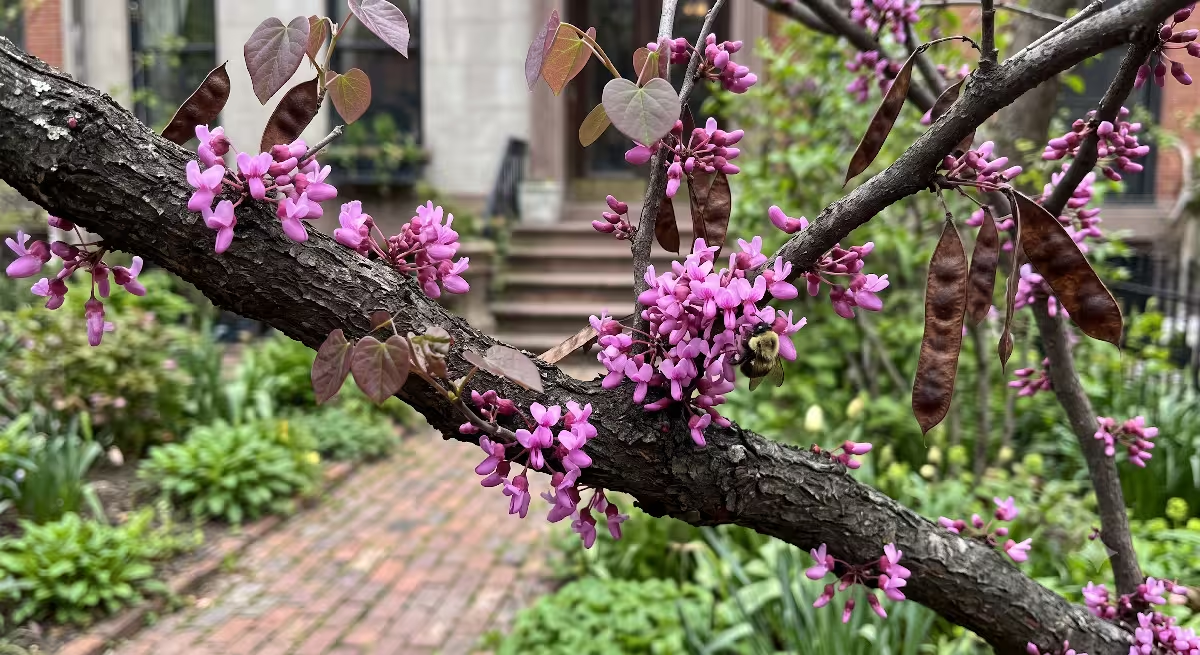
To understand why Eastern Redbud is one of the most reliable flowering trees for East Tennessee, we must look at how it grows. Eastern Redbud belongs to the Fabaceae family, which is commonly known as the pea or legume family. If you look closely at a single redbud blossom, you will see it looks just like a tiny sweet pea flower.
One of the most fascinating traits of the redbud is a feature called cauliflory. What is cauliflory? In simple terms, it means that the plant produces flowers directly on mature wood and main trunks, rather than only on new twig tips. In late March, long before the leaves emerge, tiny magenta and rose-pink buds burst right out of the dark bark. This gives the tree an unforgettable, glowing look in early spring.
After the blooms fade, the tree unfolds heart-shaped leaves. Botanists call these cordate leaves. They start as a tender bronze-green color and turn into a rich, dark green by summer. Because redbuds are legumes, they have a deep connection to nitrogen dynamics in nature. While wild woodland redbuds work with soil microbes, cultivated yard trees simply use their tough root systems to search deep through heavy soils.
Redbuds usually grow as small to medium-sized flowering trees. They reach mature heights between twenty and thirty feet, with a broad canopy that spreads up to thirty-five feet. Their flat-topped, spreading growth pattern makes them fantastic understory flowering trees for suburban yards.
Ecological Value and Pollinator Connections
Have you ever wondered what native bees eat when the air is still crisp in early spring? When queen bumblebees wake up from underground hibernation in March, nectar sources are scarce. Redbuds act as a crucial early season food station.
The flowers of these native flowering trees offer high-quality nectar and pollen right when queen bumblebees (Bombus species) need to build energy to start new colonies. Solitary native bees, such as mason bees and mining bees, rely heavily on these early blooms as well.
Redbuds are also essential host plants for native insects. A host plant is a plant that provides food and shelter for specific insect larvae. The Henry’s Elfin butterfly (Callophrys henrici) uses redbud foliage as a primary host plant for its caterpillars.
Additionally, leafcutter bees (Megachilidae) visit redbuds in early summer. You might notice neat, perfect half-circle cutouts along the edges of your redbud leaves. Do not spray insecticide when you see this! Leafcutter bees use these leaf pieces to line their tiny nesting cells. They cause no permanent harm to these hardy flowering trees, and they are some of the most effective pollinators in our region.
Performance in Tri-Cities Soils and Microclimates
Why do Eastern Redbuds perform so well in Johnson City clay? The secret lies in their root system and their tolerance for varied soil pH.
Much of the soil in the Tri-Cities region consists of dense clay derived from limestone bedrock. This clay often has a neutral to slightly alkaline pH, ranging from 6.0 to 7.8. Many ornamental flowering trees suffer in dense clay because heavy clay holds onto water in winter and bakes hard like a brick in summer.
Eastern Redbuds are naturally adapted to these tough conditions. Their roots can push into heavy clay without rotting, provided the site does not have standing water for weeks at a time. They tolerate full sun to partial shade, though trees planted in full sun produce the thickest flower coverage. Once their roots get established over two growing seasons, redbuds become remarkably drought-tolerant flowering trees that require very little maintenance.
Botanical Profile 2: Flowering Dogwood (Cornus florida)
Technical Features and Plant Structure
Flowering Dogwood (Cornus florida) is widely considered the crown jewel of native flowering trees in the American South. However, from a botanical standpoint, this tree holds a few big surprises for home gardeners.
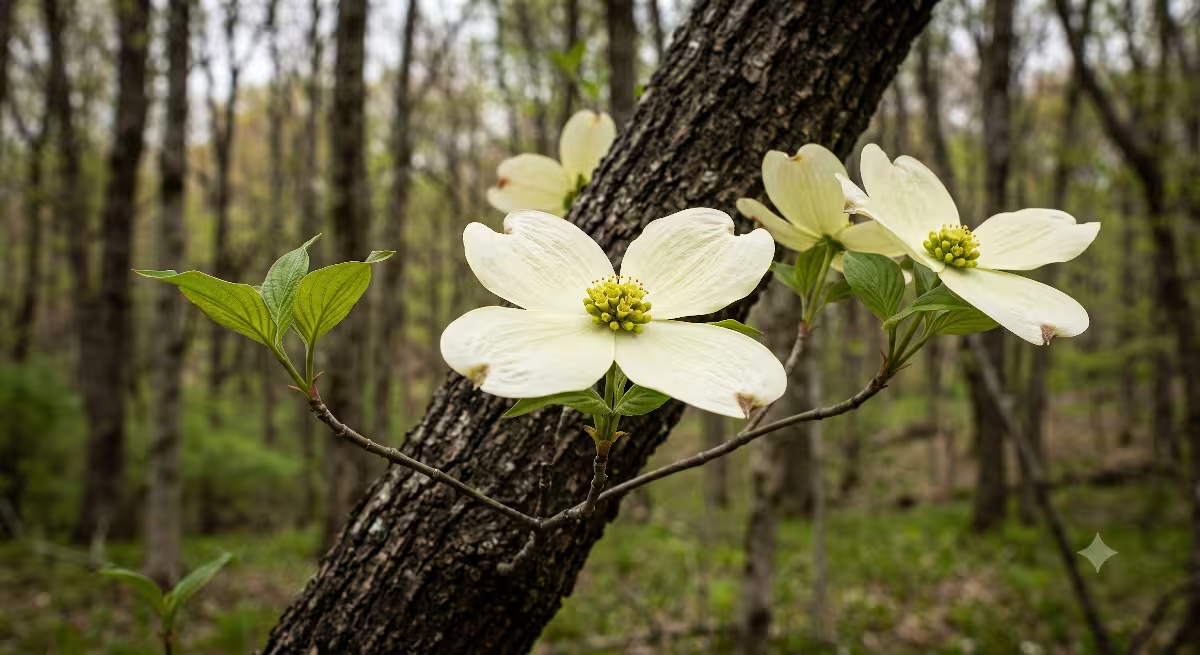
When you look at a dogwood in full bloom during April or May, you are not actually looking at large white flower petals. The true flowers of Cornus florida are tiny, yellowish-green clusters located right in the very center of the display. What look like four large white or pink petals are actually modified leaves called bracts. These durable bracts protect the delicate true flowers during cold spring nights and serve as a visual signal to attract passing insects.
Dogwood belongs to the Cornaceae family. It typically grows into a small tree, reaching fifteen to twenty-five feet in height with a similar canopy spread. Its horizontal branching pattern gives it a classic layer-cake shape that looks beautiful in native gardens.
Dogwoods play a fascinating role in forest soil chemistry. Botanists often call the dogwood a calcium pump. The roots of these flowering trees draw calcium up from deep soil layers and store it in their green leaves. When the leaves drop in autumn, they decompose very rapidly compared to oak or pine leaves. This process enriches the top layer of soil with natural calcium oxide, making the surrounding soil healthier for other forest plants.
Ecological Value and Pollinator Connections
If redbuds are the heroes of early spring nectar, dogwoods are the champions of autumn wildlife survival.
During spring, dogwoods support specialist bee species that rely on their pollen. They also serve as a vital larval host plant for the Spring Azure butterfly (Celastrina ladon). The tiny green caterpillars of the Spring Azure feed directly on the flower buds and young foliage of these flowering trees.
However, the greatest ecological work of Cornus florida happens in late summer and fall. After pollination, the central flower clusters develop into tight clusters of bright red oval fruits called drupes. These drupes ripen in September and October, right as songbirds prepare for long autumn migrations.
Dogwood drupes are packed with high-fat lipids. Birds like wood thrushes, bluebirds, robins, and vireos rely on these lipid-rich fruits to fuel their journeys south. Invasive plants like Asian bush honeysuckle produce low-fat berries that offer little energy to birds, but native dogwood fruits offer the high-calorie energy migrating birds need.
Performance in Tri-Cities Soils and Microclimates
If dogwoods are so wonderful, why do so many homeowners struggle to keep them healthy in local yards? The answer comes down to soil structure and air flow.
Unlike redbuds, dogwoods are very selective about where they grow. They require acidic to neutral soil (pH 5.5 to 6.5) that is rich in organic matter. They have shallow, delicate root systems that are easily damaged by hot, dry soil or standing water. If you plant a dogwood in raw clay on a sunny hill, its shallow roots will bake in August, causing the leaves to scorch and drop early.
Furthermore, dogwoods in East Tennessee face two major fungal diseases: Dogwood Anthracnose (Discula destructiva) and Powdery Mildew (Erysiphe pulchra). In shady, humid mountain hollows with poor air flow, these fungi can cause leaf spots, dieback, and trunk damage.
To keep dogwoods happy in our region, they should be planted in partial shade, preferably where they receive morning sun and afternoon shade. Their roots must be protected with a thick layer of organic mulch to keep the soil cool and moist.
Direct Comparative Analysis: Dogwood vs. Redbud
When choosing between these two iconic flowering trees, comparing their features side-by-side helps make your decision clear. Both bring beauty to a landscape, but they serve different roles in garden design and home orchard management.
Below is a direct comparison of how these two native flowering trees perform across critical categories:
| Feature / Metric | Eastern Redbud (Cercis canadensis) | Flowering Dogwood (Cornus florida) |
| Bloom Timing | Early Spring (March to April; blooms on bare branches) | Mid to Late Spring (April to May; blooms with young leaves) |
| Flower Type | True pea-like blooms (cauliflorous) | Central flower cluster surrounded by 4 large bracts |
| Soil Preference | Wide tolerance; handles heavy clay, limestone, neutral pH | Strict preference; needs rich, acidic, organic, well-drained soil |
| Sunlight Needs | Full Sun to Partial Shade | Partial Shade (morning sun with afternoon shade preferred) |
| Growth Rate | Fast (12 to 18 inches per year) | Moderate to Slow (6 to 12 inches per year) |
| Drought Tolerance | High (once fully established) | Low to Moderate (requires summer watering during dry spells) |
| Disease Risks | Low (occasional verticillium wilt or leaf spot) | Moderate to High (vulnerable to Anthracnose and Powdery Mildew) |
| Autumn Feature | Yellow fall leaf color; dry brown seed pods | Vivid red fall leaf color; high-fat red drupes for songbirds |
| Wildlife Value | Early nectar source; Henry’s Elfin host plant | Spring Azure host plant; high-fat food source for songbirds |
Examining the Differences
Why do these differences matter for your yard? Let us look at the growth habits of these flowering trees.
Redbuds grow faster than dogwoods. If you have a brand-new home in a subdivision where the topsoil was cleared away, a redbud will establish quickly. Its roots will dig into tough subsoil clay, and it will give your yard shade and color within a few seasons.
Dogwoods take more time and care. They grow slowly and require rich soil. If you plant a dogwood in poor soil, it may sit still for years without growing much at all. But if you give a dogwood rich soil, light afternoon shade, and regular moisture, it grows into an elegant centerpiece that can live for over seventy years.
Consider bloom timing as well. Redbuds bring color to your yard when most other plants are still dormant. Their magenta flowers wake up the landscape in March. Dogwoods take the baton in April, offering white or pink clouds that bridge the gap between early spring and the lush growth of early summer. By planting both of these flowering trees, you extend your bloom season across three full months.
Frequently Asked Questions about Flowering Trees in the Tri-Cities of Tennessee
When homeowners visit garden centers to look for flowering trees, they often ask similar questions. Here we address the four most common questions about dogwoods and redbuds using clear, practical science.
Which tree blooms first, Redbud or Dogwood?
If you drive through the Tri-Cities in early spring, you will see bright pink spots in the woods long before you see white dogwood bracts.
Eastern Redbuds bloom first. In Zone 7a, redbuds begin blooming in late March or early April, depending on spring temperatures. Because redbuds use cauliflory, their flower buds open directly on mature branches before the tree uses energy to push out new leaves. This allows the tree to take full advantage of early spring sunlight before the taller forest canopy fills in.
Flowering Dogwoods open their blooms about two to three weeks after the redbuds start. In East Tennessee, dogwoods usually bloom from mid-April through early May. By the time dogwood bracts are fully expanded, redbuds are dropping their flowers and unfurling their heart-shaped leaves.
If you want early spring color, redbuds lead the way. If you want mid-spring color that overlaps with late spring bulbs, dogwoods fill that spot perfectly.
Can you plant Redbud and Dogwood trees together in the same yard?
Have you ever looked at how native woodlands grow naturally along the Blue Ridge Mountains? You rarely see redbuds and dogwoods growing completely apart from each other. In nature, these flowering trees grow side-by-side in understory layers.
Yes, you can absolutely plant redbuds and dogwoods together in the same landscape, and doing so offers great benefits for your yard.
Because redbuds handle full sun and tough clay better, you can plant them on the hotter, brighter southern or western side of a garden bed. The redbud will grow quickly and create a canopy that breaks the harsh afternoon heat. You can then plant a dogwood on the eastern side of the redbud, or slightly beneath its canopy.
This layout mimics a natural forest edge. The redbud shields the moisture-sensitive dogwood from afternoon sun, while the falling dogwood leaves drop calcium-rich organic matter that feeds the soil for both trees. Planted together, these flowering trees create a layered landscape that supports early spring pollinators, summer caterpillars, and fall birds.
Do Redbuds or Dogwoods grow faster in Tri-Cities soil?
If you want quick results in an East Tennessee yard, redbuds win this race every time.
Redbuds are fast-growing native flowering trees. In typical Johnson City or Kingsport clay, a young redbud can gain twelve to eighteen inches of height per year once its root system establishes. Redbuds tolerate compacted clay and higher pH levels, so they do not waste energy struggling against difficult soil conditions. They usually reach their full mature height in ten to fifteen years.
Dogwoods grow at a moderate to slow rate, usually gaining only six to twelve inches per year. In heavy clay soil with low organic matter, their growth can slow down even more. Because dogwood roots need plenty of oxygen and moisture, compacted clay forces the tree to spend its energy just trying to survive rather than growing upward.
To help dogwoods grow faster, you must improve the planting site with organic compost and keep a thick layer of mulch over the root zone.
Which tree is better for native pollinators and wildlife?
As gardeners, we often look for the single best plant for wildlife. But should we measure ecological value by early spring nectar, or by high-calorie fall food?
The truth is that neither tree is better than the other. Instead, these flowering trees fulfill different ecological jobs throughout the year.
Redbuds provide essential early season nectar for queen bumblebees and solitary native bees in early spring. They also serve as the host plant for the Henry’s Elfin butterfly and supply leaf material for nesting leafcutter bees. Without early flowering trees like the redbud, early pollinators would struggle to survive warm March days when few other flowers are open.
Dogwoods provide critical fall nutrition. Their high-fat red drupes feed migrating songbirds like thrushes, robins, and bluebirds in September and October. In addition, dogwood foliage feeds the larvae of the Spring Azure butterfly and dozens of native moth species.
If your goal is to create a complete wildlife habitat, combining both flowering trees in your yard ensures that your garden offers food in early spring, host leaves in summer, and high-energy fruit in autumn.
Step-by-Step Planting Guide for Tri-Cities Clay (Zone 7a Focus)
Planting flowering trees in heavy East Tennessee clay requires proper technique. If you dig a narrow hole in dense clay, fill it with potting soil, and drop in a root ball, you have built what horticulturists call a bathtub. Rainwater will collect in the hole, sit around the roots, and rot the tree within two seasons.
Follow these simple, step-by-step instructions to ensure your flowering trees thrive for decades.
Seasonal Care and Maintenance Schedule
Once your flowering trees are safely in the ground, proper ongoing care ensures they remain healthy, strong, and bloom reliably year after year. While both redbuds and dogwoods are native species, young trees require attention during their first three growing seasons in our regional climate.
Spring Maintenance (March through May)
Spring is an active season for both growth and pest monitoring on young flowering trees.
Watering Needs: As spring temperatures rise, monitor rainfall. If the Tri-Cities receives less than one inch of rain per week, give young flowering trees five gallons of water around their outer root zone once a week.
Mulch Check: Check the mulch ring around your trees. Over winter, mulch degrades and decomposes. Top off the mulch layer so it remains two to three inches deep, keeping it pull-backed from the trunk base.
Pruning: Prune redbuds and dogwoods only after they finish blooming. Pruning too early in winter or early spring removes the flower buds that formed during the previous summer. Remove dead, broken, or crossing branches with sharp hand pruners. Never apply pruning paint to cuts; trees heal best on their own.
Summer Maintenance (June through August)
Summer heat in Zone 7a can stress shallow-rooted flowering trees, especially during dry spells in July and August.
Deep Hydration: Dogwoods need extra care in summer heat. If foliage shows signs of curling or drooping in afternoon sun, apply a slow drip of water at the base of the tree for thirty minutes. Deep, slow soakings encourage roots to grow downward away from surface heat.
Fungus Prevention: Avoid using overhead lawn sprinklers that wet the leaves of your flowering trees. Wet leaves combined with warm summer nights create ideal conditions for powdery mildew and anthracnose on dogwood foliage. Water at ground level instead.
No Late Fertilization: Avoid applying nitrogen fertilizers to flowering trees after July 1st. Late summer fertilization forces trees to produce tender new growth that will not harden off before the first autumn freeze in October.
Autumn Maintenance (September through November)
Fall is the best time for root growth in native flowering trees. Even though top growth stops, roots continue growing in warm autumn soil until the ground freezes.
Fall Planting Window: September through November is the ideal time to plant new flowering trees in East Tennessee. The cool air reduces moisture stress on leaves, while warm soil encourages strong root development before winter.
Leaf Retention: Allow fallen dogwood and redbud leaves to break down naturally in your garden beds whenever possible. Dogwood leaf litter enriches topsoil with calcium, while redbud leaves add valuable organic carbon to heavy clay.
Hydrate Before Winter: Give your flowering trees a deep soaking in late November before the ground freezes. Evergreen and deciduous trees alike survive winter freezes much better when their cell tissues are fully hydrated.
Winter Maintenance (December through February)
Winter is a dormant season, but it is also a great time to inspect the structure of your flowering trees.
Structure Inspection: With the leaves gone, examine the branch structure of your flowering trees. Look for rubbing branches, narrow v-shaped crotches, or storm damage. Mark problem branches with a piece of colored tape so you can prune them right after spring flowering.
Protect Young Bark: Young redbuds and dogwoods have thin bark that can be damaged by lawn mowers, string trimmers, or hungry deer. Install a simple cylinder of wire hardware cloth around the base of young trunks to protect them from physical damage during winter months.
Soil Health and Micro-Fungal Associations
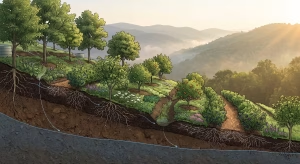
To truly understand how to grow healthy flowering trees in Appalachian clay, we must look below the surface into the living soil environment. Soil is not just dirt; it is a complex biological ecosystem containing millions of beneficial fungi, bacteria, and microscopic organisms.
The Role of Mycorrhizal Fungi
In native Appalachian forests, flowering trees do not grow in isolation. Their roots form close partnerships with beneficial soil fungi called mycorrhizae.
How does this partnership work? The fungal threads, called hyphae, attach themselves to the fine root hairs of flowering trees. These fungal threads spread out through the soil like a massive underground web, reaching into tiny soil pores that tree roots cannot access. The fungi collect water, phosphorus, and trace minerals from the clay and deliver them directly to the tree roots. In exchange, the tree shares sugars produced through photosynthesis with the fungi.
When you plant new flowering trees in suburban yards, the native soil fungi may have been damaged by past construction, grading, or synthetic chemical fertilizers.
You can restore this natural network when planting flowering trees by adding organic compost or commercial mycorrhizal inoculants to the planting hole. Building healthy soil biology helps flowering trees absorb moisture during dry summers, resist root diseases, and handle heavy clay soils with ease.
Soil pH and Nutrient Availability
Soil pH measures how acidic or alkaline your soil is on a scale from 0 to 14. This metric determines which plant nutrients are available for roots to absorb.
Redbuds and Soil pH: Eastern Redbuds adapt well to a wide pH range, performing comfortably in soils from pH 6.0 to 7.8. In the limestone soils of Bristol and Kingsport, where soil pH often leans neutral to slightly alkaline, redbuds absorb iron, calcium, and magnesium without any problems.
Dogwoods and Soil pH: Flowering Dogwoods prefer acidic to neutral conditions, thriving best in soil with a pH between 5.5 and 6.5. In alkaline soils above pH 7.0, dogwoods struggle to absorb iron and manganese. This causes a condition called iron chlorosis, where the leaves turn pale yellow while the veins stay dark green.
If a soil test shows your yard has a high pH, you can gently lower it around dogwoods by applying elemental sulfur or top-dressing the soil with pine needle mulch and leaf compost over time.
Selecting Superior Native Cultivars for East Tennessee
When visiting local garden centers or nurseries, you will find wild native species as well as named cultivars of both redbuds and dogwoods. Cultivars are plants selected by horticulturists for specific traits like unique flower colors, improved disease resistance, or dwarf growing sizes.
Choosing the right cultivar of these flowering trees can make a big difference in long-term garden success.
Recommended Redbud Cultivars
Cercis canadensis ‘Appalachian Red’: Do not let the name fool you; this striking cultivar produces flowers of intense fuchsia-pink, closer to red than any other native redbud. It grows twenty to twenty-five feet tall and thrives in local clay soils.
Cercis canadensis ‘Forest Pansy’: Known for its dramatic foliage, this cultivar emerges with dark purple heart-shaped leaves that turn deep green in late summer heat. It performs best in sites with morning sun and afternoon shade to protect leaf color.
Cercis canadensis ‘Ruby Falls’: A fantastic choice for small suburban yards or townhouse patios. This weeping dwarf redbud grows only six to eight feet tall, featuring cascading branches covered in pink blooms each spring.
Recommended Dogwood Cultivars
Cornus florida ‘Appalachian Spring’: Developed by researchers at the University of Tennessee specifically for our regional climate, this remarkable cultivar possesses strong natural resistance to Dogwood Anthracnose. It features large, clean white bracts and excellent red fall color.
Cornus florida ‘Cherokee Chief’: A classic Southern selection that produces rich ruby-red to deep pink bracts in mid-spring. It reaches twenty feet tall and provides outstanding lipid-rich fruit for fall birds.
Cornus florida ‘Cherokee Princess’: Famous for its exceptionally heavy production of large, pure white bracts. It blooms reliably every spring and exhibits good resistance to common foliage spot diseases.
Designing Your Landscape with Native Flowering Trees
How can you use these flowering trees to transform your home landscape into a beautiful, functional outdoor living space? Thoughtful plant placement improves home energy efficiency, increases property value, and creates outdoor habitat.
Creating Understory Layers
In natural forest ecosystems, plants grow in distinct vertical layers: canopy trees, understory trees, shrubs, and groundcovers. You can recreate this natural structure in your yard.
Plant large canopy trees like White Oak (Quercus alba) or Sugar Maple (Acer saccharum) on the high outer points of your landscape. Place native flowering trees like dogwoods and redbuds beneath or along the southern edges of those larger trees. Beneath your flowering trees, plant native shrubs like Flame Azalea (Rhododendron calendulaceum) or Oakleaf Hydrangea (Hydrangea quercifolia). Complete the layer with native perennial groundcovers like Wild Ginger (Asarum canadense) or Green and Gold (Chrysogonum virginianum).
Layered landscapes reduce weed growth, hold moisture in the soil, and provide diverse nesting spots for native songbirds.
Framing Views and Enhancing Curb Appeal
Flowering trees are effective focal points in front yard landscape design.
Placing a redbud near the corner of your home softens harsh architectural lines and draws the eye upward with spring color. Planting a dogwood near a patio or porch window allows you to watch spring pollinators and fall songbirds from inside your home.
When planting near home foundations, driveways, or utility lines, always respect mature plant dimensions. Plant redbuds and dogwoods at least twelve to fifteen feet away from building walls, and avoid placing them directly under overhead power lines unless you are using dwarf cultivars like ‘Ruby Falls’.
Tri-Cities TN Home Final Verdict
Which tree wins the title for the best flowering tree in a Tri-Cities yard?
If we step back and look at our yards through a Socratic lens, we realize there is no single right answer for every home. The true winner depends entirely on the specific microclimate and soil conditions of your landscape.
If your property sits on a sunny, unamended clay ridge in Kingsport with raw soil and full afternoon heat, why force a sensitive dogwood to struggle against the elements? An Eastern Redbud will embrace those tough clay conditions, send its roots deep into the ground, and reward you with bright spring color and early pollinator food for decades with very little help.
On the other hand, if your yard features a sheltered spot in Johnson City with rich topsoil, afternoon shade, and good air circulation, why deny yourself the multi-season beauty of a Flowering Dogwood? With proper planting, cool mulch, and organic matter, a dogwood will grace your garden with white spring bracts, summer shade, rich autumn leaves, and vital winter bird food.
Better yet, if you have space in your yard, plant both! Combining Eastern Redbuds and Flowering Dogwoods extends your spring bloom season, enriches your soil chemistry, and provides year-round support for local native wildlife.
We invite you to visit us at McMullen House Garden Shop to explore our selection of healthy, regionally grown native flowering trees. Our team is always ready to help you test your soil, select superior cultivars, and choose the perfect trees for your home landscape. Happy gardening!