
The Architecture of the Small Landscape
Imagine walking onto a job site in Johnson City. The house was a beautiful custom build with clean lines and a modern craftsman feel. The owners had spent months picking out the right tile and the perfect light fixtures. But when you looked at the yard, you saw a major problem. The owners had planted a row of Silver Maples just five feet from the foundation. Those trees grow fast and huge. In ten years, those roots would be cracking the basement walls and the limbs would be scraping the shingles. It was a classic mistake. People often want instant shade, but they forget that a tree is a living part of the home’s structure.
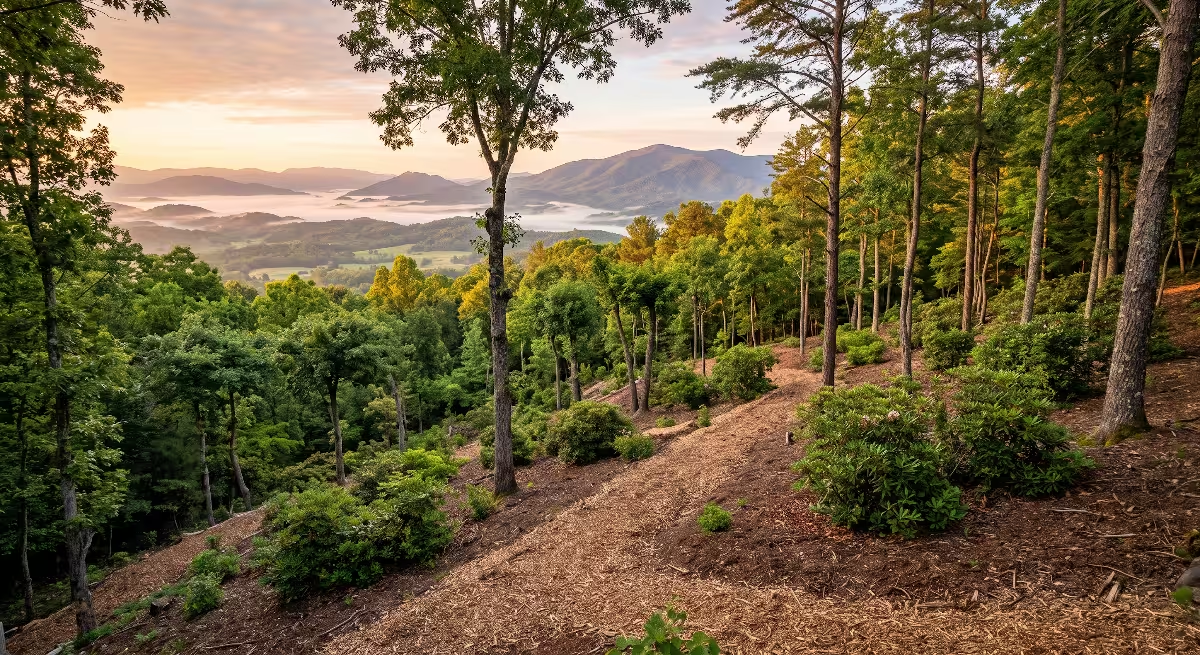
It helps to look at a yard the same way you look at a floor plan. Every square foot matters. In the Tri-Cities area, our lots can be tricky. We have hills, we have clay, and we have neighbors close by. You need a landscape that works with you, not against you. That is why finding the best native trees for small yards is such a vital part of the building process. When we choose native plants, we are choosing species that have lived in Tennessee longer than we have. They know how to handle our crazy spring freezes and our humid August afternoons.
Think of your yard as an outdoor room. Just like you wouldn’t put a king-sized bed in a tiny guest closet, you shouldn’t put a massive forest tree in a small suburban lot. By focusing on the best native trees for small yards, you create a space that feels balanced. You get the privacy you want and the beauty you crave without the maintenance headaches.
In this guide, we want to show you how to pick the right “living furniture” for your property. We will look at how these trees protect your home investment and which ones thrive best right here in East Tennessee.
Why Native Matters for Your Home Investment
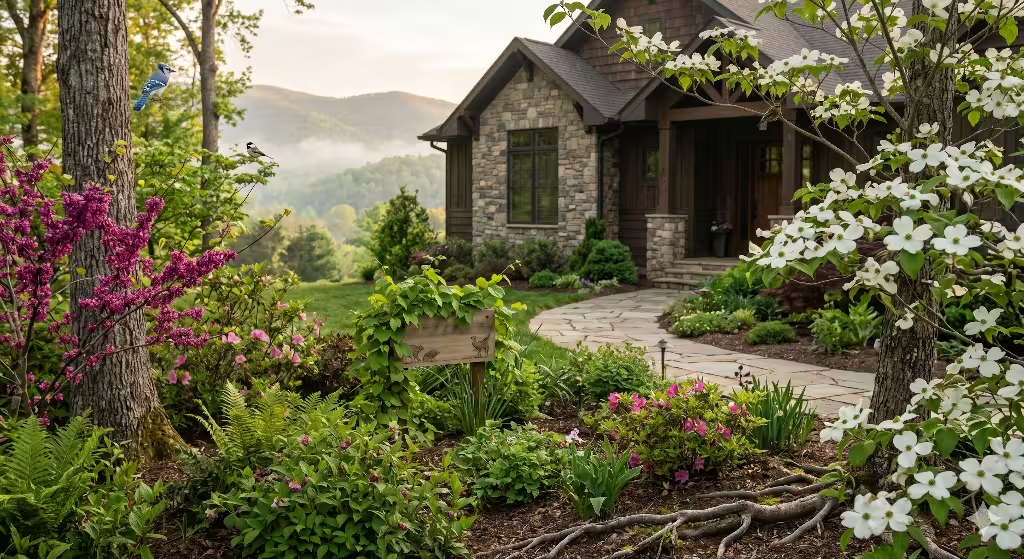
Native trees are competent. They are precisely tuned to the Zone 7 climate. When you buy a tree that is native to our region, you are buying a plant that has a built-in survival manual for the Tri-Cities.
From a builder’s perspective, native trees are a smart investment. If you plant a non-native tree, you might spend hundreds of dollars on extra water, special fertilizers, and pesticides. Non-native trees often struggle with our heavy clay soil. They get stressed, and stressed trees attract bugs. When you choose the best native trees for small yards, you are choosing plants that are naturally resistant to local pests. This means your home stays looking professional and polished without you having to spend every weekend playing “tree doctor.”
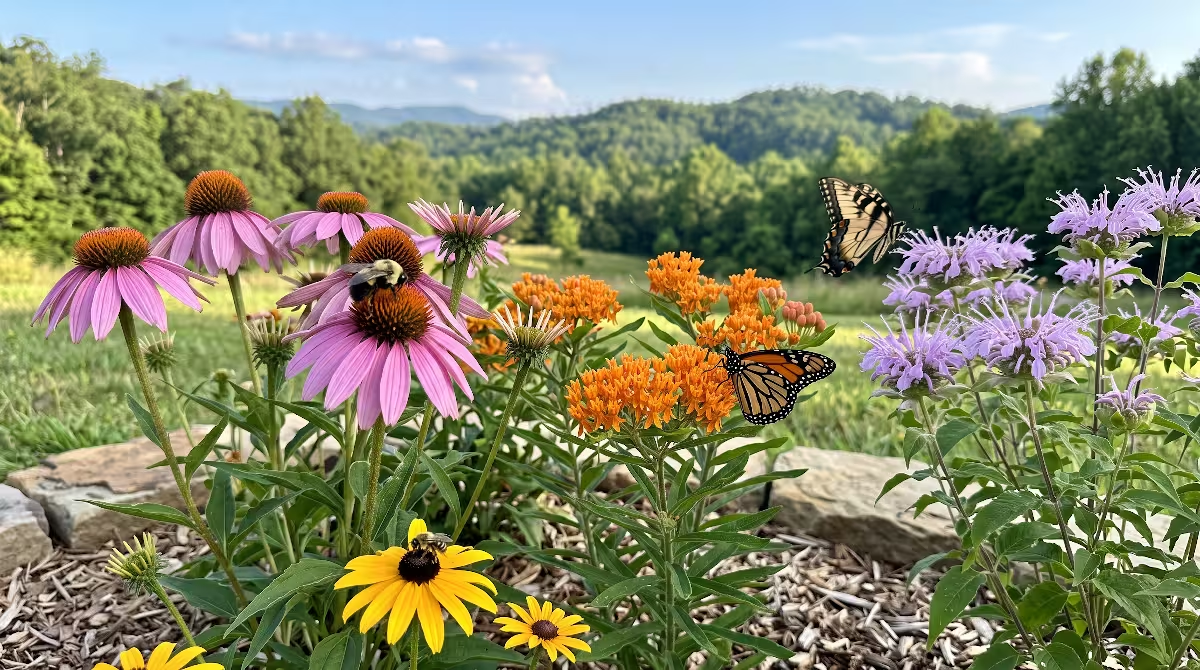
There is also the emotional side of home building. Many women want a home that feels like a sanctuary. They want to see birds and butterflies from their kitchen window. Native trees provide the best food and shelter for our local wildlife. By planting the best native trees for small yards, you are helping the environment while also making your home more peaceful. It is a win-win situation. You get a low-maintenance yard that looks like a professional designer handled it, and the local ecosystem gets a boost.
Top Recommendations: Best Native Trees for Small Yards Zone 7 TN
Choosing the right species is where precision comes into play. You have to look at the mature height and the spread of the branches. Here are our top picks for the best native trees for small yards in our area.
1. Eastern Redbud (Cercis canadensis): The Spring Showstopper
If you grew up in Kingsport, you know the Redbud. It is one of the first signs that winter is finally over. This is one of the best native trees for small yards because it stays relatively small. It usually reaches about 20 to 30 feet tall. The flowers are a stunning magenta color that wraps right around the branches.
Builders love Redbuds because they have a very graceful shape. They often grow with multiple trunks, which gives them a sculptural look. If you are looking for the best native trees for small yards to put near a patio, this is a great choice. The heart-shaped leaves provide nice shade in the summer but aren’t so thick that they kill the grass underneath. They are very precise in their growth and don’t usually cause trouble with underground lines.
2. Serviceberry (Amelanchier): The Four-Season Performer
Serviceberry is the “Swiss Army Knife” of landscaping. It is easily one of the best native trees for small yards because it gives you something beautiful to look at in every season. In the spring, it has delicate white flowers. In the summer, it produces small berries that look like blueberries. You can actually eat them or leave them for the birds. In the fall, the leaves turn a brilliant orange and red. Even in the winter, the gray bark looks sleek and professional.
For a small yard, the Serviceberry is perfect because it is narrow. It doesn’t take up a lot of horizontal space. When searching for the best native trees for small yards that won’t crowd out your driveway or your neighbor’s fence, this is usually my first recommendation. It is a very sturdy tree that handles our Zone 7 wind and rain with ease.
3. Flowering Dogwood (Cornus florida): The Tennessee Classic
You can’t talk about Tennessee landscapes without mentioning the Dogwood. It is our state tree for a reason. It is one of the best native trees for small yards because it is used to growing under the canopy of larger trees. This means it can handle some shade, which is common in older neighborhoods in Johnson City.
The Dogwood offers a very high level of “curb appeal.” When people see a healthy Dogwood in full bloom, they associate it with a well-cared-for home. It is one of the best native trees for small yards for adding value to your property. Just make sure you plant it in a spot where the soil drains well. Dogwoods don’t like “wet feet,” which is builder-speak for roots that sit in water for too long.
4. American Fringetree (Chionanthus virginicus): The “Grancy Graybeard”
This is a tree that not many people know about, but it is a hidden gem. It is one of the best native trees for small yards if you want something unique. It gets its name from the white, fringe-like flowers that cover the tree in late spring. It looks like a white cloud has landed in your yard.
It is a slow-growing tree, which I find very helpful for small spaces. You won’t have to worry about it outgrowing its spot for a very long time. Landscapers love the Fringetree because it is incredibly hardy. It is rarely bothered by bugs or diseases. If you want the best native trees for small yards that require almost zero work, put this one on your list.
5. Ironwood (Carpinus caroliniana): The Structural Anchor
In the home building industry, we value strength. The Ironwood, also known as the American Hornbeam, is one of the strongest trees you can find. It is one of the best native trees for small yards because it is very tough. It has bark that looks like a flexed muscle, which is why some people call it “Musclewood.”
The Ironwood is great for small yards because it is very patient. It can grow in the shade or the sun. It has a very tidy growth habit, meaning it doesn’t drop a lot of messy seeds or sticks. When looking for the best native trees for small yards to use as a privacy screen or a boundary marker, the Ironwood is a top contender. It adds a sense of permanence and stability to a new build.
Common Questions about Native Trees for Small Yards
Homeowners usually have the same questions when it comes to the best native trees for small yards. We want to address those here.
What is the best small tree for privacy in Tennessee?
If you want privacy, you usually want something evergreen. While many of the best native trees for small yards are deciduous (they lose their leaves), you can look at the ‘Taylor’ Juniper or certain native Hollies. These stay narrow and provide a green wall all year round. They are great for blocking the view of a neighbor’s trash cans or a busy street in Bristol.
How close to a house can I plant a small native tree?
This is a safety issue. Even the best native trees for small yards need some space. I usually recommend the “10-foot rule.” Try to keep the trunk at least ten feet away from your foundation. This prevents roots from pushing against your walls and keeps branches from rubbing against your siding. If the tree is very small, like a Fringetree, you might be able to go a little closer, but ten feet is a safe bet for any home builder.
Which native TN trees grow fastest?
The Redbud is a relatively fast grower compared to the Ironwood. However, “fast” can sometimes mean “weak.” One reason I suggest the best native trees for small yards mentioned above is that they grow at a moderate pace. This makes their wood stronger. A tree that grows too fast often breaks in an ice storm. In the Tri-Cities, we get those ice storms every few years, so you want a tree that can hold its own.
Technical Considerations for the Tri-Cities Area
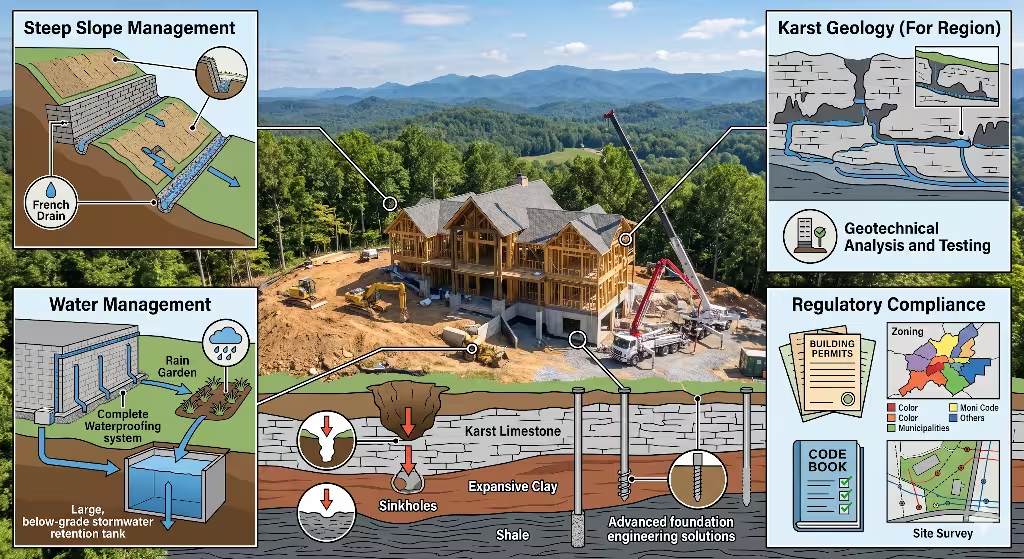
When doing landscaping, you can’t ignore the technical side of planting the best native trees for small yards. Our geography in East Tennessee is unique. We are nestled in the Appalachian Highlands, and that means our soil and weather have specific quirks.
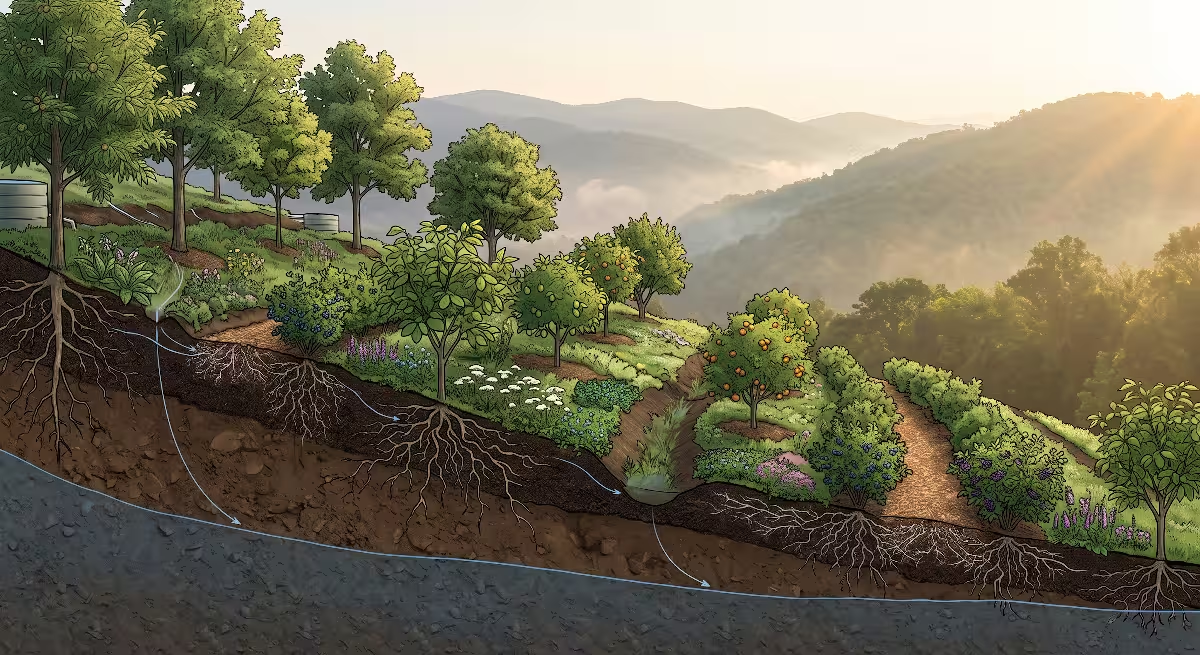
The biggest challenge in Johnson City and Kingsport is clay. Our soil is thick and heavy. When it gets wet, it holds water like a bucket. When it gets dry, it turns into a brick. When you are looking for the best native trees for small yards, you have to consider how the tree handles clay. The Serviceberry and Ironwood are particularly good at this. They have strong roots that can push through the heavy soil.
Another thing to think about is drainage. Before you plant the best native trees for small yards, look at how water moves across your lot. Does water puddle in one spot after a rain? If so, don’t plant a Dogwood there. You might need to do some light grading or add some compost to the soil to help it breathe. In the building industry, we always say that “water is the enemy.” This is true for your foundation and for your trees.
Microclimates are also a factor. If your yard is on a north-facing hill in the shadows of the mountains, it will be much cooler and wetter than a south-facing yard in a flat valley. The best native trees for small yards are the ones that fit your specific “micro-neighborhood.” Take a walk around your block and see what is thriving. That is often the best clue for what will work in your own yard.
Maintenance and Precision Care
Once you have picked the best native trees for small yards and put them in the ground, the work isn’t quite done. You need a maintenance plan. we like to keep things simple and precise.
First, let’s talk about mulching. I see people make “mulch volcanoes” all the time. This is where they pile mulch high against the trunk of the tree. This is a huge mistake! It rots the bark and invites bugs. Instead, use the “donut” method. Put a ring of mulch around the tree, but keep it a few inches away from the wood of the trunk. This keeps the roots cool and moist without hurting the tree. Even the best native trees for small yards can die if they are mulched incorrectly.
Pruning is another area where people get nervous. For the best native trees for small yards, you usually only need to prune in the late winter. Look for branches that are crossing or rubbing against each other. You want to open up the center of the tree so air can flow through. This prevents fungus and keeps the tree looking sharp. Think of it like trimming the loose threads off a high-quality suit. It just makes everything look more professional.
Finally, don’t forget to water. Even though these are the best native trees for small yards and they are adapted to our area, they still need help for the first two years. Their roots are small and can’t reach deep water yet. During a hot July in the Tri-Cities, give your new trees a good soak once a week. Once they are established, they will be much more self-sufficient. This is the goal: a yard that takes care of itself so you can enjoy your home.
How to Choose the Best Native Trees for Small Yards for Your Style
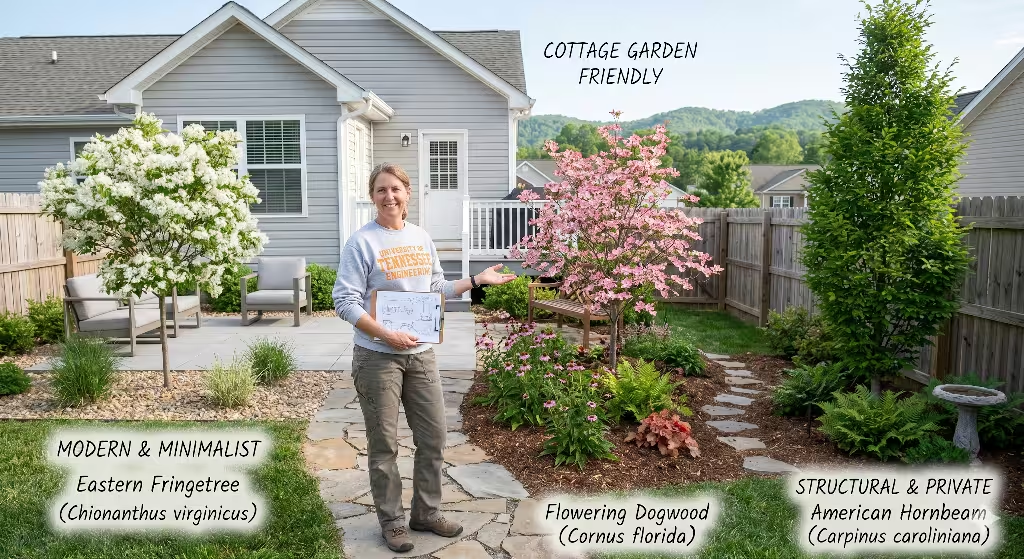
Every homeowner has a different style. Some like the “English Garden” look, while others prefer a “Modern Minimalist” vibe. The best native trees for small yards can fit into any of these designs.
If you like a formal look, consider planting a row of Serviceberries. Their uniform shape looks very clean and intentional. If you prefer a more natural, wooded feel, the Dogwood and Redbud are perfect. They look like they have always been there. We often suggest grouping the trees in odd numbers, like threes or fives. This creates a more organic and relaxing feel for the eyes.
You should also think about the color of your home. If you have a gray or blue house, the white flowers of a Fringetree or Serviceberry will pop beautifully. If your home is a warm brick or tan, the pink of a Redbud or Dogwood will complement the tones perfectly. Choosing the best native trees for small yards is about more than just biology; it is about aesthetics and how you feel when you pull into your driveway after a long day.
The Importance of Sourcing Locally
When you are ready to buy the best native trees for small yards, we highly recommend visiting a local nursery in the Tri-Cities. Don’t just go to a big-box store. Local nurseries often grow their trees right here in Tennessee. This means the tree is already used to our local weather and soil. A tree that was grown in a greenhouse in Florida will have a hard time surviving its first winter in Johnson City.
Ask the nursery staff questions. They are experts and can help you find the best native trees for small yards that match your specific needs. Tell them about your soil and how much sun you get. Bringing a photo of your yard can also be very helpful. In my experience, taking that extra step ensures you get a high-quality plant that will live for decades. It is part of being precise and having integrity in your landscaping choices.
Creating a Living Legacy
The houses around the Tri-Cities of Tennessee are sturdy and well-made, but it is the trees around them that make them feel like a part of the community. When you plant the best native trees for small yards, you are planting a legacy. You are creating a habitat for birds that will sing for your children. You are providing shade for a porch where you will drink your morning coffee.
Landscaping shouldn’t be an afterthought. It is the final chapter of the home building story. By choosing the best native trees for small yards, you are ensuring that your home remains beautiful and functional for years to come. You are avoiding the costly mistakes of planting invasive or oversized trees. You are making a choice that reflects competence and care.
In the Tri-Cities, we are lucky to have so many wonderful options. Whether you choose the vibrant Redbud, the sturdy Ironwood, or the elegant Dogwood, you are making your property better. Take the time to plan your “outdoor room” with the same detail you used for your kitchen or your living room. The best native trees for small yards are waiting to become a part of your home.
Planning for Future Growth
One final thing to keep in mind is that trees change. The best native trees for small yards will look different in five years, ten years, and twenty years. When I am designing a site plan, I always look at the “mature spread.” If a tree says it will grow 20 feet wide, I make sure there is 20 feet of space for it.
Don’t be tempted to plant things too close together just because they look small in the pots. Giving the best native trees for small yards enough room to breathe is essential. It prevents disease and ensures that each tree can reach its full, beautiful potential. This kind of forward-thinking is what separates a good homeowner from a great one.
As you look at your yard today, imagine what you want it to look like in the future. The best native trees for small yards will grow with you. They will witness the seasons of your life. They are more than just plants; they are the structural elements of your outdoor life.
Building Your Legacy
We hope this guide has helped you feel more confident about your landscaping. Selecting the best native trees for small yards is a journey in precision and local pride. We live in a beautiful part of the world, and our yards should reflect that. From Kingsport to Bristol to Johnson City, our native trees are a huge part of what makes East Tennessee special.
By picking the best native trees for small yards, you are protecting your home’s foundation, increasing your property value, and supporting the local environment. It is a smart, technical, and professional way to finish your home. If you ever feel overwhelmed, just remember the trees we talked about. The Redbud, Serviceberry, Dogwood, Fringetree, and Ironwood are all excellent partners for a small lot.
Take a deep breath, grab a shovel, and start planting your legacy. Your home deserves the best native trees for small yards, and so do you. Building a home is a big job, but with the right information and a little bit of planning, it can be the best experience of your life.
Final Checklist for Planting the Best Native Trees for Small Yards
Check Your Zone: Make sure you are in Zone 7 (Tri-Cities area).
Measure Your Space: Know the distance from your house to the planting spot.
Test Your Soil: Is it heavy clay? Does it drain well?
Pick Your Favorite: Choose one of the best native trees for small yards like a Redbud or Serviceberry.
Call Before You Dig: Always check for underground utility lines!
Plant at the Right Depth: Don’t bury the root flare (where the trunk meets the roots).
Water Regularly: Especially in the first two years.
Use the Donut Mulch Method: Keep the trunk clear.
Enjoy your new “outdoor room”! The best native trees for small yards are the perfect finishing touch for any East Tennessee home. By following these steps, you are ensuring a beautiful and stress-free landscape for the long haul. Your home is your sanctuary, and the best native trees for small yards will help keep it that way. Happy planting!
Tri-Cities TN Home Expert Note: Don’t rush the process. Finding the best native trees for small yards is worth the effort. It’s about building something that lasts. When you choose the best native trees for small yards, you are choosing quality over quantity, and that is a value I stand by in every home I work on.