The Entryway as a Biophilic Threshold
In the world of Tri-Cities TN Home, we don’t just see a driveway as a slab of material to keep your tires out of the mud. We see it as the most important transition in your daily life. When we talk about a biophilic threshold, we are talking about the emotional and physical shift you feel when you move from the busy, loud world of the public road into the private sanctuary of your home.
A driveway is the very first part of your personal ecosystem that you touch. If that touch feels harsh, cold, or disconnected from the Tennessee landscape, it sets a tone of stress. If it feels integrated and natural, it sets a tone of peace and overall, feels like it belongs there.
The Psychology of the Arrival
Most people think of their driveway as a utility, like a toaster or a water heater. But as someone with a background in both biology and computer science, I look at the data of human emotion. When you pull onto a driveway that feels like a natural extension of the Tri-Cities hills, your heart rate actually begins to slow down. This is the “threshold effect.” We want to design a space that tells your brain, “You are safe now; you are back in nature.”
A driveway that is just a blind strip of gray concrete doesn’t give the brain any information to process. But a driveway that uses biophilic principles, perhaps with edges that gently curve or colors that mimic the local limestone, engages the mind. It makes the act of coming home an experience rather than a chore. This is why we focus so much on the textures and the visual flow of the material.
Integrating with the Tri-Cities Topography
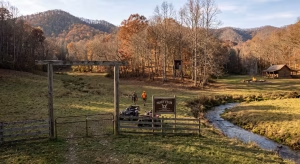
Our region in East Tennessee is defined by its ridges and valleys. A biophilic driveway respects this “spirit of place” by following the contours of the land. Instead of cutting a deep, ugly scar through a hill to make a straight path, a biophilic approach might suggest a driveway that meanders. This not only looks more beautiful, but it also helps with practical issues like water runoff and soil erosion.
When we use materials that look like they belong here, such as asphalt that matches the dark shadows of the Appalachian woods or concrete that reflects the light of a limestone cliff, we are grounding the home. We are making sure the house doesn’t look like it was just dropped from the sky, but rather that it grew out of the red Tennessee clay.
The Driveway as a Living System
A threshold is also a place where two systems meet. In this case, it is where the human world of cars and engines meets the natural world of soil and rain. A biophilic driveway acts as a filter. By using permeable options, we allow the earth to breathe. Instead of the driveway being a barrier that blocks the rain, it becomes a sponge that feeds the groundwater.
We aren’t just making things look “pretty.” We are designing systems that function like a forest floor. We want to manage the “hydrostatic pressure,” that is just a fancy way of saying how water pushes against your driveway, so that your investment lasts for fifty years instead of ten. By treating the driveway as a living threshold, we ensure that it supports the health of your lawn and the local Tri-Cities watershed.
Visual Harmony and Materiality
Finally, the entryway must be a visual bridge. We look at the “reflectance” of the materials. In the bright Tennessee sun, a stark white driveway can be blinding and create a “heat island” that kills nearby plants. A biophilic choice might involve adding “exposed aggregate” to a concrete driveway. This means we strip away the top layer of paste to show the beautiful river stones underneath.
These stones have colors, tans, browns, and deep blues, that coordinate with the bark of the oak trees and the colors of the local soil. This creates a soft visual transition. Your eyes don’t jump from “road” to “house.” Instead, they glide across a landscape that feels whole. That is the power of a biophilic threshold. It turns a simple driveway into a welcoming embrace.
Asphalt: The Flexible Appalachian Contender
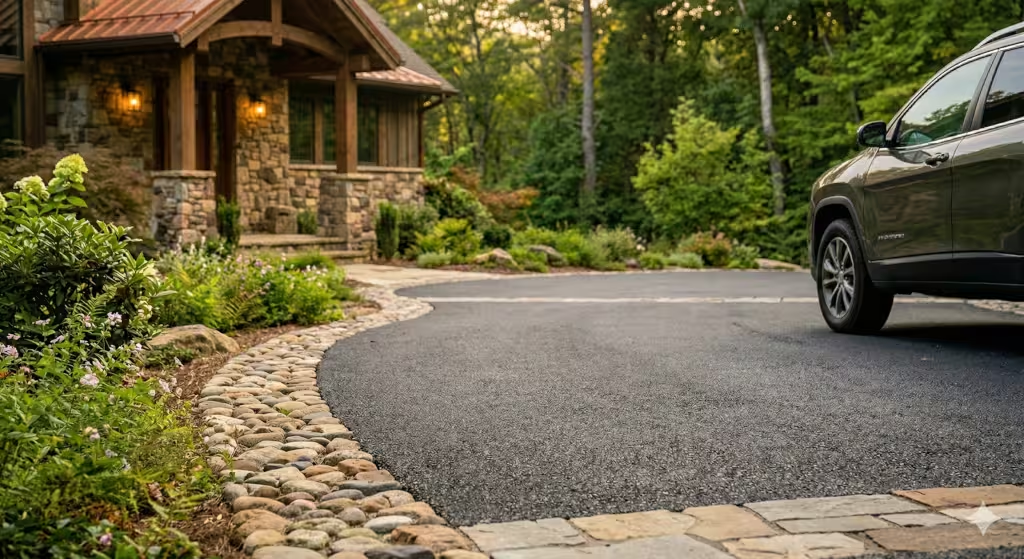
If you are looking for a driveway that works with the land, asphalt is a very popular choice. In 2026, many homeowners in the Tri-Cities are choosing this material because it is flexible. Unlike stone or concrete, asphalt can bend a little bit. This is great for our hilly terrain. When the ground shifts or settles, a well-made asphalt driveway can move with it.
The cost for an asphalt driveway in 2026 usually falls between 7 and 15 dollars for every square foot. This price includes the labor and the materials. For a standard home, this often means you can get a fresh look without spending a fortune. One reason it costs less is that it is made of oil-based products. These materials are easier to work with than heavy concrete.
The lifespan of an asphalt driveway is usually 15 to 20 years. In the Tri-Cities, we have many freeze and thaw cycles. The ground gets cold, then it gets warm. This can be hard on any surface. Asphalt handles this well because it is dark. The sun hits the black surface and melts the ice faster than it would on a lighter color. If you like the look of dark shale found in our local mountains, asphalt is a perfect match. It looks organic and stays low to the ground. It also takes very little time to install. You can usually drive your car on a new asphalt driveway just a few days after it is finished.
Concrete: The Permanent Stone-Mimic
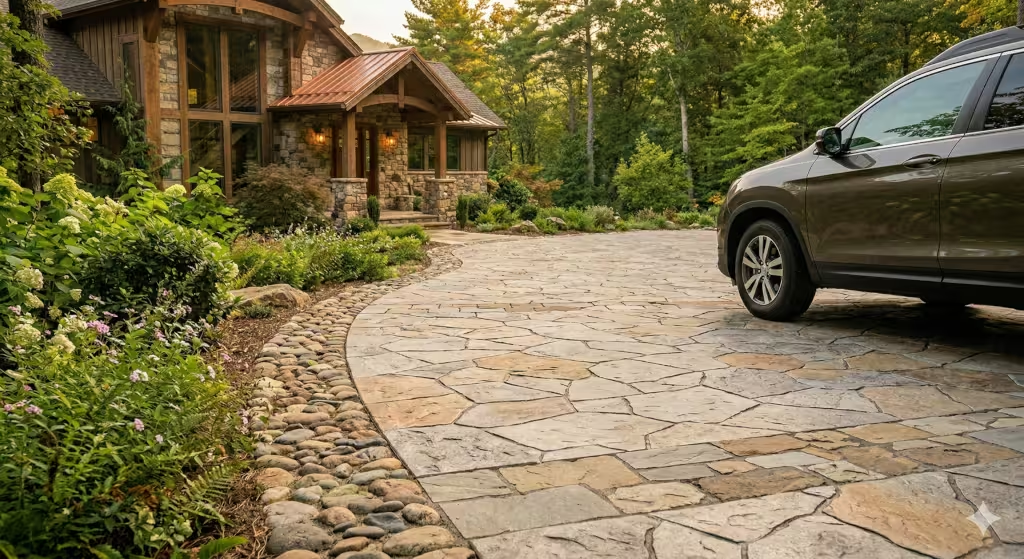
Now let us talk about concrete. If you want a driveway that feels like it will last forever, concrete is the king. It is a very stiff material. It does not bend like asphalt does. Instead, it stands its ground. For a homeowner who wants to build something once and not worry about it for 30 or 40 years, concrete is a top choice.
In 2026, the price for a concrete driveway is a bit higher. You should expect to pay between 8 and 20 dollars per square foot. If you want special designs or colors, the price can go even higher. Why is it more expensive? Concrete takes a lot of work. You have to build wooden frames to hold the wet mix. You often need to put metal bars inside the wet concrete to make it stronger. It also takes a long time to dry. You might have to wait a whole month before you can park your heavy truck on a new concrete driveway.
Even though it costs more at the start, a concrete driveway adds a lot of value. It looks clean and bright. In the summer heat of Tennessee, concrete stays much cooler than asphalt. This is nice if you have kids or pets who like to walk outside without shoes. We can also make concrete look like natural stone. By using stamps and colors, your driveway can look like the limestone rocks we see all over our region. This makes the built parts of your home look like they grew right out of the soil.
Comparative Matrix: Asphalt vs. Concrete Driveway Cost and Durability
Choosing between these two can be hard. We have created a simple table to help you see the differences at a glance. Think of this as a quick data sheet for your home project.
| Feature | Asphalt Driveway | Concrete Driveway |
| Initial Cost | Lower (7 to 15 dollars per sq. ft.) | Higher (8 to 20 dollars per sq. ft.) |
| Lifespan | 15 to 25 Years | 30 to 50 Years |
| Maintenance | Needs a seal every 3 to 5 years | Needs a seal every 5 to 10 years |
| Repair Ease | Very easy to patch and blend | Hard to patch without seeing marks |
| Summer Heat | Gets very hot and soft | Stays cool and hard |
| Winter Ice | Melts ice quickly | Stays icy longer |
As you can see, each material has a trade-off. If you want to save money today, asphalt is a great tool. If you want to invest in the future and have less work to do later, concrete is the winner. Your choice depends on how long you plan to live in your home. It also depends on how much you enjoy doing yard work.
Regional Performance: The Tri-Cities Climate Factor
We live in a unique part of the country. The Tri-Cities area has hot, humid summers. We also have winters where it can be 60 degrees one day and 20 degrees the next. This constant changing of temperature is what kills a driveway. When water gets into tiny cracks and freezes, it expands. This pushes the material apart.
In the summer, asphalt can get very soft. If you park a very heavy trailer on a hot asphalt driveway in July, the wheels might leave little dents. This is because the oil in the asphalt gets thin in the heat. On the other hand, concrete does not care about the heat. It stays solid. But concrete has a different problem in the winter. If the ground under the concrete freezes and moves, the concrete can crack. Once a concrete driveway has a big crack, it is very hard to fix it so it looks like new.
For those living on steep hills in Bristol or Kingsport, traction is a big deal. Asphalt has a bit more grip when it is wet or snowy. The surface is slightly rougher. Concrete can be very slippery if it is finished with a smooth polish. If you choose concrete for a hilly area, you must make sure the workers give it a “broom finish.” This adds tiny grooves so your tires can grab the surface.
Elevating Design: The Biophilic Approach
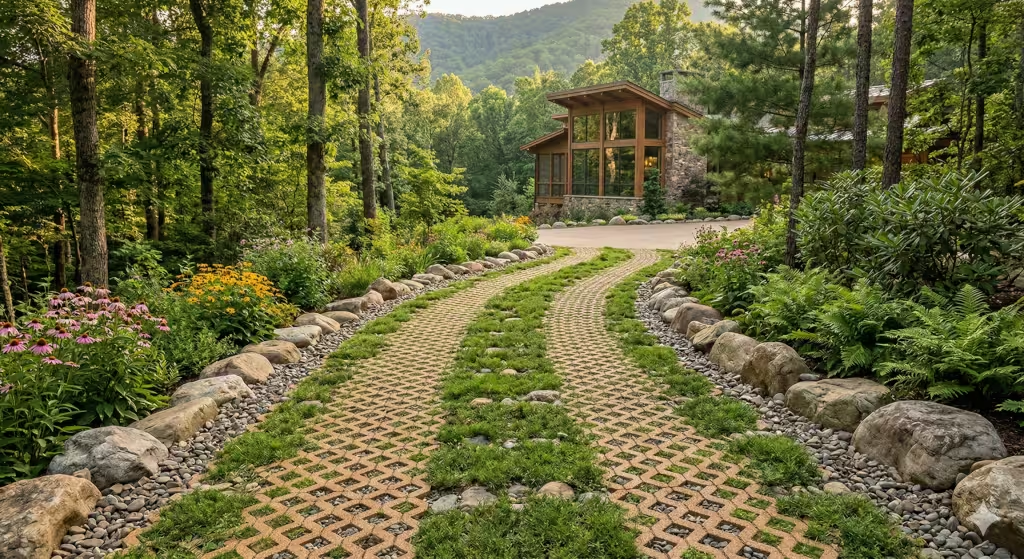
Biophilic design is all about bringing the outside in. This is the same effect that Frank Lloyd Wright achieved with his organic architecture. Even a driveway can be part of this movement. Instead of a giant desert of gray or black, we can think about how the driveway interacts with the grass and trees. One way to do this is by using permeable materials. These are materials that let water soak through them into the ground.
A permeable asphalt or concrete driveway helps prevent big puddles, helps with aquifer recharge, and prevents flooding of the local watersheds. It also keeps our local streams cleaner because the water goes through the soil first. Another idea is to use curved lines. Nature rarely moves in straight lines. A driveway that follows the curve of a hill looks more peaceful. It feels like a path through the woods rather than a highway.
You can also add local stones to the edges of your driveway. Using rocks from the Tennessee river or local quarries makes the transition from your car to your lawn feel natural. We want the driveway to feel like an invitation. It should say “welcome home” in a way that feels soft and organic. By choosing colors that match the earth around us, we reduce the visual noise of the built environment.
Frequently Asked Questions About Concrete vs. Asphalt Driveways
Builders often get asked which choice is truly better when it comes to asphalt or concrete. Here are the most common questions they hear from homeowners in the Tri-Cities.
Is it cheaper to have a concrete or asphalt driveway in the long run?
While asphalt is cheaper to buy on day one, it requires more care. You have to seal it every few years. Over 30 years, you might spend the same amount of money on an asphalt driveway as you would on a concrete one. Concrete is a “set it and forget it” option for many people.
Does a concrete driveway add more home value than asphalt in Tennessee?
In many cases, yes. Home buyers often see a concrete driveway as a premium feature. It looks more expensive and permanent. However, in very rural areas with long paths, a clean asphalt driveway is also very well-respected.
Can you pave asphalt over concrete?
Yes, you can. This is called an overlay. It is a way to save money if your old concrete is still strong but looks ugly. However, you have to be careful. If the concrete underneath moves, it will cause the new asphalt to crack in the same spot.
Maintenance Protocols for Longevity
To keep your driveway looking good, you must have a plan. For asphalt, the most important thing is sealcoating. This is like putting sunblock on your driveway. It protects the oil from the sun. You should do this every three to five years. You should also fill any small cracks as soon as you see them. This keeps water from getting under the surface, where it can freeze and create potholes and cracking.
For a concrete driveway, the maintenance is easier but still important. You should wash it once a year to get rid of dirt and oil. You should also use a clear sealer every five or ten years. This prevents the concrete from soaking up water and salt. In the winter, try not to use heavy salt on your concrete. Salt can eat away at the surface. Use sand instead to get better grip for your tires.
Whether you have a black or gray surface, keeping the edges clean is a big help. Do not let grass grow over the sides of the driveway. When roots get under the material, they can lift it up and cause damage. A little bit of weeding goes a long way in making your home look sharp and well-cared for.
Selecting Your Path
In the end, the choice between an asphalt or concrete driveway is personal. It is a mix of your budget, your style, and how much you care about the planet. We suggest looking at your home as a whole. Does it have a lot of wood and stone? A dark asphalt driveway might blend in better. Is it a modern home with clean lines? A bright concrete driveway might be the perfect touch.
Remember that the driveway is the start of your journey every day. It should be a place that brings you peace, not stress. If you live in the Tri-Cities, take a look at the homes in your neighborhood. See what has lasted 20 years and what looks like it is falling apart. Talk to local experts who know our Tennessee soil.
Choosing a driveway is an investment in your life. It is the path your family will walk on for decades. Make sure it is a path that you love. If you take care of it, it will take care of you.