The Rise of the Micro-Sanctuary
A home in Kingsport, TN was filled with the smell of old paper and the sound of the wind through the trees. A mother, who lived in the house, had a tiny nook under the stairs. It was not much bigger than a closet. She called it her “quiet place.” She would sit there for hours, surrounded by her books, writing letters to family. That small space felt bigger than the rest of the house because it was hers. It was intentional.
Today, in the Tri-Cities of Tennessee there are so many women looking for that same feeling. We live in a world that is loud and fast. We need a place where the world slows down.
People are moving away from giant, cold rooms. They want small, warm spaces that serve a specific goal. This is why the idea of a small library and writing room is so popular right now. It is more than just a place to store books. It is a micro-sanctuary. It is a room designed for the soul.
A small library and writing room is a special kind of challenge. You have to fit a lot of function into a tiny footprint. You need shelves that hold heavy books. You need a desk that supports your body. You need light that does not hurt your eyes. But most of all, you need a room that feels like a hug. For many women, this room is the heart of their creative life. It is where they plan their businesses, write their journals, or simply get lost in a story.
In this article, we will show you how to build this space with precision and heart. We will look at how to make it beautiful and how to make it work for you every single day.
Spatial Engineering: Maximizing a Small Footprint
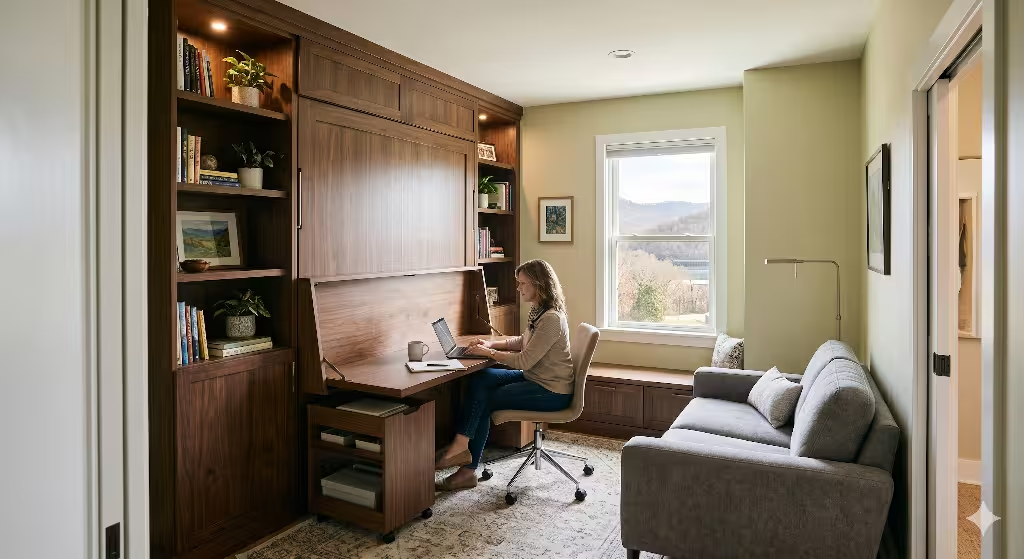
When you start planning a small library and writing room, you have to think like an engineer. You have to look at the volume of the room, not just the floor. In a small space, the floor is your most precious asset. If you clutter the floor, the room feels cramped. This is why vertical storage is so important. We always suggest floor to ceiling built-in bookshelves. These shelves do two things. First, they provide a massive amount of storage for your books. Second, they draw the eye upward. This makes the ceiling feel higher than it really is. It creates a sense of grandeur in a tiny space.
Another great trick for a small library and writing room is using a floating desk. A floating desk is mounted directly to the wall. It has no legs. Because you can see the floor underneath the desk, the room feels more open. It is a simple trick of the eye, but it works perfectly. You can also use “dead” spaces. Do you have a wide hallway? Do you have an alcove in your bedroom? These are perfect spots for a small library and writing room. You do not need a whole separate room to create a sanctuary. You just need a well-engineered corner.
We also love the idea of using niche storage. This means building shelves into the gaps between the wall studs. This saves even more floor space. When we build custom homes in the Tri-Cities, we often look for these opportunities. It adds a level of craft that you just do not get with store-bought furniture. A small library and writing room should feel like it was carved out of the house itself. It should feel permanent and sturdy. This gives you a sense of security while you work or read.
The Foundation of Your Small Library and Writing Room
Every good project starts with a solid foundation. In a small library and writing room, this means your floor plan. You need to measure your space exactly. I always use a digital tape measure to be precise. Even an inch can make a big difference in a tiny room. You want to make sure there is enough room to walk around your chair. You do not want to feel trapped.
When looking at a floor plan for a small library and writing room, you need to look for “clearances.” This is the space needed to move. For a desk chair, you usually need about thirty inches of space behind the desk. This allows you to push the chair back and get out easily. In a small library and writing room, you might have to be creative. Maybe your chair is a stool that tucks under the desk. Or maybe your shelves stop a few feet above the floor to give your feet more room.
The Writing Zone: Ergonomics Meets Focus
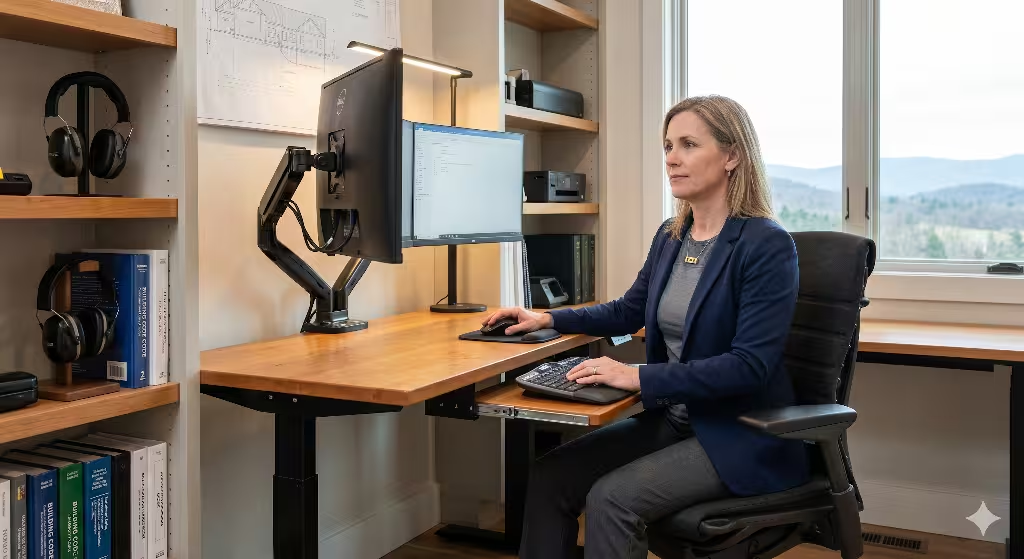
A small library and writing room must be comfortable. If it is not comfortable, you will not use it. This is where ergonomics comes in. Ergonomics is just a fancy word for how things fit the human body. Many women know that desks are built for taller men. When you set up your writing zone, make sure your desk and chair are the right height for you. Your feet should be flat on the floor. Your elbows should be at a ninety-degree angle when you type or write. This prevents back and neck pain.
It is helpful to know about the 20-20-20 rule. For every twenty minutes you spend looking at a screen or a book, look at something twenty feet away for twenty seconds. This is why the layout of your small library and writing room matters. If you can, put your desk near a window. Looking at the mountains or even just a tree helps your eyes rest. If you do not have a window, hang a beautiful piece of art across from your desk. It gives your mind a place to wander for a moment before you get back to work.
You also want to hide the “digital friction.” This means hiding cables and chargers. In a small library and writing room, wires look like clutter. They break the calm feeling of the room. It is helpful to use desks with built-in cord management. Or, we can install outlets inside the drawers. This keeps the space looking clean and analog. You want your small library and writing room to feel like a place for deep thought, not a computer lab. When you sit down, you should feel a sense of peace.
Optimizing Your Desk for Peak Productivity
Your desk is the “engine” of your writing room. It needs to be the right size for what you do. If you only use a laptop, you only need a small surface. But if you like to spread out papers and books, you need more room. In a small library and writing room, a “Secretary Desk” is a classic choice. It has a top that folds up when you are done. This hides your work and saves space.
You should also think about the material of your desk. Wood is warm and quiet. Metal or glass can be cold and loud. For a small library and writing room, I almost always recommend wood. It feels more “literary.” It also ages beautifully. Every scratch and mark tells the story of the work you have done there. It makes the room feel personal and lived-in.
Managing Air Quality and Temperature
A small room can get stuffy very fast. This is a big problem for focus. When you design your small library and writing room, think about air flow. If there is a window, make sure it can open. If not, you might need a small, quiet fan. Air quality is also important for your books. Books do not like it too humid or too dry.
In the Tri-Cities, we have high humidity in the summer. You might want a small dehumidifier in your small library and writing room. This protects your book collection from mold and warping. It also makes the room more comfortable for you. A comfortable writer is a productive writer. Look at the HVAC system to make sure the room gets enough air. It is a small detail that makes a huge difference in how much you enjoy the space.
The Library Zone: Curation and Comfort
Now, let’s talk about the books. A small library and writing room needs a smart shelving plan. Books are heavy. As an engineer, I care about the structural integrity of your shelves. You do not want them to sag over time. We use thick wood and strong supports. You should also think about the depth of your shelves. Standard fiction books do not need deep shelves. If the shelves are too deep, you waste space. We can design custom joinery that fits your specific collection. This makes your small library and writing room feel very high-end.
Comfort is the next big piece. You need a place to sit that is different from your desk chair. This allows you to switch gears from “working” to “reading.” In a small library and writing room, you might not have room for a giant sofa. But you probably have room for a cozy armchair. Choose a chair that you can curl up in. Add a small footstool or an ottoman. If you are really short on space, a built-in window seat is a dream. It gives you a place to sit and storage underneath for more books.
If your shelves go all the way to the ceiling, you might need a way to reach the top. A sliding library ladder is a classic choice. In a small library and writing room, we use slim-profile ladders. They add a bit of magic to the room. It feels like something out of an old storybook. It also makes use of every single inch of wall space. This is a great way to show off your personality and your love for books.
Selecting the Right Shelving System
Not all shelves are the same. In a small library and writing room, you have a few choices. You can do “Adjustable Shelves.” These use metal tracks so you can move the shelves up or down. This is great if you have books of all different sizes. You can also do “Fixed Shelves.” These are built into the wall and cannot move. They look more expensive and are very strong.
You also want look at the “load” of the books. A shelf full of books can weigh hundreds of pounds. If your shelves are too long without a support, they will bend in the middle. This is called “deflection.” To avoid this in your small library and writing room, keep your shelf spans under thirty-six inches. If you want longer shelves, use thicker wood or add a middle support. This keeps your library looking sharp and professional for years to come.
Lighting: The Dual Purpose Challenge
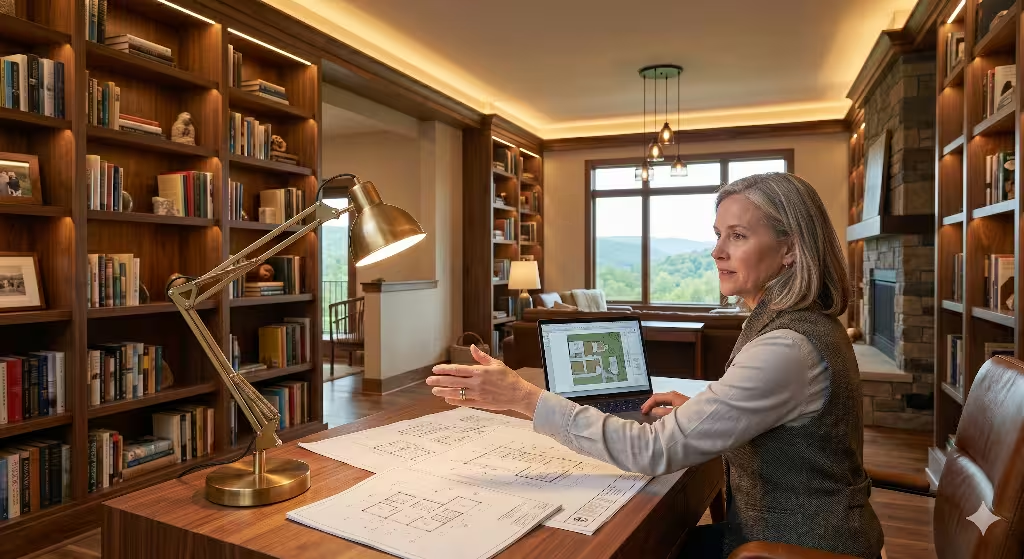
Lighting is the most underrated part of interior design. In a small library and writing room, lighting has to do two jobs. It has to help you see, and it has to help you feel. We like to use layers of light. First, you have your task lighting. This is a bright lamp on your desk. It helps you focus on your writing. We recommend LED lights because they stay cool and last a long time.
Second, you have your accent lighting. These are small lights inside the bookshelves. They make your books glow at night. It looks beautiful and makes the room feel warm. In a small library and writing room, these small details make a big difference. They turn a closet into a professional study.
Third, you have your ambient light. This is the general light in the room. In 2026, we are seeing a lot of smart lighting. You can have lights that change color throughout the day. In the morning, the light can be a crisp white to help you wake up. In the evening, it can turn into a warm amber. This helps your body get ready for sleep. It is a great feature for a small library and writing room because it changes the mood of the space without you having to do anything.
Lighting the Path to Creativity
Above, we talked about the types of light, but the “placement” of light is just as important. You want to avoid “glare” on your computer screen or your book pages. In a small library and writing room, place your task light to the side of your dominant hand. This prevents your hand from casting a shadow while you write.
Also, think about the “temperature” of the light bulbs. Light is measured in “Kelvins.” For reading and writing, you want something around 3000K to 4000K. This is a “cool white” that is easy on the eyes. For the ambient light in your small library and writing room, you can go warmer, around 2700K. This creates a cozy “sunset” feel in the evening. Balancing these different lights is an engineering task that pays off in pure comfort.
Aesthetics: 2026 Trends and Color Drenching
How should your small library and writing room look? In the building industry, trends are shifting. We are seeing a move toward “color drenching.” This is when you paint the walls, the trim, and even the bookshelves the exact same color. In a small room, this is a secret weapon. When everything is the same color, the corners of the room seem to disappear. It makes the small library and writing room feel much bigger than it is. It also feels very cozy, like you are inside a velvet box.
For 2026, many women are choosing “Low Arousal” colors. These are soft greens, muted blues, and warm tans. These colors help the brain relax. They are perfect for a small library and writing room. You want a space that supports your mental health. Another big trend is “Warm Minimalism.” This means having fewer things, but the things you have are high quality. Think of a soft wool rug, a solid wood desk, and a few pieces of handmade pottery.
We are also seeing a lot of “Dark Academia” style in East Tennessee. This style uses dark woods and vintage details. It fits our regional history perfectly. You can use old-fashioned brass hardware on your cabinets. You can hang framed maps of the Tri-Cities area. This gives your small library and writing room a sense of place. It connects your personal sanctuary to the world outside.
Frequently Asked Questions about having a Small Library and Writing Room
One question often asked is, “How do I combine a library and a writing room in a 10 by 10 space?” Our answer is always the same: Choose a layout that fits your workflow. If you like to move back and forth, use an L-shaped layout. Put your desk on one wall and your shelves on the other. If you want a more formal look, use a parallel layout. Put the shelves on both sides and the desk in the middle. This makes the small library and writing room feel symmetrical and balanced.
Another common question is, “What are the best colors for a focused writing room?” I always suggest avoiding bright, distracting colors like red or neon yellow. Instead, go for “Earth Tones.” Sage green and taupe are wonderful. They remind us of nature, which is very calming. In a small library and writing room, these colors help you stay focused for a long time.
Lastly, people want to know, “How can I make my small home library look expensive?” You do not have to spend a fortune. The secret is in the details. Use uniform book covers or group your books by color. Add high-quality trim work to your shelves. Use nice brass handles on your drawers. These small engineering choices make a small library and writing room look like a million dollars. It shows that you care about the space and the work you do there.
Regional Materials: Bringing the Tri-Cities Home
Many people, when they build libraries, love using local materials. Our region has some of the most beautiful wood in the world. When you build your small library and writing room, consider using Appalachian hardwoods. Oak, Walnut, and Cherry are all grown right here. These woods are strong and have beautiful grains. They give your small library and writing room a sense of history and strength.
We also think about the “Kingsport Craftsman” style. This style is all about honesty in materials. It uses simple lines and solid construction. You can add a built-in window seat with storage underneath. This is very common in older homes in our area. It is a great way to add charm to a new small library and writing room. Using local craftsmen to build your shelves also supports our local economy. It makes your room feel like a true part of the community.
Incorporating Nature: Biophilic Design
We all feel better when we are near nature. This is called “Biophilic Design.” Even in a small library and writing room, you can bring the outside in. A small potted plant on your desk can boost your mood. A view of the trees can lower your stress. If you don’t have a window, use natural materials like stone or raw wood.
In East Tennessee, we are surrounded by beauty. Why not reflect that in your small library and writing room? Use a piece of local river stone as a paperweight. Use a wooden bowl made by a local artist. These small touches connect you to the earth. They make the room feel grounded and real. It is a nature oriented way to design, focusing on how the space feels to the touch and the spirit.
Your Legacy in Print and Paper
Building a small library and writing room is a gift to yourself. It is a place where you can be your true self. Whether you are writing a novel or just reading the morning news, you deserve a space that is precise and beautiful. My engineering brain loves the challenge of a small room. My heart loves the peace it brings to the women who live there.
Remember to start with the “spine” of the room. Pick your desk first. Then, build the “ribs,” the shelves, around it. Make sure you have good light and a comfortable chair. If you do these things, your small library and writing room will be your favorite place in the world. If you are in the Tri-Cities area, reach out to a local builder. They can help you make sure your shelves are strong enough for all your favorite books.