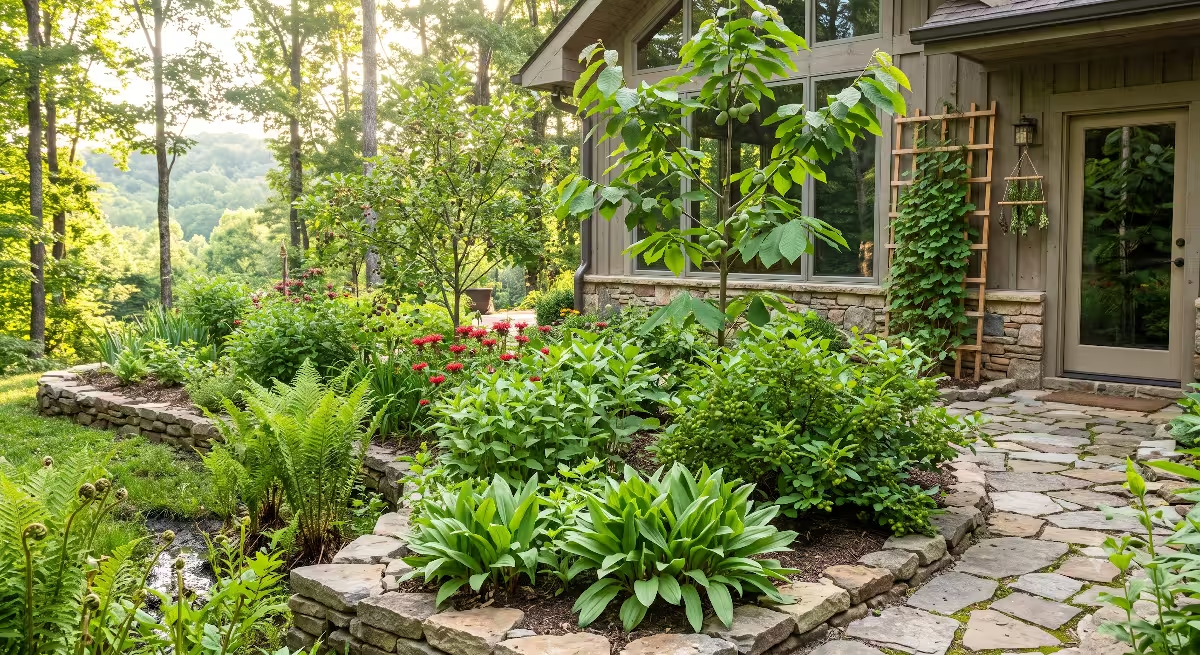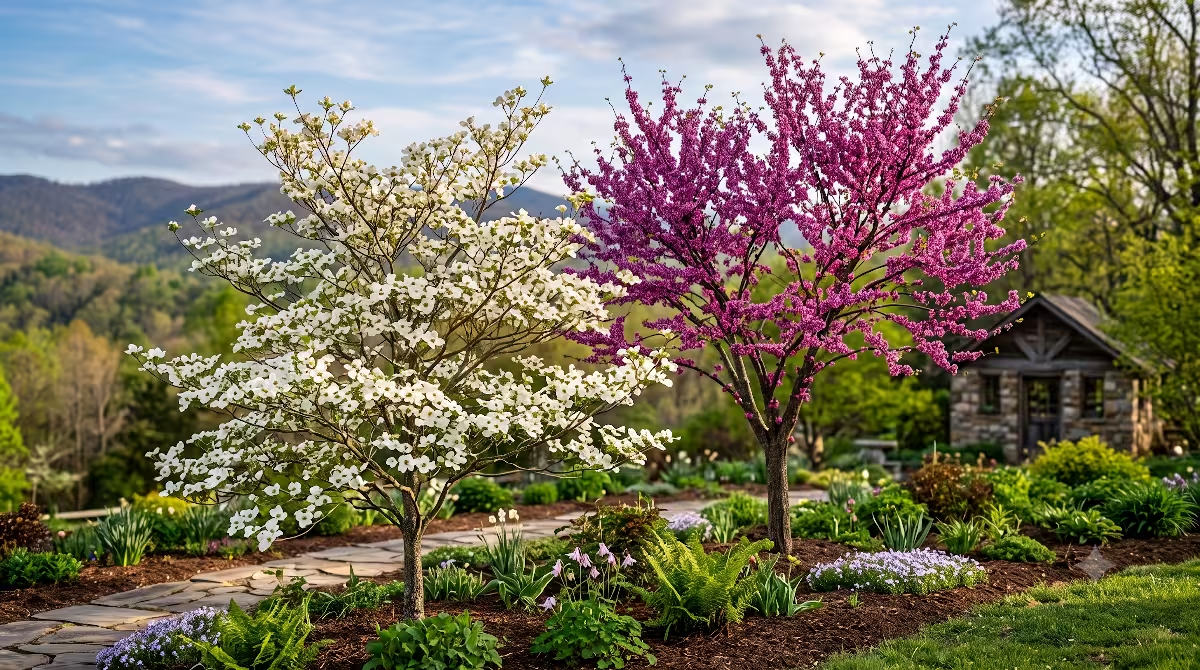

On a crisp morning in Johnson City sitting on the back deck of a custom home; the sun was just starting to peek over the ridges of the Appalachian Highlands. It should have been a peaceful moment, but the homeowner, a busy professional and mother, felt like she was on a stage. Every time she stepped outside to enjoy her coffee, the neighbors in the new subdivision next door could see right onto her patio. She just wanted to feel safe and tucked away in her own world. She did not just need a fence. She needed a sense of refuge.
In biophilic design, a refuge is a place where you feel protected but can still see the beauty of nature around you. This is why we talk so much about choosing the right trees for privacy.
The dilemma we faced that morning is one I see all the time in the Tri-Cities. Do you plant something that grows lightning fast so you can have your peace today, or do you plant something that will stand strong for fifty years? Our local hills and valleys create tricky sightlines. A house built on a slope might look right down into your yard.
To solve this, we have to look at the battle between fast-growing vs. long-lived trees for privacy. It is not just about height. It is about how the light filters through the leaves and how the wind sounds in the branches. It is about creating a living skin for your home that makes you feel at ease the moment you pull into the driveway.
The Fast-Growing Contenders: Instant Gratification
When people first move into a new custom home, they usually want results yesterday. This is where fast-growing trees for privacy come into play. These species are the sprinters of the forest. They put all their energy into reaching for the sky.
In our region, the most popular choice is the Thuja Green Giant (Thuja standishii x plicata). This tree is a powerhouse. It can grow between three and five feet every single year once it gets its roots settled. If you are looking for trees for privacy that will block out a two-story house in just a few seasons, the Green Giant is hard to beat. It stays green all winter and has a nice, soft texture that feels good to the touch.
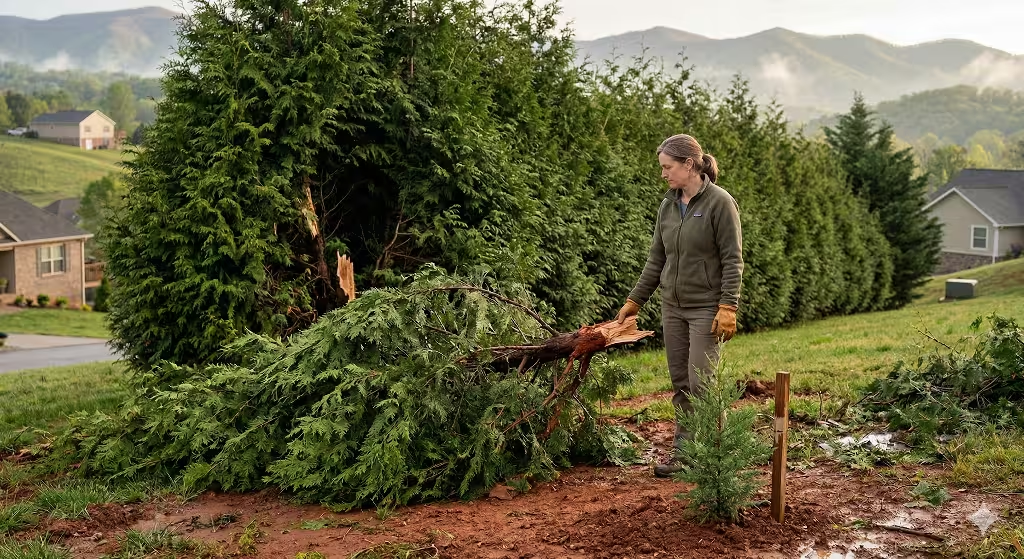
Another common choice is the Leyland Cypress. You see these all over Kingsport and Bristol. They grow very quickly and create a thick, dark green wall. However, we have to give you a warning about these trees for privacy. While they look great for the first ten years, they can be a bit fragile. They are like a star athlete who retires early due to injury. In the humid summers of East Tennessee, Leyland Cypress (Cuprocyparis leylandii) trees can catch diseases like blight and canker. If one tree in your row gets sick, the whole wall can start to turn brown.
This is why we always want to think carefully before putting all their eggs in the Leyland basket.
There is also the Carolina Sapphire (Cupressus arizonica ‘Carolina Sapphire’. This is a type of Arizona Cypress that has a beautiful, silvery-blue color. It grows fast and adds a unique pop of color to the landscape. When we use these trees for privacy, we are adding more than just a screen. We are adding a visual element that makes the yard feel more like a curated garden. They smell wonderful too, like a mix of lemon and pine. For a woman who wants her home to be a sensory sanctuary, these trees for privacy offer a lot of value. They grow about two feet a year and handle our heat very well.
The Technical Trade-off: Speed vs. Strength
It is important to note, that the fast growing trees usually have weaker wood. Think of it like a building. If you rush the framing and use cheap materials, the house might go up fast, but it won’t handle a big storm as well. The same is true for trees for privacy. Fast-growing trees have cells that are spread further apart. This makes the branches more likely to snap during a heavy East Tennessee snowstorm or a high-wind event coming off the mountains.
When you choose fast-growing trees for privacy, you are also signing up for more maintenance. Because they grow so much, they need more water and more food. They can also get “leggy,” which means the bottom branches start to die off because the top is growing so fast it blocks the sun. This leaves a gap at the bottom of your screen. If you want trees for privacy that stay thick from the ground to the top, you have to be ready to prune them regularly. It takes a precise hand to keep a fast-growing hedge looking professional and healthy.
There is also the issue of lifespan. A Thuja might live for forty years, but a slow-growing oak or cedar could live for over a hundred. If you are building a legacy home, you have to decide if you want to be the one replacing your trees for privacy in twenty-five years. I always suggest a balanced approach. We want the privacy now, but we want the beauty to last for the next generation. This leads us to the more patient side of landscaping.
The Long-Lived Legacy: Planting for the Next Generation
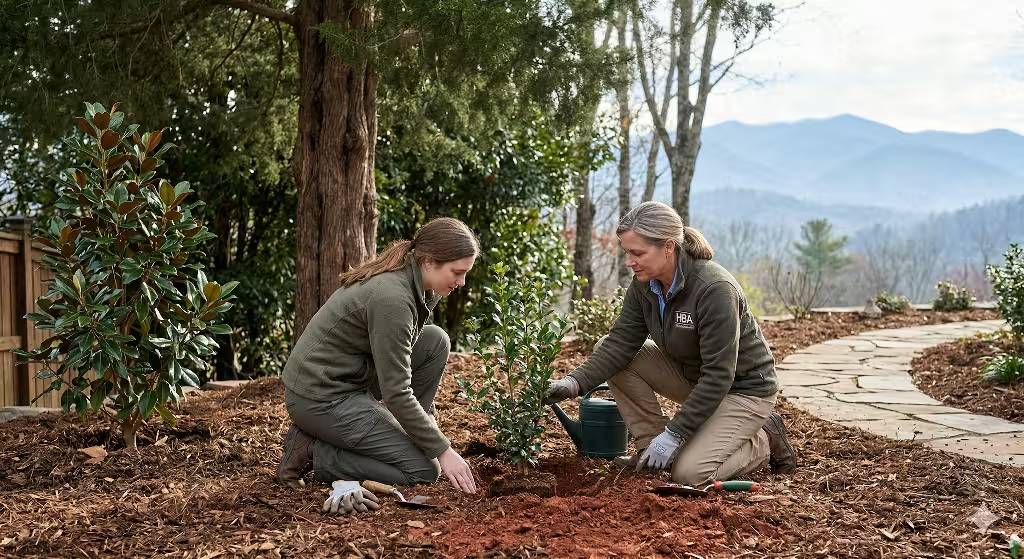
If we look at the trees that have lived in the Tri-Cities for centuries, we see true strength. Long-lived trees for privacy are the marathon runners. They take their time. They build deep, strong roots in our red clay. The Eastern Red Cedar (Juniperus virginiana) is a perfect example. It is a native tree that you see along the fences of old farms in Tennessee. These are fantastic trees for privacy because they are nearly impossible to kill. They handle drought, ice, and wind without complaining. They might only grow a foot a year, but they will be there long after we are gone.
Then there is the Nellie Stevens Holly (Ilex x ‘Nellie R. Stevens’). This is one of my personal favorites for homes. It is elegant and strong. It has glossy, deep green leaves and bright red berries in the winter. It grows about two feet a year, which is a nice middle ground. As trees for privacy, these hollies are excellent because they are very dense. No one is going to see through a row of Nellie Stevens Hollies. They also handle the heavy clay soil in Johnson City better than almost any other evergreen. They have a formal look that fits well with the mountain modern architecture we see trending in 2026.
For a touch of Southern grace, we often look at the Southern Magnolia (Magnolia virginiana). I specifically like the “Little Gem” variety for smaller yards. These trees for privacy offer large, thick leaves and huge white flowers that smell like heaven. Biophilic design is all about connecting with nature, and the scent of a Magnolia on a summer night is a powerful way to do that. They are slow growers, but they represent permanence. They tell the world that this home is built to stay. When you sit in your backyard surrounded by these trees for privacy, you feel a deep sense of calm that a fast-growing plastic-looking hedge just cannot give you.
The “Middle Path” Strategy: A Biophilic Approach
So, how do we solve the problem of wanting privacy now but wanting quality for later? We use a strategy I call layering. In a forest, you don’t just see one row of trees. You see layers of different plants at different heights. We can do the same thing with trees for privacy in your yard. We often suggest planting a row of fast-growing Thujas near the back of the property line and then planting a second row of long-lived hollies or cedars in front of them, but staggered in the gaps.
This creates a deeper, more natural look. It also means that as the fast-growing trees for privacy reach the end of their life, the long-lived trees are already mature and ready to take over. This is much better than having to clear-cut a dead hedge and start from zero. This layered approach also helps with noise. If you live near a busy road in Kingsport, a single thin row of trees won’t do much. But two or three layers of trees for privacy will act like a giant sponge for sound. It makes your backyard feel like a quiet “cocoon,” which is a big trend for home wellness in 2026.
Another part of the “Middle Path” is using curves. Most people plant trees for privacy in a straight line, like soldiers. But nature does not like straight lines. By planting in a gentle curve, we create a more relaxing environment for the human brain. This is a core part of living in a home in a female-centric way. We want the landscape to hug the home. A curved line of trees for privacy feels like an embrace. It softens the hard edges of the house and makes the yard feel much larger and more private than a rigid box.
Local Technical Specifics: Soil, Zone, and Climate
Building and planting in the Tri-Cities requires local knowledge. We are in a transition zone between USDA Hardiness Zone 6b and 7a. This means we get cold enough to kill tropical plants but warm enough to stress out some mountain trees. When picking trees for privacy, you must ensure they can handle both extremes. Our winters can bring “ice storms” that weigh down branches. This is why we avoid the “Willows” as trees for privacy. They grow fast, but their wood is so brittle that one bad ice storm will leave your yard a mess of broken sticks.
Then there is our soil. If you have ever tried to dig a hole in Johnson City, you know about the red clay. It is thick and heavy. When it gets wet, it stays wet. When it gets dry, it turns into a brick. Fast-growing trees for privacy often struggle if the clay is too wet. Their roots can literally drown because the water cannot drain away. Before we plant any trees for privacy, we always recommend a soil test and a drainage plan. Sometimes we have to plant the trees on small mounds to keep their “feet” dry. This is the kind of precision that makes a custom home experience successful.
Wind is the final local factor. Because we are near the mountains, we get strong gusts. Trees for privacy that have a very thin, tall shape can act like a sail on a boat. If they are planted in soft, wet clay and a big wind comes, they can actually tip over. We look for species with a broader base or a more flexible trunk. This is another reason why we like the native Eastern Red Cedar or the hardy hollies. They have evolved to handle the specific moods of East Tennessee weather.
Why Privacy Matters for Female Wellness
We often talk about the home as a place of restoration. For many women, the home is a place where they care for everyone else. They need a spot that cares for them in return. When we use trees for privacy to create a sanctuary, we are protecting the nervous system. Looking at a solid wooden fence can feel like being in a pen. But looking at the movement of leaves in the wind provides “soft fascination.” This is a biophilic term for something that captures your attention without making you tired.
When you have the right trees for privacy, you feel free to be yourself. You might practice yoga on the grass, read a book in your pajamas, or let the kids play without feeling like the whole neighborhood is watching. This sense of being unobserved is vital for true relaxation. By choosing the best trees for privacy, we are not just hiding the neighbors. We are creating a boundary that says, “This is my space, and here, I can breathe.” This is why we are so passionate about getting the landscape right. It is the final layer of a well-built home.
Frequently Asked Questions about Trees for Privacy
People often ask, “What is the fastest growing tree for privacy in Tennessee?” Our answer is almost always the Thuja Green Giant. It loves our climate and can handle the clay if it is not sitting in a swamp. It is the most reliable way to get a ten-foot wall in just a few years. However, I always follow that up by asking how long they plan to live in the home. If it is a “forever home,” we need to add some variety.
Another common question is, “How far apart should I plant Thuja Green Giants for a solid screen?” To get a good wall without the trees crowding each other to death, I recommend five to six feet apart. If you plant them too close, they will fight for nutrients and light. This leads to brown spots and weak trees. If you are using hollies or other trees for privacy, the spacing might be different. You have to look at the “mature width” of the plant. Precision in spacing is the difference between a professional landscape and a DIY mistake.
Another question is whether fast-growing trees are more prone to storm damage. The answer is yes. As I mentioned before, the fast growth creates softer wood. If you live on a ridge in the Tri-Cities where the wind is strong, you should be very careful with Leyland Cypress or Silver Maples (Acer saccharinum). They tend to break. Instead, look for more sturdy trees for privacy like the Arborvitae or the various types of Juniper. They might grow a bit slower, but you won’t be cleaning up branches after every thunderstorm.
Finally, people ask about low-maintenance trees for privacy for small backyards. If you don’t have a lot of room, you don’t want a tree that grows thirty feet wide. In those cases, I recommend “Sky Pencil” Hollies or “Degroot’s Spire” Arborvitae. These are very narrow trees for privacy. They grow up like a pillar and don’t take up much floor space. This lets you have your privacy even on a small city lot in downtown Kingsport or near the university in Johnson City.
Maintaining Your Green Wall
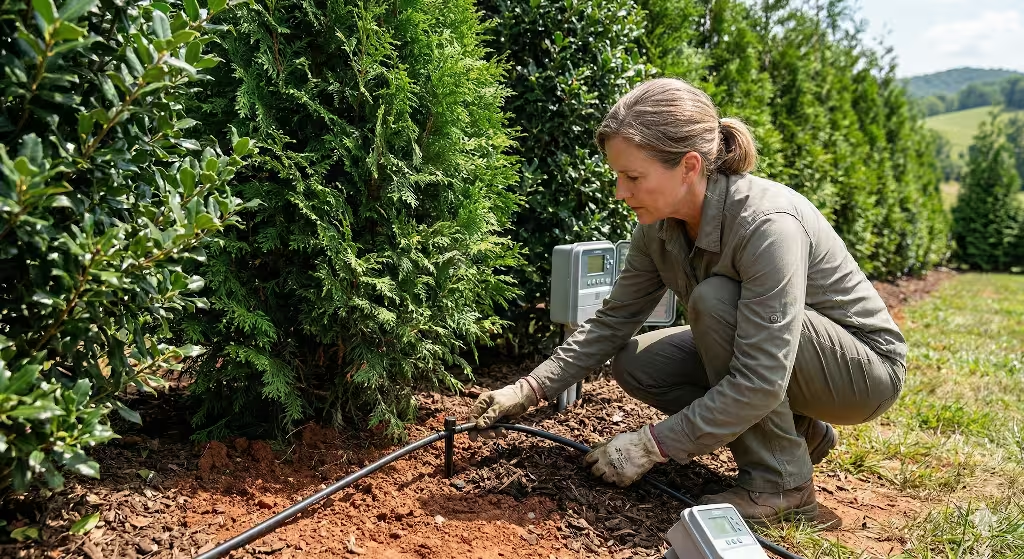
Once your trees for privacy are in the ground, the work is not over. The first two years are the most important. You have to make sure they get enough water, especially during our hot July and August days. I always tell my clients to install a drip irrigation system. It takes the guesswork out of it. It delivers water right to the roots, which is more efficient than a sprinkler. Remember, even drought-tolerant trees for privacy need help while they are young.
Mulching is another key step. A good layer of bark mulch keeps the roots cool and holds in moisture. It also stops weeds from growing and stealing the nutrients from your trees for privacy. It looks clean and serves a vital purpose. Just don’t pile the mulch up against the trunk of the tree like a volcano. This can cause the bark to rot. Keep the mulch a few inches away from the wood.
Pruning is the final touch. You don’t have to prune every year, but a light trim can help the trees stay thick. If you cut the very top of some trees for privacy, it encourages them to grow wider. This helps fill in the gaps between the trees faster. However, you have to know which species handle pruning well. Hollies love it, but some pines do not. Always check with an expert before you start hacking away at your investment.
Integrating Technology into the Landscape
In 2026, we are seeing a big rise in smart landscaping. This fits perfectly with a high-end custom home. You can now get sensors that tell your phone when your trees for privacy need water or fertilizer. There are even AI-powered systems that adjust your irrigation based on the weather forecast for the Tri-Cities. This level of control is great for people who want a perfect yard but don’t have the time to be out there with a hose every day.
We are also seeing “invisible” lighting. Instead of big, ugly floodlights, we use small LED lights hidden in the branches of your trees for privacy. This creates a soft glow at night that makes the yard feel magical. It provides security without making your home look like a prison. It is all about that “cocoon” feeling. When the sun goes down, your screen of trees becomes a wall of soft light that keeps the outside world away.
Designing with Intent: Final Thoughts
Choosing trees for privacy is one of the most important decisions you will make for your home’s exterior. It is about more than just plants. It is about how you want to live your life. Do you want to feel exposed, or do you want to feel nestled in nature? In the Tri-Cities, we have the perfect environment to grow a stunning, living sanctuary. Whether you choose the fast speed of the Thuja or the steady strength of the Cedar, the goal is the same. You are building a place of peace.
As a specialist in biophilic design, I encourage you to see your yard as an extension of your living room. The trees for privacy are your walls. The grass is your carpet. The sky is your ceiling. When you treat the outdoors with the same care as your interiors, the whole home feels more complete. It becomes a place that truly supports your well-being. So, take a walk around your property. Look at where the sun hits and where the neighbors can see. Then, start planning your legacy.
If you are building a new custom home in Johnson City, Kingsport, or Bristol, don’t leave the landscape for last. Think about your trees for privacy during the design phase. Consider how they will frame your views and protect your peace. It is an investment in your mental health and your property value. A home with mature, beautiful trees for privacy is always more desirable than one with a bare yard and a plastic fence.
If you are going to do something, you should do it right the first time. That means picking the right species for our soil, spacing them correctly, and giving them the care they need to thrive. When you follow these steps, you won’t just have a row of plants. You will have a living, breathing part of your home that brings you joy every single day.
The Tri-Cities area is a beautiful place to call home. Our mountains and forests are part of our identity. By bringing that beauty right to your property line with the right trees for privacy, you are honoring the landscape and your own need for a quiet life. I hope this guide helps you make the best choice for your living sanctuary. Remember, the best time to plant a tree was twenty years ago. The second best time is today.
As you move forward with your home building or renovation project, keep the biophilic principles in mind. Look for ways to connect with the earth. Choose materials that feel real and natural. And most importantly, create a space that feels like you. Your home is your refuge. Let your trees for privacy be the guardians of that refuge.