

The Home Office Sanctuary
There was once a family that had a house in Kingsport, having echoes inside that were loud enough to hear a pin drop three rooms away. Most modern homes are built for looks, but they are not always built for silence. When you are working from home, a noisy house is more than just a bother. It is a hurdle to your success.
Think about a typical Tuesday morning. You are on a video call with your team. In the kitchen, the dishwasher is running. In the living room, the kids are laughing at a cartoon. Down the hall, the dog is barking at the mail carrier. All of that noise travels through your house like water through a leaky pipe. Most of that noise is coming right through your office door. Your office door is a structural puzzle. It is the weakest point in your room when it comes to keeping noise out.
Our goal with this article is to show you how to fix this using soundproofing. You do not need to be a professional builder to make your office quiet. You just need to understand how sound moves and how to stop it. We are going to look at your door as a project that requires precision and care. By the time we are done, you will have a workspace that feels like a true sanctuary. This is about more than just muffling a few sounds. This is about creating a place where you can think, lead, and create without any interruptions.
The Science of Silence
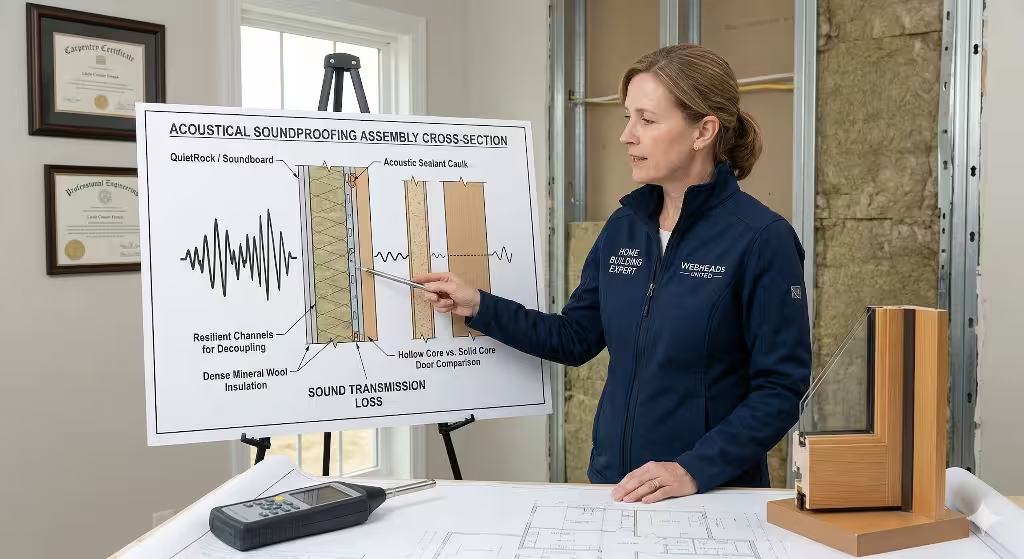
To understand soundproofing, we have to talk about how sound behaves. Sound is not just a ghost that floats through walls. It is a physical wave of energy. It moves by vibrating the air or the objects it hits. When your neighbor mows their lawn, those sound waves hit your house. They vibrate the glass in your windows and the wood in your doors. That vibration then pushes the air inside your office, which is what your ears pick up as noise.
There are two main ways that sound gets into your office. The first is through the air. If air can move from the hallway into your office, sound will follow it. This is why a tiny gap under a door can let in so much noise. The second way is through the material itself. If your door is thin and light, the sound waves can easily shake it. That shaking passes the noise right through to the other side.
In the world of building, we use a term called the Sound Transmission Class. You can think of this as a grade for how well a material stops noise. A thick brick wall has a high grade. A thin piece of glass has a low grade. Most interior doors in Tennessee homes have a very low grade. They are designed to provide privacy for your eyes, but not for your ears. When we talk about soundproofing, we are trying to raise that grade. We do this by adding mass to block the waves and sealing gaps to stop the air.
It is also important to know the difference between soundproofing and sound treatment. Sound treatment is when you add soft things like foam to a room to stop echoes. This makes your voice sound better on a microphone. Soundproofing is when you block noise from entering or leaving the room entirely. For a home office, you usually need a little bit of both, but blocking the noise at the door is the most important part of the job.
Assessment: Is Your Door Worth Saving?
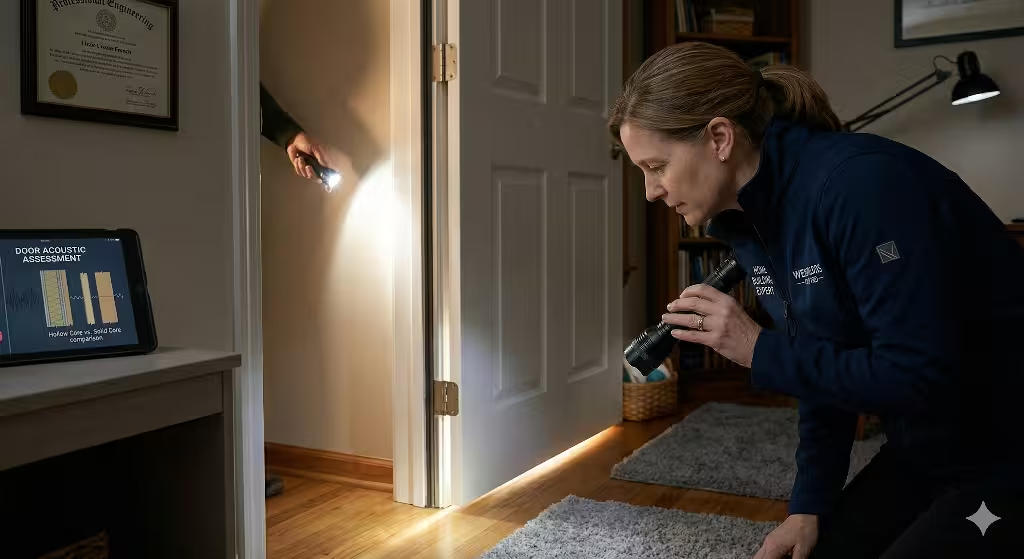
Before you go to the hardware store, you need to look closely at your door. There are often two main types of interior doors. The first is the hollow-core door. This is the most common door in modern subdivisions. If you knock on it and it sounds like a drum, it is hollow. These doors are basically two thin sheets of wood with a cardboard honeycomb inside. They are very light and very bad at soundproofing.
The second type is a solid-core door. These are much heavier because they are filled with solid wood or a dense composite material. If you have a solid-core door, you are already halfway there. These doors have the mass needed to stop a lot of noise. If you have a hollow-core door, you can still improve it, but you will have to work much harder.
The best first step in soundproofing is to simply buy a new solid-core door. It might cost a bit more, but it saves you hours of work later. However, we know that many people want to work with what they already have. To test your current door, try the light test. Turn off the lights in your office and have someone stand in the hallway with a bright flashlight. If you see light shining through the edges or the bottom of the door, you have found your noise leaks. Every bit of light you see is a path for sound to travel.
Check the hinges as well. A heavy door needs strong hinges. If you plan on adding heavy materials for soundproofing, you need to make sure your door can handle the weight. If the door feels loose or squeaks, you should tighten the screws or replace the hinges before you start your project. A sturdy door is a quiet door. Below are 4 steps to soundproof your door.
Step 1: Sealing the Perimeter (The Low-Hanging Fruit)
The easiest and cheapest part of soundproofing is sealing the gaps around the top and sides of the door. This is what we call the perimeter. Even a tiny gap can ruin all your other hard work. Think of it like a bucket with a small hole. No matter how strong the bucket is, the water will still leak out.
For this step, you want to use high-density weatherstripping. This is a strip of foam or rubber with an adhesive back. You can find this at any local hardware store in the Tri-Cities. I prefer the rubber D-shaped gaskets because they last longer and create a tighter seal. You want to stick these strips onto the door stop. That is the thin piece of wood that the door rests against when it is closed.
When you install the weatherstripping, make sure it is clean. Use a little bit of rubbing alcohol to wipe down the wood first. This helps the glue stick better. Press the strip firmly all along the top and the sides. When you close the door, you should feel a little bit of resistance. That means the rubber is being compressed. That compression is what stops the air and the noise.
This is a very effective way to start soundproofing because it is invisible when the door is closed. It does not change the look of your home. It just makes the door fit better in its frame. If you still hear noise coming through the sides after this, you might need to look at the trim. Sometimes there are gaps between the door frame and the wall. You can fill these with a special kind of caulk called acoustic sealant. This caulk stays flexible even after it dries. It won’t crack when the house shifts, which keeps your soundproofing seal strong for years to come.
Step 2: Mastering the Threshold (The Bottom Gap)
The largest gap on any door is usually at the bottom. This is where most of the noise from the rest of the house sneaks in. In many homes, this gap is left wide to help with airflow for the heating and cooling system. But if you want a quiet office, you have to close that gap. This part of soundproofing requires a tool called a door sweep.
There are a few different kinds of door sweeps. The simplest one is a strip of rubber or bristles that you screw into the bottom of the door. As the door closes, the sweep rubs against the floor to seal the gap. This is a great DIY option because it is very easy to install. However, if you have a thick carpet, a standard sweep can be hard to move.
For a more professional feel, we recommend an automatic door sweep. These are a bit more complex, but they are wonderful. When the door is open, the sweep stays up and off the floor. As soon as the door touches the frame to close, a small button is pushed that drops the sweep down to the floor. This creates a perfect seal every time without dragging on your carpet. It is the gold standard for soundproofing a doorway.
If you are not ready to screw anything into your door, you can use a weighted draft stopper. These are long fabric tubes filled with heavy sand or beans. You just lay it against the bottom of the door when you are working. While this is not as effective as a permanent sweep, it is a quick and cheap way to start your soundproofing journey. Just remember that every time you leave the room, you have to put it back in place. For a permanent workspace, we always suggest a fixed solution that works automatically.
Step 3: Adding Mass (The Heavy Lifters)
Once you have sealed all the air gaps, you need to deal with the door itself. If you have a light door, sound waves will vibrate right through it. To stop this, we need to add mass. In the building industry, mass is the best friend of soundproofing. The heavier an object is, the harder it is for sound to move it.
One of the best materials for this is called Mass Loaded Vinyl, or MLV. It is a very heavy, flexible sheet of vinyl that is designed specifically for soundproofing. It is quite thin, but it is as heavy as lead. You can cut it with a utility knife and attach it to the back of your office door. You can use a strong adhesive or even small nails to hold it in place.
Applying MLV to a door can be a bit tricky because it is so heavy. You might need a friend to help you hold it while you fasten it. Once it is on, you can cover it with a piece of thin wood or even a fabric panel to make it look nice. This adds a huge amount of weight to the door, which helps block the deep, low noises like the hum of a television or the rumble of traffic.
Another option for adding mass is using soundproofing blankets. These are much thicker than a regular blanket. they are filled with dense materials that soak up sound. You can hang these on the back of your door using hooks. This is a great choice for people who are renting their home or who don’t want to make permanent changes. While it doesn’t look as clean as MLV, it is very effective.
You can also use acoustic panels. These are often made of compressed fiberglass or special foam. While these are mostly used to stop echoes inside a room, they also add a layer of mass to the door. If you choose panels that have a solid backing, they can help with soundproofing as well. Just make sure you cover as much of the door surface as possible. Any bare spot on the door is a place where noise can get through.
Step 4: Managing Internal Reflections
Even if you have the best soundproofing in the world, you might still feel like your office is noisy. This is often because of reflections. When sound gets into your room, it bounces off hard surfaces like the floor, the walls, and the back of your door. This makes the noise stay in the room longer and feel louder.
To help with this, you should look at the area right around your door. If you have hardwood or tile floors, the sound will bounce right under the door. Placing a thick rug on both sides of the door can make a big difference. The rug will soak up the sound waves before they have a chance to hit the gap. This is a simple but powerful part of a complete soundproofing plan.
You can also add soft materials to the face of the door itself. Fabric panels or foam squares can stop sound from bouncing off the door back into your office. This makes your workspace feel much quieter and more comfortable. It also helps your voice sound more professional when you are on calls.
It is advisable to think about the “echo” of a room. A room with lots of hard surfaces feels cold and loud. A room with rugs, curtains, and soft panels feels warm and quiet. By adding these elements to your door and the surrounding area, you are finishing the job of soundproofing. You are making sure that once you block the noise out, the noise that stays inside is managed properly.
Common Questions Answered about Soundproofing a Home Office Door
Homeowners in the Tri-Cities usually have a few common questions about soundproofing. One of the most common is: “Does soundproofing a door really work?” The answer is yes, but it depends on how much effort you put in. If you only do one thing, like adding a rug, you will only see a small change. But if you seal the gaps and add mass, you can reduce the noise by more than half. That is a huge difference when you are trying to focus.
Another question is: “What is the cheapest way to soundproof a door?” If you are on a tight budget, the best thing to do is focus on air leaks. A roll of weatherstripping and a simple door sweep will cost less than fifty dollars. These two steps give you the biggest “bang for your buck” in soundproofing. They stop the most obvious noise paths for a very low price.
People also ask: “How do I stop noise from coming through my door?” I always tell them to follow the three steps: Seal, Mass, and Dampen. Seal the air gaps. Add mass to the door. Dampen the reflections with soft materials. If you do those three things in that order, you will have a very quiet door.
Finally, people wonder if soundproofing can be done without damaging the door. This is important for renters. You can use removable adhesive strips to hold up foam panels or soundproofing blankets. You can also use draft stoppers that just sit on the floor. You don’t have to drill holes to get a quieter room. There are plenty of ways to improve your office without losing your security deposit.
The Human Touch: Function Meets Fashion

Many women I know don’t just want our homes to work well. We want them to look beautiful too. A lot of professional soundproofing materials look like they belong in a recording studio or a factory. They are often gray, bumpy, or industrial looking. But your home office is part of your home. It should feel like it belongs there.
The good news is that you can hide almost all of your soundproofing work. For example, if you add a layer of mass to your door, you can cover it with a beautiful fabric that matches your curtains. You can use decorative molding to create a frame around acoustic panels. This makes the door look like a piece of custom furniture rather than a DIY project.
We also think about the emotional side of soundproofing. When you have a quiet place to work, you feel more in control. You don’t have to worry about your family hearing your private business calls. You don’t have to get frustrated when the kids are playing in the next room. A quiet door helps maintain a happy home. It creates a clear boundary between your work life and your family life.
When designing a home office, it is helpful to look for ways to make the soundproofing feel natural. Many workers choose rugs that are soft and inviting. We pick door sweeps that have a finish that matches the doorknobs. These small details matter. They turn a construction project into a home improvement project. You are not just building a sound barrier. You are building a space where you can be your best self.
Your Quietest Workday Yet
Soundproofing your home office door is a journey of precision. It starts with a simple look at your door and ends with a space that is truly yours. Generally, the best results come from paying attention to the little things.
Start by sealing those air gaps with good weatherstripping. Move on to the bottom of the door and install a sturdy sweep. If you still need more quiet, add the mass that a solid-core door or a heavy vinyl sheet provides. And finally, soften the room with rugs and panels to stop the echoes.
Every home in our beautiful Tri-Cities area is different. Your house in Kingsport might have older, solid wood doors that just need a little sealing. Your new home in Johnson City might have hollow doors that need a lot of mass. No matter what you are starting with, you have the power to change it.
You deserve a workplace that supports your hard work. You deserve to close your door and feel a sense of peace. Soundproofing is the key to that peace. It is a gift you give to yourself and your career. So, take a deep breath, grab your tools, and start building your sanctuary today. You will be amazed at how much better your day feels when the world finally goes quiet.