

Building a custom home in the Tri-Cities area of Tennessee is a dream for many families. Whether you are looking at a wooded lot in Kingsport or a rolling hillside in Johnson City, there is a lot of work that goes into making that dream real. One of the most important steps in this process is how you plan to run power from the main line to your new front door. This is often where people get a big surprise when they see the bill.
These costs can jump if you do not plan ahead with precision. The road is just where the public utility lines stop, but it is not where your work ends. You have to think about how to run power through your yard, over hills, or under the red clay soil that we have here in East Tennessee.
In 2026, the building industry is changing fast. We have new materials and new rules that affect your budget. When you decide to run power to a new site, you are doing more than just buying wire. You are building an infrastructure that must last for fifty years or more. It is about making sure your home is safe and your lights stay on during a winter ice storm.
It takes a calm hand to look at the site and decide the best path to run power without wasting money. If you are starting this journey, you need to understand that every foot of distance counts. We want to help you see the hidden costs and the smart choices you can make so you do not have any bad surprises later.
Breaking Down the Numbers: 2026 Average Costs
When you look at the budget to run power to your house, the first thing you will notice is that prices are not what they used to be a few years ago. In 2026, we are seeing a national average of about 12,250 dollars for a 500 foot run. However, here in the Tri-Cities, our local power boards like BrightRidge and the Johnson City Power Board have their own specific rates. Generally, you can expect to pay anywhere from 5 dollars to 25 dollars for every foot you have to run power.
The following table shows some typical price ranges for 2026 based on the distance.
| Distance from Road | Overhead Cost Range | Underground Cost Range |
| 100 feet | 500 to 700 dollars | 1,000 to 3,000 dollars |
| 500 feet | 4,000 to 7,500 dollars | 5,000 to 12,500 dollars |
| 1,000 feet | 8,000 to 15,000 dollars | 10,000 to 25,000 dollars |
| 1 mile | 40,000 to 80,000 dollars | 50,000 to 150,000 dollars |
As you can see, the distance makes a massive difference. If you buy a piece of land where the house is tucked far away from the street, the cost to run power can be as high as the price of a small car. Many local utilities in Tennessee give you a credit for the first 100 or 200 feet, which is called an allowance. This helps keep costs down for people living in suburban lots.
But if you are building on a large farm, you will likely have to pay for most of the line yourself. It is vital to call your local utility company before you even buy the land to see what their specific policy is to run power to that specific spot.
Overhead vs. Underground: The Engineering Trade-off
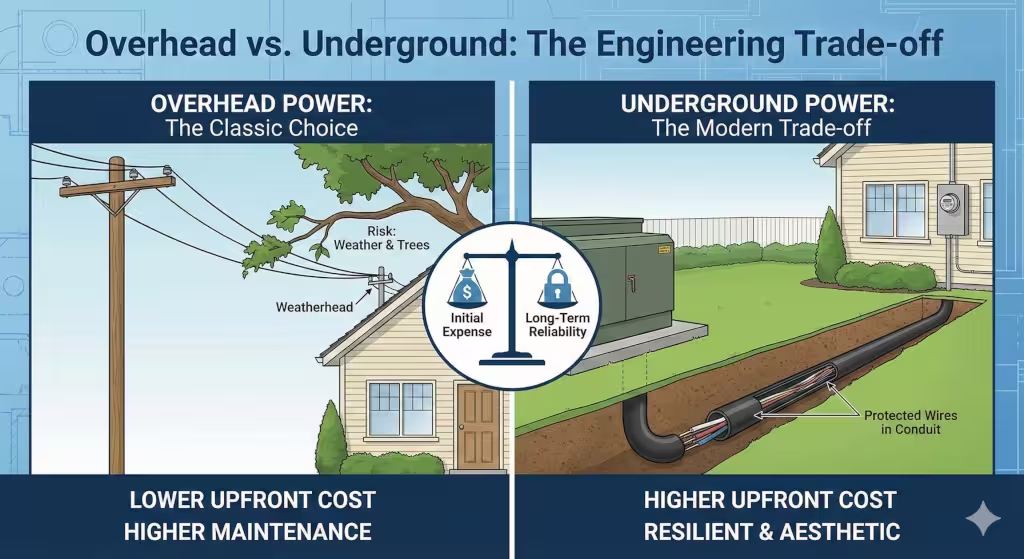
One of the biggest choices you will make is whether to run power through the air or under the ground. Both options have good and bad points. Overhead lines are the classic choice. You see them everywhere on wooden poles. The main reason people choose to run power this way is because it is cheaper. It usually costs about half as much as burying the lines. If you have a lot of rocky soil or trees in the way, it might be easier to run power over them rather than trying to dig a trench.
However, overhead lines have some downsides. In East Tennessee, we get ice storms and heavy winds. A fallen branch can snap a line and leave you in the dark. Also, some people think the poles and wires are ugly and ruin the view of the mountains.
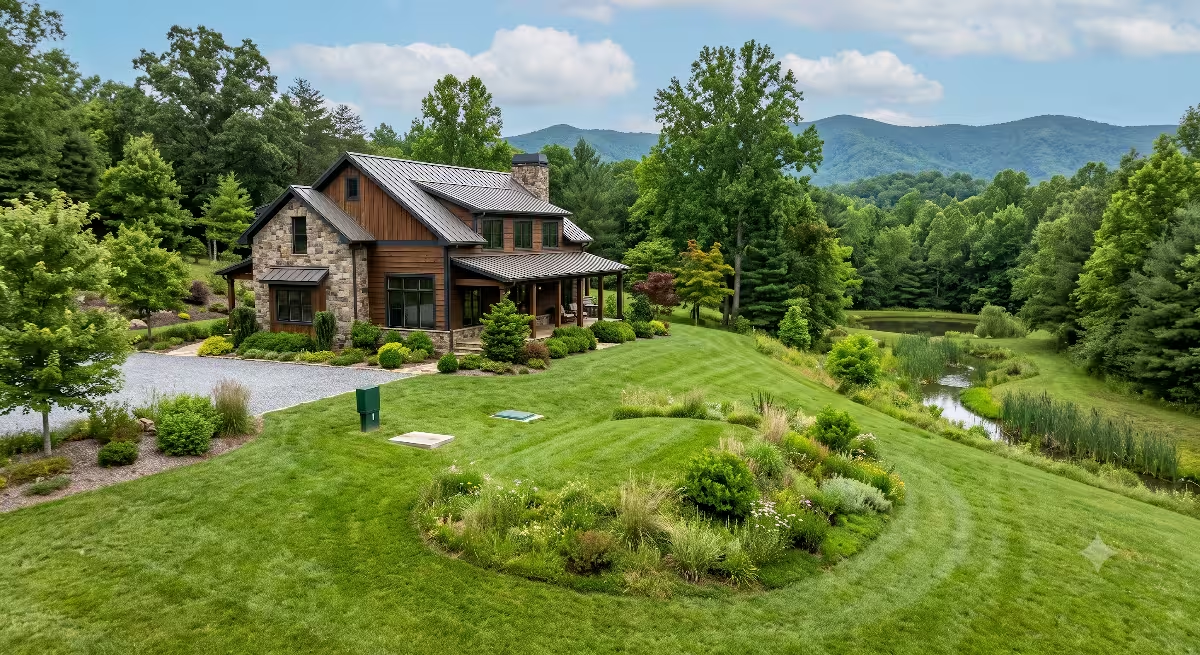
On the other hand, you can choose to run power underground. This is becoming very popular in new developments in Johnson City and Kingsport. When you run power underground, the wires are protected from the wind and ice. It looks much cleaner because there are no wires in your yard. But it is much more expensive to run power this way. You have to pay for a machine to dig a deep trench. You also have to buy a special pipe called conduit to protect the wires from moisture and roots. If the ground is very rocky, the cost to run power underground can skyrocket because the digging takes much longer.
Key Cost Drivers: Beyond the Wire
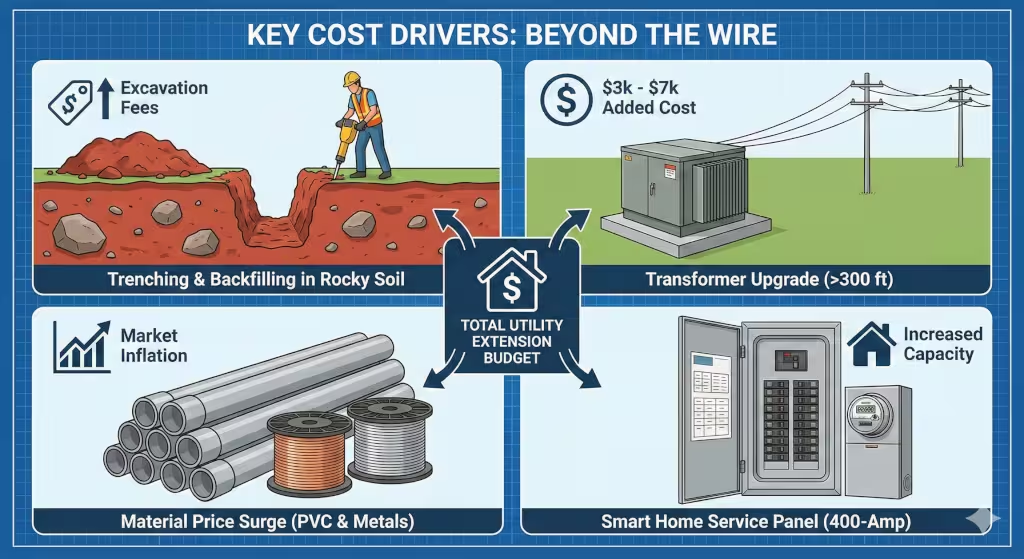
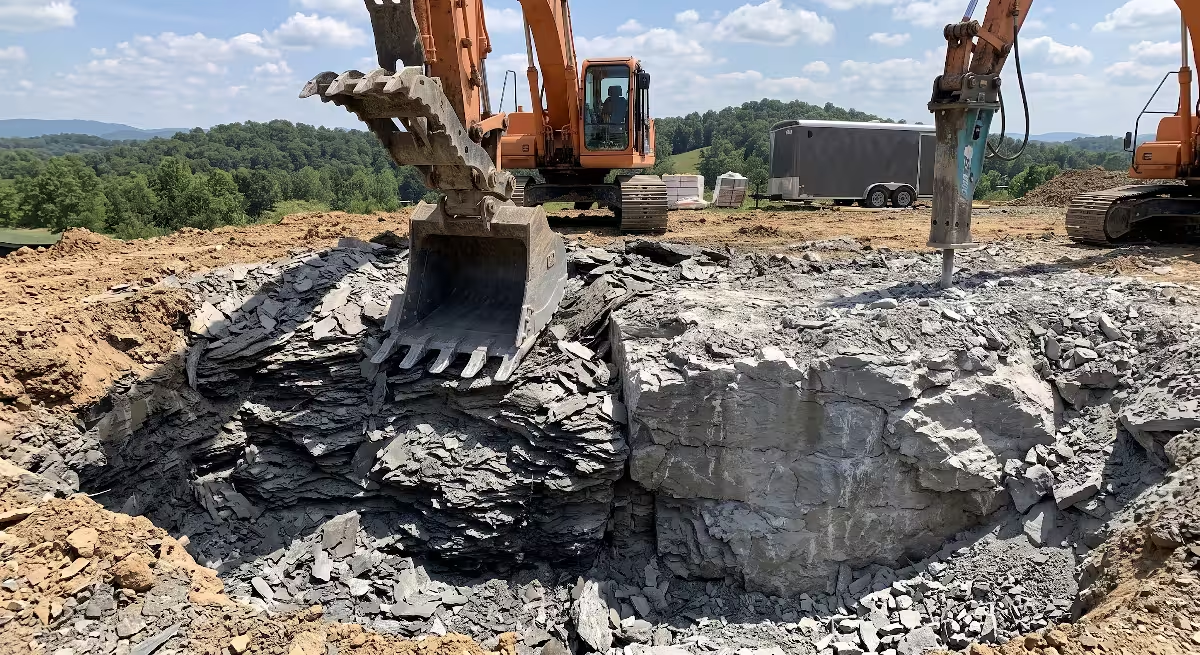
To truly understand how much it costs to run power, you have to look at all the different parts of the job. It is not just the cable itself. The first big driver is trenching and backfilling. In our part of the state, we have a lot of clay and rock. A contractor might charge you 5 to 12 dollars for every foot they dig to run power lines. If they hit a big shelf of rock, they might have to bring in a bigger machine, which adds more to the bill.
Another thing to think about is the transformer. A transformer is that grey box you see on a pole or on the ground. It changes the high voltage from the road into the lower voltage your house uses. If you have to run power more than about 300 feet, the voltage can drop too low. To fix this, the utility might need to install a new transformer closer to your home. In 2026, a new transformer can cost between 3,000 and 7,000 dollars. This is a huge cost that many people forget to put in their budget when they plan to run power to a far-off site.
You also have the cost of the materials like the conduit and the meter base. The conduit is the plastic pipe that holds the wire. Because of inflation in 2026, the price of these plastic pipes has gone up. You also need a meter base on the side of your house where the power company hooks up their equipment. If you want a big house with lots of appliances, you might need a 400-amp service instead of the standard 200-amp service. This bigger equipment will cost more when you run power into your home.
Legalities, Permits, and Local Requirements
You cannot just go out and run power whenever you want. There are a lot of rules you have to follow. First, you need a permit from the state or the local city government. In Tennessee, the Department of Commerce and Insurance oversees electrical inspections. You have to pay a fee for this permit, and an inspector will come out to make sure everything is safe. If you run power and do not follow the code, the inspector can make you rip it all out and start over. That is a very expensive mistake to make.
You also have to think about easements and rights-of-way. An easement is a legal right for the power company to come onto your land to fix the lines. If you have to run power across a neighbor’s yard to get to your house, you will need to get their legal permission. This usually involves a lawyer and a signed document that is filed with the county. Without this, you might not be allowed to run power at all.
It is also important to know that the utility company has a say in where the lines go. They want to make sure they can get their trucks to the equipment if something breaks. If you want to run power through a swampy area or up a cliff where they cannot reach it, they might tell you no. You have to work with their engineers to find a path that works for everyone.
The Details of Modern Materials in 2026
When we talk about the materials needed to run power today, we have to look at what has changed in the market. Copper and aluminum are the two main metals used in the wires that run power from the road. Copper is a better conductor, but it is much heavier and costs more. Most of the long lines that run power over poles are made of aluminum because it is lighter and cheaper. However, inside the conduit that goes to your house, we often see copper being used for the final stretch.
The type of plastic used for the conduit is also important. In 2026, we are using advanced PVC that is stronger and more flexible. This helps prevent the pipe from cracking when the ground freezes and thaws in the Tennessee winters. If your conduit cracks, water can get in and damage the wires that run power to your home. That can lead to shorts or even fires. Paying a little more for high-quality conduit when you first run power is a smart move that saves money in the long run.
Soil Conditions in East Tennessee
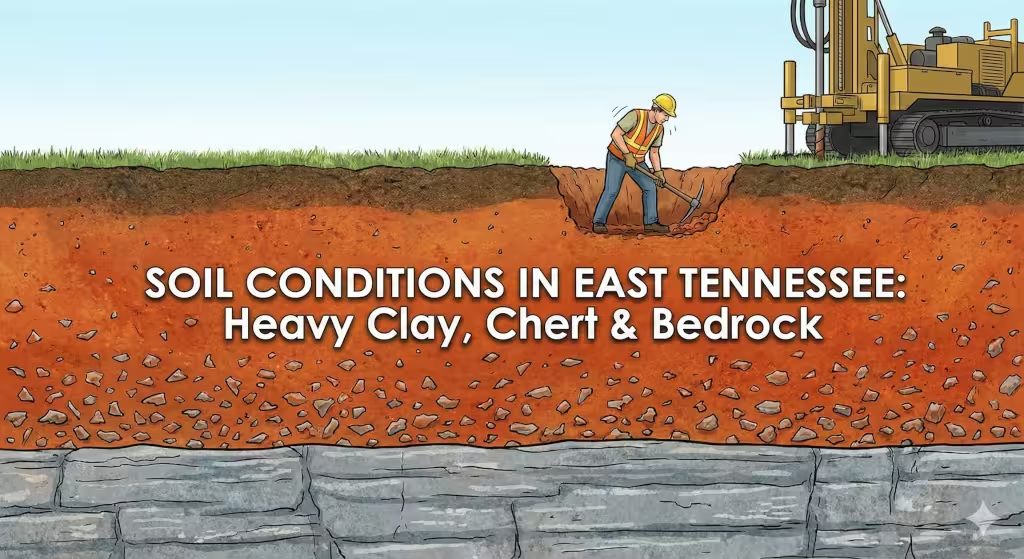
The soil in the Tri-Cities is famous among builders, and not for a good reason. We have a lot of “chert” and heavy red clay. This soil is very hard when it is dry and very sticky when it is wet. This makes it harder to dig the trenches needed to run power underground. In some parts of Sullivan County, you might hit solid limestone just two feet down. If that happens, the cost to run power will go up because the contractor might need a rock saw or even blasting.
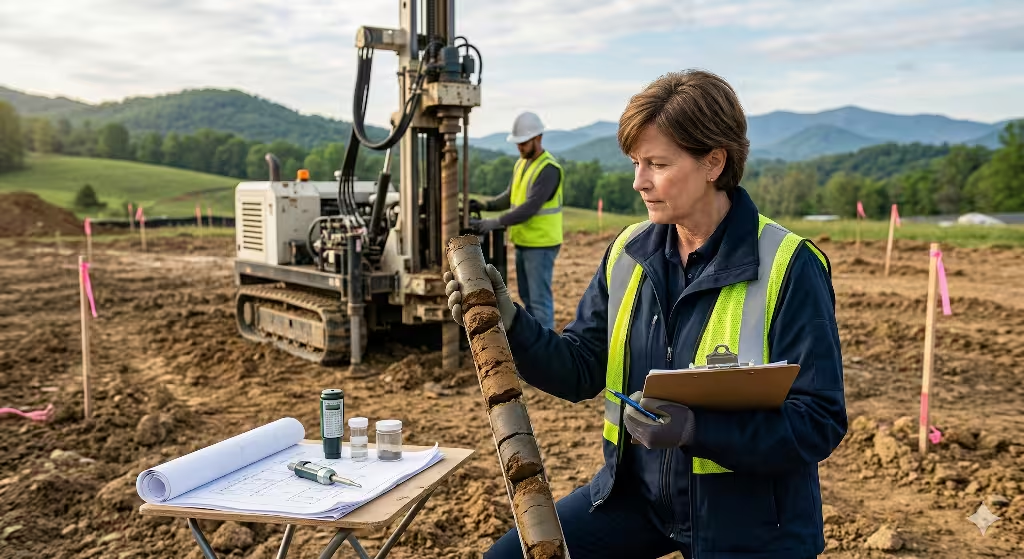
If you are planning to run power, it is a good idea to have a soil test or a “perk” test done on your land. This tells you what is under the grass. If you know there is rock in the way, you might decide to run power overhead instead of trying to dig. This kind of engineering foresight is what separates a successful build from one that goes over budget. A professional builder will always look at the ground before they decide how to run power.
The Role of the Tennessee Valley Authority (TVA)
All the electricity in our area comes from the TVA. They are the ones who generate the energy using dams, nuclear plants, and coal plants. While your bill comes from a local board like BrightRidge, the rules for how they run power are often set by the TVA. In 2026, the TVA has been working to modernize the grid to handle more electric cars and smart homes. This means they are sometimes raising the standards for how we run power to new houses.
For example, they might require better surge protection or more efficient transformers. These upgrades are good for the planet and your home’s safety, but they do add to the initial cost to run power. It is important to stay informed about any new TVA policies that might affect your build. As your home building expert, I keep an eye on these trends so I can explain them to you in simple terms. Knowing why a rule exists makes it easier to accept the cost to run power according to that rule.
Understanding Electrical Load and Service Size
When you run power to your home, you have to decide how much energy you will need at one time. This is called the “load.” In the old days, a 100-amp service was enough for a small house. But today, we have big air conditioners, electric car chargers, and high-end kitchen appliances. Most new homes in the Tri-Cities now use a 200-amp service. If you have a very large home or a workshop, you might need to run power for a 400-amp service.
The size of the service affects the thickness of the wires you need. Thicker wires cost more money. Also, the meter base on the side of your house has to be bigger to handle the extra load. When you sit down with your electrician to plan how to run power, be honest about your future needs. It is much cheaper to run power for a big service now than it is to try and upgrade it five years from now when you buy an electric truck.
Maintenance and Long-Term Reliability
Once you run power to your house, you have to think about keeping it working. If you chose overhead lines, you will need to trim the trees near the poles. If a tree falls on the line that you paid to run power through, you might be responsible for the repair costs if it is on your private property. This is a recurring cost that many people don’t think about.
Underground lines are much lower maintenance. Once you run power under the dirt, you don’t have to worry about trees or wind. However, you must be very careful whenever you do any digging in your yard. You should always call 811 to have your lines marked before you start a garden or a new fence. If you accidentally dig into the line you used to run power, it can be very dangerous and expensive to fix. In 2026, we have better mapping tools to show where you run power, but the old rule of “call before you dig” still stands.
Financing the Utility Extension
Because the cost to run power can be 10,000 dollars or more, many people wonder how to pay for it. Usually, this cost is included in your construction loan. When you go to the bank to get money to build your house, you show them the quotes for all the work, including the job to run power. The bank will then give you the money in stages as the work gets done.
It is a good idea to have a small “contingency fund” in your budget. This is extra money set aside for things you didn’t expect. If the contractor finds a huge rock while trying to run power, you can use this fund to pay for the extra labor. Having that extra bit of money makes the whole process much less stressful. Competent planning means being ready for the things you can’t see under the ground.
Working with Local Contractors
In the Tri-Cities, we have many great local electricians and excavators who know how to run power in our unique terrain. When you are looking for someone to help you run power, ask for references. You want someone who has worked with the local power board before. They will know the local inspectors and the specific rules for your city.
A good contractor will visit your site and walk the path where you want to run power. They will look for hills, creeks, and rocky spots. They should give you a clear, written estimate that shows the cost for labor and the cost for materials. If someone gives you a price to run power over the phone without seeing your land, you should be careful. A precise estimate requires a pair of eyes on the ground.
The Future of Home Power in Tennessee
Looking ahead, the way we run power might continue to change. We are seeing more “microgrids” and local battery storage being used. In 2026, some new neighborhoods are even experimenting with shared solar power. But for the vast majority of us in East Tennessee, the standard way to run power from the road will remain the most reliable choice.
As technology improves, we might see new ways to dig trenches faster or wires that can carry more energy with less heat. But the basic engineering principles of how to run power stay the same. It is about moving energy safely from one point to another. By staying informed and working with experts, you can make sure your home is part of this bright future.
Practical Steps to Take Today
If you are ready to start, the first step is to get your property survey. This shows exactly where your land starts and ends. You cannot run power until you know where the property lines are. Next, call the power board that serves your area. Tell them you are building a new home and need to run power to the site. They will send an engineer to meet you and talk about the best plan.
After you talk to the utility, find a local electrician. They will give you a quote for the part of the job that the power board doesn’t do, like the meter base and the panel. Once you have all these pieces, you will have a clear picture of the total cost to run power. This precision will give you peace of mind as you start your building project.
Things and Terms to Keep in Mind related to Running Power to Your House
As you go through this process, you will hear a lot of technical terms. Here is a quick list of things related to the job to run power that you might encounter:
Secondary Service: This is the wire that goes from the transformer to your house.
Primary Line: This is the high-voltage line that the utility uses to run power along the road.
Voltage Drop: This is when the electricity gets weaker because it has to travel too far.
Backfill: This is the dirt that is put back into the trench after you run power lines.
Service Drop: This is the name for an overhead line that comes down to your house.
Rigid Conduit: A very strong type of pipe used to protect the wires when you run power in high-traffic areas.
By knowing these terms, you can talk to your builder and electrician like a pro. It helps you stay in control of the project and ensures that everyone is on the same page. Precision in communication is just as important as precision in engineering when you prepare to run power to your new home.
Why Quality Matters Most
It can be tempting to try and save a few dollars by using cheaper materials when you run power. But I always tell my clients that this is not the place to be stingy. If a cheap wire fails ten years from now, you will have to dig up your whole yard to fix it. That will cost much more than the money you saved today. When you run power, think about the long term. Use the best conduit and the best wire you can afford. It is an investment in your home’s future.
The homes that have the fewest problems are the ones where the owners focused on quality from the very beginning. From the foundation to the roof, every part of the house matters. And the system you use to run power is the heartbeat of your home. It keeps your food cold, your house warm, and your family connected to the world. Treat it with the respect it deserves, and it will serve you well for a lifetime.
Common Questions About Household Power Lines
A common question I get is how far the power company will run power for free. Every company is different. Some might give you 100 feet for free if you are a new customer. Others might give you a credit based on how much electricity they think you will use. But most of the time, if you are building a custom home on a large lot, you should expect to pay for the majority of the work to run power from the street.
Another question is about going off-grid with solar. Some people think they can save money by not having to run power from the road at all. While solar is getting better, a full system with batteries in 2026 can cost 40,000 dollars or more. For most people, it is still cheaper to pay the 12,000 dollars to run power from the utility company.
People also ask who is responsible for digging the trench. Usually, the homeowner or their builder has to hire a contractor to dig the trench and lay the pipe. Then the utility company comes out to run power through that pipe and hook it up. It is a team effort between you, your builder, and the power board. You have to make sure the trench is deep enough and in the right spot before they will agree to run power.
The “Measure Twice, Dig Once” Philosophy
In the world of home building, being precise is the only way to succeed. When you prepare to run power to your new home, you should never guess. You need to talk to experts and get real quotes. The costs to run power can be high, but they are a necessary part of building a home that is comfortable and safe. By knowing the difference between overhead and underground lines and understanding the cost of things like transformers, you can make a plan that fits your budget.
If you are looking at land in the Tri-Cities, take a moment to look at where the nearest power pole is. That distance is going to dictate a big part of your early construction costs. Don’t wait until the last minute to think about how you will run power to your site. Start that conversation with your builder and the utility company as soon as you can. It will make the whole experience much smoother for you and your family.
Final Thoughts on Your Building Journey
Building a home is a big adventure. It can be a bit overwhelming at times, especially when you are looking at technical things like how to run power. But remember, you don’t have to do it alone. There are many professionals here in the Tri-Cities who are ready to help. My goal is to give you the information you need to feel confident.
When you finally turn on the lights in your new home for the first time, you will know that all the work to run power was worth it. You will have a safe, reliable home where your family can make memories for years to come. Take it one step at a time, be precise with your budget, and always look for quality. That is the best way to have a great home building experience.