The world has changed quite a bit in the last few years. More people are working from home than ever before. In our part of East Tennessee, we have seen a huge surge in folks wanting their own private space. They call it an “outpost” or a “shoffice”—a shed office. But before you go out and buy a pre-made shed or hire a crew to pour a slab, you need to understand the full picture. Building a detached backyard office is a big project. It is more than just a place to put a desk. It is an engineering project in your own backyard.
The Mental Shift: Why We Look to the Backyard
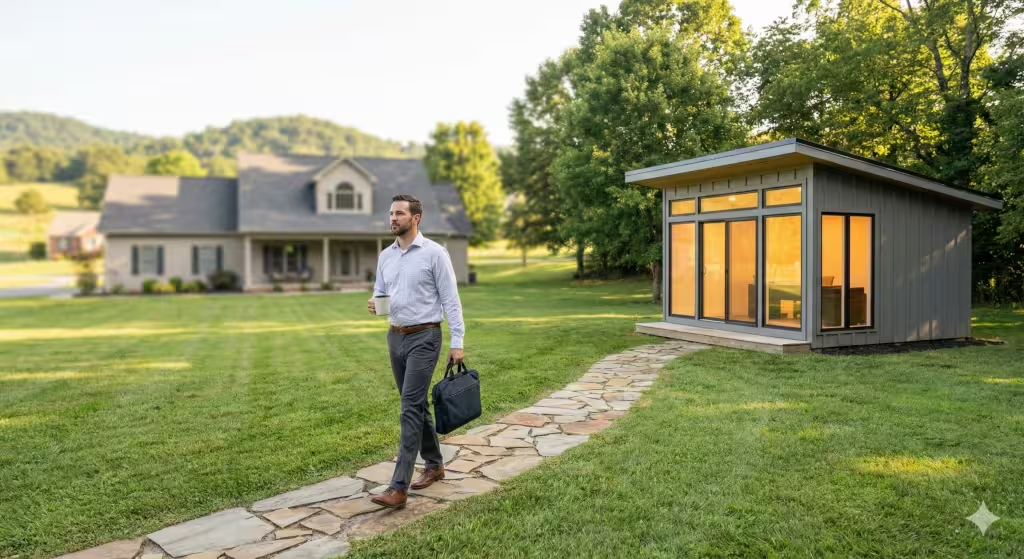
The first thing to think about when weighing the pros and cons of building a detached backyard office is your mental health. Many people try to work from a kitchen table or a spare bedroom. It sounds easy at first. But after a few months, the lines between work and home start to blur. You see the dirty dishes while you are on a Zoom call. You hear the kids playing while you are trying to finish a report.
When you have a detached backyard office, you get a “commute.” It might only be twenty steps across your lawn, but those twenty steps matter. They tell your brain that the workday has started. When you walk back to the house at 5:00 PM, you leave the work behind. This physical gap is a huge part of the pros and cons of building a detached backyard office. For many remote workers in Johnson City, that gap is the only thing keeping them sane.
The Financial Side: Adding Value to Your Tennessee Home
You always have to think about resale value. Does a detached backyard office help you sell your house later? In the Tri-Cities, the answer is usually yes, but with a catch. If the office is built with precision and matches the main house, it adds a lot of value. If it looks like a cheap plastic shed, it might actually hurt your curb appeal.
When we talk about the pros and cons of building a detached backyard office, we have to talk about appraisals. An appraiser in Sullivan County or Washington County looks at “finished square footage.” If your backyard office is heated, cooled, and built to code, it counts as part of your home’s value. This is a big pro. It makes your home stand out in a crowded market. Many buyers today are specifically looking for a home that has a dedicated work space. They are willing to pay more for it.
The Downside: The Upfront Cost
Now, let us look at the “cons” part of the pros and cons of building a detached backyard office. The biggest con is the cost. Building a separate structure is not cheap. You are not just buying walls and a roof. You are essentially building a tiny house. You have to pay for a foundation, framing, roofing, and siding. Then you have the “invisible” costs. These are things like permits, electrical wiring, and high-speed internet.
In the Tri-Cities area, labor and material costs have gone up. If you want a high-quality detached backyard office, you should expect to spend at least $15,000 for a basic setup. If you want a luxury space with a bathroom or a high-end HVAC system, that price can jump to $50,000 or more. This is a major factor when you are looking at the pros and cons of building a detached backyard office. You have to ask yourself if you will be in the home long enough to make that money back.
Customization: Making the Space Your Own
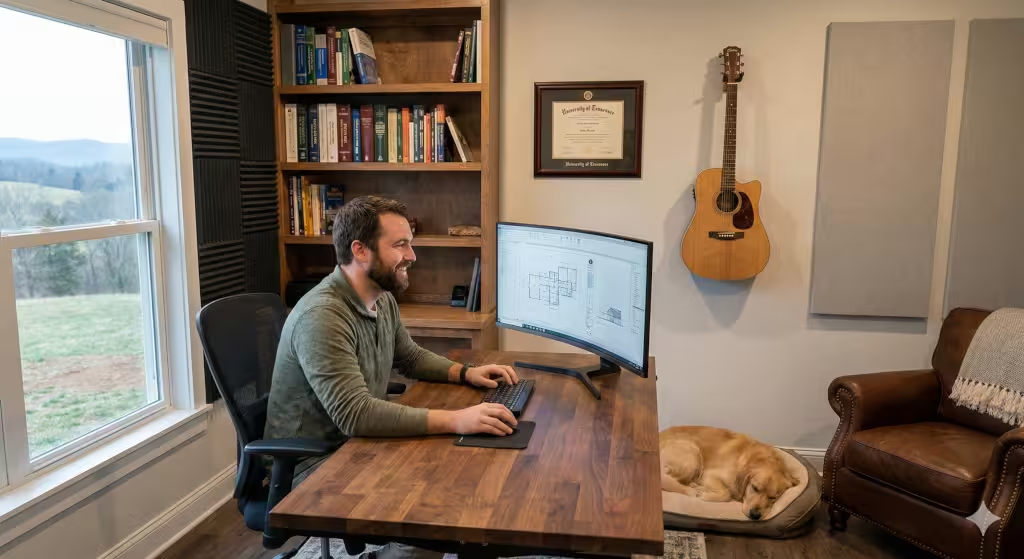
One of the best things about a detached backyard office is that you can build it exactly how you want. In a spare bedroom, you are stuck with the walls that are already there. In a detached backyard office, you can choose where the windows go. You can decide where the plugs should be. You can even choose the type of lighting that helps you focus.
For many engineers, they want a space that is quiet. We can use special “sound-dampening” drywall or extra insulation. This makes the office a “dead zone” for outside noise. No more barking dogs or lawnmowers ruining your meetings. This level of control is a massive benefit when you weigh the pros and cons of building a detached backyard office.
The Technical Challenge: Utilities and Connectivity
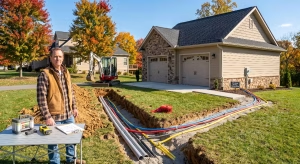
When you decide to build a detached backyard office, you have to figure out how to get power and internet to it. You cannot just run an orange extension cord across the grass. That is a fire hazard and it looks terrible.
You will need to dig a trench. In East Tennessee, our soil is full of clay and limestone. Digging is not always easy. You have to bury your electrical lines in a special pipe called a conduit. You also need to think about your internet. Most people find that their home Wi-Fi does not reach the backyard very well. You might need to run a “cat-6” cable in that same trench or use a “point-to-point” wireless system. These technical hurdles are definitely on the “cons” side of the pros and cons of building a detached backyard office because they add work and cost.
Regional Laws: Navigating the Tri-Cities Rules
Every city has its own rules. This is a part of the pros and cons of building a detached backyard office that many people forget. In Johnson City, the rules might be different than they are in Kingsport or Bristol.
For example, most cities have “setback” rules. This means you cannot build your office right up against your neighbor’s fence. You usually have to stay five or ten feet away from the property line. You also have to worry about “lot coverage.” This is a rule that says you can only cover a certain percentage of your land with buildings. If your house and driveway already take up most of your lot, you might not be allowed to build a detached backyard office at all.
The Impact on Your Yard
When you add a building to your backyard, you lose green space. This is a big deal if you have kids or dogs. You have to think about how the new building will change the flow of your yard. Will it block the sun for your garden? Will it create a place where water puddles up when it rains?
Drainage is a huge issue in the Tri-Cities. We get plenty of rain, and our clay soil does not soak it up very fast. If you build a detached backyard office without thinking about drainage, you might end up with a wet basement in your main house. This is why we always suggest a site plan. A good site plan shows where the water will go. This is a key part of the pros and cons of building a detached backyard office. You want a better workspace, not a flooded yard.
DIY vs. Hiring a Pro
Can you build a detached backyard office yourself? If you have the skills, you can save a lot of money. My certificate in carpentry taught me that building a small structure is a great way to learn. However, if you make a mistake on the foundation or the roof, it will cost you a lot more to fix it later.
Hiring a pro gives you peace of mind. A licensed contractor in Tennessee knows the local codes. They know which permits to pull. They have crews who can get the job done fast. But a pro costs more. This choice is a big part of the pros and cons of building a detached backyard office. If you have more time than money, DIY might be the way to go. If you need it done right and done fast, hire a professional.
Building Materials: Wood, Steel, or Prefab?
In our area, most detached backyard office buildings are made of wood. Wood is easy to work with and looks great. But it also requires maintenance. You have to paint it or stain it every few years to keep the rot away.
Some people are looking at steel frames or even shipping containers. These are very strong and modern. However, they can be harder to insulate. If your office gets too hot in the summer or too cold in the winter, you won’t want to use it. This is a major point in the pros and cons of building a detached backyard office. You need a space that is comfortable all year round. Our Tennessee summers are humid, and our winters can get pretty chilly.
Privacy and Security: Keeping Your Work Safe
Having a separate building means you need to think about security. You probably have an expensive computer and other gear in your office. Because it is a detached backyard office, it is “out of sight” from the main house. You might need to add a security camera or a smart lock.
Privacy is also a factor. If your office has big windows, your neighbors might be able to see right in. You have to think about where you place the building on your lot. This is one of the more subtle pros and cons of building a detached backyard office. You want to feel connected to nature, but you don’t want to feel like you are on display.
The Timeline: How Long Does It Take?
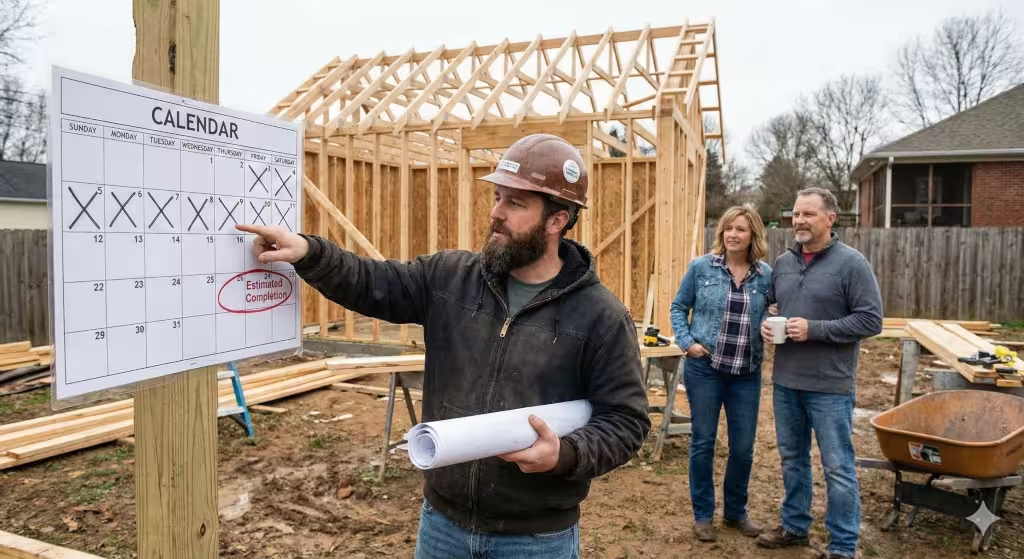
People often think they can have a detached backyard office ready in a weekend. That is rarely the case. Even a simple project can take several weeks. You have to wait for the city to approve your permits. You have to wait for the concrete to dry. You have to wait for the electrician to show up.
If you are a busy person, this wait can be a con. You have to manage the noise and the mess in your backyard for a month or two. This is a key part of the pros and cons of building a detached backyard office. You have to be patient to get a good result.
Understanding Zoning in the Tri-Cities
If you live in Johnson City, you need to look at the “Accessory Structure” rules. Most of the time, if your detached backyard office is under 200 square feet, you might not need a full building permit. But you still need a zoning permit. This ensures you are not building over a utility line or too close to your neighbor.
In Kingsport, the rules can be even more strict. They care about how the building looks from the street. If you live in a neighborhood with a Homeowners Association (HOA), you have another layer of rules. Most HOAs in the Tri-Cities have a say in what color your detached backyard office can be and what kind of roof it has. Navigating these rules is a vital part of the pros and cons of building a detached backyard office.
| City | Typical Permit Cost | Size Limit for No Permit |
| Johnson City | $50 – $200 | Under 120 – 200 sq ft |
| Kingsport | $100 – $300 | Varies by zone |
| Bristol | $50 – $150 | Under 200 sq ft |
Choosing the Right Foundation
When we talk about the pros and cons of building a detached backyard office, we have to talk about what it sits on. In East Tennessee, we have a lot of “heaving” soil. This means the ground moves when it gets wet or freezes.
Concrete Slab: This is the most stable. It feels like a real room. But it is expensive and permanent.
Skids or Blocks: This is cheaper. It allows the building to be moved later. But it can feel “bouncy” when you walk inside.
Screw Piles: These are metal posts that screw deep into the ground. They are great for sloped yards, which we have a lot of in the Tri-Cities.
Each of these has its own set of pros and cons of building a detached backyard office. For a permanent office that adds the most value, a concrete slab is usually the winner.
Your Questions Answered about Detached Backyard Offices
Does a detached backyard office add value to a home?
Yes, it usually does. In the Tri-Cities market, a well-built detached backyard office can increase your home’s value by 5% to 10%. Buyers love the idea of a “bonus space” that is already finished and ready for work. However, the work must be done with permits. If you build it “off the books,” a buyer’s bank might not count it in the appraisal.
How much does it cost to build a detached backyard office?
In our area, you can expect to pay between $100 and $200 per square foot. A 10×12 office (120 square feet) might cost you $15,000 if you do some work yourself. If you hire a full custom builder to make it match your luxury home in Johnson City, you could easily spend $30,000 to $40,000.
Do I need a bathroom in my backyard office?
Adding a bathroom is a huge decision. It makes the space much more useful. But it also makes it much more expensive. You have to run water lines and sewer lines. In the Tri-Cities, this often means digging very deep trenches to stay below the frost line. Adding a bathroom is one of the most debated pros and cons of building a detached backyard office. Most people decide to skip the bathroom to save money and just walk back to the house.
Is a backyard office tax deductible?
Generally, yes, but you need to check with your tax professional. If you use the detached backyard office exclusively for work, you can often deduct the cost of building it and the utilities. This is one of the big financial pros when looking at the pros and cons of building a detached backyard office. Always talk to a local accountant to be sure.
Technical Details: Keeping it Comfortable
When building your detached backyard office, you need to care about the “R-value.” This is how we measure insulation. If you don’t insulate your detached backyard office well, your electric bill will be very high.
In Tennessee, we have high humidity. You need a way to keep the air dry inside your office. A “mini-split” HVAC system is usually the best choice. It provides both heat and air conditioning. It is quiet and takes up very little space. This is a key technical factor in the pros and cons of building a detached backyard office. Without good climate control, your office will just be a fancy storage shed for most of the year.
Lighting and Windows
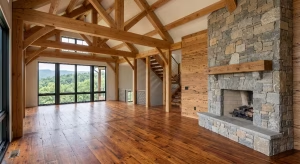
You should think about “natural light” when designing your detached backyard office. In the Tri-Cities, we have beautiful views of the mountains. Why not take advantage of them? Placing your windows to face the north can give you steady light all day without the harsh heat of the afternoon sun.
However, more windows mean less wall space for shelves or desks. This is another small part of the pros and cons of building a detached backyard office. You have to balance the view with the function of the room.
The Importance of Integrity
I have seen many “fly-by-night” contractors come through the Tri-Cities. They promise a cheap detached backyard office and then disappear halfway through the job. This is why I value integrity. When you are looking at the pros and cons of building a detached backyard office, remember that the “cheapest” option is often the most expensive in the long run.
A building with integrity is built to last. It uses rot-resistant materials like pressure-treated wood or fiber-cement siding. It has a roof that won’t leak in five years. It has electrical work that won’t start a fire. When you build with precision, you are protecting your investment.
Final Thoughts: Is it Right for You?
We have covered a lot of ground today. We looked at the mental benefits of a separate workspace. We talked about the costs and the laws in the Tri-Cities. We even looked at the technical side of foundations and insulation.
The pros and cons of building a detached backyard office come down to your personal situation. If you work from home full-time and have the budget, it is one of the best investments you can make. It gives you a place to be productive and professional. It keeps your home life and your work life separate.
On the other hand, if you are planning to move soon or if your yard is very small, the cons might outweigh the pros. The cost and the hassle of construction are real hurdles. You have to be ready for the project.
In our opinion, a detached backyard office is the future of the American home. As we see more people move to the Tri-Cities from bigger cities, the demand for these spaces will only grow. If you build one with precision and integrity, you will have a space that serves you well for decades.
We hope this guide has helped you understand the pros and cons of building a detached backyard office. It is a big decision, but with the right planning, it can be a great one.