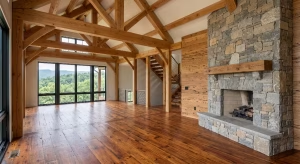
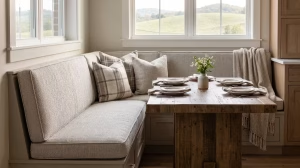
The way we live in Tennessee has changed quite a bit. Today, people in Johnson City and Bristol want every square inch of their house to work hard for them. That is where the flex room comes into play. It is one of the most common things people ask builders about when they sit down to look at blueprints.
Our goal is to help you understand exactly how this space can make your life easier and your home more valuable.
What is a Flex Room in a New House?
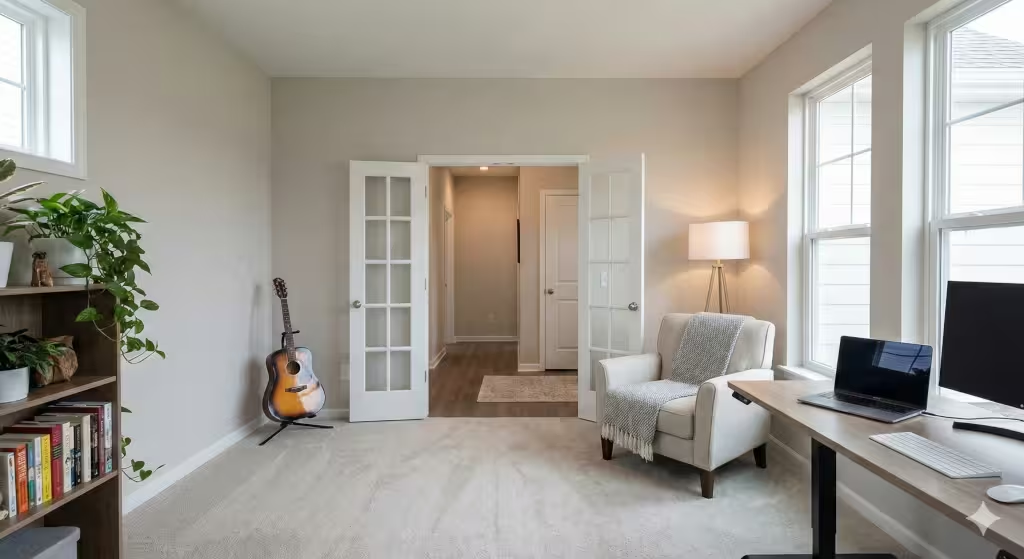
If you are looking at new floor plans, you might see a space labeled as a flex room. To put it simply, a flex room is a finished area in your home that is not designed for just one specific task. It is a bit of a “choose your own adventure” space. Most rooms have a clear job. A kitchen is for cooking. A bathroom is for washing up. A bedroom is for sleeping. But a flex room is different. It is built to be a blank slate.
In the building industry, we call this a multipurpose area. It is a room that can change as your life changes. One year it might be a place for a new baby to sleep. Five years later, it might be a place where you keep your desk and computer. Ten years after that, it might be where you store your fishing gear and hunting clothes. The beauty of this space is that it does not lock you into one way of living. It gives you the freedom to adapt.
When we talk about value, we are talking about more than just money. We are talking about how much you enjoy your home. A house that fits your life like a well-worn glove is a house that feels like a sanctuary. In our part of East Tennessee, we value our independence and our family time. Having a flex room allows you to have a home that grows with you instead of a home that you eventually outgrow.
What Defines a Flex Room?
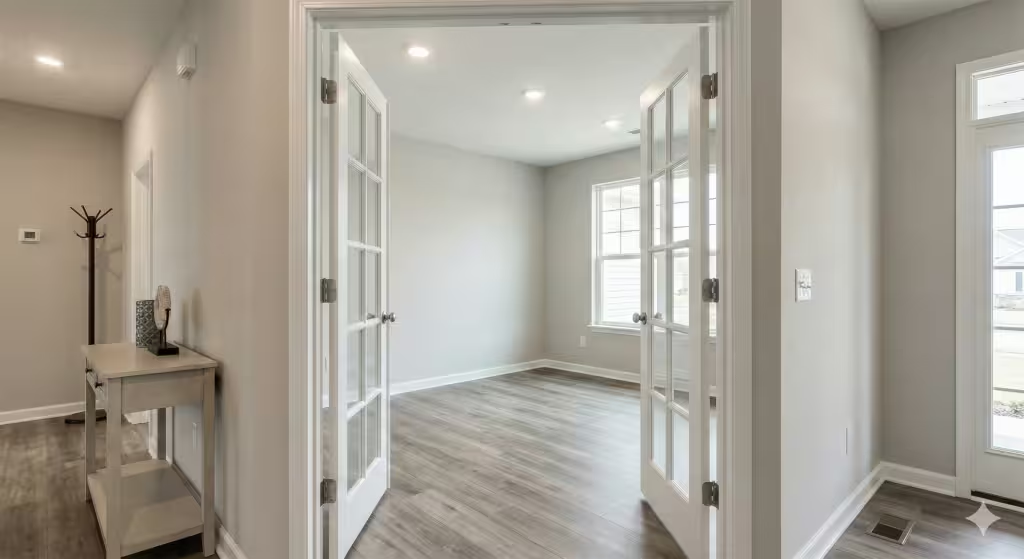
When a builder walks client through a frame-in of a new house, they often ask how a flex room is different from a regular bedroom. There are a few technical things we look for. First, most flex rooms are located in a very convenient spot. You will often find them right off the front door or the foyer. This makes them great for a home office because guests do not have to walk through your whole house to get to your desk.
Another big factor is the closet. In the world of building codes, a room usually needs a closet and a certain type of window to be legally called a bedroom. Many times, we build a flex room without a closet. This keeps the walls smooth and gives you more floor space for furniture. It also makes the room feel more open. Sometimes we use French doors or even sliding barn doors instead of a standard solid door. This lets in more light and makes the space feel connected to the rest of the house.
The design is usually very simple. We use neutral colors on the walls and simple lighting on the ceiling. As builders, we want that room to be a blank slate for you. If we put in too many built-in shelves or specific features, it stops being a flex room and starts being a “dedicated” room. We want to avoid that. We want you to look at that square footage and see whatever you need it to be at that moment.
Popular Ways to Use Your Flex Space
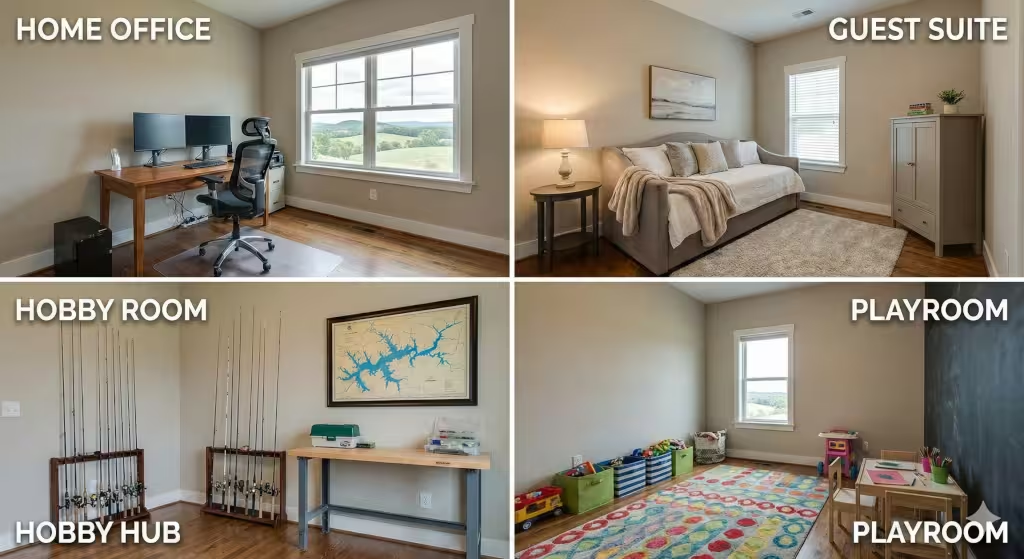
A lot of buyers get very creative with this space. The most popular use right now is the executive home office. More people in the Tri-Cities are working from home than ever before. Having a quiet spot with a door that shuts is a lifesaver. It keeps your work life separate from your family life.
Another great use is what I call the multi-generational suite. We have a lot of families in East Tennessee who take care of their aging parents. A flex room on the main floor can easily be turned into a sitting room or a small bedroom for a parent who can’t walk up the stairs easily. It gives them their own space while keeping them close to the family.
For those of us who love the outdoors, a flex room can be a hobby hub. I love to fish and hunt. Having a room with durable floors where I can clean my reels, organize my tackle, or keep my camo gear is a huge plus. It keeps the “messy” hobbies out of the main living area. I have also seen folks turn these rooms into crafting studios, sewing rooms, or even a small library with floor-to-ceiling books.
If you have kids, the flex room often starts as a nursery or a playroom. It is a place where you can keep the toys tucked away so you don’t trip over them in the middle of the night. As the kids get older, it turns into a “Zoom room” or a homework station. It provides a quiet place for them to study away from the noise of the TV in the great room.
Some people use the space for their health. A fitness studio is a very popular choice. We can install reinforced flooring or extra-thick padding under the carpet so you can use weights or do yoga. Having a dedicated spot for a treadmill means it won’t end up as a place to hang your laundry in your bedroom.
Common Questions: Does a Flex Room Count as a Bedroom?
This is a question beuilders get all the time at the job site. The short answer is: usually not. For a room to be listed as a bedroom when you sell your house, it generally needs to have a closet and an “egress” window. An egress window is just a window big enough for a person to get out of in case of an emergency.
If we build a flex room without a closet, a real estate agent cannot count it as a bedroom on the official listing. However, that does not mean it doesn’t add value. Most buyers today are smart. They see a flex room and they know they can use it as a guest room if they put a nice wardrobe or an armoire in there.
Another question is whether a flex room is the same as a bonus room. In our area, a “bonus room” is usually that big space over the garage. It often has sloped ceilings and is a bit separated from the rest of the house. A flex room is usually on the main floor and is part of the primary living area. They serve similar purposes, but the flex room is often more accessible and easier to use for daily tasks like an office or a den.
When it comes to appraisal value, an appraiser looks at the total square footage of the home. Even if the flex room isn’t a “bedroom,” it still counts as finished living space. In a market like Johnson City or Kingsport, having that extra functional space can make your home much more attractive to buyers than a house with the same square footage but a less useful layout.
Design Tips for Your New Space
When you are planning your build, you need to think about the finishes in your flex room. If you think the room might be a gym or a craft room, I suggest using Luxury Vinyl Plank flooring. It looks like wood but it is very hard to scratch and easy to clean. If the room is going to be a nursery or a cozy library, carpet might be better.
Electricity is another big deal. I always tell my clients to “over-wire” their flex room. You want outlets on every wall. You should also run a Cat6 internet cable to that room. Even with Wi-Fi, having a plugged-in internet connection is much better for video calls if you use the space as an office. We also look at lighting. I like to install recessed “can” lights on a dimmer switch. This way, the room can be bright for working or dim for watching a movie.
Privacy is the final piece of the puzzle. Do you want the room to feel like a part of the hallway, or do you want it to be private? French doors are a great middle ground. They look professional and elegant, but the glass lets you see what is going on. If you want a more rustic Tri-Cities look, a sliding barn door is a great choice. It saves space because the door doesn’t swing out into the room.
Why a Flex Room Helps When You Sell
Even if you plan to stay in your home for a long time, it is always wise to think about resale value. A flex room makes your home appeal to a much wider range of buyers. A young couple might see a nursery. A professional might see a high-end office. A retired couple might see a room for their grandkids to stay in when they visit.
By having a room that isn’t “labeled,” you are allowing every person who walks through the house to imagine their own life there. In the building industry, we call this “future-proofing” your home. Trends change, and the way people use houses changes. A flex room is the best way to make sure your home stays relevant for decades to come.
Building a home is a big investment. It is probably the biggest one you will ever make. It makes sense to build a space that can change as your needs change. Whether you are in Kingsport, Bristol, or Johnson City, the flexibility of your floor plan will be one of the things you appreciate most about your new house.
Our goal is always to make sure you feel competent and informed about your building choices. When we build with precision and integrity, we create homes that last. A flex room is a key part of that smart design. It represents the best of modern building because it puts the power in your hands.
Checklist for Electrical and Lighting in Your Flex Room
It is a smart move to plan this out before the drywall goes up. It is much cheaper to run a wire today than it is to cut into a finished wall two years from now.
When you sit down with your builder or your electrician, you want to be precise. You want to make sure your flex room can handle high-speed internet, heavy power tools, or even just a cozy reading lamp without extension cords running across the floor.
Here is a checklist of the electrical and lighting features we recommend for a truly versatile flex room.
The Flex Room Electrical & Tech Checklist
Power & Outlets
Four-Wall Coverage: Ensure there is at least one outlet on every wall. If the room is larger than 12 feet, add a second outlet to the longest walls.
Dedicated Circuit: If you plan to use the flex room as a home gym with a treadmill or a workshop with power tools, ask for a dedicated 20-amp circuit. This prevents the lights from flickering when the motor starts.
USB/USB-C Outlets: Install at least two outlets that have built-in USB ports near where a desk or a bed might sit. This makes charging phones and tablets much cleaner.
Floor Outlet: If the flex room is large and you plan to put a desk or a sofa in the middle of the space, a floor outlet is a lifesaver. It keeps you from tripping over cords.
Lighting & Atmosphere
Recessed “Can” Lighting: Use 4 to 6 recessed LED lights for general illumination. They provide an even “wash” of light that works for any room use.
Dimmer Switches: Every light in a flex room should be on a dimmer. You want bright light for a home office, but soft light for a movie night or a nursery.
Ceiling Fan Pre-Wire: Even if you don’t want a fan now, have the builder install a “fan-rated” box and a separate switch. In the Tennessee summers, you will be glad you did if that room becomes a workout space.
Sconce Blocking: If you think the room might become a library or a formal den, have the electrician put in “blocking” (wood support) and wiring for wall sconces.
Data & Communication
Cat6 Ethernet Port: Do not rely solely on Wi-Fi. A hard-wired internet port is essential for a stable connection during video calls or gaming.
Coaxial Cable: Even if you stream everything, having a cable “drop” is good for resale value. It allows the next owner to easily hook up a television.
Conduit (Smurf Tube): Ask for a plastic tube to be run inside the wall from the TV height down to the floor. This allows you to hide all your HDMI and power cables inside the wall for a clean look.
A Builder’s Tip on Placement
You need to always think about “The Pivot.” This means looking at the flex room and imagining it turned 90 degrees. If you move your desk from the north wall to the east wall, will you still have an outlet nearby? If the answer is yes, you have planned it correctly.
Checklist for Flooring and Window Treatments in Flex Room
Choosing the right finishes for your flex room is just as important as the wiring. Since this space is designed to change over the years, you need materials that are tough enough for a home gym but look nice enough for a guest bedroom. In our part of Tennessee, we also have to think about the humidity in the summer and the chill in the winter.
Here is our professional checklist for picking out flooring and window treatments that will stand the test of time.
The Flex Room Flooring Checklist
Luxury Vinyl Plank (LVP): This is my top recommendation for a flex room in the Tri-Cities. It is waterproof and very hard to scratch. If the room starts as a playroom for kids and later becomes a place to lift weights, LVP can handle it all. It also cleans up easily if you spill a drink.
Engineered Hardwood: If you want a more high-end look that matches the rest of your house, this is a great choice. It handles the humidity of East Tennessee better than solid wood. It adds great resale value but keep in mind it can scratch if you move heavy furniture or gym equipment around.
Carpet with a Heavy-Duty Pad: If you know the room will mostly be used as a nursery, a library, or a bedroom, carpet is the way to go. It is quiet and warm. Just make sure to get a high-quality “moisture barrier” pad underneath. This keeps the subfloor safe from spills.
Area Rugs: Even if you choose a hard surface like LVP, you should plan for an area rug. A rug lets you change the look of the flex room instantly. It also helps with the sound so the room does not echo during work calls.
Transition Strips: Make sure your builder uses a “flush” transition between the flex room and the hallway. This keeps the floor level and prevents people from tripping as they walk in.
The Flex Room Window Treatment Checklist
Cellular or Honeycomb Shades: These are excellent for insulation. They trap air in little pockets which helps keep the room cool in July and warm in January. This is very helpful if your flex room has large windows facing the sun.
Faux Wood Blinds: I prefer faux wood over real wood because they do not warp when the humidity changes. They give you great control over light. You can tilt them to let in just enough sun to see your computer screen without a glare.
Blackout Curtains or Liners: If you ever plan to use the flex room as a guest room or a nursery, you need a way to make it completely dark. Adding a blackout liner behind your decorative curtains is a simple fix.
Top-Down Bottom-Up Shades: These are a favorite of mine. You can lower the top part of the shade to let in natural light while keeping the bottom part closed for privacy. This is perfect if the flex room is on the first floor near the street.
Layering for Style: Don’t be afraid to use both a blind and a curtain. This gives the flex room a finished, professional look. It also adds an extra layer of soundproofing, which is great if you use the space as a music room or a home office.
A Builder’s Tip on Color
We always suggest keeping the permanent parts of the flex room neutral. Use a light gray or a soft beige for the walls and the main flooring. You can always add color with your furniture or your curtains. By keeping the “bones” of the room simple, you make it much easier for the space to transition from one use to another without needing a full remodel.