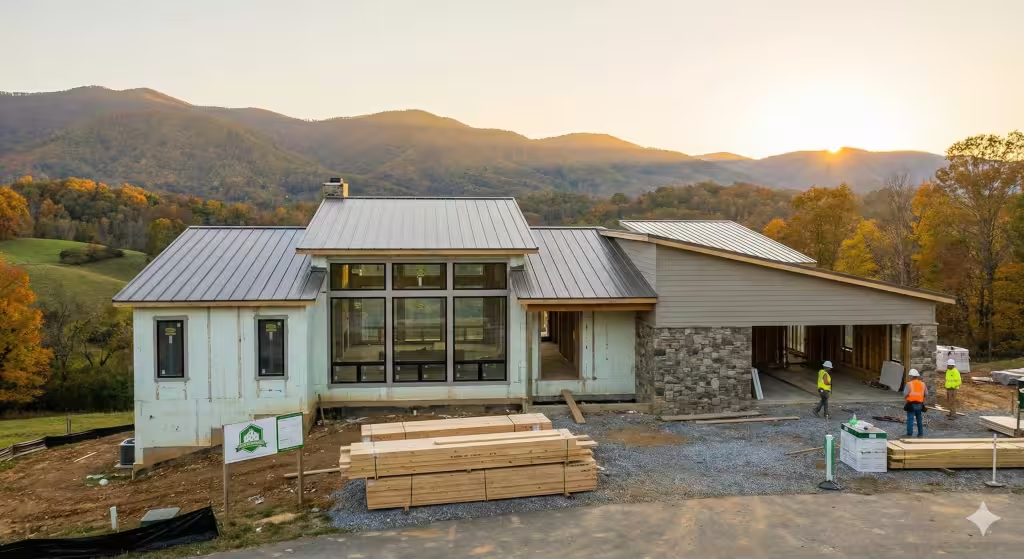


Building a custom home is one of the biggest investments you will ever make. It is an exciting journey, but it can also be a bit confusing if you do not know the steps. One of the most important steps happens before any dirt is moved or any wood is nailed together. That step is creating a residential site plan. Think of this document as your project’s north star. It is the master drawing that tells the city, your builder, and your utility companies exactly where everything will go on your land. Without a solid plan, you might find yourself building too close to a neighbor’s line or in a spot where water will pool around your foundation.
In this guide, we want to walk you through what it costs to get this document ready in the Tri-Cities area. We will help you understand the fees, the rules, and the professional help you will need so you can build with confidence and precision.
Why the Site Plan is Your Project’s North Star
A residential site plan is much more than just a simple drawing of a house on a piece of land. It is a technical map that shows how your new home will sit on the earth. It includes the boundaries of your property, the location of the house, and the spots for things like driveways, decks, and even your mailbox. When you are building in the Tri-Cities, the local government needs to see this residential site plan before they will give you a building permit.
This is their way of making sure you are following all the local laws. These laws are called zoning rules. They decide how far back your house must be from the road and how much of your lot can be covered by buildings.
In places like Sullivan County or Washington County, the land is not always flat. We have beautiful hills and ridges, but those slopes change how we build. A residential site plan shows the height of the land, which we call topography. If you do not have a good map of these heights, your builder might run into trouble when they try to pour the foundation.
There have been projects get delayed for weeks because the owner tried to skip a professional survey. By the time they realized the house would not fit on the slope as planned, they had already spent money on materials that did not work. Getting a residential site plan done right the first time is the best way to save money and avoid headaches later.
Breaking Down the Cost of a Residential Site Plan
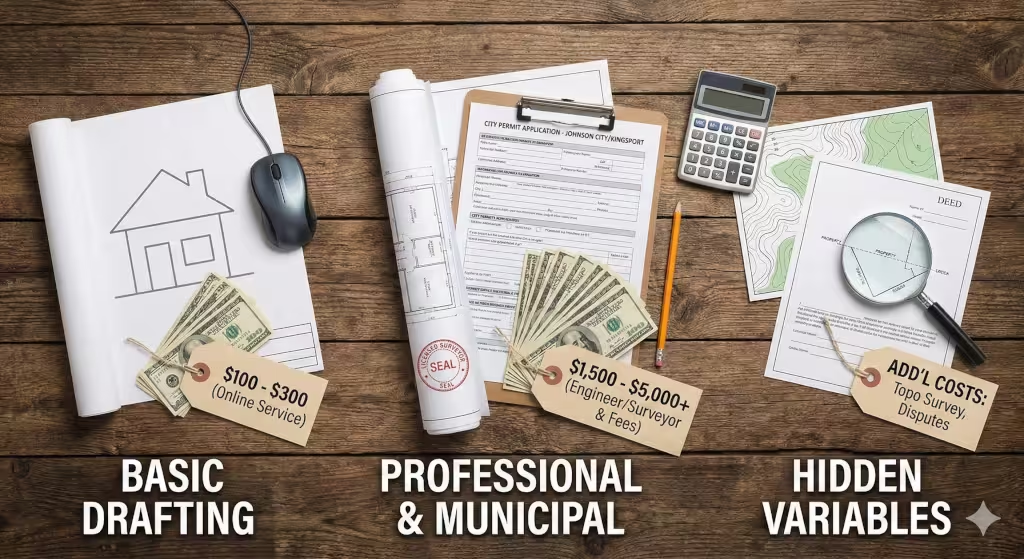
When people ask about the cost of a residential site plan, they are often surprised at the range of prices. You can find very cheap options online, or you can hire a high-end engineering firm. The right choice depends on what you are building and where you are building it.
If you are just putting up a small shed or a fence, you might be able to use a basic residential site plan that costs between $100 and $300. These are often made using satellite photos and existing records. They are great for simple permits where the city does not need a lot of technical data.
However, if you are building a custom home in the Tri-Cities, you will likely need a professional residential site plan created by a licensed land surveyor or a civil engineer. This type of plan usually costs between $1,500 and $5,000.
Why is it so much more? It is because a professional has to actually visit your land. They use special tools to find the exact corners of your property. They also look for underground pipes and wires. This residential site plan is “stamped,” which means a licensed professional has signed off on it. This stamp tells the city that the plan is accurate and safe. If you building a custom home, this fee is an investment in your peace of mind.
Professional Drafting Fees
The drafting part of the residential site plan is where the lines are drawn. A drafter takes all the numbers from the surveyor and puts them into a computer program. They add the shape of your house and the layout of your driveway.
If you hire a solo drafter, you might pay a few hundred dollars. If you hire a full engineering firm to handle the whole residential site plan, the drafting is usually included in their total price. In 2026, the cost for high-quality digital drafting has stayed fairly steady, but the expertise of the person doing the work is what you are really paying for. You want someone who knows the specific rules for Johnson City or Kingsport so they do not make a mistake that gets your plan rejected.
Municipal Application and Review Fees
Once your residential site plan is finished, you have to turn it in to the local planning department. They do not work for free. Each city in the Tri-Cities has its own fee schedule. In Johnson City, for example, the fee to review a residential site plan for a standard home is often around $55 to $250. This fee covers the time it takes for a city worker to check your plan against the local laws. In Kingsport or Greeneville, the fees might be a little higher, ranging from $300 to $450.
These fees are separate from the cost of the building permit itself. It is important to remember that these are non-refundable. If your residential site plan is rejected because it was not done correctly, you might have to pay the fee again when you turn in the fixed version.
The Hidden Variables in Site Planning
There are always things that can pop up and add to the cost of a residential site plan. One big one is a topographic survey. Because East Tennessee has so many hills, the city often wants to know exactly how steep your land is. This helps them make sure your driveway will not be too steep for an ambulance or fire truck to climb. Adding this data to your residential site plan can add $500 to $1,500 to your bill.
Another hidden cost can be boundary disputes. Sometimes, the old records at the courthouse do not match what is on the ground. If a neighbor thinks your fence is on their land, a surveyor has to spend more time researching old deeds. This extra work will show up on your bill for the residential site plan.
Factors Influencing Your Total Investment
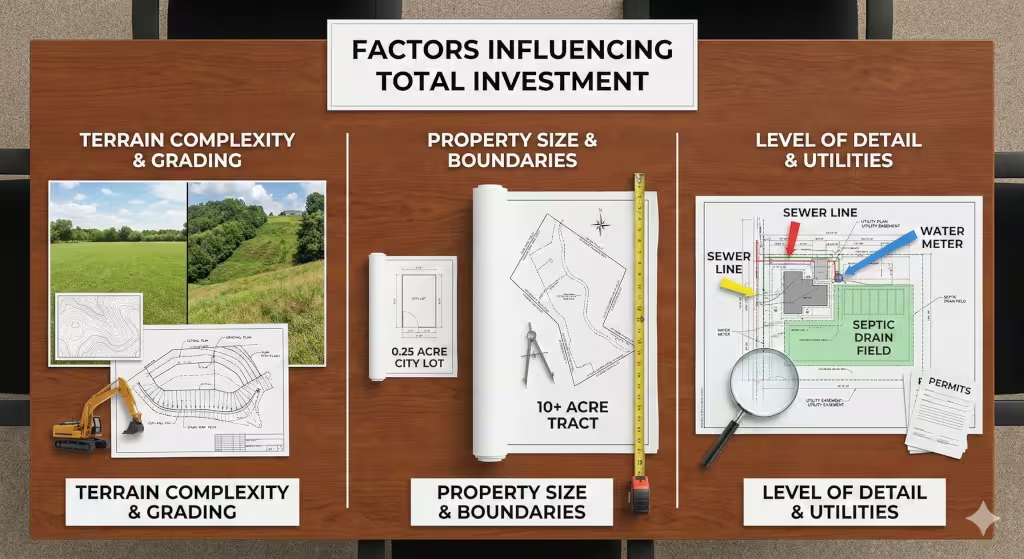
No two pieces of land are the same. This is especially true here in the Appalachian highlands. The price of a residential site plan can change based on the physical traits of the lot. If you buy a flat lot in a pre-made subdivision in Gray, your residential site plan will be simple and cheap. But if you buy five acres on the side of a mountain in Unicoi County, your residential site plan will be much more complex.
Terrain Complexity and Grading
The shape of your land is the biggest factor. If your lot is steep, your residential site plan must include a grading plan. This shows how you will move the dirt to create a flat spot for the house. It also shows where the water will go when it rains. In our area, we have a lot of clay in the soil. Clay does not soak up water very well, so the residential site plan must be very careful about drainage.
If the drainage part of the residential site plan is wrong, you could end up with a wet basement or a yard that turns into a swamp every time it rains. Engineers spend a lot of time on these calculations, which is why a residential site plan for a hilly lot costs more.
Property Size and Boundaries
The size of your land also matters. Surveying a small city lot in downtown Bristol takes much less time than surveying a ten-acre farm. The surveyor has to walk the whole boundary. If the land is covered in thick brush or trees, it takes them longer to see through their equipment. They might have to cut a path just to get a clear line of sight. All that labor adds to the cost of your residential site plan.
Also, larger properties often have more “easements.” An easement is a piece of land that someone else has the right to use, like a power company or a neighbor who needs to drive across your land to get to theirs. Your residential site plan must show every single one of these.
Level of Detail and Utilities
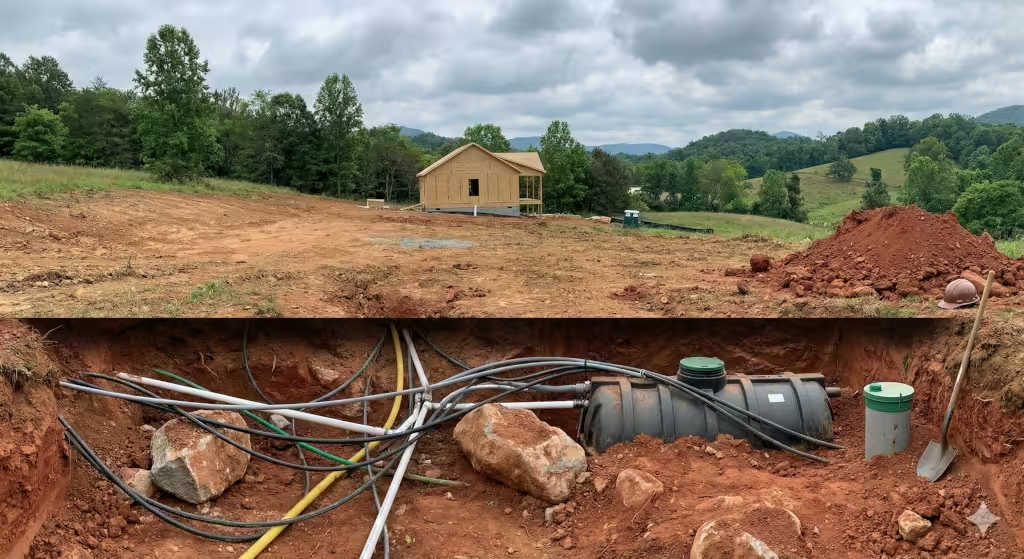
A good residential site plan shows more than just the house. It shows where your water, power, and sewer lines will go. If you are building in a city, you will likely hook up to the public sewer. Your residential site plan will show the exact spot where your pipe meets the city’s pipe. If you are out in the county, you might need a septic system. In that case, your residential site plan must show the “drain field.” This is a large area of land where the septic waste is cleaned by the soil. You cannot build anything on top of a drain field, so your residential site plan has to be very precise about its location.
In Kingsport, the Traffic Department also looks at your residential site plan. They want to make sure your driveway is safe. They check to see if you can see far enough down the road when you are pulling out. If they think it is dangerous, they might make you change your residential site plan. This is why having a pro who knows the local staff is so helpful. They can often spot these problems before you even turn the plan in.
Common Questions About Residential Site Plans
There are a lot of questions from folks who are looking at their first build. People are often looking for ways to save money, and they wonder if they can do some of this work themselves. Here are the answers to some of the most common questions.
Can I draw my own site plan in Tennessee?
This is a tricky question. If you are building a small shed or a simple deck, some cities in Tennessee will let you draw your own residential site plan. You can use a ruler and some graph paper. However, for a new house, the answer is almost always no. Most local building offices require a residential site plan that is signed and stamped by a licensed professional. They want to be sure that the measurements are perfect.
If you draw it yourself and you are off by just a few inches, the whole house might be in the wrong spot. That is a risk that most people should not take. It is possible that your house has to be torn down because it was built two feet over a property line. A professional residential site plan is the best insurance against that kind of disaster.
How long does a site plan take to get approved?
In the Tri-Cities, you should expect to wait about two to four weeks for your residential site plan to be approved. Once you turn it in, it goes to several different departments. The zoning office checks the setbacks. The engineering office checks the drainage. The utility department checks the pipes. If any of them find a problem, they will send it back to you for changes. It is advisable to start your residential site plan as early as possible. Do not wait until you have the lumber delivered to the site. If the approval takes longer than you thought, your project will be stuck before it even starts.
Does a site plan include a soil test?
A residential site plan usually does not include a soil test, but the two work together. A soil test tells you if the ground is strong enough to hold a house. In East Tennessee, we have some areas with sinkholes or very soft soil. You need to know this before you finish your residential site plan. If the soil is bad in one spot, you might have to move the house to a different part of the lot.
Once you know where the good soil is, you can put that spot on your residential site plan. If you are using a septic system, you will also need a “perc test” to see how fast water moves through the dirt. The results of that test will decide where the drain field goes on your residential site plan.
Legal and Development Trends in 2026
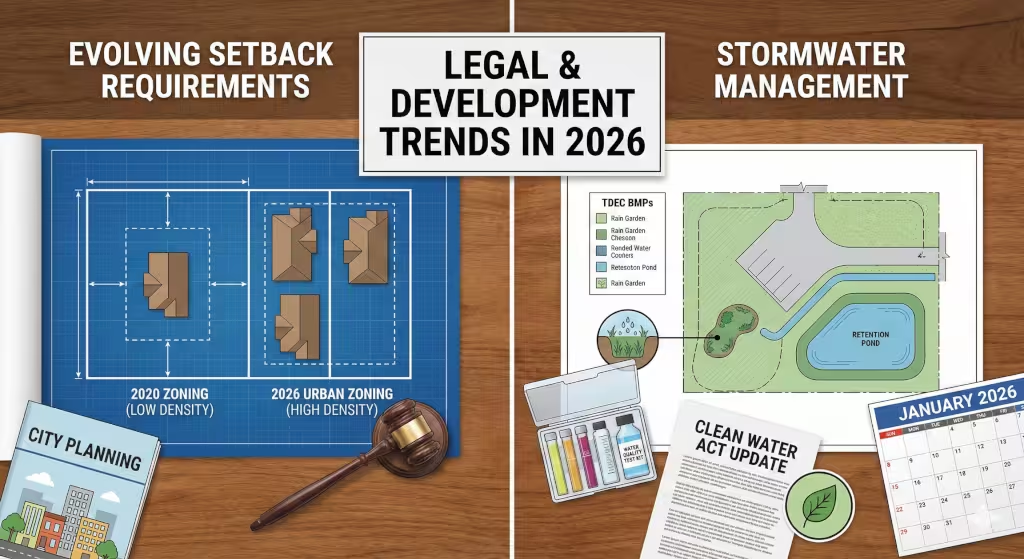
The world of home building is always changing. As we move through 2026, there are a few new trends that affect the cost of a residential site plan in our area. One big change is that our cities are getting more crowded. Because more people are moving to the Tri-Cities, the local governments are changing the zoning rules. In some areas, they are allowing houses to be closer together. This means your residential site plan has to be even more accurate because there is less room for error.
Another trend is a bigger focus on the environment. The Tennessee Department of Environment and Conservation (TDEC) has new rules about stormwater. When you build a house, you replace grass with a roof and a driveway. Rainwater cannot soak into a roof, so it runs off. This runoff can carry dirt into our local rivers, like the Watauga or the Holston. Because of this, your residential site plan might need to include special “Best Management Practices” or BMPs. These could be things like rain gardens or special ponds that hold the water. Adding these features to your residential site plan takes more engineering work, which can increase the cost.
Expert Advice: Maximizing Value While Minimizing Cost
One piece of advice is to follow the “measure twice, cut once” rule. It might feel like you are spending a lot of money on a residential site plan before you even see any progress on your home. But this document is what prevents the most expensive mistakes. If you try to save $500 by hiring a cheap surveyor, you might end up spending $5,000 later to fix a foundation that was poured in the wrong spot.
I also suggest that you network with local experts. When you are looking for someone to create your residential site plan, ask your builder who they like to work with. If the surveyor and the builder have a good relationship, they can talk to each other and solve problems quickly. Also, look for a surveyor who is local to the Tri-Cities. Someone from out of town might not know about a specific city ordinance in Bristol or a local drainage issue in Johnson City. A local pro will have a better relationship with the people in the planning office, which can help your residential site plan get through the review process faster.
Understanding the Details of the Site Plan
To really understand the cost, you need to know what goes into the drawing. A basic residential site plan will show the “footprint” of the house. This is the shape of the house as seen from above. It will also show the “setbacks.”5 These are the invisible lines that mark how close you can build to the edges of your property. For example, in many parts of Johnson City, you must stay at least 30 feet away from the front property line. Your residential site plan proves to the city that you are following this rule.
A more detailed residential site plan will also show the “finished floor elevation.” This is a fancy way of saying how high the first floor of the house will be above the ground. This is very important if you are building in a flat area where flooding might be an issue. Even if you are not in a formal flood zone, a heavy rain in East Tennessee can cause water to move quickly across the land.
Your residential site plan should show that the ground around the house is sloped away from the walls. This keeps your crawl space or basement dry. The cost of adding this elevation data to your residential site plan is well worth it to avoid water damage in the future.
Working with Your Planning Department
Try to be friendly and professional when dealing with the city planning office. They are there to help make sure your house is safe and legal. When you turn in your residential site plan, ask them if there are any common mistakes they see in your neighborhood. Sometimes, there might be a new rule that your surveyor didn’t know about yet. By being proactive, you can often fix your residential site plan before it even goes through the formal review. This can save you weeks of waiting.
In Kingsport, the city has been working hard to make the permit process easier. They have online tools where you can upload your residential site plan and track its progress. Using these tools can save you trips to the city hall. However, you still need to make sure your residential site plan is complete. If you forget to show the location of your trash cans or your air conditioning unit, the city might send the residential site plan back to you. Little details matter when you are looking for a smooth experience.
Planning for the Future
When you are thinking about the cost of a residential site plan, think about your future plans too. Are you planning to add a pool or a detached garage in five years? If so, you should put those items on your residential site plan now. Even if you don’t build them right away, having them on the approved residential site plan can make it much easier to get a permit later. It shows the city that you have a long-term plan for your property. Plus, it ensures that you don’t build your house in a spot that makes it impossible to add that pool later.
Building a custom home in the Tri-Cities is a wonderful adventure. We have some of the best views and the friendliest neighbors in the country. By taking the time to get a professional residential site plan, you are setting yourself up for success. You are ensuring that your home is safe, legal, and built to last. I hope this guide has helped you understand the “why” and the “how much” behind this important document. Remember, the best home building experience starts with a great plan.
Technical Accuracy and Terminology
In the world of civil engineering, we use many specific terms. On your residential site plan, you might see words like “easement,” “encroachment,” or “right-of-way.” An easement is a legal right for someone else to use part of your land. An encroachment is when a structure, like a fence or a shed, accidentally crosses a property line. A right-of-way is usually for a road or a sidewalk. Your residential site plan must identify all of these accurately. If your residential site plan fails to show an easement, and you build a porch over a buried power line, the utility company could force you to tear the porch down.
Conclusion and Final Thoughts on Costs
To wrap things up, the cost of a residential site plan in the Tri-Cities is not a single number. It is a range that depends on your land and your project. For a simple addition, you might spend a few hundred dollars. For a complex custom home on a hillside, you might spend several thousand. On average, most clients in Johnson City and Kingsport find that a high-quality, stamped residential site plan costs between $2,000 and $3,500. While that might seem like a lot, it is a small price to pay to protect a project that costs hundreds of thousands of dollars.
As you move forward with your build, keep these points in mind. Look for a local professional. Don’t skip the topographic data if you have a slope. And always be sure to show your utilities and setbacks clearly. If you do these things, your residential site plan will be the key to a smooth and successful building process. You will be able to rest easy knowing that your new home is sitting exactly where it belongs on our beautiful East Tennessee soil.
Key Takeaways for Tri-Cities Homeowners
| Factor | Estimated Cost Range | Why It Matters |
| Basic Site Plan (Online) | $100 – $300 | Good for simple permits like fences or sheds. |
| Professional Survey | $1,500 – $5,000 | Required for new custom homes; ensures legal accuracy. |
| Topographic Data | $500 – $1,500 | Vital for our local hills; prevents drainage and foundation issues. |
| City Review Fees | $50 – $450 | Varies by city; pays for the official government check. |
| Potential Revisions | $300 – $700 | Budget this for changes requested by the planning office. |
Building a house is a big job, but you don’t have to do it alone. By understanding the cost of a residential site plan, you are taking the first step toward being an informed and successful homeowner. I am proud to be part of the building community here in the Tri-Cities, and I am always happy to help explain the technical side of making a dream home a reality.
Whether you are in Bristol, Kingsport, or Johnson City, the rules might be slightly different, but the need for a good residential site plan is the same. It is the foundation of your legal rights as a property owner. It is the guide for your contractors. And most importantly, it is the document that turns a piece of dirt into a place where you can build your life. Make sure you treat it with the respect and care it deserves.