

In this post we will talk about a concept that is vital for anyone looking to build a custom home in our region: the thermal mass of your building materials. Specifically, we are going to look at a thermal mass comparison concrete vs. block to see which one serves as the better “thermal battery” for your living space.
In the world of home building, thermal mass is the ability of a material to soak up, store, and then slowly release heat. Think of it like a giant sponge, but instead of water, it holds onto temperature. For those of us living in East Tennessee, where the sun can be hot in the afternoon and the nights can get quite chilly, understanding thermal mass is the key to a home that stays comfortable without making your air conditioner work overtime. Whether you are looking at a sleek poured concrete wall or a classic concrete block foundation, the choice you make will change how your home breathes and stays warm or cool throughout the year.
The Concept of Thermal Mass as a Battery
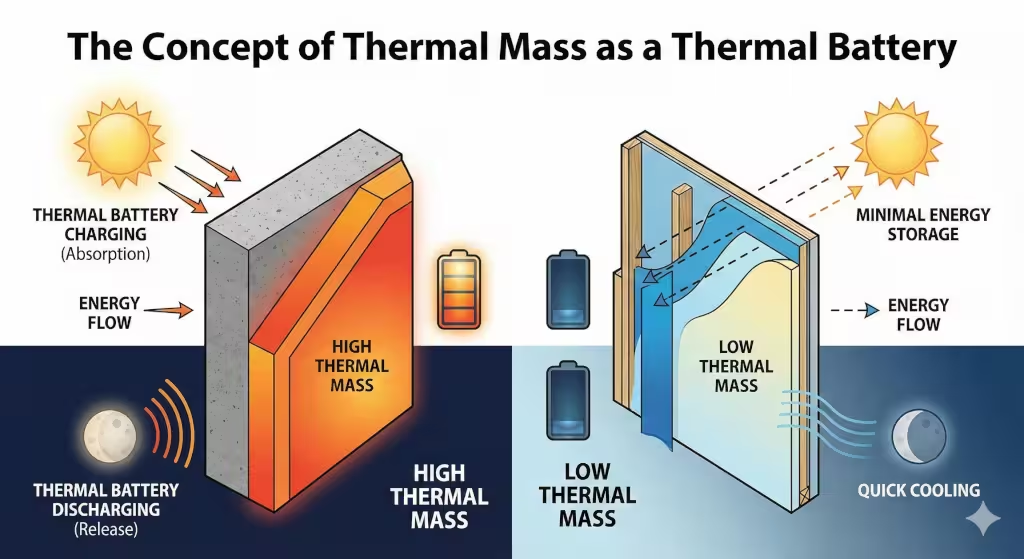
To understand why we care about a thermal mass comparison concrete vs. block, we first have to understand what thermal mass actually does. Imagine a heavy stone sitting in the sun all day. Even after the sun goes down, that stone stays warm to the touch for hours. This is because the stone has a high thermal mass. It took a long time to get hot, and it takes a long time to get cold again.
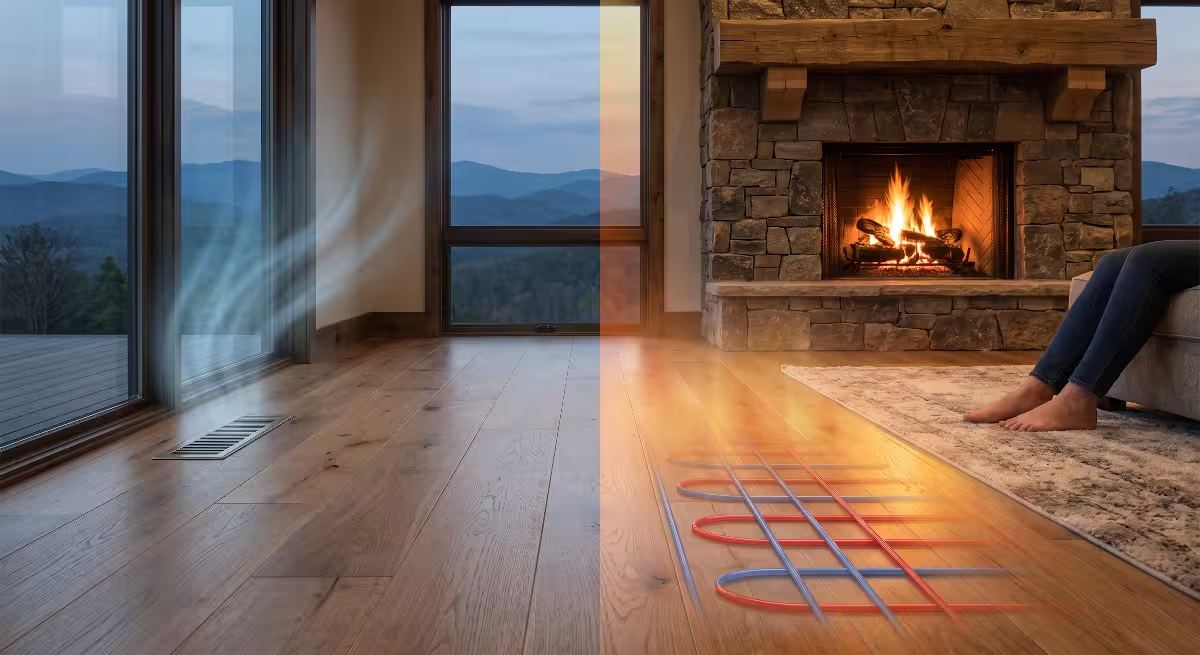
In a home, we use materials with high thermal mass to help keep the temperature steady. If you have a lot of thermal mass inside your house, like a thick concrete floor or a heavy masonry wall, that material will soak up extra heat during the day. This keeps the air inside from getting too hot too fast. Then, at night when the air cools down, the thermal mass slowly lets that heat back out. It acts like a “flywheel” that keeps everything moving at a steady pace rather than jumping up and down in temperature.
In the Tri-Cities, our weather changes a lot. We have humid summers and crisp winters. By using thermal mass correctly, we can “shave off” the hottest part of the day and the coldest part of the night. This means your heater and your air conditioner do not have to turn on and off every five minutes. It makes for a much more peaceful and comfortable home.
Technical Deep-Dive: Thermal Mass Comparison: Concrete vs. Block
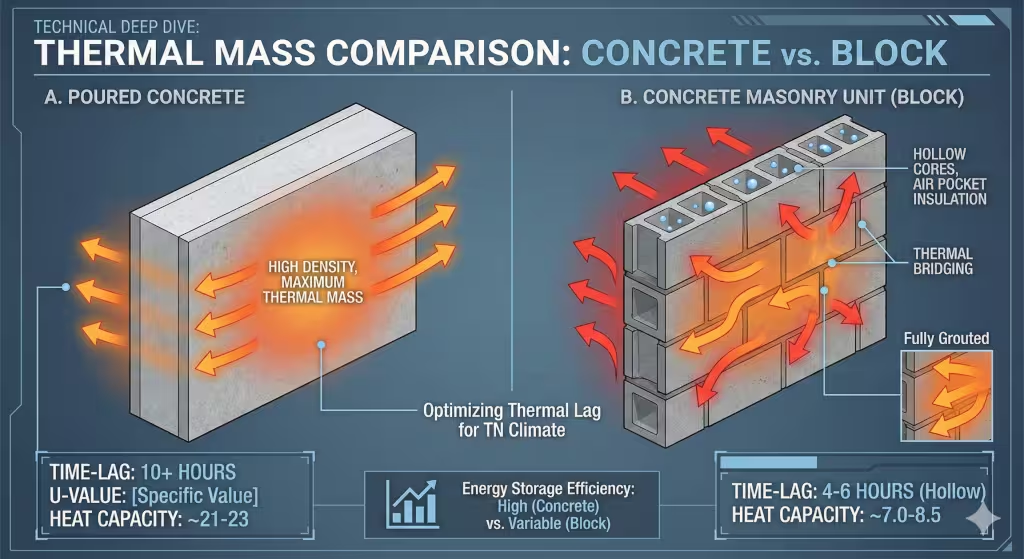
When we get into the technical side of a thermal mass comparison concrete vs. block, we are looking at things like density and “thermal lag.” Density is just a fancy word for how heavy and packed together a material is. Poured concrete is usually very dense because it is a solid, continuous mass of rock and cement. A standard concrete block, or a Concrete Masonry Unit (CMU), is often hollow in the middle.
Because poured concrete is more solid, it generally has more thermal mass per inch of thickness than a hollow block does. This means a poured wall can store more heat energy. However, if you take those concrete blocks and fill the hollow centers with a liquid concrete mix called “grout,” the thermal mass of the block wall goes way up.
Another big part of the thermal mass comparison concrete vs. block is what we call thermal lag. This is the amount of time it takes for heat to travel from one side of a wall to the other. For a thick, solid concrete wall, it might take 6 to 10 hours for the heat of the afternoon sun to actually reach the inside of the house. By the time that heat gets inside, it is already nighttime and the air is cooler, so the extra heat is actually helpful! This delay is one of the best ways that thermal mass helps you save energy.
Poured Concrete: The Seamless Thermal Heavyweight
Poured concrete is often seen as the gold standard when people want the most thermal mass possible. In this method, a builder sets up wooden or metal forms and pours wet concrete into them. Once it hardens, you have a solid, seamless wall.
The Pros of Poured Concrete
The biggest benefit of poured concrete is its density. Because there are no air pockets and no mortar joints, it acts as one giant piece of thermal mass. This makes it very good at stopping air from leaking through the wall, which is a major cause of high energy bills. Poured concrete also has a very high “volumetric heat capacity,” which is a technical way of saying it can hold a lot of heat in a small space.
The Cons of Poured Concrete
The main downside is that it can be more expensive and requires specialized workers to set up the forms. It also uses a lot of energy to create the cement in the first place, which is something people concerned about the environment often think about. Additionally, poured concrete holds a lot of moisture when it is first built, so it can feel a bit damp inside until it fully dries out over a few months.
Most builders in the Tri-Cities recommend poured concrete for basements or for modern homes where the owner wants an exposed concrete look. The thermal mass provided by a thick poured wall in a basement helps keep that lower level at a steady 65 to 68 degrees all year round, even when it is snowing outside in Johnson City.
Concrete Block: The Versatile Building Staple
Concrete blocks, or CMUs, have been used for a very long time because they are easy to transport and easy to build with. In a thermal mass comparison concrete vs. block, the block wall is more of a “customizable” option.
The Pros of Concrete Block
Blocks are very versatile. A mason can build almost any shape or size wall with them. When it comes to thermal mass, you have choices. You can leave the blocks hollow, which gives you a little bit of air insulation but less thermal mass. Or, you can fill the cores with grout and rebar to make them very strong and heavy. A fully grouted block wall has a thermal mass that is very close to a poured concrete wall.
The Cons of Concrete Block
The biggest issue with blocks is the mortar joints. Mortar is the “glue” that holds the blocks together. Sometimes, heat can travel through these joints faster than it travels through the block itself, which is called a “thermal bridge.” This can slightly reduce the efficiency of your thermal mass. Also, unless you fill the blocks with grout, they don’t have nearly as much thermal mass as a solid wall.
For many homeowners in the Tri-Cities, a block foundation is the standard. It works well and is very cost-effective. If we want to increase the thermal mass of a block wall, we often look at adding insulation to the outside so the heavy blocks stay inside the “warm” part of the house.
Insulation vs. Thermal Mass: A Dynamic Duo
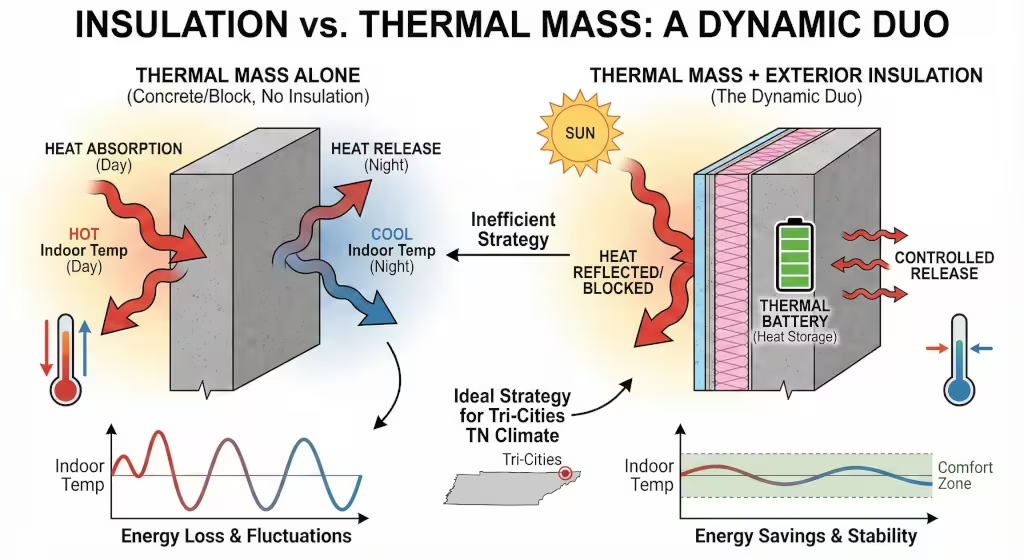
Many people get confused and think that thermal mass is the same thing as insulation. They are actually very different, and you need both for a high-quality home.
Insulation is like a fluffy winter coat. It works by slowing down the movement of heat.13 We measure insulation with something called an “R-value.” The higher the R-value, the better it stops heat from moving.14 Thermal mass, on the other hand, is like a heavy jug of hot water. It doesn’t stop heat from moving as much as it just holds onto it for a long time.
In a well-built home, we use insulation to keep the heat inside and thermal mass to keep the temperature steady. If you have a house with a lot of thermal mass but no insulation, the heat will eventually soak through the wall and escape to the outside. But if you put insulation on the outside of your thermal mass, the heat stays trapped inside the heavy walls. This is the secret to a house that stays warm all night in a Kingsport winter with almost no help from the heater.
Common Questions About Thermal Mass
Does concrete block have better insulation than poured concrete?
Actually, a hollow concrete block has a slightly higher R-value (better insulation) than solid poured concrete because the air trapped inside the block slows down heat flow. However, solid concrete has much higher thermal mass. If you are looking for energy efficiency, the best path is usually to take the solid material and add high-quality insulation to the outside of it.
Is a concrete house colder in the winter?
This is a common myth! A concrete house isn’t “colder”; it is just “slower” to change temperature. If you don’t heat a concrete house, it will feel cold because the walls are soaking up the heat from your body. But once you warm up those heavy walls, they will stay warm for a very long time. A house with high thermal mass feels much more “solid” and comfortable because there are no cold drafts or sudden temperature changes.
How do you calculate thermal mass for a home?
Engineers use a formula that looks at the weight of the material and its “specific heat.” Specific heat is just a measure of how much energy it takes to raise the temperature of a material by one degree. For a regular person, a good rule of thumb is that the heavier and denser the material is, the more thermal mass it has.
Energy Efficiency and the Tennessee Climate
In the Tri-Cities, we are in a transition zone. We aren’t as cold as the North, but we aren’t as hot as the Deep South. This makes thermal mass especially useful here.
One of the biggest benefits of thermal mass in Tennessee is something called “peak shaving.” Most power companies charge more for electricity during the middle of the day when everyone is using their air conditioners. If your home has a lot of thermal mass, your house will stay cool during those peak hours because the heavy walls haven’t warmed up yet. You can “bank” the cool air from the night before and ride through the afternoon without turning on the AC. This saves you a lot of money on your monthly bills.
Also, masonry materials like concrete and block help manage humidity. While they aren’t a replacement for a dehumidifier, they don’t rot or grow mold as easily as wood if they get a little damp. In our humid Tennessee summers, having a home made of durable, high thermal mass materials provides a lot of peace of mind.
Choosing the Best Path for Your Tri-Cities Build
When we finish our thermal mass comparison concrete vs. block, the winner really depends on your goals and your budget. If you want the absolute highest thermal mass and a very modern, airtight home, poured concrete is a fantastic choice. If you want a more traditional build that is flexible and cost-effective, concrete block with grouted cores is an excellent way to get the thermal mass you need.
Regardless of which one you choose, the most important thing is to make sure your thermal mass is paired with good insulation and a smart design. At the end of the day, your goal should be to build a home in the Tri-Cities that is as solid and lasting as the mountains around us. A home with high thermal mass isn’t just a place to live; it is a high-performance machine that keeps your family comfortable and your energy bills low for generations.
A Comparison of Specific Materials to Use in the Tri-Cities of TN
To make things easy to compare, we have put together a table that shows how different wall systems common in our area stack up. This table looks at R-value (how well it stops heat from moving) and the “Thermal Battery” capacity (how much heat it can store).
Thermal Mass Comparison: Concrete vs. Block (8-Inch Walls)
| Wall Material Type | Wall Weight (lb/sq ft) | R-Value (Uninsulated) | Thermal Mass (Heat Capacity) | Thermal Lag (Time Delay) |
| Poured Concrete (Solid) | 100 – 110 | 1.1 – 1.2 | 21.0 – 23.0 | 8 to 12 Hours |
| Concrete Block (Hollow) | 35 – 40 | 2.0 – 2.2 | 7.0 – 8.5 | 4 to 6 Hours |
| Concrete Block (Grout-Filled) | 80 – 90 | 1.9 – 2.0 | 16.0 – 18.0 | 6 to 9 Hours |
| Insulated Concrete Form (ICF) | 100 – 110 | 22.0 – 25.0 | 21.0 – 23.0 | 10 to 14 Hours |
Understanding the Thermal Mass Comparison: Concrete vs. Block
When we look at this data, the first thing people notice is that the “Block Only” wall actually has a higher R-value than the solid poured wall. This is because the air inside the hollow blocks acts as a tiny bit of insulation. However, when we talk about thermal mass, the solid poured wall is the clear winner. Because it is so heavy and dense, it can hold nearly three times as much heat energy as a hollow block wall.
In the Tri-Cities, we often have days where the morning is 40 degrees and the afternoon is 75 degrees. A home with high thermal mass will soak up that afternoon warmth and hold it. By the time the house would normally start to get cold at 10:00 PM, the thermal mass begins to release its stored heat, keeping you warm without you having to touch the thermostat.
Why Thermal Mass is the Secret to Comfort in Tennessee
Our region sits in what builders call “Climate Zone 4.” This means we get plenty of humidity, some snow, and very hot summers. Because our weather is so changeable, thermal mass is a powerful tool. In a lightweight wood-frame house, the temperature inside can jump around very quickly. If a cloud blocks the sun, the house gets cool. If the sun comes out, the house gets hot.
A home with high thermal mass does not have these “mood swings.” It stays steady. This is what I call “thermal comfort.” It is not just about what the thermometer says; it is about how the air feels against your skin. Massive walls like concrete or block provide a steady radiance that makes a room feel more solid and peaceful.
When you use thermal mass correctly, you are using physics to do the work that your HVAC system usually does. In Johnson City, many of our summer nights are cool enough that if you have high thermal mass, you can open your windows at night to “charge” your walls with cool air. During the hot afternoon the next day, those walls will keep the air inside cool even if the sun is beating down on the roof.
A Detailed Look into Poured Concrete: The Heavyweight Choice
Poured concrete is a favorite for many high-end custom builds in Kingsport and Bristol. When we build with poured concrete, we are creating a monolithic structure. “Monolithic” just means it is all one piece.
The Power of Density
The thermal mass of poured concrete comes from its weight. A single square foot of an 8-inch thick concrete wall weighs over 100 pounds. All of that weight is ready to store energy. Because there are no seams or mortar joints, the heat moves through the wall at a very predictable and slow rate.
Air Leakage and Energy
One thing people forget when doing a thermal mass comparison concrete vs. block is air leakage. Poured concrete is naturally airtight. In a block wall, there are hundreds of mortar joints where air might slowly leak through over time. Keeping the air inside your home is just as important as the thermal mass itself. When you combine the airtight nature of poured concrete with its high thermal mass, you get a very efficient building envelope.
The Versatility of the Concrete Block (CMU)
Even though I love the performance of poured concrete, the concrete block—which we also call a CMU—is the backbone of building in the South. It is reliable, it is easy to find, and every local mason knows how to work with it.
Hollow vs. Grout-Filled
If you choose a block wall, you have a big decision to make regarding thermal mass. A hollow block wall is like a series of empty boxes. It doesn’t have much mass. However, we often fill those boxes with “grout,” which is a soupy concrete mix. Once that grout hardens, you have turned your block wall into a solid wall. This significantly increases the thermal mass and the strength of the home.
The Mortar Factor
In a block wall, the mortar joints can act as a “thermal bridge.” This means heat can travel through the mortar faster than the block. While this is a small detail, it is something to consider if you want the ultimate energy-efficient home. However, for most residential basements and foundations in the Tri-Cities, the block is a fantastic choice because it is fast to build and very strong.
Thermal Lag: The Time Machine for Heat
I mentioned “thermal lag” in the table above, and it is a concept I love to explain to my clients. Imagine the sun hitting the west side of your house at 2:00 PM. In a thin wood wall, that heat would be inside your living room by 3:00 PM.
With a high thermal mass wall, like 8 inches of poured concrete, the heat starts moving through the wall very slowly. It might take 10 hours to reach the inside surface. By the time that heat arrives inside, it is 12:00 midnight. Outside, the air has dropped to 50 degrees, and you actually want that heat inside now.
This delay is what makes thermal mass so special. It takes the energy from the hottest part of the day and gives it to you when you need it most at night. This “lag” is the main reason why concrete homes stay so comfortable in the summer without the air conditioner running constantly.
Pairing Insulation with Your Thermal Mass
One mistake I see some people make is thinking they don’t need insulation if they have a “thick concrete wall.” This is not true. Thermal mass and insulation are a team.
In the Tri-Cities, I always recommend putting your insulation on the outside of your thermal mass. Think of it this way: the concrete is your “thermal battery,” and the insulation is the “case” that keeps the energy from leaking out.
If you put the insulation on the outside, the concrete stays the same temperature as the air inside your house. If you turn on your heater for an hour, the concrete soaks up that heat. Even after you turn the heater off, the walls keep the room warm. If you put the insulation on the inside, you are cutting yourself off from that thermal mass, and you lose all the benefits of that “thermal battery.”
The Role of ICF (Insulated Concrete Forms)
If you want the best of both worlds, you should look at Insulated Concrete Forms, or ICFs. These are basically hollow blocks made of foam insulation. We stack them up like LEGOs, put steel rebar inside, and then fill the middle with poured concrete.
This system gives you a massive amount of thermal mass (from the concrete core) and a massive amount of insulation (from the foam) at the same time. In our local climate, an ICF home is incredibly quiet and stays at a very steady temperature year-round. It is one of the most advanced ways to build a home today, and it perfectly solves the thermal mass comparison concrete vs. block debate by giving you the density of poured concrete with built-in insulation.
Energy Savings and the Bottom Line
Building a home with high thermal mass might cost a little more at the start. Poured concrete and grout-filled blocks require more material and more labor than a simple wood-frame wall. However, as an engineer, I like to look at the “lifecycle cost.”
Because a home with high thermal mass stays at a steady temperature, your HVAC system doesn’t have to be as big. You can often install a smaller, cheaper air conditioner because the walls are doing some of the work. Over 20 or 30 years, the savings on your electric bill can easily pay for the extra cost of the concrete. Plus, in the Tri-Cities, these homes are much more resistant to the high winds and storms we sometimes get coming off the mountains.
Maintenance and Longevity of High-Mass Homes
Another reason I often suggest concrete or block for custom homes in East Tennessee is durability. Wood can rot, it can be eaten by termites, and it can burn. Concrete and block are almost indestructible.
A high thermal mass wall doesn’t just save you energy; it saves you time and money on repairs. You don’t have to worry about the “thermal expansion” and “contraction” that causes wood to creak and crack over time. Once a concrete wall is in place, it is there for a hundred years or more. For a family looking to build a “forever home” in Johnson City, this kind of permanence is a huge value.
Common Questions About Thermal Mass Specific to the Tri-Cities, TN
Does thermal mass work in the winter?
Yes! In the winter, thermal mass stores the heat from your furnace or from the sun coming through your windows. It prevents the house from cooling down too quickly when the sun goes down.
Is concrete better than brick for thermal mass?
Both are good, but concrete is usually denser than standard house brick. In a thermal mass comparison concrete vs. block, concrete is often used for the main structure, while brick is used as a beautiful “veneer” on the outside.
Can I add thermal mass to an existing home?
It is hard to add mass to your walls after a house is built, but you can add it in other ways. A heavy tile floor or a large stone fireplace can act as thermal mass inside an existing wood-frame home.
Making the Final Decision
As you plan your custom home in the Tri-Cities, think about how you want the house to feel. Do you want a home that reacts to every change in the weather, or do you want a home that feels solid, quiet, and steady?
Choosing materials with high thermal mass is one of the smartest things you can do for your comfort and your wallet. Whether you go with a solid poured wall or a well-built block foundation, you are building a home that uses the laws of physics to keep you comfortable.
My best advice is to work with a builder who understands how to insulate these walls properly. If you do it right, you will have a home that is cool in the summer, warm in the winter, and built to last as long as the hills of Tennessee.