

In the Tri-Cities, TN are more people are looking for ways to own a home while also making some extra money. This is where the duplex becomes a very smart choice. Whether you want to live in one side and rent the other or just keep it as a full investment, the layout you choose is the most important part of your plan.
In our region, the choice between an up-down and a side-by-side duplex can change your costs, your stress levels, and how much your property is worth later. A duplex is more than just a house with two doors. It is a tool for building wealth, but you have to pick the right tool for the land you have.
Defining the Configurations
When we talk about a duplex, we are talking about a single building that has two separate living spaces. In the Tri-Cities, you will mostly see two types. The first is the side-by-side configuration. Think of this like two small houses that are stuck together at the side. They share one long wall that goes from the ground up to the roof. Each person has their own front door and usually their own driveway.
The second type is the up-down duplex. This is also called a stacked duplex. In this setup, one home is on the first floor and the other home is directly above it on the second floor. You see this a lot in older parts of Bristol or downtown Johnson City where people turned big old houses into two units. It is also a popular way to build on very small pieces of land. Each style has its own set of rules and benefits that you need to know before you start digging a foundation.
Side-by-Side Duplex: The “Home-Like” Experience
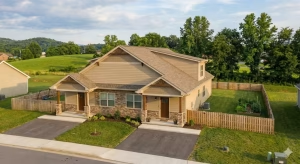
The side-by-side duplex is often considered the “gold standard” for those who want to balance rental income with a high quality of life. When we build these in areas like the suburbs of Johnson City, we aren’t just building a rental unit; we are building two distinct homes that happen to share a single structural line.
Privacy and the Feeling of Ownership
The most significant advantage of the side-by-side arrangement is the sense of autonomy it provides. Unlike an up-down model, each tenant has their own “slice” of the earth and sky. This means no one is walking above your bedroom at 2:00 AM, and you aren’t worried about your television volume bothering the person living below you.
For a buyer in the Tri-Cities, this layout mimics the single-family home experience. Each side usually has its own private driveway and a dedicated front porch. In Kingsport, where neighborhood character is very important, we often design these with “staggered” front entries. This means one front door might be set back five feet further than the other, so you aren’t standing shoulder-to-shoulder with your neighbor when you walk out to get the mail.
Yard Space and Outdoor Living
In East Tennessee, we love our outdoor space. Whether it is for a summer barbecue or a place for a dog to run, the side-by-side duplex wins every time. Typically, the property line is split right down the middle of the backyard. This allows each side of the house to have a private deck or patio.
From a builder’s perspective, this makes the duplex much easier to manage. You can clearly state in the lease that each tenant is responsible for the “upkeep and mowing of their respective side.” This reduces the owner’s maintenance costs and gives the tenants a sense of pride in their living space. It is much harder to assign yard work in an up-down duplex where the green space is shared.
The Physics of Sound and Comfort
When looking at these house it is helpful to focus on the “common wall.” In a side-by-side duplex, we build what is called a “double-stud” wall or a firewall. This is actually two separate walls with a small gap in between, filled with specialized insulation.
Because sound has a hard time traveling through air gaps and thick mineral wool, the noise transfer is nearly zero. In an up-down duplex, you are fighting gravity, sound vibrates through the floor joists. In a side-by-side duplex, you are only dealing with lateral sound, which is much easier to block. This leads to longer-term tenants because people are less likely to move out due to noise complaints.
Maintenance and Long-Term Durability
When you have a side-by-side duplex, your systems are usually mirrored. This means you have two separate HVAC units sitting on opposite sides of the building and two separate electrical “drops.” For a homeowner, this makes troubleshooting very simple. If one side has a power issue, it rarely affects the other.
Furthermore, if you ever decide to sell, a side-by-side duplex can sometimes be “condoed” out, meaning you sell each side to a different owner as a “townhome” style property. This is a common trend in growing markets like Bristol, as it allows for more affordable entry-level homeownership.
Challenges of the Side-by-Side Build
This style of duplex isn’t without challenges. The footprint of this duplex is much wider. If you are building on a hill, which we have plenty of in the Tri-Cities, a wide duplex can be tricky. You might have to “step” the foundation, meaning one side of the duplex sits a few feet higher than the other to follow the slope of the land. This adds to the engineering and concrete costs.
However, even with the higher initial cost for the foundation and the roof, the resale value and tenant satisfaction of a side-by-side duplex usually make it the more “competent” choice for a long-term investment.
Up-down Duplex: The Density Specialist
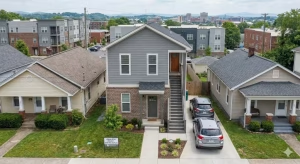
For some people, land is often our most precious resource. When you are looking at a tight lot in the middle of a busy neighborhood in Johnson City or Bristol, a side-by-side duplex might not even fit within the property lines. This is where the up-down duplex becomes your best friend. I call it the density specialist because it allows you to house two families on the same small footprint where a single-family home would usually sit.
Efficiency and the Building Footprint
The biggest strength of the up-down duplex is how it uses space. Because you are stacking the living areas, you only need half the amount of land for the actual building. This leaves more room for a driveway, a small garden, or the off-street parking that local city codes require.
For a builder, this efficiency also shows up in the budget. A duplex that is stacked requires only one foundation and one roof. In the world of construction, the “envelope” (the floor and the top) is where a lot of your money goes. By sharing these two major components, you can often build a stacked duplex for a lower cost per square foot than an attached side-by-side model. This makes it a very attractive option for people who want to maximize their return on investment in areas where land prices are rising.
The Infill Advantage in Tri-Cities
Many of our older neighborhoods near the downtown areas were laid out long before modern building standards. These lots are often very narrow and deep. If you try to build a side-by-side duplex on a fifty-foot wide lot, you will run into trouble with “setback” rules. These are the laws that say how far your building must be from the edge of the property.
The up-down duplex solves this problem. It fits perfectly into these narrow gaps. I have seen many successful projects where an old, crumbling house was replaced by a beautiful, new stacked duplex. This helps clean up our local neighborhoods and provides much-needed housing without changing the “footprint” of the community too much.
Mastering the Vertical Sound Barrier
The success of an up-down duplex depends entirely on how you handle the ceiling of the first floor. If you just use standard wood and drywall, the person on the bottom will hear every footstep, every chair moving, and every dropped spoon from above.
To make a stacked duplex feel high-end and professional, we use technical soundproofing. We install resilient channels, which are metal strips that keep the drywall from touching the wood floor joists directly. This “decouples” the two units. We also add heavy insulation and sometimes even a second layer of special drywall. When done with precision, you can make a stacked duplex nearly as quiet as a standalone house. Without this step, you will likely deal with unhappy tenants and constant phone calls.
Accessibility and the Staircase Factor
There is one practical reality of the up-down duplex that we must address: the stairs. The tenant on the second floor will always have to climb at least one flight of stairs to get home. While this is fine for college students at ETSU or young professionals, it can be a deal-breaker for older residents or people with mobility issues.
When designing these, I suggest putting the more “family-friendly” or “senior-friendly” layout on the bottom floor. The bottom unit of the duplex can be made fully accessible with no steps at all. This allows you to market your building to a wider range of people. You might have a retiree living on the first floor and a graduate student living on the second. This mix can actually create a very quiet and stable environment for your property.
Maintenance Pros and Cons
From a maintenance standpoint, the up-down duplex is a bit of a mixed bag. On the plus side, having a smaller roof and foundation means you have fewer surfaces to worry about. If a hail storm rolls through Kingsport, you only have one roof to inspect and repair for both units of the duplex.
However, the plumbing becomes more complex. In a stacked duplex, the pipes for the upper kitchen and bathroom have to run through the walls of the lower unit. If a leak happens upstairs, it can quickly damage the ceiling of the tenant below. This is why I insist on using the highest quality PEX piping and doing a “pressure test” on all lines before we close up the walls. In this business, being precise during the build saves you thousands of dollars in repairs later.
Technical Comparison Table
To help you see the differences clearly, I have put together this table. It compares the two styles based on what I see every day in the Tri-Cities building industry.
| Feature | Side-by-Side Duplex | Up-Down Duplex |
| Privacy | High (separate yards) | Moderate (shared entries) |
| Noise Level | Low (mostly shared wall) | High (floor/ceiling noise) |
| Land Needed | Wide lot | Narrow lot |
| Build Cost | Higher per square foot | Lower per square foot |
| Tenant Appeal | Families and pet owners | Students and young workers |
| Accessibility | Good for all ages | Harder for seniors |
The Tri-Cities Regulatory Filter (Zoning/Codes)
Before you buy a lot for your duplex, you have to talk to the local planning office. In Johnson City and Kingsport, the rules are very specific. Most areas are zoned for single houses only. You need to find land that is zoned as R-2 or R-3. R-2 usually allows a duplex, while R-3 allows for more units.
The building codes in Tennessee are also very strict about safety. If you build a duplex, you must have a fire wall between the two units. This wall has to be able to stop a fire for at least one or two hours. In an up-down duplex, this means the ceiling of the bottom unit must be fire-rated. This adds to your costs because you need special drywall and sealants.
You also have to think about parking. Most cities in our area require at least two parking spots for every unit in a duplex. If you are building on a small lot, finding space for four cars can be hard. You also will want to check the “setback” rules too. These rules tell you how far the structure must be from the street and the neighbors’ property lines.
Financial and Investment Outlook
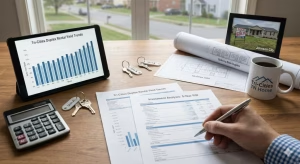
From an investment standpoint, a duplex is one of the best ways to get started. In the Tri-Cities market, we are seeing a high demand for rentals. A side-by-side duplex often sells for more money than an up-down one because it feels more like a house. However, the up-down duplex might give you a better return on your money because it was cheaper to build.
If you plan to live in one side, a duplex is a great way to “house hack.” Your tenant’s rent might cover most of your mortgage.4 In our region, the average rent for a nice duplex is growing every year. This means your duplex will become more profitable the longer you own it.
You also need to think about utilities. It is best to have separate meters for water and power. If you don’t, you have to pay the whole bill yourself and try to get money back from the tenants. This is often a headache. In a new duplex, I always install two of everything: two water heaters, two HVAC units, and two power boxes. It costs more at the start, but it makes them much easier to manage.
Commonly Asked Questions about Duplex Homes
Many people ask if a duplex is harder to sell than a regular house. The answer is that it depends on who is buying. These homes are very popular with investors. If your duplex is in good shape and has steady tenants, it will sell quickly.
Another common question is about soundproofing. People want to know if they can truly make an up-down configuration quiet. You can use things like “resilient channels” and “mass-loaded vinyl” to block sound. These are special materials we put inside the walls and ceilings. They help a lot, but they do not make them completely silent.
People also ask about insurance. Insuring these homes is a bit more expensive than a single home. This is because you have two kitchens and two sets of plumbing. There is a higher chance of a fire or a leak when you have two families living in one duplex building.
Precision Planning for Your Build
Choosing between an up-down and a side-by-side duplex is a big decision. If you have the land and the budget, a side-by-side duplex is usually the better long-term choice for privacy and value. But if you are working with a tight space or a smaller budget, an up-down configuration can be a fantastic way to enter the rental market.
A well-built duplex provides a safe home for two families and a steady income for the owner. It is a win-win for everyone involved. Just remember to do your homework on zoning and soundproofing before you start.
IWhether you are looking at a duplex in the hilly parts of Kingsport or the flat lands near the university, the same rules apply. Take your time, pick the right layout, and your duplex will serve you well for many years to come.
More on Maintenance and Management
When you own one of these homes, maintenance is a top priority. Because the two units are joined, a problem in one can quickly become a problem in the other. For example, if a pipe leaks in the top unit of an up-down duplex, the bottom unit will get water damage very fast. Most builders will recommend high-quality materials for plumbing and roofing. In a side-by-side duplex, the maintenance is a bit easier to split. You can even make the tenants responsible for their own yard work.
Managing them also means being a good neighbor if you live there. You have to be careful about who you pick as a tenant. Since you share a wall or a floor, you will see them often. I always check references and do background checks. A good tenant makes owning a duplex a dream, but a bad one can make it a nightmare.
Why the Tri-Cities is Great for a Duplex
Our area is unique because we have three distinct cities that are all growing. Johnson City is a college town, which means there are always students looking for a duplex near ETSU. Kingsport has a lot of industrial jobs, creating a need for stable housing for workers and their families. Bristol has its own charm and a growing tourism scene.
In a market like this, these homes offer flexibility. If one unit is empty, you still have the other one bringing in money. This is much safer than owning a single-family rental that is either 100% full or 100% empty. The duplex is the middle ground that gives you the best of both worlds.
In terms of local trends, we are seeing more “modern” duplex designs. These have big windows and open floor plans. They look very nice from the street and don’t always look like a duplex at first glance. This helps with the “curb appeal” and makes the neighbors happy too.
Soundproofing the Up-Down Layout
If you decide to go with the stacked style, let’s talk more about sound. You want to use a “floating floor” system. This means the flooring is not nailed directly to the subfloor. Instead, it sits on a soft pad. This stops the vibration of footsteps. In the ceiling below, we use “hat channels.” These are metal strips that hold the drywall away from the wood beams. This creates an air gap that sound has a hard time crossing.
I also suggest using “Green Glue” between layers of drywall. It is a special paste that turns sound energy into heat. It sounds like science fiction, but it works very well. In a duplex, peace and quiet are the most valuable things you can offer your tenants.
Final Thoughts on Your Investment
Building or buying a duplex is a journey. It starts with an idea and ends with a home that pays for itself. Whether it is a side-by-side duplex with two private gardens or a tall up-down duplex with a view of the mountains, you are making a smart move. Our region needs more quality housing, and a duplex is a perfect way to provide it.
Many people in the Tri-Cities reach their goal of financial freedom through these homes. It takes hard work and good planning, but it is very much worth it. Always keep your core values of competence and integrity in mind as you build. If you do things the right way, your duplex will be a source of pride for you and a great home for others.