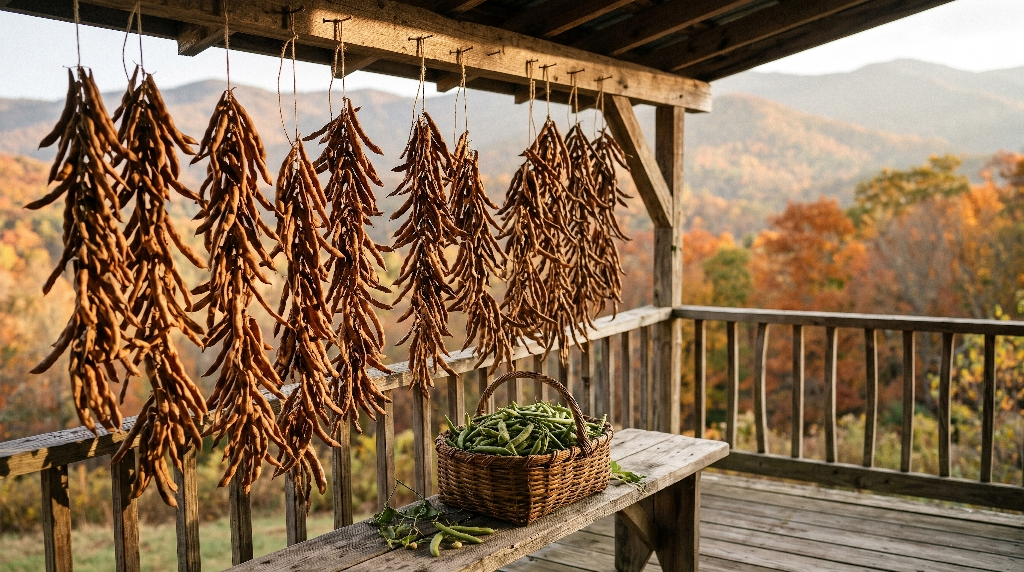
By late March in the mountains of East Tennessee and Western North Carolina, a long winter leaves its mark on every pantry and every body. Down in the smokehouse, the hams and slabs of salt pork hang thin and dry. Back in the root cellar, the last potatoes have grown soft eyes, the turnips have turned woody, and only a few strings of dried green beans, known locally as leather britches, remain hanging from the rafters.
After months of eating heavy, preserved fare by the fire, people across Southern Appalachia felt sluggish, heavy-limbed, and hungry for something alive. That hunger gave rise to one of the richest culinary traditions in American history: the annual gathering and cooking of spring tonic foods.
If you ask what a traditional Appalachian spring tonic actually was, the honest answer is that it was never just one bottle on a shelf or one single recipe. Instead, spring tonic foods made up a whole seasonal category of bitter wild greens, aromatic woodland bark teas, and mineral-rich pantry mixtures designed to wake up the body after winter. Mountain cooks combined tender shoots from the forest floor with staples like apple cider vinegar and blackstrap molasses to restore lost vitamins, stimulate sluggish digestion, and clear out winter fatigue.
This mountain tradition did not appear by accident. Traditional spring tonic foods grew out of a remarkable meeting of three distinct worlds in the Blue Ridge and Unaka Mountains. Cherokee ethnobotany provided deep, generational knowledge of native woodland plants like ramps, sassafras, and spicebush. Scots-Irish and German settlers brought European humoral theories about balancing the body’s fluids with the changing seasons. Finally, hard-won survival cooking turned bitter weeds and tough roots into nourishing meals on the hearth. Together, these influences shaped a food culture where medicine and supper shared the very same cast-iron skillet.
“Thick Blood” and Rising Sap: The Folklore Behind Appalachian Spring Tonic Foods
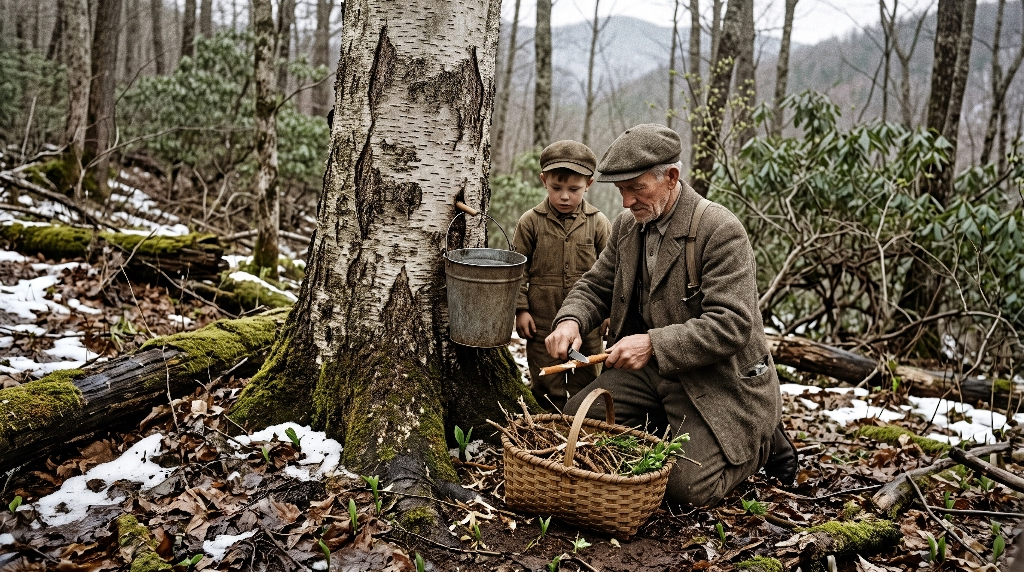
To understand why mountain families reached so eagerly for spring tonic foods every March and April, you have to look at how earlier generations understood the human body. Living close to the land, Appalachian folks saw their own health as a mirror of the forest around them. In the dead of winter, sap stopped flowing in the sugar maples and black birches, creeks froze over, and bears slept deep in the hollows. People believed human blood behaved the exact same way, growing thick, cold, and slow during the dark months.
When warm rains finally thawed the red clay and the first green shoots pushed through the leaf litter, mountain people believed their blood needed to “thin out” and move again just like rising tree sap. Taking spring tonic foods was the yearly ritual that kicked off that seasonal awakening. Families spoke of “cleaning the blood” or “scouring out the winter” before the grueling work of spring plowing, fence mending, and garden planting began.
Why did mountain people take spring tonics in Appalachia?
Mountain people took spring tonic foods to overcome winter sluggishness, “thin” what they believed was thick winter blood, and rebuild strength before heavy spring farm work. While folk wisdom framed the practice around purifying the bloodstream, the real benefit was nutritional. Eating fresh bitter greens, bark teas, and iron-rich syrups reversed months of vitamin and mineral shortages caused by a diet of salt pork, cornmeal, and dried beans.
This blend of folklore and practical nutrition reflects the cultural crossroads of Southern Appalachia. Long before European settlers crossed the ridges, the Cherokee people harvested early spring plants along the riverbanks and coves of the Tennessee and Little Tennessee valleys. Cherokee healers and cooks knew exactly which shoots eased joint stiffness, settled the stomach, and restored vigor after cold weather.
When Scots-Irish, English, and German pioneers settled those same hollows, they recognized familiar plant families like dandelions, nettles, and wild cresses, while learning native species like sassafras and pokeweed from their Indigenous neighbors. Over time, these shared habits became woven into the calendar of mountain life, recorded in family journals and later preserved in landmark collections like The Foxfire Book of Appalachian Cookery and the archives of the Appalachian Forest National Heritage Area.
The Nutritional Deficit of the Appalachian Winter Diet
From a modern culinary science perspective, the mountain belief in “thick winter blood” makes complete sense. Even though nineteenth-century and early twentieth-century mountain cooks did not use words like ascorbic acid or bioavailable iron, their bodies felt the exact symptoms of micronutrient deficiency.
Consider what sat on an Appalachian supper table between November and March. Without refrigerated trucks or grocery stores stocked with year-round produce, winter survival depended on preservation methods like salting, smoking, drying, and root-cellaring:
- Cured and salted meats: Country ham, side meat, and fatback supplied vital calories and fat, yet they lacked fresh water-soluble vitamins.
- Dried corn and beans: Cornmeal mush, hoecakes, and soup beans delivered protein and energy, though prolonged storage drained away delicate antioxidants.
- Canned and pickled cellar goods: Canned tomatoes, sauerkraut, and pickled beets helped bridge the gap, yet by March those jars were often empty.
By the end of winter, many people suffered from mild, subclinical scurvy, low iron stores, and slow digestion caused by a lack of fresh plant fiber. Doctors of the era even had a name for the heavy exhaustion, bleeding gums, and pale skin that struck rural families every March: they called it “spring fever.”
Spring tonic foods solved this nutritional crisis within days. The very first wild plants to break through cold soil are packed with concentrated vitamin C, vitamin A, folate, potassium, and iron to fuel their own rapid growth. When mountain cooks gathered a basket of those early shoots and wilted them in a skillet, they were delivering a massive dose of fresh micronutrients right when the human body needed them most.
Eating a “Bait of Greens”: Wild Spring Plants of the Mountain Hollows
In East Tennessee and across the southern mountains, nobody talked about eating a polite side salad in April. Instead, when the first wild shoots reached picking height, folks went out to gather a “mess of greens” or a “bait of greens,” meaning a big, generous helping cooked down until tender and served with potlikker and cornbread. These wild harvests formed the heart of traditional spring tonic foods.
What plants were used in Appalachian spring tonics?
Traditional Appalachian spring tonic foods relied on early-emerging wild greens, roots, and barks that appeared right after the last frost. The most common plants included wild ramps, poke sallet, dandelion leaves and roots, stinging nettle, creasy greens (upland cress), chickweed, burdock root, sassafras root bark, and spicebush twigs. Cooks combined these plants into boiled greens, pan-fried dishes, and simmered herbal teas.
Ramps (Allium tricoccum)
Few spring tonic foods carry as much fame or pungency in Southern Appalachia as the wild ramp. Growing in rich, shady coves beneath sugar maples and tulip poplars, ramps send up broad, smooth green leaves attached to slender white bulbs tinged with purple. Their aroma combines sweet spring onion with bold, lingering garlic, driven by high levels of sulfur compounds.
Mountain families prized ramps as the ultimate blood purifier. People ate the crisp raw bulbs spread with salted butter on crusty bread, chopped the leaves into scrambled eggs, or fried them in bacon grease alongside diced potatoes. Because ramps grow only for a brief window in April and May, cooks also packed excess bulbs into stone crocks with salt brine to create lacto-fermented spring tonic foods that lasted well into summer.
Poke Sallet (Phytolacca americana)
If ramps were the aromatic star of the spring woods, poke sallet was the undisputed staple of the mountain table. Pokeweed grows into a towering, purple-stemmed bush with toxic berries by late summer, yet in early spring its young shoots look remarkably like tender green asparagus topped with smooth, oval leaves.
Across Appalachia, cooks harvested poke shoots when they stood less than eight inches tall, before any purple color crept into the stalks. Because raw pokeweed contains natural toxins, mountain kitchens passed down a strict cooking rule: boil the greens in fresh water, drain them completely, and repeat that boiling process two more times. Once triple-boiled, the greens turned mild, earthy, and silky, ready to be finished in a hot cast-iron skillet with bacon drippings, chopped hard-boiled eggs, or a splash of vinegar.
Dandelion, Stinging Nettle, and Creasy Greens
Long before modern homeowners sprayed lawns to kill dandelions, mountain gardeners welcomed Taraxacum officinale as one of the earliest and most reliable spring tonic foods. Before the yellow flower buds opened, cooks dug the young crowns and pale taproots. The crisp leaves brought a pleasant, peppery bitterness to wilted salads, while the scrubbed roots were simmered into dark, coffee-like liver tonics.
Alongside dandelions, three other humble plants filled spring foraging baskets:
- Creasy greens (Barbarea verna): Also called upland cress or winter cress, these glossy, dark green leaves grew along sunny creek banks and plowed fields. Their sharp, mustard-like bite woke up tired taste buds immediately.
- Stinging nettle (Urtica dioica): Picked carefully with gloved hands or folded cloths, young nettle tops lost their tiny stinging hairs the moment they hit boiling water. Cooked down, nettles tasted remarkably like rich spinach and delivered more iron and calcium than almost any cultivated garden crop.
- Chickweed (Stellaria media): This tender, sprawling groundcover stayed green even under late snows, offering a mild, corn-silk flavor that softened sharper bitter herbs in the pot.
Rhubarb or “Pieplant”
Right beside the kitchen garden fence, crimson stalks of rhubarb, almost always called “pieplant” in older Appalachian households, pushed up through the mulch. While summer cooks baked rhubarb into sweet pies, early spring cooks stewed the tart stalks with a touch of honey or sorghum syrup into a thin, tangy fruit soup. That bright malic acid stimulated saliva and stomach acid, acting as a gentle digestive wake-up call after months of starchy winter meals. Cooks always took strict care to trim away and discard the broad green leaves, which contain dangerous levels of oxalic acid.
Woodland Bark and Root Teas: Sassafras, Spicebush, and Sweet Birch

Not all spring tonic foods arrived on a dinner plate. Just as important were the fragrant woods teas brewed in blackened kettles over the hearth. Gathering roots and twigs gave mountain families a warm, comforting drink that cost nothing and filled the cabin with sweet, spicy steam.
Sassafras Root and Twig Tea
For generations, no spring in Southern Appalachia felt official until someone dug a young sassafras sapling (Sassafras albidum) and brewed a pot of ruby-red tea. Diggers looked for small trees growing along fence rows, washing the red-brown roots clean before shaving off the aromatic bark. Simmered gently in water, sassafras bark released a deep amber color and a sweet, root-beer-like fragrance.
As documented in The Foxfire Book of Appalachian Cookery, mountain elders drank sassafras tea hot with a spoonful of honey for three weeks every spring to thin the blood and ward off colds. While modern food science has changed how we prepare sassafras today, its historical place among Appalachian spring tonic foods remains legendary.
Spicebush (Lindera benzoin)
Along shaded mountain streams, spicebush shrubs bloom with tiny yellow flowers before their leaves even unfurl. In early spring, when rising sap makes the bark easy to peel or “slip” from the wood, foragers snapped off tender young twigs. Bruising a spicebush twig releases an unforgettable scent of allspice, citrus peel, and black pepper. Simmered whole in spring water for fifteen minutes, spicebush twigs produced a bright, warming tonic tea that settled upset stomachs and eased spring chills without a trace of bitterness.
Sweet Birch and Burdock Root
Higher up on cool, rocky slopes, sweet birch (Betula lenta) offered another classic woodland infusion. Peeling inner bark from fallen branches or young shoots yielded an intense wintergreen aroma from natural methyl salicylate, the same soothing compound related to modern aspirin. Cooks steeped sweet birch twigs in hot (never boiling) water so the delicate wintergreen oils would not evaporate.
Meanwhile, in deep, rich soil around old barnyards, foragers dug the long taproots of first-year burdock (Arctium lappa). Sliced thin and simmered into a dark, earthy decoction, burdock root was prized across mountain communities as a deep-acting blood cleanser and digestive supporter.
From the Pantry and Hearth: Sulfur, Molasses, Vinegar, and Iron
When cold snaps lingered into April and kept wild plants hidden beneath frost, Appalachian mothers turned to the kitchen cupboard to mix up concentrated spring tonic foods. These pantry remedies combined everyday cooking ingredients into powerful mineral tonics that every mountain child remembered, whether fondly or with a grimace.
Why did people take sulfur and molasses in the spring?
People took sulfur and molasses in the spring because blackstrap molasses supplied dense iron, calcium, and B-vitamins after winter food shortages, while elemental sulfur acted as a mild laxative and antimicrobial agent. Mountain families believed this thick mixture purified sluggish blood and cleared skin blemishes.
Blackstrap Molasses and Flowers of Sulfur
Of all the home-mixed spring tonic foods in American memory, none is more famous than sulfur and molasses, immortalized on the cover of The Saturday Evening Post in Norman Rockwell’s 1936 painting Spring Tonic. In mountain kitchens, cooks blended powdered yellow sulfur (sold at country stores as “flowers of sulfur”) into dark, unrefined blackstrap molasses at a ratio of roughly one part sulfur to three or four parts molasses.
Children lined up each morning for a single spoonful. Nutritionally, blackstrap molasses was a powerhouse. Unlike refined white sugar, blackstrap is the dark, thick liquid left behind after sugar cane juice is boiled down to extract sugar crystals, concentrating all the plant’s natural iron, magnesium, potassium, and vitamin B6. Combined with the gentle cleansing action of sulfur, a daily spoonful genuinely restored energy to tired, iron-deficient bodies.
Cast-Iron Cookware and “Nail Water”
Even the pots and pans played a quiet role in traditional spring tonic foods. Every Appalachian kitchen relied on heavy, well-seasoned cast-iron skillets and Dutch ovens. When cooks wilted acidic spring greens like rhubarb, sorrel, or wild greens dressed with vinegar inside bare or lightly seasoned cast iron, trace amounts of dietary iron leached directly into the food.
For family members who looked especially pale or weak in March, mountain healers went a step further and made “nail water.” They placed a handful of clean, ungalvanized iron nails into a glass jar filled with hard apple cider or spring water, letting it sit on the sunny windowsill for several days. Taking a tablespoon of that mineral-steeped liquid each morning delivered a direct dose of soluble iron long before pharmacy iron pills existed.
Apple Cider Vinegar and Castor Oil Chasers
Raw, unfiltered apple cider vinegar sat at the center of almost every mountain pantry. Made from late-autumn heirloom apples fermented in wooden barrels, this cloudy vinegar was packed with acetic acid and beneficial fermentation cultures. Cooks stirred a tablespoon of apple cider vinegar and a spoonful of local sourwood honey into a mug of warm spring water to spark digestion before breakfast.
Vinegar and fruit preserves also served another practical job: making harsher spring tonic foods easier to swallow. When a spring cleanup called for a dose of castor oil or bitter herbal tea, mothers kept a jar of spiced apple butter or warm apple cider ready as an immediate chaser to wipe the taste off the tongue.
Culinary Science and Foraging Safety: Separating Folklore from Chemistry
Looking at traditional spring tonic foods through the lens of modern culinary science reveals just how smart mountain cooks really were. Even without laboratory equipment, generations of careful observation led them straight to plants that trigger specific, measurable responses in human digestion and metabolism.
The Biochemistry of Bitter Greens and Roots
Modern Americans tend to avoid bitter flavors, favoring sweet, salty, and rich foods instead. Yet bitterness is the exact chemical key that makes spring tonic foods work. Plants like dandelion, burdock, and creasy greens contain natural bitter compounds such as sesquiterpene lactones and glucosinolates.
The moment those bitter molecules touch specialized taste receptors on the back of your tongue, your nervous system sends an immediate signal to your digestive tract. Within seconds, your mouth produces more saliva, your stomach releases digestive acid and enzymes, and your liver and gallbladder increase bile flow. Bile is essential for breaking down fats and absorbing fat-soluble vitamins like vitamins A, D, E, and K. In plain terms, bitter spring tonic foods prime the entire digestive engine so your body can actually absorb the nutrients on your plate.
Is sassafras tea safe to drink as a spring tonic?
Traditional sassafras root tea is no longer considered safe to drink regularly because sassafras root bark contains high levels of safrole, a natural compound shown to cause liver damage in laboratory studies. Today, the U.S. Food and Drug Administration bans safrole in commercial foods, though cooks can safely use safrole-free sassafras extracts or substitute aromatic spicebush twigs.
Mandatory Foraging and Preparation Safety Rules
Honoring the heritage of spring tonic foods in a modern kitchen means pairing traditional wisdom with modern food safety. Wild plants contain powerful chemistry, and mistaking one shoot for another or skipping a cooking step can cause real harm. If you plan to harvest or cook wild spring ingredients, follow these essential safety rules:
- Never guess on plant identification: Always verify wild plants using two reliable regional field guides before eating a single leaf. Deadly look-alikes exist, such as poison hemlock resembling wild carrot or false hellebore growing near wild ramps.
- Triple-boil poke sallet without exception: Never eat pokeweed raw, and never drink the cooking water. Boil young shoots under eight inches tall in three separate pots of fresh water, draining thoroughly after each boil, to neutralize natural phytolaccatoxins.
- Discard rhubarb leaves completely: Only eat the red or green stalks of rhubarb. The leaves contain high concentrations of oxalic acid that can injure the kidneys.
- Harvest away from roadsides and sprayed fields: Wild greens absorb heavy metals and herbicides from soil and runoff. Gather spring tonic foods only from clean woods, private chemical-free pastures, or your own backyard.
- Practice ethical ramp harvesting: Ramps take up to seven years to grow from seed to maturity. Never pull up the entire patch; instead, snip a single leaf from each plant and leave the white bulb rooted in the soil so the colony thrives for decades.
How Modern Appalachian Chefs Reinterpret Spring Tonic Foods Today

Across East Tennessee, Western North Carolina, and the wider Appalachian region, a new generation of chefs and home cooks is bringing spring tonic foods back to the table. Rather than treating these ingredients as dusty museum pieces or punishing childhood medicine, modern kitchens celebrate their bold, bright flavors using refined culinary techniques.
In my own kitchen in Johnson City, Tennessee, the arrival of the first wild greens signals a complete shift in how we cook. Instead of boiling greens for an hour until gray, we use quick blanching, gentle wilting, and controlled fermentation to keep their vibrant emerald color and fresh nutrients intact. Paired with smoked country ham, browned butter, or toasted nuts, bitter spring tonic foods become the highlight of the spring menu.
Master Reference Table: Traditional Appalachian Spring Tonics
| Ingredient (Common and Latin Name) | Plant Part Used | Traditional Folk Purpose | Key Nutrients and Compounds | Safety and Preparation Rule |
| Wild Ramps (Allium tricoccum) | Bulbs and young leaves | Blood purifier and spring energizer | Vitamin C, organosulfur compounds, allicin | Harvest leaves sustainably; leave bulbs rooted |
| Poke Sallet (Phytolacca americana) | Young shoots under 8 inches | General spring cleanser and tonic green | Vitamin A, vitamin C, iron, potassium | Mandatory triple-boil in fresh water; never eat raw |
| Dandelion (Taraxacum officinale) | Young leaves and taproots | Liver stimulant and digestive bitter | Vitamins A, C, and K, inulin, sesquiterpene lactones | Pick leaves before yellow flowers open for best flavor |
| Stinging Nettle (Urtica dioica) | Top 4 to 6 young leaves | Mineral builder for tired blood | Bioavailable iron, calcium, magnesium, chlorophyll | Wear gloves when picking; blanching removes sting |
| Creasy Greens (Barbarea verna) | Rosette leaves | Appetite stimulant and scurvy preventative | Vitamin C, beta-carotene, glucosinolates | Harvest early before tall yellow flower stalks form |
| Spicebush (Lindera benzoin) | Young twigs and bark | Warming blood mover and stomach tonic | Aromatic essential oils, antioxidants | Safe alternative to sassafras; simmer twigs 15 minutes |
| Sassafras (Sassafras albidum) | Root bark and twigs | Traditional blood thinner | Safrole, aromatic tannins | Avoid whole root bark; use safrole-free extract only |
| Blackstrap Molasses | Boiled cane syrup | Iron and strength builder | Iron, calcium, potassium, vitamin B6 | Pair with apple cider vinegar or citrus to boost iron uptake |
Chef’s Kitchen Guide: Three Safe Modern Spring Tonic Preparations
If you want to experience the flavors and digestive benefits of Appalachian spring tonic foods in your own kitchen, start with these three safe, approachable preparations.
1. Simmered Spicebush and Apple Cider Vinegar Tonic
This bright, spicy infusion captures the soul of an old mountain woods tea without any of the safety concerns of sassafras root.
- Ingredients: 1 handful of fresh, clean spicebush twigs (snapped into 2-inch pieces), 4 cups cold spring water, 2 tablespoons raw unfiltered apple cider vinegar, and 1 to 2 tablespoons local sourwood honey.
- Method: Place the spicebush twigs and cold water in a heavy saucepan. Bring just to a gentle simmer over medium-low heat, cover, and steep for 15 minutes until the water turns pale gold and smells of allspice and citrus. Strain into warm mugs, stir in the apple cider vinegar and honey, and drink warm before breakfast.
2. Wilted Spring Bitter Greens with Sorghum-Vinegar Pan Dressing
This dish honors the classic mountain “mess of greens” while keeping the leaves tender, bright green, and balanced against sweet-and-sour pan drippings.
- Ingredients: 6 cups mixed young dandelion greens, blanched stinging nettle tops, and creasy greens; 2 slices thick-cut smoked bacon (or 2 tablespoons olive oil); 1 small shallot or 2 chopped ramp leaves; 2 tablespoons apple cider vinegar; 1 tablespoon pure sorghum syrup; pinch of kosher salt and black pepper.
- Method: Blanch the stinging nettles in boiling salted water for 60 seconds, then plunge into cold water and squeeze dry. Render the bacon in a cast-iron skillet until crisp, remove the bacon, and sauté the ramp leaves in the warm drippings for 30 seconds. Whisk in the vinegar and sorghum syrup until bubbling, toss in all the greens just until wilted, season with salt and pepper, and crumble the bacon over top.
3. Roasted Dandelion and Burdock Root Bitters
Roasting these earthy roots transforms their raw bitterness into deep notes of toasted cocoa, coffee, and caramel that make a wonderful digestive tonic.
- Ingredients: 1/2 cup scrubbed, finely chopped dandelion root, 1/2 cup scrubbed, finely chopped burdock root, 1 strip organic orange peel, 3 bruised allspice berries, and 2 cups raw apple cider vinegar (or 100-proof neutral spirit).
- Method: Spread the chopped roots on a baking sheet and roast at 325 degrees Fahrenheit for 20 to 25 minutes until fragrant and deep brown. Cool completely, transfer to a clean glass jar with the orange peel and allspice, and cover with vinegar or spirit. Seal and store in a dark cupboard for three weeks, shaking every few days. Strain through cheesecloth and add a few drops to sparkling water before meals.
Carrying the Seasonal Table Forward
Looking back at traditional Appalachian spring tonic foods reminds us that good cooking has always started with paying attention to the calendar outside the kitchen door. Long before nutrition labels or supplement aisles existed, mountain families listened to what their bodies needed after a hard winter and looked to the hillsides, creek banks, and pantry shelves for the answer. Whether it was a skillet of triple-boiled poke sallet, a bunch of pungent woodland ramps, or a spoonful of dark blackstrap molasses, those spring tonic foods bridged human health with the rhythm of the seasons.
Today, we enjoy fresh produce year-round, yet our bodies still respond to the crisp bitterness and concentrated minerals of early spring plants. Stepping outside in March or April to gather clean dandelion greens, simmer a pot of spicebush tea, or dress a skillet of creasy greens with warm apple cider vinegar connects your modern supper table directly to centuries of Appalachian resourcefulness, kitchen science, and mountain heritage.