
Introduction to Permaculture Food Forest Guilds
A permaculture food forest mimics the natural layers, relationships, and fertility cycles of a wild woods while producing an abundance of human food, medicine, and useful materials. When establishing a permaculture food forest on hillside topography in USDA Hardiness Zone 7a, standard flat land gardening rules no longer apply. Gravity exerts constant physical force on topsoil, organic matter, and surface runoff.
Carefully planned permaculture food forest guilds transform these physical vulnerabilities into productive assets. A permaculture food forest built on a slope captures gravity-fed water, takes advantage of rolling air drainage, and stacks dynamic ecological niches through every elevation tier.
Understanding how to engineer a permaculture food forest guild across undulating ground requires integrating soil mechanics, regional climate patterns, and intentional polyculture guilds. Zone 7a encompasses diverse ecological regions, including the ridge-and-valley terrains of the southern Appalachians. By applying tailored permaculture food forest design techniques, any hillside can become an enduring, resilient agricultural system.
                     SLOPE HYDROLOGY & WATER HARVESTING

  Rainfall & Surface Flow
        │
        ▼
   [Hilltop / Ridge] ──── Upper Diversion Swale / Infiltration Basin
        │
        ▼
   [Mid-Slope Terrace] ── Tree Berm (Overstory Guild Anchors)
        │                 ├── Dynamic Taproots Bind Subsoil
        │                 └── Water Infiltrates to Unconfined Aquifer
        ▼
   [Lower Contour] ────── Overflow Spillway & Silt Trap
        │
        ▼
   [Valley Floor] ─────── High-Organic Absorption & Riparian Infiltration
Topographical Hydrology and Earthworks on Slopes
Sloping ground dictates the movement of every drop of liquid water, every loose granule of silt, and every trace of organic fertility. Before planting a single root in your permaculture food forest, you must read the contours of the ground and build passive hydrological earthworks.
Contour Line Mapping and Keyline Design
Contour lines represent level pathways cutting across the face of an incline. Water always travels at a ninety-degree angle perpendicular to these contour lines, choosing the path of least resistance straight downhill. In a sloped permaculture food forest, the primary engineering objective is to interrupt this rapid downslope velocity. Slowing surface runoff transforms erosive sheets of muddy water into deep subsoil moisture reserves.
Keyline design begins by locating the keypoint on a hillside. The keypoint marks the topographical inflection point where the upper slope shifts from a convex, shedding shape to a concave, depositional shape.
 CONVEX PROFILE (Upper Slope)  ──> Water sheds away rapidly
            ╲
             ╲  <-- [ KEYPOINT: Slope changes from shedding to gathering ]
              ╰───────────────> CONCAVE PROFILE (Lower Slope): Water collects
By surveying a gentle off-contour line through this keypoint, you can direct surface runoff away from over-saturated valleys and spread it outward toward dry, exposed ridges. Mapping precise contours using an A-frame level, a water tube level, or a laser transit establishes the baseline framework for every subsequent swale, berm, and pathway in your permaculture food forest.
On-Contour Swales vs. Off-Contour Diversion Ditches
A swale is a level ditch dug directly on the contour line, with the excavated soil mounded immediately downhill into an uncompacted berm. Swales serve as passive, unpressurized infiltration basins. When rainfall hits the hillside, surface runoff collects within the level swale trench, halts its forward momentum, and slowly seeps downward into the underlying ground, creating an underground plume of moisture known as a water lens.
However, standard on-contour swales are not suitable for every hillside setting:
| Earthwork Strategy | Slope Gradient Limit | Soil Condition Requirements | Primary Hydrologic Function | Failure Risk If Miscalculated |
| On-Contour Infiltration Swale | Under 15% (8.5 degrees) | Well-drained loams, fractured subsoils | Halts runoff; creates an unpressurized underground hydration lens | Soil saturation causing slope slip or catastrophic berm blowout |
| Off-Contour Diversion Ditch | 15% to 30% (8.5 to 17 degrees) | Heavy clays, slow infiltration layers | Moves surplus water gently sideways at a 1% to 2% grade toward stable outlets | Channel bed scour and accelerated gully erosion |
| Bench Terracing with French Drains | Exceeding 30% (Over 17 degrees) | Mixed soils requiring mechanical retaining steps | Stops sheet wash; steps down water volume onto reinforced gravel beds | Retaining wall blowout from hydrostatic pressure |
| Boomerang / Smile Micro-Basins | Variable (Applicable to any incline) | Individual tree planting pockets | Collects localized runoff exclusively for a single guild root zone | Overflow cutting around pocket ears during cloudbursts |
On slopes exceeding fifteen percent, capturing massive volumes of standing water inside an unlined trench can liquefy heavy subsoil layers, increasing the risk of structural slope failure. When designing a permaculture food forest on steeper grades, swap out deep, level swales for shallow, off-contour diversion channels.
These channels convey torrential runoff sideways across the landscape at a mild one-to-two percent fall. They safely deliver excessive volumes toward armored stone spillways, retention basins, or established tree groves, preventing structural instability while nourishing your permaculture food forest.
Terracing and Micro-Basins
On steep, broken hillside ground where continuous trenches are impractical, terracing creates level working shelves across the slope face. Bench terraces transform an otherwise unmanageable incline into a series of stepped, flat platforms. You can secure terrace faces using dry-stacked fieldstones, rot-resistant locust timber cribbing, or densely woven living root barriers.
Individual micro-basins, frequently referred to as “boomerang swales” or “smile basins,” offer an effective way to harvest water for individual trees in a permaculture food forest without modifying the entire hillside:
                      BOOMERANG / SMILE BASIN PROFILE
                                (Top-Down View)

               Upslope Surface Runoff Flow (Downhill)
                                │   │   │
                                ▼   ▼   ▼
                      . ─ ─ ─ ─ ─ ─ ─ ─ ─ ─ .
                   . '                       ' .   <-- Crescent Earth Berm
                 '     ┌───────────────────┐     '
                │      │ Central Root Ball │      │
                │      │ (Fruit/Nut Tree)  │      │
                 .     └───────────────────┘     .
                   . .                         . .
                       ' ─ ─ ─ ─ ─ ─ ─ ─ ─ ─ '
                                  │
                   Level Overflow Outlets on Both Wings
Each crescent berm is built using native topsoil excavated from a shallow planting pocket directly uphill of the tree. The curved wings of the crescent sweep gently uphill along the contour line, guiding natural runoff into the root zone of the guild’s central tree. If sudden storms drop several inches of rain, excess water spills evenly around the tips of both wings rather than cutting through the central berm, preventing erosion within the permaculture food forest.
Soil Stabilization Dynamics
Excavating hillside dirt breaks structural soil aggregates, exposing fragile earth to sudden rain. You must stabilize newly shaped ground immediately with deep-rooting plants before erosion begins. Relying solely on dead straw mulch or synthetic geotextiles provides only temporary protection. Living root systems are required to stitch together shifting soil layers.
Select native bunchgrasses, perennial taproot species, and fast-growing nurse crops with dense root architectures:
- Switchgrass (Panicum virgatum): Produces fibrous root networks that dive six to ten feet into raw subsoil, mechanically locking down berms.
- Indian Grass (Sorghastrum nutans): Highly drought-tolerant native grass that handles thin, sunny, hillside ground.
- Daikon Radish (Raphanus sativus var. longipinnatus): Acts as a biological drill, penetrating compacted clay subsoils before winter-killing to leave open organic channels.
- Hairy Vetch (Vicia villosa) and Crimson Clover (Trifolium incarnatum): Rapidly knit the surface soil together while pumping atmospheric nitrogen into the newly disturbed earth.
Interplanting these stabilization species immediately across all disturbed earthworks preserves your contour lines, setting up a solid foundation for the permanent permaculture food forest.
Microclimatic and Edaphic Constraints of Zone 7a Slopes
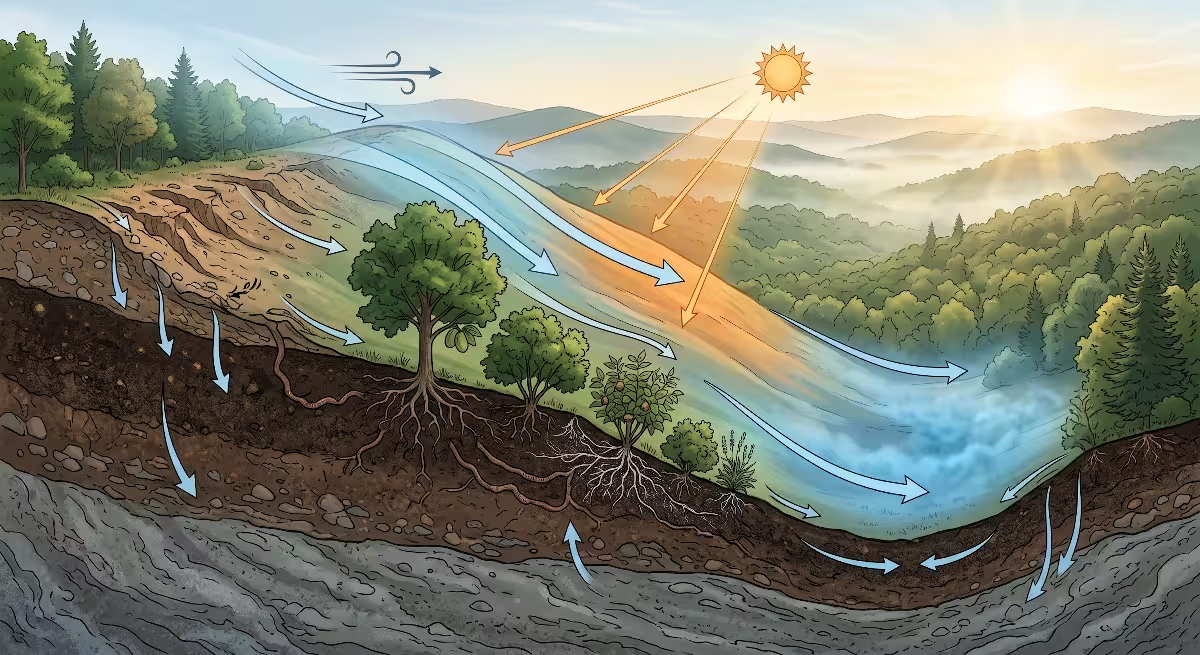
Successful permaculture food forest design depends heavily on local conditions. USDA Hardiness Zone 7a features average annual minimum winter temperatures ranging from 0 degrees to 5 degrees Fahrenheit (-18 to -15 degrees Celsius).
However, hillside landscapes create distinct microclimates. One slope can behave like cold Zone 6a, while another just a short distance away performs like mild Zone 8a.
                    HILLSIDE THERMAL STRATIFICATION

       [Cold Hilltop Crest] ── Strong winds, exposed to desiccation
                 │
                 ▼
       [Mid-Slope Thermal Belt] ── WARM AIR BAND
                 │                 * Ideal for early bloomers (Peach, Plum)
                 │                 * Trapped warm air, reduced freeze damage
                 ▼
       [Valley Floor / Base] ──── COLD AIR POOL (Frost Pocket)
                                   * Cold air settles like heavy liquid
                                   * Severe late-spring frost risk
Aspect and Solar Radiation
The compass direction your hillside faces dictates its daily sunlight exposure, soil temperatures, and overall water demand:
- South and Southwest Aspects: Absorb direct solar energy at intense angles throughout the growing season. In Zone 7a, southern faces dry out quickly under the summer sun, but warm up weeks earlier each spring. This thermal boost makes them ideal for heat-loving fruit trees like figs, European plums, and persimmons. However, fast evaporation rates mean you must use thicker mulch layers and larger water retention earthworks to support a permaculture food forest here.
- North and Northeast Aspects: Receive indirect, low-angle sunlight throughout the winter and early spring. The ground stays cold much longer, delaying spring bud break. While this reduces late-spring frost damage on delicate blossoms, these slopes remain humid, cool, and subject to slow drainage. They provide ideal conditions for moisture-loving woodland crops like pawpaws, spicebush, and understory native ramps.
Thermal Belts on Hillside Terrain
Cold air is physically denser and heavier than warm air. On calm, clear nights, cold air flows slowly down hillsides just like liquid water, draining down valleys and pooling across low-lying basin floors. This leaves low valley locations vulnerable to severe, plant-killing spring frosts.
The mid-slope zone of a hill forms what meteorologists call a thermal belt. As cold air drains downhill, it displaces warmer air upward, creating a stable band along the middle third of the slope that stays several degrees warmer than either the high, windswept ridge or the low valley bottom.
Situating your core fruit guilds within this mid-slope thermal belt protects tender, early-blooming stone fruits from damaging spring freezes. Keep the downhill path clear of dense, solid evergreen walls so cold air can drain away freely rather than pooling behind thick foliage.
Zone 7a Temperature Thresholds
A standard Zone 7a climate provides an average frost-free growing window spanning approximately 190 to 210 days, typically beginning in mid-April and ending in late October. Winter low temperatures consistently test cold-hardiness thresholds. While trees easily handle dormant mid-winter freezes, unstable early spring temperatures present a major challenge.
A stretch of unseasonably warm weather in early March can wake trees from winter rest, swelling fruit buds weeks ahead of schedule. If temperatures drop into the low twenties shortly after, unprotected flower crops can freeze completely.
In a permaculture food forest, you can manage this freeze-and-thaw cycle through strategic guild placement. Planting early-blooming species like peaches or apricots along cooler east-facing slopes or behind canopy shade helps keep the soil chilled, preventing premature blooming until spring temperatures stabilize.
Soil Matrix Remediation
Hillside soils across many Zone 7a areas, especially throughout the older weathered hills of the American Southeast, consist primarily of acidic, clay-heavy Ultisols and thin Inceptisols:
- Subsoil Compaction: Years of unchecked rainfall runoff across unprotected land tend to strip away rich native topsoil, leaving behind dense subsoil packed with heavy clay.
- Low Organic Content: Humus levels on degraded, cleared slopes often sit below two percent, limiting biological activity and water storage capacity.
- Nutrient Leaching and Acidity: Soluble nutrients like calcium, potassium, and magnesium readily wash away, leaving behind low soil pH levels between 4.8 and 5.8 that can tie up available phosphorus.
Remediating this damaged soil profile does not require intensive, destructive tillage that exposes loose dirt to erosion. Instead, spread generous surface applications of hardwood woodchips, decomposed leaf mold, and agricultural lime across the slope.
Fungi will feed on this surface biomass, sending hyphal threads deep into the subsoil. These fungal networks break apart dense clay, buffer soil acidity, and pull humic matter deep underground, steadily improving the hillside soil for your permaculture food forest.
Guild Layering Architecture (The 7-to-9 Layer Framework)
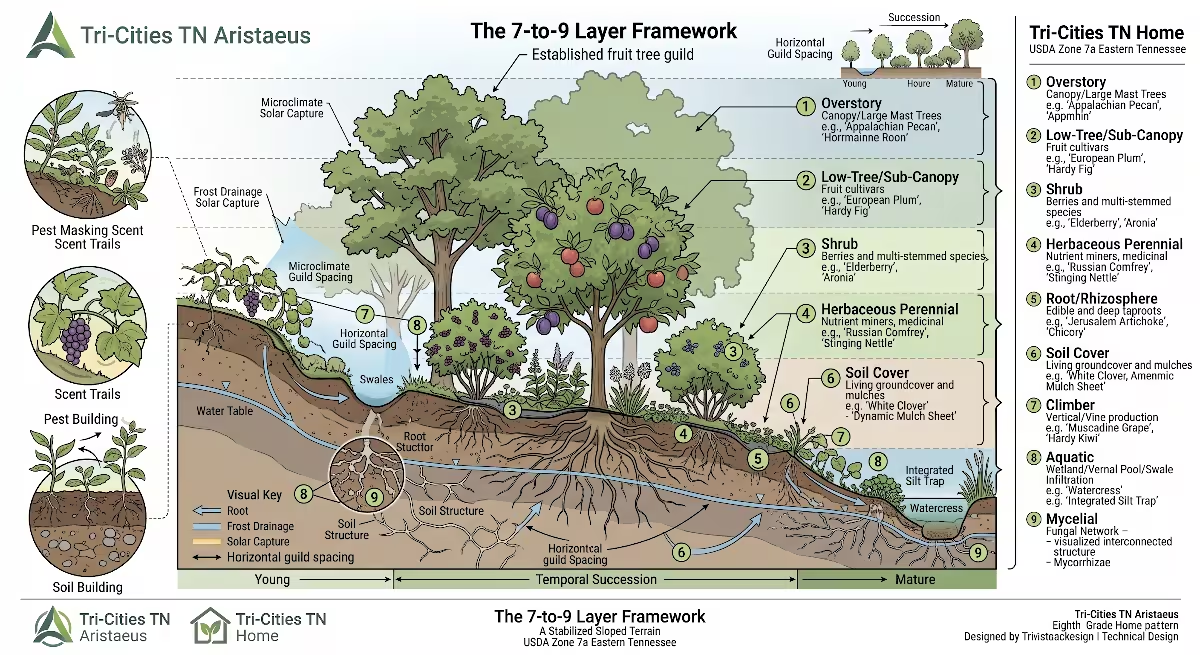
A wild natural forest organizes itself in distinct vertical layers, sharing sunlight, air, and root room across different plant heights. A permaculture food forest adopts this identical structural layering, selecting plants that fill specific ecological roles while yielding reliable harvests. Designing a sloped permaculture food forest requires adjusting standard layer layouts so tall uphill plants do not block light from shorter downhill companions.
                  VERTICAL GUILD LAYERING ON AN INCLINE

  [High Slope / North Side] ── Layer 1: Overstory / Canopy (Chestnut, Pecan)
            │
            ├── Layer 2: Understory / Sub-Canopy (Persimmon, Pawpaw, Plum)
            │
            ├── Layer 3: Shrub Layer (Blueberry, Hazelnut, Elderberry)
            │
            ├── Layer 4: Herbaceous Layer (Comfrey, Yarrow, Bergamot)
            │
            ├── Layer 5: Rhizosphere / Roots (Garlic, Sunchoke, Groundnut)
            │
            ├── Layer 6: Soil Surface / Ground Cover (White Clover, Thyme)
            │
            ├── Layer 7: Vertical / Vine Layer (Muscadine, Passionflower)
            │
            └── Layers 8 & 9: Mycelial Fungi & Wetland Water Catchment
                                                              [Low Slope / South Side]
1. Overstory and Canopy
The overstory forms the top structural framework of the permaculture food forest. These large trees reach mature heights between thirty and sixty feet. On sloping terrain, place these large canopy trees along the northern edges, ridge crests, or downslope collection valleys to prevent them from casting dense shade over smaller sun-loving fruit trees.
- Chinese Chestnut hybrids (Castanea mollissima x): Provide heavy annual crops of carbohydrate-rich nuts, resist blight, and anchor slopes with massive taproot networks.
- Pecan (Carya illinoinensis): Massive, deep-rooting native trees that provide high-value nut harvests and stabilize deep hillside soils.
- Northern Red Oak (Quercus rubra): Acts as an upper slope windbreak, cycling deep mineral reserves and dropping tannin-rich leaf cover that protects slopes from erosion.
2. Understory and Sub-Canopy
Sub-canopy trees grow between fifteen and twenty-five feet tall, flourishing under the open light filtering past larger canopy trees. This layer provides the main edible tree fruit harvest in a permaculture food forest.
- Pawpaw (Asimina triloba): North America’s largest native edible fruit. Thrives naturally on sloped ravines, spreads through underground runner roots, and tolerates partial shade while producing tropical-flavored custard fruit.
- American Persimmon (Diospyros virginiana): Incredibly hardy native tree that produces sweet, rich fruit late in the fall after first frosts. It thrives in poor hillside clay soils without heavy maintenance.
- European and Hybrid Plums (Prunus domestica): Dependable fruit producers for the middle thermal belt of your hillside.
3. Shrub Layer
Shrubs occupy heights between four and twelve feet, catching intermediate light pockets and serving as physical windbreaks across your terraces. Their root systems reinforce the upper few feet of hillside soil, preventing surface slipping.
- Highbush Blueberry (Vaccinium corymbosum): Thrives in naturally acidic hillside soils, providing nutritious summer berries and brilliant crimson autumn foliage.
- American Elderberry (Sambucus canadensis): Rapidly growing native shrub that produces dense root networks, heavy clusters of immune-boosting berries, and pollinator-friendly spring blooms.
- American Hazelnut (Corylus americana): Multi-stemmed nut shrub that forms thickets along terrace edges, anchoring fragile slope banks.
4. Herbaceous Layer
The herbaceous layer consists of non-woody perennial plants that produce green stems and foliage throughout the growing season before dying back to their root crowns in winter. These plants play essential support roles in the permaculture food forest, accumulating trace minerals, attracting beneficial insects, and producing organic mulch.
- Russian Comfrey (Symphytum x uplandicum ‘Bocking 14’): Deep-diving taproots pull calcium, potassium, and magnesium from deep subsoil layers up into broad green leaves. Pruning comfrey foliage three to four times a season provides high-potassium mulch directly underneath hungry fruit trees.
- Wild Bergamot (Monarda fistulosa): Native pollinator magnet whose aromatic foliage deters pest insects.
- Yarrow (Achillea millefolium): Feathery perennial foliage that pulls sulfur and copper from the soil while providing nectar for tiny beneficial parasitic wasps.
5. Rhizosphere (The Root Layer)
The rhizosphere comprises productive edible roots, bulbs, and tubers growing directly beneath the soil surface. Selecting suitable root species for a hillside permaculture food forest requires species that produce food without requiring destructive root-harvesting digging that could destabilize the slope.
- Jerusalem Artichoke (Helianthus tuberosus): Hardy perennial sunflower producing crisp, inulin-rich edible tubers, accompanied by extensive underground root mats that lock loose soil in place.
- American Groundnut (Apios americana): Native nitrogen-fixing climbing vine that develops strings of protein-rich edible tubers along its roots.
- Wild Ramps (Allium tricoccum): Perennial allium that yields pungent, edible underground bulbs and aerial top-sets, continuously propagating across terrace banks.
6. Soil Surface and Ground Cover
Ground cover plants crawl low along the ground, rarely rising more than six inches high. They form a living carpet across your permaculture food forest, shielding bare topsoil from the sun, preserving soil moisture, and blocking weed seed germination.
- White Clover (Trifolium repens): Low-growing, resilient perennial legume that fixes atmospheric nitrogen directly into the surrounding soil while feeding local bees.
- Creeping Thyme (Thymus serpyllum): Tough, fragrant, drought-tolerant ground cover that forms thick mats across exposed, sunny, south-facing banks.
- Wild Ginger (Asarum canadense): Native shade-loving ground cover with attractive kidney-shaped leaves, ideal for cool, moist, north-facing slopes.
7. Vertical and Climber Layer
Climbing vines take advantage of vertical space in your permaculture food forest, scrambling up established trellises, dead wood snags, and retaining terrace walls without taking up extra garden ground.
- Muscadine Grape (Vitis rotundifolia): Native to the American Southeast and remarkably resistant to common grape diseases, muscadines produce sweet, thick-skinned grapes along terrace fences.
- Passionflower or Maypop (Passiflora incarnata): Native climbing vine featuring beautiful exotic flowers and tasty, tart, egg-shaped fruits.
8. The Mycelial Layer
The fungal layer runs through every part of the permaculture food forest. Mycelial threads decompose fallen wood chips, link separate tree root systems, and transport water and vital phosphorus throughout the hillside soil:
- Wine Cap Stropharia (Stropharia rugosoannulata): Fast-growing edible mushroom that thrives inside moist hardwood woodchip swale paths, transforming coarse chips into rich, dark soil while yielding large edible mushrooms.
- Oyster Mushrooms (Pleurotus ostreatus): Excellent for breaking down fresh hardwood stumps and logs along terraced edges.
9. The Wetland Layer
On sloping landscapes, natural seepage spots, springs, and overflow pools often form near the foot of the hill. These wet spots provide prime locations for specialized water-loving species:
- Watercress (Nasturtium officinale): Fast-growing, peppery salad green that thrives in shallow, running cold water seeps.
- Ostrich Fern (Matteuccia struthiopteris): Produces delicious edible fiddleheads in early spring along wet bottomland ground.
Zone 7a Guild Blueprints for Sloped Terrain
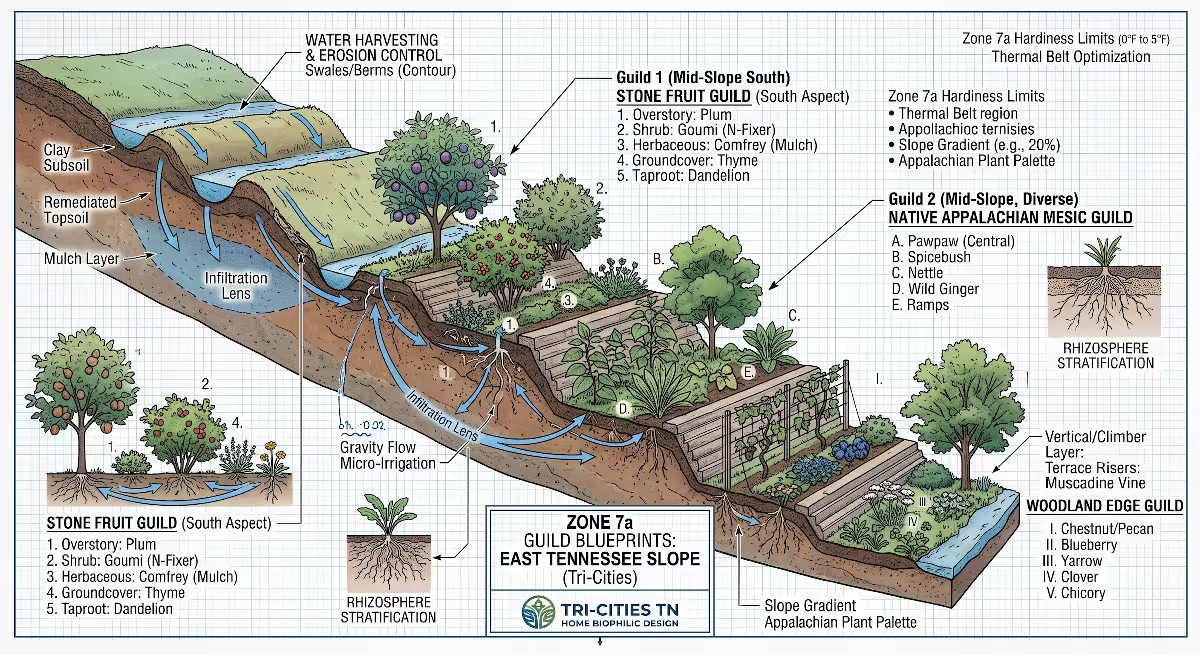
Plants do not live in isolation; they grow in interconnected ecological communities. A guild organizes plants so each neighbor supports the others by fixing nitrogen, accumulating nutrients, confusing insect pests, or protecting fragile topsoil. The following blueprints highlight balanced guilds designed for hillside conditions in Zone 7a.
                    NATIVE APPALACHIAN MESIC GUILD
                       (Cross-Section on Slope)

       [Upslope Water Infiltration Basin]
                 │
                 ▼
       ┌──────────────────────────────────────────────────────────┐
       │ OVERSTORY/UNDERSTORY: Pawpaw (Asimina triloba)           │
       │  * High shade tolerance, suckering roots stabilize slope │
       └──────────────────────────────────────────────────────────┘
                 │
                 ├── SHRUB: Spicebush (Lindera benzoin)
                 │    * Attracts native beneficial insects
                 │
                 ├── HERBACEOUS: Stinging Nettle (Urtica dioica)
                 │    * Dynamic accumulator of iron and nitrogen
                 │
                 ├── GROUND COVER: Wild Ginger (Asarum canadense)
                 │    * Deep shade living green carpet
                 │
                 └── RHIZOSPHERE: Ramps (Allium tricoccum)
                      * Early spring ephemeral native allium
                 │
                 ▼
       [Downslope Terrace Overflow & Leaf Drop Retention]
1. Stone Fruit Guild (Warm South-Facing Upper Slope)
This guild takes advantage of the strong sunlight and extended heat of a south-facing hillside. It uses drought-tolerant companion plants and nitrogen-fixing shrubs to nourish hungry stone fruits.
- Central Anchor: European Plum (Prunus domestica ‘Mount Royal’ or ‘Stanley’). Compact, self-fertile, and produces heavy yields of sweet dessert plums.
- Nitrogen-Fixing Shrub: Goumi Berry (Elaeagnus multiflora). Fixes atmospheric nitrogen directly at its roots, feeding the adjacent plum tree, while providing tart, speckled red berries in early summer.
- Dynamic Nutrient Accumulator: Russian Comfrey (Symphytum x uplandicum ‘Bocking 14’). Positioned directly along the uphill drip line of the plum tree to capture descending surface nutrients.
- Pest Confuser and Pollinator Magnet: Mountain Mint (Pycnanthemum virginianum). Produces high levels of aromatic essential oils that mask fruit scents from pest beetles while feeding beneficial predatory insects.
- Living Ground Armor: White Clover (Trifolium repens) mixed with Creeping Thyme (Thymus serpyllum). Creates a thick living green mat that keeps soil cool and prevents rainfall washouts.
- Subsoil Miner: Dandelion (Taraxacum officinale). Sends strong taproots deep into compacted clay, mining calcium and loosening the soil naturally.
2. Native Appalachian Mesic Guild (Cooler East- to Northeast-Facing Slope)
This guild mimics a natural Appalachian forest cove. It relies entirely on native, disease-resistant species that thrive in partial sunlight, moist soils, and sheltered ravine environments.
- Central Anchor: Pawpaw (Asimina triloba, using cross-pollinating cultivars like ‘Shenandoah’ and ‘Susquehanna’). Provides delicious tropical custard fruits and forms thick root runner networks that lock down hillside soil.
- Understory Shrub: Spicebush (Lindera benzoin). Native aromatic shrub whose leaves, twigs, and berries provide pleasant allspice seasonings while attracting spicebush swallowtail butterflies.
- Dynamic Nutrient Accumulator: Stinging Nettle (Urtica dioica). Highly valued for nutritious spring edible greens and exceptional dynamic accumulation of iron, nitrogen, and magnesium.
- Pest Confuser: Wild Bergamot (Monarda fistulosa). Native mint relative that deters pests and attracts bumblebees throughout midsummer.
- Living Ground Armor: Wild Ginger (Asarum canadense). Spreads broad leaves to create a dense ground cover across moist, shaded hillside pockets.
- Rhizosphere Layer: Ramps (Allium tricoccum). Native wild leeks that emerge in early spring before tree leaf-out, holding topsoil in place during rainy periods.
3. Acidic Woodland Edge Guild (Well-Drained Mid-Slope Ridge)
Many hillsides in Zone 7a feature acidic soils with a pH between 4.8 and 5.5. Rather than fighting this natural soil chemistry with heavy chemical additions, this guild uses acid-loving, productive species.
- Central Anchor: Dunstan Hybrid Chestnut (Castanea dentata x). Fast-growing, blight-resistant tree that produces heavy yields of sweet, nutritious nuts.
- Understory Berry Shrub: Highbush Blueberry (Vaccinium corymbosum ‘Patriot’ and ‘Bluecrop’). Thrives in naturally acidic hillside ground, producing bountiful summer fruit crops.
- Dynamic Nutrient Accumulator: Yarrow (Achillea millefolium). Feathery foliage that pulls trace minerals and provides nectar to tiny beneficial predatory insects.
- Pest Confuser: Nodding Wild Onion (Allium cernuum). Native perennial allium whose scent deters browsing deer and destructive beetles.
- Living Ground Armor: Wintergreen (Gaultheria procumbens). Low-growing native evergreen ground cover that yields edible wintergreen-flavored red berries.
- Subsoil Miner: Chicory (Cichorium intybus). Deep taproots penetrate tough subsoil, cycling locked-up nutrients back to the surface.
Step-by-Step Installation Sequencing
Building a sloped permaculture food forest requires following an orderly, careful process. Rushing into planting before your earthworks and soil layers are properly prepared can cause severe erosion, lost trees, and blown-out hillsides during heavy rains.
                      PROJECT IMPLEMENTATION TIMELINE

  [MONTHS 1 - 2]  Phase 1: Hydrologic Earthworks & Silt Fencing
                  * Grade laser survey, swale cutting, rock spillways

  [MONTHS 3 - 4]  Phase 2: Pioneer Biomass & Nitrogen Inoculation
                  * Cover crops (Daikon, Vetch, Winter Rye) seeded

  [MONTHS 5 - 6]  Phase 3: Woody Anchor Establishment
                  * Bare-root canopy, fruit trees, and deep taproots planted

  [MONTHS 7 - 8]  Phase 4: Understory Infill & Sheet Mulching
                  * Berry shrubs, comfrey, cardboards, wood chips spread

  [MONTHS 9 - 12] Phase 5: Gravity-Fed Micro-Irrigation Setup
                  * Header cisterns, passive manifold lines, drip emitters
Phase 1: Hydrologic Earthworks and Silt Fencing
Begin by shaping the physical hillside terrain:
- Survey Contour Lines: Mark level lines across the slope face using an A-frame level or laser transit, spacing them based on the steepness of the terrain.
- Install Temporary Silt Fencing: Secure fabric silt fences or straw wattles along the downhill base of your workspace to catch loose soil during excavation.
- Excavate Swales and Diversion Ditches: Dig trenches along your surveyed lines, placing all excavated soil onto the downhill side to form broad, uncompacted planting berms.
- Armour Spillways with Stone: Build level rock overflow spillways into each swale. These give heavy storm runoff safe, armored release points, preventing water from overtopping and washing out the earthen berms.
- Shape Gentle Access Trails: Cut switchbacking, gently sloping pathways along the hillside so you can walk and move wheelbarrows safely.
Phase 2: Pioneer Biomass and Nitrogen Inoculation
Do not leave freshly shaped dirt piles exposed to the weather. Immediately cover disturbed earth with fast-sprouting annual cover crops:
- Sow a Heavy Nurse Blend: Spread a dynamic cover crop mix of Daikon Radish, Crimson Clover, Hairy Vetch, and Annual Ryegrass across all exposed berms and swale banks.
- Roll Down Light Straw Cover: Spread weed-free wheat straw or chopped native hay across the seeded earth to protect seeds from birds and soften heavy raindrops.
- Allow Roots to Establish: Give this cover crop mix six to eight weeks to grow. The deep roots will lock loose soil particles together while pumping organic carbon and nitrogen deep into raw subsoil layers.
Phase 3: Woody Anchor Establishment
Plant your large woody anchor trees while they are dormant in late autumn or early spring:
- Plant on Berm Rises: Dig planting holes along the upper side of your constructed earth berms, never inside the bottom of the water-holding swale ditch where standing water could suffocate dormant roots.
- Rough Up Glazed Clay Edges: When digging in dense clay soils, score the slick sides of the planting hole using a hand fork so emerging tree roots can easily push into the surrounding dirt.
- Spread Roots Naturally: Set bare-root canopy trees, fruit trees, and large shrubs into their holes, spreading roots out evenly without bending or j-hooking them.
- Backfill Using Native Soil: Refill the planting hole using the native soil you dug out. Avoid amending only the planting hole with rich potting soil, which discourages roots from venturing outward into the surrounding ground.
- Water In Thoroughly: Water each newly planted tree slowly and deeply to eliminate air pockets around the roots.
Phase 4: Understory Infill and Sheet Mulching
Once your structural trees and shrubs are firmly planted, establish the lower guild layers:
- Install Weed Suppression Barriers: Lay overlapping layers of unprinted corrugated cardboard directly over the ground around each tree, extending past the outer drip line. Overlap cardboard edges by at least eight inches so weeds cannot poke through the seams.
- Apply Coarse Hardwood Mulch: Spread a four-to-six-inch layer of aged arborist woodchips over the cardboard. This layer holds soil moisture, keeps roots cool, and feeds beneficial wood-rotting mycorrhizal fungi.
- Plant Companion Species Through the Mulch: Cut small openings through the woodchips and cardboard to plant your herbaceous perennials, dynamic accumulators, and ground covers (such as comfrey crowns, wild bergamot, yarrow, and clover plugs).
Phase 5: Micro-Irrigation and Gravity-Fed Systems
Even drought-tolerant permaculture food forest systems need supplemental water while young plants establish their deep roots:
- Place Storage Cisterns Uphill: Set large rainwater storage tanks or catchment ponds on stable ground near the top of the hill.
- Capture Uphill Runoff: Route clean rainwater from uphill barn roofs, shed roofs, or upper driveway diversion ditches into your storage tanks.
- Harness Natural Gravity Pressure: Every 2.31 feet of vertical drop downhill creates one pound per square inch (psi) of natural water pressure. A vertical drop of twenty to thirty feet down the slope delivers sufficient pressure to run efficient drip irrigation without requiring an electric water pump.
- Run Drip Lines Along Contours: Lay durable poly tubing lines along each planted terrace shelf, installing pressure-compensating drip emitters right at the root zones of establishing trees.
- Water Deeply and Infrequently: Provide deep, thorough waterings during dry spells to encourage roots to grow deep into the hillside.
Frequently Asked Questions about Permaculture Food Forest Guilds
How do you design a permaculture guild on a steep slope without causing landslides?
Safety on steep hillsides depends on managing soil saturation and maintaining deep root networks. Avoid building large, water-holding swales on slopes steeper than fifteen percent (an 8.5-degree grade). Holding large bodies of standing water on steep hills can liquefy clay subsoil layers and trigger soil slippage.
Instead, use off-contour diversion drains, shallow catchment steps, and individual smile basins that direct surplus water safely across the slope at a mild one-to-two percent grade toward stone-armored channels.
Rely on deep-rooting plants to anchor the slope naturally. Trees like hybrid chestnuts, persimmons, pawpaws, and native grasses send strong roots deep underground, locking loose surface soil firmly to stable subsoil beneath.
                     LANDSLIDE PREVENTION COMPARISON

  DANGEROUS CONFIGURATION (Steep Slopes > 15%)
  Rainfall ──> [Deep On-Contour Swale]
               ├── Saturated Clay Soil Layer (Heavy Water Load)
               └── ── ── ── ── ── ── ── ── ── ── ── ── ── ── ── Slippage Plane
                   MASS SLUMP / LANDSLIDE RISK!

  STABLE CONFIGURATION (Engineered for Slopes)
  Rainfall ──> [Shallow Off-Contour Drain] ──> Stone Armored Outlet
               ├── Deep Taproot Network (Binds Soil Horizons Mechanically)
               └── Sheet Mulch + Living Armor (No Saturated Pool)
What are the best nitrogen fixers for food forest guilds in USDA Zone 7a?
Zone 7a supports a wide range of dependable perennial nitrogen-fixing trees, shrubs, and ground covers:
- Goumi Berry (Elaeagnus multiflora): An outstanding shrub for fruit guilds. It fixes nitrogen reliably, stays compact, and produces delicious, tart red berries in early summer.
- Eastern Redbud (Cercis canadensis): An attractive native understory tree that produces early pink edible blossoms for pollinators and tolerates clay soils.
- Maryland Wild Senna (Senna marilandica): A native shrub that is a host plant to the sulphur butterflies.
- False Indigo Bush (Amorpha fruticosa): A native woody shrub that thrives along wet swale spillways and tolerates tough pruning for chop-and-drop mulch.
- White Clover (Trifolium repens): A low-growing perennial ground cover that continuously pumps nitrogen into surface soil layers while feeding orchard bees.
- Wild Blue False Indigo (Baptisia australis): A deep-rooting native perennial legume featuring beautiful blue flower spikes and deep mineral-mining roots.
How do you prevent cold air pockets from damaging early fruit tree blossoms on sloped terrain?
Cold air behaves like heavy liquid water, slowly rolling downhill and pooling in low valleys and flat basins. To protect vulnerable early fruit blossoms from freezing:
- Plant in the Mid-Slope Thermal Belt: Position tender, early-blooming fruit trees (such as peaches, Japanese plums, and apricots) along the middle third of your hillside. This thermal band stays several degrees warmer on still spring nights than cold, low-lying ground.
- Clear Downhill Air Corridors: Remove solid evergreen hedges, dense windbreaks, or solid board fences positioned downhill from your fruit trees. Solid barriers block descending cold air, causing a damaging cold air pool to back up into your fruit trees.
- Choose High-Chill Cultivars: Select fruit tree varieties with high chill-hour requirements (800 to 1,000+ hours). These trees stay safely dormant through deceptive winter warm spells, blooming only after spring temperatures have settled.
Can swales be built on any slope?
No. Swales have clear physical and geological limits. You should not build on-contour infiltration swales on hillsides steeper than fifteen percent (roughly a one-foot vertical drop for every seven feet of horizontal distance). Gathering water inside unlined ditches on steep slopes increases hydrostatic pressure and can trigger mass soil slippage.
Swales should also never be dug into unstable fill dirt, directly above road cutouts, or immediately uphill from house foundations. On steep ground, choose safe alternatives like bench terraces, dry-stacked stone retaining walls, off-contour diversion channels, and densely planted living root barriers.
How long does it take for a sloped permaculture food forest to become self-sustaining?
Developing a self-sustaining permaculture food forest follows a predictable, multi-year ecological progression:
                  ECOLOGICAL SUCCESSION TO STABILITY

  [Years 1 - 2]  ESTABLISHMENT PHASE
                 * High human input: watering, weed management, erosion checks
                 * Initial yields: annual cover crops, dynamic greens, strawberries

  [Years 3 - 5]  CANOPY EXPANSION PHASE
                 * Moderate human input: light chop-and-drop pruning
                 * Reliable yields: berries, goumi, currants, early stone fruits

  [Years 6 - 8+] MATURE EQUILIBRIUM
                 * Low human input: harvesting and minimal seasonal thinning
                 * Maximum yields: full tree fruit, chestnuts, closed nutrient loops
- Years 1 to 2 (Establishment Phase): Requires active care and monitoring. You must watch water flows during heavy storms, repair small erosion spots, keep young trees watered through dry spells, and prevent invasive weeds from choking young plants. Early harvests include perennial herbs, strawberries, and tender greens.
- Years 3 to 5 (Canopy Expansion Phase): Fast-growing berry shrubs, nitrogen fixers, and young fruit trees begin producing reliable yields. The expanding tree canopy shades out early weeds, while comfrey and clover cover crops produce abundant living mulch on-site.
- Years 6 to 8 and Beyond (Mature Equilibrium): The system reaches mature stability. Canopy and sub-canopy trees produce heavy nut and fruit harvests. Deep tree roots cycle minerals continuously from the subsoil, fungi move moisture and nutrients through the earth, and the hillside stabilizes into a self-feeding, highly productive ecosystem.
Long-Term Management and Succession
A well-designed permaculture food forest is not a static, unchanging garden. It is a living ecosystem that evolves through natural succession over time. Managing this growth gracefully requires gentle, regular guidance rather than continuous hard labor.
The Chop-and-Drop Routine
Nutrient cycling in a mature permaculture food forest depends heavily on the chop-and-drop technique. Instead of hauling in heavy bags of synthetic fertilizer from outside, you generate fertility directly on your hillside using dynamic accumulator plants and nitrogen-fixing shrubs:
- Timing the Pruning: Cut back Russian comfrey, stinging nettle, and goumi shrubs three to four times throughout the warm growing season, just as they begin flowering.
- Mulching the Root Zones: Drop this pruned green biomass directly on the ground beneath nearby fruit trees, keeping it within the branch drip line.
- Feeding Soil Life: Soil microbes, worms, and fungi rapidly break down these mineral-rich green leaves, releasing potassium, nitrogen, and trace elements right where tree roots can feed on them.
Canopy Management and Light Pruning
As your overstory and sub-canopy trees grow toward maturity, they cast progressively deeper shade over the ground below:
                    CANOPY INCLINE LIGHT DYNAMICS

  SUNLIGHT ANGLE (South)
          ╲   ╲   ╲
           ╲   ╲   ╲
            ▼   ▼   ▼
        [Upper Slope Tree] ── Prune central leader for vase shape
               │
               ▼  (Light passes through open center)
         [Downslope Understory Shrub] ── Receives filtered morning/midday light
- Prune for Light Penetration: Prune fruit trees using an open-center or modified central leader approach. Thinning crowded inner branches allows sunlight to filter down through the branches to nourish lower berry shrubs and ground covers.
- Transition to Shade Companions: As the canopy closes, replace sun-loving herbs with shade-tolerant woodland species like pawpaws, ramps, spicebush, and native ferns.
Monitoring Soil Moisture and Organic Buildup
A healthy, mature permaculture food forest builds rich, spongy topsoil across the hillside:
- Track Organic Matter Depth: Check your soil depth once a year by pushing a garden trowel into the dirt beneath your woodchip layers. Over time, you will see a dark, rich layer of forest humus building over the native hillside clay.
- Check Swales After Major Cloudbursts: Walk your earthwork pathways after torrential rainstorms to ensure stone overflow spillways remain clear of fallen branches, and verify that surface water absorbs evenly without cutting erosion rills.
Designing and growing a permaculture food forest on a Zone 7a slope turns steep terrain into an agricultural advantage. Working in harmony with natural gravity, reading the flow of water, and arranging complementary plant guilds along contour lines creates a resilient, high-yielding system.
Over time, your hillside transforms from an erosion-prone slope into a self-sustaining landscape that enriches the soil, catches clean water, and yields bountiful food for decades to come.