

Building a custom home in Northeast Tennessee is one of the most rewarding projects a family can undertake. From the rolling ridgelines of Kingsport to the quiet hills of Johnson City and Bristol, our region offers beautiful topography for custom outdoor living. When homeowners plan their dream backyards, an in-ground swimming pool is often right at the top of the wish list. A private pool offers exercise, relaxation, and a private retreat during our hot Appalachian summers.
However, building a pool involves serious legal and structural duties. In the construction industry, we look at a swimming pool as both a luxury feature and an open water hazard. When you add water to a residential lot, you take on significant premises liability under Tennessee state law. The central legal rule that governs this responsibility is the attractive nuisance doctrine.
Every property owner must understand how the attractive nuisance doctrine applies to residential properties across our state. If you plan to build, own, or remodel a pool, you must know how courts evaluate accidents and child safety. This comprehensive guide walks you through the legal foundations, state statutes, municipal building codes, and job site safety rules so you can protect both your family and the community.
Introduction and Engineering Fundamentals
The Appeal vs. The Risk
In custom home building across the Tri-Cities, outdoor entertaining spaces have evolved dramatically. Homeowners regularly invest in multi-level travertine patios, integrated fire features, and swimming pools built along sloping mountain lots. A swimming pool adds immense aesthetic and lifestyle value to a home. It transforms an ordinary backyard into a personal resort where families spend warm summer afternoons.
At the same time, water represents an immediate physical danger. As builders with engineering backgrounds, we evaluate every site condition through the lens of risk assessment and hazard control. Water is naturally inviting, especially to young children who have no clear understanding of personal danger. A child sees cool blue water on a ninety-degree July day and thinks only of play. They do not calculate water depth, slippery coping stones, or their own limited swimming skills.
This clash between visual appeal and physical hazard is the primary focus of the
The Legal Trap
Under traditional Tennessee premises liability law, a property owner owes different duties of care to people who enter their land. Visitors are generally divided into invitees, licensees, and trespassers.
- Invitees are people you welcome for business or social purposes, and they receive the highest duty of care.
- Licensees are social guests who enter with permission.
- Trespassers enter without invitation, right, or permission.
Traditionally, a property owner owes an adult trespasser very little duty of care beyond avoiding intentional harm or setting hidden traps. If an adult sneaks into your yard in the middle of the night, slips on your patio, and hurts an ankle, they generally cannot win a personal injury lawsuit against you.
The legal trap happens when the trespasser is a young child. The attractive nuisance doctrine creates a complete exception to the regular rules of trespassing. Under the attractive nuisance doctrine, property owners cannot treat a child trespasser like an adult intruder. The law understands that young children lack the mental maturity to understand property boundaries or personal peril. If an unfenced or unsecured pool attracts a neighborhood child, the attractive nuisance doctrine holds the homeowner responsible for injuries that occur, even though the child entered the property without consent.
Direct Answer: Tennessee Law and Pool Ownership
Does a swimming pool qualify as an attractive nuisance under Tennessee law? Yes, a residential swimming pool is one of the most classic examples of an artificial condition subject to the attractive nuisance doctrine.
Tennessee law balances property rights with child safety. Under modern state statutes and court decisions, you are legally obligated to secure any artificial hazard that is likely to attract children. You cannot simply install a pool, leave the yard open, and claim you did not invite the neighbors. Tennessee law requires property owners to install approved physical barriers, locking gates, and early-warning sound alarms. If a homeowner fails to implement these safeguards, the attractive nuisance doctrine strips away the standard trespass defense and exposes the homeowner to substantial civil liability.
Tennessee Law Unpacked: Common Law to T.C.A. Section 29-34-208
The Evolution of the Rule
The legal concept behind child trespasser protection has a long history in American jurisprudence. It originally began in the nineteenth century as the turntable doctrine, named after dangerous railroad turntables that attracted curious children. Over time, state courts expanded this principle into the modern attractive nuisance doctrine to cover man-made backyard hazards like wells, open pits, machinery, and swimming pools.
For many decades, Tennessee courts relied on the Restatement of Torts Section 339 to interpret the attractive nuisance doctrine. Judges used common-law cases to determine whether a homeowner acted reasonably. A major turning point occurred with the landmark case Metropolitan Government of Nashville and Davidson County v. Counts in 1976. In that decision, the Tennessee Supreme Court clarified how the attractive nuisance doctrine applies when children are injured near water. The court affirmed that while water itself is a natural hazard, artificial bodies of water created by property owners require reasonable precautions under the attractive nuisance doctrine.
Later, the Tennessee General Assembly codified these principles directly into written statute under Tennessee Code Annotated Section 29-34-208. This statute formalized the attractive nuisance doctrine into clear statutory criteria. Today, judges and juries across Washington, Sullivan, and Carter counties do not have to guess at common law standards. They review the specific five-part test established under the statutory attractive nuisance doctrine.
The Five Statutory Elements of Liability
To hold a property owner liable for harm to a trespassing child under the attractive nuisance doctrine in Tennessee, a plaintiff must prove five distinct elements. As an engineer and home builder, I encourage clients to review each element carefully. Understanding these points shows why physical barriers are non-negotiable.
1. Foreseeable Presence
The first element of the attractive nuisance doctrine requires that the owner knows, or has reason to know, that children are likely to trespass on that part of the property. If your home is located in an established suburban neighborhood in Johnson City near schools, parks, or community greenways, courts assume children are nearby. You cannot claim ignorance of neighborhood demographics under the attractive nuisance doctrine if family homes surround your property.
2. Unreasonable Risk
The second element under the attractive nuisance doctrine states that the property owner must know, or should reasonably know, that the artificial condition poses an unreasonable risk of death or serious bodily injury to children. An open, uncovered, and unfenced body of deep water is universally recognized by courts as an unreasonable risk. The attractive nuisance doctrine applies because drowning happens silently and in mere seconds.
3. Child’s Lack of Realization
The third element of the attractive nuisance doctrine focuses on the age and understanding of the child. Due to their youth, the child does not discover the condition or realize the danger involved. Young children do not possess adult risk-analysis skills. Under the attractive nuisance doctrine, a four-year-old who falls into a pool is legally incapable of appreciating the deadly risk of deep water.
4. The Utility vs. Burden Test
The fourth element of the attractive nuisance doctrine provides an engineering and economic comparison. The court balances the homeowner’s usefulness in maintaining the condition against the physical burden of eliminating the risk. A swimming pool offers personal utility and enjoyment. However, the cost of installing a four-foot fence, self-closing gate latches, and an entry alarm is relatively modest compared to the catastrophic loss of a child’s life. Under the attractive nuisance doctrine, the burden test almost always sides with child safety over homeowner convenience.
5. Failure of Reasonable Care
The final element of the attractive nuisance doctrine demands proof that the owner failed to exercise reasonable care to eliminate the danger or otherwise protect the children. If you leave your pool gate propped open, fail to repair a broken latch, or ignore building codes, you demonstrate a failure of reasonable care. Meeting this final condition solidifies liability under the attractive nuisance doctrine.
Natural vs. Artificial Hazards
A critical boundary within the attractive nuisance doctrine involves the distinction between natural and artificial hazards. Tennessee property owners often ask whether natural waterways carry the same legal liability as a swimming pool.
Our Tri-Cities region is blessed with
However, the moment an excavator alters the ground to construct a swimming pool, retention basin, or decorative fountain, that feature becomes an artificial condition. The attractive nuisance doctrine focuses on man-made alterations to real estate. Because a swimming pool is deliberately engineered and placed on the property, it falls completely under the jurisdiction of the attractive nuisance doctrine.
Physical Barriers and Building Codes: Tri-Cities Local Standards
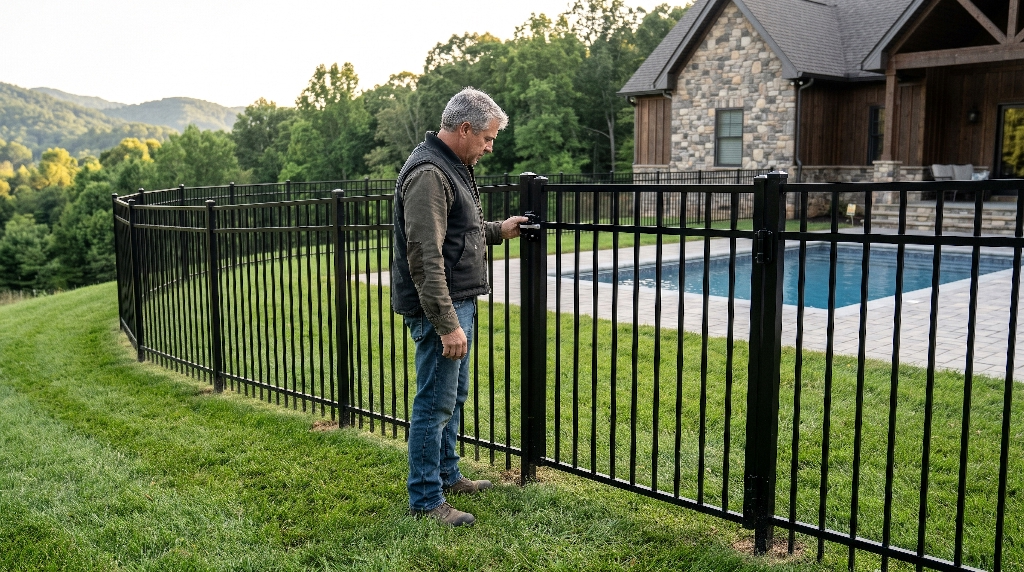
Building codes exist to turn legal principles like the attractive nuisance doctrine into specific, measurable construction standards. When building in Sullivan County, Washington County, or within the city limits of Kingsport, Johnson City, and Bristol, contractors must comply with the International Residential Code (IRC) and the International Swimming Pool and Spa Code (ISPSC). These regulations set clear safety specifications to satisfy the requirements of the attractive nuisance doctrine.
The 48-Inch Rule (Finished Grade Measurement)
The baseline requirement for pool safety in Tennessee is the barrier height rule. Every outdoor swimming pool must be surrounded by an approved barrier or fence at least 48 inches (four feet) in height.
In custom home construction, precision in measurement is essential:
- The 48-inch height must be measured on the side of the barrier that faces away from the swimming pool.
- The measurement must be taken from the finished ground grade, not from rough dirt before sod or hardscaping is installed.
- If your home sits on a sloping lot, common throughout East Tennessee, the fence must maintain that 48-inch vertical clearance across every single contour of the slope.
Failing to maintain a full 48 inches of vertical height leaves you vulnerable under the attractive nuisance doctrine if a child enters the area.
Clearance and Spacing Constraints
A fence is only as protective as its openings. Local building codes establish strict geometric rules to prevent small children from crawling under, squeezing through, or climbing over the barrier. These rules eliminate physical hazards addressed by the attractive nuisance doctrine.
Maximum Two-Inch Bottom Clearance
The vertical distance between the finished grade and the bottom of the fence barrier cannot exceed two inches. If the surface is concrete or a solid deck pad, the gap can expand slightly to four inches, but two inches is the standard on soil or grass. If a builder leaves a six-inch washout ditch under a fence rail, a toddler can easily squeeze beneath it. Such an oversight violates both building codes and the duty of care defined by the attractive nuisance doctrine.
The Four-Inch Sphere Rule
Openings in the barrier must not allow the passage of a four-inch diameter sphere. This standard is based on the average torso size of a young child. Whether you choose vertical metal pickets, cedar panels, or composite materials, the space between pickets must remain under four inches. A child should never be able to push their head or body through the fence pickets. Maintaining this spacing is a core defense against claims under the attractive nuisance doctrine.
Horizontal Rail Placement
Kids are natural climbers who treat fence crossbars as ladder rungs. To counteract this, Tennessee codes dictate that if the distance between the tops of the horizontal rails is less than 45 inches, those rails must be installed on the pool side of the fence. This design orientation leaves a smooth, unclimbable vertical face on the outside. Furthermore, decorative cutouts or projections that could serve as handholds or footholds are prohibited. These physical safeguards show compliance with the attractive nuisance doctrine.
Gate Hardware and Ingress Design
Gates are the most common failure point in residential pool barriers. A pool fence offers no protection under the attractive nuisance doctrine if the gate remains unlatched, swings wide, or sags over time.
Tennessee building codes demand specific gate engineering:
- Outward Swing: Pedestrian access gates must swing outward, away from the swimming pool area. If a toddler pushes against the gate from the outside, their body weight pushes the gate closed against the latch rather than open into the pool.
- Self-Closing and Self-Latching: Every gate must be equipped with adjustable tension hinges and latches that automatically close and secure the gate from any open position, including when opened just a single inch.
- Release Mechanism Height: If the latch release mechanism is located on the outside of the gate, it must sit at least 54 inches above the ground to keep it out of reach of small children. If mounted on the pool side, the release can sit lower, provided it is shielded so a child cannot reach through the pickets to pull it.
Inspecting and maintaining these hardware assemblies is a continuous requirement under the attractive nuisance doctrine.
Direct Access from the House
In many custom architectural layouts, the rear wall of the house serves as one side of the pool enclosure. French doors, sliding glass patio doors, and master bedroom doors often open directly onto the pool deck. This design introduces serious risks under the attractive nuisance doctrine.
When the home forms part of the barrier, Tennessee building codes require one of three safety layers:
- Audible Door Alarms: Every door and operable window with a sill height below 48 inches that leads directly to the pool patio must have an approved audible warning device. This alarm must sound immediately when the door opens and produce a minimum volume of 85 decibels for at least thirty seconds. It must feature a momentary deactivation switch mounted at least 54 inches high to allow adult passage.
- ASTM-Approved Safety Covers: The pool must be fitted with a motorized, certified safety cover that meets ASTM Standard F1346. These heavy covers can support the weight of multiple adults and form an impenetrable barrier when closed.
- Interior Isolation Fencing: An additional four-foot fence can be installed between the back patio doors and the edge of the water.
Relying solely on standard residential door latches does not satisfy the requirements of the attractive nuisance doctrine.
Tennessee’s Katie Beth’s Law (T.C.A. Sections 68-14-801 through 68-14-807)
Beyond standard municipal building codes, Tennessee homeowners and general contractors must adhere to specific state statutes designed to prevent childhood drownings. Chief among these is Katie Beth’s Law, codified at Tennessee Code Annotated Sections 68-14-801 through 68-14-807. This legislation provides mandatory safety mandates that operate alongside the attractive nuisance doctrine.
Statutory Mandate
Katie Beth’s Law was enacted following the tragic drowning of a young child in Tennessee. The statute mandates that anyone applying for a building permit for the construction or substantial alteration of a residential swimming pool must install an approved pool alarm prior to final inspection.
Local building inspectors in Kingsport, Johnson City, and Bristol cannot issue a final certificate of occupancy or permit sign-off without a functioning pool alarm on site. From a legal standpoint, compliance with Katie Beth’s Law is critical. If an accident occurs and the owner neglected to install a state-mandated alarm, that violation serves as clear evidence of negligence under the attractive nuisance doctrine.
Operational Specs
Under T.C.A. Section 68-14-802, a compliant pool alarm must meet rigid operational standards:
- Detection Capability: The device must be capable of detecting an accidental entry into the water by a child, pet, or object weighing fifteen pounds or more.
- Audible Output: Upon detecting water displacement, the alarm must emit an audible warning siren of at least 50 decibels.
- Multi-Point Warning: The siren must sound both outdoors at the pool edge and inside the main residential structure through a wireless remote receiver.
- Continuous Operation: The system must run continuously, monitoring the pool twenty-four hours a day, seven days a week.
Meeting these operational thresholds demonstrates that a homeowner took active, measurable steps to satisfy the duty of care outlined in the attractive nuisance doctrine.
Sensor Selection
Selecting the right alarm equipment requires an understanding of both physics and local weather conditions. East Tennessee experiences mountain wind patterns, heavy rain, and seasonal temperature swings that impact sensor performance. Property owners generally choose between two primary technologies:
Subsurface Pressure Wave Detectors
These sensors extend beneath the water line into the pool basin. They monitor hydrostatic pressure waves caused by an object falling into the water. Subsurface sensors are highly reliable because they are rarely fooled by surface winds, rain ripples, or floating leaves. From an engineering and legal perspective, subsurface wave sensors provide dependable risk mitigation that directly aligns with the intent of the attractive nuisance doctrine.
Surface Wave Sensors
These devices float on top of the water or clamp to the pool coping at water level. They detect surface disturbances. While economical, surface units are prone to false alarms caused by wind gusts blowing across the water. A system that triggers frequent false alarms is often turned off by frustrated homeowners. Disabling an alarm creates severe legal vulnerability under the attractive nuisance doctrine.
Homeowners should note that personal wearable alarms (such as wristbands worn by children) do not satisfy Katie Beth’s Law. The statute requires an alarm integrated into the pool structure itself to protect any child who approaches the water, fully reinforcing the principles of the attractive nuisance doctrine.
Construction Phase Liability: Protecting the Active Job Site
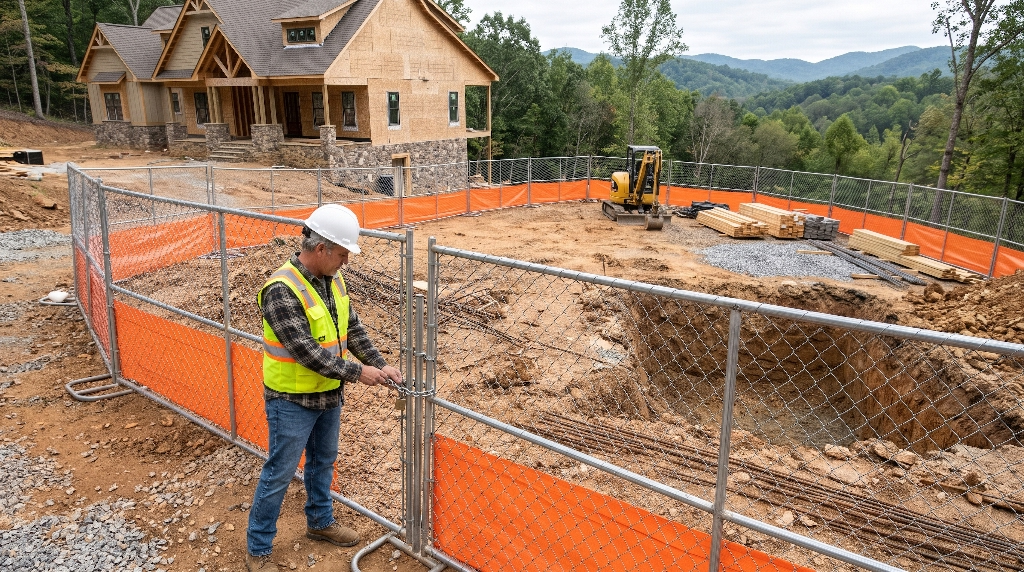
A pool does not have to be completed, filled with treated water, or open for swimming to trigger liability. In my experience managing custom home projects, the construction phase presents some of the highest safety risks under the attractive nuisance doctrine.
Excavation Phase Exposure
The excavation stage of pool installation involves heavy machinery cutting large, deep cavities into the earth. In the Tri-Cities, excavators often dig into dense clay and shale to create a pool basin eight feet deep or more.
During construction, this open excavation represents an immediate liability trap:
- An open pit with sheer vertical dirt drops attracts curious neighborhood children who see it as an adventure playground.
- Rainstorms in our area can rapidly fill an unfinished excavation with several feet of muddy runoff.
- Muddy water conceals sharp exposed rebar, steel forms, electrical conduit, and plumbing lines.
If a child wanders onto an open job site and falls into a rain-filled pit, the attractive nuisance doctrine applies directly to the homeowner and the general contractor. Courts recognize an unmonitored excavation as a dangerous condition under the attractive nuisance doctrine.
Site Containment Protocols
To maintain a secure construction site, professional builders implement strict physical containment protocols:
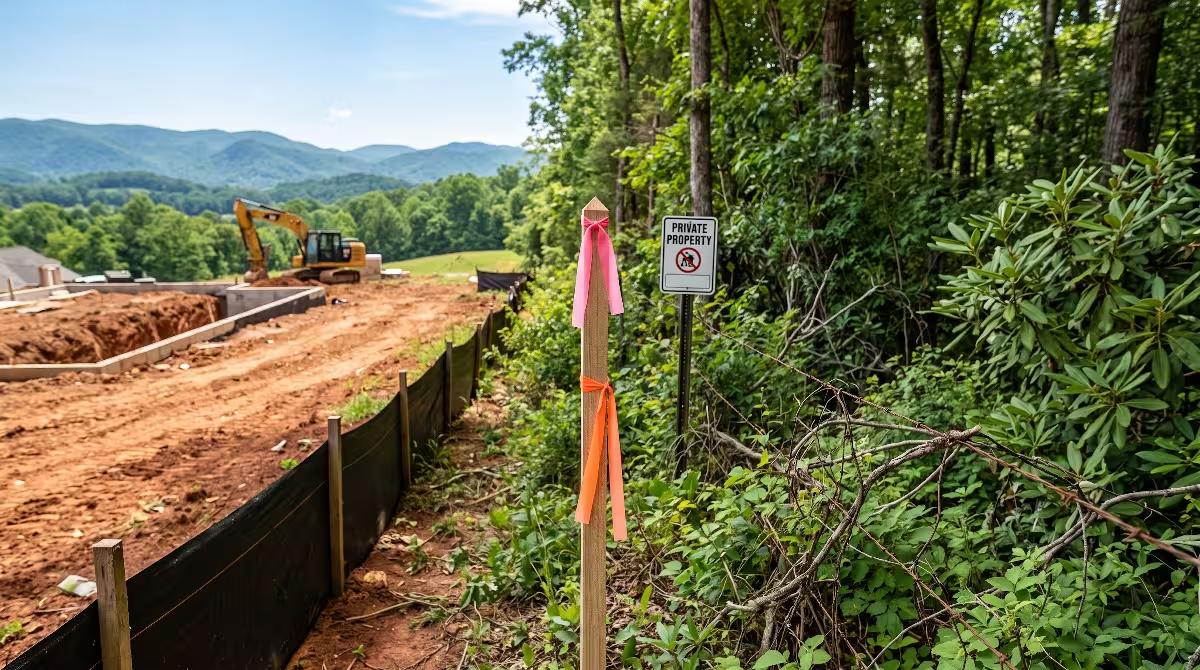
- Temporary Security Fencing: Before excavation equipment arrives, contractors must erect a continuous temporary chain-link fence or a rigid, high-visibility orange safety barrier around the entire work zone.
- Secured Access Points: Driveway access gates and path entries must be padlocked at the end of each workday.
- Perimeter Inspections: Job site supervisors must walk the perimeter daily to confirm that wind, equipment, or deliveries have not compromised the security barrier.
Allowing temporary fencing to collapse or leaving gaps in the site boundary invites disaster. Maintaining strong perimeter controls is essential to satisfy the attractive nuisance doctrine during home construction.
Subcontractor Protocols
Managing job site safety requires enforcing strict safety rules across all specialty subcontractors:
- Equipment Immobilization: Excavators, skid steers, and trenchers must have their ignition keys removed and cabs locked every evening. Leaving keys in heavy machinery creates another severe hazard under the attractive nuisance doctrine.
- Ladder Removal: Ladders used to access deep pool excavations must be removed and locked away at the end of every shift. A ladder left in an open pit allows children easy, unsupervised access to an active hazard.
- Trench and Hole Covers: Plumbers and electricians must securely cover utility trenches and tie-in holes with heavy structural plywood.
- Chemical Storage: Gunite materials, pool acid, chlorine treatments, and bonding chemicals must be locked inside secure storage trailers.
Implementing these daily protocols protects children and shields the project from claims under the attractive nuisance doctrine.
Comprehensive Risk Mitigation Checklist for Homeowners
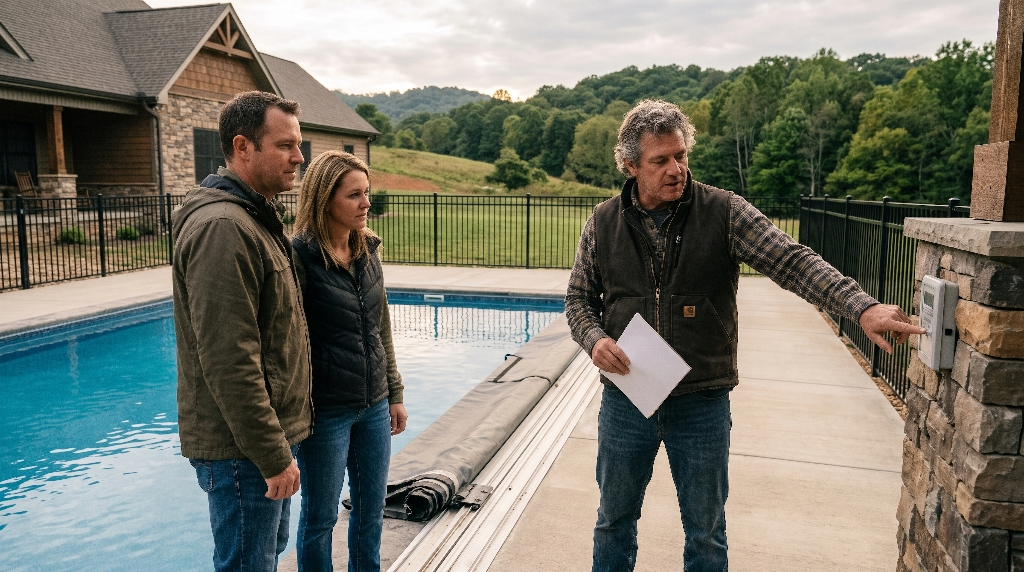
Protecting your property against liability under the attractive nuisance doctrine requires a layered defense strategy. In engineering, we use defense-in-depth principles: if one safety barrier fails, secondary systems immediately step in to prevent harm.
Here is a practical, four-step risk mitigation framework tailored for Tennessee pool owners:
+-----------------------------------------------------------------+
|                   LAYERED DEFENSE ARCHITECTURE                  |
+-----------------------------------------------------------------+
|  Layer 1: Perimeter Barrier (48" un-climbable fence & gate)     |
|  Layer 2: Surface Isolation (ASTM F1346 automatic safety cover) |
|  Layer 3: Audible Detection (Katie Beth's Law pool alarms)      |
|  Layer 4: Access Point Alarms (Direct patio door & window alerts)|
+-----------------------------------------------------------------+
Layered Defensive Engineering
A single safety measure is rarely enough to protect children or eliminate liability under the attractive nuisance doctrine. Homeowners should combine physical, mechanical, and electronic defenses into a unified safety shield:
- Outer Perimeter Fence: Install an approved 48-inch fence enclosing the entire yard or pool zone, engineered with self-closing, self-latching gate hardware.
- ASTM Certified Safety Cover: Install a track-mounted, motorized safety pool cover. When closed, it creates a rigid barrier over the water that prevents any direct contact.
- Underwater Acoustic Alarm: Install an operational pool alarm compliant with Katie Beth’s Law to provide instant acoustic notification if an object enters the water.
- Patio Door and Window Alarms: Secure every household portal leading to the patio with high-decibel warning sensors.
- Underwater LED Lighting: Maintain powerful interior pool lighting to keep the bottom of the basin clearly visible from the home at night.
Deploying these layered physical defenses demonstrates active compliance with the standard of care required by the attractive nuisance doctrine.
Homeowners Insurance and Umbrella Coverage
Physical barriers are your primary physical defense; insurance coverage is your essential financial defense. When you construct a swimming pool, your risk profile changes instantly under the attractive nuisance doctrine.
- Base Homeowners Policy Limits: Standard homeowners policies typically include personal liability limits between $100,000 and $300,000. In the event of a catastrophic pool injury or drowning lawsuit, medical expenses and legal judgments can easily surpass those caps.
- Dedicated Umbrella Liability Policy: Every pool owner should purchase a separate personal umbrella liability policy with limits of at least $1,000,000 to $2,000,000. Umbrella coverage provides excess liability protection above your standard home policy.
- Underwriter Requirements: Insurance carriers often inspect pool properties before issuing coverage. They will check fence heights, self-latching gates, and diving board clearances. If your pool fails an underwriter inspection, the insurer may cancel your coverage, leaving you personally exposed to claims under the attractive nuisance doctrine.
- Mandatory Disclosure: Always notify your insurance carrier in writing before pool construction begins. Hiding a pool from your insurer can void your liability protection entirely.
Routine Maintenance Logs
Even the most advanced safety hardware deteriorates if neglected. Over time, seasonal freeze-thaw cycles in the Tri-Cities shift gate posts, deaden alarm batteries, and loosen latch springs. Under the attractive nuisance doctrine, homeowners must inspect and maintain their safety gear continuously.
Homeowners should establish a formal inspection routine and keep a written maintenance log:
| Frequency | Target Safety System | Inspection Protocol | Legal Protection Objective |
| Weekly | Gates and Latches | Test self-closing action from open positions of 1″, 6″, and 45″. | Proves ongoing compliance with the attractive nuisance doctrine. |
| Monthly | Katie Beth’s Law Alarm | Drop a 15-pound test weight into water to confirm indoor/outdoor sirens. | Verifies operational readiness under state alarm statutes. |
| Monthly | Perimeter Fence Lines | Inspect base clearance for soil erosion, washouts, or animal burrowing. | Preserves the two-inch gap required by the attractive nuisance doctrine. |
| Quarterly | Door and Window Alarms | Test sounder decibel levels and replace backup batteries. | Eliminates household blind spots under local safety codes. |
| Seasonal | ASTM Safety Cover | Clean tracks, verify motor tension, and inspect fabric stitching. | Ensures mechanical barrier integrity across seasonal breaks. |
If an accident occurs, having a documented maintenance log serves as written proof that you consistently fulfilled your duties under the attractive nuisance doctrine.
Frequently Asked Questions about Nuisance Doctrine
Can a No Trespassing Sign Shield Me from a Claim?
No, posting warning signs will not protect you from liability under the attractive nuisance doctrine. A “No Trespassing,” “Keep Out,” or “Private Pool” sign relies on the reader’s ability to read and understand written language.
The attractive nuisance doctrine exists specifically to protect young children who are illiterate or lack the cognitive ability to understand legal warnings. A four-year-old child cannot read a metal sign nailed to a post. While a warning sign may help deter adult trespassers, it provides zero defense against claims brought on behalf of a young child under the attractive nuisance doctrine. Physical, impenetrable barriers are the only acceptable defense.
Do Above-Ground Pools Require the Same Barrier Protections as In-Ground Installations?
Yes, Tennessee building codes and the attractive nuisance doctrine apply equally to above-ground pools. While the raised structural walls of an above-ground pool can sometimes serve as part of the 48-inch barrier, strict conditions apply:
- The distance between the surrounding ground and the top rim of the pool wall must measure at least 48 inches continuously around the circumference.
- Any access ladder or exterior steps must be removable, retractable, or enclosed within an approved four-foot self-latching fence enclosure.
- Fold-up ladders must be locked securely in the upright position when the pool is unattended.
Leaving an above-ground pool ladder down invites curious children to climb inside. This act constitutes clear negligence under the attractive nuisance doctrine.
What Age Bracket Qualifies as a Child of Tender Years?
Tennessee courts do not establish an absolute, rigid age cutoff for the attractive nuisance doctrine. Instead, the law evaluates the child’s age, mental capacity, and emotional maturity on a case-by-case basis.
Generally, the attractive nuisance doctrine applies most strictly to children under the age of twelve or fourteen, often referred to in legal decisions as children of “tender years.” Very young children (ages one through seven) receive the highest degree of protection because they have no capacity to calculate drowning dangers. As children grow older, courts evaluate whether a teenager possessed sufficient knowledge to realize the risks of their actions. However, relying on an age defense is risky; property owners must design pool barriers to deter children of all ages under the attractive nuisance doctrine.
Are HOA Amenities Subject to Different Liability Standards than Private Pools?
Homeowners association (HOA) pools, condominium facilities, and community clubhouses face even greater exposure under the attractive nuisance doctrine than single-family residential backyards.
While private residential pools are governed primarily by the residential code and Katie Beth’s Law, commercial and community pools must comply with Tennessee Department of Health public swimming pool regulations (Chapter 1200-01-05). These facilities must feature:
- Continuous commercial-grade perimeter fencing (often five to six feet tall).
- Self-closing panic hardware on entry gates.
- Prominently posted emergency telephone equipment with direct 911 access.
- Professional life rings, shepherd’s crooks, and formal chemical logging.
An HOA board owes a fiduciary and legal duty to all association members and neighborhood visitors. If a community pool gate fails to latch and a child enters the water unsupervised, the association can face massive liability under the attractive nuisance doctrine.
Builder’s Field Note and Technical Perspective
When designing and building custom homes across Kingsport, Johnson City, and Bristol, safety must never take a back seat to aesthetics. As an engineer and builder, I view pool construction as an integrated structural system where mechanical components, physical fencing, and landscape architecture work together.
The attractive nuisance doctrine is not merely an abstract legal concept cooked up by lawyers. It reflects the fundamental reality that human life is fragile, especially the lives of young children in our communities. When we build an artificial water feature into the East Tennessee landscape, we alter the natural environment. We introduce an undeniable hazard that demands intelligent, durable safety controls.
Meeting the expectations of the attractive nuisance doctrine does not mean your backyard must look like a secure industrial yard. Modern building products make it easy to blend beauty with safety:
- High-tensile ornamental aluminum pickets deliver classic beauty while meeting strict spacing mandates.
- Keyless magnetic gate latches keep hardware out of a toddler’s reach while providing quiet, reliable security.
- In-ground automated safety covers sit flush with the surrounding stone deck, rolling away invisibly at the press of an authorized security code.
- Digital subsurface alarms integrate directly with modern smart home automation systems, sending alerts straight to your phone.
As builders and property owners, our duty is clear. We must approach every residential project with professional competence, meticulous precision, and personal integrity. By investing in proper engineering, honoring municipal building codes, adhering to Katie Beth’s Law, and understanding the attractive nuisance doctrine, we create outdoor spaces that remain places of joy, relaxation, and peace of mind for generations to come.