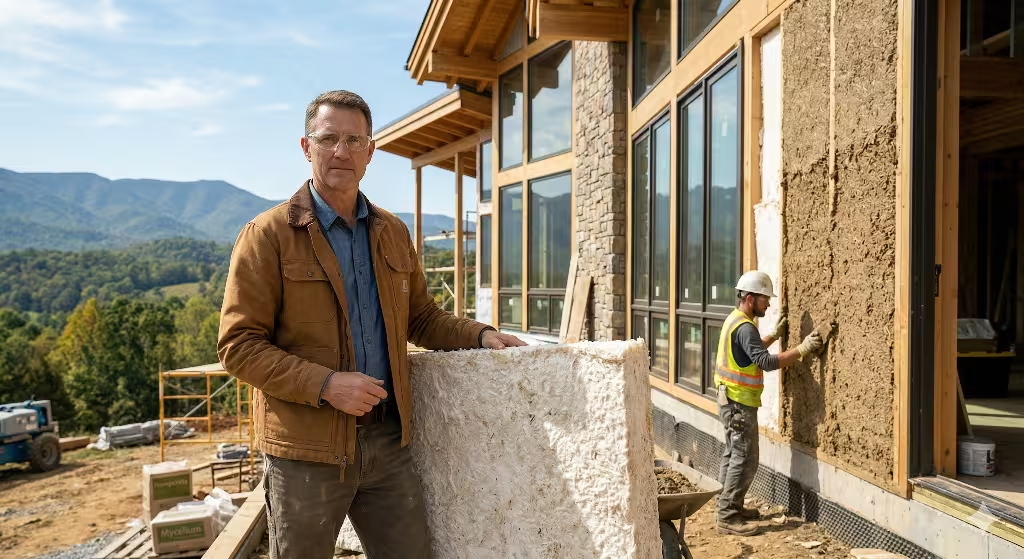
The Intersection of Biophilic Architecture and Appalachian Forestry
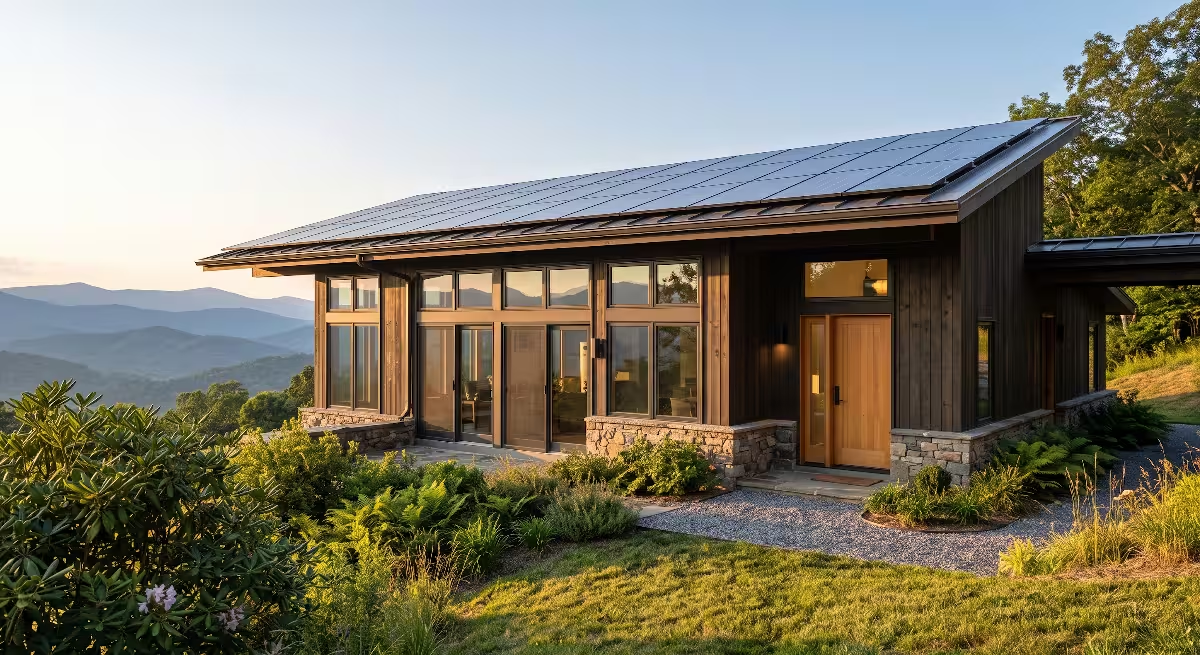
Building a home that connects people to nature starts with the materials you touch every day. Here in the mountains of East Tennessee, our landscape gives us one of the greatest natural resources in the world. When we design living spaces that support human wellness, we look directly to the surrounding woods. But good design requires more than just picking pretty wood. It demands that we protect the forest where that timber grew. This is where verified hardwood suppliers play a central role in our work.
When you design a home with nature in mind, you cannot separate the health of the building from the health of the regional forest. Sourcing your lumber through reliable hardwood suppliers protects the local ecosystem and improves indoor comfort.
The Regional Imperative
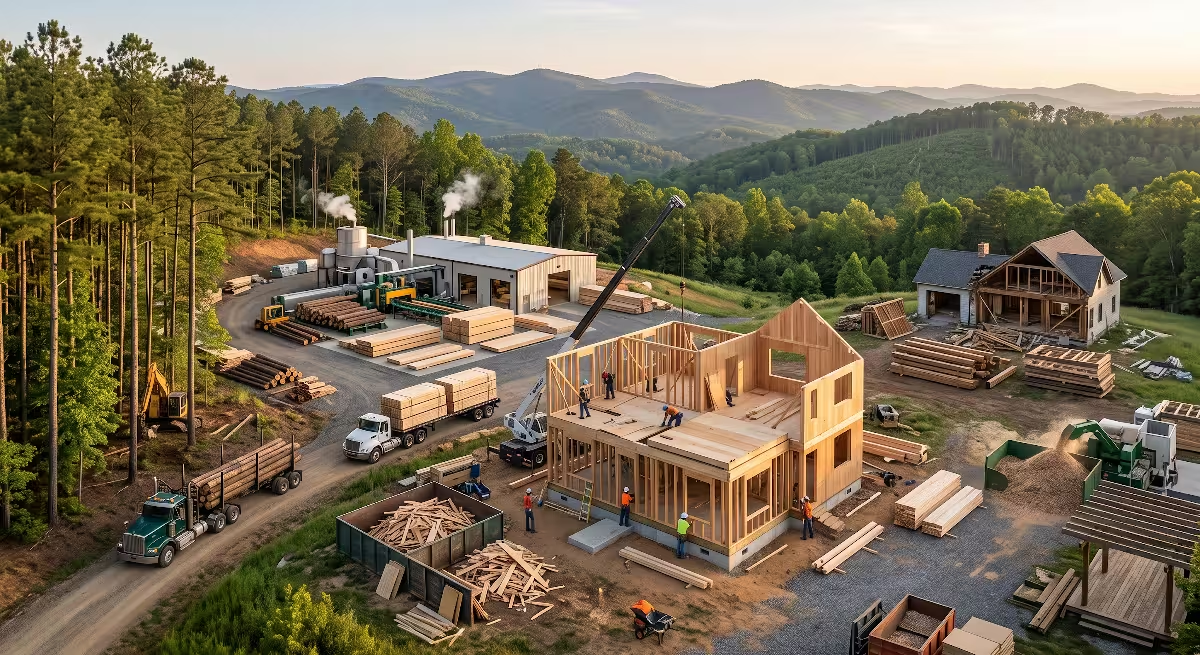
The Southern Appalachian forest is a biological treasure. In East Tennessee, our mixed mesophytic forests hold dozens of native tree species growing together across rich coves and ridges. Because our timber is so valuable, our woodlands face heavy pressure. If logging is done without strict rules, clear-cutting strips the soil, pollutes local mountain streams, and destroys wildlife habitat.
Sustainable building practices demand that we know where our timber originates. Ethical hardwood suppliers work closely with forest managers to preserve root systems, protect water tables, and allow young trees room to mature. When builders partner with responsible hardwood suppliers, they ensure that timber harvesting does not damage the mountain landscape we love. East Tennessee builders have a special duty to guard this biodiversity. Choosing certified hardwood suppliers allows our regional building economy to thrive while keeping our mountain canopies intact.
Biophilic Engineering Value
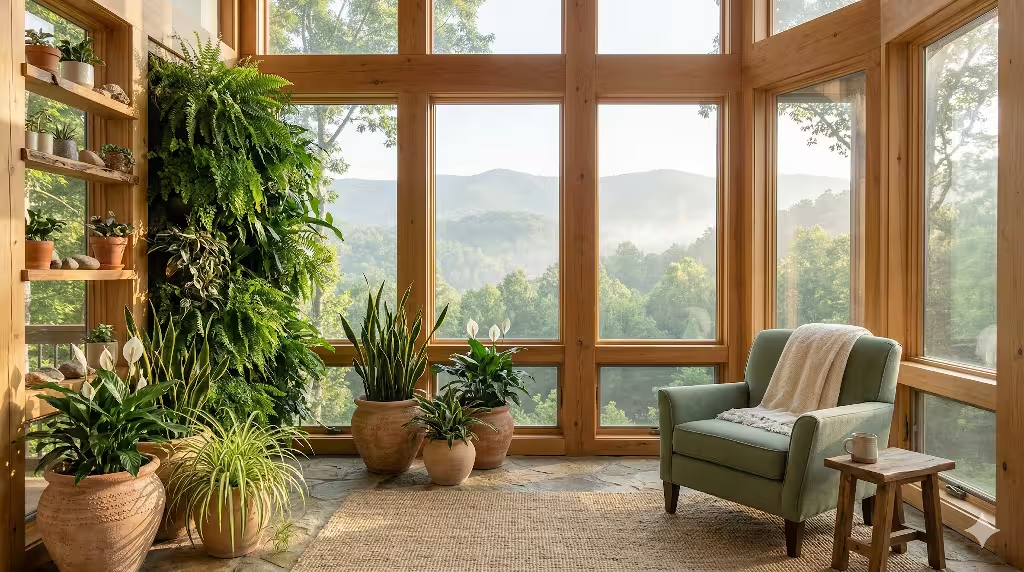
Biophilic engineering focuses on how natural patterns and materials improve physical and mental health. Human biology evolved alongside natural environments. When we bring authentic wood surfaces inside a living space, our nervous systems respond immediately. Research shows that visible wood grain lowers heart rates, reduces stress levels, and improves focus.
+-------------------------------------------------------------------------+
|                  BIOPHILIC VALUE OF NATURAL TIMBER                      |
+-------------------------------------------------------------------------+
|  1. Visual Connection   | Natural fractal patterns reduce stress        |
|  2. Acoustic Comfort    | Cell structure absorbs harsh reverberation    |
|  3. Air Modulation      | Open pores buffer indoor humidity swings      |
|  4. Low Embodied Carbon | Biogenic carbon remains locked inside rooms   |
+-------------------------------------------------------------------------+
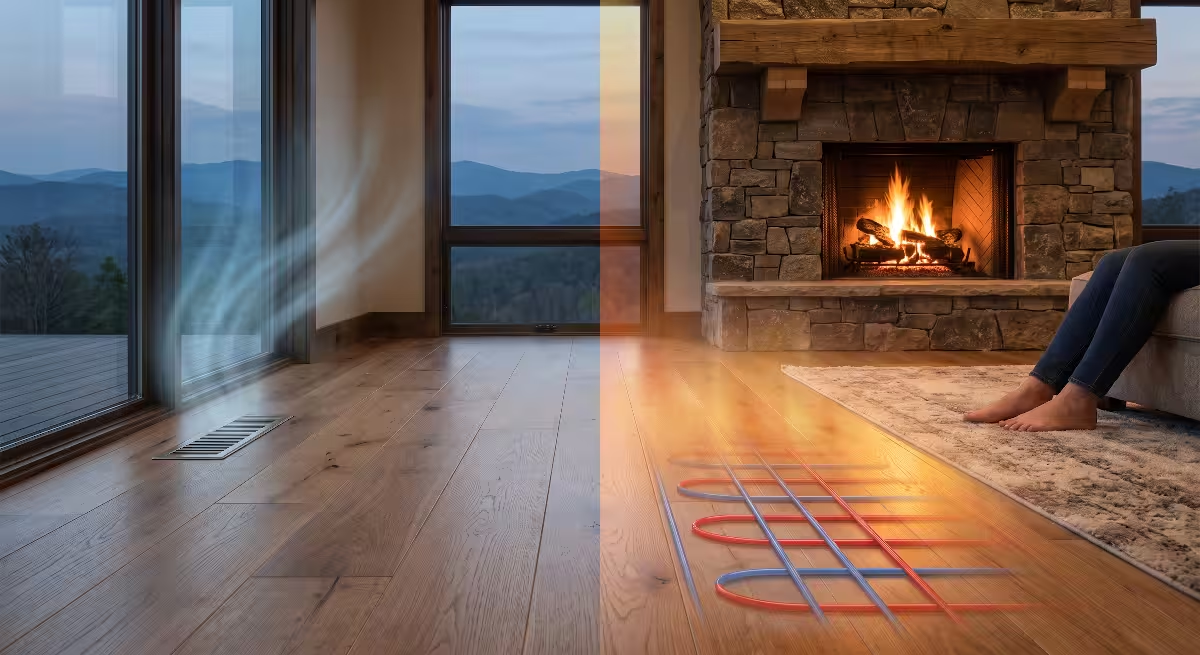
Wood is also hygroscopic, meaning it absorbs and releases moisture vapor as room humidity changes. This helps buffer indoor air, keeping living areas more comfortable across our humid East Tennessee summers and dry mountain winters. Wood cells also absorb sound, cutting down on harsh echoes inside large living spaces.
Synthetic floors and composite trim cannot duplicate these biological benefits. But to capture these health advantages safely, builders must buy clean, natural timber through dedicated hardwood suppliers. Reputable hardwood suppliers provide lumber that has not been treated with harsh chemicals, keeping indoor air safe to breathe.
Deconstructing FSC: What Architects and Builders in East TN Must Verify
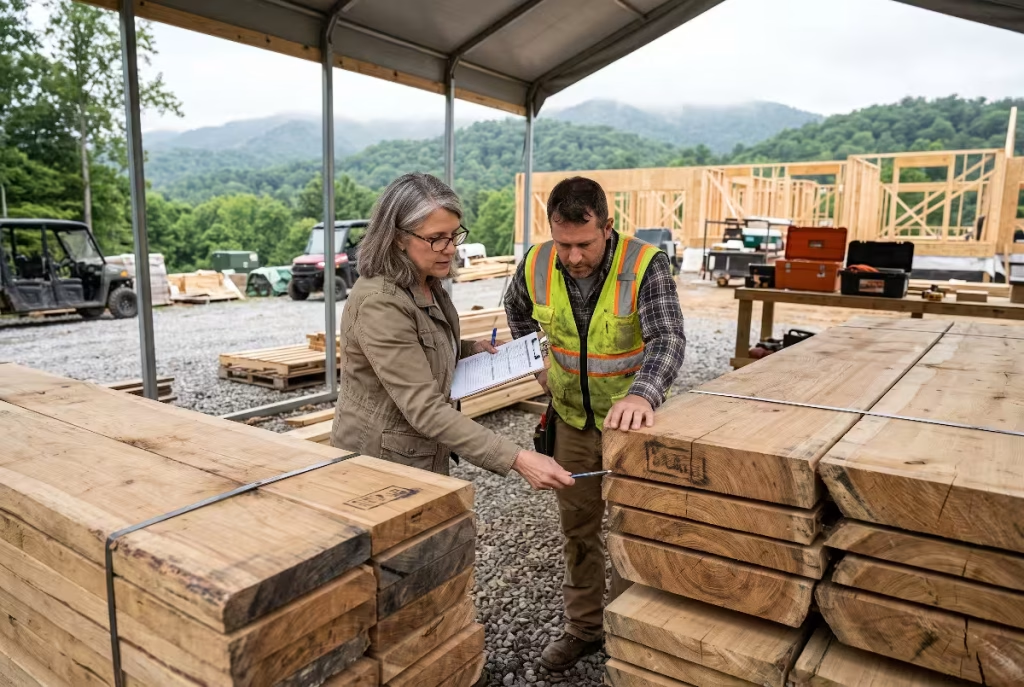
Many lumber mills claim their products are green, but vague marketing terms do not guarantee good forestry. You need a trusted third-party standard to confirm that the trees were harvested responsibly. The Forest Stewardship Council, known worldwide as FSC, is the gold standard for responsible forestry.
For projects in East Tennessee, professional builders rely on verified hardwood suppliers who carry true FSC credentials. Knowing how to read these credentials helps you avoid greenwashing.
The FSC Certification Matrix
FSC provides three distinct label tiers. Each tier tells you exactly how much certified fiber is present in the final product:
- FSC 100%: Every single fiber comes from an FSC-certified forest that meets strict ecological and social rules. This is the top tier for timber framing, exposed rafters, and solid plank flooring. Conscientious hardwood suppliers recommend FSC 100% when a project aims for the highest green building standards.
- FSC Mix: The product blends timber from FSC-certified forests with controlled wood or recycled inputs. Controlled wood must avoid five unacceptable sources, such as illegally harvested timber, wood harvested in violation of civil rights, or wood from genetically modified trees. Many hardwood suppliers stock FSC Mix for architectural plywood, cabinet sheet goods, and interior doors.
- FSC Recycled: The timber comes entirely from reclaimed materials, such as salvaged Appalachian barns, old industrial warehouses, or river-recovered logs. Specialized hardwood suppliers clean, de-nail, and re-mill this wood, offering aged textures without cutting a single standing tree.
The Non-Negotiable: Chain of Custody Tracking
A sawmill cannot simply buy logs from an FSC-certified forest and call the resulting lumber certified. The entire supply chain must maintain an unbroken record called Chain of Custody, or CoC.
Forest Floor (Certified)
       │
       ▼
   Log Hauler (Tracked)
       │
       ▼
    Sawmill (CoC Certified)
       │
       ▼
 Kiln & Planing Mill (CoC Certified)
       │
       ▼
 Hardwood Suppliers (CoC Certified)
       │
       ▼
Jobsite Delivery (Verified Invoice)
Chain of Custody tracks the wood from the forest floor, through the log truck, into the sawmill, through the dry kiln, into the warehouse, and finally to your jobsite. Every business handling the material must hold its own active CoC code. When you receive lumber on your jobsite, certified hardwood suppliers must provide an invoice displaying their unique CoC license number alongside the specific FSC claim for each line item. If that license number is missing from the paper invoice, the wood cannot count toward green building credits.
FSC vs. SFI in Tennessee Forestry
In the Southeastern United States, you will often see timber carrying a label from the Sustainable Forestry Initiative, or SFI. SFI is an industry-backed standard common among commercial pine plantations across the deep South. While SFI encourages good practices like replanting after a harvest, its rules allow larger clear-cuts and permit more chemical herbicide use.
FSC enforces far stricter standards. It prohibits the conversion of natural forests into tree plantations, protects watercourses with wide buffer zones, and limits clear-cutting in sensitive mountain coves. For biophilic and sustainable homes, architects prefer FSC-certified hardwood suppliers. These dedicated hardwood suppliers help protect our native hardwood ecology rather than supporting monoculture tree farms.
Vetted FSC-Certified Hardwood Suppliers Serving East Tennessee
Finding certified timber in Northeast Tennessee requires knowing the regional supply network. While East Tennessee is covered in trees, much of the local timber is sold into standard commercial markets without certification paperwork. Builders must actively seek out certified hardwood suppliers who maintain active Chain of Custody tracking.
+--------------------------------------------------------------------------+
|            REGIONAL SOURCING CORRIDOR FOR EAST TENNESSEE                 |
+--------------------------------------------------------------------------+
|  Primary Transit Artery: Interstate 81 & Interstate 40                   |
|  Distribution Centers:   Johnson City, Kingsport, Bristol, Knoxville     |
|  Specialty Milling:      Newport, Greeneville, Chattanooga, Asheville    |
|  Logistics Hubs:         Atlanta & Charlotte Regional Feeder Yards       |
+--------------------------------------------------------------------------+
Regional Supply Chain Landscape
The supply chain for East Tennessee runs along the Interstate 81 and Interstate 40 highway corridors. Timber harvested in the Appalachian mountains often travels to concentration yards in Southwest Virginia, Western North Carolina, or East Tennessee before reaching local distribution warehouses.
Experienced builders know that regional hardwood suppliers often operate central yards in cities like Johnson City, Kingsport, Knoxville, and Chattanooga. These hardwood suppliers can pull specialized inventory from large mill networks across the region, making it simple to order specific species even when local retail yards do not keep them on the shelf.
Key Regional Suppliers, Mills, and Distributors
Several established operations serve our regional building market:
- AHC Hardwood Group: This company runs extensive distribution networks across the Southeast, with direct delivery routes running through East Tennessee. They hold full FSC Chain of Custody certification and supply commercial architectural millwork firms, cabinet shops, and custom builders with high-grade native lumber.
- Columbia Forest Products: Located just down the road in Newport, Tennessee, Columbia Forest Products is an industry leader in sustainable wood products. They manufacture hardwood plywood panels using pure wood veneers and soy-based, formaldehyde-free glues. They work with regional hardwood suppliers to deliver fully documented FSC panels for cabinetry and architectural paneling.
- Appalachian Specialty Hardwood Concentration Yards: Several wholesale concentration yards across East Tennessee and Southwest Virginia buy green rough lumber from small mountain sawmills. These yards dry the wood in computer-controlled kilns and sort it by grade. When working on commercial green builds, architects can partner with these hardwood suppliers to purchase bulk quantities of certified White Oak, Poplar, and Maple.
- Boutique and Reclaimed Timber Handlers: Local salvage operations in Southern Appalachia specialize in saving timber from historic structures. These specialty hardwood suppliers deconstruct old barns and factories, test the wood for safety, and mill the antique timbers into flooring, fireplace mantels, and heavy beams.
Sourcing Logistics in the Tri-Cities
If you are building in Johnson City, Kingsport, or Bristol, you must plan your lumber orders carefully. Standard non-certified lumber is easy to pick up on short notice, but certified timber takes time to source. Leading hardwood suppliers usually need four to eight weeks of advance notice to source, mill, and ship FSC 100% lumber.
+--------------------------------------------------------------------+
|               MATERIAL ORDER TIMELINE & LOGISTICS                  |
+--------------------------------------------------------------------+
|  Phase 1: Week 1 to 2   | Finalize take-offs and species specs     |
|  Phase 2: Week 3 to 5   | Mill sourcing, CoC verification, kiln run|
|  Phase 3: Week 6 to 7   | Transit to local regional yard           |
|  Phase 4: Week 8        | Jobsite drop and initial moisture check  |
|  Phase 5: Week 9 to 10  | Conditioned jobsite acclimation period   |
+--------------------------------------------------------------------+
You should also discuss minimum order quantities with your hardwood suppliers. While common species like Poplar or Red Oak can be ordered in small amounts, rare cuts like quarter-sawn White Oak or thick Walnut slabs may require buying a full pallet. Communicating early with your hardwood suppliers prevents jobsite delays and keeps your construction schedule on track.
Native Appalachian Hardwood Species Matrix for High-Performance Builds
East Tennessee forests contain an incredible variety of tree species. Each native hardwood species evolved unique physical traits, cell densities, and grain patterns. Understanding these botanical characteristics helps you pick the perfect wood for each part of your home.
| Botanical Name | Common Name | Janka Hardness | Ideal Use Case | Biophilic and Performance Character |
| Quercus alba | White Oak | 1,360 lbf | Solid flooring, structural timbers, outdoor decking | Natural tyloses block liquid water; striking medullary ray flecks when quarter-sawn. |
| Liriodendron tulipifera | Yellow Poplar | 540 lbf | Interior trim, ceiling paneling, painted cabinets | Very stable, straight grain; light weight; highly renewable regional tree. |
| Juglans nigra | Black Walnut | 1,010 lbf | Feature walls, open stair treads, custom furniture | Rich dark color; warm feel underfoot; excellent acoustic absorption. |
| Acer saccharum | Sugar Maple | 1,450 lbf | Heavy-use flooring, butcher blocks, stair nosing | Extremely hard surface; light blonde color bounces natural sunlight deep into rooms. |
| Prunus serotina | Black Cherry | 950 lbf | Custom casework, wall paneling, bedroom cabinetry | Deepens to a rich reddish patina with sunlight exposure; silky smooth texture. |
Quercus alba (White Oak)
White Oak is the premier building hardwood of the Appalachian mountains. It is dense, strong, and highly resistant to decay. Microscopically, the pores of White Oak are plugged with natural cellular growths called tyloses. These tyloses act like biological dams, stopping water from moving through the wood fibers. This makes White Oak an ideal choice for kitchen floors, bathroom accents, and exterior trim.
+-------------------------------------------------------------------------+
|                  WHITE OAK WOOD CELL ANATOMY                            |
+-------------------------------------------------------------------------+
|   [ Large Open Pore ]  ──► Pores naturally plugged by tyloses           |
|   [ Medullary Rays  ]  ──► Ribbon cells creating wide visual flecks     |
|   [ Dense Latewood  ]  ──► Resists mechanical wear and heavy foot traffic|
+-------------------------------------------------------------------------+
When White Oak is quarter-sawn, the saw cuts across the tree’s medullary rays at a ninety-degree angle. This reveals shimmering ribbon patterns across the face of the board. These visible growth patterns provide a direct visual connection to nature. Reliable hardwood suppliers carry White Oak in both plain-sawn and quarter-sawn profiles to suit different design needs.
Liriodendron tulipifera (Yellow Poplar)
Yellow Poplar, also known as the Tuliptree, is the state tree of Tennessee. It is not a true poplar; it belongs to the ancient Magnolia family. Tuliptrees grow fast, straight, and tall in our mountain coves, reaching heights over one hundred feet. Because it grows rapidly and regenerates naturally, it is one of the most eco-friendly hardwoods available.
Yellow Poplar is moderately soft, very easy to work with hand tools, and exceptionally stable once kiln-dried. It holds paint smoothly and will not warp or cup easily. Builders turn to local hardwood suppliers for Poplar when crafting interior door casings, baseboards, and tongue-and-groove ceiling paneling. Sourcing Poplar through regional hardwood suppliers supports a circular local timber economy.
Juglans nigra (Black Walnut)
Black Walnut is the luxury hardwood of the eastern deciduous forest. It features a deep chocolate-brown heartwood with complex swirling grain lines. Walnut is softer than White Oak, but its dimensional stability is outstanding. It shrinks and swells very little during seasonal humidity shifts.
+-------------------------------------------------------------------------+
|                   BLACK WALNUT GRAIN DYNAMICS                           |
+-------------------------------------------------------------------------+
|  Heartwood: Rich chocolate tone with violet undertones                  |
|  Sapwood:   Narrow blonde outer band (steamed or unsteamed)             |
|  Acoustics: Porous fiber bundles absorb harsh, high-frequency sound     |
|  Sensory:   Soft, velvet-like surface under clear protective oils       |
+-------------------------------------------------------------------------+
In biophilic home design, Black Walnut serves as a grounding material. We use it on kitchen island countertops, floating stair treads, and focal walls. Its dark tones create visual contrast against white plaster walls and large glass windows. Because Walnut is in high demand, builders must work with ethical hardwood suppliers to ensure it is harvested through selective thinning rather than destructive logging.
Acer saccharum (Sugar Maple)
Sugar Maple grows abundantly on cooler northern slopes and high-elevation ridges across East Tennessee. It has a tight, closed grain and a high Janka hardness rating of 1,450 pounds-force. This density allows it to withstand intense foot traffic, dropped objects, and active family pets without showing deep dents.
Sugar Maple has a pale, creamy heartwood that reflects natural daylight. In homes designed with passive solar strategies, maple flooring helps bounce sunlight into darker corners of the home. Trusted hardwood suppliers offer Sugar Maple in clear architectural grades for modern spaces or character grades that showcase natural mineral streaks and bird pecks.
Prunus serotina (Black Cherry)
Black Cherry is famous for its warm amber and reddish tones. When freshly cut, Cherry lumber appears pale pinkish-brown. But as the wood is exposed to natural sunlight inside a home, the natural compounds in its cells oxidize. Over the first year of installation, Cherry deepens into a rich, glowing patina.
This natural aging process provides an ever-changing reminder of the passage of time, a core principle of biophilic architecture. Cherry is fine-grained, smooth to the touch, and easy to shape into custom cabinet doors and curved handrails. Working with established hardwood suppliers ensures you receive well-matched Cherry boards without excessive sapwood streaks.
Engineering for East Tennessee’s Climate: Moisture, Curing, and Acclimation
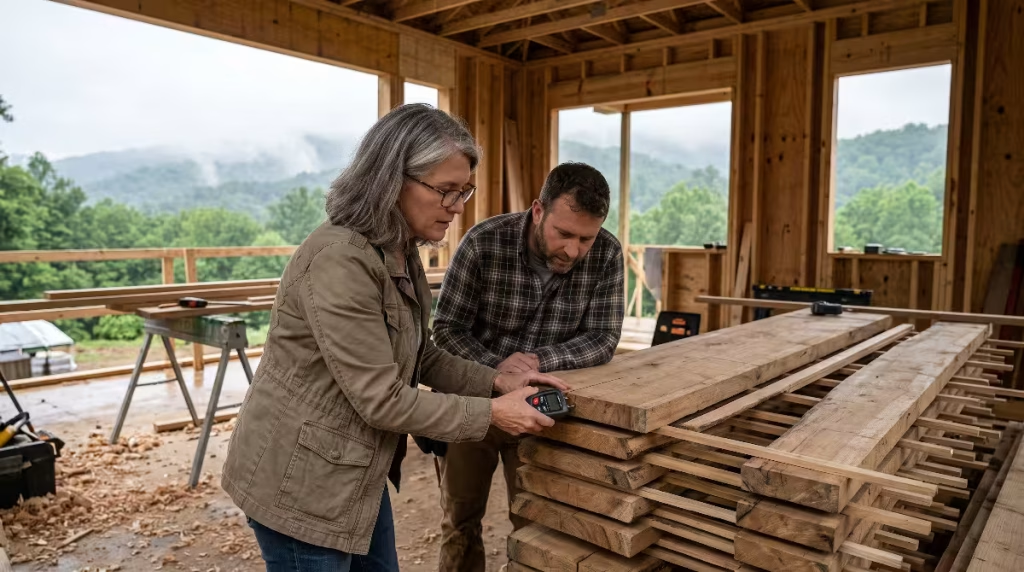
East Tennessee has a humid subtropical climate. We experience warm, moist air pushed up from the Gulf of Mexico all summer long, followed by cold, dry mountain air in the winter. Wood reacts like a giant sponge, swelling when the air is humid and shrinking when the air dries out. If you install wood without understanding these forces, your floors can buckle in July or open wide gaps in January.
Professional builders look to knowledgeable hardwood suppliers to provide lumber dried to exact moisture standards. But proper drying at the mill is only half the battle. You must manage jobsite acclimation with care.
+-----------------------------------------------------------------------+
|             EAST TENNESSEE SEASONAL MOISTURE CYCLE                    |
+-----------------------------------------------------------------------+
|  Summer Ambient:  80% RH  ──► Wood EMC rises to 12% - 14% (Expands)   |
|  Winter Heated:   25% RH  ──► Wood EMC drops to 5% - 6%   (Shrinks)   |
|  Target Balance:  45% RH  ──► Stable indoor target: 7% - 8% EMC       |
+-----------------------------------------------------------------------+
Equilibrium Moisture Content Dynamics
Equilibrium Moisture Content, or EMC, is the point where wood fibers reach balance with the surrounding air. At this point, the wood neither absorbs nor releases moisture. In East Tennessee, outdoor wood reaches an EMC of twelve to fourteen percent. But inside a climate-controlled home, the indoor air brings wood to an EMC of six to eight percent.
       Relative Humidity (%)       Target Wood Moisture (EMC)
            30% RH        ────────►        6.2% EMC
            40% RH        ────────►        7.7% EMC
            50% RH        ────────►        9.2% EMC
            60% RH        ────────►       11.0% EMC
To prevent warping, hardwood suppliers use computerized dry kilns to bring hardwood lumber down to six to eight percent moisture content before delivery. Once the lumber arrives at your build site, it must acclimate inside the enclosed, climate-controlled building for at least seven to fourteen days before installation.
Never store premium lumber in an unconditioned garage or open subfloor. Good hardwood suppliers will warn you that rushing the installation before moisture levels equalize voids material warranties and risks costly repairs.
Specifying Finishes for Biophilic Integrity
How you finish a hardwood floor or timber beam directly impacts its performance and biophilic benefits. Conventional polyurethane finishes coat the wood in a layer of liquid plastic. While plastic coatings resist spills, they seal off the natural pores of the wood. This eliminates the wood’s ability to help balance indoor humidity and hides its authentic tactile feel under a synthetic film. Plastic finishes can also off-gas volatile organic compounds, known as VOCs, into your indoor air.
+-------------------------------------------------------------------------+
|                  WOOD FINISH COMPARISON FOR BUILDS                      |
+-------------------------------------------------------------------------+
|  Metric               | Hardwax Plant Oils   | Standard Polyurethane    |
|-----------------------+----------------------+--------------------------|
|  Surface Feel         | Natural wood texture | Slick plastic film       |
|  Vapor Permeability   | Open cellular breathing| 100% sealed barrier    |
|  VOC Emissions        | Zero to ultra-low    | High off-gassing risks   |
|  Spot Repairability   | Buff in new oil easy | Requires full strip-down |
+-------------------------------------------------------------------------+
To keep the material authentic and healthy, we specify plant-based hardwax oils, pure tung oil, or zero-VOC wax finishes. These natural oils penetrate deep into the open cells of the wood, hardening from within. The wood surface remains breathable, tactile, and warm to the touch.
Many hardwood suppliers now stock prefinished wood treated with plant-based oils, saving time on the jobsite while keeping indoor air clean and healthy.
Common Questions About Hardwood Suppliers and Sustainable Sourcing
Builders, designers, and property owners frequently ask important questions when planning sustainable projects in our region. Here are straightforward answers to the most common questions:
What is the difference between FSC-certified hardwood and standard Appalachian hardwood?
Standard Appalachian hardwood is cut from regional forests under basic state timber harvesting guidelines. The Appalachian Hardwood Manufacturers trade group points out that regional forest growth rates exceed harvest rates, which is positive news. However, standard hardwood does not come with independent third-party verification.
FSC-certified timber requires strict third-party inspections to verify that the forest of origin protects waterways, maintains wildlife biodiversity, respects workers’ rights, and avoids clear-cutting. In addition, FSC certification includes full Chain of Custody tracking, giving you a verified paper trail that proves where your specific boards were cut. Certified hardwood suppliers provide this documented chain of ownership, while standard lumber retailers cannot.
How much more expensive is FSC-certified lumber for a home build?
FSC-certified hardwood typically costs between ten and twenty-five percent more than non-certified lumber of the same grade. This price difference covers the cost of third-party forest audits, separated warehouse inventory, and detailed Chain of Custody tracking.
The premium also depends on the species you select. Abundant native trees like Yellow Poplar, Red Oak, or Soft Maple carry smaller price premiums because they are widely available. Rare cuts like wide-plank, quarter-sawn White Oak or thick Black Walnut carry higher premiums. Working with established hardwood suppliers allows you to balance your design goals with your construction budget.
Can I earn LEED credits using local East Tennessee FSC wood?
Yes. Under the LEED green building rating system, FSC-certified lumber earns points under the Materials and Resources credit category for Responsible Sourcing of Raw Materials.
+-------------------------------------------------------------------------+
|                  LEED v4.1 MATERIAL CREDIT CRITERIA                     |
+-------------------------------------------------------------------------+
|  Criterion 1: FSC Certified Fiber    ──► 100% credit valuation          |
|  Criterion 2: Sourced < 100 Miles    ──► Multiplies valuation by 200%   |
|  Criterion 3: Verified CoC Invoicing ──► Mandatory audit documentation  |
+-------------------------------------------------------------------------+
If the timber is harvested, milled, and purchased through hardwood suppliers located within one hundred miles of your project site, it also qualifies for the Regional Material credit booster. This doubles the contribution of the wood toward your total LEED score, making local certified timber an effective way to certify a sustainable building.
How do I verify if an East Tennessee lumber yard is actually FSC certified?
You can verify any company’s certification in three simple steps:
Step 1: Request the Supplier's FSC License Code (Format: FSC-C######).
                           │
                           ▼
Step 2: Search the Public FSC Global Database (info.fsc.org).
                           │
                           ▼
Step 3: Confirm the Certificate Status is "Valid" and covers your species.
When your shipment arrives at the building site, inspect the physical delivery ticket and final billing invoice. The invoice must clearly display the vendor’s certification code along with the specific FSC claim next to every line item. If these items are missing, the material cannot be verified as certified.
Implementation Protocol: How Tri-Cities TN Home Specifies FSC Hardwood
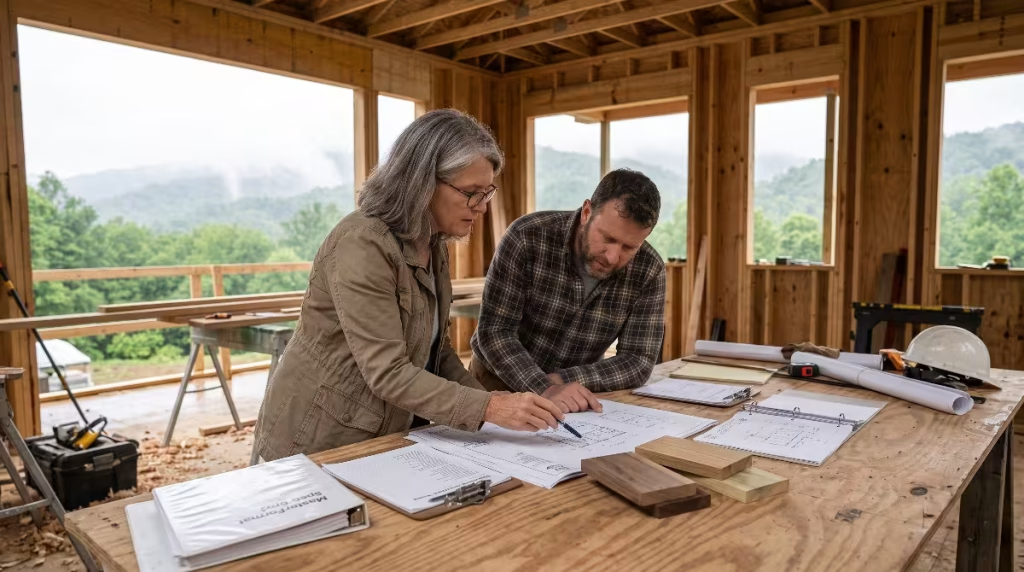
Turning sustainable design concepts into a finished home requires clear contract rules. If your construction drawings simply state “hardwood floors,” framing subcontractors and trim carpenters will usually buy the cheapest commodity lumber available at local retail yards.
To ensure that your project uses certified wood, you must write strict sourcing rules into your architectural specifications. These instructions ensure your project team buys only through qualified hardwood suppliers.
The Specification Clause: Architectural Template
Architects and designers can insert the following language into their project manuals under CSI MasterFormat Section 06 20 00 (Finish Carpentry) or Section 09 64 00 (Wood Flooring):
PART 2 – PRODUCTS: SUSTAINABLE TIMBER SPECIFICATION
- Quality Assurance and Certification: All interior finish carpentry, exposed structural timber, and solid plank flooring must be certified in accordance with the rules of the Forest Stewardship Council (FSC).
- Chain of Custody Requirements: All wood products must be sourced through certified hardwood suppliers holding an active FSC Chain of Custody (CoC) certificate.
- Submittals for Approval: Before delivering any timber to the site, the contractor must submit copies of the participating hardwood suppliers’ active CoC certificates along with written confirmation of species availability.
- Invoice Verification: Every delivery ticket and final invoice must display the supplier’s valid FSC CoC code and identify the certification level (FSC 100% or FSC Mix) for each line item.
- Moisture Verification: Interior finish lumber must be delivered with a verified moisture content between six and eight percent. The contractor must perform on-site pin meter moisture tests upon delivery and document seven to fourteen days of conditioned indoor acclimation before beginning installation.
+------------------------------------------------------------------------+
|             ARCHITECTURAL SPECIFICATION FLOWCHART                      |
+------------------------------------------------------------------------+
|  Architect writes Section 06 20 00 with strict FSC rules               |
|                               │                                        |
|  General Contractor solicits bids from certified hardwood suppliers    |
|                               │                                        |
|  Hardwood suppliers provide CoC certificate and moisture verification  |
|                               │                                        |
|  Materials delivered with FSC CoC code printed directly on invoice     |
|                               │                                        |
|  Site superintendent verifies 6% - 8% moisture before nailing boards   |
+------------------------------------------------------------------------+
Including this clear language in your bidding documents prevents misunderstandings, eliminates unexpected change orders, and guarantees that your general contractor works exclusively with certified hardwood suppliers.
Balancing Material Cost vs. Environmental Integrity
You do not need an unlimited budget to build an eco-friendly home. Smart designers allocate their material budgets strategically across the structure.
                    FOCAL TOUCHPOINTS (High Biophilic Impact)
               ┌─────────────────────────────────────────────────┐
               │  • Solid White Oak or Black Walnut Flooring     │
               │  • Exposed Heavy Rafters and Ceiling Beams      │
               │  • Entryway Millwork and Custom Front Doors     │
               │  • Floating Open Stair Treads                   │
               │  ──► Specify: FSC 100% Solid Appalachian Lumber │
               └─────────────────────────────────────────────────┘
                                        │
                                        │ Balanced Sourcing Strategy
                                        ▼
                  CONCEALED WORK (Secondary Priority Areas)
               ┌─────────────────────────────────────────────────┐
               │  • Cabinet Carcasses and Interior Box Framing   │
               │  • Painted Baseboards and Crown Mouldings       │
               │  • Wall Sheathing and Structural Subflooring    │
               │  • Hidden Blocking and Furring Strips           │
               │  ──► Specify: FSC Mix or Regional Poplar Stock  │
               └─────────────────────────────────────────────────┘
Invest your highest material funds into the surfaces people see, touch, and smell every day. Spend your budget on FSC 100% solid White Oak for living room floors, Black Walnut for kitchen island counters, and clear native Cherry for bathroom vanities.
For hidden structural areas, such as framing studs, subflooring, and cabinet carcasses, specify FSC Mix sheet goods or regional Poplar lumber. Knowledgeable hardwood suppliers can help you divide your order into high-impact visual woods and economical utility woods, keeping your overall budget on target.
Building the Future in the Southern Appalachians
Choosing sustainable materials is about more than earning building plaques or following trends. When we build homes in East Tennessee, we become caretakers of the land around us. Our choices ripple across mountain ridges, down forest streams, and through our local communities.
By choosing verified hardwood suppliers, you ensure that every floorboard, ceiling beam, and cabinet panel honors the forest where it grew. You help protect ancient mountain ecosystems, keep regional timber jobs alive, and create living spaces that offer comfort, beauty, and peace for generations to come. When you are ready to begin planning your next project, reach out to local hardwood suppliers early. Partnering with the right hardwood suppliers from the very start ensures that your home will stand as a model of lasting craftsmanship and environmental stewardship.
Project Consultation and Planning
At Tri-Cities TN Home, we help homeowners, architects, and builders throughout Johnson City, Kingsport, and Bristol design healthy, nature-focused living spaces. Sourcing the right materials requires clear guidance, verified documentation, and deep knowledge of our regional timber shed. If you need assistance writing lumber specifications, selecting native wood species, or connecting with certified hardwood suppliers across East Tennessee, our team is ready to guide your project from initial design to final installation.