

Walnut Hill, TN History
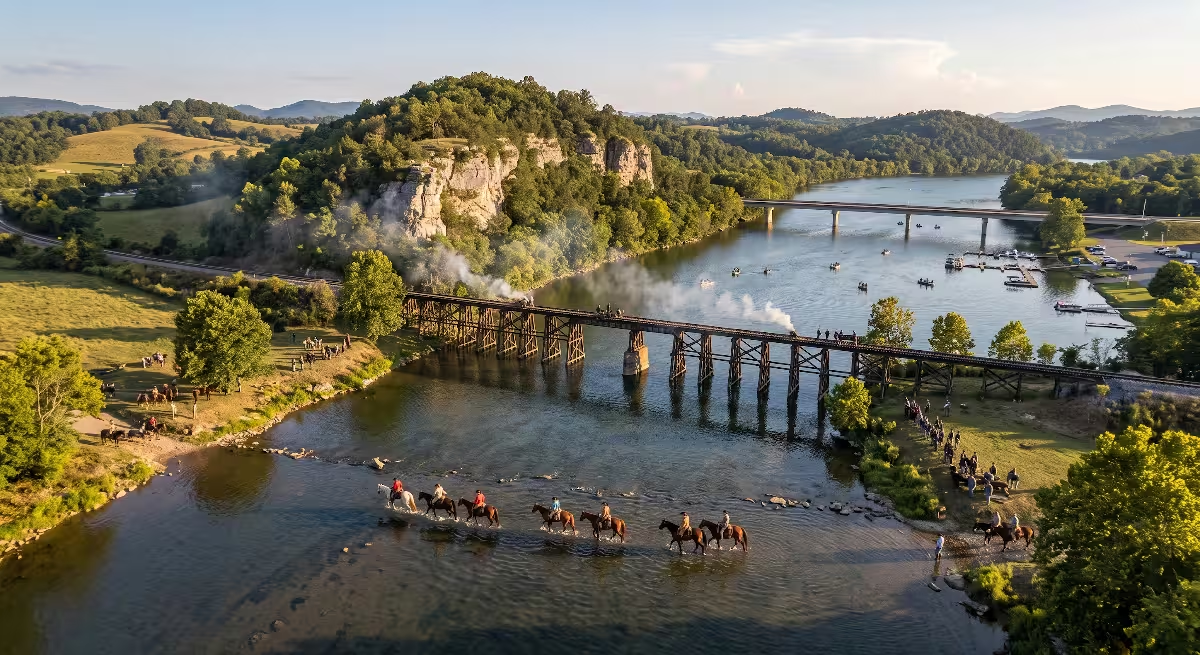
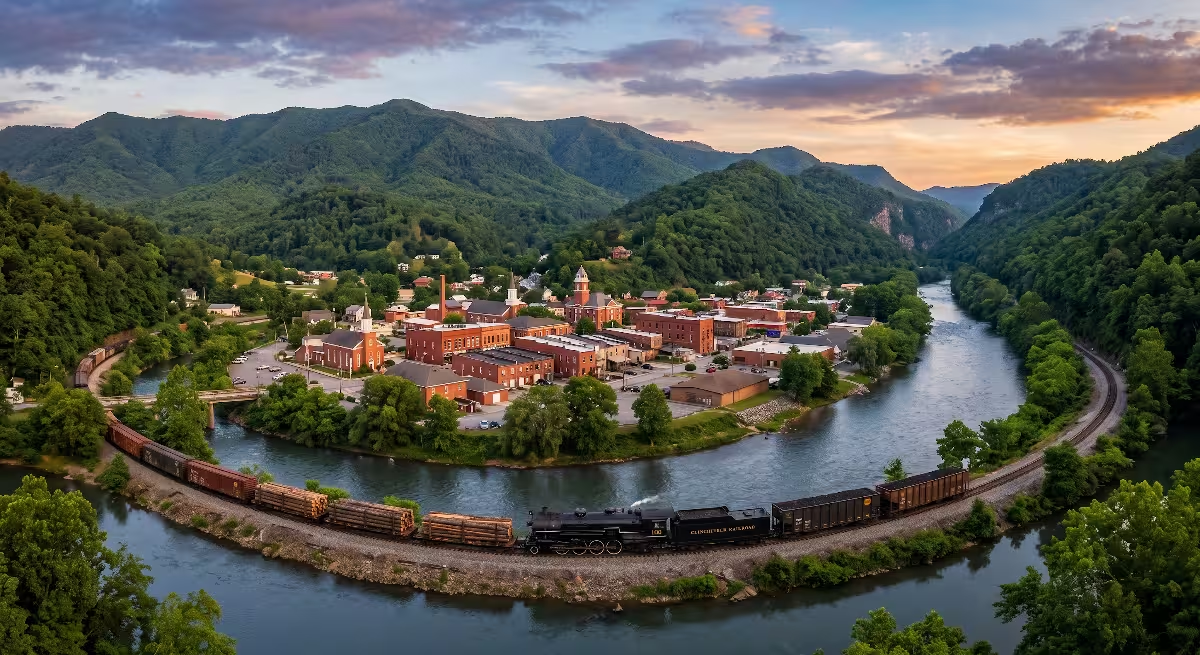
When you drive along State Route 126 between Bristol and Blountville today, you see rolling green pastures, quiet country lanes, and custom homes tucked into the hillsides. This peaceful area is known as Walnut Hill, TN. It is an unincorporated community and a census-designated place resting in the heart of Sullivan County. For decades, folks looking for open land and fresh air have chosen Walnut Hill, TN as an ideal location to settle down. Yet, long before modern subdivisions and paved driveways arrived, this ground served as an active crossroads for early settlers, teamsters, and frontier farmers.
The story of Walnut Hill, TN began long before anyone drew property lines for suburban neighborhoods. Indigenous travelers moved along these natural ridgelines and creek valleys for generations. When European settlers arrived in the late 1700s, they found a landscape shaped by ancient limestone beds and cold, bubbling water sources. The community of Walnut Hill, TN grew directly out of these natural resources. Pioneer families did not choose their home sites at random. They looked for fertile soil, solid ground for footers, and constant water to keep their families and livestock alive.
From an engineering and land perspective, the survival of early settlements came down to basic earth science. The terrain throughout Walnut Hill, TN sits in the Appalachian ridge-and-valley province. Here, thick beds of limestone lie beneath layers of rich, heavy clay. This geology created sweet, alkaline pastures for cattle and crops. More importantly, it produced natural springs that flowed clean water year-round. These water sources made Walnut Hill, TN a natural resting spot along the old migration routes. By understanding how the rocks, soil, and water shaped early living, we can better understand why Walnut Hill, TN remains one of the most stable and attractive places to live in Sullivan County.
Frontier Grants and Early Settlement in Walnut Hill, TN
To understand how Walnut Hill, TN took shape, we have to look back to the years during and right after the American Revolution. In the 1770s and 1780s, this region was not yet Tennessee. It was the wild western frontier of North Carolina. Sullivan County was formed in 1779 by the North Carolina legislature, making it the second-oldest county in the state. Veterans of the Revolutionary War and bold pioneer families received military land warrants and state land grants to claim property along the frontier.
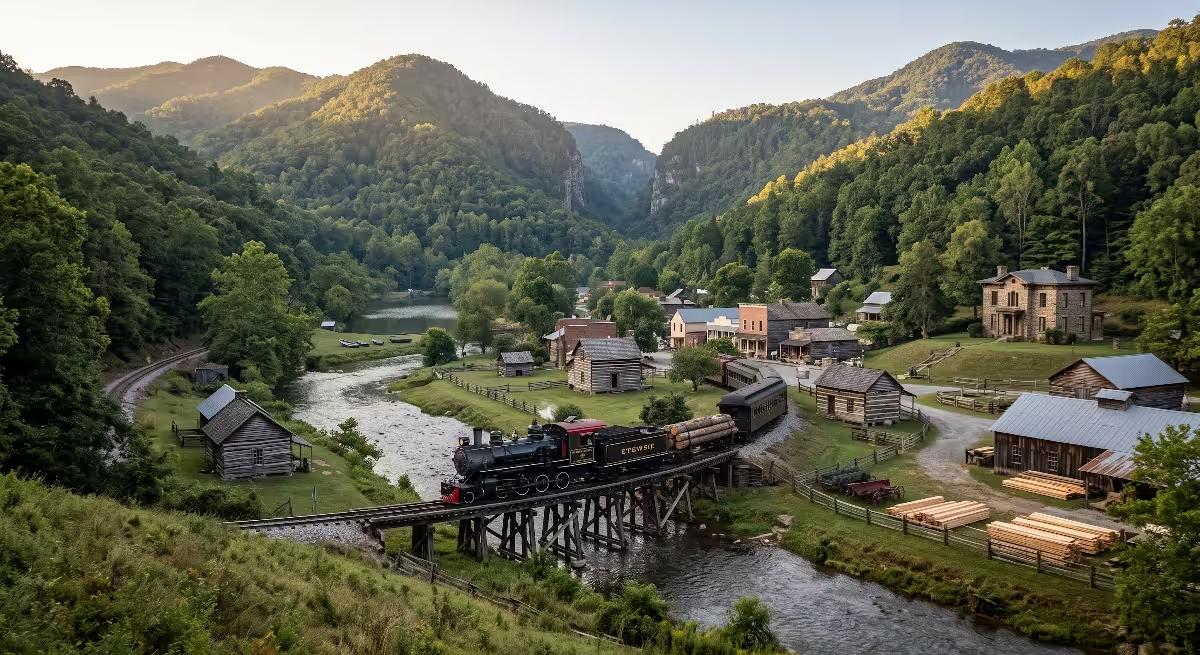
Early pioneers traveled through the Great Valley of Virginia down into northeastern Tennessee. They followed natural river valleys and animal trails that had been worn down over centuries. When these early travelers reached the rolling terrain of Walnut Hill, TN, they recognized that the ground held great promise. The land was heavily forested with virgin timber. Giant American chestnuts, white oaks, black walnuts, and poplars covered the hills. These trees provided the raw building materials needed to construct sturdy cabins, barns, and boundary fences.
Claiming land in Walnut Hill, TN during this era required grit and physical endurance. A settler had to mark their boundaries using the metes-and-bounds survey system. Instead of square miles and grid lines, deeds from that era were measured by physical markers on the earth. A surveyor would start at an agreed point, such as a marked white oak or a prominent limestone outcropping. From there, they measured distances in poles and chains along creek banks or ridge points. Many early deeds in Walnut Hill, TN read with references to big corner trees, spring branches, and shared fence rows.
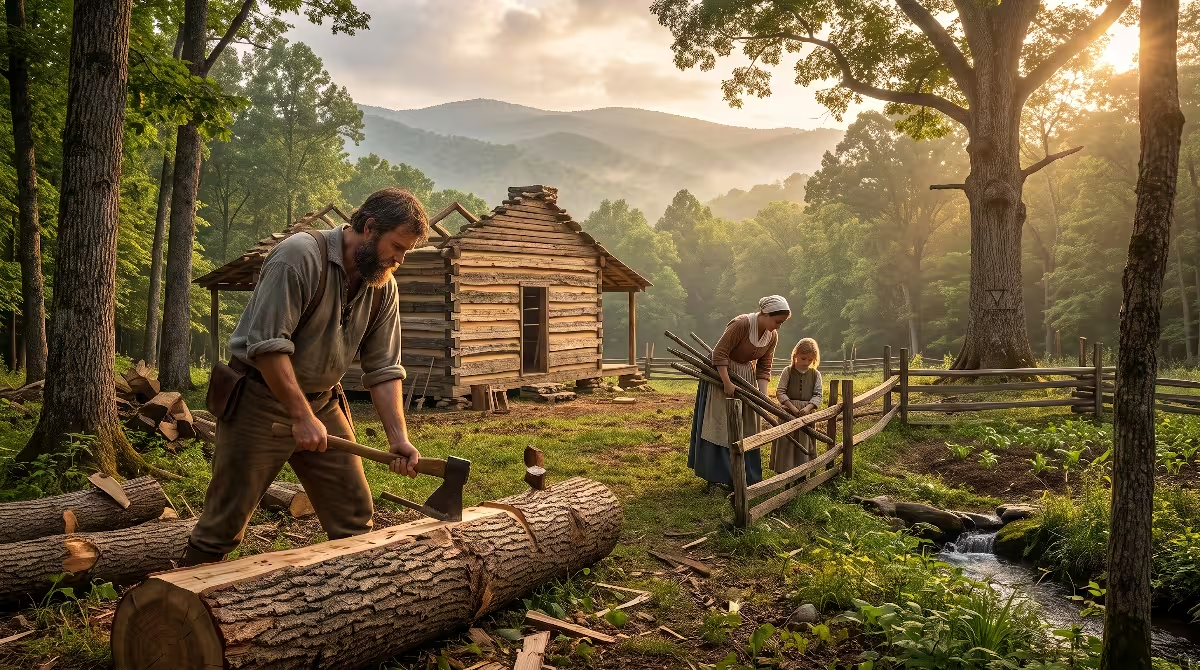
The early homesteaders in Walnut Hill, TN had to be entirely self-reliant. Once a family arrived, the first order of business was clearing timber to prepare fields for planting corn and garden vegetables. The cleared timber went directly into building home structures. Logs were hewn flat with broadaxes and notched at the corners so they would fit together tight and true. These initial log cabins formed the first small pockets of community life across Walnut Hill, TN, laying the foundation for generations of family farms.
Pioneer Families and the Lifeblood of Back Creek Springs
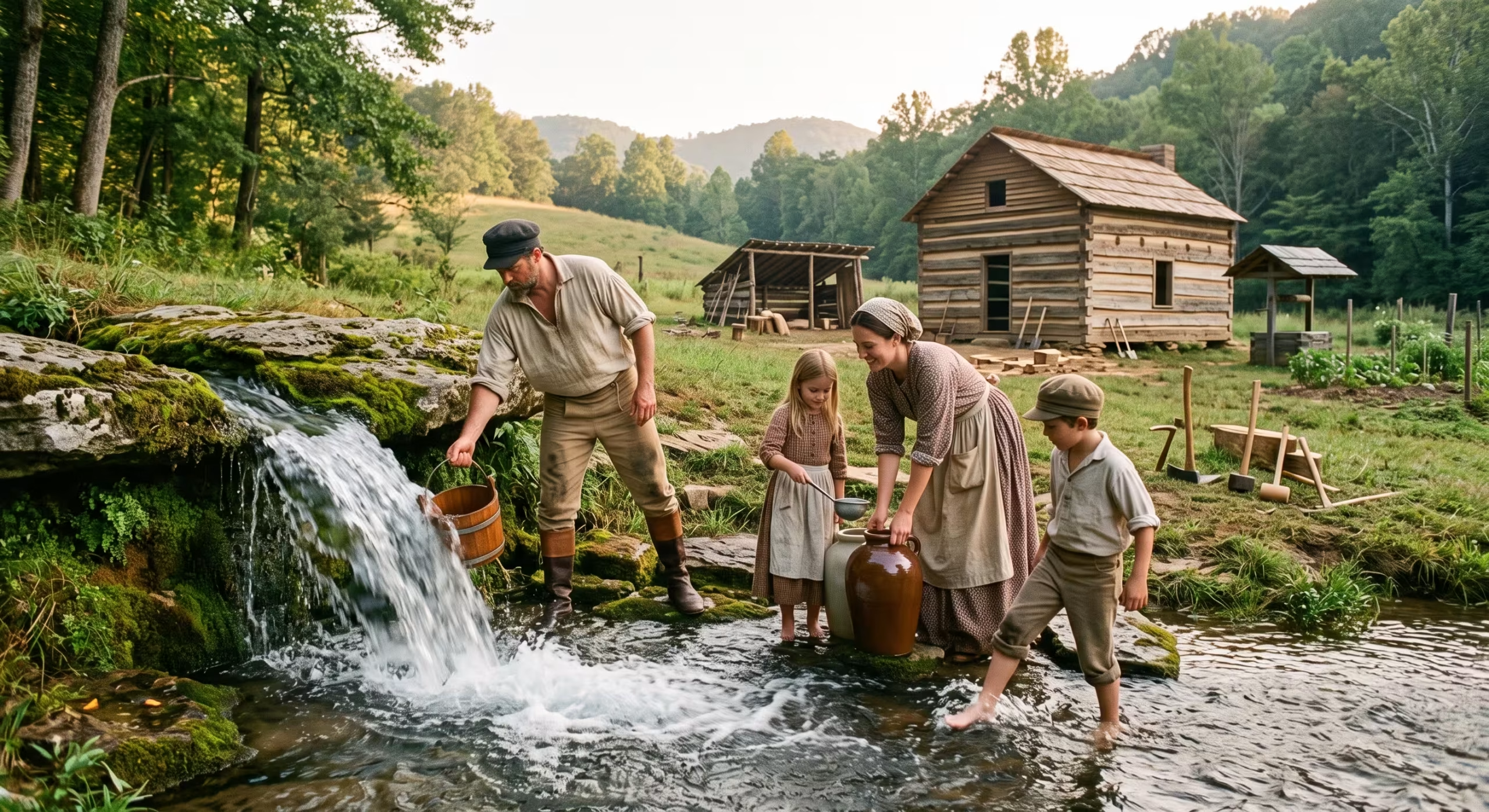
Any experienced builder will tell you that you cannot build or maintain a homestead without reliable water. In the late 1700s, there were no municipal water lines or drilled deep-well pumps. Settlers had to rely on gravity and the natural water table. This reality explains why the earliest domestic centers in Walnut Hill, TN clustered around Back Creek and its surrounding springs.
Among the earliest and most influential pioneers to establish roots in Walnut Hill, TN were members of the Steel family. Between the late 1780s and the early 1800s, David Steel, James Steel, Robert Steel, and John Steel acquired vast tracts of land across this valley. Over time, their combined landholdings in Walnut Hill, TN stretched across more than two thousand acres. The Steel family recognized that the springheads feeding into Back Creek were exceptional. These springs flowed out of deep limestone caverns, providing cold, clear water that never ran dry, even in the hottest summer months.
Reliable water meant more than just drinking water for the family. It meant that farmers in Walnut Hill, TN could water large herds of cattle, horses, and sheep. It also allowed them to construct small water-powered gristmills. By placing a mill wheel along a flowing creek branch, early settlers could grind corn and wheat into meal and flour without traveling miles across rough wagon trails. The natural springs of Walnut Hill, TN quickly became a hub of economic life in Sullivan County.
In 1792, another prominent family line joined the local community. Elias Gottlieb Schoeneker, whose family later simplified the spelling of their name to Seneker, moved to Sullivan County. The Seneker family was of German descent, having traveled south from Pennsylvania through the Shenandoah Valley of Virginia. They settled down right beside the Steel family properties in Walnut Hill, TN.
The union of the Steel and Seneker families through marriage and business created a lasting agricultural network. They built substantial homesteads, improved hundreds of acres of pasture, and established standard framing and woodworking practices that influenced construction across Walnut Hill, TN. By combining Scottish-Irish and German farming traditions, these families transformed the wild frontier timber of Walnut Hill, TN into one of the most productive agricultural basins in eastern Tennessee.
Life on the Great Stage Road: Why the Area Was Named Stop
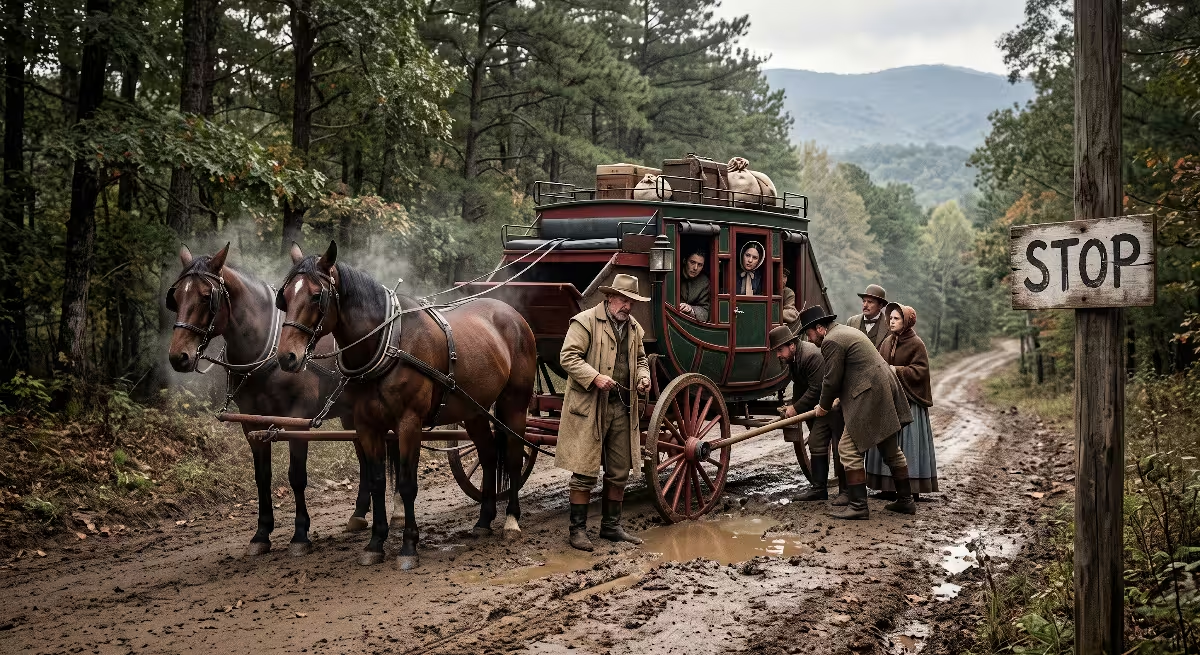
As Sullivan County grew in the early 1800s, the path connecting Blountville to the Virginia state line became a vital travel corridor. Blountville had been established as the county seat in 1795, complete with a courthouse and county jail. To the northeast, the settlement of Sapling Grove was growing into what we now know as Bristol. The dirt trail connecting these two commercial centers eventually became known as the Great Stage Road. Today, that route is known as State Route 126, which cuts directly through Walnut Hill, TN.
Stagecoaches and heavy freight wagons traveled this road daily. They carried passengers, commercial freight, mail, and farm goods between local towns. Traveling this route was difficult under the best conditions, but traveling through Walnut Hill, TN presented a major civil engineering problem. The problem came down to soil mechanics and surface water drainage.
The area around Back Creek in Walnut Hill, TN is rich in fine silt and heavy red clay. These soils hold moisture for a long time. Furthermore, the numerous natural springs kept the low ground saturated throughout the year. When heavy stagecoach wheels, iron-rimmed wagon wheels, and hundreds of hooves ground into that wet soil, the road turned into deep mud. During the winter freezes and spring rains, the crossing at Back Creek became impassable.
Wagons would sink up to their wooden axles in the thick red clay. Horses and oxen struggled to find solid footing. Travelers and drivers often had no choice but to unhitch their teams, unload heavy crates, and dig their wheels out by hand. The delay was so consistent that teamsters began to dread the crossing. Whenever a wagon train approached the marshy bottoms of Walnut Hill, TN, everyone knew travel would grind to a halt.
Because every wagon and coach had to pull up and wait for help or dry ground, the settlement earned a very plain, literal nickname. People across the region simply called the place Stop, Tennessee. It was not named for a famous general or a founding father. It was named because the mud of Walnut Hill, TN literally brought all travel to a dead stop. Even as small general stores and a blacksmith shop opened to serve stranded travelers, locals continued to call their community Stop, Tennessee. It remained the informal name of Walnut Hill, TN for decades.
The Architectural Heritage of the Steel and Seneker Homesteads
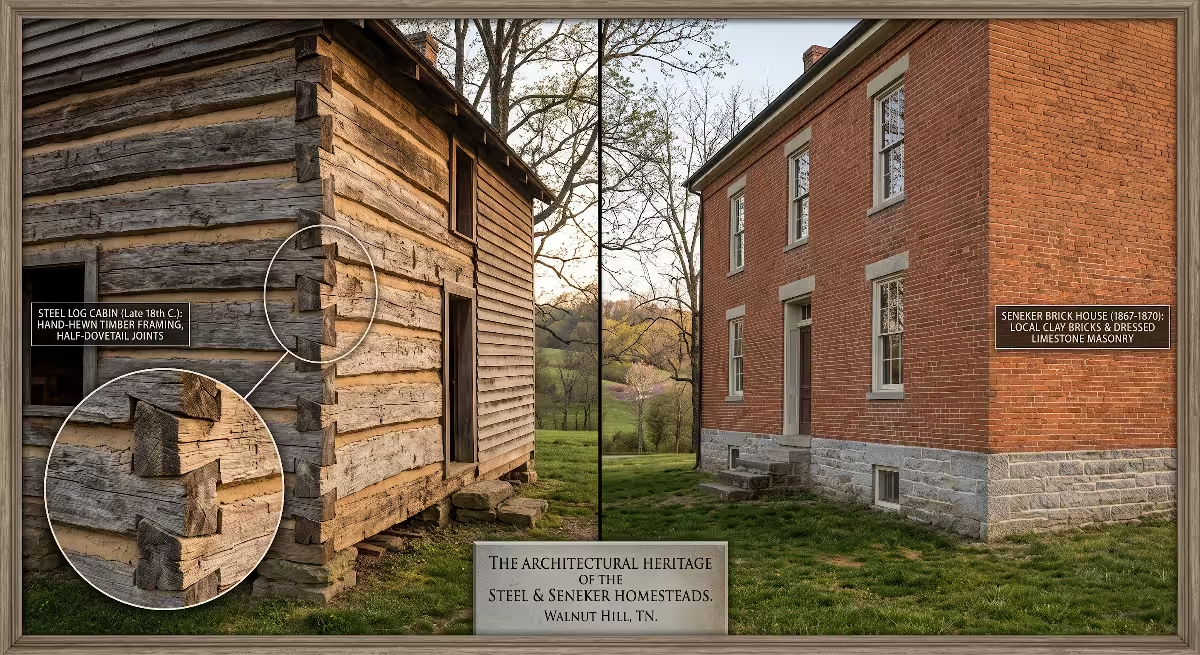
When you look at modern custom homes in Walnut Hill, TN, you see advanced building materials like engineered lumber, high-efficiency insulation, and poured concrete footers. However, looking at the surviving historic structures in Walnut Hill, TN gives us great appreciation for the pioneer builders who worked with hand tools and native materials. The Steel and Seneker homesteads stand as remarkable examples of early Appalachian residential construction.
The earliest preserved home on the property began as a traditional late-eighteenth-century log dwelling. The timber framing displays skilled craftsmanship. Pioneer carpenters in Walnut Hill, TN did not use nails to hold the primary structural walls together. Nails were rare, expensive, and had to be hand-forged by a local blacksmith. Instead, the builders used heavy oak and chestnut logs, hewing them flat with adzes and broadaxes.
The corners were joined using precision half-dovetail notches. This notching method was an ingenious engineering technique. The angled cuts of the dovetail forced water to drain away from the joint rather than pooling inside. This prevented rot. The weight of the logs above pressed down on the joints below, locking the entire structural frame together. Between the logs, builders packed a mixture of clay, lime, horsehair, and flat stones, a process called chinking and daubing. This kept cold winter drafts out of the living quarters. In later years, as commercial sawmills opened in Sullivan County, the family covered these original logs with protective weatherboard siding, helping the house survive in Walnut Hill, TN for centuries.
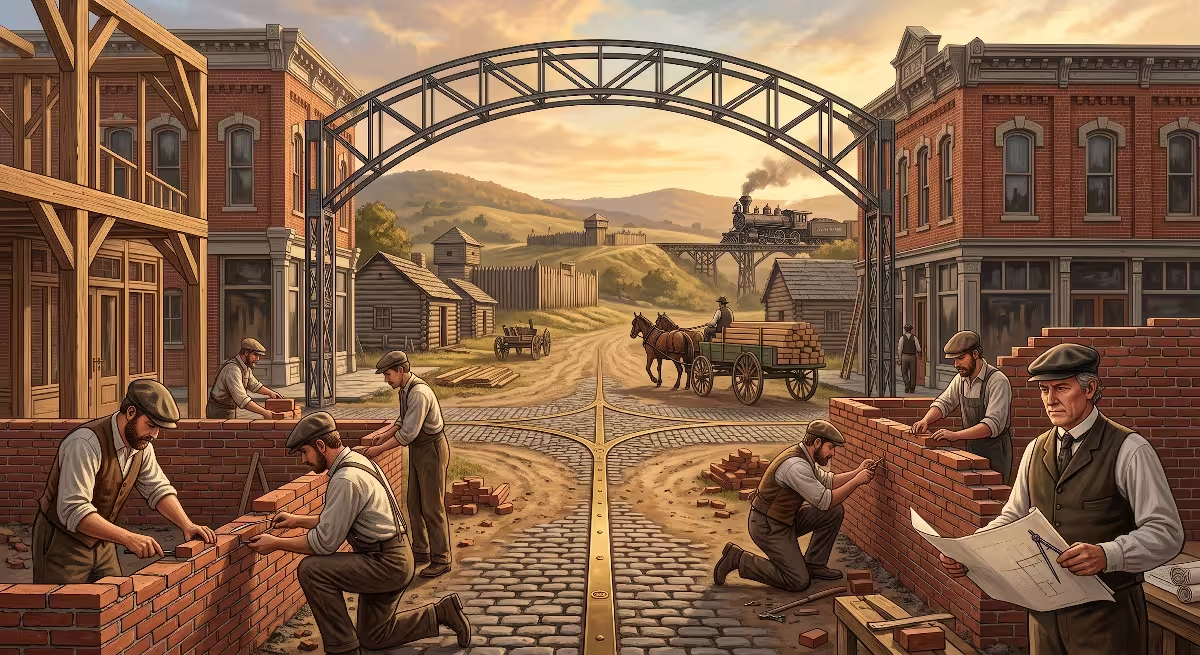
Just steps away stands another impressive piece of historical architecture in Walnut Hill, TN: the Seneker brick home, constructed between 1867 and 1870. Building a large, multi-story brick home in rural Sullivan County right after the Civil War was an enormous undertaking. Transportation was still limited to wagons, so you could not simply order bricks from a distant factory. The Seneker family made the bricks right on their own land in Walnut Hill, TN.
To make the bricks, workers excavated dense red clay directly from the creek banks of Walnut Hill, TN. They mixed the clay with sand and water, packed the mud into wooden molds, and let the green bricks dry in the sun. Once dry, workers stacked the bricks into large temporary kilns called clamps. They fired the kilns with cords of hardwood for several days at extreme heat. The resulting bricks were hard, durable, and naturally colored with the rich iron tones of the local Sullivan County soil.
The foundation beneath this historic brick house in Walnut Hill, TN is equally impressive. The builders quarried native gray limestone from local outcroppings. They dressed the stone by hand, shaping flat top and bottom beds so the foundation walls would carry the heavy structural load of two solid layers of exterior brick. Even today, you can look at the masonry lines of this home in Walnut Hill, TN and see how level and plumb those pioneer builders worked. Because of their remarkable preservation and historical significance, the Steel-Seneker houses were officially placed on the National Register of Historic Places. They serve as an enduring symbol of honest craftsmanship in Walnut Hill, TN.
Historical Clarification: The Two Walnut Hills of Sullivan County
When researching the history of Walnut Hill, TN, it is very common to run into confusing and contradictory historical records. Local historians and property researchers frequently mix up two completely different historical sites located within the borders of Sullivan County. To understand the true story of Walnut Hill, TN, we must clearly separate the rural community near Bristol from the historic riverfront estate near Kingsport.
The community we are focusing on is the Walnut Hill, TN census-designated place. This community sits in eastern Sullivan County along State Route 126, nestled between Blountville and Bristol around the headwaters of Back Creek. It is primarily a residential, farming, and light commercial area that grew out of pioneer land grants, the stagecoach road, and the old post village once known as Stop.
However, about twenty miles to the west, near the confluence of Reedy Creek and the Holston River in Kingsport, another historical property carried the exact same name: Walnut Hill Plantation. This 850-acre plantation was established around 1775 by Colonel Gilbert Christian, a legendary frontier officer, long hunter, and early leader in the State of Franklin. Colonel Christian cleared the land and built a prominent home overlooking the river.
After Christian died, the riverfront plantation passed to his daughter and her husband, John Lynn, who operated a major trading post and flatboat landing there. Eventually, the estate became home to Dr. James H. Vance and his wife, Jane Sevier Vance. Jane was the granddaughter of John Sevier, the first governor of Tennessee and a hero of the Battle of Kings Mountain. Because of the prominent political ties of the Vance and Sevier families, this western plantation was famous in early regional newspapers and state historical archives as Walnut Hill.
Today, that riverfront plantation site in Kingsport is completely absorbed by modern industrial facilities, public greenways, and city neighborhoods. It has no physical or geographical connection to the residential community of Walnut Hill, TN located outside Bristol. If you are examining historical maps, land grants, or genealogy records, it is critical to confirm which location the documents describe. Understanding this distinction prevents costly confusion when tracking family deeds and property records in Walnut Hill, TN.
Divided Loyalties and Civil War Encampments in Walnut Hill, TN
The years between 1861 and 1865 brought deep tension and open conflict to Sullivan County. East Tennessee was famously divided during the American Civil War. While middle and western Tennessee voted overwhelmingly to join the Confederacy, many mountain counties in East Tennessee remained fiercely loyal to the United States Union. Sullivan County was unique because its population was deeply split. Neighbors often took opposing sides, creating bitter feuds that lasted for decades.
The strategic geography of the region made Walnut Hill, TN an active zone for military movements. The Virginia and Tennessee Railroad ran through nearby Bristol, serving as a vital transportation lifeline for Confederate troops and supplies moving between Virginia, Tennessee, and Georgia. Because the Great Stage Road passed directly through Walnut Hill, TN, both Confederate cavalry and Union forces used this corridor to march between Blountville and Bristol.
Once again, the natural limestone springs of Walnut Hill, TN played a major role in local events. Armies during the Civil War moved on foot and horseback. A single cavalry regiment required thousands of gallons of clean water every day for soldiers and horses. The cold, reliable springs at Back Creek made the fields of Walnut Hill, TN a natural staging and camping ground for troops.
Union cavalry units set up camp in the open pastures of Walnut Hill, TN during their campaigns through upper East Tennessee. While encamped there, soldiers requisitioned food, firewood, and livestock from surrounding farms. Soldiers took split-rail fences down to burn as camp firewood. They gathered corn from barns and turned horses loose to graze in private pastures. Families throughout Walnut Hill, TN, including the Senekers and their neighbors, had to endure the stress of having armed troops camped on their land.
After the war concluded, the federal government set up the Southern Claims Commission. This commission allowed citizens who had remained loyal to the Union to file claims for financial compensation for property taken by the United States Army. The records from these claims provide modern historians with an incredible view into daily life in Walnut Hill, TN during the war. Claim files describe how many head of cattle, cords of wood, and bushels of grain were taken from farms in Walnut Hill, TN.
Interestingly, local oral history suggests that compensation received from wartime property claims provided the financial capital that allowed the Seneker family to construct their large brick residence between 1867 and 1870. In this way, the hardships of the Civil War directly shaped the physical architectural landscape that still survives in Walnut Hill, TN today.
The Formal Shift from Stop to Walnut Hill, TN
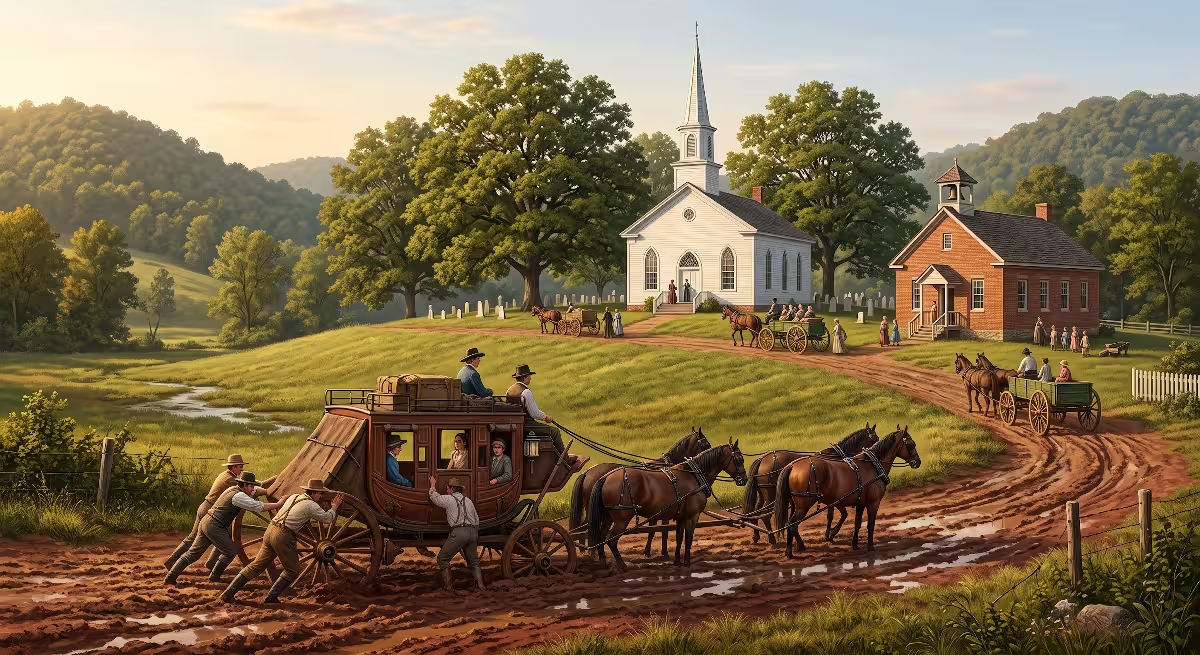
As the late nineteenth century approached, the residents of Sullivan County wanted their community to have a more refined, permanent identity. While the name Stop had been a humorous and accurate description of the stagecoach mud, it did not reflect the pride the local people felt in their homes, churches, and schools. The transition from the frontier village of Stop to the established community of Walnut Hill, TN was driven by the growth of civic institutions.
The primary force behind this change in identity was the local church. In the late 1800s, area residents gathered to establish a formal congregation. They organized the Walnut Hill Presbyterian Church. The founders chose the name because of the magnificent native black walnut trees that stood tall along the surrounding ridges and church property. Black walnuts were highly prized across East Tennessee. Their nuts provided food for wildlife and livestock, and their rich, dark hardwood made the finest furniture, gunstocks, and interior trim.
The establishment of the church gave the community a dignified, unifying focal point. Families from all across the area traveled to the church each Sunday by wagon and horse. Soon, the surrounding neighborhood took on the name of the church, and folks proudly began calling their home Walnut Hill, TN.
Along with the church came investment in local education. Small, wood-framed schoolhouses opened across Walnut Hill, TN to serve the children of local farm families. These one-room schools taught reading, writing, and basic mathematics through the eighth grade. Students walked miles down country dirt roads to attend class, carrying their books and lunches. The schoolhouse and the church became the social pillars of Walnut Hill, TN. They hosted community suppers, holiday pageants, and local meetings where farmers discussed agricultural prices and county road maintenance.
By the turn of the twentieth century, the rough-and-tumble nickname of Stop was fading into local folklore. Official post office records, county voting rolls, and regional trade maps formally adopted the name Walnut Hill, TN. The community had matured from a mired wagon stop into a respected agricultural settlement.
The Agrarian Century and the Postwar Shift in Walnut Hill, TN
From the 1880s through the mid-1900s, life in Walnut Hill, TN followed the natural rhythms of the farming calendar. Sullivan County was rural, and nearly every household in Walnut Hill, TN operated as a working family farm.
The primary cash crop throughout Walnut Hill, TN was burley tobacco. Growing burley tobacco was hard, labor-intensive work that required the efforts of the whole family. In the early spring, farmers prepared small, covered seedbeds in protected soil. Once the young tobacco plants sprouted, they were transplanted by hand into prepared field rows. Throughout the hot summer months, farmers walked the rows to hoe weeds, remove insect pests, and top the plants to encourage full leaf growth.
In late summer, the tobacco was cut, speared onto wooden sticks, and hung in large, ventilated tobacco barns across Walnut Hill, TN. These barns, with their vertical side-vent boards, became a classic feature of the local rural architecture. The cured leaves were taken down in late autumn, sorted by hand, and driven to auction warehouses in Bristol, where the sale proceeds paid property taxes and bought winter supplies for families in Walnut Hill, TN.
Alongside tobacco, dairy farming flourished across Walnut Hill, TN. The rich limestone soils produced excellent orchard grass, clover, and fescue pastures. Small dairy herds grazed across the rolling hills, and farmers delivered fresh milk daily to regional creameries and bottling plants in the Tri-Cities area.
Everything began to change after World War II. The 1950s and 1960s brought modern machinery, affordable automobiles, and improved public roads to Sullivan County. The state widened and paved State Route 126, turning the old, dusty Great Stage Road into a smooth, reliable asphalt highway. Nearby, major transportation corridors like US-11W and US-11E received upgrades, and construction began on the Interstate highway system.
These transportation improvements changed the economic landscape of Walnut Hill, TN forever. Suddenly, a person did not have to farm for a living to reside in the country. A family could build a home in Walnut Hill, TN and easily commute to good industrial and professional jobs in Bristol, Kingsport, or Johnson City. Plants like Eastman Chemical in Kingsport, Raytheon in Bristol, and dozens of regional manufacturing facilities hired thousands of workers.
Longtime farming families in Walnut Hill, TN began to see new value in their land. Many elderly farmers chose to sell off road frontage or divide large pastures into spacious residential building lots. The landscape of Walnut Hill, TN slowly transformed from working farms into a quiet bedroom community filled with open space and custom residences.
Frequently Asked Questions About Walnut Hill, TN
Where is Walnut Hill, TN located?
Walnut Hill, TN is located in eastern Sullivan County in upper East Tennessee. It sits directly between the city of Bristol and the historic town of Blountville. The community is centered along State Route 126, which is also known locally as the Blountville Highway. It rests just south of the Virginia state line and forms an integral residential part of the greater Tri-Cities metropolitan region.
Why was Walnut Hill, TN once called Stop?
During the nineteenth century, the main wagon road connecting Bristol and Blountville crossed several spring-fed branches of Back Creek in Walnut Hill, TN. The combination of active natural springs and heavy red clay created deep, sticky mud pits. Stagecoaches and heavy freight wagons routinely sank to their axles and were forced to stop until teams could dig them out. Because traffic consistently ground to a halt at this spot, teamsters and travelers simply named the village Stop, Tennessee.
What county oversees Walnut Hill, TN, and what public schools serve the area?
Walnut Hill, TN is entirely within Sullivan County. Because it is an unincorporated area, all local municipal services, zoning oversight, building permits, and law enforcement are managed by the Sullivan County government. Public school students living in Walnut Hill, TN attend Sullivan County Schools. Most students in the community are zoned for West Ridge High School, a modern consolidated high school located nearby in Blountville.
Is Walnut Hill, TN an incorporated city?
No, Walnut Hill, TN is not an incorporated city or town. It has no mayor, city council, or independent municipal tax rate. Instead, it is classified by the United States Census Bureau as a Census-Designated Place (CDP). Residents who live in Walnut Hill, TN pay Sullivan County property taxes and do not pay any separate city property taxes.
What historic landmarks can you see in Walnut Hill, TN today?
The most famous historical landmarks in Walnut Hill, TN are the Steel-Seneker Houses, which are listed on the National Register of Historic Places. These structures include an eighteenth-century hand-hewn log cabin and a two-story brick farmhouse built between 1867 and 1870 using bricks fired right on the property. Another enduring landmark is the historic Walnut Hill Presbyterian Church, which helped give the community its modern name.
What should custom home buyers know about the soils and building in Walnut Hill, TN?
Building a home in Walnut Hill, TN requires an understanding of local soil conditions. The area features a mix of rich topsoil, dense red clay, and underlying limestone formations. Anyone looking to build in Walnut Hill, TN should conduct a thorough soil percolation test to ensure proper septic drain-field performance. Builders must also perform standard geotechnical site assessments to identify any subsurface limestone ledges or groundwater flow from natural springs before pouring footers.
Modern Home Building and Land Development in Walnut Hill, TN
For anyone involved in residential development, Walnut Hill, TN represents one of the most appealing markets in Sullivan County. The demand for custom homes here has grown steadily. Buyers want larger lots, natural privacy, and picturesque mountain views, yet they still need to be within a ten-to-fifteen-minute drive of major amenities. Walnut Hill, TN provides that exact balance.
However, building a quality home in Walnut Hill, TN requires a practical understanding of local geography, earthwork, and structural foundations. As someone who has managed home building projects across the Tri-Cities, I always remind clients that a great home begins from the ground down, not the ground up. The unique landscape of Walnut Hill, TN requires specific attention during the planning and excavation phases.
Site Evaluation and Soil Mechanics
Before you dig a foundation in Walnut Hill, TN, you have to understand the soil profile. Sullivan County is famous for its heavy red clay. This clay has a high plasticity index, meaning it expands when wet and contracts when dry. When you build on clay soils in Walnut Hill, TN, you must ensure that your foundation footers are dug deep enough into stable, undisturbed subsoil.
Footers must be placed below the local frost line, which in upper East Tennessee is a minimum of twelve inches, though a depth of eighteen to twenty-four inches is far better practice on rolling ground. Digging into solid bearing ground prevents seasonal frost heave from cracking foundation walls.
Furthermore, because Walnut Hill, TN is an unincorporated area, many residential home sites rely on private subsurface septic systems. You cannot assume every acre of land will support a four-bedroom home. In Walnut Hill, TN, having an experienced soil scientist perform a high-intensity soil map and percolation test is essential. The soil must be able to absorb and filter wastewater effectively. If the soil has too much dense clay or sits too close to shallow limestone, you may need an engineered alternative septic system or a larger designated drain-field reserve area.
Managing Karst Topography and Limestone
Like much of the Great Appalachian Valley, Walnut Hill, TN sits atop karst topography. Over millions of years, rainwater has slowly dissolved the underlying limestone, creating underground channels, caves, and springs. This is why natural springs are so common throughout Walnut Hill, TN.
When developing a building site in Walnut Hill, TN, your excavator may encounter massive limestone outcroppings just a few feet beneath the topsoil. If your architectural plans call for a deep basement, hitting solid limestone can quickly increase excavation costs. In some cases, rock hammers or hydraulic splitters are required to break up the stone.
Experienced builders in Walnut Hill, TN use this topography to their advantage. Instead of forcing a flat house plan onto a sloping hillside, we often recommend walk-out daylight basements. A walk-out basement works with the natural slope of the rolling hills in Walnut Hill, TN. It minimizes the amount of rock excavation required and provides full-height windows and exterior patio doors along the lower level. This design doubles the usable living space while dramatically reducing the risk of water intrusion.
Foundation Drainage and Surface Water
Water was the reason early settlers stopped in Walnut Hill, TN, and water remains the primary concern for modern builders. Controlling water is the single most important factor in building a home that lasts for generations.
Because the clay in Walnut Hill, TN holds water like a sponge, every foundation must have an engineered drainage system. This means installing continuous perforated drain pipes around the exterior of all foundation footers. These pipes must be wrapped in filter fabric and covered with washed crushed stone to prevent silt from clogging the line. The drain system should always run to daylight, using natural gravity to pull groundwater safely away from the foundation walls.
In addition to subsurface drains, proper finish grading around homes in Walnut Hill, TN is critical. The ground must slope away from the exterior walls at a minimum slope of six inches within the first ten feet. Gutter downspouts should never dump roof runoff directly beside foundation footers. By piping downspouts thirty to forty feet away into swales or rain gardens, you protect the structural integrity of your home in Walnut Hill, TN.
Crawlspaces vs. Basements in East Tennessee
Many custom homes in Walnut Hill, TN are built over crawlspace foundations. In our humid East Tennessee climate, traditional vented crawlspaces can lead to moisture problems. During warm summer months, humid outside air enters through foundation vents and hits cool concrete and ductwork, causing condensation to form on floor joists and insulation.
For a long-lasting, healthy home in Walnut Hill, TN, closed and conditioned crawlspaces are the modern standard. In this building method, the dirt floor of the crawlspace is sealed with a heavy-duty, twenty-mil reinforced vapor barrier that runs up the foundation walls. Foundation vents are eliminated, and a small supply of conditioned air or a dedicated commercial dehumidifier is installed. This keeps the framing lumber dry, prevents hardwood flooring from cupping, improves indoor air quality, and lowers heating and cooling bills for homeowners in Walnut Hill, TN.
Utility Infrastructure and Zoning Regulations
When planning a new build in Walnut Hill, TN, prospective homeowners must consider utility connections. While State Route 126 and primary secondary roads have access to public utility water provided by local utility districts, some secluded rural parcels in Walnut Hill, TN still require private drinking water wells.
Drilling a well in the karst geology of Walnut Hill, TN requires a licensed driller who understands regional water tables. Because limestone formations can carry surface water directly into underground aquifers, wells must be drilled deep and cased properly with steel pipe and sanitary grout seals to guarantee clean, safe drinking water.
Electricity across Walnut Hill, TN is provided by local electric utilities, offering dependable service. High-speed fiber-optic internet has expanded rapidly through Sullivan County in recent years, making Walnut Hill, TN an ideal location for professionals who work remotely.
From a regulatory standpoint, building in Walnut Hill, TN falls under the jurisdiction of the Sullivan County Regional Planning Commission and the county building codes department. Building plans must comply with standard International Residential Code (IRC) regulations. Permits are required for building, electrical, plumbing, and septic installation. Working with a contractor who knows the county inspectors and understands local setback requirements ensures a smooth, predictable building experience in Walnut Hill, TN.
Preserving Character Amid Modern Growth
What makes Walnut Hill, TN truly unique is its balance of the past and the future. When you stand on a ridge in Walnut Hill, TN on a clear autumn morning, you can look out across the same rolling pastures that the Steel and Seneker families worked over two centuries ago. You can see the dark silhouettes of the Holston Mountain range to the east and the gentle curves of Back Creek winding through the valley.
At the same time, residents in Walnut Hill, TN enjoy modern conveniences right at their fingertips. Steele Creek Park, a 2,200-acre city park featuring hiking trails, a golf course, and a 54-acre lake, sits just minutes away. The Pinnacle shopping center, featuring major retailers, grocery stores, and restaurants, is an easy ten-minute drive up the road. Bristol Regional Medical Center is right around the corner, offering world-class healthcare facilities.
Building a home in Walnut Hill, TN means becoming part of a continuous community story. It is a place where frontier log cabins, post-Civil War brickwork, and modern custom houses all share the same ground. By respecting the natural landscape, planning for proper drainage, and honoring the deep agricultural roots of Sullivan County, modern homeowners can continue to build a bright and lasting future in Walnut Hill, TN.