

The East Tennessee Subterranean Lottery
If you drive along the rolling ridges of Sullivan County or through the scenic hills of Washington County, you will see some of the most beautiful home sites in the country. You might find two neighboring five-acre parcels for sale right down the road from each other. Both parcels might sit along the same ridge, share the exact same view of the mountains, and carry the exact same asking price on paper.
To an excited home buyer, those
That massive gap in residential excavation costs catches many families completely by surprise. In our region of the country, what sits below the grass matters just as much as the view above it. Ground conditions dictate whether your site work goes smoothly or turns into a financial headache.
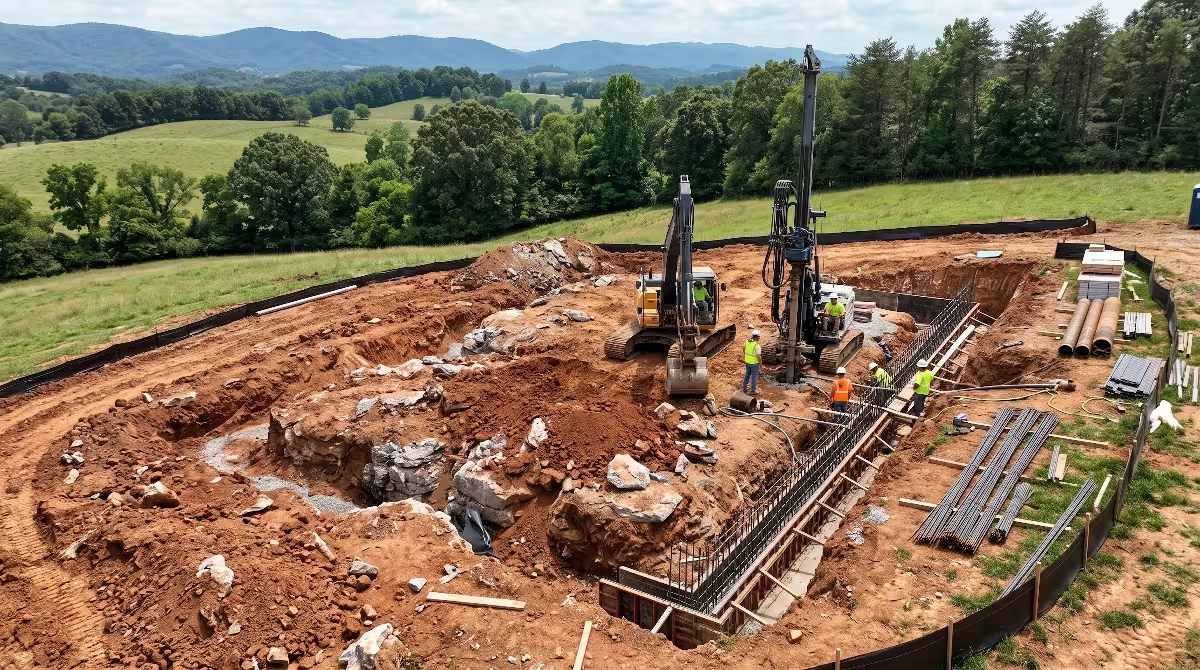
Across East Tennessee, our ground is shaped by what geologists call the Valley and Ridge province. That means our landscape is made of alternating bands of completely different rock types. In one spot, your excavator might dig into weathered, crumbly shale that peels away easily. Just three hundred feet away, your excavator bucket might strike solid, massive limestone that will not budge without heavy hydraulic hammers or blasting.
Understanding the true impact of shale vs. limestone on residential excavation costs in TN comes down to a few basic factors. You have to look at rock strength, the heavy machinery needed to dig it, how much the rock expands when broken, and how your construction contract handles hidden underground rock.
Building a custom home should be an exciting journey, not a stressful guessing game. Underground rock is one of the biggest drivers of unpredictable residential excavation costs in our region, but it does not have to ruin your budget if you know how to plan for it. Let us walk through the geology, the equipment, the math, and the contracts so you can protect your wallet before you break ground.
East Tennessee Geology 101: What Lies Beneath the Topsoil?
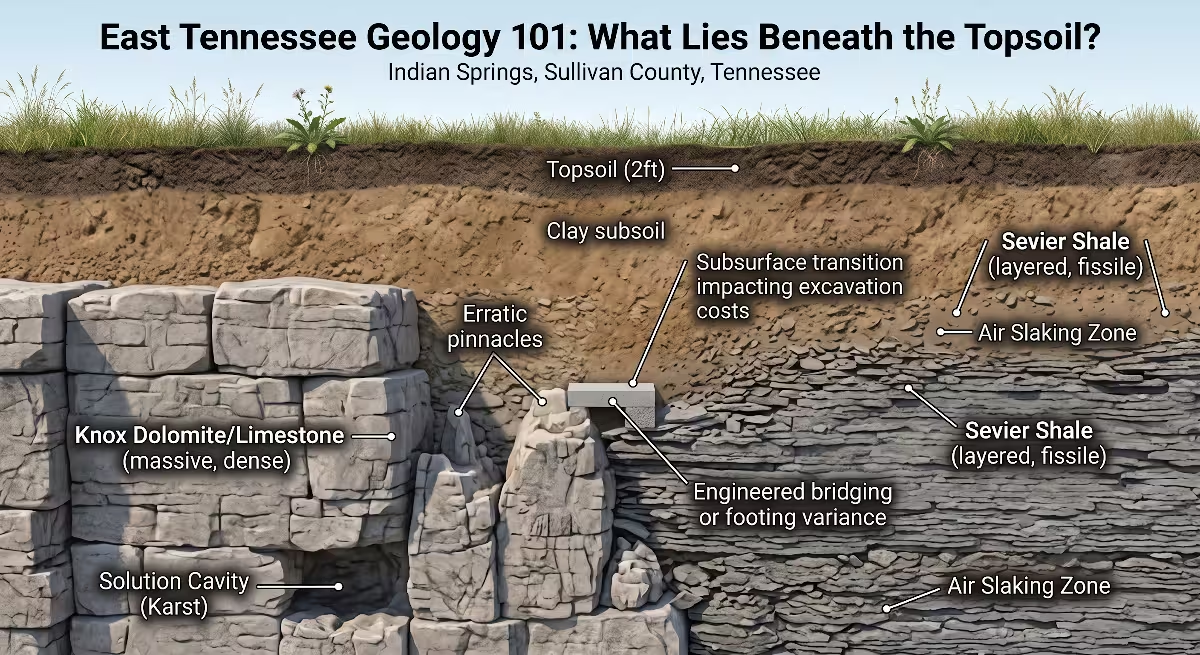
To understand how rock affects residential excavation costs, you first have to understand how our local ground formed. East Tennessee sits within the Appalachian Valley and Ridge province. Millions of years ago, colossal forces in the earth pushed, squeezed, and folded rock layers together from east to west. This tectonic action shoved hard, sedimentary rocks against softer layers, tilting them on their sides like a row of books that fell over on a shelf.
Because of that ancient folding, our ridges and valleys run in long, parallel stripes from northeast to southwest. The hard, resistant rocks form the tops of our ridges, while the softer rocks weather down to form our fertile valleys. When you buy a building lot in the Tri-Cities, you are buying a cross-section of this complex underground landscape.
Limestone and dolomite represent the hard backbone of many East Tennessee hills. In Sullivan, Washington, Carter, and Greene counties, builders run directly into formations like the Knox Group, Newman Limestone, and Honaker Dolomite. These rocks are sedimentary carbonates formed on ancient ocean floors.
Limestone also creates erratic underground patterns known as pinnacle rock. Over thousands of years, rainwater mixes with carbon dioxide to form a mild acid that slowly dissolves limestone. This process creates deep underground cutters, sharp peaks called pinnacles, caves, and sinkholes. Because of this karst topography, you might hit solid rock at two feet deep on the front left corner of your foundation, while the back right corner has soft clay down to twelve feet. These wild shifts directly increase residential excavation costs because standard equipment cannot dig evenly across the site.
When it comes to strength, weathered shale is far weaker than limestone. Most weathered shale in our region tests at a compressive strength below 5,000 to 8,000 pounds per square inch. Because it is layered, an excavator can often catch an edge along the natural seam and peel it up in sheets.
However, shale has its own engineering quirks. When shale is buried deep underground away from air and water, it can remain fairly firm. Once your excavator uncovers it and exposes it to rain and summer humidity, shale can undergo a process called air slaking. Slaking means the rock rapidly absorbs moisture, swells, dries out, and crumbles into loose silt and mud.
If you cut into a steep shale bank on a hillside lot, the natural angle of those rock layers can create slip planes. If the layers slope toward your new foundation, the hillside can slide into your cut during a heavy rainstorm. Even though shale is softer, ignoring its structure can lead to unexpected stabilization expenses that raise your total residential excavation costs later in the build.
Equipment, Mechanics, and Cycle Times: Ripping vs. Hammering
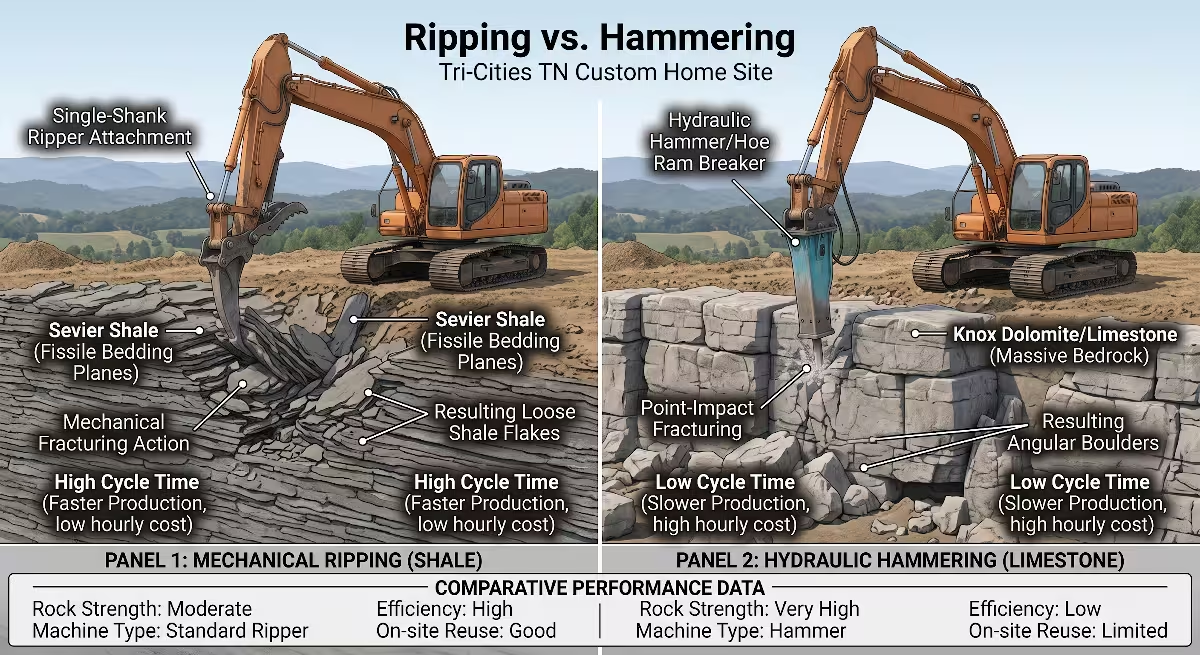
The physical properties of rock directly dictate what machines your site contractor must bring to the property. Heavy equipment is expensive to transport, expensive to fuel, and expensive to operate by the hour. How an operator removes rock from your foundation hole is the single largest variable in your residential excavation costs.
When an excavation crew works in weathered shale, they can usually handle the job using mechanical ripping. Mechanical ripping uses the pure pulling force and leverage of heavy machinery to break apart rock along its natural seams.
A standard tracked excavator weighing between twenty and thirty metric tons, such as a Caterpillar 320 or 330, is the workhorse of residential home sites. When working in shale, the contractor equips the excavator bucket with heavy-duty rock teeth. The operator uses the sharp teeth like a giant claw, hooking the bucket into the natural bedding planes of the shale and pulling backward.
For tougher, thicker shale layers, the contractor might bring in a heavy bulldozer equipped with a single-shank or multi-shank ripper tooth on the rear. The dozer sinks the steel shank into the shale and drives forward, shattering the layered rock much like a farmer plows a field.
Because ripping takes advantage of the natural fractures in the stone, production moves quickly. An experienced equipment operator can rip and scoop between twenty-five and forty-five cubic yards of shale per machine hour. Fast cycle times keep equipment hours low, which keeps your residential excavation costs predictable and manageable.
Limestone requires an entirely different, violent mechanical approach. A standard excavator bucket with rock teeth cannot rip massive limestone bedrock. When the operator drops the bucket onto solid Knox limestone, the steel teeth simply bounce off, creating sparks and scraping the surface. Pulling harder only risks snapping the bucket teeth, bending the boom, or blowing out hydraulic hoses.
To break solid limestone, the excavator must take off its digging bucket and attach a hydraulic hammer, commonly called a hoe ram. A hydraulic hammer is an enormous pneumatic chisel powered by the high-pressure fluid of the excavator. These breakers deliver thousands of foot-pounds of impact energy, striking the rock hundreds of times per minute.
Breaking limestone with a hydraulic hammer is slow, punishing work. The operator has to set the chisel tip on the rock, hammer until a fracture forms, move the tip six inches, and hammer again. Instead of peeling out big sheets of stone, the breaker chips the rock away piece by piece.
The hammering process creates tremendous wear and tear on machinery. The continuous pounding rattles the machine pins, overheats hydraulic fluid, and shakes the excavator cab. Because of this mechanical stress and high fuel consumption, contractors charge significantly higher hourly rates for a hammer than for a bucket.
Production speeds plummet when a breaker is running. A twenty-ton excavator with a hydraulic hammer might only break five to fifteen cubic yards of limestone per machine hour, depending on the density of the rock. When production drops from forty yards an hour down to eight yards an hour, residential excavation costs multiply rapidly.
When a builder hits a massive limestone ledge that spans the entire basement footprint and runs six or eight feet deep, even hydraulic hammering becomes too slow and expensive. In those situations, controlled precision blasting becomes the only practical solution.
Blasting involves bringing in a licensed drilling rig to bore vertical holes into the rock on a tight grid pattern. Technicians place small, carefully calculated explosive charges inside the holes and cover the area with heavy blast mats woven from recycled truck tires. The charges fire with millisecond delays, shattering the internal structure of the limestone so a standard excavator can shovel it out.
While modern blasting is remarkably safe and controlled, it requires specialized permits, seismic vibration monitoring to protect neighboring structures, pre-blast home inspections, and heavy insurance coverage. Those overhead requirements create a steep starting price, adding several thousand dollars in fixed administrative expenses to your overall residential excavation costs before the first shot ever fires.
Cost Comparison: Dollar-for-Dollar Breakdown
To see how these mechanical differences play out on your bank statement, let us look at real-world numbers. Excavation pricing is typically calculated in two ways: by the cubic yard or by the machine hour. A cubic yard is a block of material measuring three feet high, three feet wide, and three feet deep, which is about the size of an ordinary household washing machine.
When you dig in standard topsoil and red clay across Tennessee, moving dirt is relatively simple. The operator digs with a standard bucket, loads dump trucks quickly, and shapes the lot easily. Once you strike rock and need excavation, the financial rules change completely.
The following table provides a direct comparison of typical pricing across East Tennessee for standard soil, weathered shale, and massive limestone bedrock:
| Excavation Parameter | Standard Earth (Clay/Loam) | Weathered Shale Formations | Massive Limestone Bedrock |
| Typical Cost per Cubic Yard | $5 to $15 | $20 to $45 | $60 to $150+ |
| Primary Machinery Used | Standard Excavator Bucket | Ripper Tooth / Severe-Duty Bucket | Hydraulic Hammer / Blasting Rig |
| Equipment Hourly Rate | $140 to $190 per hour | $180 to $240 per hour | $260 to $425+ per hour |
| Basement Excavation Variance | Baseline ($3,500 to $6,000) | Adds $4,000 to $9,000 | Adds $15,000 to $45,000+ |
| Utility Trenching (per Linear Foot) | $5 to $12 per linear foot | $15 to $28 per linear foot | $35 to $75+ per linear foot |
These rate differences have a direct compounding effect on your residential excavation costs. When digging in shale, your site work budget increases, but the increase is usually something a standard contingency line item can absorb. When digging in solid limestone, costs can quickly spiral out of control if you are unprepared.
Let us look at two realistic case studies from right here in our area to see how this works on actual home sites.
Case Study A: The Ridge Lot in Johnson City (Sevier Shale)
A family purchased a one-acre lot on a sloping ridge in Johnson City to build a 2,800-square-foot home with a full walkout basement. The house plans required cutting into the hillside to displace 350 cubic yards of subsurface material.
The site contractor cleared the trees and removed twelve inches of topsoil before striking dense, dark Sevier shale. Because the shale was naturally layered, the contractor did not need to rent an expensive hydraulic breaker. The operator brought in a 25-ton excavator fitted with single-point tiger teeth and worked down the slope, ripping the shale along its natural dip angle.
The operator completed the basement cut in two full eight-hour workdays. The project required sixteen hours of machine time at an adjusted rock-ripping rate of $210 per hour, totaling $3,360. Adding the baseline clearing and grading costs, the total site preparation bill came in at $8,200. The shale added roughly $4,200 beyond what a pure dirt dig would have cost. The owners easily covered the difference with their initial site contingency budget, keeping their total residential excavation costs well within expectations.
Case Study B: The Knob in Sullivan County (Knox Limestone)
Another couple bought a beautiful, wooded parcel on an elevated knob in Sullivan County, planning to build an identical home footprint requiring the exact same 350-cubic-yard basement excavation.
After scraping away eighteen inches of cherty clay, the excavator bucket hit solid Knox limestone bedrock. The rock formed a flat, unbroken shelf that would not yield to ripping teeth. The builder had to halt digging and bring in a specialized 30-ton excavator fitted with a heavy hydraulic hammer.
The hydraulic hammer spent six long days pounding the limestone shelf to break it into chunks small enough for a dump truck to carry. The machine ran for forty-eight operating hours at a rate of $325 per hour, generating an equipment invoice of $15,600 just for rock breaking.
Because the broken limestone chunks were too large and angular to bury on the building lot, the contractor had to hire tri-axle dump trucks to haul forty loads of rock away to an off-site disposal location at $220 per load, adding another $8,800.
Between the hydraulic hammer time, specialized mobilization fees, and rock hauling, the unexpected rock excavation added $24,400 to the original site estimate. Their total residential excavation costs jumped past $30,000 before the footings were ever poured. That is the stark reality of the difference between shale and limestone.
The Hidden Secondary Costs: Swell, Haul-Off, and Fill Usability
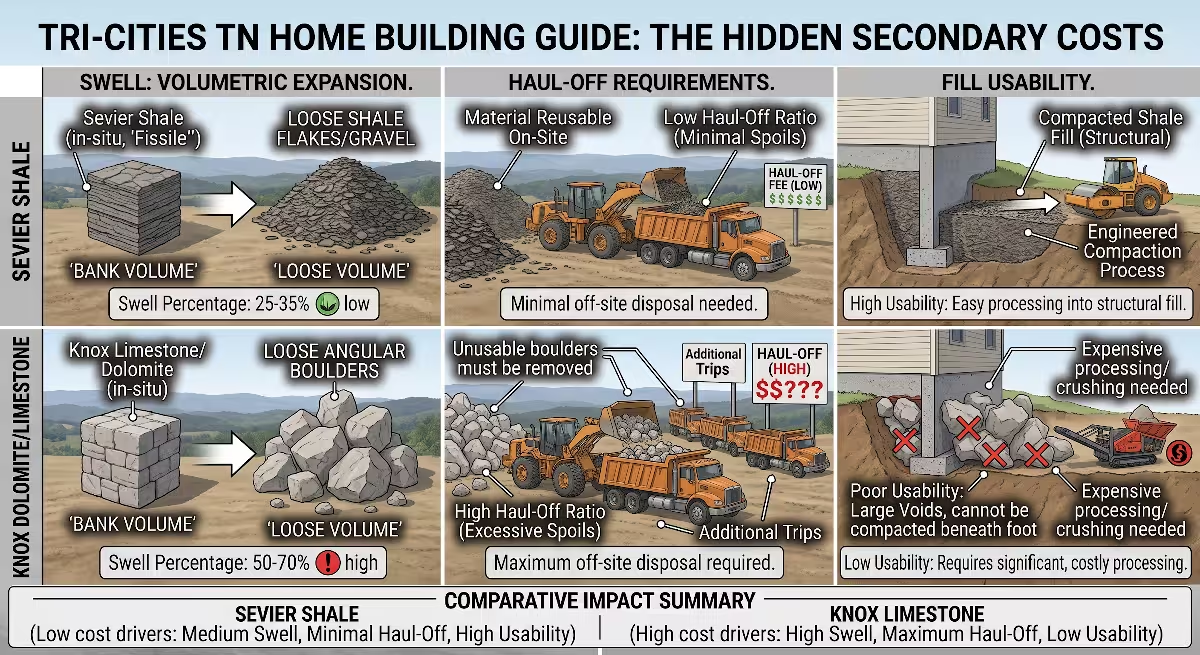
When estimating residential excavation costs, many homeowners and inexperienced builders focus only on the time it takes to break the rock out of the ground. That is only half the equation. Once rock is broken, you have to do something with it, and this is where secondary site expenses surprise people.
The first physical rule every builder must remember is the swell factor. When rock sits undisturbed in the earth for millions of years, it is compressed into a tight, dense solid. Geologists call this bank volume. When heavy equipment shatters that solid rock, it breaks into loose chunks with air pockets between them. The material increases in volume, which is called loose volume.
The swell factor describes how much volume that rock gains once broken:
- Solid earth and clay swell roughly 15 to 20 percent when excavated.
- Weathered shale swells approximately 25 to 35 percent.
- Solid limestone swells by 50 to 70 percent.
Consider what that means for your residential excavation costs. If your basement cut requires removing 200 cubic yards of solid limestone from the ground, that rock will expand to nearly 340 cubic yards of loose stone once your contractor hammers it loose.
A standard tri-axle dump truck can legally haul around ten to twelve loose cubic yards of heavy rock per trip over Tennessee roads. That 200-yard hole in the ground does not generate twenty truckloads; it generates over thirty truckloads of material that must be loaded, transported, and dumped. Every additional truck run requires driver labor, fuel, and disposal tipping fees, driving up your total residential excavation costs.
The next major consideration is whether you can reuse that excavated rock on your property or if you must pay to haul it away.
Shale is far easier to reuse on site. When shale breaks apart under an excavator bucket or dozer track, it fractures into flat gravel-sized flakes, small plates, and fine aggregate. If an engineer verifies that the shale does not have excessive clay content and is not prone to rapid slaking, your contractor can spread that broken shale in thin layers across low areas of your lot.
By running a heavy compactor or bulldozer over the shale, the contractor can crush the flakes into a dense, interlocking structural fill. That material works well for building up driveway sub-bases, leveling lawn slopes, or backfilling behind landscape walls. Reusing shale on your lot eliminates truck haul-off expenses, which keeps your overall residential excavation costs significantly lower.
Limestone creates the opposite problem. When a hydraulic hammer fractures limestone bedrock, it breaks into irregular, angular boulders often the size of office chairs, beer coolers, and engine blocks.
You cannot use giant, irregular limestone boulders as structural fill beneath your house, patio, or driveway. If you bury huge boulders under a driveway or foundation, dirt will slowly wash into the empty voids between the stones over several years. Eventually, the ground above will cave in, creating sinkholes and cracked asphalt.
To use limestone as structural fill, a contractor would have to bring an industrial rock crusher to your job site to crush the boulders into uniform gravel, such as crusher run or aggregate base. Mobilizing an industrial rock crusher to a residential home site costs thousands of dollars and is rarely cost-effective for a single house.
Unless you have a low, non-structural ravine on your acreage where you can safely discard boulders, you must pay to haul them away. Commercial dump sites and rock yards charge tipping fees to receive broken rock, and trucking companies charge by the hour or the load. These disposal expenses represent a major hidden driver of high residential excavation costs on rocky limestone sites.
Foundation Engineering and Long-Term Structural Implications
Excavation is not an isolated task; it directly affects the structural concrete foundation that sits on top of the cut. What kind of stone you encounter will dictate how your structural engineer designs your footings, walls, and drainage systems.
When your builder digs down to design depth in weathered shale, the bearing capacity of the ground is generally very good. Intact, unweathered shale can easily support four to six thousand pounds per square foot, which is more than enough for a standard two-story custom home.
However, shale requires careful timing during construction. Because shale breaks down quickly when exposed to weather, your contractor should never let a freshly dug shale foundation sit open to the elements for weeks. If a heavy summer thunderstorm hits an exposed shale trench, the water will turn the top few inches of shale into soft, slippery mud.
To protect the shale, a professional builder will pour a mud slab immediately after excavation. A mud slab is a thin, two- to three-inch layer of lean concrete poured directly over the clean rock floor. This thin concrete cap seals the shale from rain and air, preserving its strength while the crew builds formwork and ties steel rebar. Skipping this step can lead to footing failures or forced re-excavation, adding unexpected steps to your total residential excavation costs.
Another risk with shale is differential settlement along dip planes. If your home site sits on a hill where the shale layers tilt downward at a steep angle, part of your house might rest on bedrock while another part rests on soft fill dirt. If moisture gets between those rock layers, the ground can shift along the natural seam. An engineer must evaluate the site to ensure the house is anchored securely, sometimes requiring deeper foundation cuts that increase residential excavation costs.
Building on limestone presents a completely different structural challenge known as the pinnacle problem. Because water dissolves limestone irregularly, bedrock rarely forms a smooth, level floor. It forms jagged underground ridges, sharp spires, and deep mud pockets.
Imagine digging a foundation trench where three sides hit solid, immovable limestone at a depth of three feet, but the fourth corner drops into a soft, red clay fissure that runs ten feet deep between two rock pinnacles. You cannot simply pour half of your house footing on solid bedrock and the other half on soft red clay.
If you pour concrete across both surfaces, the corner on the soft clay will settle over time under the heavy weight of the home, while the corners on the limestone will remain completely rigid. This uneven movement is called differential settlement. It causes foundation walls to snap, brick veneer to crack, and doors throughout the house to bind and stick.
To solve this problem, a structural engineer must design site-specific foundation repairs. Common solutions include:
- Over-excavation and mass concrete: The excavator digs out the deep clay pocket until it finds solid rock, and the crew fills the entire void with unreinforced concrete to bring it up to level.
- Stepped footings: The foundation crew builds multiple vertical steps in the concrete footing to follow the natural contours of the bedrock shelf.
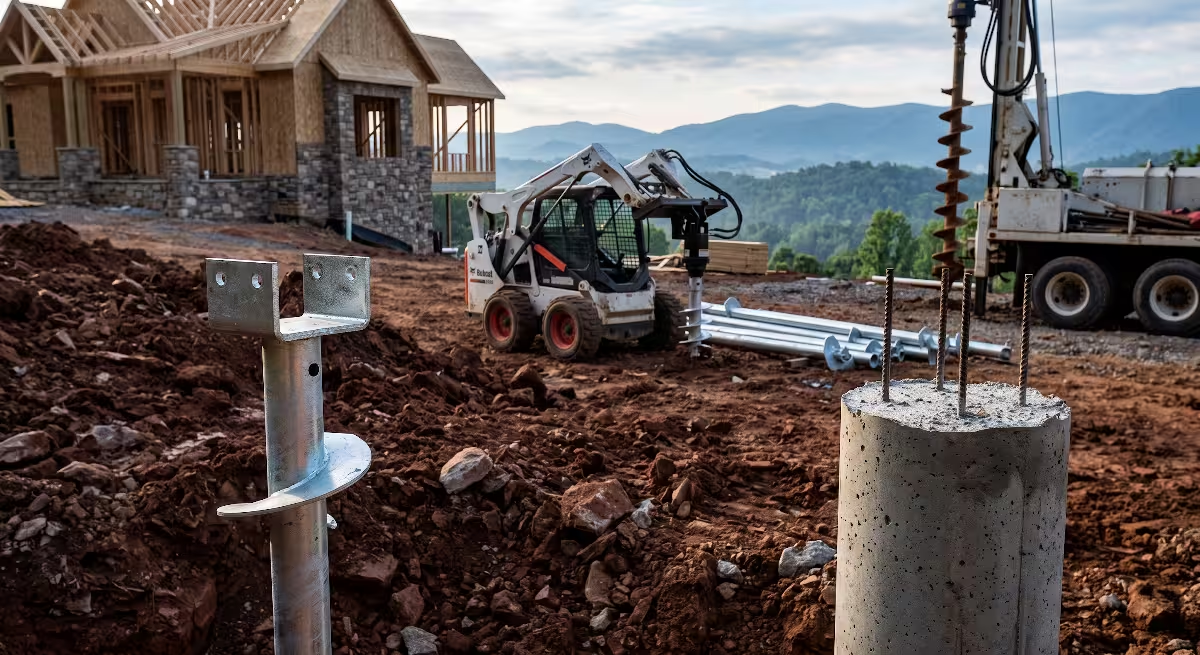
- Grade beams and rock pins: The contractor drills heavy steel dowels deep into the limestone pinnacles and pours a thick, heavily reinforced concrete grade beam that spans across the soft clay void like a bridge.
Every single one of these engineering fixes requires extra excavation time, extra steel, extra concrete, and special structural inspections. These foundation adaptations represent a secondary wave of residential excavation costs that stem directly from the presence of unyielding limestone bedrock.
Contractual Protection: De-risking Your Build in Tennessee
Now that you understand the physical and financial realities of underground rock, you need to know how to protect your bank account before signing a construction contract. The most dangerous assumption a buyer can make is believing that a fixed-price construction contract covers everything below the grass.
In the custom home building industry, standard contracts almost universally contain a clause called the rock clause or unforeseen subsurface conditions clause.
A builder cannot see through the earth with x-ray vision. When a builder gives you a fixed estimate to build a home, that site work number is based on standard earth conditions, meaning ordinary soil that a backhoe can dig without assistance. The contract will explicitly state that if the excavator encounters rock requiring mechanical ripping, hydraulic hammering, or blasting, all associated expenses fall outside the base contract price.
If you do not read your contract carefully, striking rock can lead to intense conflict between you and your contractor. To keep the process fair and transparent, you should understand how different rock clauses function and negotiate reasonable terms before work starts.
There are two primary ways contractors bill for rock excavation:
1. Time and Materials (Hourly Machine Rate)
Under this arrangement, the contractor charges you a set hourly rate for every hour the specialty equipment operates. For example, the contract might specify that standard excavation is included, but hydraulic hammer operation will be billed at $325 per machine hour.
This model is common, but it places all the financial risk on the homeowner. If the rock is exceptionally hard and the hammer takes three weeks to chip through it, your residential excavation costs will rise every single hour the machine runs, regardless of how much rock is actually moved. If you use this approach, require the operator to keep detailed daily equipment logs that you verify in person.
2. Unit-Price Billing (Cubic Yard Rate)
Under a unit-price model, you and the builder agree beforehand on a fixed price per cubic yard for any rock that must be removed. For example, the agreement might state that mechanical shale ripping costs $30 per cubic yard, while hammered limestone removal costs $95 per cubic yard.
When the operator hits rock and excavation is needed, work pauses briefly while the site contractor and an independent surveyor or engineer measure the exposed rock shelf. Once the excavation is finished, they measure the hole again. The difference between the two measurements establishes the exact volume of rock removed.
Unit-price billing is often fairer for custom home buyers because you pay strictly for the work accomplished, not for machine breakdowns, idle time, or an operator learning how to run a breaker on your dime. It provides predictable bounds for your residential excavation costs.
Beyond contract language, the best way to de-risk your build is to conduct thorough pre-purchase due diligence before you close on a piece of land.
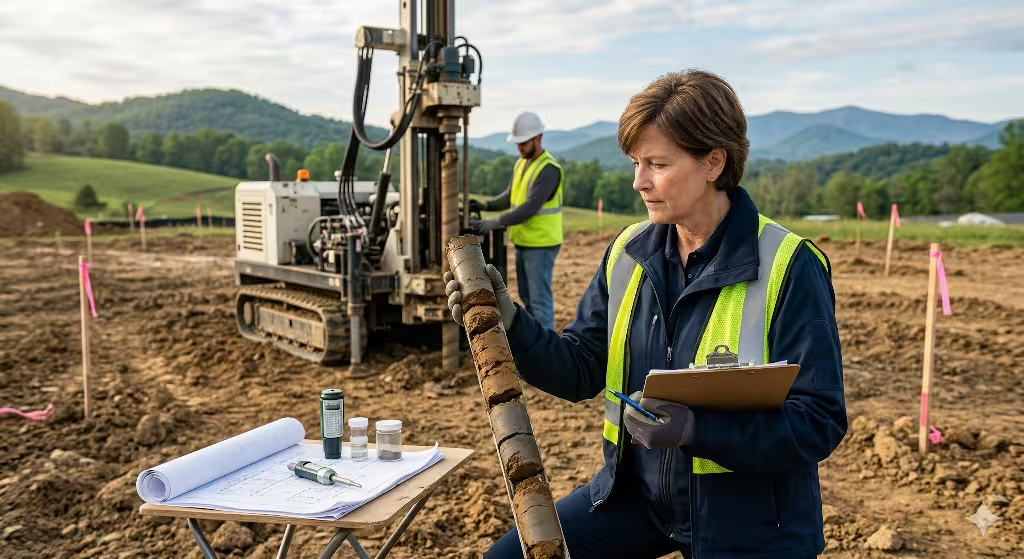
Never buy a vacant lot or acreage in East Tennessee without testing what sits beneath the surface. For a few hundred dollars, you can hire an excavation contractor to bring a backhoe or mini-excavator to the property for half a day. Have the operator dig three or four test pits down to your planned foundation depth across the proposed home footprint.
Watching a bucket dig reveals the subsurface profile instantly. You will see how thick the topsoil is, where the water table sits, and whether the machine strikes soft shale, stubborn limestone boulders, or unbroken bedrock. Spending $800 on test pits before closing can save you thirty thousand dollars in unexpected residential excavation costs later.
You can also read the natural landscape for clues. Look at the nearby road cuts where the state highway department blasted through hillsides; the exposed rock face tells you what geology dominates the immediate area. Look for natural rock outcroppings poking through the grass.
Pay close attention to subtle bowl-shaped depressions in the ground, which often indicate developing sinkholes in limestone terrain. You can also consult soil survey maps published by the Natural Resources Conservation Service (NRCS) or geological maps from the Tennessee Division of Geology. These public resources show known fault lines, rock formations, and historical karst features, helping you identify high-risk lots long before you apply for a building permit.
Frequently Asked Questions About Rock and Excavation in Tennessee
How much does rock excavation cost per cubic yard in Tennessee?
In Tennessee, the cost to excavate rock generally ranges from $20 to over $150 per cubic yard, depending entirely on the hardness of the rock and the equipment required to remove it. Weathered shale that can be broken using standard ripping attachments typically costs between $20 and $45 per cubic yard. Solid limestone bedrock that demands heavy hydraulic hammering or precision blasting ranges from $60 to $150 or more per cubic yard. By comparison, digging standard dirt and clay usually costs between $5 and $15 per cubic yard. These wide cost swings explain why rock is the largest variable in total residential excavation costs.
Is shale cheaper to excavate than limestone?
Yes, shale is almost always significantly cheaper to excavate than limestone. Shale is a layered sedimentary rock made from compressed silt and clay, which gives it natural fracture lines and relatively low compressive strength. An excavator can easily peel and rip shale out of the ground using standard bucket teeth or dozer rippers, maintaining fast cycle times. Limestone is a dense, massive carbonate rock with high compressive strength that resists mechanical ripping. It requires slow, high-energy hydraulic hammering or commercial blasting, which drives up equipment hourly rates and dramatically increases residential excavation costs.
What should I budget for a rock contingency in East Tennessee?
When building a custom home on raw land in East Tennessee, especially along ridges or untested ground in the Tri-Cities and Knoxville regions, you should carry a rock contingency of at least 10 to 15 percent of your total site development budget. In dollar terms, carrying a dedicated contingency of $10,000 to $25,000 for unexpected rock removal is standard practice. If you conduct preliminary test pits and confirm soft soil or easy shale, you can reduce this reserve. If you are building a full basement into a steep limestone knob, keeping a larger cushion will prevent work stoppages and protect your overall residential excavation costs.
Can rock blasting damage neighboring foundations?
When performed by a licensed, insured professional, modern rock blasting is extremely safe and rarely causes damage to neighboring homes. Blasting contractors use precision electronic delay detonators that fire individual charges milliseconds apart, rather than detonating all explosives at once. This micro-delay technique breaks the rock while directing energy inward, minimizing ground vibrations. State regulations govern peak particle velocity limits, and contractors set up seismographs around neighboring homes to record vibration levels. While blasting sounds intimidating, it is often faster, less disruptive, and more cost-effective than running a noisy hydraulic hammer for three consecutive weeks, helping control residential excavation costs on massive limestone sites.
Can I reuse excavated limestone on my residential property?
While uncrushed limestone boulders cannot be used as structural fill under house footings, driveways, or concrete patios, you can certainly repurpose them on other parts of your property. Large limestone rocks make attractive dry-stack retaining walls, decorative garden borders, rustic outdoor fire pits, and natural boulder accents in your landscaping. Contractors also use broken limestone as rip-rap to line drainage ditches, stabilize steep slopes, and prevent soil erosion around culverts. Repurposing limestone for non-structural landscaping keeps the rock on your property, eliminating expensive dump truck haul-off charges and reducing your total residential excavation costs.
Final Thoughts: Precision Beats Optimism
When you set out to build your dream home in the Tri-Cities, optimism is a great thing to bring to your floor plan, your kitchen finishes, and your interior design. But when it comes to the ground beneath your foundation, you need to leave optimism at the door and rely on cold, hard engineering precision.
The geological reality of East Tennessee means that rock is simply part of our lives. The difference between striking weathered shale and hitting massive limestone bedrock can alter your site work budget by tens of thousands of dollars. Shale gives you the advantage of fast mechanical ripping, low machine wear, easy on-site compaction, and reasonable residential excavation costs. Limestone brings heavy hydraulic hammering, slower production, high swell factors, expensive truck haul-off, and complex foundation engineering.
Neither rock type should stop you from building a home on a property you love. The secret is simply knowing what lies below the grass before you start spending money.
Do not rely on guesses or assumptions. Hire a local excavator to dig test pits before you close on your land. Review your construction contract thoroughly and make sure you understand every word of the rock clause. Agree on clear unit pricing for rock removal upfront so you never face a surprise billing dispute. Plan your building footprint intelligently to take advantage of the natural contours of the rock rather than fighting against them.
Building a custom home should be one of the most rewarding milestones of your life. When you approach site work with competence, precision, and thorough preparation, you can tame your residential excavation costs and build a home on a solid, lasting foundation that will stand strong for generations.