

The Critical Water Decision for Property Owners
When you decide to buy land or build a custom home, you have dozens of big decisions to make. You have to pick the right floor plan, choose the exterior materials, and lay out the foundation. But one of the most important decisions you will ever make happens right beneath the ground. That choice comes down to well water vs. city water.
Whether you are standing on a rolling ridge in Johnson City, looking at a lot near Kingsport, or evaluating acreage out in the county, water supply is always one of the very first items that is inspected. Every buyer wants to know how the debate of well water vs. city water will impact their daily life, their monthly budget, and their home’s long-term value.
       ┌───────────────────────────────┐
       │   WELL WATER (Private)        │
       │   • Underground Aquifer       │
       │   • On-Site Well Pump         │
       │   • Pressure Tank & Filters   │
       │   • $0 Monthly Water Bill     │
       └───────────────┬───────────────┘
                       │
             THE PROPERTY DECISION:
           well water vs. city water
                       │
       ┌───────────────┴───────────────┐
       │   CITY WATER (Municipal)      │
       │   • Water Treatment Plant     │
       │   • Pressurized City Mains    │
       │   • Municipal Water Meter     │
       │   • Monthly Utility Billing   │
       └───────────────────────────────┘
The difference between these two systems comes down to decentralized private ownership versus centralized public service. When you choose a private well, you are tapping directly into an underground aquifer on your own property. You own the equipment, you draw the water, and you manage the quality. In contrast, municipal water connects your plumbing to a vast city-managed treatment and distribution network. You do not own the pipes in the street, but you pay a monthly fee for the service.
From an engineering perspective, this decision is not just about where your water comes from. It determines how your plumbing system is designed, how much electrical backup you need, where you place your septic system, and how you budget for home maintenance over the next twenty years. Understanding the full picture of well water vs. city water is the best way to protect your investment and ensure your family has clean, dependable water every single day.
The Dilemma: Choosing Your Water Source, Well Water vs. City Water
Every home buyer faces a fundamental choice between convenience and self-reliance. When evaluating well water vs. city water, you are really deciding what kind of relationship you want to have with your home utilities.
For some homeowners, independence is the top goal. They want to know that no matter what happens to public utilities, their water comes straight from the ground below their feet. For other homeowners, hands-off convenience is the priority. They prefer to pay a monthly bill to a city utility department so they never have to think about pump repairs or water testing.
When you weigh well water vs. city water on a new build, you must look at both the upfront construction costs and the long-term lifestyle impact. A private well gives you freedom from monthly utility bills, but it requires personal responsibility. City water gives you simplicity and regular government testing, but it ties you to monthly bills and utility rate hikes. Looking closely at well water vs. city water helps you decide which option matches your budget and lifestyle.
The High-Level Difference: Private Supply vs. Public Grid
To truly understand well water vs. city water, it helps to look at how water moves from the environment into your kitchen sink.
With a private well system, water is drawn from natural underground rock formations known as aquifers. Rainwater slowly filters down through soil, sand, and layers of limestone or sandstone over many years. This natural filtration cleans the water and fills it with natural earth minerals. An electric submersible pump sits deep inside a steel or PVC casing in the ground. When your home calls for water, the pump turns on and pushes water up into an indoor pressure tank, which supplies your fixtures. In the ongoing debate of well water vs. city water, the well system gives you complete, localized control over every drop you use.
                  TYPICAL RESIDENTIAL WELL SYSTEM

   [ Rain / Surface Infiltration ]
                 │
                 ▼
     ┌───────────────────────┐
     │ Topsoil & Clay Layers │
     └───────────┬───────────┘
                 ▼
     ┌───────────────────────┐
     │ Bedrock & Sand Layers │ (Natural Filtration)
     └───────────┬───────────┘
                 ▼
     ┌───────────────────────┐
     │  Subterranean Aquifer │ <── [ Submersible Well Pump ]
     └───────────────────────┘               │
                                             ▼
                                  [ Indoor Pressure Tank ]
                                             │
                                             ▼
                                  [ Whole-House Filtration ]
                                             │
                                             ▼
                                     [ Home Fixtures ]
With municipal city water, the process is centralized. A city utility department pulls raw water from large surface reservoirs, lakes, or major river basins. The water is pumped to a massive municipal treatment facility where it goes through chemical coagulation, sedimentation, multi-stage filtration, and chemical disinfection. Once treated, the water is pumped through miles of underground water mains under high pressure, through a meter at your property line, and into your home. Comparing well water vs. city water shows how different these distribution methods really are.
The Engineering Perspective: Site Planning and Utility Design
It has to be remembered, that your water source affects almost every major system on your home site.
First, your water source dictates lot layout. If you choose a private well, you must coordinate its physical location with your septic tank and drain field. State and local health codes require strict minimum setback distances between your wellhead and potential contamination sources. If you connect to city water, you do not have to worry about wellhead setbacks, but you must plan the path of your underground supply line from the city water meter to your foundation.
                      TYPICAL LOT LAYOUT SEPARATION

       ┌────────────────────────────────────────────────────────┐
       │                                                        │
       │     [ Private Wellhead ]                               │
       │              │                                         │
       │              │ <── Minimum 50 to 100 ft Separation ──> │
       │              │                                         │
       │     [ Home Foundation ]         [ Septic Drain Field ] │
       │                                                        │
       └────────────────────────────────────────────────────────┘
Second, your water source, well water vs. city water, impacts your indoor mechanical room design. When comparing well water vs. city water for indoor equipment, a well requires dedicated floor space for a pressure tank, a pressure switch, and filtration equipment like a water softener or sediment filter. City water requires less indoor equipment because the municipality provides the delivery pressure.
Third, power resilience must be engineered into your home. When comparing well water vs. city water during electrical power outages, well pumps require electricity to operate, while city water often continues flowing under municipal gravity pressure. If you build with a well, adding a manual transfer switch or an automatic standby generator is an essential engineering step to keep your water running during winter storms.
The Pros and Cons of Well Water

To make an educated choice between well water vs. city water, you need to understand both the benefits and the responsibilities of owning a private well.
┌────────────────────────────────────────────────────────────────────────┐
│                        PRIVATE WELL WATER SYSTEM                       │
├───────────────────────────────────┬────────────────────────────────────┤
│         ADVANTAGES (PROS)         │         DRAWBACKS (CONS)           │
├───────────────────────────────────┼────────────────────────────────────┤
│ • $0 Monthly usage bills          │ • High upfront drilling costs      │
│ • Rich in natural minerals        │ • Requires homeowner maintenance   │
│ • No chlorine or chemical tastes  │ • Electric pump needs power backup │
│ • Complete property independence  │ • Natural mineral hardness/iron    │
└───────────────────────────────────┴────────────────────────────────────┘
The Advantages of Well Water
The biggest advantage of a private well in the well water vs. city water comparison is the elimination of monthly water bills. Once your well is drilled and operational, the water you pull from the ground is free. You can irrigate your lawn, water a large garden, wash vehicles, and run daily household chores without worrying about tiered utility rates or sewer surcharges.
Another major benefit is natural water quality and taste. Groundwater that travels through natural rock layers is naturally filtered and packed with healthy minerals like calcium and magnesium. It contains no added chlorine, chloramines, or fluoride. Many people who compare well water vs. city water notice that fresh well water has a cleaner, crisper taste because it is free from industrial treatment chemicals.
Utility independence is another strong selling point. When you have a private well, you are not affected by city water main breaks, municipal boil-water advisories, or city-mandated water rationing during hot summer months. In rural and semi-rural areas, having a high-producing private well adds real property value and gives homeowners complete peace of mind.
The Drawbacks of Well Water
The primary disadvantage of a well in the well water vs. city water comparison is the upfront capital cost. Drilling a new well, installing steel or PVC casing, dropping a heavy-duty submersible pump, running electrical lines, and setting up an indoor pressure tank requires a substantial financial investment during construction.
Another challenge is that maintenance falls entirely on your shoulders. When comparing well water vs. city water, you are your own water utility manager. You must schedule annual water testing, monitor water pressure, replace pre-filters, add salt to your water softener, and replace mechanical components when they wear out.
Power outages also present a challenge for private wells. Because the submersible pump relies on electricity, a power failure means your water stops running once your pressure tank empties. Well owners must plan for backup power solutions. Additionally, groundwater can contain natural minerals like iron, manganese, or hard calcium that require filtration systems to prevent fixture staining and pipe scaling.
The Pros and Cons of City (Municipal) Water

Just as private wells have clear strengths and weaknesses, municipal systems offer distinct tradeoffs when evaluating well water vs city water.
┌────────────────────────────────────────────────────────────────────────┐
│                        MUNICIPAL CITY WATER SYSTEM                     │
├───────────────────────────────────┬────────────────────────────────────┤
│         ADVANTAGES (PROS)         │         DRAWBACKS (CONS)           │
├───────────────────────────────────┼────────────────────────────────────┤
│ • Low initial connection expense  │ • Ongoing monthly utility bills    │
│ • Strict federal EPA testing      │ • Chemical additives (chlorine)    │
│ • Zero equipment to maintain      │ • Vulnerable to aging city pipes   │
│ • Gravity water during blackouts  │ • Subject to municipal rationing   │
└───────────────────────────────────┴────────────────────────────────────┘
The Advantages of City Water
The most significant benefit of city water in the well water vs. city water debate is hands-off convenience. When your home is connected to a public water line, you do not have to worry about drilling depths, pump mechanics, or pressure tank bladders. If a main pipe breaks or a pump station fails, municipal utility workers handle the repairs while you go about your day.
Strict regulatory oversight is another major advantage. Under the Safe Drinking Water Act, the Environmental Protection Agency (EPA) requires public water suppliers to test water daily for hundreds of contaminants, bacteria, and heavy metals. Homeowners receive an annual Consumer Confidence Report detailing everything in their water supply. When comparing well water vs. city water for buyers who want tested water without managing their own lab work, city water provides reliable assurance.
City water also provides superior reliability during local power outages. Municipal systems rely on large elevated water storage towers. These towers use gravity to maintain water pressure throughout neighborhood distribution lines. If a severe thunderstorm knocks out power to your street, your faucets will usually continue running with normal pressure.
The Drawbacks of City Water
The main drawback of city water when assessing well water vs. city water is the recurring monthly cost. Municipal water is never free. You pay a base access fee every month plus a volumetric rate for every gallon used. In many municipalities, sewer charges are tied directly to water usage, making your monthly utility bill even higher. Over ten to twenty years, these monthly bills add up to tens of thousands of dollars.
Another common complaint is the presence of chemical additives. To keep water safe as it travels through miles of underground distribution pipes, utilities add chemical disinfectants like chlorine or chloramines. These chemicals can produce an unpleasant swimming-pool odor and a sharp chemical taste. They can also dry out skin and hair, prompting many homeowners on city water to install whole-house carbon filtration systems.
Aging municipal infrastructure is also a growing concern. Many city distribution networks across the country use pipes that are decades old. Pipe breaks can lead to sudden boil-water notices, sediment intrusion, and service disruptions. When you analyze well water vs. city water, city water leaves you dependent on public infrastructure funding and municipal maintenance schedules.
Side-by-Side Comparison: Well vs. City Water Matrix
To help you quickly evaluate well water vs. city water, the comparison table below outlines the essential differences across every major category.
| Feature Category | Private Well Water System | Municipal City Water System |
| Initial Upfront Cost | $5,000 to $15,000+ (Drilling, casing, pump, tank) | $1,500 to $8,000 (City tap fees, meter, lateral line) |
| Monthly Water Bill | $0 per month (Only ~$3 to $5 in pump electricity) | $40 to $120+ per month (Based on usage and sewer) |
| Water Quality Oversight | Homeowner responsible for testing and maintenance | Regulated by EPA Safe Drinking Water Act standards |
| Chemical Additives | None (100% natural groundwater) | Chlorine, chloramines, and fluoride added |
| Mineral Content | High in natural minerals; often requires softening | Variable; treated to reduce extreme scale |
| Power Outage Resilience | No water flow without generator or battery backup | Water continues flowing via gravity-fed water towers |
| Maintenance Burden | High (Filter changes, pump checks, softener salt) | None (Utility handles all distribution maintenance) |
| Supply Restrictions | None (Limited only by aquifer sustainable yield) | Mandatory bans or surcharges during drought periods |
| Long-Term Economics | Higher upfront cost; substantial savings over time | Lower upfront cost; permanent recurring expense |
When you study this matrix of well water vs. city water, you can see that neither option is universally better. The right answer depends on your location, your budget, and how much hands-on control you want over your home systems.
Financial Lifecycle Analysis: Upfront Costs vs. 20-Year Horizon
A detailed financial analysis is essential when comparing well water vs. city water. Let us break down both the initial capital investment and the long-term operational costs over a twenty-year ownership timeline.
       20-YEAR ESTIMATED CUMULATIVE COST COMPARISON

  $45,000 ──┐
            │                                     / [ City Water ]
  $35,000 ──┤                                    /  ($36k - $45k+)
            │                                   /
  $25,000 ──┤                     Break-Even   /
            │                     Point       /
  $15,000 ──┤ ── [ Well Water ] ────────────X ── [ Well Water ]
            │    ($12k initial)            /      ($22k - $28k total)
   $5,000 ──┤                             /
            └────────────────────────────┴────────────────────────
              Year 1       Year 5       Year 10      Year 20
Initial Capital Expenditure (CapEx)
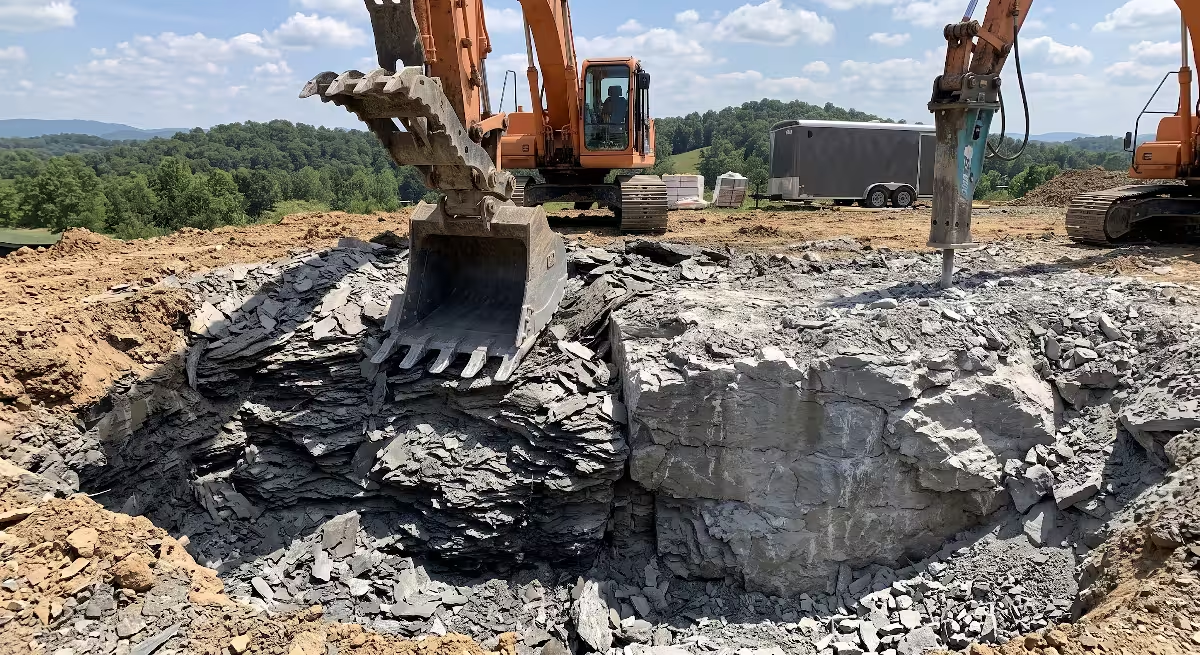
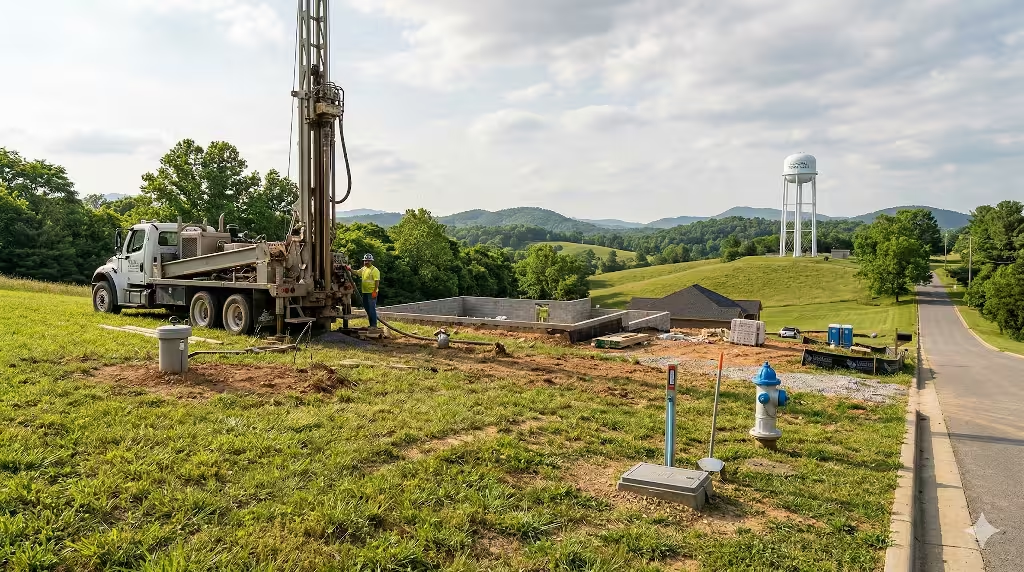
The initial cost of installing a well system depends heavily on your property’s geology and the depth required to reach a dependable aquifer. In the Tri-Cities and Southern Appalachian region, residential wells typically range from 150 feet to over 400 feet in depth. Drilling costs generally run between $35 and $65 per foot, including steel or PVC casing. When you add a heavy-duty submersible pump, torque arrestors, safety wiring, an indoor pressure tank, and initial water filtration, total upfront well installation typically runs between $7,500 and $15,000.
For municipal supply, initial costs center on municipal tap fees, impact fees, water meter installation, and trenching a service line from the street to your foundation. In suburban developments, tap and meter fees typically range from $1,500 to $5,000. However, if the municipal main line is across a wide road or several hundred feet away, extension costs can quickly push connection expenses over $10,000. In most standard subdivision settings, city water has a lower initial upfront cost in the well water vs. city water comparison.
Ongoing Operational Expenditure (OpEx)
Once installed, operational costs tell a very different story in the comparison of well water vs. city water.
A private well has very low monthly operating costs. A standard deep-well submersible pump draws modest power, typically adding only $3 to $5 per month to your electric bill. Ongoing maintenance includes annual professional water lab testing ($100 to $250), periodic pre-filter cartridge replacements ($50 to $100 per year), and water softener salt ($10 to $20 per month). Submersible pumps typically last 12 to 18 years before needing replacement, which costs around $1,500 to $3,500.
City water costs are continuous and tend to rise each year. The average American household pays between $50 and $120 per month for combined municipal water and sewer service. Over twenty years, assuming modest utility rate increases of 3% to 5% annually, a homeowner will spend between $20,000 and $38,000 in monthly utility bills.
The Break-Even Calculus
When you calculate the total cost of ownership in well water vs. city water, the private well system usually reaches a financial break-even point between year 8 and year 12.
After the initial installation cost of the well is offset by the absence of monthly utility bills, the well becomes significantly cheaper to operate.For families with high water consumption, such as households with extensive landscaping, large gardens, swimming pools, or multiple bathrooms, the break-even timeline happens even faster.Over a thirty-year mortgage, a well can save a homeowner tens of thousands of dollars compared to municipal water billing.
Site Planning & Lot Evaluation: What Home Buyers Must Know about Well Water vs. City Water
When evaluating a parcel of land, understanding well water vs. city water is critical for proper site design and legal permitting.
                  TYPICAL LOT EVALUATION CHECKLIST

  [ ] Soil Perc Test Completed (Determines Septic Location)
  [ ] Minimum Wellhead Setback Verified (50 to 100 ft from Septic)
  [ ] Distance to Property Lines Checked (Minimum 10 to 20 ft)
  [ ] Regional Hydrogeology & Aquifer Depth Reviewed
  [ ] City Water Main Proximity & Tap Fees Confirmed
Topography, Soil Perc Tests, and Septic Separation
If you build on a rural or semi-rural lot that requires both a private well and an on-site septic system, physical geometry is everything. State environmental and health departments enforce strict separation distances between a private drinking wellhead and potential sources of groundwater contamination.
In most jurisdictions, a wellhead must be positioned at least 50 feet away from a standard septic tank and at least 100 feet away from the septic absorption field. The wellhead must also be placed uphill from the septic drain field whenever possible to prevent surface runoff from pooling around the well casing. When comparing well water vs. city water on smaller parcels under one acre, fitting a home foundation, driveway, septic field, and a well with proper setbacks can be challenging. On tight lots, city water provides much greater site planning flexibility.
Regional Geology and Sustainable Flow Rates
Groundwater availability depends on local geological formations. In the Appalachian Valley and Ridge province of East Tennessee, groundwater moves through fractures in limestone, dolomite, and shale bedrock. When drilling a well, your driller must locate water-bearing fracture zones that deliver adequate yield.
A healthy residential well should produce a continuous flow rate of at least 5 to 10 gallons per minute (GPM) for a typical single-family home. If a well produces a lower yield (such as 2 to 4 GPM), an engineer or builder must install a larger indoor pressure tank or a secondary atmospheric storage tank with a booster pump. When evaluating well water vs. city water, city water provides consistent, pre-engineered line pressure without the need to assess underground geology.
Utility Availability Realities
One practical reality in the debate of well water vs. city water is whether municipal water is even available at your property line.
If you are buying land in an established subdivision or within municipal city limits, city water connections are usually ready and waiting at the curb. However, on larger rural tracts, mountain lots, or agricultural parcels, public water mains may terminate miles down the road. Extending a public water line across private properties and along public right-of-ways can cost $50 to $100+ per linear foot, making line extensions financially impractical. In those cases, drilling a private well is the only logical choice.
Water Quality, Testing, and Home Treatment Systems
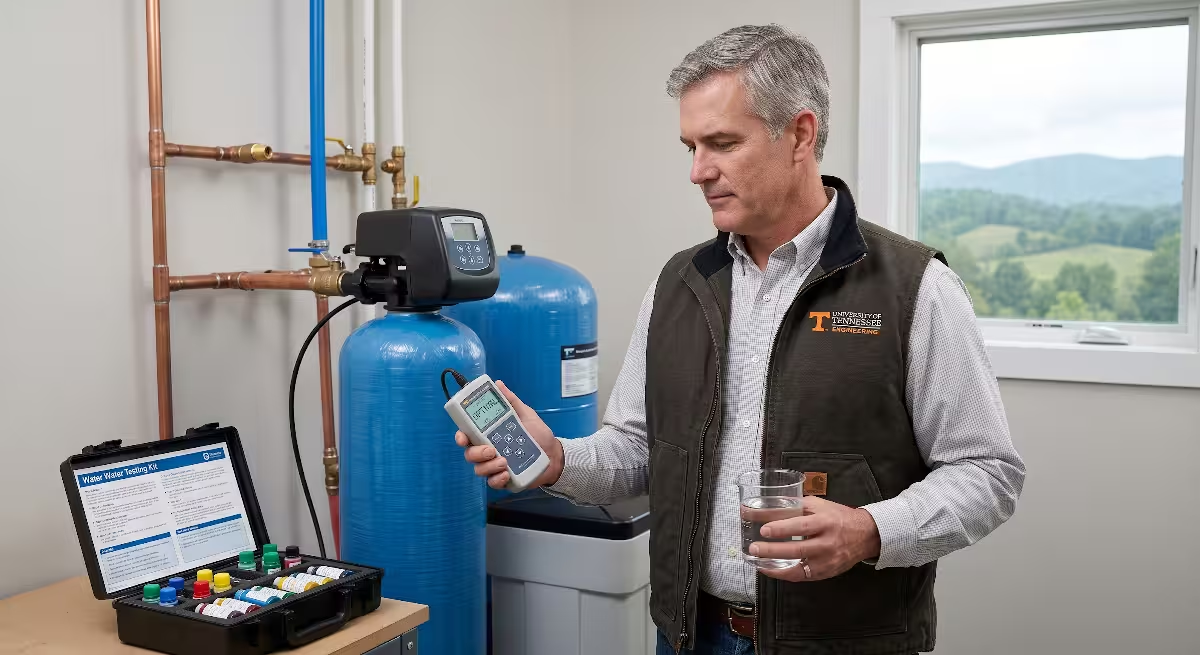
Water quality is one of the most debated topics when people compare well water vs. city water. Both water sources can provide clean, safe drinking water, but they require different treatment approaches.
┌────────────────────────────────────────────────────────────────────────┐
│                   WATER FILTRATION & TREATMENT PATHS                   │
├───────────────────────────────────┬────────────────────────────────────┤
│         WELL WATER SYSTEM         │         CITY WATER SYSTEM          │
├───────────────────────────────────┼────────────────────────────────────┤
│ • Spin-Down Sediment Filter       │ • Whole-House Carbon Filter        │
│ • Ion-Exchange Water Softener     │   (Removes chlorine & chloramines) │
│ • Iron / Sulfur Media Filter      │ • Under-Sink Reverse Osmosis       │
│ • Ultraviolet (UV) Disinfection   │   (Removes fluoride & micro-toxins)│
└───────────────────────────────────┴────────────────────────────────────┘
Understanding Well Water Treatment
Because well water comes straight from the ground, its mineral makeup reflects local soil and bedrock. While natural minerals are healthy to drink, high levels of dissolved calcium and magnesium create hard water. Hard water causes white scale buildup inside water heaters, dishwasher elements, and shower fixtures.
To protect your plumbing infrastructure, a complete well water treatment setup often includes:
- Spin-Down Sediment Pre-Filter: Traps coarse sand, silt, and grit before water reaches your pressure tank.
- Ion-Exchange Water Softener: Removes calcium and magnesium ions, replacing them with sodium ions to eliminate hard water scale.
- Iron and Manganese Filter: Uses air injection or catalytic media to eliminate reddish iron staining and dark manganese specks.
- Ultraviolet (UV) Disinfection System: Uses a germicidal UV light chamber to destroy bacteria, coliform, and microorganisms without adding chemicals.
Understanding City Water Treatment
Many homeowners assume that municipal city water needs no filtration. While city water is thoroughly treated to meet federal safety standards, it often contains treatment chemicals that homeowners prefer to remove before drinking or bathing.
To optimize city water quality, common home treatment options include:
- Whole-House Activated Carbon Filter: Removes chlorine, chloramines, and chemical disinfection byproducts to eliminate chemical odors and taste.
- Under-Sink Reverse Osmosis (RO) System: Uses a semi-permeable membrane to remove dissolved solids, fluoride, residual nitrates, and micro-contaminants at the kitchen drinking tap.
- Point-of-Entry Sediment Filter: Catches loose rust and scale particles that break free from aging municipal distribution mains.
When comparing well water vs. city water, both systems benefit from point-of-use filtration, but well water focuses on mineral management while city water focuses on chemical removal.
Power Outages, Grid Resilience, and Emergency Preparedness
A critical engineering difference between well water vs. city water is how each system responds during emergency weather events and power outages.
                     POWER OUTAGE RESPONSE COMPARISON

  [ POWER OUTAGE OCCURS ]
            │
            ├──────────────────────────────────────────────┐
            ▼                                              ▼
   [ PRIVATE WELL SYSTEM ]                        [ CITY WATER SYSTEM ]
            │                                              │
    Pump Loses Power                               Municipal Towers Hold
    Pressure Tank Empties (20-40 gal)              Massive Water Storage
            │                                              │
    WATER STOPS RUNNING                            Gravity Maintains Flow
    *Requires Generator or Battery Backup*         WATER CONTINUES RUNNING
The Well Water Vulnerability
A private well relies entirely on electricity to push water from deep underground into your home. The submersible pump operates on a 230-volt electrical circuit. When a severe winter storm, high wind event, or grid failure cuts power to your home, your well pump shuts down immediately.
Your indoor pressure tank stores a small reserve of pressurized water (typically between 10 and 40 gallons, depending on tank size). Once that reserve is drained by a few toilet flushes or faucet uses, water flow stops completely.
For homeowners choosing well water in the well water vs. city water comparison, emergency planning is essential:
- Portable or Standby Generator: A generator with a dedicated 230V connection and manual transfer switch allows you to power your well pump during extended grid failures.
- Manual Emergency Hand Pump: Installing a secondary manual pump head on your well casing allows you to pump clean water by hand from several hundred feet down during a crisis.
- Solar with Battery Backup: Modern home battery systems can be wired to support well pump circuits, ensuring continuous water access during off-grid situations.
The City Water Advantage During Blackouts
During typical electrical blackouts, city water provides an advantage in the well water vs. city water comparison. Municipal water distribution systems do not rely solely on real-time electric pumping to deliver water to your home.
Cities store millions of gallons of treated water in elevated water towers built on high hills or tall steel structures. The elevation of the water tower creates continuous natural gravity head pressure throughout the distribution grid. Even if power is out across several neighborhoods, the water inside the tower continues flowing through underground mains and into your home with normal pressure. Unless a regional treatment plant loses backup generator power or a major line ruptures, city water remains fully functional during power outages.
Health, Taste, and Safety Considerations
When home buyers ask about well water vs. city water, health and safety are always top priorities. Families want to know which source is safer and better for long-term consumption.
┌────────────────────────────────────────────────────────────────────────┐
│                     HEALTH & TASTE PROFILE SUMMARY                     │
├───────────────────────────────────┬────────────────────────────────────┤
│         WELL WATER SYSTEM         │         CITY WATER SYSTEM          │
├───────────────────────────────────┼────────────────────────────────────┤
│ • 100% Free of added chlorine     │ • Treated with chemical additives  │
│ • Rich in natural dietary minerals│ • Monitored daily under EPA rules  │
│ • Requires annual owner lab tests │ • Published Consumer Reports (CCR) │
│ • Excellent, clean natural flavor │ • Noticeable chlorine odor/taste   │
└───────────────────────────────────┴────────────────────────────────────┘
Chemical Exposure vs. Biological Oversight
The safety distinction between well water vs. city water comes down to chemical additives versus independent monitoring.
City water is continuously treated with disinfectants like chlorine or chloramine to kill harmful pathogens, viruses, and bacteria. While this disinfection prevents waterborne diseases, long-term exposure to chlorine and disinfection byproducts (such as trihalomethanes) is a common concern for health-conscious buyers. City water provides consistent biological safety, but it relies on chemical treatment to achieve that standard.
Well water contains zero added chemical disinfectants. It comes straight from underground rock formations, retaining its natural purity and beneficial dissolved minerals. However, because private wells are not monitored by government agencies, the homeowner is solely responsible for biological safety. Surface runoff from heavy agricultural activity, failing neighbor septic systems, or cracked wellhead seals can introduce coliform bacteria or nitrates into an unmonitored well.
The Taste Profile Difference
Taste is subjective, but in the comparison of well water vs. city water, natural well water is frequently preferred by homeowners.
Well water has a smooth, refreshing taste because of its balanced mineral content. It contains no chemical odor. When you pour a glass of well water from a properly filtered system, it smells and tastes clean.
City water often has a noticeable chemical scent and a slightly metallic or bleached flavor, particularly in summer months when utilities increase chlorine dosages to combat algae blooms in surface reservoirs. While a refrigerator filter or pitcher filter can reduce this taste, comparing well water vs. city water on pure, straight-from-the-tap flavor usually gives the edge to high-quality well water.
Frequently Asked Questions about Well Water vs. City Water
To help you navigate the details of well water vs. city water, here are direct answers to the most common questions asked by prospective home buyers, builders, and property owners.
Is well water healthier or safer than city water?
Neither water source is automatically safer than the other; safety depends entirely on testing and filtration. When evaluating well water vs. city water, city water has the advantage of mandatory federal testing under the EPA Safe Drinking Water Act, ensuring it is free from dangerous biological pathogens. Well water has the health advantage of containing zero chlorine, chloramines, or artificial additives, along with healthy natural minerals. As long as a well owner tests their water annually and maintains proper filtration, well water is exceptionally healthy and safe to drink.
Is well water actually cheaper than city water in the long run?
Yes, in the vast majority of residential installations, well water is significantly cheaper over a 10-to-20 year timeline.While drilling a well requires an initial investment of $7,500 to $15,000, you pay $0 in monthly usage and sewer bills.City water has a lower initial connection cost but comes with permanent monthly bills that rise over time. Most well owners reach a complete financial break-even point within 8 to 12 years, saving thousands of dollars over the lifetime of their home.
What happens to a well system when the power goes out?
Because private well systems use 230-volt electric submersible pumps to bring water to the surface, the pump will not run during a power blackout. You will have access only to the 10 to 40 gallons of pressurized water stored in your indoor pressure tank. Once that water is used, flow stops. To maintain continuous water access during blackouts, homeowners can connect their well pump to a standby generator, a battery backup system, or install an emergency manual hand pump on the wellhead.
How do I know if a home I am looking at has well water or city water?
You can identify the water source through a few physical checks on the property:
- Look for a Wellhead: A private well has a round steel or PVC casing with a sealed cap extending 12 to 18 inches above ground level in the yard.
- Inspect the Utility Room or Basement: Well systems feature a large cylindrical pressure tank with an attached pressure gauge, electrical pressure switch, and heavy plumbing line coming through the foundation wall.
- Look for a Water Meter: City water properties have a metal or composite utility meter box buried near the street curb or property boundary.
- Check the Utility Billing: If the property owner pays a monthly water and sewer utility bill, the home is on city water.
Can you switch from a private well to city water, or vice versa?
Yes, you can convert between water sources, provided public mains are accessible. If a municipal water line is extended past your property, you can pay the required tap and connection fees, trench a new service line to your foundation, and connect your home plumbing to the city meter. When doing this, local plumbing codes require a physical disconnection or an approved backflow preventer to ensure well water cannot contaminate the public grid. Conversely, if you currently have city water on a large lot, you can hire a licensed well driller to drill a private well for home use or landscape irrigation, subject to local municipal permitting rules.
Does well water cause dry skin or damaged hair compared to city water?
Both water sources can affect skin and hair, but for different reasons. Untreated well water is often rich in calcium and magnesium (hard water), which can leave a light mineral film on skin and make hair feel dry or brittle. However, installing a whole-house water softener completely solves this issue. On the other hand, city water contains chlorine and chloramines, which strip natural oils from skin and hair follicles, causing irritation and dryness. Installing a whole-house carbon filter on a city water line removes these drying chemicals.
Environmental Impact and Water Conservation
Evaluating well water vs. city water also involves looking at environmental stewardship and local water conservation.
┌────────────────────────────────────────────────────────────────────────┐
│                     ENVIRONMENTAL FOOTPRINT PROFILE                    │
├───────────────────────────────────┬────────────────────────────────────┤
│         WELL WATER SYSTEM         │         CITY WATER SYSTEM          │
├───────────────────────────────────┼────────────────────────────────────┤
│ • Direct local aquifer recharge   │ • High energy centralized pumping  │
│ • Zero industrial chemical use    │ • Chemical production & transport  │
│ • No distribution pipe energy loss│ • Massive municipal line leaks     │
│ • Natural localized water cycle   │ • Surface water ecosystem impact   │
└───────────────────────────────────┴────────────────────────────────────┘
The Closed-Loop Groundwater Cycle
A private well is an environmentally clean, closed-loop water system. When you draw water from your well, you use it in your home and send it through your on-site septic tank. The septic drain field naturally filters the wastewater through soil layers, where microbes break down organic matter. Over time, that clean, filtered moisture percolates back down into the earth, recharging the very aquifer from which it was drawn.
Furthermore, private wells require no large industrial chemical plants, no massive chemical transport tanker trucks, and no miles of leaking municipal piping infrastructure. When looking at well water vs. city water from an ecological perspective, a private well has a very small carbon and environmental footprint.
Municipal Infrastructure and Water Loss
Centralized municipal water networks require significant energy and industrial resources to maintain. City water treatment plants consume large amounts of electricity and chemicals to treat millions of gallons of water daily.
Additionally, municipal pipe networks across the country suffer from significant distribution losses. The American Society of Civil Engineers estimates that billions of gallons of treated drinking water are lost every day nationwide due to aging, leaking underground water mains. When comparing well water vs. city water, private well systems eliminate municipal transmission loss because water travels only a few dozen feet from the wellhead directly into your home plumbing.
Which Water Source Makes Sense for You?
Both systems, well water vs. city water, perform exceptionally well when properly planned and maintained. When you sit down to make your final choice between well water vs. city water, match your decision to your property location, your long-term goals, and your personal lifestyle.
                  BUILDER'S DECISION FLOWCHART

                    [ Evaluate Your Lot & Goals ]
                                 │
                 ┌───────────────┴───────────────┐
                 ▼                               ▼
       [ Rural / Acreage Lot ]       [ Subdivision / Urban Lot ]
       [ Values Independence ]       [ Prefers Hands-Off Living ]
       [ Wants $0 Monthly Bill]      [ Wants No Maintenance     ]
                 │                               │
                 ▼                               ▼
       CHOOSE WELL WATER               CHOOSE CITY WATER
Choose Well Water If:
- You are building on a rural lot, acreage, or a mountain homesite where municipal lines are unavailable or expensive to extend.
- You want complete independence from public utility monopolies, rate increases, and summer watering bans.
- You prefer natural, chemical-free drinking water rich in natural earth minerals.
- You plan to stay in your home for more than eight years and want to maximize long-term savings by eliminating monthly water bills.
- You are comfortable performing basic seasonal home maintenance, such as checking filter gauges and adding softener salt.
Choose City Water If:
- You are building in an established suburban neighborhood or master-planned community with existing utility connections.
- You want a hands-off water supply with zero equipment to service, repair, or replace.
- You prefer government-regulated water testing under the EPA Safe Drinking Water Act rather than managing your own lab tests.
- You want continuous water pressure during electrical power outages without needing a backup generator.
- You want to keep your initial construction budget as low as possible.
The Homeowner’s Action Checklist for Water Due Diligence
Whether you choose well water vs. city water for your next home, take these practical steps before closing on land or signing a construction contract:
- Test Existing Wells Thoroughly: If you are buying a home with an existing well, hire a certified testing laboratory to run a complete water panel checking for coliform bacteria, nitrates, lead, hardness, pH, and volatile organic compounds (VOCs).
- Perform a Well Flow Rate Test: Have a licensed well contractor perform a sustained four-hour flow test to verify the well’s continuous gallons-per-minute (GPM) production and drawdown recovery rate.
- Request City Water Quality Reports: If you are connecting to city water, request the most recent Consumer Confidence Report (CCR) from the local utility department to see exactly what minerals and treatment chemicals are present in the municipal supply.
- Plan Mechanical Space Early: Ensure your architectural floor plan includes adequate space in the utility room or basement for necessary water treatment equipment, whether that means a pressure tank and softener for a well, or a whole-house carbon filter for city water.
- Install Emergency Shut-Off Valves: Make sure your builder installs a commercial-grade, quarter-turn main water shut-off valve near the water entry point so you can easily isolate your plumbing during maintenance or emergencies.
Making an informed choice between well water vs. city water ensures your home has a safe, dependable, and cost-effective water supply for generations to come.