The Frontier Blueprint of Tennessee’s Oldest Town
If you take a drive down Highway 11E through Washington County, you will run right into a place where American history feels alive. When you look at the foundation stones, hand-hewn timbers, and timber frames of this town, you see the true grit of early settlers. Anyone wanting to understand Jonesborough, TN history must look at how this community was laid out before Tennessee was even a state.
1779 Establishment Under North Carolina
The foundation of Jonesborough, TN history began in 1779. That was seventeen years before Tennessee gained statehood in 1796. At that time, this land was part of the Washington District of North Carolina. The American Revolutionary War was still raging along the eastern seaboard. Pioneers were pushing past the Appalachian Mountains to find fertile land, clean mountain spring water, and new opportunities.
Establishing a town on the wild frontier required careful surveying and civil planning. North Carolina chartered the town to bring law, order, and tax collection to the western settlements. The original town plan laid out a central main street with half-acre lots. Settlers had to build a proper wood or brick structure with a chimney within a set time to keep their land grants. That early zoning rule was the very first building code in the region. This rule helped turn a rough camp into a permanent, thriving frontier trade town.
Naming Origin: Honoring Willie Jones
A key detail in Jonesborough, TN history is the origin of its name. The town was named in honor of Willie Jones. He was a prominent North Carolina aristocrat, planter, and political leader from Halifax County. Willie Jones was an ardent defender of individual liberty and states’ rights. He later became a leading Anti-Federalist who demanded a Bill of Rights before North Carolina would ratify the United States Constitution.
Although Willie Jones never lived in the town that carries his name, naming the settlement after him was a smart political move. The frontier leaders in the Washington District needed political allies in the North Carolina General Assembly. They needed funding for roads, military support against hostile border attacks, and legal backing for their court systems. Naming the town after Willie Jones helped secure those crucial political ties.
Geographic Significance as America’s First Frontier
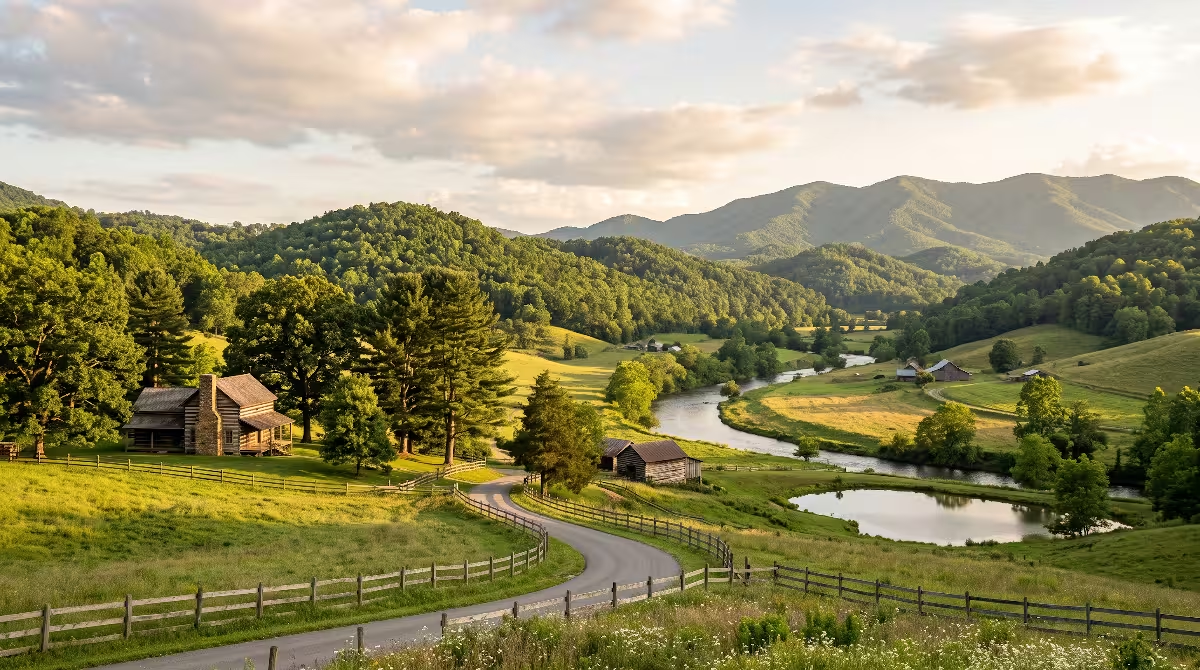
To appreciate Jonesborough, TN history, you have to understand the geography of the Appalachian Mountains. In the late 1700s, the Great Valley of East Tennessee served as a natural highway for wagons heading west. Jonesborough sat squarely along the Great Stage Road. This road was the primary path connecting Virginia and the Carolinas to the Cumberland Gap and the unsettled western territories.
Settlers stopped here to repair iron wagon wheels, buy cornmeal and salt, purchase black powder, and register legal land deeds. The town became a regional hub where tradesmen, blacksmiths, carpenters, lawyers, and tavern keepers set up shop. The natural limestone springs around town gave travelers reliable fresh drinking water. The fertile valley soil between the mountains made farming productive. Jonesborough was not just a quiet mountain village; it was the active western staging post for early America.
The Lost State of Franklin (1784 to 1788): Capital of an Independent Frontier
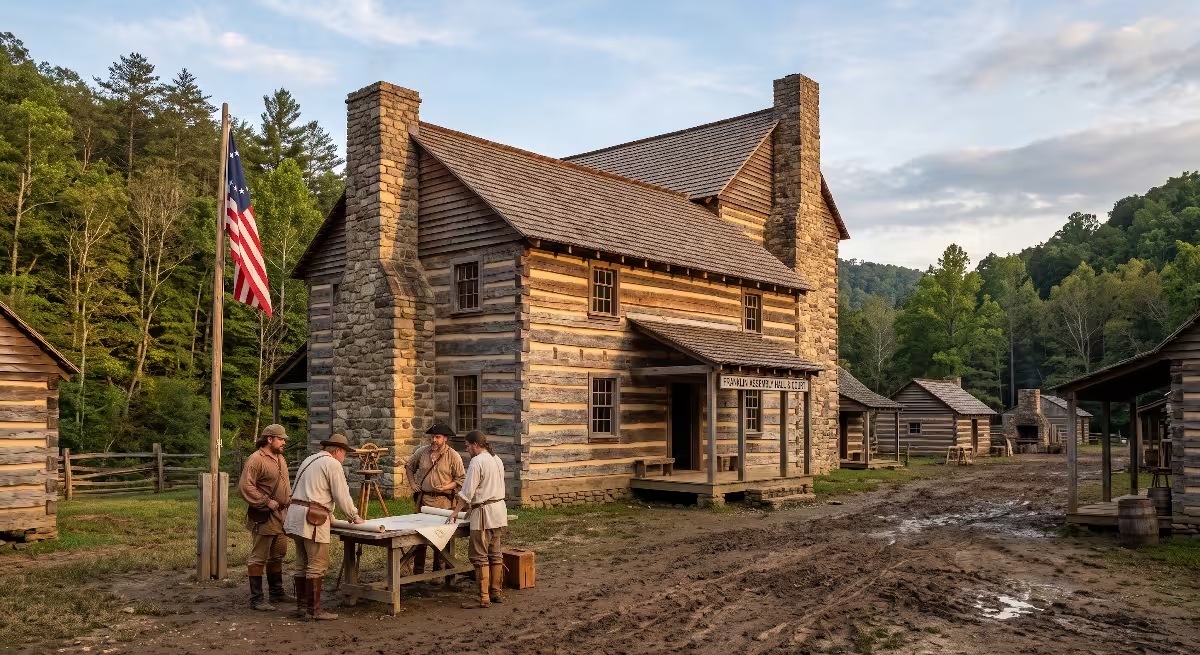
You cannot talk about Jonesborough, TN history without diving into the story of the State of Franklin. It is one of the most interesting stories of frontier independence in American history. For four years, the people of this valley formed their own separate government and tried to join the United States as the fourteenth state.
+-------------------------------------------------------------------------+
|                  THE RISE AND FALL OF THE STATE OF FRANKLIN              |
+-------------------------------------------------------------------------+
|  1784: North Carolina cedes western lands; settlers declare independence|
|  1784: Jonesborough named the first capital of the State of Franklin    |
|  1785: Constitution drafted; John Sevier elected as the first Governor  |
|  1787: Competing court systems cause deep local political conflict      |
|  1788: The Battle of Franklin; the independent government dissolves     |
|  1796: Tennessee enters the Union as the 16th state                     |
+-------------------------------------------------------------------------+
The Secession from North Carolina
In 1784, the North Carolina legislature voted to give its western lands beyond the Blue Ridge Mountains to the Continental Congress to help pay off Revolutionary War debts. The mountain settlers suddenly felt abandoned. They were left with no military protection, no functioning regional court system, and no public services.
When North Carolina realized Congress was slow to accept the land and tried to take it back, the frontiersmen decided they had had enough. Delegates from Washington, Sullivan, and Greene counties met to form a new, self-governing territory. They named their independent state after Benjamin Franklin, hoping to win his political influence in Congress. This bold move set off a major chapter in Jonesborough, TN history that proved how fiercely independent mountain settlers were.
Jonesborough as the First Capital
Jonesborough was chosen as the original capital of the State of Franklin in 1784. The leaders gathered in a simple log courthouse on Main Street to organize their government, write treaties, and establish a court of law.
Running a frontier government without official gold or silver coin was a real challenge. The Franklin legislature passed laws allowing taxes and public salaries to be paid in practical trade goods. You could pay your property taxes with:
- Otter skins, beaver pelts, and deer hides
- Clean animal fats like tallow
- Gallons of rye whiskey or peach brandy
- Clean bundles of cured tobacco
- Linsey-woolsey cloth spun by local weavers
The records of these trade-good payments remain a colorful and important part of Jonesborough, TN history. The town bustled with judges, militia officers, and traders who worked hard to establish order in an unmapped wilderness.
John Sevier’s Leadership on the Frontier
General John Sevier is the central figure in the story of the State of Franklin and early Jonesborough, TN history. Sevier was a hero of the Battle of Kings Mountain in 1780, where pioneer Overmountain Men defeated British Major Patrick Ferguson. The settlers trusted Sevier completely. They elected him as the first and only Governor of the State of Franklin.
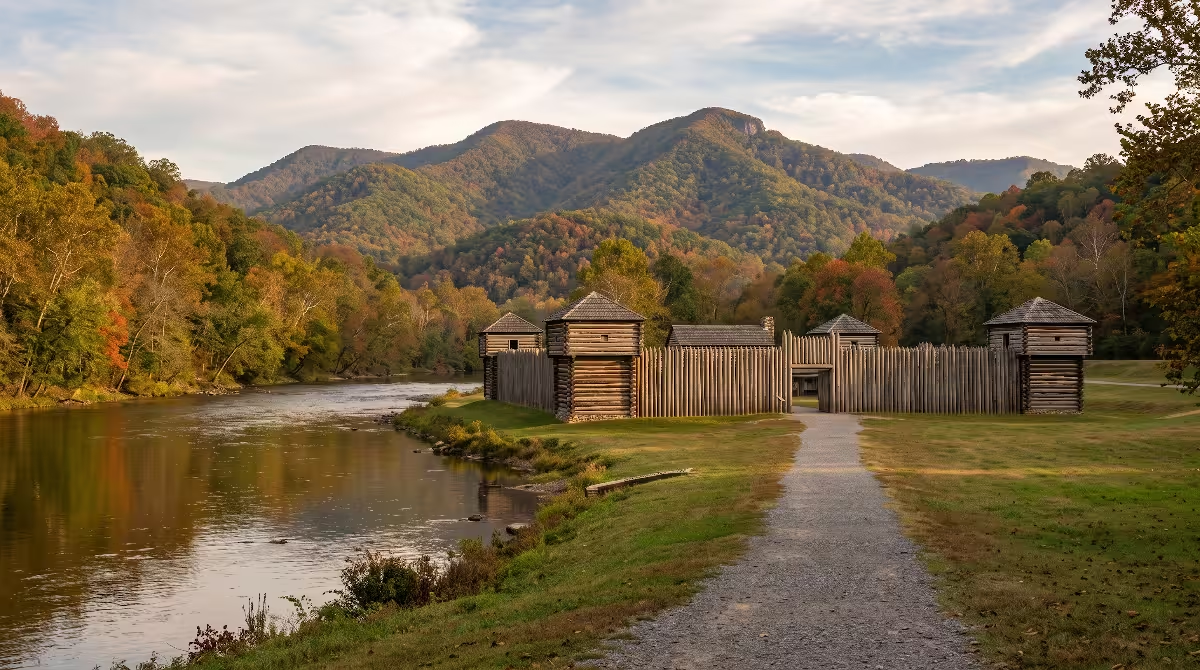
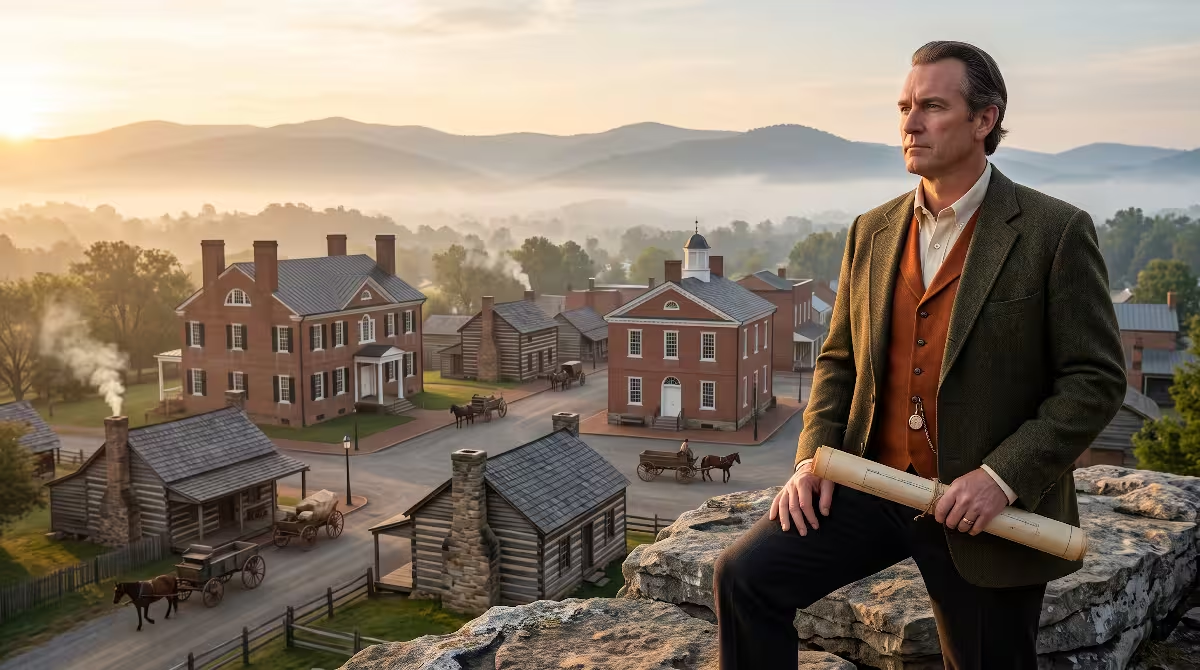
Sevier was a skilled leader, surveyor, and diplomat. He worked out of Jonesborough to negotiate land treaties with Native American tribes, build defensive stockades, and lead local militia units. Locals in the Tri-Cities sometimes joke that I share his look, but what I really admire about Sevier was his practical ability to build functional systems in a rugged mountain environment. He kept the settlements safe and organized during years of intense border danger.
Collapse and the Road to 1796 Statehood
The State of Franklin could not last forever. In 1785, the Continental Congress voted on whether to admit Franklin as the fourteenth state. The measure fell short of the needed two-thirds majority by just a single vote.
Back home, North Carolina reasserted its authority. The region ended up with two competing governments operating at the exact same time. There were two rival county courts, two sets of sheriffs, and two tax collectors competing for control in Jonesborough. Local tensions grew until 1788, when an armed skirmish took place at John Tipton’s farm just down the road from Jonesborough.
By 1789, the State of Franklin had dissolved, and North Carolina resumed control. However, the movement paved the way for the Southwest Territory in 1790. In 1796, the territory officially entered the Union as the state of Tennessee, with John Sevier serving as the state’s very first governor. The lessons learned during those four years in Franklin helped shape the legal and civic framework of early Tennessee.
Historic Milestones, Figures, and the Press
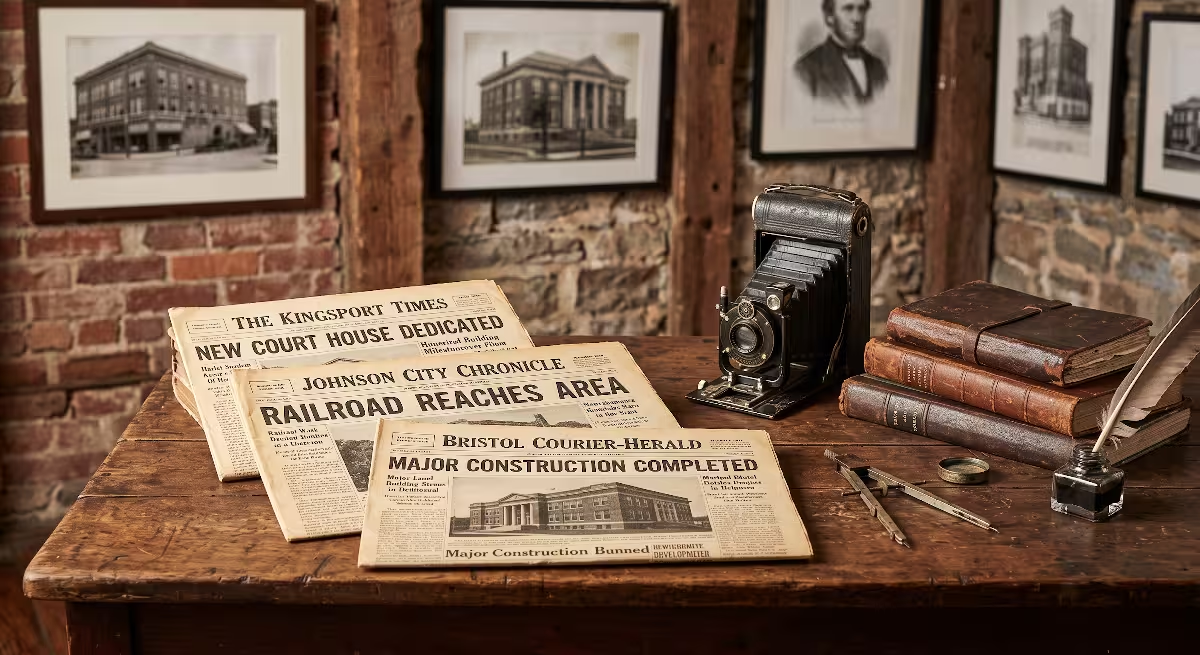
As the nineteenth century began, Jonesborough grew from a frontier fort town into a center of politics, journalism, and early industrial commerce in the southern Appalachian region.
Andrew Jackson’s Early Legal Career
A foundational moment in Jonesborough, TN history was the arrival of a young, red-haired lawyer named Andrew Jackson in 1788. Jackson came to town to be admitted to the bar and practice law in the local courts. He lived in the area for several months, boarding at the Christopher Taylor House just outside the town center.
Jackson was known for his sharp temper, quick legal mind, and fierce loyalty. While practicing law in Jonesborough, Jackson argued cases involving land boundaries, horse theft, and frontier trade debts. He even fought a bloodless duel with a fellow attorney, Colonel Waightstill Avery, after a heated courtroom argument. Jackson continued to visit Jonesborough throughout his political career. He stayed at the Chester Inn while campaigning for the presidency of the United States.
+-------------------------------------------------------------------------+
|                  NOTABLE HISTORIC FIGURES IN JONESBOROUGH                |
+-------------------------------------------------------------------------+
|  John Sevier: Revolutionary War hero and only Governor of Franklin      |
|  Andrew Jackson: 7th U.S. President; admitted to the bar in 1788        |
|  Elihu Embree: Abolitionist; published The Emancipator in 1820          |
|  William G. Brownlow: Unionist editor, Methodist preacher, TN Governor  |
|  Landon Carter Haynes: Confederate politician and skilled orator        |
+-------------------------------------------------------------------------+
Cradle of the Abolitionist Movement: Elihu Embree and The Emancipator
One of the most significant chapters in Jonesborough, TN history occurred in 1820. Elihu Embree, a local Quaker and iron manufacturer, began publishing The Emancipator right on Main Street. The Emancipator was the very first periodical in the entire United States dedicated exclusively to the abolition of slavery.
Embree was a passionate writer. He used his printing press to condemn the moral evils of human bondage, advocate for universal freedom, and publish antislavery essays and legal arguments. Despite living in the slaveholding South, Embree’s paper gained thousands of subscribers across the United States.
East Tennessee had a high concentration of small farms rather than massive plantations, along with strong Quaker, Presbyterian, and Methodist communities. This unique cultural mix made Jonesborough a major early center for human rights advocacy decades before the Civil War began.
Frontier Journalism and Political Feuds
By the 1840s and 1850s, Jonesborough was famous for heated political journalism. The town was home to fiery debates between two famous figures: Parson William Gannaway Brownlow and Landon Carter Haynes.
- Parson William G. Brownlow: An outspoken Methodist circuit rider, editor of the Jonesborough Whig, and fierce Union supporter. His biting insults, strong writing style, and deep political convictions made his newspaper read across the country.
- Landon Carter Haynes: A gifted lawyer, Democratic politician, editor of the Tennessee Sentinel, and later a Confederate Senator.
These two editors lived near each other and ran rival newspapers on Main Street. Their editorials were filled with sharp insults, political debates, and public challenges. Their public disputes turned Jonesborough into an epicenter of Southern political thought during the turbulent years leading up to the Civil War.
The 1873 Cholera Epidemic
Jonesborough, TN history was not without tragedy. In the summer of 1873, an outbreak of cholera swept through the Appalachian valley. The disease entered the town through contaminated water sources along the railroad line. Within a few weeks, the epidemic killed dozens of residents and caused much of the town to evacuate into the surrounding hills.
The 1873 epidemic forced the town to rethink public health, sanitation, and municipal infrastructure. The local government passed stricter rules regarding trash disposal, spring water protection, and drainage ditches. The recovery that followed showed the resilience of the community and led to improvements in local building and water management.
The Architectural Anatomy of Jonesborough
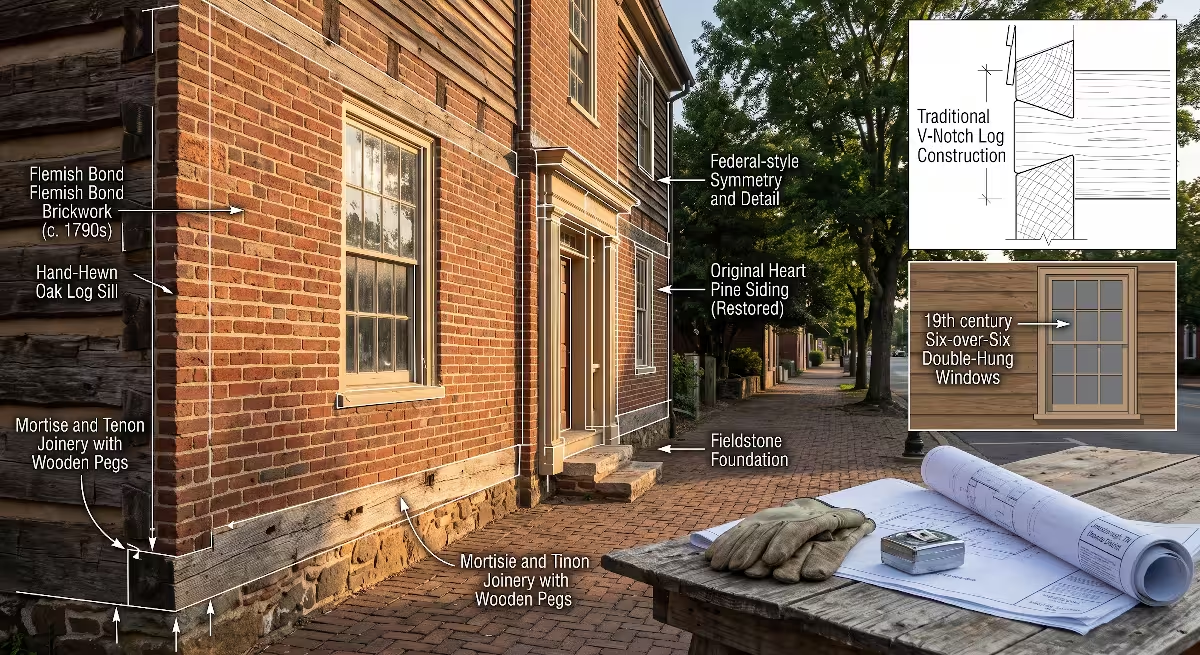
As a builder who works with wood, brick, concrete, and steel every day, I find the physical structures in Jonesborough fascinating. You can read the entire story of Jonesborough, TN history just by inspecting the framing joints, stone foundations, and brick patterns along Main Street.
Frontier Timber Craftsmanship: The Christopher Taylor House (1777)
The Christopher Taylor House, built in 1777, is the oldest standing structure in Jonesborough and one of the finest examples of early pioneer construction in Tennessee. Christopher Taylor was a veteran of the French and Indian War and a major in the local militia. He built this two-story log home two years before Jonesborough was formally established.
+-------------------------------------------------------------------------+
|            EARLY APPALACHIAN LOG JOINERY: HALF-DOVETAIL CORNER          |
+-------------------------------------------------------------------------+
|                                                                         |
|      +-----------------------------------------+                        |
|     /                                         /|                        |
|    +-----------------------------------------+ |                        |
|    |                                         | |                        |
|    |    Hand-Hewn Yellow Poplar Log          | |                        |
|    |                                         | +                        |
|    |   +---------------------------------+   |/                         |
|    +---|        Sloped Interlocking      |---+                          |
|        |            Corner Notch         |                              |
|        +---------------------------------+                              |
|                                                                         |
|   1. Hewn flat on sides with a broadaxe for tight, stable stacking.     |
|   2. Sloped notch sheds rain water outward to prevent wood rot.         |
|   3. Mortar and lime chinking seals gaps against winter winds.          |
+-------------------------------------------------------------------------+
When you examine this home closely, you can see brilliant frontier engineering:
- Massive Yellow Poplar Logs: The builders chose yellow poplar because it grew straight, resisted rot, and was relatively easy to cut with hand tools.
- Half-Dovetail Notching: The corners feature half-dovetail joints cut by hand. These joints lock the heavy logs together through friction and gravity. The outward slope drains rainwater away from the building, protecting the logs from moisture rot for more than two centuries.
- Mortise-and-Tenon Framing: Floor joists and roof rafters were secured using mortise-and-tenon joints locked with wooden pegs called trunnels. Metal nails were scarce and expensive, so builders relied entirely on solid wood joinery.
Federal and Greek Revival Transitions: The Chester Inn (1797)
As the town prospered, wood-frame and brick architecture began replacing raw log structures. The Chester Inn, constructed in 1797 by Dr. William Chester, represents a major step forward in Jonesborough, TN history.
The Chester Inn was built using heavy timber framing, also known as post-and-beam construction. Instead of solid stacked logs, builders constructed a skeleton of heavy oak posts and beams. They covered this frame with finished weatherboard siding. Over the decades, the building grew. In the late 1800s, owners added a beautiful two-story front porch with detailed Victorian wood brackets and railings. This blend of early Federal framing and Victorian porch details shows how historic homes in our region adapted to changing styles over time.
Washington County Courthouse and Main Street Masonry
During the mid-to-late nineteenth century, commercial buildings in Jonesborough shifted to multi-wythe brick masonry. The Washington County Courthouse, standing proudly in the center of town, is an excellent example of this period.
+-------------------------------------------------------------------------+
|                 HISTORIC MASONRY WALL SYSTEM (MULTI-WYTHE)               |
+-------------------------------------------------------------------------+
|                                                                         |
|     [ Exterior Face Brick ]  [ Center Collar Joint ]  [ Interior Brick ]|
|     +-----+ +-----+ +-----+         +--+             +-----+ +-----+    |
|     |  *  | |  *  | |  *  |         |  |             |  #  | |  #  |    |
|     +-----+ +-----+ +-----+         +--+             +-----+ +-----+    |
|     |  *  | |  *  | |  *  |         |  |             |  #  | |  #  |    |
|     +-----+ +-----+ +-----+         +--+             +-----+ +-----+    |
|                                                                         |
|   * High-fired clay bricks face the outdoors to shed wind and rain.     |
|   # Softer, porous common bricks form the structural interior core.     |
|   - Soft lime mortar allows the masonry to breathe and expand naturally.|
+-------------------------------------------------------------------------+
Early builders created bricks using local clay fired in wood-burning kilns. They laid these bricks in multiple thick layers, known as wythes. They used traditional lime-based mortar instead of modern Portland cement. Lime mortar is softer and more flexible, allowing old brick buildings to move slightly during seasonal freeze-and-thaw cycles without cracking the brick faces. This solid brick masonry gave Main Street fire protection and long-term durability.
Preservation Standards and the 1969 Historic District
By the 1960s, many old American downtowns were tearing down historic buildings to build strip malls and asphalt parking lots. The leaders of Jonesborough chose a different path. In 1969, Jonesborough became the very first town in Tennessee to be listed on the National Register of Historic Places as an entire historic district.
The town established the Jonesborough Historic Zoning Commission to protect its historic architecture. This commission created clear design guidelines:
- Preserving Original Materials: Property owners must repair historic wood siding and brick masonry rather than covering them with vinyl or synthetic materials.
- Maintaining Architectural Scale: Additions and new buildings must match the roof pitch, window proportions, and building heights of historic neighbors.
- Color and Trim Fidelity: Paint colors, signs, and trim profiles must match the historical period of each building.
This early commitment to historic preservation saved the town center from demolition and laid the groundwork for the modern tourism economy that thrives here today.
Cultural Evolution: From Frontier Outpost to Storytelling Capital
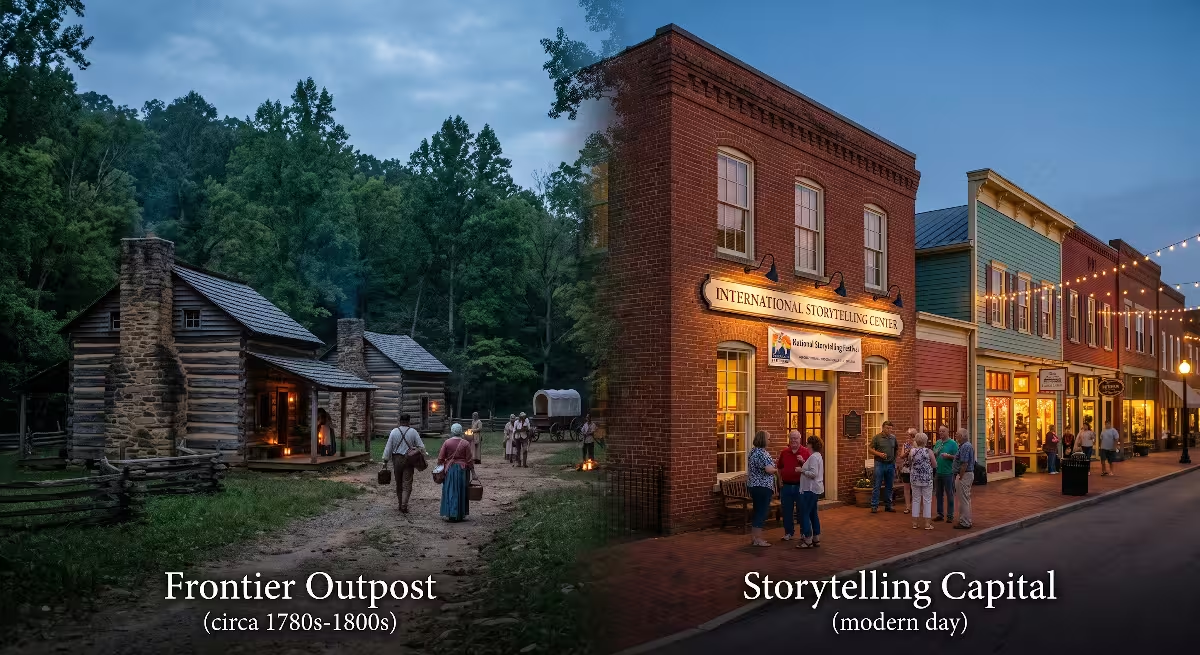
Jonesborough, TN history changed forever in the early 1970s. The town transformed from a quiet agricultural center into an international destination for the performing arts.
Jimmy Neil Smith and the 1973 Inception
In October 1973, a local high school journalism teacher and future mayor named Jimmy Neil Smith organized the first National Storytelling Festival. Smith had been listening to tall tales told by mountain folks while riding through the hills in a car. He realized that the rich Appalachian tradition of oral storytelling was fading as television and modern media expanded.
Smith gathered a small crowd of sixty people behind the Washington County Courthouse. The storytellers stood on a flatbed farm wagon to share traditional mountain folk tales, ghost stories, and family memories. That simple gathering struck a deep emotional chord. It showed that people still had a strong hunger for authentic, face-to-face human storytelling.
The International Storytelling Center
From that small farm wagon grew a global cultural movement. Today, Jonesborough is recognized around the world as the Storytelling Capital of the World.
The International Storytelling Center now occupies a beautiful modern campus in the heart of downtown. The facility includes:
- An intimate, acoustically engineered indoor theater
- Educational archives and meeting rooms
- Landscaped public courtyards and gathering spaces
- A seasonal Teller-in-Residence program featuring master storytellers from every continent
Every October, the National Storytelling Festival draws more than 10,000 visitors to Jonesborough. Giant circus-style tents are set up across downtown parks and lawns. The festival provides a major economic boost to local restaurants, specialty shops, and bed-and-breakfast inns throughout the Tri-Cities.
+-------------------------------------------------------------------------+
|                  THE EVOLUTION OF STORYTELLING IN JONESBOROUGH          |
+-------------------------------------------------------------------------+
|  1973: First National Storytelling Festival held on a farm wagon        |
|  1975: National Association for the Preservation of Storytelling formed |
|  2000: Construction of the International Storytelling Center facility   |
|  Present: Over 10,000 global travelers visit every October              |
+-------------------------------------------------------------------------+
Adaptive Reuse in Modern Downtown
As a building professional, one of the things I love most about Jonesborough, TN history is how well the town practices adaptive reuse. Rather than turning historic buildings into static museum pieces, the community has adapted them into working commercial spaces.
Nineteenth-century hardware stores, dry-goods shops, and post offices now house:
- Locally owned coffee shops and bakeries
- Fine dining restaurants and casual brewpubs
- Artisan craft shops, pottery studios, and antique stores
- Professional law offices, design firms, and boutique inns
Modern plumbing, high-speed fiber-optic internet, and efficient mini-split heating and cooling systems have been carefully integrated behind historic plaster walls and beadboard ceilings. This approach allows the town to celebrate its past while supporting a modern, vibrant local economy.
Common Questions Answered About Jonesborough, TN History
Here are direct, clear answers to the most common questions people ask about Jonesborough, TN history.
Why is Jonesborough, TN famous?
Jonesborough is famous for four major historical reasons:
- Oldest Town in Tennessee: It was founded in 1779, seventeen years before Tennessee became a state.
- Capital of the Lost State of Franklin: It served as the primary seat of government for the independent State of Franklin from 1784 to 1788.
- Birthplace of The Emancipator: In 1820, Elihu Embree published the first newspaper in the United States dedicated entirely to abolishing slavery.
- Storytelling Capital of the World: It is the home of the International Storytelling Center and hosts the famous National Storytelling Festival every autumn.
What was the State of Franklin and why did it fail?
The State of Franklin was an independent frontier territory formed in 1784 by settlers living in what is now East Tennessee. The settlers declared independence after North Carolina ceded its western lands to the Continental Congress without protecting local residents.
The State of Franklin failed by 1788 for three main reasons:
- The Continental Congress fell one vote short of admitting it as the fourteenth state.
- North Carolina re-established its military and political control over the region.
- Internal political divisions split local residents between supporters of Governor John Sevier and loyalists to North Carolina.
What is the oldest structure in Jonesborough?
The oldest standing structure in Jonesborough is the Christopher Taylor House, built in 1777. It is a two-story log home constructed from hand-hewn yellow poplar logs joined with precision half-dovetail notches. The cabin was built two years before the town was founded and once provided lodging for a young Andrew Jackson.
+-------------------------------------------------------------------------+
|                  OLDEST HISTORIC STRUCTURES IN JONESBOROUGH             |
+-------------------------------------------------------------------------+
|  Structure Name          | Year Built | Primary Construction Type       |
+--------------------------+------------+---------------------------------+
|  Christopher Taylor House| 1777       | Hand-Hewn Log Framing           |
|  The Chester Inn         | 1797       | Heavy Timber Post-and-Beam      |
|  Old Washington Co. Jail | 1840s      | Multi-Wythe Brick and Limestone |
|  Presbyterian Church     | 1845       | Greek Revival Brick Masonry     |
+--------------------------+------------+---------------------------------+
What should homeowners know about building or renovating in Jonesborough’s Historic Overlay?
If you are planning to build, remodel, or add onto a home within the Jonesborough Historic Overlay District, you must work with the Jonesborough Historic Zoning Commission.
Key guidelines include:
- Exterior Changes Require Approval: Any visible exterior change—including window replacements, new siding, paint colors, porch repairs, and rooflines—must receive a Certificate of Appropriateness before work begins.
- Material Compatibility: You are expected to repair original wood, brick, and stone whenever possible. If replacement is necessary, materials must match the original in size, shape, texture, and appearance.
- No Interior Restrictions: The historic commission regulates exterior architectural elements visible from public streets. Interior renovations like kitchens, bathrooms, and modern floor plans are not restricted by historic zoning rules, though standard building and electrical codes apply.
Modern Building and Living in Historic Washington County
As someone who designs and constructs custom homes throughout the Tri-Cities, I see strong buyer demand for land around Jonesborough. People want the warmth, charm, and craftsmanship found in Jonesborough, TN history combined with modern comfort and high energy efficiency.
+-------------------------------------------------------------------------+
|                HISTORIC CHARM VS. MODERN BUILDING SCIENCE               |
+-------------------------------------------------------------------------+
|  Historic Aesthetic Feature  | Modern Engineering Application           |
+------------------------------+------------------------------------------+
|  Steep gable roof profiles   | High-efficiency spray foam roof decks    |
|  Covered timber-frame porches| Composite tongue-and-groove porch floors |
|  Multi-wythe brick facades   | Insulated cavity wall construction       |
|  Double-hung divided windows | Low-E argon-filled insulated glass       |
|  Handcrafted fireplace stone | High-efficiency gas and sealed flues     |
+------------------------------+------------------------------------------+
Marrying Historic Character with Modern Building Science
When designing a custom home near historic Jonesborough, you do not have to sacrifice modern performance to achieve a classic look. We can borrow the best architectural elements from Jonesborough, TN history while utilizing modern building science:
- Building Envelopes: We can design steep-pitched rooflines, wide covered front porches, and dormers that echo Appalachian farmhouse styles, while sealing the building envelope with closed-cell spray foam insulation and continuous weather barriers.
- Modern Mechanicals: Historic homes often struggle with uneven temperatures. In new builds, we install multi-zone heat pump systems with variable-speed compressors, along with energy recovery ventilators to keep indoor air fresh.
- Durable Exterior Materials: Instead of high-maintenance wood that requires regular repainting, we use fiber-cement siding, engineered wood trim, and authentic masonry veneer laid with traditional bond patterns.
Site Selection, Topography, and Soil Considerations
Building a custom home in Washington County requires a clear understanding of our local geology. East Tennessee sits in the Ridge-and-Valley province of the Appalachian Mountains.
Before purchasing land or digging foundations near Jonesborough, keep these site engineering factors in mind:
- Limestone Karst Formations: Much of Washington County rests on thick limestone bedrock. Underground water can create sinkholes and solution cavities. Always conduct a professional soil study and structural probe before pouring footings.
- Slope and Grade Management: Mountain foothills provide great views, but they require careful grading, stepped foundation walls, and engineered retaining systems to manage stormwater runoff.
- Septic and Drainage Requirements: If you are building on acreage outside the municipal sewer service area, you must test the soil for water absorption (percolation test). Washington County clay soils often require specialized chamber septic systems or engineered drain fields.
Community Appeal for Custom Homes Between Johnson City and Jonesborough
The corridor connecting Johnson City and Jonesborough along Highway 11E and Brownsborough Road is one of the most desirable residential areas in the Tri-Cities region.
Custom home buyers, growing families, and retirees moving to East Tennessee love this area because it offers:
- Convenient Access: You are just ten minutes from the medical centers, shopping districts, and amenities of Johnson City, while enjoying the quiet, small-town atmosphere of Jonesborough.
- Lower Property Taxes: Washington County offers favorable county-only tax rates for properties located outside municipal boundaries, alongside Tennessee’s benefit of no state income tax.
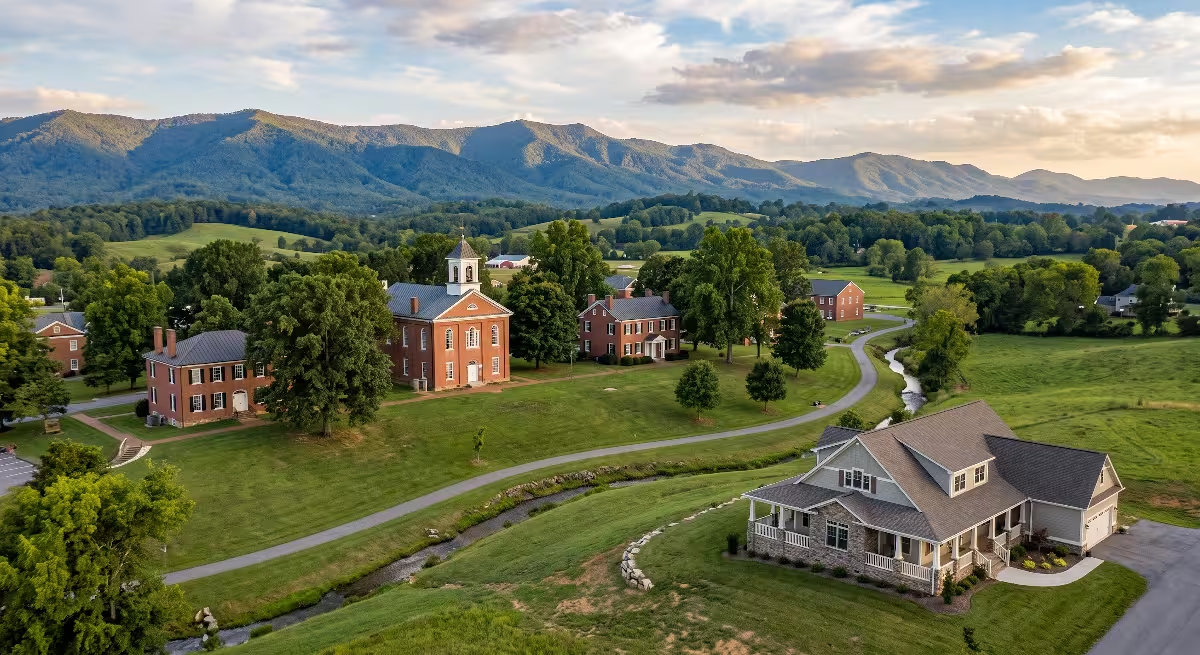
- Natural Beauty: Rolling pasture hills, views of Buffalo Mountain and the Cherokee National Forest, and large open home lots give homeowners space to breathe.
- Community Identity: Living near a town with deep historical roots creates a sense of place that generic suburban subdivisions cannot match.
Preserving Regional Craftsmanship for the Next Century
Studying Jonesborough, TN history teaches us that a community endures when it builds with care, purpose, and integrity. From the hand-shaped yellow poplar timbers of the 1777 Christopher Taylor House to the restored brick store fronts along Main Street, early builders used the best materials and techniques available in their day.
As we continue building new custom homes, neighborhoods, and commercial spaces across Washington County, it is important to honor that heritage. By pairing the classic craftsmanship of Jonesborough, TN history with high-efficiency building science, we should endeavor create homes that will stand strong for generations to come.