

The Neurobiology of the Hearth
Defining Fire-Biophilia in Modern Environmental Psychology
For hundreds of thousands of years, the daily life of human beings ended around an open flame. Long before our ancestors built permanent shelters or paved roads, fire provided warmth, safety from predators, and a way to cook food. More importantly, gathering around a fire shaped the way the human brain developed.
In modern
When you sit near a natural flame, your body responds immediately. In biophilic design, we classify this experience using established frameworks. The first is Pattern 2, which is Non-Visual Connection with Nature. This pattern describes how our senses of hearing, touch, and smell connect us to living natural systems. The crackle of seasoned timber, the aroma of burning wood, and the soft, pulsing warmth against your skin all signal to your primitive brain that you are secure.
The second framework is Pattern 8, known as Dynamic and Diffuse Light. In nature, light is never completely static. Sunlight filters through tree canopies, water ripples under the sun, and fire moves in unpredictable, flowing patterns. When you watch a wood stove burn, the light does not shine with the harsh, steady glare of an overhead lightbulb. Instead, it pulses with soft, shifting amber waves. This gentle movement catches our attention without draining our mental energy, creating a state of deep mental relaxation.
Seasonal Affective Dysregulation in Southern Appalachia
In the Tri-Cities region of East Tennessee, our winter landscape brings unique environmental challenges. The mountains surrounding Johnson City, Kingsport, and Bristol create stunning views in the summer and fall. However, when winter arrives, these same mountain ridges trap low clouds, mist, and heavy moisture across the valleys.
Our winter days become short, overcast, and cold. In science, we call this period of reduced daylight a shortened photoperiod. When you spend weeks under gray skies on the slopes of Roan Mountain or along the Holston River, your body gets fewer signals from natural sunlight.
This drop in natural light disrupts your circadian rhythm, which is the internal 24-hour clock that tells your body when to wake up and when to sleep. Without bright morning light and warm evening light, the brain produces less serotonin and dopamine. These are the natural chemical messengers responsible for mood stability, focus, and energy. At the same time, your brain may produce melatonin, the sleep hormone, at the wrong times of day.
This chemical imbalance leads to seasonal affective dysregulation, commonly known as winter blues or Seasonal Affective Disorder. People feel sluggish, unmotivated, and physically drained. Creating an indoor environment that mimics the natural rhythms of light and warmth becomes essential for health. A carefully chosen hearth element helps restore balance to a home during these long mountain winters.
The Main Hypothesis: Sensory Bandwidth Versus Operational Friction
When homeowners in East Tennessee look to add fire-biophilia to their homes, the debate usually centers on two main heating choices: the wood stove and the direct-vent gas fireplace.
Both heating systems can support our biological need for fire. However, they work in very different ways, and each comes with its own set of trade-offs. The central comparison comes down to sensory bandwidth versus operational friction.
Sensory bandwidth refers to the total amount of rich, natural sensory information an object provides to your brain. A traditional wood stove delivers maximum sensory bandwidth. It produces a rich blend of crackling sounds, variable radiant heat, natural wood scents, and complex flame shapes. It engages all five senses at once.
Operational friction refers to the physical time, labor, and maintenance required to run a system. A wood stove demands significant effort. You must cut, split, haul, stack, and season local hardwood. You have to build the kindling bed, tend the fire, clean the glass, and shovel the ash.
A modern gas fireplace offers the exact opposite balance. It reduces operational friction to almost zero. You can turn on a gas fireplace with the push of a button or a tap on a smartphone app. It delivers instant warmth and steady, glowing yellow flames without any ash, soot, or heavy physical lifting. However, its sensory bandwidth is lower because the flames are more uniform, the glass remains sealed, and it produces no wood scent or crackling sound.
Choosing between a wood stove and a gas fireplace requires understanding how these biological benefits and daily responsibilities balance out in your everyday life.
Sensory Dimension Analysis: Wood Stove vs. Gas Fireplace
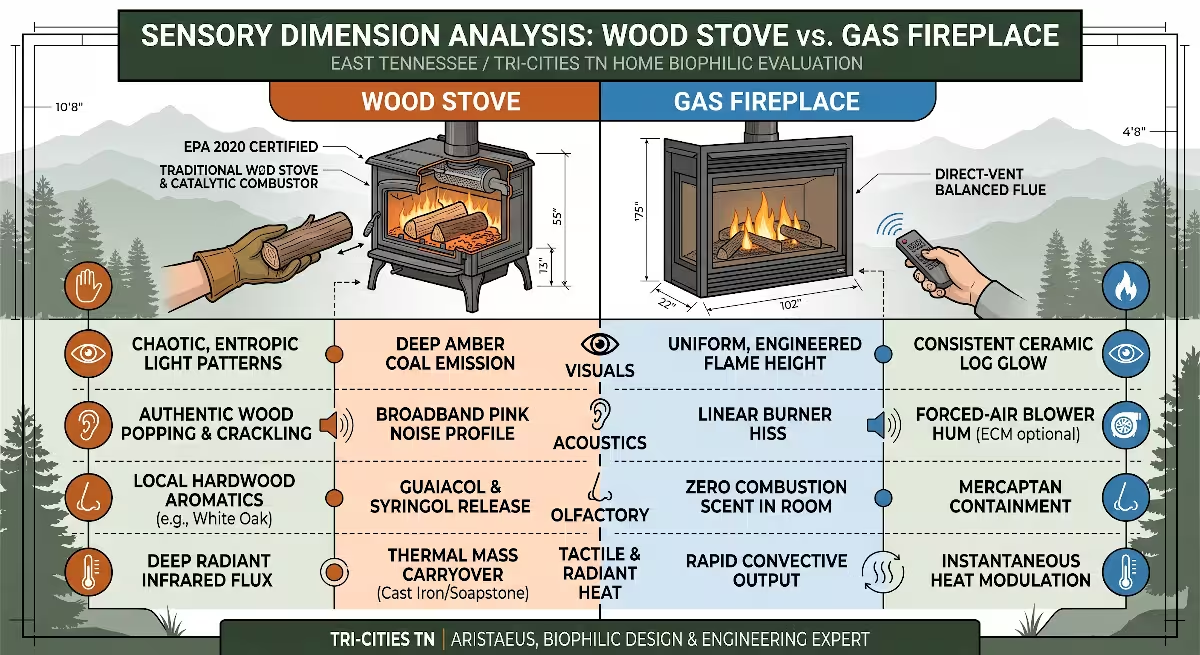
+-------------------------------------------------------------------------+
|                  THE MULTI-SENSORY SPECTRUM OF HEARTH DESIGN             |
+-------------------+---------------------------+-------------------------+
| Sensory Domain    | Wood Stove                | Gas Fireplace           |
+-------------------+---------------------------+-------------------------+
| Visual Quality    | Organic, chaotic embers   | Engineered, steady      |
| Acoustic Output   | Dynamic pink-noise pop    | Constant whisper/fan    |
| Olfactory Impact  | Rich hardwood aromatics   | Odorless sealed box     |
| Tactile / Radiant | Deep, long-wave thermal   | Rapid convective cycle  |
+-------------------+---------------------------+-------------------------+
Visual Kinematics: Dynamic and Diffuse Light
The way light moves from a heating appliance directly influences your mental state. A wood stove produces what physicists call blackbody radiation. As the hardwood burns down into glowing coals, the ember bed reaches temperatures between 1,000 and 1,200 Kelvin. This glowing coal bed emits a deep, organic amber light that is rich in red and near-infrared wavelengths.
The flames in a wood stove are never still. Because natural wood contains varying amounts of moisture, resin, and air pockets, the combustion process is constantly changing. Air currents move through the firebox in chaotic patterns. The flames dance, split, fold, and swirl across the logs.
In psychology, this chaotic movement triggers a mental state called soft fascination. When you watch unpredictable natural movements, like ocean waves, leaves blowing in the wind, or flames inside a wood stove, your brain enters a state of restful awareness. Your involuntary attention is engaged, which gives your directed attention, the part of your brain used for work, reading, and problem-solving, a chance to rest and recover.
A gas fireplace creates a different visual experience. Gas flames are produced by feeding natural gas or liquid propane through precision-drilled burner ports beneath ceramic log sets. Because the fuel and air flow are mechanically controlled, the flame height and color remain consistent.
Modern gas fireplaces use realistic ceramic fiber logs molded from real oak, birch, or driftwood branches. Some high-end models include glowing ember beds made of glowing wool or crushed glass that reflect light nicely. While the yellow and orange colors of a gas fireplace look warm and inviting, the flame paths follow predictable patterns. The light is dynamic, but it lacks the deep, chaotic variation found in an active wood stove firebox. For many homeowners, this steady glow is still relaxing, but it does not hold the eye in the same hypnotic way that burning logs do.
Acoustic and Auditory Resonance
The sound of a fire is one of the most powerful auditory cues in human biology. A wood stove creates sound through physical and chemical reactions inside the wood fibers. As the wood heats up, tiny pockets of trapped moisture and sap expand rapidly into steam. When the steam builds enough pressure, it ruptures the wood cell walls with a distinct pop or crackle.
The sound profile of a wood stove closely matches
A gas fireplace operates with a different sound profile. When the gas valve opens, the fuel flows through the burner tubes with a soft, steady hissing sound. There are no moisture pockets to pop and no wood fibers to crackle.
Many gas fireplaces rely on electric blower fans to push heated air out of the metal firebox and into the room. If the fireplace uses a standard fan motor, the sound can introduce a steady mechanical hum into the living space. To protect the peaceful, biophilic atmosphere of your room, you must specify quiet, variable-speed blowers that run smoothly on low settings. Without a blower, a gas fireplace is almost silent, which some homeowners prefer if they enjoy reading or listening to music without acoustic interruptions.
Olfactory and Tactile Realism
The sense of smell is wired directly into the limbic system, the part of the brain that controls emotion and memory. When seasoned wood burns in a wood stove, it releases complex organic aromatic compounds. Two of the most important compounds are guaiacol and syringol. These natural chemicals are created when lignin, the structural material in plant cell walls, breaks down under heat. They give burning hardwood its sweet, smoky, and earthy aroma.
When you burn native East Tennessee hardwoods like White Oak, Shagbark Hickory, or Sugar Maple in a wood stove, the subtle aroma connects you directly to the Appalachian forest outside your walls. Even when the wood stove door is closed tight, a faint, clean wood scent often lingers near the hearth, creating a warm, cozy feeling that cannot be copied by artificial scents.
Beyond smell, a wood stove offers a complete tactile, physical experience. You feel the rough, mossy bark of the firewood as you carry it inside. You feel the weight of the cast iron door handle, the sudden blast of heat against your face when you open the firebox, and the resistance of the iron poker as you adjust the logs. Building a fire requires hand-eye coordination, balance, and patience. This hands-on routine forces you to step away from glowing digital screens and engage your physical body in a purposeful task.
A gas fireplace eliminates these scents and physical rituals entirely. Because direct-vent gas fireplaces use sealed glass fronts, no combustion gases or aromas enter the living space. In fact, if you smell gas or combustion products from a gas unit, it indicates a mechanical leak or venting problem that requires immediate repair.
The tactile interaction with a gas fireplace is modern and digital. You interact with the appliance through a handheld remote, a sleek wall-mounted switch, or a smartphone program. You can set the target room temperature to the exact degree you want, program the flame height to adjust automatically, or set a timer so the fireplace turns off after you fall asleep. It provides thermal comfort without requiring any physical labor.
Physiological and Psychological Impact
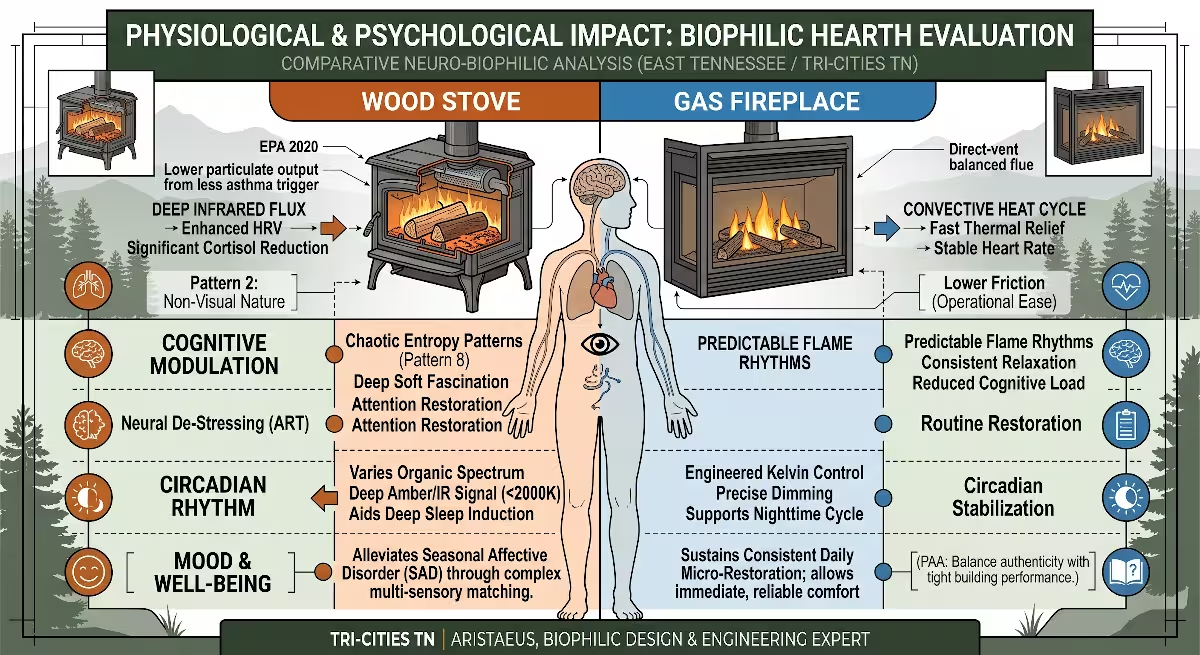
+-------------------------------------------------------------------------+
|                  AUTONOMIC NERVOUS SYSTEM HEARTH RESPONSE                |
|                                                                         |
|   Sensory Inputs (Visual, Auditory, Radiant Heat)                       |
|         │                                                               |
|         ▼                                                               |
|   Limbic System & Hypothalamus Processing                               |
|         │                                                               |
|         ├─────────────────────────────────────────┐                     |
|         ▼                                         ▼                     |
|   Sympathetic Tone (Stress)         Parasympathetic Tone (Rest)         |
|   • Cortisol: DECREASES             • Heart Rate Variability: RISES     |
|   • Muscle Tension: DROPS           • Blood Pressure: LOWERS            |
|   • Peripheral Blood Flow: INCREASES                                    |
+-------------------------------------------------------------------------+
Autonomic Nervous System Modulation
The human autonomic nervous system is divided into two main branches: the sympathetic nervous system, which controls our stress and fight-or-flight reactions, and the parasympathetic nervous system, which controls our rest, digestion, and healing states.
Modern life keeps many people stuck in a state of mild, chronic sympathetic stress. Cold winter weather, demanding work schedules, artificial indoor lighting, and constant digital notifications keep heart rates high and muscle tension tight. Sitting within the warm reach of an active hearth creates measurable, positive changes in human physiology.
Clinical studies evaluating human responses to fire have shown that watching an authentic fire leads to significant drops in systolic and diastolic blood pressure. When your body absorbs radiant heat, your blood vessels naturally widen in a process called vasodilation. This widening allows blood to flow more easily to your hands and feet, taking mechanical strain off your heart.
At the same time, heart rate variability increases. A higher heart rate variability is a clear medical sign that your body has shifted out of a stressed state and into a healthy parasympathetic recovery state.
Both a wood stove and a gas fireplace can trigger this calming physical response. However, the depth of the response is closely tied to how real the fire feels. When all sensory elements match up, such as seeing flames, hearing crackles, and feeling deep warmth from a wood stove, the brain recognizes the experience as completely authentic. This full sensory match produces a rapid, deep drop in physical stress markers.
A gas fireplace produces a similar, though slightly milder, calming effect. Because the warmth from a gas unit is immediate and requires no effort, it allows people who are completely exhausted after a long day to experience quick relaxation without having to build a fire first.
Seasonal Affective Disorder and Circadian Entrainment
Addressing winter depression requires careful management of the light you absorb in your home every evening. Many people use bright light therapy boxes in the morning to treat
However, during the late afternoon and evening in an East Tennessee winter, you need the exact opposite kind of light. Exposing your eyes to cool white LED bulbs or glowing computer screens after dark tricks your brain into thinking it is still noon. This delayed light exposure stops your body from releasing melatonin, making it difficult to fall into deep, restorative sleep.
The warm glow from a wood stove or a gas fireplace provides ideal evening illumination. The light emitted by burning wood and gas flames has a very low color temperature, usually measuring below 2,000 Kelvin. This light contains virtually no blue wavelengths.
When you dim your electric overhead lights and illuminate your living area with the soft glow of a wood stove or gas fireplace, your brain gets the biological signal that night has arrived. Your eyes relax, your pineal gland begins releasing natural melatonin, and your body prepares for healthy sleep. By replacing harsh electric light with natural firelight during cold winter evenings, you help protect your natural circadian rhythm and improve your sleep quality throughout the season.
+-------------------------------------------------------------------------+
|                  EVENING LIGHT SPECTRUM COMPARISON                      |
|                                                                         |
|  Standard LED / TV Screen (4000K-6500K)                                 |
|  [Blue Wavelength Peak] ──> Suppresses Melatonin ──> Disrupts Sleep     |
|                                                                         |
|  Wood Stove / Gas Hearth Flame (<2000K)                                 |
|  [Amber / Infrared Peak] ──> Preserves Melatonin ──> Encourages Sleep    |
+-------------------------------------------------------------------------+
The Friction Coefficient in Biophilic Benefit
While the sensory benefits of natural fire are clear, we must also consider the practical reality of maintaining these systems. In biophilic design, an element that causes daily frustration can quickly lose its therapeutic value. We call this the friction coefficient.
Operating a wood stove involves continuous physical chores:
[Stacking Cordwood Outdoors] ──> [Hauling Wet Logs Inside] ──>
[Building Fire Bed] ──> [Managing Air Controls] ──> [Disposing Ash]
If an older adult, a busy professional, or a parent caring for young children has to spend an hour every evening managing wood, carrying heavy logs through the rain, and sweeping up bark, the wood stove can turn into a source of physical stress. If the chore becomes too difficult, the homeowner may stop using the wood stove altogether. A cold, empty stove sitting in the middle of a room provides zero biophilic or psychological benefit.
This is where a gas fireplace shows its greatest advantage. By removing all physical friction, it makes biophilic relaxation accessible every single day. If you can turn on a beautiful fire with a simple remote control while walking through the living room, you will use the fireplace far more often. For people with demanding schedules or physical limitations, the low maintenance of a gas fireplace provides steady, reliable daily stress relief that a labor-intensive wood stove might not deliver.
Engineering, Thermal Dynamics, and Energy Efficiency
+-------------------------------------------------------------------------+
|                    HEAT TRANSFER MECHANISMS IN HEARTHS                  |
|                                                                         |
|        WOOD STOVE (Radiant Dominant)      GAS FIREPLACE (Convective)    |
|             ~~~~~~~~~~~~~~~                   ┌──────────────┐          |
|            (   Cast Iron   )                  │ Warm Air Out │▲         |
|             \  / Soapstone/                   │  ┌────────┐  ││         |
|              \___________/                    │  │ Sealed │  ││         |
|             /     │     \                     │  │ Glass  │  ││         |
|            ▼      ▼      ▼                    │  └────────┘  ││         |
|        Deep Infrared Radiation                │ Cold Air In  │▼         |
|       Warms Objects & Bodies Directly         └──────────────┘          |
|                                            Circulates Air via Blower    |
+-------------------------------------------------------------------------+
Radiant Heat vs. Convective Distribution
The physical way a heating appliance warms a room fundamentally changes how comfortable your body feels. Heating systems deliver warmth through two main methods:
A wood stove is primarily a radiant heating appliance. When wood burns inside the heavy firebox, the thick cast iron or natural soapstone walls absorb enormous amounts of energy. As these dense materials heat up, they emit long-wave infrared radiation.
Infrared radiation does not warm the air directly. Instead, it travels silently through the room until it strikes a solid object, such as a wall, a piece of furniture, or your body. When you sit in front of a working wood stove, your skin and muscles absorb this radiant energy directly. It feels like the deep, penetrating warmth of natural sunshine on a crisp autumn day. This radiant energy keeps you feeling comfortably warm even if the air in the room remains relatively cool and fresh to breathe.
Most modern gas fireplaces rely heavily on convective heat transfer. A gas fireplace features a double-walled steel chassis built around the combustion chamber. Cool air from the floor is drawn into the bottom opening, passes over the hot metal exterior of the firebox, warms up quickly, and rises back out into the room through top vents.
Convective heat warms the air in the room rather than warming objects directly. This method heats up a cold room very quickly, but moving hot air around can create temperature layers, leaving the ceiling hot and the floor cool. While high-efficiency gas fireplaces also emit radiant heat through their front ceramic glass panels, the overall warmth feels lighter and less deeply penetrating than the solid thermal mass of a heavy wood stove.
Comprehensive Hearth Performance Comparison
| Metric / Parameter | Modern Catalytic Wood Stove | Direct-Vent Sealed Gas Fireplace |
| Combustion Fuel Type | Solid biomass (seasoned cordwood) | Natural gas or liquid propane |
| Biophilic Sensory Fidelity | Maximum (Visual, acoustic, scent, deep radiant warmth) | Moderate to High (Clean visual flame and quick radiant warmth) |
| Thermal Efficiency Range | 72% to 84% (EPA 2020 certified clean burn) | 70% to 85% (EnerGuide and AFUE rated) |
| Primary Heat Transfer | Radiant dominant (Cast iron and soapstone mass) | Convective dominant (Warm air circulation with blower) |
| Indoor PM2.5 Risk | Low to Moderate (Occasional smoke puffs during reloading) | Zero (Air is sealed completely from the living space) |
| Thermal Mass Retention | Exceptional (Radiates stored heat for 8 to 12 hours) | Low (Cools down within 20 to 30 minutes of shutoff) |
| Grid Independence | 100% manual operation (Zero electricity required) | High (Operates on millivolt valve or backup battery) |
| Daily Operational Effort | High (Hauling wood, tending fire, shoveling ash) | Zero (Instant switch, thermostat, or remote control) |
Thermal Mass Retention and Long-Term Heat Storage
One of the most important engineering differences between these two heating systems is thermal mass retention. A modern wood stove is constructed using thick, heavy materials like cast iron plate, welded structural steel, and interior refractory firebricks. High-end wood stoves often feature exterior panels made from natural soapstone, a dense metamorphic rock with exceptional thermal storage properties.
When you burn a load of dry hardwood in a catalytic wood stove, the dense materials absorb and store thermal energy. Long after the active flames have died down and the logs have turned into glowing coals, the body of the wood stove continues to gently radiate stored heat into your home.
A high-efficiency soapstone wood stove can easily release steady warmth for 8 to 12 hours after a single burn cycle. In the mountain communities around the Tri-Cities, this long-term heat storage keeps your living space warm throughout freezing winter nights without requiring you to get out of bed to tend the fire.
A gas fireplace has very little thermal mass. It is built using lightweight sheet steel and decorative ceramic log components designed to heat up instantly and cool down just as fast. The moment you flip the wall switch to turn off the gas valve, the flame goes out and the heat production stops. Within 20 to 30 minutes, the steel firebox cools down to room temperature.
While this rapid cooling makes a gas fireplace extremely safe and easy to manage before leaving the house or going to sleep, it provides none of the overnight thermal stability that comes naturally with a heavy wood stove.
Indoor Air Quality (IAQ) and Building Envelope Integration
+-------------------------------------------------------------------------+
|                  INDOOR COMBUSTION AND AIRFLOW PATHWAYS                 |
|                                                                         |
|   DIRECT-VENT GAS FIREPLACE (Balanced Flue)                             |
|   Fresh Outdoor Air ───────► [ Sealed Firebox ] ───────► Exhaust Gases  |
|                               (No IAQ Contact)        (Vented Outside)  |
|                                                                         |
|   WOOD STOVE WITH OUTDOOR AIR KIT (OAK)                                 |
|   Outdoor Air Intake ──────► [ Heavy Firebox ] ───────► Flue Chimney    |
|                                  │        ▲                             |
|   (Brief indoor air exposure     ▼        │                             |
|    during door opening/reloading) ────────┘                             |
+-------------------------------------------------------------------------+
Particulate Matter (PM2.5) and VOC Dynamics
Indoor air quality is a top priority in modern architectural design. When solid biomass or fossil fuels burn, they produce combustion byproducts. These byproducts include fine particulate matter, known as PM2.5, carbon monoxide, nitrogen dioxide, and volatile organic compounds. Fine particulate matter consists of microscopic particles smaller than 2.5 microns across. When inhaled, these tiny particles travel deep into the lungs and can enter the bloodstream, causing inflammation and respiratory irritation.
A modern wood stove certified under EPA 2020 clean-air standards burns far cleaner than older stoves built decades ago. These modern stoves use catalytic combustors or secondary combustion burn tubes to re-ignite smoke particles before they leave the firebox. When the wood stove door is closed and the chimney has established a strong upward draft, virtually all smoke and particulates are pulled safely up the flue pipe and exhausted outside.
However, operational habits still affect indoor air quality. Every time you open the wood stove door to add fresh logs, a small puff of smoke and fine dust can escape into the living room. Over the course of a long winter, repeated reloading cycles can raise the baseline level of PM2.5 inside a tightly built home. Homeowners must use proper techniques, such as opening the bypass damper fully and cracking the door slowly for a few seconds before opening it all the way, to keep indoor smoke to an absolute minimum.
A direct-vent gas fireplace handles combustion differently. A direct-vent system uses a sealed combustion chamber separated from the indoor air by a solid ceramic glass window. The fireplace pulls all of its combustion air directly from the outdoors through the outer tube of a co-axial vent pipe. It then exhausts all combustion gases safely outside through the inner tube of the exact same pipe.
Because the combustion loop is completely sealed, zero fine particulate matter, carbon monoxide, or fuel odors enter the room. For families managing existing respiratory challenges, a direct-vent gas fireplace provides a visually rich fire without introducing any fine particulates into the home.
Tight Building Envelopes and Mechanical Ventilation in East Tennessee
Over the past decade, home construction practices across the Tri-Cities have improved significantly. Modern homes in Johnson City and surrounding areas are built with tight, energy-efficient building envelopes. Builders use advanced house wraps, continuous foam insulation, and high-performance windows to stop uncontrolled air leaks.
In building science, we measure the airtightness of a home using a blower door test. The result is expressed as Air Changes per Hour at 50 Pascals of pressure, written as ACH50. A traditional older farmhouse might have an ACH50 score of 5.0 to 9.0, meaning air leaks freely through gaps in the structure. A newly constructed high-performance home often achieves an ACH50 score below 1.5.
In a tightly sealed home, appliances that move air can cause indoor air pressure to drop. Powerful kitchen range hoods, bathroom exhaust fans, and clothes dryers pull air out of the house. If fresh air cannot leak back in through the walls, the house becomes depressurized, acting like a giant vacuum.
This negative air pressure creates a serious challenge for a wood stove. A wood stove relies entirely on the natural, buoyant rise of hot air up the chimney, known as the draft, to pull exhaust gases out of the firebox. If the home is under negative pressure, the house can pull air down the chimney instead. When you open the wood stove door, smoke can spill out into the room.
To prevent this problem in a modern, airtight home, you must install a Dedicated Outdoor Air Kit, commonly called an OAK, directly to the wood stove. An OAK connects the air intake of the wood stove to an exterior wall using a sealed metal duct. This direct connection ensures the wood stove pulls fresh combustion air straight from outside, completely protecting the natural draft of the chimney from indoor pressure drops.
A direct-vent gas fireplace is naturally immune to these house pressure issues. Because the co-axial venting system balances both intake and exhaust air within a sealed outdoor loop, changes in indoor air pressure cannot disrupt the fireplace or cause indoor air contamination.
+-------------------------------------------------------------------------+
|                  AIRTIGHT BUILDING ENVELOPE DYNAMICS                     |
|                                                                         |
|   Without Outdoor Air Kit (OAK):                                        |
|   Kitchen Hood / Dryer Exhaust ──> Creates Negative House Pressure      |
|                                             │                           |
|                                             ▼                           |
|   Chimney Draft Reverses ◄──────────────────┘                           |
|   (Smoke spills into living room when door opens)                       |
|                                                                         |
|   With Dedicated Outdoor Air Kit (OAK):                                 |
|   Outdoor Air ──► [Sealed Duct] ──► [Wood Stove] ──► [Chimney Flue]    |
|   (Safe, balanced combustion completely isolated from indoor pressure)  |
+-------------------------------------------------------------------------+
Health Sensitivities and Vulnerable Occupants
When selecting a hearth appliance, you must carefully evaluate the health profiles of every person living in the home. Biophilic design focuses on creating spaces that support human wellness. If a heating system triggers asthma attacks, seasonal allergies, or cardiovascular stress in vulnerable occupants, it fails to achieve its primary purpose.
If a family member has chronic asthma, severe dust allergies, chronic obstructive pulmonary disease, or sensitive airways, a direct-vent gas fireplace is usually the best choice. It delivers the psychological benefits of natural firelight and soothing radiant heat with zero exposure to airborne wood dust, ash, or combustion particles.
On the other hand, if the occupants are healthy and value the active lifestyle of cutting, stacking, and managing firewood, a properly installed, EPA-certified clean-burning wood stove equipped with a dedicated outdoor air intake is a wonderful, life-enriching addition to the home. The physical exercise of handling wood combined with the multi-sensory richness of the fire creates a rewarding lifestyle that supports overall wellness.
Regional Application: Tri-Cities, TN Architectural Scenarios
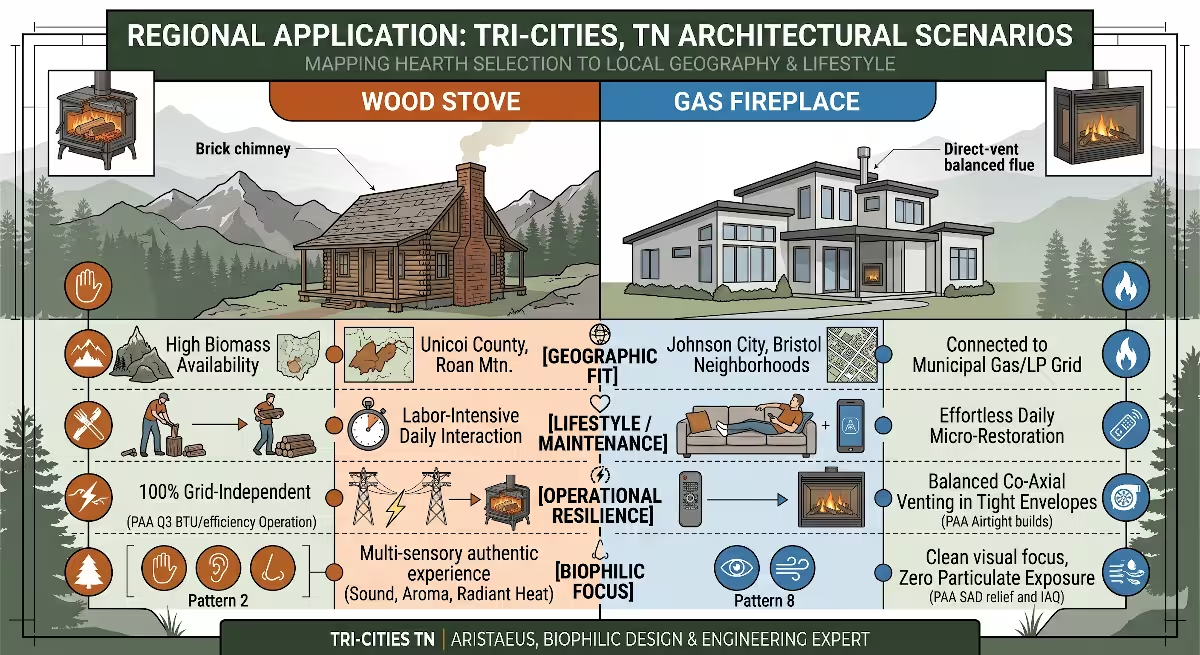
+-------------------------------------------------------------------------+
|                  REGIONAL HEARTH FIT: EAST TENNESSEE                     |
+------------------------------------+------------------------------------+
| Mountain & Rural Cabins            | Contemporary Suburban Residences   |
| (Roan Mountain, Unicoi County)     | (Johnson City, Kingsport, Bristol) |
+------------------------------------+------------------------------------+
| • Abundant seasoned hardwoods      | • Connected to municipal gas grid  |
| • Frequent winter power outages    | • Fast-paced, busy daily schedules |
| • High thermal mass demand         | • Strict indoor air quality focus  |
| • Wood Stove provides grid independence • Gas Fireplace offers instant ease |
+------------------------------------+------------------------------------+
Rural and Mountain Dwellings in Upper East Tennessee
The mountain terrain of Upper East Tennessee presents real challenges during the winter months. Rural properties located in Unicoi County, Carter County, the Holston Mountain foothills, or along the high ridges near Roan Mountain experience severe winter weather. Freezing rain and heavy, wet mountain snow regularly knock down tree branches, causing widespread electrical power outages that can last for days.
In these rural and mountain settings, a high-efficiency wood stove is an unmatched heating choice. A wood stove operates completely independent of the electrical power grid. It requires no electricity to ignite, burn, or draft safely. Even if a winter storm knocks out power across the valley, a wood stove will keep your home comfortably warm, provide a safe surface for heating water and cooking food, and illuminate your living space with warm, steady light.
Furthermore, rural landowners in East Tennessee have easy access to abundant, sustainable supplies of high-grade local firewood. Hardwoods such as White Oak, Red Oak, Chestnut Oak, Shagbark Hickory, Black Locust, and Sugar Maple grow abundantly across our region. When seasoned properly down to a moisture content below 20%, these native Appalachian hardwoods deliver exceptional heat output and long burn times, turning local natural resources into reliable home warmth.
Urban and Suburban Contemporary Homes
In the suburban and urban neighborhoods of Johnson City, Kingsport, and Bristol, homeowners face a different set of priorities. Neighborhoods along the Bristol Highway or surrounding North Johnson City feature modern floor plans with large, open living areas, tall ceilings, and engineered hardwood flooring.
For these contemporary residences, a direct-vent gas fireplace is often the most practical and elegant choice. Most suburban subdivisions have direct access to municipal natural gas lines or on-site liquid propane storage tanks.
A sleek, linear gas fireplace fits cleanly into contemporary interior design palettes. It can be framed flush into walls with drywall, stacked stone, or large-format porcelain tile, creating a striking visual centerpiece that matches clean, modern architecture.
Homeowners living in these active suburban settings often have demanding work schedules and busy family routines. Coming home from work and enjoying an instant, warm fire for two hours while helping children with homework or relaxing in the evening fits smoothly into a busy lifestyle. There is no need to store cordwood on the porch, track bark across clean floors, or manage ash disposal before leaving for work the next morning.
+-------------------------------------------------------------------------+
|                  ARCHITECTURAL PLACEMENT & SIGHTLINES                   |
|                                                                         |
|             [ PRIMARY GATHERING ZONE / LIVING ROOM ]                    |
|                                                                         |
|      Sightline A (From Kitchen)          Sightline B (From Entryway)    |
|                \                              /                         |
|                 \                            /                          |
|                  ▼                          ▼                           |
|            ┌──────────────────────────────────────┐                     |
|            │         CENTRAL HEARTH ZONE          │                     |
|            │   (Wood Stove on Soapstone Hearth    │                     |
|            │    or Direct-Vent Gas Centerpiece)   │                     |
|            └──────────────────────────────────────┘                     |
|                               │                                         |
|                               ▼                                         |
|                 Radiant Heat Perimeter (8-12 Ft)                        |
|             Warms Primary Seating and Social Spaces                     |
+-------------------------------------------------------------------------+
Architectural Integration and Hearth Placement
Whether you choose a wood stove or a gas fireplace, where you place the hearth inside your floor plan determines how well it delivers its biophilic benefits. Fire should serve as the natural heart of the home, drawing people together and providing a visual anchor for daily living.
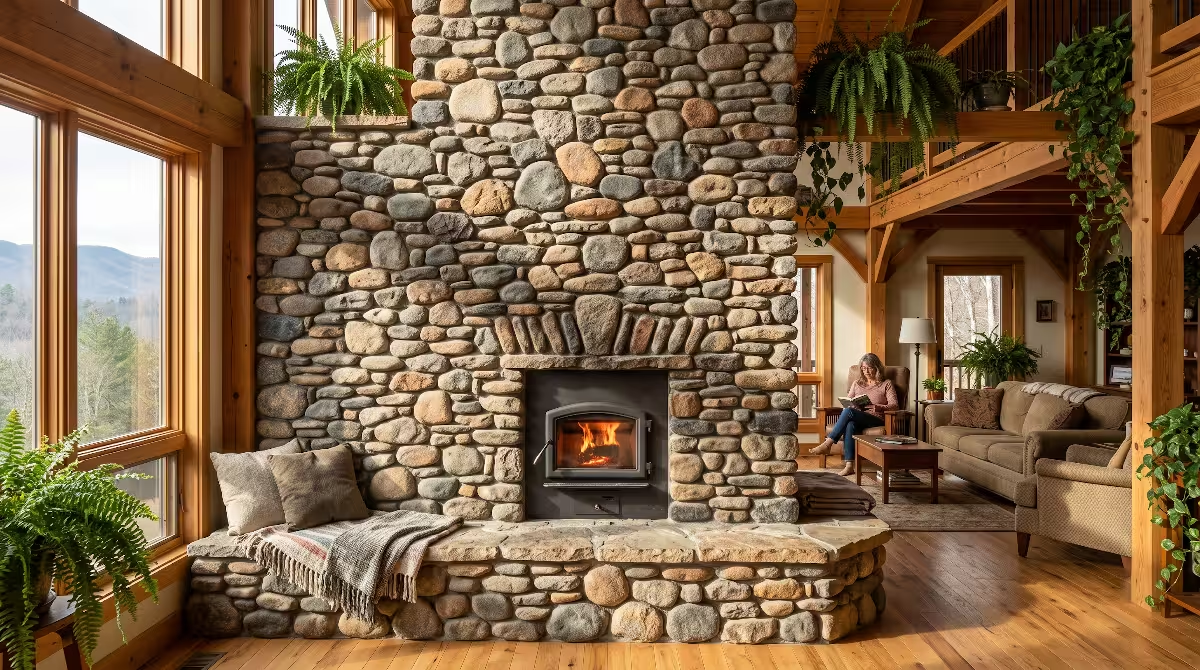
When planning your room layout, consider primary sightlines from multiple vantage points. You should be able to see the glowing fire not just from the main sofa, but also from the kitchen island, the dining table, or the main entryway. In biophilic architecture, this visual connection is part of Prospect and Refuge theory. Sitting in a safe, comfortable seat with a solid wall behind you (Refuge) while looking out across an open room toward a glowing natural fire (Prospect) creates an instinctive feeling of security and peace.
Clearance distances, hearth pads, and thermal shielding must also be carefully planned. A freestanding wood stove requires a non-combustible floor pad made of stone, slate, or tile that extends outward to catch stray embers when the door is opened. It also requires clear space between the hot steel body of the stove and any combustible drywall or wood framing.
A direct-vent gas fireplace can often be installed with zero clearance to combustible materials around the sides and rear of its insulated metal chassis. This flexible installation profile allows architects to place gas units in compact locations, such as primary bedrooms, home offices, or built-in dining nooks where a traditional wood stove would be too large or run too hot.
Comprehensive Decision Framework
+-------------------------------------------------------------------------+
|                HEARTH SYSTEM SELECTION FLOWCHART                        |
+-------------------------------------------------------------------------+
                                    │
                                    ▼
                 [ Do any household members suffer from ]
                 [  chronic respiratory issues or asthma? ]
                                    │
                         ┌──────────┴──────────┐
                        YES                    NO
                         │                     │
                         ▼                     ▼
             [ SELECT DIRECT-VENT ]  [ What is your maintenance ]
             [    GAS FIREPLACE   ]  [ tolerance for wood chores?]
                                               │
                                    ┌──────────┴──────────┐
                                   LOW                   HIGH
                                    │                     │
                                    ▼                     ▼
                         [ SELECT DIRECT-VENT ]  [ Is off-grid storm ]
                         [    GAS FIREPLACE   ]  [ resilience a priority?]
                                                           │
                                                ┌──────────┴──────────┐
                                               YES                    NO
                                                │                     │
                                                ▼                     ▼
                                    [ SELECT HIGH-EFFICIENCY ]   [ EITHER SYSTEM  ]
                                    [  CATALYTIC WOOD STOVE  ]   [ IS APPROPRIATE ]
Step-by-Step Selection Flowchart for Homeowners and Designers
To help you choose the ideal hearth system for your specific property, follow this structured, four-step evaluation process:
- Step 1: Evaluate Indoor Respiratory Health: Begin by looking at the health needs of your household. If anyone living in the home has chronic asthma, severe dust allergies, or breathing sensitivities, choose a direct-vent gas fireplace. The sealed glass combustion chamber completely protects your indoor air quality from smoke and particulates. If everyone is healthy and enjoys natural living processes, continue to the next step.
- Step 2: Quantify Daily Maintenance Capacity: Be honest about your available free time, energy, and physical ability. A wood stove requires seasonal physical work, including splitting, carrying logs, building fires, and clearing ashes. If you have a busy lifestyle or prefer effortless comfort at the touch of a button, choose a direct-vent gas fireplace. If you enjoy the physical, grounding routine of tending a real fire, proceed to the next step.
- Step 3: Assess Building Airtightness and Mechanical Ventilation: Evaluate the construction of your home envelope. If you are building a new, high-performance home with an airtightness rating below 2.0 ACH50, ensure that any wood stove you consider includes a Dedicated Outdoor Air Kit (OAK) connection to prevent backdrafting. If installing an exterior direct air duct is difficult in your floor plan, a direct-vent gas fireplace is the safer choice.
- Step 4: Determine Grid Independence and Emergency Heating Priorities: Consider your location and seasonal storm exposure. If you live on a rural property where winter ice storms cause frequent, multi-day electrical outages, a heavy cast iron or soapstone wood stove provides total grid independence and dependable life-safety heat. If you live in an urban neighborhood with buried utility lines and rare outages, a gas fireplace with battery-backup ignition will meet all your heating needs.
The Hybrid Design Solution
For many custom homes in the East Tennessee region, the most effective architectural strategy is not choosing one system over the other, but using a thoughtful hybrid approach.
By combining the strengths of both heating systems, you can create a home that balances effortless daily convenience with deep sensory richness:
- Primary Living Zone (Direct-Vent Gas Fireplace): Install a sleek, direct-vent gas fireplace in the main open-concept living room or master suite. This unit provides instant, clean warmth for daily evening relaxation, morning coffee, and quick comfort without adding chores or dust to high-traffic areas.
- Secondary Gathering Space or Hearth Room (Wood Stove): Install a high-efficiency catalytic wood stove in a daylight basement, a dedicated four-season sunroom, or a rustic hearth room. This secondary installation gives your family a cozy space for weekend fires, hands-on fire-building rituals, and complete emergency heating security during winter power outages.
This hybrid configuration delivers the ultimate biophilic living experience, providing reliable daily wellness alongside deep seasonal connection to nature.
Frequently Asked Questions about Wood Stoves, Gas Fireplaces, and Fire Biophilia
Is a ventless gas fireplace safe for biophilic design?
No, ventless gas fireplaces should not be used in biophilic residential design. A ventless fireplace operates without a chimney or exterior vent pipe, discharging all of its combustion products directly into the room air you breathe.
When gas burns, it produces large volumes of water vapor, carbon dioxide, nitrogen dioxide, and small amounts of carbon monoxide. Adding excessive moisture to a modern, airtight home encourages mold and mildew growth inside wall assemblies.
Furthermore, breathing nitrogen dioxide can irritate lung tissue and cause respiratory inflammation. To protect indoor health and support genuine human wellness, always specify a sealed direct-vent gas fireplace or a clean-burning, properly drafted wood stove.
Does gazing at a fire really lower blood pressure?
Yes, clinical studies in environmental psychology and physiological anthropology confirm that sitting near an authentic fire produces measurable drops in both systolic and diastolic blood pressure.
When you watch the dynamic, flickering light of a flame and absorb gentle radiant warmth, your brain shifts out of a stressed sympathetic state and activates the parasympathetic nervous system.
This calming shift slows your resting heart rate, widens blood vessels, reduces muscle tension, and lowers circulating cortisol levels. The soothing effect is strongest when multiple senses are engaged at the same time through natural light, pleasant sound, and deep warmth.
Which heats better during an extended power outage: a wood stove or a gas fireplace?
A wood stove is the most dependable, fully independent emergency heating system available. A wood stove operates completely on natural physics, using the heat of the fire to create a natural chimney draft. It requires zero electrical power to ignite, burn, or heat your home safely. As long as you have a supply of dry, seasoned firewood on hand, a wood stove will keep your home warm indefinitely during major winter storms.
Many modern direct-vent gas fireplaces can also function during electrical outages using a millivolt gas valve or an internal battery-backup ignition pack. These systems will ignite the gas burner and generate radiant heat through the front glass without grid power.
However, the electric blower fans that circulate warm convective air throughout the room will not run without electricity. While a gas fireplace will still provide valuable emergency heat, a heavy cast iron or soapstone wood stove radiates far more total thermal energy into the living space under off-grid conditions.
What local East Tennessee hardwoods burn cleanest in a wood stove?
To achieve a clean, efficient burn with minimal smoke and creosote formation, you should burn dense native hardwoods that have been split, stacked, and seasoned down to a moisture content between 15% and 20%.
The best native firewood species in the Tri-Cities region include:
- White Oak and Red Oak: Excellent energy density, providing long, steady burn times and rich, glowing ember beds.
- Shagbark Hickory and Pignut Hickory: Highest heat output per cord, producing a wonderful natural aroma and intense coals.
- Black Locust: Extremely dense wood that burns very hot, resists rot, and produces minimal sparking.
- Sugar Maple: Clean-burning timber with steady flame output, pleasant aroma, and easy splitting qualities.
Avoid burning softwoods like Eastern White Pine or Hemlock in your primary wood stove fires, except as small kindling to start the blaze. Softwoods burn very fast, create lower heat per volume, and can leave sticky resin deposits in your chimney flue if burned at low temperatures.
Can you install a modern wood stove in an airtight green home?
Yes, you can safely install a modern wood stove in an airtight, high-performance green home, provided you follow specific mechanical engineering guidelines.
First, the wood stove must be EPA 2020 certified to ensure low particulate emissions and high combustion efficiency.
Second, you must install a Dedicated Outdoor Air Kit (OAK) that connects the stove air intake directly to the exterior of the building envelope using a sealed metal pipe. This dedicated air supply guarantees the wood stove receives steady combustion air without competing against kitchen exhaust fans, clothes dryers, or mechanical ventilation systems.
Finally, pairing your hearth setup with a balanced Energy Recovery Ventilator (ERV) maintains continuous fresh air circulation and balanced indoor air pressure throughout the home all winter long.
Crafting Your Seasonal Hearth Sanctuary
Creating a warm, biophilic sanctuary in Upper East Tennessee is about more than just keeping the cold outside. It is about designing a home that actively restores your mental focus, supports your natural biological rhythms, and protects your physical health through the dark, cold days of winter.
Both the wood stove and the direct-vent gas fireplace offer powerful ways to bring the restorative magic of fire into your living space. If you value the deep, authentic sensory connection of natural timber, the peaceful crackle of burning logs, and the total security of off-grid radiant warmth, a modern wood stove is an extraordinary investment in your home and lifestyle. If your life calls for effortless daily convenience, clean architectural lines, zero physical maintenance, and completely protected indoor air quality, a direct-vent gas fireplace provides instant, soothing stress relief at the touch of a button.
By understanding the unique balance between sensory bandwidth and daily maintenance, you can choose the ideal hearth system for your family, turning the long mountain winters of the Tri-Cities into a season of warmth, health, and peaceful renewal.