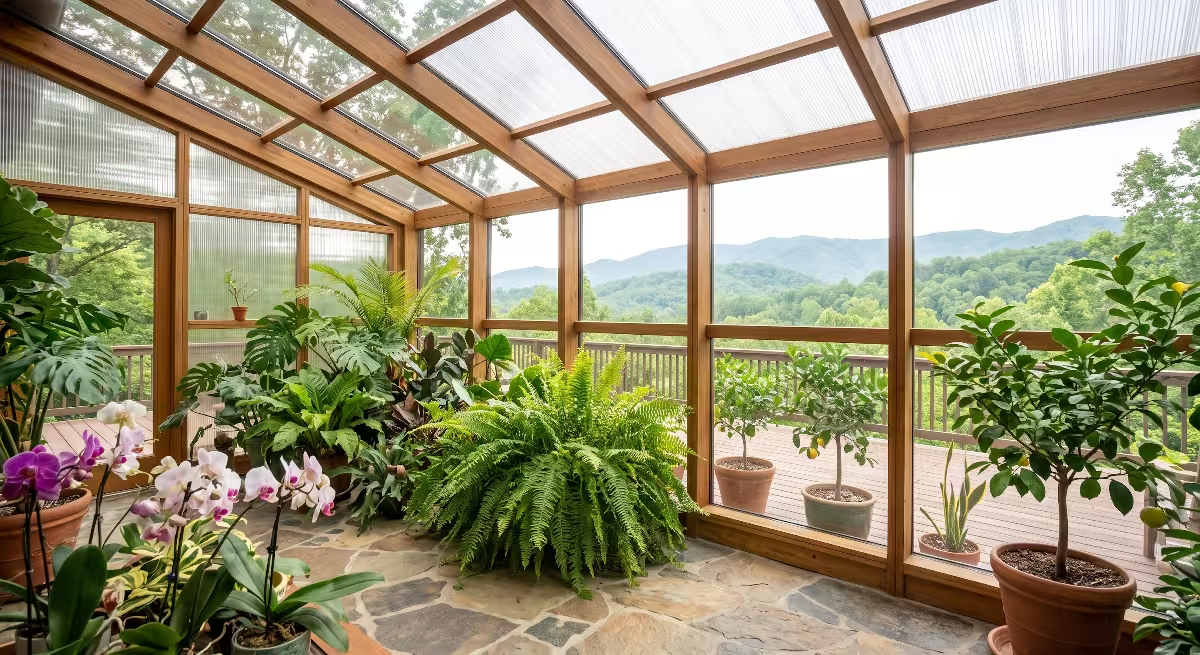
The Visual Connection to Nature
When we step inside a house, we often think about comfort in terms of soft furniture, good heating, or quiet rooms. Yet, human biology demands something much deeper from our living spaces. For thousands of generations, human beings lived entirely surrounded by living landscapes, shifting skies, and natural terrain. Our brains and bodies evolved to read the visual cues of the outdoors to understand safety, time, and rest. Today, most people spend close to ninety percent of their lives indoors. When a home cuts us off from the living world, our nervous systems notice the absence. Establishing a clear visual connection to nature inside our living spaces is not just an aesthetic upgrade. It is a biological necessity that directly influences our mental health, our cognitive energy, and our daily sense of calm.
The science behind this relationship begins with the biophilia hypothesis, a concept popularized by biologist E.O. Wilson. Wilson pointed out that humans carry an innate, genetically rooted affinity for living systems and organic patterns. When our eyes observe living greenery, moving water, or distant horizons, our brains process these scenes with very little effort. In contrast, artificial environments full of hard angles, flat drywall, and glowing screens force our visual systems to work constantly. By studying cognitive neuroscience and architectural engineering, we can measure how a direct visual connection changes brainwave patterns, reduces stress hormones, and sharpens daily focus.
In this guide, we will explore how intentional spatial design, window placement, and site planning create an authentic visual connection to the outdoors. We will look at the exact psychological mechanisms that make natural views so healing. We will also examine how to apply these architectural principles specifically within the unique geography of East Tennessee and the Tri-Cities region, where rolling ridges, native tree canopies, and distinct seasons offer extraordinary opportunities for restorative residential design.
Understanding Visual Connection with Nature in Spatial Design
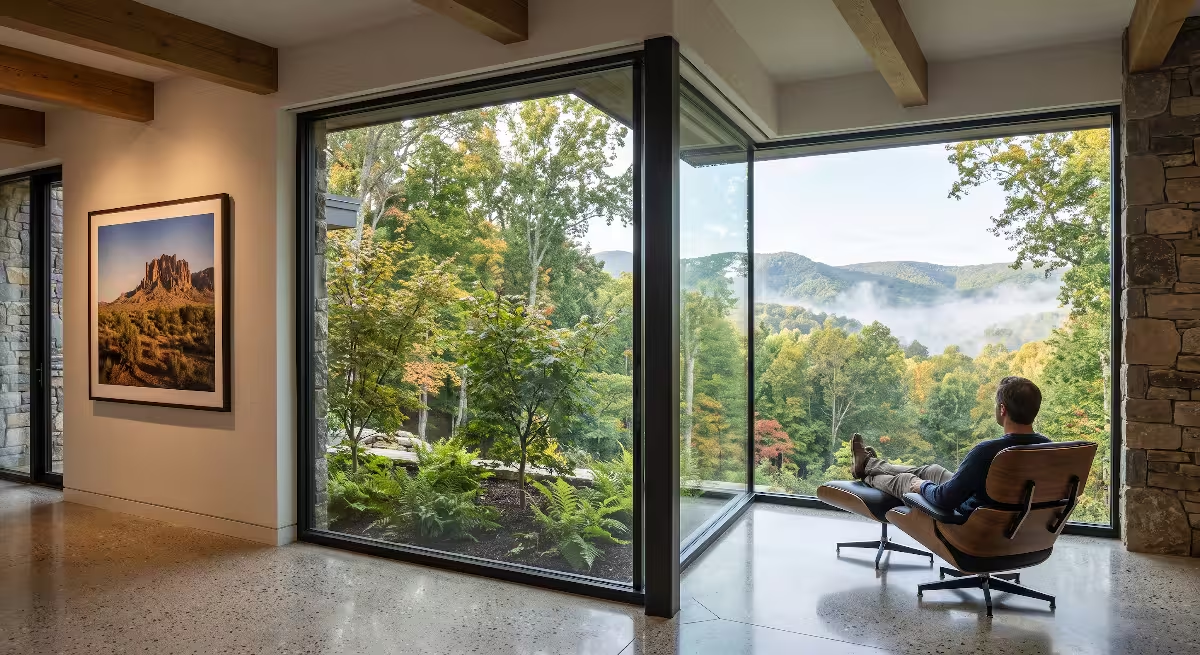
To design homes that truly support human well-being, we must first define what a visual connection actually means in modern architecture. In the field of biophilic design, organizations like Terrapin Bright Green classify the visual connection to nature as Pattern Number One among their fourteen foundational patterns. This pattern focuses specifically on providing occupants with views of natural elements, living systems, and active outdoor processes.
A true visual connection is not just about putting a random window on an exterior wall. It is about creating a deliberate, meaningful relationship between the person sitting inside and the living landscape outside. When designed properly, this visual connection provides continuous sensory information about the weather, the time of day, the season, and the presence of life.
+-------------------------------------------------------------------------+
|                  THE SPECTRUM OF VISUAL CONNECTION                      |
+-------------------------------------------------------------------------+
|  DYNAMIC VISUAL CONNECTION            |  STATIC VISUAL CONNECTION       |
|  - Swaying tree canopies              |  - Still landscape paintings    |
|  - Drifting clouds and rain           |  - Potted desk plants           |
|  - Wildlife and birds in flight       |  - Unchanging decorative moss   |
|  - Shifting sunlight and shadows      |  - Artificial greenery          |
|  High autonomic nervous system reset  |  Mild, baseline sensory support |
+-------------------------------------------------------------------------+
Dynamic Versus Static Visual Connections
Not all views provide the same mental benefits. Biophilic design separates sightlines into two main categories: dynamic connections and static connections.
A dynamic visual connection involves scenes that change over time. When you look out a window and see tree branches swaying in the breeze, clouds moving across a ridgeline, or rain hitting a garden terrace, your brain registers authentic physical movement. This dynamic visual connection stimulates your peripheral vision and engages your brain in a gentle, relaxing way. It reassures the primitive parts of your nervous system that the environment is healthy, open, and safe.
A static visual connection involves unchanging natural representations. Examples include framed landscape photographs, preserved moss walls, or silk plants. While a static visual connection is far better than a blank wall, it lacks the biological richness of real outdoor movement. A still image cannot provide feedback about passing time or wind speed. For maximum psychological recovery, a home should prioritize an active, living visual connection wherever possible, reserving static elements as supportive accents.
The Hierarchy of Visual Stimuli
To create a balanced living environment, designers organize sightlines into three distinct tiers. This hierarchy ensures that a person experiences a continuous visual connection no matter where they stand or sit in the house.
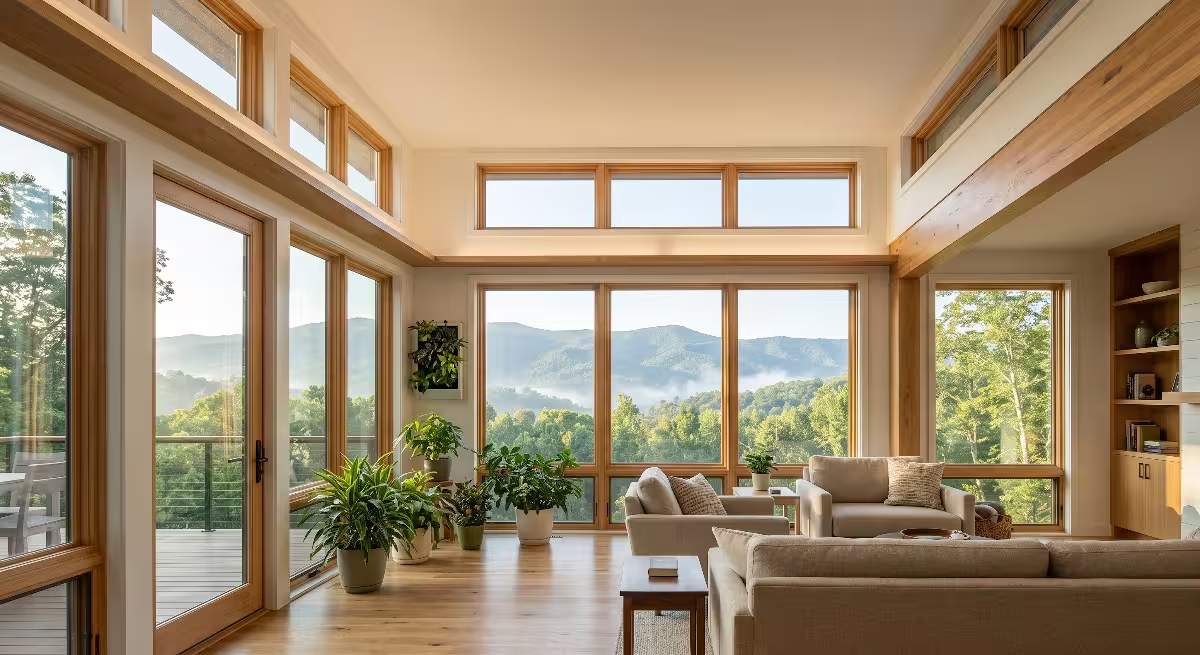
- Primary Sightlines: These are the dominant, unobstructed views from the main living spaces. A primary visual connection occurs through large living room windows, master bedroom glass walls, or kitchen workspaces that look directly out onto mature trees, meadows, or mountain ridges.
- Secondary Sightlines: These are interior framed views that capture smaller, contained natural pockets. A secondary visual connection might look into a private courtyard, a central lightwell, or an indoor atrium filled with living flora.
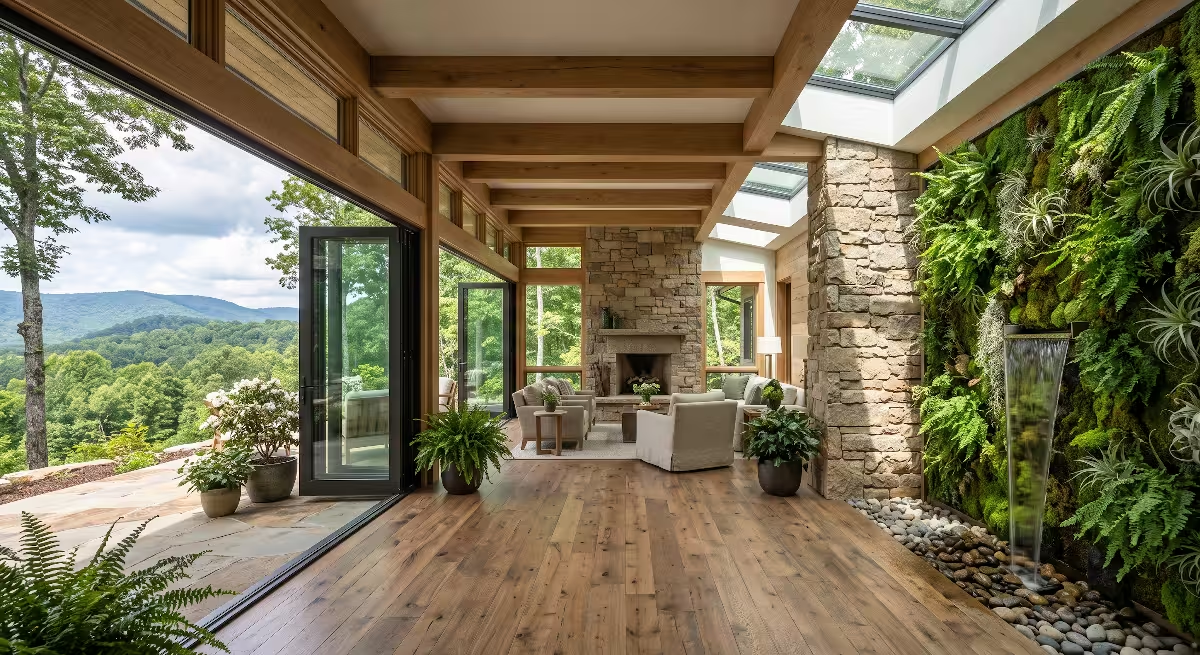
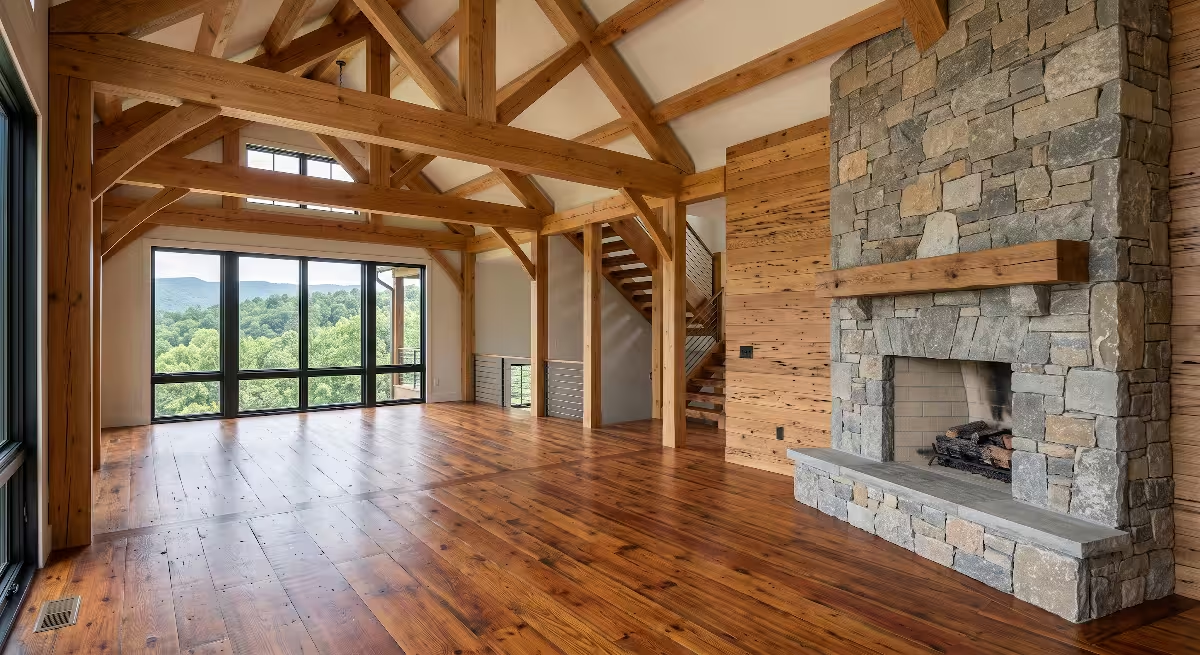
- Tertiary Elements: These are micro-level natural cues embedded directly into the interior decor. A tertiary visual connection includes exposed timber beams showing clear wood grain patterns, natural stone fireplace surrounds with organic textures, and materials that display natural mathematical fractals.
By layering these three tiers together, a house ensures that an occupant is never more than a glance away from a restorative visual connection.
Quantifiable Psychological and Cognitive Benefits
The psychological value of a strong visual connection is backed by decades of rigorous medical and environmental research. When we look at nature, our bodies undergo immediate, measurable physical changes.
+-------------------------------------------------------------------------+
|                   NEUROLOGICAL PATHWAY OF RECOVERY                      |
|                                                                         |
|  Natural Sightline View  ==>  Visual Cortex (Soft Fascination)         |
|                                     ||                                  |
|                                     \/                                  |
|  Hypothalamus Deactivation  ==>  Cortisol & Blood Pressure Drop         |
|                                     ||                                  |
|                                     \/                                  |
|  Parasympathetic Activation ==>  Alpha Brainwaves (8-12 Hz) Elevate     |
|                                     ||                                  |
|                                     \/                                  |
|  Result: Restored Prefrontal Cortex Focus & Emotional Equilibrium       |
+-------------------------------------------------------------------------+
Stress Reduction and Autonomic Nervous System Regulation
One of the most famous frameworks in environmental psychology is Dr. Roger Ulrich’s Stress Recovery Theory. Ulrich demonstrated that simply viewing green landscapes can trigger rapid physical recovery from stress. When a person feels anxious or overwhelmed, their sympathetic nervous system activates, increasing heart rate, raising blood pressure, and releasing cortisol.
Looking through a window with a clear visual connection interrupts this stress cascade. Within minutes of viewing natural greenery, the parasympathetic nervous system takes over. The body enters a rest and digest state. Blood vessels relax, heart rate variability balances out, and circulating stress hormones decline.
Modern neuroscientists measure this shift using electroencephalograms, commonly called EEGs. Research shows that maintaining a visual connection to natural scenes increases the production of alpha brainwaves, which vibrate between 8 and 12 Hertz. Alpha waves represent a state of relaxed alertness, the exact mental state experienced during meditation or quiet contemplation. When your home provides a steady visual connection to trees and sky, your brain naturally spends more time in this calm alpha state throughout the day.
Attention Restoration and Cognitive Fatigue Mitigation
In modern life, our jobs and digital devices demand intense, focused concentration. Psychologists Stephen and Rachel Kaplan identified this mental effort as directed attention. Directed attention requires the prefrontal cortex of the brain to work hard while actively blocking out distractions. Over several hours of computer work, reading, or replying to messages, the prefrontal cortex becomes depleted, leading to a condition known as directed attention fatigue. When you suffer from attention fatigue, you become irritable, make more errors, and struggle to solve complex problems.
The Kaplans developed Attention Restoration Theory to explain how a visual connection helps the brain recharge. Nature does not demand directed attention. Instead, it offers what the Kaplans called soft fascination. Soft fascination occurs when your attention is held effortlessly by gentle, engaging visual stimuli, such as autumn leaves fluttering, water rippling across a pond, or light filtering through branches.
+-------------------------------------------------------------------------+
|              DIRECTED ATTENTION VS. SOFT FASCINATION                    |
+-------------------------------------------------------------------------+
|  DIRECTED ATTENTION (Screens/Work)    |  SOFT FASCINATION (Nature Views)|
|  - Prefrontal cortex overtaxed        |  - Involuntary, effortless gaze |
|  - High cognitive fatigue             |  - Prefrontal cortex rests      |
|  - Leads to irritability and errors   |  - Restores working memory      |
|  - Blocks out background stimuli      |  - Encourages creative insight  |
+-------------------------------------------------------------------------+
When you look up from a laptop and allow your gaze to rest on an outdoor visual connection, your prefrontal cortex gets a crucial break. It rests and replenishes its energetic reserves. Research confirms that even a brief, forty-second visual connection with a green roof or tree line significantly improves subsequent task accuracy, working memory, and impulse control.
Emotional Regulation and Circadian Health
A consistent visual connection to the outdoor environment plays a vital role in regulating human emotions and biological timing. Natural sunlight is the primary environmental timekeeper for the human brain. Special receptors in the human eye, called intrinsically photosensitive retinal ganglion cells, detect changes in daylight throughout the day.
When your living spaces maintain a generous visual connection to open skies, your brain registers the high-intensity blue-wavelength light of morning. This morning visual connection signals the brain to produce serotonin, a neurotransmitter that elevates mood, stabilizes emotions, and promotes daytime wakefulness.
As afternoon transitions into evening, the visual connection captures the warm, low-angled light of sunset. This optical shift tells the pineal gland to begin synthesizing melatonin, the hormone responsible for deep, restorative sleep. Homes that lack a direct visual connection often leave their occupants in flat, unchanging artificial lighting. This sensory isolation disrupts the natural circadian rhythm, leading to poor sleep quality, daytime lethargy, and increased vulnerability to mood disorders.
The Geometry of Visual Restoration: Architectural Design Principles
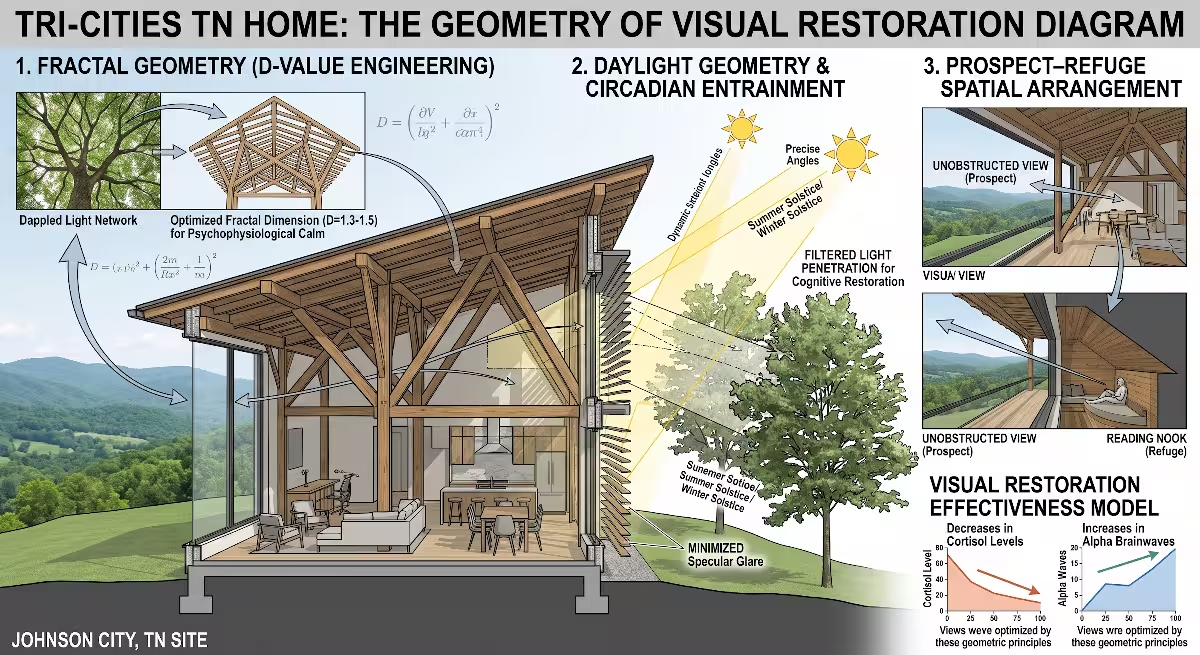
To capture the biological and mental benefits of natural views, builders and architects must treat the visual connection as a core structural priority. It is not enough to place standard windows randomly around a floor plan. The size, placement, glass quality, and orientation of every opening must be carefully calculated.
+-------------------------------------------------------------------------+
|              THREE-LAYER OPTICAL DEPTH OF FIELD MODEL                   |
+-------------------------------------------------------------------------+
|                                                                         |
|  [Interior Room] ==> [Foreground: 0-20 ft]  ==> Native deck plantings   |
|                  ==> [Midground: 20-100 ft] ==> Mature tree canopy      |
|                  ==> [Background: 100+ ft]  ==> Mountain ridgeline      |
|                                                                         |
|  *Full focal shift relaxes ciliary eye muscles and restores attention.* |
+-------------------------------------------------------------------------+
Sightlines, Depths of Field, and Visual Prospect
One of the most powerful concepts in architectural psychology is Jay Appleton’s Prospect-Refuge Theory. Human beings feel most comfortable in environments that offer two things at once: a wide, open view of the surrounding landscape (prospect) combined with a safe, sheltered place to sit (refuge).
A well-designed home creates a visual connection that balances prospect and refuge. For example, placing a cozy window seat with a low ceiling next to an expansive glass wall gives the occupant a secure, protected feeling while looking out over a wide lawn or valley. This specific spatial arrangement satisfies ancient survival instincts, producing a profound feeling of safety and mental ease.
Furthermore, an effective visual connection must incorporate multiple depths of field. If a window looks out only at a solid fence six feet away, the eye cannot relax. To alleviate physical eye strain, human vision needs to shift between near, intermediate, and far focal distances.
When you look at a landscape with a foreground garden, a midground tree line, and a background mountain ridge, the ciliary muscles inside your eyes completely relax. This physical relaxation follows the well-known 20-20-20 rule used by optometrists: every twenty minutes, look at an object at least twenty feet away for at least twenty seconds. A home designed with a deep visual connection makes this healthy visual habit happen naturally and effortlessly.
Window Geometry and Fenestration Engineering
Architects use specific technical metrics to maximize the psychological power of a visual connection while maintaining energy efficiency. Two of the most important metrics are the Window-to-Wall Ratio and Visible Light Transmittance.
The Window-to-Wall Ratio measures the percentage of an exterior wall that is made of glass. For optimal mental well-being, research indicates that living spaces should aim for a Window-to-Wall Ratio between twenty-five and forty percent. A ratio lower than twenty percent often fails to provide an adequate visual connection, making rooms feel enclosed and isolating. Conversely, a ratio higher than fifty percent can introduce excessive solar heat gain and uncomfortable glare, which causes occupants to pull down window blinds and destroy the visual connection entirely.
Visible Light Transmittance refers to the amount of visible light that passes through a glass window pane. High-performance windows often use special coatings to block heat, but if the coating is too dark or heavily tinted, it alters the natural colors of plants and sky. To preserve an authentic visual connection, window glass should maintain a Visible Light Transmittance rating of at least sixty percent. This ensures that the greens of foliage, the blues of the sky, and the warm hues of sunlight enter the home without artificial color distortion.
| Architectural Parameter | Target Metric | Psychological and Functional Impact |
| Visual Depth of Field | Greater than 20 feet (6+ meters) | Relaxes ciliary eye muscles and supports cognitive soft fascination |
| Window-to-Wall Ratio (WWR) | 25% to 40% | Balances thermal efficiency with a generous visual connection |
| Visible Light Transmittance (VLT) | 60% or higher | Preserves authentic natural colors and seasonal foliage tones |
| Fractal Dimension ($D$) | 1.3 to 1.5 | Optimizes alpha brainwave production and reduces physiological stress |
| Sill Height at Workstations | 28 to 32 inches from finished floor | Maintains an unbroken visual connection while seated at a desk |
Window sill height is another crucial detail. In home offices, kitchens, and reading rooms, window sills should be positioned between twenty-eight and thirty-two inches above the floor. This matches the eye level of a seated adult. When sill heights are set too high, a seated person must physically crane their neck to see the ground outside, breaking the natural flow of the visual connection.
Regional Integration: Visual Biophilia in East Tennessee Homes
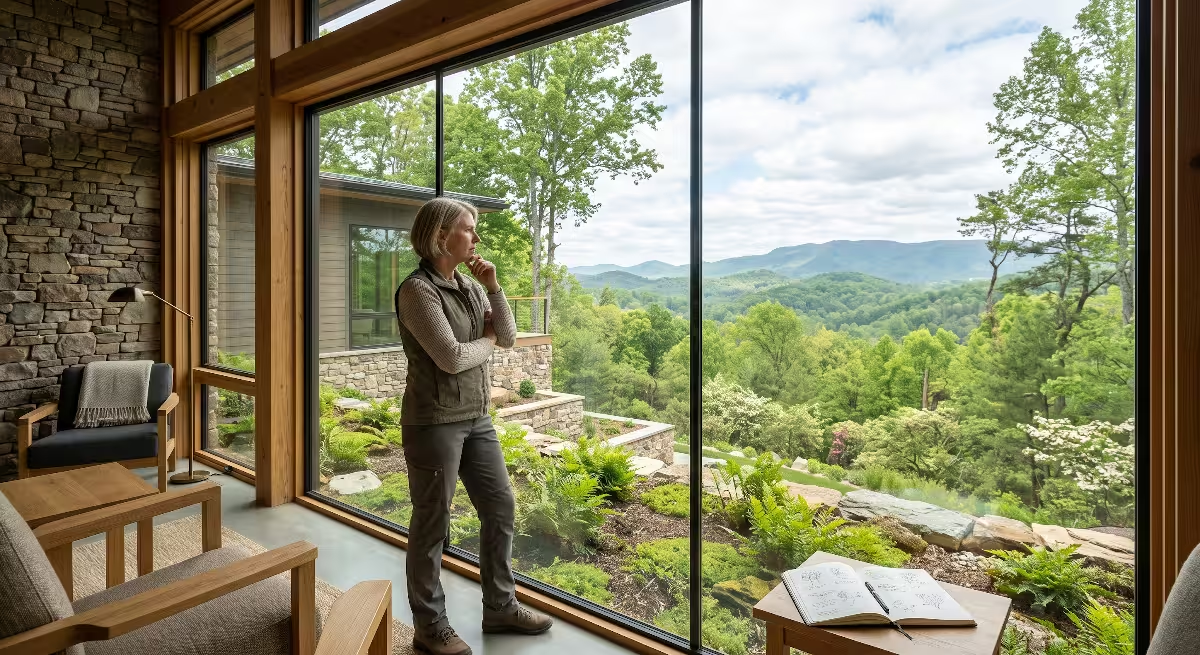
Every geographical region has its own distinctive natural character. Designing a successful visual connection requires understanding the native geography, plant life, and weather patterns of the local area. In the Tri-Cities region of East Tennessee, encompassing Johnson City, Kingsport, and Bristol, the Southern Appalachian landscape provides an incredible canvas for biophilic residential design.
+-------------------------------------------------------------------------+
|              TRI-CITIES TN REGIONAL SIGHTLINE ORIENTATION               |
+-------------------------------------------------------------------------+
|  NORTH & NORTH-EAST FACING SIGHTLINES:                                  |
|  - Captures soft, indirect daylight without harsh summer glare          |
|  - Frames the morning mist rising from low valleys                      |
|  - Excellent for home offices and creative studio spaces                |
|                                                                         |
|  SOUTH & SOUTH-WEST FACING SIGHTLINES:                                  |
|  - Captures dramatic rolling ridge contours and sunset color gradients  |
|  - Requires architectural overhangs or deep porches to control heat    |
|  - Maximizes winter daylight autonomy and passive solar warmth          |
+-------------------------------------------------------------------------+
Leveraging Southern Appalachian Topography
The Tri-Cities area sits within the Ridge-and-Valley and Blue Ridge physiographic provinces. This landscape is defined by long, parallel mountain ridges, rolling farmland, and protected river valleys. When building or remodeling a home in this region, orienting primary rooms to capture these elevation changes creates an extraordinary visual connection.
In morning hours, cool air frequently settles into the valleys of East Tennessee, creating atmospheric river mist and mountain fog that slowly burns off as the sun rises. Orienting breakfast rooms and main living areas toward these valleys gives homeowners a front-row seat to these dynamic weather shifts. Watching the movement of morning mist provides a powerful visual connection that grounds the mind and reduces early morning stress.
In the late afternoon, south-facing and west-facing windows can frame the silhouettes of distant ridges like Buffalo Mountain, Holston Mountain, or Roan Mountain. Viewing distant mountain layers establishes an expansive visual connection that enhances prospect, helping the mind zoom out from small daily worries and gain broader perspective.
Designing with Native Deciduous Flora
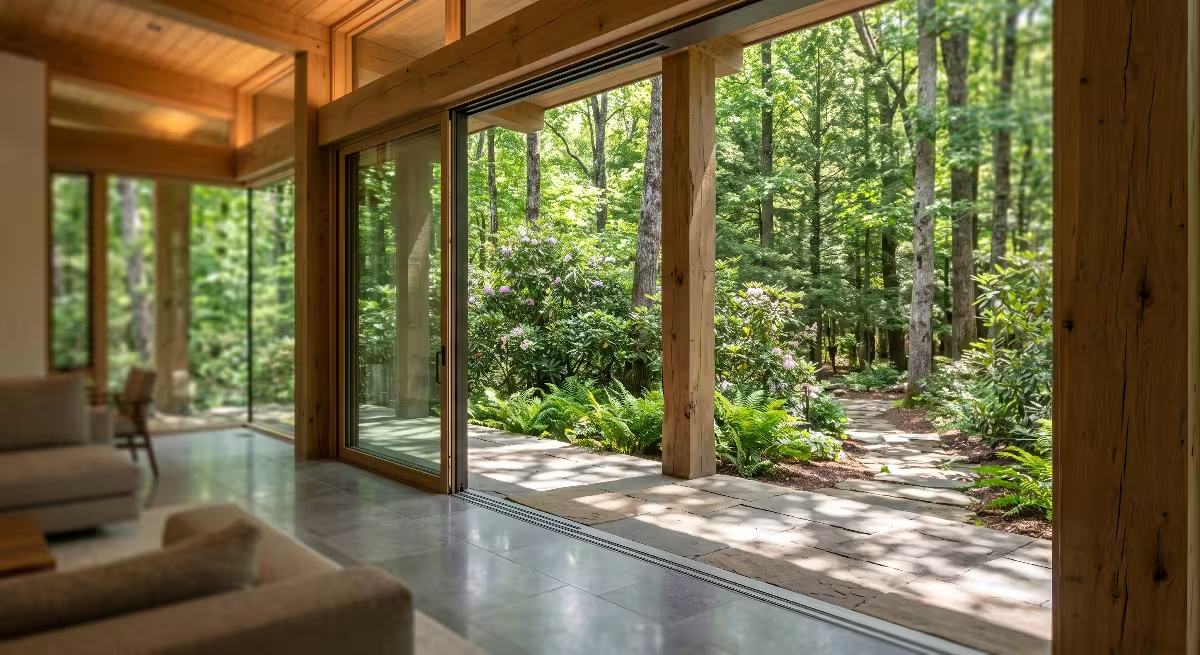
The Southern Appalachian forest is one of the most biologically diverse temperate deciduous forests on Earth. A homeowner can dramatically enhance their home’s visual connection by landscaping with native trees and flowering shrubs placed intentionally within primary sightlines.
+-------------------------------------------------------------------------+
|                  NATIVE APPALACHIAN PLANT PALETTE                       |
+-------------------------------------------------------------------------+
|  CANOPY LAYER (Midground Sightlines, 30-70 ft out):                     |
|  - Tulip Poplar (*Liriodendron tulipifera*): Fast growth, yellow fall   |
|  - Eastern White Oak (*Quercus alba*): Broad canopy, deep winter texture|
|  - Sugar Maple (*Acer saccharum*): Brilliant orange and red autumn foil |
|                                                                         |
|  UNDERSTORY LAYER (Foreground Sightlines, 10-25 ft out):                |
|  - Flowering Dogwood (*Cornus florida*): Spring white bracts, red berries|
|  - Mountain Laurel (*Kalmia latifolia*): Broadleaf evergreen structure  |
|  - Catawba Rhododendron (*Rhododendron catawbiense*): Lush purple blooms|
+-------------------------------------------------------------------------+
Planting native deciduous trees such as Tulip Poplar, Sugar Maple, and White Oak outside large windows creates an evolving seasonal visual connection. In spring, homeowners watch bright green buds emerge, symbolizing renewal. In summer, the dense canopy creates a sheltering green screen that blocks harsh sun. In autumn, the foliage transforms into rich golds, oranges, and deep reds, offering a vibrant visual connection that marks the passage of time. In winter, the bare architectural branch structures allow low winter sunlight to pour into the home while maintaining delicate geometric textures against the sky.
Integrating native understory species like Mountain Laurel, Eastern Redbud, and Flowering Dogwood closer to the foundation creates a layered foreground visual connection. Adding native perennial pollinator beds with species like purple coneflower and milkweed brings dynamic animal life directly into the window frame. Watching birds, bumblebees, and butterflies interact with native flowers adds micro-movements to the visual connection, capturing soft fascination and restoring mental clarity throughout the work day.
Architectural Solutions for Low-View or Dense Urban Footprints
Not every house is situated on an open mountain ridge or a wooded acreage. Many homes are located in dense suburban developments, historic downtown neighborhoods, or tight zero-lot-line lots where windows face neighboring walls, fences, or paved driveways. Even on constrained properties, clever architectural engineering can establish an authentic visual connection to nature.
+-------------------------------------------------------------------------+
|                 URBAN / COMPACT SITE SIGHTLINE STRATEGY                 |
+-------------------------------------------------------------------------+
|                                                                         |
|       [Sky / Sunlight]                                                  |
|              ||                                                         |
|              \/                                                         |
|    +--------------------+  <-- Clerestory Window / High Lightwell       |
|    |                    |                                               |
|    |   Interior Living  |  <-- Internal Living Wall (Vertical Nature)   |
|    |       Space        |                                               |
|    |                    |  <-- Enclosed Japanese-Style Courtyard        |
|    +--------------------+      (Private, dense green view pocket)       |
|                                                                         |
+-------------------------------------------------------------------------+
Internalized Visual Nature
When external views are blocked or unappealing, architects can turn the focus inward by creating dedicated internal nature zones.
- Central Lightwells and Atriums: Installing an open vertical shaft with an overhead skylight brings direct sunlight down into the core of a two-story home. Planting a small indoor tree, such as a Japanese maple or weeping fig, at the base of the lightwell establishes an enchanting vertical visual connection that can be seen from hallways, stairwells, and surrounding rooms.
- Enclosed Courtyards and Pocket Gardens: Designing a home in a U-shape or O-shape allows windows to face inward toward a secure, private courtyard. Even a tiny ten-by-ten foot garden courtyard planted with bamboo, ferns, and a recirculating stone fountain provides an intimate, undisturbed visual connection that blocks out surrounding urban noise and clutter.
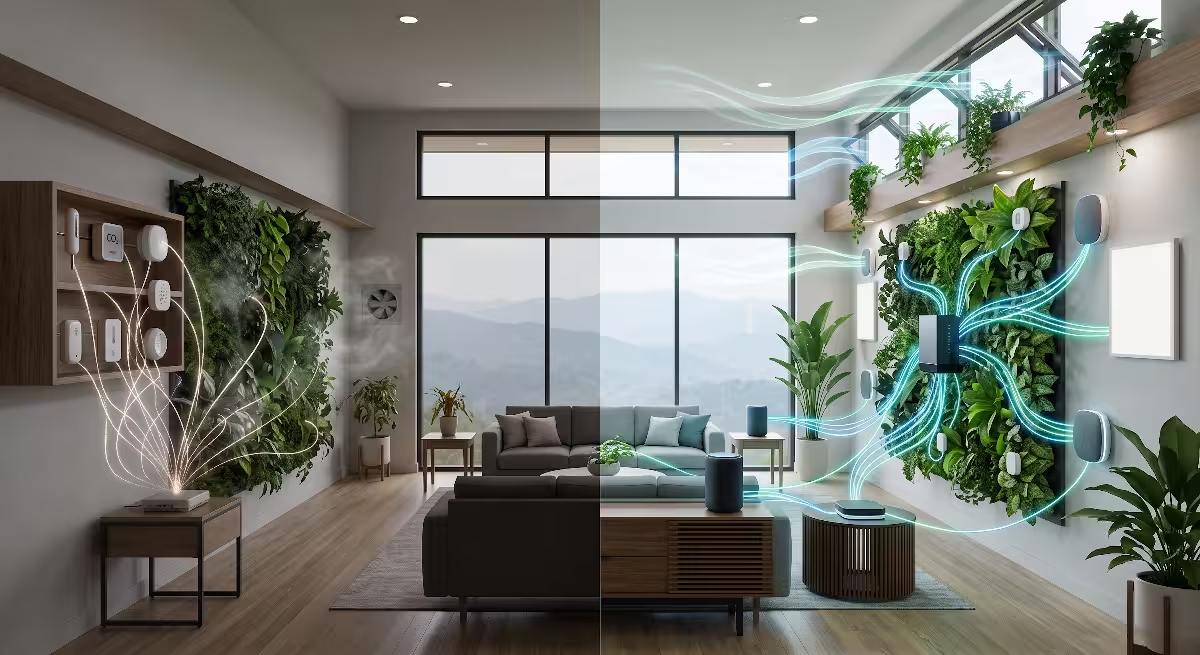
- Engineered Living Walls: A structural living wall equipped with built-in automated watering and full-spectrum LED growth lighting brings hundreds of lush tropical plants directly into living areas. Placing a vertical living wall opposite a primary seating area or dining table creates a rich, textured visual connection that purifies the air while lowering heart rate and muscle tension.
Biomorphic Analogs and Statistical Fractals
When direct views of living plants are limited, human psychology responds remarkably well to biomorphic analogs. Biomorphic analogs are human-made design elements, textures, and patterns that mimic the mathematical geometries found in the natural world.
+-------------------------------------------------------------------------+
|              THE MATHEMATICS OF VISUAL RESTORATION                      |
+-------------------------------------------------------------------------+
|  Statistical Nature Fractals:  Dimension D = 1.3 to 1.5                |
|                                                                         |
|  Found in:                                                              |
|  - Natural tree branch branching patterns                               |
|  - Exposed natural wood grain and stone strata                          |
|  - Custom architectural screens, louvers, and timber trusses            |
|                                                                         |
|  Human Neurological Response:                                           |
|  - Immediate drop in physiological stress markers                       |
|  - Saccadic eye movements stabilize into natural scanning rhythms       |
+-------------------------------------------------------------------------+
In nature, shapes are rarely straight lines or perfect circles. Instead, natural forms are organized as fractals, self-repeating mathematical patterns where the small parts look similar to the whole structure. Examples include the branching patterns of trees, the veins in a leaf, the structure of Romanesco broccoli, and the craggy edges of rock formations.
Physicists and neuroscientists, such as Dr. Richard Taylor, have discovered that human visual systems are hardwired to process statistical fractals with a fractal dimension between 1.3 and 1.5. When our eyes observe patterns within this specific mathematical range, our brain’s visual cortex processes the image with extreme efficiency, inducing a state of physiological relaxation.
Architects can introduce a supportive visual connection by incorporating these fractal patterns directly into interior architectural elements:
- Exposed Heavy Timber Framing: Leaving natural structural posts, beams, and trusses visible highlights the authentic grain lines, knots, and organic growth rings of the wood.
- Stratified Stone Masonry: Using rough-cut native fieldstone or stacked slate on accent walls and fireplaces provides organic tactile and visual depth.
- Perforated Louvers and Brise-Soleil: Installing custom exterior screens with laser-cut organic patterns creates dynamic shadow play across interior walls and floors as the sun moves, mimicking the dappled light of a forest floor.
Frequently Asked Questions about Visual Connection to Nature
What is a visual connection with nature in interior design?
A visual connection with nature in interior design is an intentional spatial strategy that provides building occupants with clear, restorative sightlines to living elements, natural systems, and outdoor processes. Rather than treating windows as simple ventilation openings, a design focused on a visual connection carefully positions openings to frame trees, changing weather, gardens, water features, and daylight patterns to lower stress and restore mental focus.
How does looking at nature through a window reduce stress?
Looking at nature through a window reduces stress by engaging the parasympathetic branch of the autonomic nervous system. When the human eye observes natural scenes containing soft movement and organic fractals, the brain recognizes an absence of immediate physical threat. This neurological realization halts the production of stress hormones like cortisol and adrenaline, lowers blood pressure, stabilizes heart rate variability, and increases soothing alpha brainwaves.
What is the optimal distance for a restorative nature view?
The optimal distance for a restorative nature view is at least twenty feet away from the viewer. Optometrists and cognitive scientists recommend viewing objects beyond twenty feet because this distance allows the ciliary muscles inside the human eye to fully relax from the strain of close-up screen reading. In architectural design, the most restorative visual connection incorporates a deep, three-layer view that extends from a foreground garden to a distant background horizon over one hundred feet away.
Can indoor plants replicate the psychological benefits of outdoor views?
Indoor plants provide genuine, measurable psychological benefits, including improved mood, cleaner indoor air, and reduced baseline anxiety. However, indoor potted plants cannot fully replicate the complete cognitive recovery offered by an outdoor visual connection. Outdoor views supply dynamic sensory elements that indoor plants lack, such as shifting atmospheric weather, long-range focal depths, natural breeze movements, and changing diurnal light temperatures that are essential for regulating the human circadian rhythm.
Implementation Checklist: Auditing Your Home’s Nature Sightlines
Improving the visual connection in your living spaces does not always require building a brand-new house from the ground up. You can dramatically upgrade your existing home by conducting a systematic sightline audit and making targeted improvements.
+-------------------------------------------------------------------------+
|                 SIGHTLINE AUDIT & IMPLEMENTATION STEPS                  |
+-------------------------------------------------------------------------+
|                                                                         |
|  [Step 1: Map Core Task Zones]                                          |
|  Identify where you spend 2+ hours sitting or standing daily.          |
|  Check if your primary view line points at drywall or living nature.    |
|                                                                         |
|  [Step 2: Eliminate Glare & Visual Barriers]                            |
|  Remove heavy, dark drapes and clean exterior glass panes.             |
|  Install exterior solar shades or louvers to stop harsh glare.         |
|                                                                         |
|  [Step 3: Build Foreground & Midground Greenery]                        |
|  Plant native shrubs, ornamental grasses, and pollinator flowers       |
|  directly outside primary windows to introduce living movement.         |
|                                                                         |
+-------------------------------------------------------------------------+
Step 1: Primary Task-Area Audit
Walk through your home and identify every spot where household members spend two or more continuous hours each day. Common locations include:
- The primary desk in the home office.
- The main kitchen preparation island or sink.
- The living room sofa or favorite reading chair.
- The master bed headboard orientation.
Sit or stand in each exact spot. Look straight ahead, then look forty-five degrees to the left and right. Does your natural gaze land on a blank wall, a television screen, or an expansive visual connection to the outdoors? If your desk faces a solid interior wall, rotate your furniture layout so that your workstation sits perpendicular to a window, giving your eyes an effortless visual connection every time you glance up from your screen.
Step 2: Glare and Reflectance Mitigation
A visual connection is useless if the window blinds remain permanently closed because of harsh sunlight or blinding reflections. Inspect your primary windows at different times of day to identify glare issues:
- Replace heavy, dark fabric curtains with sheer linen drapery or motorized solar roller shades that diffuse bright light without completely severing your visual connection to the trees outside.
- Install exterior architectural overhangs, pergolas, or trellises above south-facing windows to block high summer sun while allowing gentle winter daylight to enter.
- Keep exterior window glass thoroughly clean. Accumulated dust, pollen, and mineral deposits reduce Visible Light Transmittance, creating a hazy film that diminishes the crisp optical clarity of your visual connection.
Step 3: Layered Foreground Planting
Take control of what you see through your glass by intentionally designing the landscape immediately outside your primary windows:
- Install raised garden planter boxes or deep flower beds within five to ten feet of your ground-floor windows.
- Plant native ornamental grasses, such as Little Bluestem or Switchgrass, which catch the slightest breeze and provide continuous micro-motion in your visual connection.
- Add native flowering perennials, such as Purple Coneflower, Wild Bergamot, and Black-Eyed Susan, alongside a clean stone birdbath to attract goldfinches, bluebirds, and hummingbirds into your daily field of view.
Summary & Architectural Consultation
A thoughtfully engineered visual connection to nature is one of the highest-yielding investments you can make in your home. By bridging the gap between indoor comfort and outdoor ecology, biophilic design transforms a residential structure into a restorative sanctuary that actively protects your mental health.
+-------------------------------------------------------------------------+
|                     LONG-TERM RETURN ON INVESTMENT                      |
+-------------------------------------------------------------------------+
|  - Measurable drops in chronic daily stress and anxiety biomarkers      |
|  - Faster cognitive restoration from work and screen fatigue            |
|  - Enhanced emotional balance, deeper sleep, and circadian stability    |
|  - Timeless architectural value and strong regional landscape cohesion  |
+-------------------------------------------------------------------------+
Whether you are designing a custom mountain residence overlooking the rolling ridges of Sullivan or Washington County, or remodeling a historic neighborhood home in Johnson City, prioritizing a clear visual connection will elevate your daily living experience. By combining rigorous architectural fenestration, healthy daylight geometry, and the rich native biodiversity of the Southern Appalachian region, your home can become a place where you do not just live, but truly thrive.