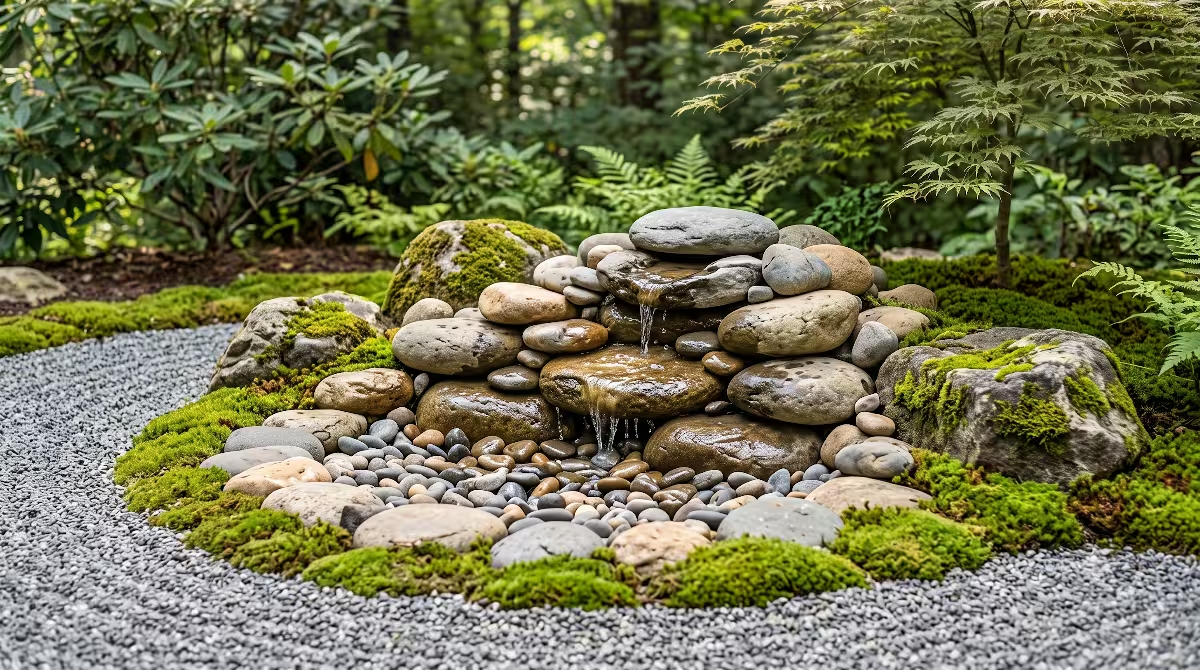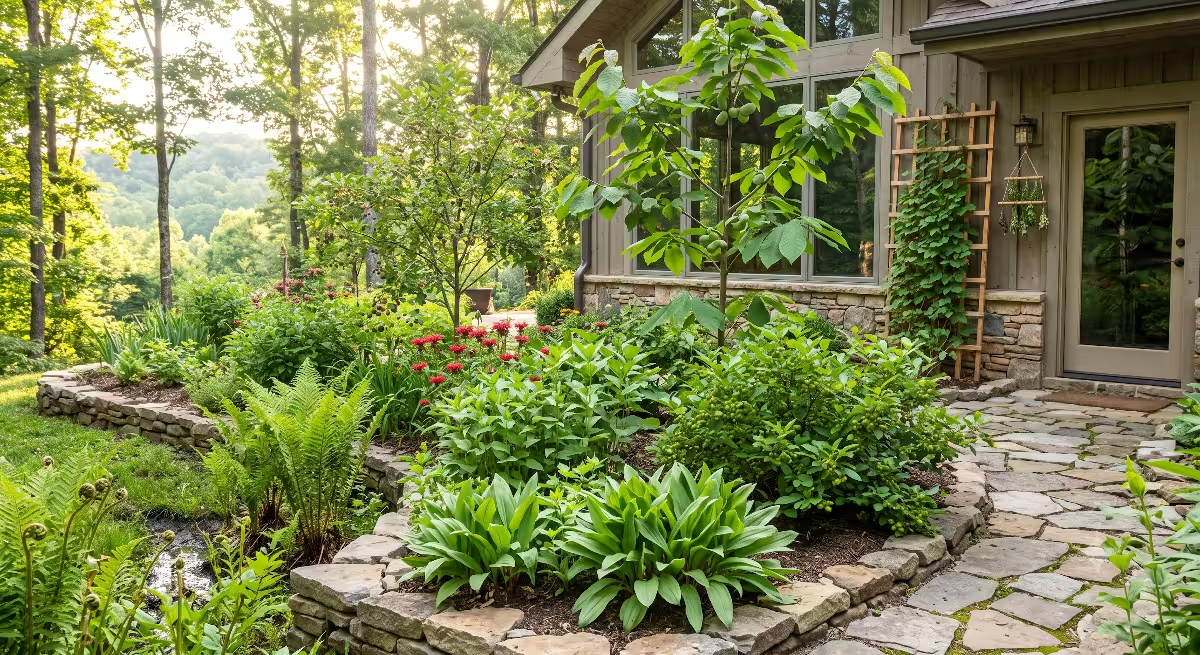

In this article, we are going to explore a major shift happening across Sullivan County, Washington County, and the broader Tri-Cities region. Traditional manicured turfgrass is giving way to native ecosystems. Specifically, we will look at how deploying a native wildflower meadow can solve heavy clay soil challenges, lower landscape maintenance budgets, meet HOA aesthetic standards, and manage storm runoff.
The Biophilic Shift in East Tennessee Residential Planning
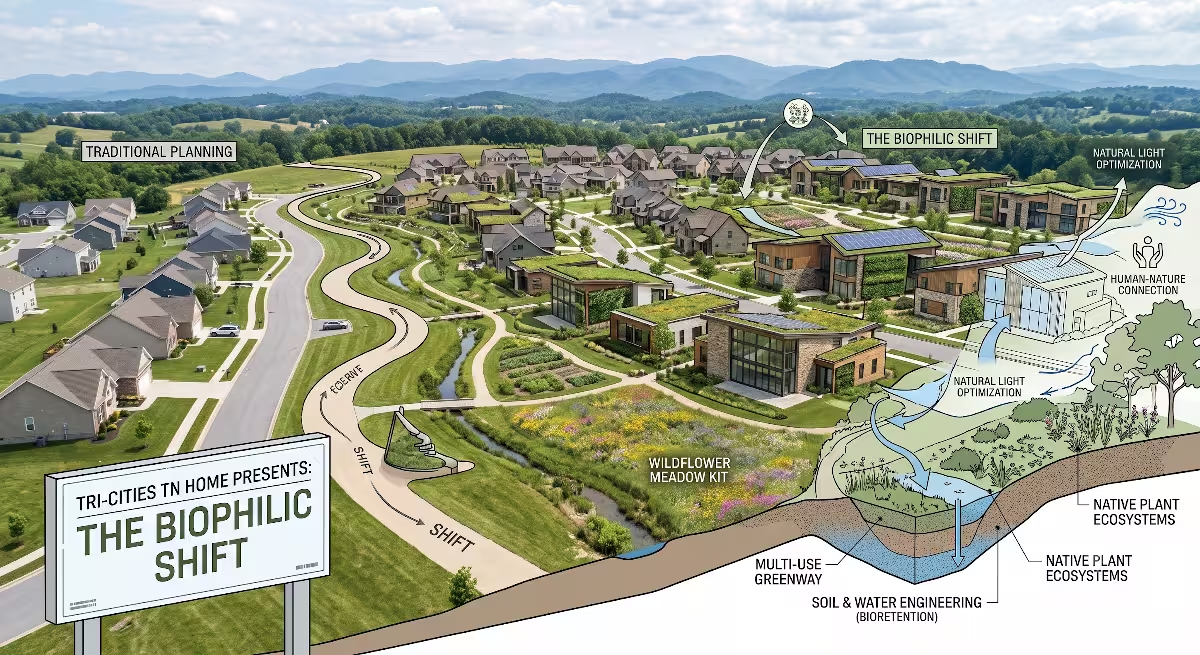
Beyond Turfgrass: Why Tri-Cities Subdivisions Are Transitioning to Native Landscapes
For decades, standard real estate development in Johnson City, Kingsport, and Bristol followed a predictable pattern. A developer cleared the land, scraped off the topsoil, built homes, and covered every remaining square foot with non-native turfgrass, like tall fescue. While a green lawn looks tidy, it requires constant mowing, heavy watering, and routine applications of synthetic fertilizers and chemical weed sprays.
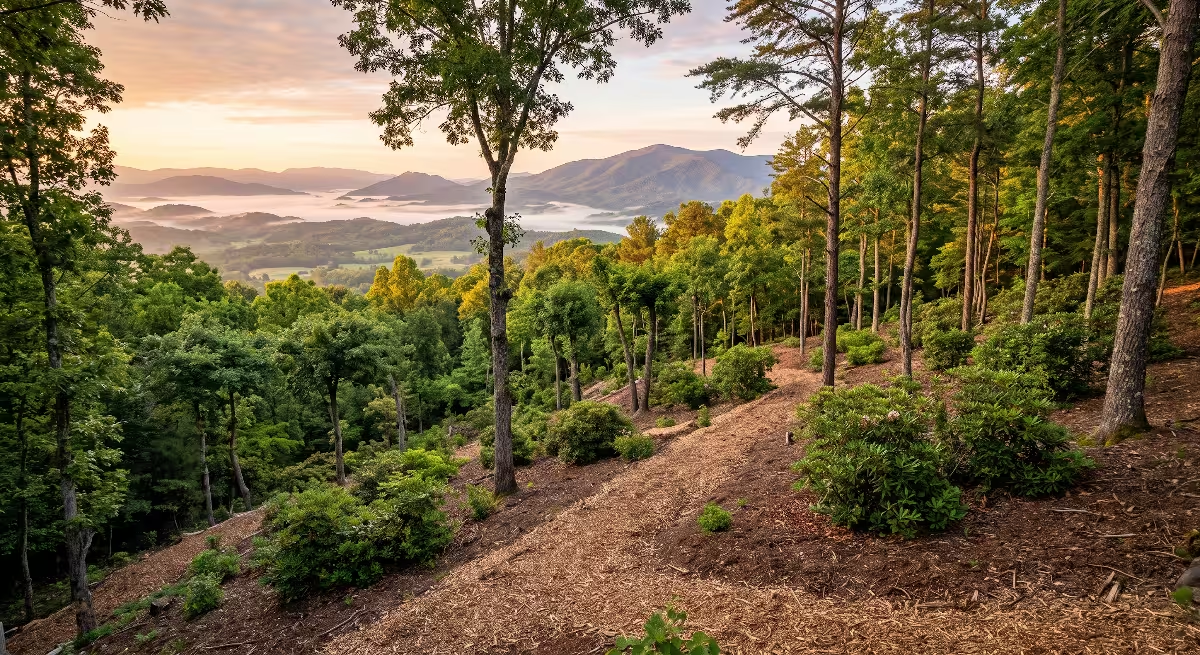
In the Ridge and Valley ecoregion of East Tennessee, this reliance on turfgrass creates long-term problems. Our region features steep slopes, tight clay soils, and unique rock patterns under the surface. Traditional lawns do not handle heavy rainfall well. Their shallow root systems cannot soak up large amounts of storm runoff. This leads to standing water, soil washouts, and expensive maintenance for neighborhood associations.
Because of these problems, developers and homeowners are embracing biophilic design. Biophilic design is the practice of connecting human environments with natural biological systems. In residential developments, this shift is led by the establishment of a native wildflower meadow in common spaces, retention basin edges, and residential side yards.
Installing a wildflower meadow restores the natural ecological function of the land. Instead of creating a biological desert made of a single grass species, a wildflower meadow brings back native plant communities. These plants have spent thousands of years adapting to East Tennessee weather, soil, and insect populations.
From a human health perspective, living near a wildflower meadow offers clear psychological benefits. Studies in environmental psychology show that seeing natural textures, varied seasonal colors, and wildlife activity reduces stress and improves mood. When neighborhood residents walk past a lively wildflower meadow filled with native blooms, they feel a direct connection to the local landscape. This visual variety increases property values and makes master-planned neighborhoods much more attractive to home buyers.
What Is Included in a Commercial Wildflower Meadow Kit?
When developers or landscape architects decide to install native plants, they often turn to commercial meadow seed packages. Understanding what goes into a professional kit is key to getting clean, predictable results. A high-quality wildflower meadow kit is not just a bag of loose seeds. It is a carefully engineered system designed to help native seeds germinate evenly and outcompete unwanted weeds.
A complete commercial wildflower meadow kit typically includes four main components:
Ecoregion-Specific Native Seeds: The core of the kit consists of native perennial wildflower seeds and native warm-season grass seeds. These species are specifically selected for Zone 7 climate conditions and regional soil types.
Seed Carrier Agent: Native wildflower seeds vary greatly in size and weight. Some seeds are as tiny as dust particles, while others are large and fluffy. A carrier agent, such as clean dry sand or fine wood sawdust, is mixed with the seeds. This carrier adds volume, ensuring that workers or machines spread the seeds evenly across large acres.
Companion Cover Crop: Native perennial seeds take time to build root systems during their first year. To prevent soil erosion and keep fast-growing weeds away while the native seeds wake up, a kit includes a non-invasive annual cover crop like oats or annual ryegrass.
Mycorrhizal Inoculants and Soil Conditioners: High-grade kits contain beneficial soil fungi known as mycorrhizae. These natural organisms attach to young plant roots. They expand the root network, helping the young wildflower meadow absorb water and nutrients from dense local clay.
+-----------------------------------------------------------------------+
|                 COMMERCIAL WILDFLOWER MEADOW KIT                      |
+-----------------------------------------------------------------------+
|  1. Native Seed Blend   --> Forbs (Flowers) + Warm-Season Grasses     |
|  2. Carrier Material    --> Sand or Fine Sawdust for Even Spreading    |
|  3. Cover Crop          --> Quick-Germinating Annual (Erosion Control)|
|  4. Soil Inoculant      --> Mycorrhizal Fungi for Root Health         |
+-----------------------------------------------------------------------+
It is vital to understand the difference between a professional native wildflower meadow kit and generic wildflower seed boxes sold at retail stores. Generic store-bought boxes often contain non-native annual flowers from Europe or the Western United States. While those flowers might bloom quickly during the first summer, they do not come back reliably in following years. Worse, some generic boxes contain aggressive weeds that can escape into local state parks and natural areas.
A certified native wildflower meadow kit uses seeds sourced from regional plant populations. These plants are true perennials or self-seeding annuals. Once established, a native wildflower meadow survives cold Appalachian winters, hot humid summers, and brief summer droughts without needing extra watering or chemical fertilizers.
Frequently Asked Questions about Wildflower Meadows
How do you start a wildflower meadow from seed in East Tennessee?
Starting a wildflower meadow from seed in the Tri-Cities area requires attention to timing and proper seed-to-soil contact. Unlike grass seed, which you can simply throw onto the ground in early autumn, native plant seeds have special biological requirements.
The most critical step is seed stratification. Many native flower seeds have a hard outer shell. They need a cold, wet period to break dormancy. This process mimics winter in the Appalachian Mountains. For this reason, late autumn or early winter (late October through mid-December) is the best time to seed a wildflower meadow in East Tennessee. When you spread seeds during late autumn, winter rains and freezing temperature cycles naturally press the seed into the clay and break down the seed coat. When warm weather arrives in April, the seeds germinate evenly.
If you must plant in the spring, you should purchase seeds that have already undergone cold stratification in a refrigerated facility. Spring planting should take place between mid-March and late April before summer heat sets in.
Here is the essential installation process for starting a wildflower meadow:
Clear Existing Vegetation: Eliminate all aggressive weeds, turfgrass, and invasive species from the area.
Prepare the Soil Surface: Lightly rake or roll the soil to create a firm, even surface. Avoid deep tilling, which brings dormant weed seeds to the surface.
Mix and Broadcast: Mix your native seed kit with your carrier material. Broadcast half of the mixture walking in one direction, then broadcast the remaining half walking at a right angle to cover all gaps.
Compress the Seed: Roll the area with a water-filled lawn roller or cultipacker. Native seeds need firm contact with the soil to sprout, but they should never be buried deep under dirt.
Protect and Monitor: Apply a thin layer of clean wheat straw or biodegradable erosion matting on sloped ground to protect the seeds from washing away during heavy spring thunderstorms.
What native wildflowers grow best in Tri-Cities clay soils?
Our soils in Johnson City, Kingsport, and Bristol are famous for heavy red and yellow clay. Clay soil holds nutrients well, but it can become compacted and waterlogged in winter, then dry out like brick during late summer. A successful wildflower meadow depends on selecting hardy native species whose deep root systems thrive in these conditions.
A well-engineered seed mix balances native flowering plants (forbs) with native structural grasses. The grasses act as a supportive matrix, keeping tall flowers standing upright and preventing weed seeds from finding open soil.
| Common Name | Botanical Name | Bloom Season | Clay Soil Adaptation & Ecological Role |
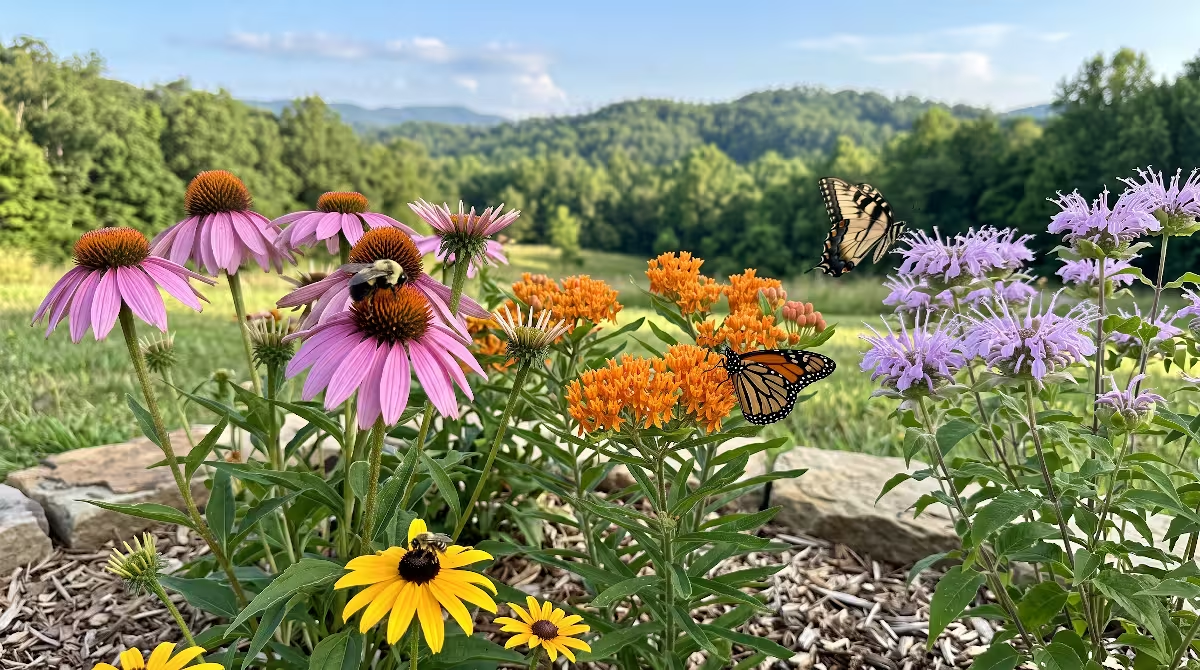
| Purple Coneflower | Echinacea purpurea | Early to Mid-Summer | Deep taproot breaks up hard clay; attracts native bees and finches. |
| Black-Eyed Susan | Rudbeckia hirta | Summer to Fall | Extremely adaptable pioneer species; provides bright yellow color in Year 1. |
| Lanceleaf Coreopsis | Coreopsis lanceolata | Late Spring to Early Summer | Thrives in low-nutrient clay; fast establishment and rich nectar source. |
| Butterfly Weed | Asclepias tuberosa | Mid-Summer | Deep taproot handles dry summer clay; host plant for Monarch butterflies. |
| Wild Bergamot | Monarda fistulosa | Summer | Aromatic foliage deters deer; highly attractive to bumblebees and hummingbirds. |
| Little Bluestem | Schizachyrium scoparium | Late Summer (Grass) | Native grass with 5-8 ft deep roots; provides winter structural interest and bird shelter. |
| Purple Lovegrass | Eragrostis spectabilis | Late Summer (Grass) | Low-growing native grass that thrives in compacted edges and dry open ground. |
When these native species are planted together in a wildflower meadow, their root systems interlock beneath the surface. This root matrix breaks up dense clay, opening pathways for water and air to enter the subsoil naturally.
+--------------------------------------------------------------------+
|                NATIVE WILDFLOWER & GRASS ROOT MATRIX               |
+--------------------------------------------------------------------+
|  [Above Ground]   Purple Coneflower   Black-Eyed Susan   Little Bluestem
|  ~~~~~~~~~~~~~~~~~~~~~~~~~~~~~~~~~~~~~~~~~~~~~~~~~~~~~~~~~~~~~~~~~ |
|  [Topsoil 0-6 in]  |||||||||||||||    ||||||||||||||||   |||||||||||||||
|  [Clay Subsoil]    |  |  |  |  |      |  |  |  |  |     |  |  |  |  |
|  [3 to 8 Feet]     |     |     |      |     |     |     |     |     |
|                    |     |            |           |     |     |     |
|                    V     V            V           V     V     V     |
+--------------------------------------------------------------------+
Are wildflower meadows allowed by residential HOAs in Johnson City, Kingsport, and Bristol?
A common question from developers and board members is whether a wildflower meadow can comply with strict neighborhood rules. The answer is yes, provided the meadow is designed intentionally rather than left to grow wild without management.
Many homeowners associations have rules against “overgrown yards” or “uncultivated weeds.” Problems occur when a property owner simply stops mowing their lawn, allowing invasive weeds, thistles, and wild brambles to take over. An unmanaged weed patch looks untidy and causes friction with neighbors.
To gain HOA approval for a wildflower meadow in a Tri-Cities subdivision, developers and residents should follow the “Cues to Care” design strategy. Coined by landscape architect Joan Iverson Nassauer, this concept uses visible design markers to show that a natural landscape is intentional and well-maintained.
Key strategies for HOA compliance include:
Defined Mown Borders: Maintain a neat 3 to 5-foot strip of clean mown turfgrass or dark wood mulch around the edge of the wildflower meadow. This clear border frames the meadow, signaling that the space is deliberately cared for.
Architectural Edging and Hardscaping: Use stacked native limestone, timber edging, or paved walking paths to enclose the planting area.
Height Management near Roads: Choose lower-growing native species (under 3 feet tall) for sightlines near driveways, road intersections, and sidewalks. Reserve taller plants for central common areas or retention basins.
Educational Signage: Install clean wooden or metal signs identifying the site as a “Registered Native Pollinator Habitat.” Signs explain the environmental purpose of the area to neighbors and visitors.
Seasonal Cleanup: Perform a single neat mow-down in late winter (February) to clear dead stems before new spring growth emerges.
When an HOA board sees a structured plan featuring mown edges and an intentional seed list, they recognize that a native wildflower meadow adds value and beauty to the community.
How much maintenance does a wildflower meadow kit require compared to traditional lawn?
A native wildflower meadow requires significantly less labor, water, and money over time than standard turfgrass. However, it is a common myth that a wildflower meadow is completely zero-maintenance. Understanding the maintenance timeline helps set realistic expectations for property managers and grounds crews.
During Year 1 (the establishment phase), native perennial plants focus most of their energy on growing deep roots underground. Above ground, quick-growing annual weeds may try to take over. To manage these weeds, maintenance crews must mow the young wildflower meadow to a height of 6 to 8 inches every time weeds reach 12 inches high. Mowing at this specific height cuts off the seed heads of annual weeds without damaging the low-growing basal leaves of young native perennials.
By Year 2, native root systems expanded deep into the soil. The perennial wildflowers and native grasses emerge quickly in spring, shading out light for competing weed seeds. Spot-weeding for aggressive invasive plants (such as Canada thistle or crown vetch) is occasionally needed in late spring.
By Year 3 and beyond, the wildflower meadow reaches full maturity. The ongoing maintenance routine drops to just one major event per year: a late-winter mowing or string-trimming in late February. Leaving dead plant stems standing throughout autumn and winter provides essential shelter for wintering songbirds and native bees.
+-----------------------------------------------------------------------+
|                3-YEAR MEADOW MAINTENANCE VS. TURFGRASS                |
+-----------------------------------------------------------------------+
|  Year 1: 3-4 High Mows (6-8 in height) to suppress annual weed growth |
|  Year 2: 1 Late-Winter Mow + Minor spot-weeding in May                |
|  Year 3+: ONLY 1 Late-Winter Mow per year | ZERO fertilizer or water  |
|  -------------------------------------------------------------------  |
|  Turfgrass: 25-30 Mows EVERY Year + Fertilizer + Weed Sprays + Water  |
+-----------------------------------------------------------------------+
Compared to a traditional lawn that demands 25 to 30 mows per year plus chemical treatments, a mature wildflower meadow reduces long-term landscaping labor costs by up to 75 percent.
Engineering Site Preparation & Soil Dynamics in the Tri-Cities Region
Managing Heavy Clay Soil and Karst Topography
Successful landscape engineering in East Tennessee requires a clear understanding of our regional geology. The Tri-Cities sits within a karst landscape, characterized by limestone rock formations under heavy red clay soils. Karst areas are prone to sinkholes, subterranean drainage paths, and rapid surface water movement.
Heavy clay soil presents two distinct challenges for site development: low water infiltration when dry and poor aeration when wet. When heavy equipment clears a site for residential construction, it compresses the clay soil, destroying soil structure.
Standard landscaping approaches try to fix this by importing topsoil or adding heavy synthetic fertilizers. When installing a wildflower meadow, however, adding rich fertilizers is a mistake. High nitrogen fertilizers encourage fast-growing invasive weeds like crabgrass and pigweed to outgrow native perennials. Native wildflowers evolved to thrive in lean, low-nutrient soils.
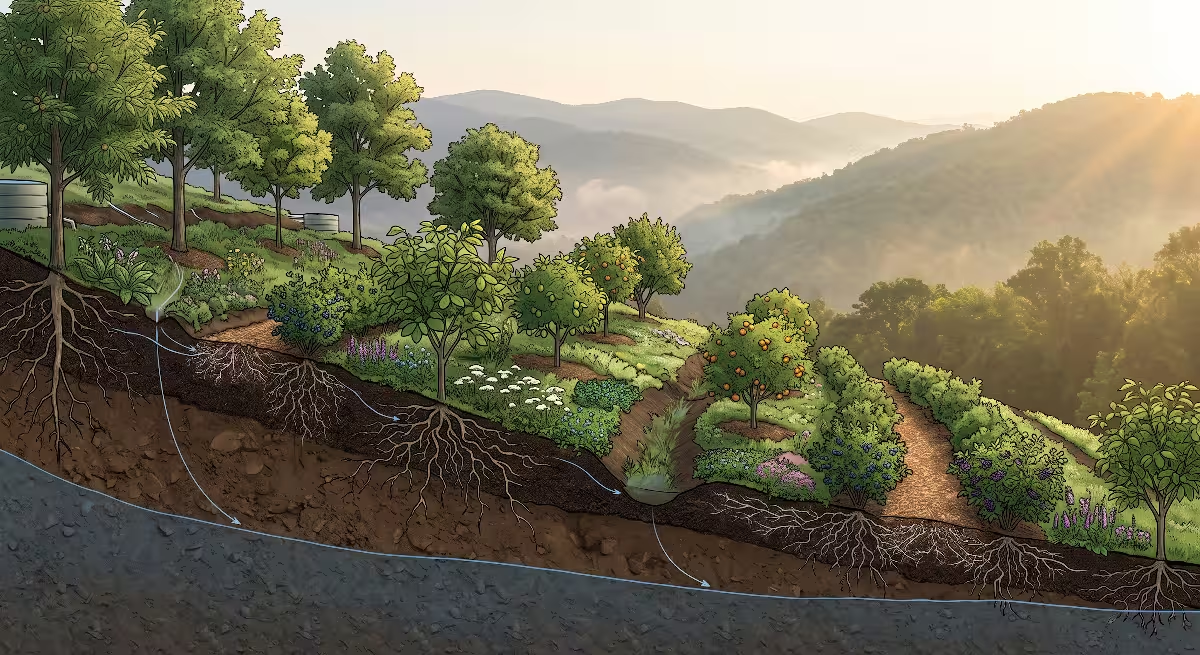
Instead of heavy fertilizers, an engineered native wildflower meadow uses biological roots to decompact clay soil. Deep native roots act as natural drills. They penetrate dense clay, opening small passages that allow oxygen, microbes, and rainwater to reach deeper soil layers. Over time, as old roots die and decay, they deposit organic material deep underground, building rich topsoil naturally.
+-----------------------------------------------------------------------+
|                    TURF FESCUE VS. NATIVE MEADOW ROOTS                |
+-----------------------------------------------------------------------+
|  Turf Fescue Roots:      | | | | (Shallow 2-4 inches)                 |
|  Clay Compaction Barrier:===========================================  |
|                          |                                            |
|  Native Meadow Roots:    |   |   |   |   |                            |
|                          |   |   |   |   |                            |
|                          |   |   |   |   | (Deep 5-15 feet)           |
|                          V   V   V   V   V                            |
|                      [Breaks through dense karst clay naturally]      |
+-----------------------------------------------------------------------+
Site Preparation Protocols for New Subdivisions
Proper site preparation is the single most important factor in determining whether a wildflower meadow succeeds. Skipping site prep steps usually results in an area dominated by aggressive weeds.
For new residential developments in Johnson City, Kingsport, and Bristol, civil engineers and site managers should choose one of three site preparation protocols based on project timelines:
Method A: Organic Smothering and Solarization (Best for Small Areas & High-Vis Spaces)
Timeframe: 3 to 6 months (Spring/Summer).
Procedure: Lay down heavy agricultural solarization plastic or thick cardboard topped with clean mulch over the installation zone. Secure the edges firmly. The intense heat generated under solarization plastic cooks existing weed seeds and turf roots in upper clay layers without chemical sprays.
Outcome: Creates a weed-free seedbed ready for late-autumn seeding.
Method B: Repeated Shallow Tillage and False Seedbed Creation
Timeframe: 2 to 3 months.
Procedure: Lightly disk or till the top 1 to 2 inches of soil to trigger dormant weed seeds to germinate. Once weeds sprout, destroy them using a flame weed burner or shallow scuffle hoe. Repeat this cycle 2 to 3 times.
Caution: Never till deeply (beyond 2 inches). Deep tilling brings buried weed seeds to the surface, causing major weed issues later.
Method C: Eco-Friendly Non-Selective Herbicide Application (Best for Large Acreage)
Timeframe: 4 to 6 weeks.
Procedure: For large acreage where solarization is not practical, apply a biodegradable, short-lived non-selective herbicide when undesirable grass is actively growing. Allow the vegetation to die back fully, then mow the dead thatch flush to the ground before seeding directly into the firm soil.
When working on sloped acreage, erosion control is critical. Heavy rains on bare clay can wash away native seed investments overnight. Pairing your wildflower meadow kit with a biodegradable jute or coconut fiber erosion blanket holds the seed in place, retains moisture, and naturally decomposes as young native seedlings grow.
Stormwater Management & Civil Infrastructure Benefits
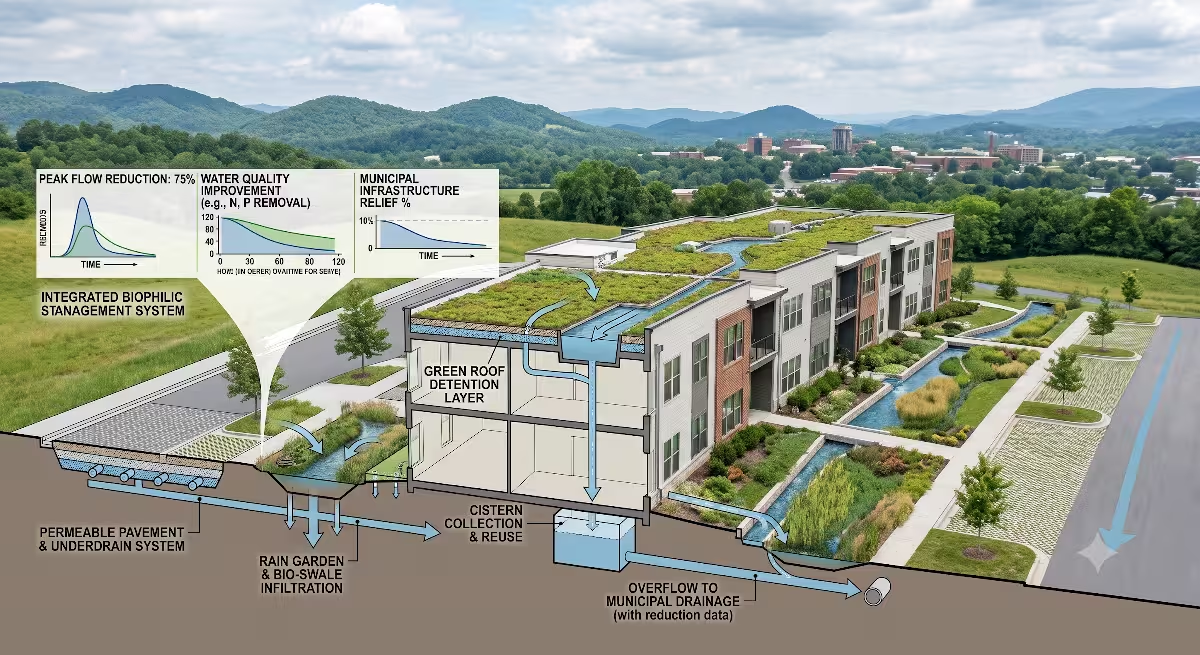
Bio-Retention and Runoff Attenuation
Stormwater management is one of the largest budget items in modern subdivision development. Local city engineering standards in Johnson City and Bristol require developers to control peak runoff rates from new construction. Converting farm fields or forests into houses, paved driveways, and concrete roads reduces permeable surface area, causing higher stormwater volumes.
Traditional engineering relies on concrete channels and detention ponds lined with turfgrass. Turfgrass, however, has a very short root structure (usually only 2 to 4 inches deep). Water slips over dense turf almost as fast as it flows over concrete, leading to surface erosion and sediment buildup in local watersheds like the Watauga and Holston Rivers.
A mature wildflower meadow serves as a living sponge for civil infrastructure. Native plants like Black-Eyed Susan, Purple Coneflower, and Little Bluestem grow deep, complex root systems that reach 5 to 15 feet into the earth.
These deep root channels transform compacted soils into highly porous bio-retention zones. Water infiltration rates under a native wildflower meadow can be up to 8 times higher than under standard fescue lawn.
When heavy rain falls on a subdivision with integrated native planting zones, water soaks into the soil where it falls. This reduces peak flow volumes entering drainage networks, allowing civil engineers to design smaller, less expensive detention basins.
+-----------------------------------------------------------------------+
|                    STORMWATER INFILTRATION RATES                      |
+-----------------------------------------------------------------------+
|  Concrete / Asphalt:       0% Infiltration (100% Surface Runoff)      |
|  Standard Fescue Lawn:     Low Infiltration (Shallow 2-4 in roots)    |
|  Native Wildflower Meadow: HIGH Infiltration (Deep 5-15 ft roots)     |
|                                                                       |
|  Result: Up to 8x higher water absorption in native meadow soils!     |
+-----------------------------------------------------------------------+
Urban Heat Island Mitigation in Master-Planned Communities
As new residential developments replace natural fields with dark asphalt roads, shingled roofs, and driveways, microclimate temperatures rise. This warming pattern is known as the urban heat island effect. Heat trapped by hard surfaces increases air conditioning costs for homeowners and creates an uncomfortably hot neighborhood environment during East Tennessee summers.
Standard turfgrass lawns do little to lower ambient temperatures because their shallow roots dry out quickly during dry spells, causing the turf to go dormant and brown.
A native wildflower meadow actively cools the surrounding neighborhood air through evapotranspiration. Native perennial roots pull groundwater from deep subsoil layers and release moisture through leaves into the air. This natural cooling effect can lower local ground surface temperatures by 5 to 10 degrees Fahrenheit compared to dried-out turfgrass or dark asphalt.
By distributing native planting zones throughout a master-planned community, developers create cool microclimates, reduce energy demands on home cooling systems, and make neighborhood walking trails far more pleasant for residents.
Step-by-Step Deployment Guide for Developers and HOA Landscapers
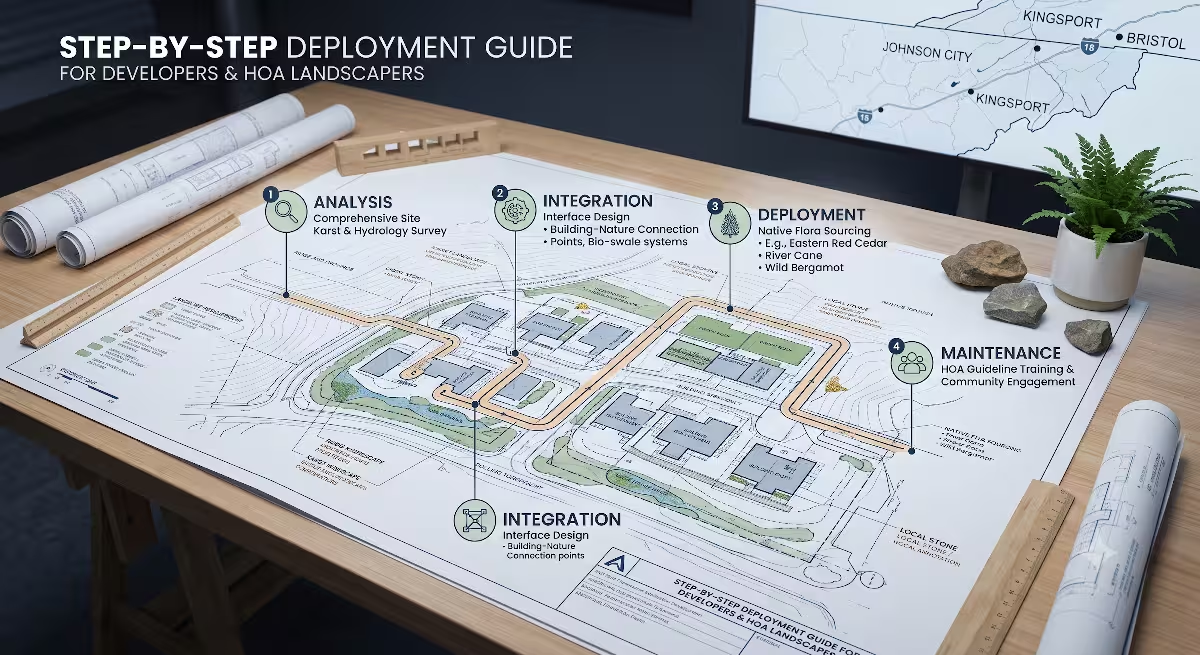
Calibrating Kit Coverage Rates for Open Spaces vs. Residential Lots
Deploying native seed kits requires precise calibration. A common error made by general landscaping contractors is applying too much seed or applying it unevenly. Sowing seed too densely causes young seedlings to compete aggressively with one another for light and space, weakening overall stand health.
Seeding rates for a wildflower meadow are much lower by weight than traditional grass seeding rates because native seeds are small and light.
+-----------------------------------------------------------------------+
|                    RECOMMENDED SEEDING COVERAGE RATES                 |
+-----------------------------------------------------------------------+
|  Application Type          | Seed Mix Density      | Carrier Ratio    |
|  -------------------------------------------------------------------  |
|  High-Visibility Common Areas | 8 - 12 lbs per Acre   | 1 lb seed to     |
|  (Focus on flowering forbs) | (approx. 4-5 oz / 1k sq ft) | 5 lbs sand |
|  -------------------------------------------------------------------  |
|  Stormwater / Basin Slopes | 12 - 15 lbs per Acre  | 1 lb seed to     |
|  (Higher grass percentage)  | (approx. 5-6 oz / 1k sq ft) | 4 lbs sand |
+-----------------------------------------------------------------------+
Always check the pure live seed (PLS) rating on your wildflower meadow kit certification tag. PLS measures the percentage of pure seed that is viable and capable of germinating. High-quality commercial mixes maintain a PLS rating of 80 percent or higher.
Seeding Execution Protocols
When you are ready to install your wildflower meadow kit across a development site, select the appropriate application method based on total acreage and terrain steepness:
Direct Broadcast Seeding (Best for Areas Under 2 Acres)
Split your total seed mix and carrier blend into two equal parts.
Hand-broadcast or use a mechanical belly-grinder hand spreader to apply the first half walking north-to-south.
Apply the second half walking east-to-west to create a uniform criss-cross pattern.
Pass over the seeded soil once with a lawn roller to press the seed firmly into the clay surface.
Mechanical No-Till Drill Seeding (Best for Flat Open Fields Over 2 Acres)
Use a specialized native seed drill tractor attachment equipped with agitator boxes designed for fluffy native grass seeds and small flower seeds.
Set drill depth guards to 1/8 inch maximum. Native seeds require light to trigger germination and must not be buried deeply.
The drill’s packer wheels press the soil down immediately behind the seed drop tubes, ensuring excellent seed-to-soil contact in one pass.
Hydroseeding with Native Meadow Mixes (Best for Steep Retention Slopes)
Fill the hydroseeder tank with water, native seed mix, mycorrhizal inoculants, and 100% biodegradable wood fiber slurry mulch.
Do NOT add synthetic high-nitrogen fertilizers to the hydroseed slurry mix.
Spray the slurry evenly across the slope grade. The wood fiber mulch binds to the clay, holding seeds in place against heavy spring rainfall while retaining moisture.
The Business Case for Biophilic Master Planning
Transitioning from traditional turfgrass to native landscape design is not just an ecological decision. It is a smart financial strategy for property developers, civil engineers, and residential HOAs in the Tri-Cities region.
Installing a native wildflower meadow delivers immediate cost savings and long-term financial benefits:
Lower Installation Costs: Pre-formulated native wildflower meadow seed kits cost less per square foot to purchase and install than buying and laying tall fescue turf sod across acres of common land.
Drastic Reduction in Operational Overhead: Replacing weekly mowing, watering, aeration, and chemical fertilizing routines with a single late-winter cut lowers long-term landscape management budgets by up to 75 percent starting in Year 3.
Built-in Infrastructure Protection: Deep-rooted native vegetation absorbs stormwater, reduces erosion on sloped residential lots, prevents sinkhole formation in karst clay, and extends the lifespan of stormwater channels and basins.
Enhanced Marketability: Subdivisions designed with biophilic amenities like pollinator corridors, walking paths through a blooming wildflower meadow, and natural common areas attract eco-conscious buyers faster and command higher lot prices.
By using high-quality wildflower meadow kits engineered for local soil and climate conditions, we can build residential developments across Johnson City, Kingsport, and Bristol that are lower maintenance, ecologically rich, and visually attractive for decades to come.
+-----------------------------------------------------------------------+
|             5-YEAR COST COMPARISON: MEADOW VS. TURFGRASS              |
|                     (Estimated Per Acre Average)                      |
+-----------------------------------------------------------------------+
|  Cost Category           | Wildflower Meadow     | Traditional Turf   |
|  -------------------------------------------------------------------  |
|  Year 1 (Install + Prep) | $2,500 - $4,000       | $5,000 - $8,500    |
|  Year 2 Maintenance      | $800 - $1,200         | $2,500 - $3,500    |
|  Year 3 Maintenance      | $300 - $500           | $2,500 - $3,500    |
|  Year 4 Maintenance      | $300 - $500           | $2,500 - $3,500    |
|  Year 5 Maintenance      | $300 - $500           | $2,500 - $3,500    |
|  -------------------------------------------------------------------  |
|  TOTAL 5-YEAR INVESTMENT | $4,200 - $6,700       | $15,000 - $22,500  |
+-----------------------------------------------------------------------+
|  SAVINGS: Up to $15,800+ saved per acre over 5 years with a meadow!   |
+-----------------------------------------------------------------------+