

Canopy Thinning for Viewsheds in East Tennessee
Living in the rolling hills and steep ridgelines of Eastern Tennessee gives us front-row seats to some of the oldest, most biodiverse terrain on Earth. From Johnson City to Kingsport and Bristol, our homes sit among ancient slopes carpeted in oak, hickory, maple, and pine. We crave the far-off view. We want to sit on our porches or look through large glass walls to see the morning fog lift out of the valleys toward Mount LeConte or the Roan Mountain highlands.
Yet, there is a clear problem that comes with building on these mountain slopes. To see the valley below, many people want to cut down every tree in front of their windows. That choice can lead to disaster. Clear-cutting a steep Appalachian hillside destroys the natural engineering that holds the ground together. Without living root networks and dense tree crowns, heavy rain cuts deep gullies into the soil, sending mud, rocks, and expensive landscape walls sliding down the mountain.
The solution is not to destroy the woods, but to work with them. Through scientific, deliberate canopy thinning, you can open up panoramic mountain views while leaving the living soil anchors completely undisturbed. By understanding how native trees manage rain, anchor bedrock, and direct sightlines, you can achieve both a safe slope and an expansive view.
The Biophilic Paradox of Hillside Living
The Tension Between Prospect and Ecological Stability
In environmental design, we talk about an idea called Prospect-Refuge Theory. Developed by geographer Jay Appleton, it explains why humans love hillside homes. As a species, we feel safest and most at peace when we have a sheltered place behind us (refuge) and a clear, open view of the landscape before us (prospect). An open vista allows our minds to relax. It lowers our stress levels, stabilizes our heart rates, and connects us directly with the rhythm of daylight, shifting weather, and seasonal changes.
In the rugged terrain of the Appalachian Mountains, creating this prospect creates an ecological paradox. The very trees that block your view of the valley are the structural pillars holding your land in place. When a homeowner clears those trees, they trade ecological security for an open horizon. They want the view, but they destabilize the foundation that supports their home. The goal of smart landscape design is to satisfy our biological drive for an expansive vista without compromising the physical stability of the slope.
The Danger of Clear-Cutting Slopes
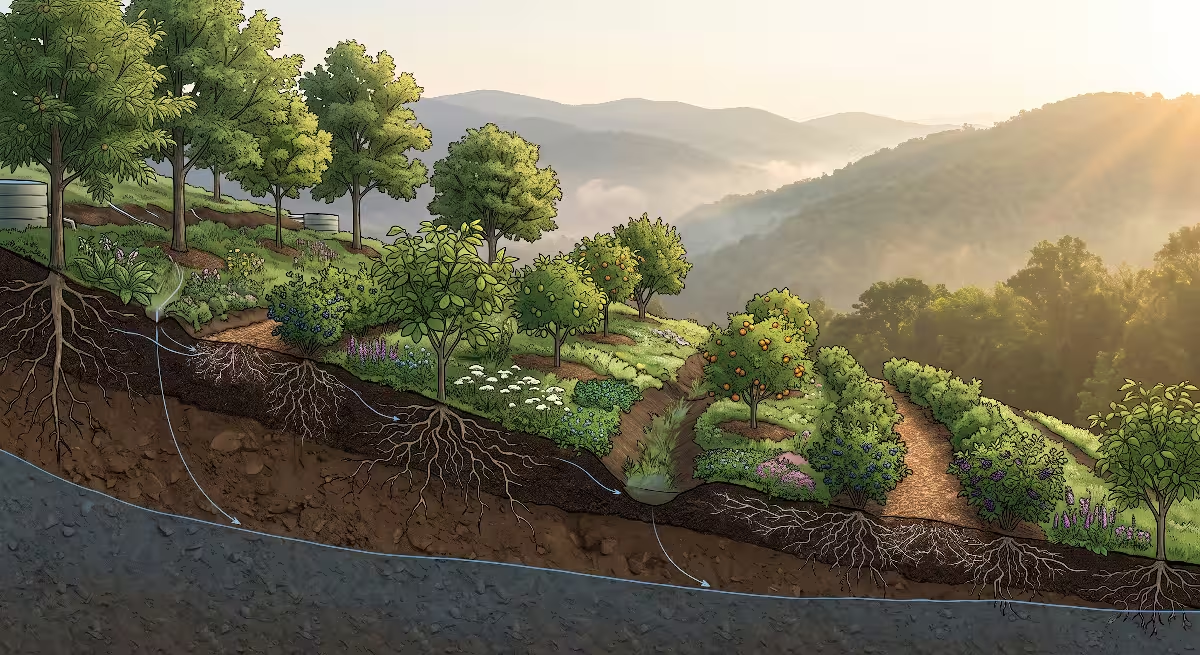
When an excavator or clear-cutting crew strips a hillside down to bare dirt, the clock starts ticking on slope failure. A healthy forest operates like a giant sponge paired with a massive underground net. The leaves high up catch rain and slow it down, while the litter on the forest floor absorbs gallons of moisture before it can run across the surface. Underneath, millions of roots bind the soil particles into a unified, solid mass.
When you cut all the trees down to clear a view, four destructive events happen at once:
- Unchecked Rainfall Impact: Rain hits the exposed soil with full force, dislodging fine sediment.
- Loss of Surface Absorption: Rainwater pools on the surface and starts racing downhill.
- Gully and Rill Formation: Flowing surface water cuts small grooves that grow into deep channels, carrying tons of rich topsoil away.
- Soil Saturation: Without tree roots drinking up hundreds of gallons of groundwater every day, the mountain soil becomes heavy, waterlogged, and prone to sliding under its own weight.
Clear-cutting turns a living hillside into an unstable slip hazard. It damages downstream creeks with silt, ruins native habitats, and puts the home above in direct structural danger.
The Biophilic Engineering Solution
Biophilic engineering looks to natural systems to solve structural problems. Instead of fighting nature with expensive concrete retaining walls, steel ground anchors, and clear-cuts, we use living plants as structural building materials.
Through planned canopy thinning, we leave the trees standing and their roots working deep underground. We prune specific branches, remove select understory stems, and redirect how the trees grow. This method opens up wide windows of sky and valley through the forest canopy while keeping the root matrix intact. You get your morning view of the sunrise over the ridges, and the mountain stays firmly anchored beneath your feet.
Biomechanics of Slope Stability: Soil, Roots, and Canopy Interception
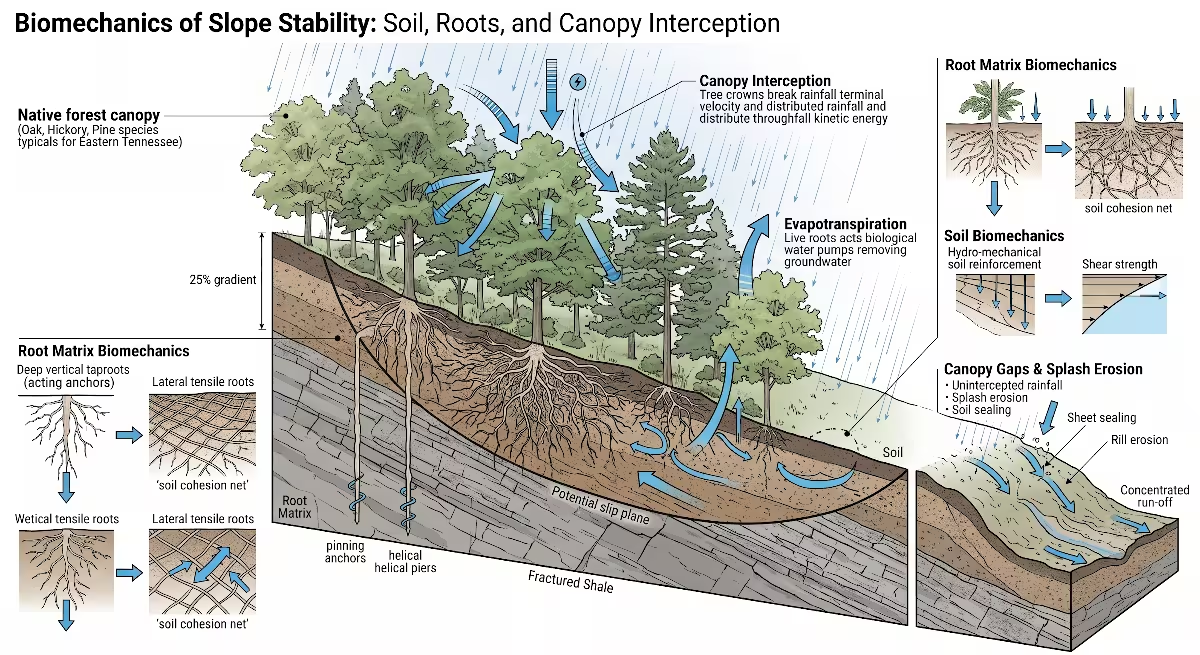
To manage a forest canopy safely, you must understand the mechanical forces at play on an Appalachian hillside. Slope stability is a balance between driving forces (gravity pulling earth downward) and resisting forces (friction and the shear strength of the soil). Native trees act as structural anchors that strengthen those resisting forces.
Hydrological Interception and Raindrop Energy
Rain falling from storm clouds gathers speed as it drops. By the time a large raindrop nears the ground, it travels at a high terminal velocity. When that drop slams into bare soil, it acts like a tiny explosive charge. It blasts soil particles apart in a process called splash erosion. These broken-down particles wash into the tiny pores between soil grains, sealing the surface so rainwater cannot soak in. The water has nowhere to go but across the surface, carrying your topsoil with it.
A natural forest prevents this damage through canopy interception. A multi-layered forest crown catches the falling raindrops. The water breaks apart on leaves and needles, drips gently to lower limbs, runs down the rough bark of the trunk, and trickles softly to the ground.
When you manage your woods with canopy thinning, you must preserve this broken canopy network. If you cut broad gaps into the canopy, rain can gather on broad upper leaves and fall as huge droplets. These oversized drips hit the ground with even more kinetic force than natural rain. Thoughtful canopy thinning keeps a distributed, multi-tiered tree umbrella overhead so no bare patch of dirt takes the direct hit of a mountain downpour.
Root Matrix Biomechanics and Soil Reinforcement
Beneath the trunk lies a massive, branching foundation. Tree roots stabilize slopes using two different structural systems:
- Deep Vertical Taproots: These thick, central roots dive down into weathered bedrock, fractured shale, and deep subsoil layers. They act just like the steel helical piers engineers drive into the ground to support buildings. They physically pin the loose, upper layers of topsoil to the solid rock beneath, preventing deep landslides.
- Lateral Tensile Roots: Spreading outward in the top two to three feet of soil is a thick web of woody roots and fine fibers. These roots have high tensile strength, meaning they resist being pulled apart. As soil tries to creep downhill under the pull of gravity, these lateral roots pull back. They distribute the load across the entire slope, acting like a woven net that holds the dirt in place.
When a live tree is cut down, its root system does not vanish overnight, but it begins to die. In the first year, fine absorbing roots break down. By year two and three, fungi and soil microbes rot away the thick lateral roots. The tensile strength of that underground net drops toward zero. Many homeowners clear-cut a hillside and think they got away with it because the slope holds for eighteen months. Then, during a wet spring in year three, the rotted roots snap under the weight of saturated soil, and the entire hillside slides downward.
Selective canopy thinning avoids this delayed failure entirely. Because the tree stays alive, the roots keep growing, drinking, and gripping the subsoil year after year.
                    STORM RAINFALL
                          │
                          ▼
            ┌───────────────────────────┐
            │   Forest Canopy Layer     │  ◄── Rain velocity broken
            └─────────────┬─────────────┘
                          │ (Soft Drips & Stemflow)
                          ▼
            ┌───────────────────────────┐
            │ Forest Litter & Understory│  ◄── Organic sponge absorbs runoff
            └─────────────┬─────────────┘
                          │ (Gentle Infiltration)
                          ▼
      ═════════════════════════════════════════  ◄── Mountain Topsoil
        │       \       │       /       │
        │ Lateral Tensile Root Network  │      ◄── Woven net resists pull
        │       /       │       \       │
      ─────────────────────────────────────────  ◄── Potential Slip Plane
            │                       │
            ▼                       ▼
        Deep Anchoring Taproots & Bedrock Pins ◄── Structural stability
Subsurface Hydrology and Living Water Pumps
Water is the primary enemy of hillside stability. Dry soil is strong because individual dirt particles lock together through internal friction. When heavy rains saturate a hillside, water fills every empty pore space between the soil grains. This creates pore water pressure, which pushes the soil grains apart. The water acts like a lubricant, reducing friction to near zero. Add the immense physical weight of hundreds of gallons of trapped water, and the slope fails along its weakest boundary layer, or slip plane.
Native trees are natural de-watering pumps. A single mature hardwood tree can pull between fifty and one hundred gallons of water out of the ground every single day during the growing season. It pulls moisture through its roots, runs it up the trunk, and releases it into the air as water vapor through the tiny stomata on its leaves. This process, called evapotranspiration, keeps mountain soil drier and lighter.
Careful canopy thinning keeps these biological water pumps running. By retaining healthy, mature trees and trimming only the branches that sit in your direct line of sight, you keep those living root pumps pulling water out of the ground, lowering dangerous pore water pressure throughout heavy rainy seasons.
Silvicultural Tactics: How to Create Sightlines Without Tree Removal
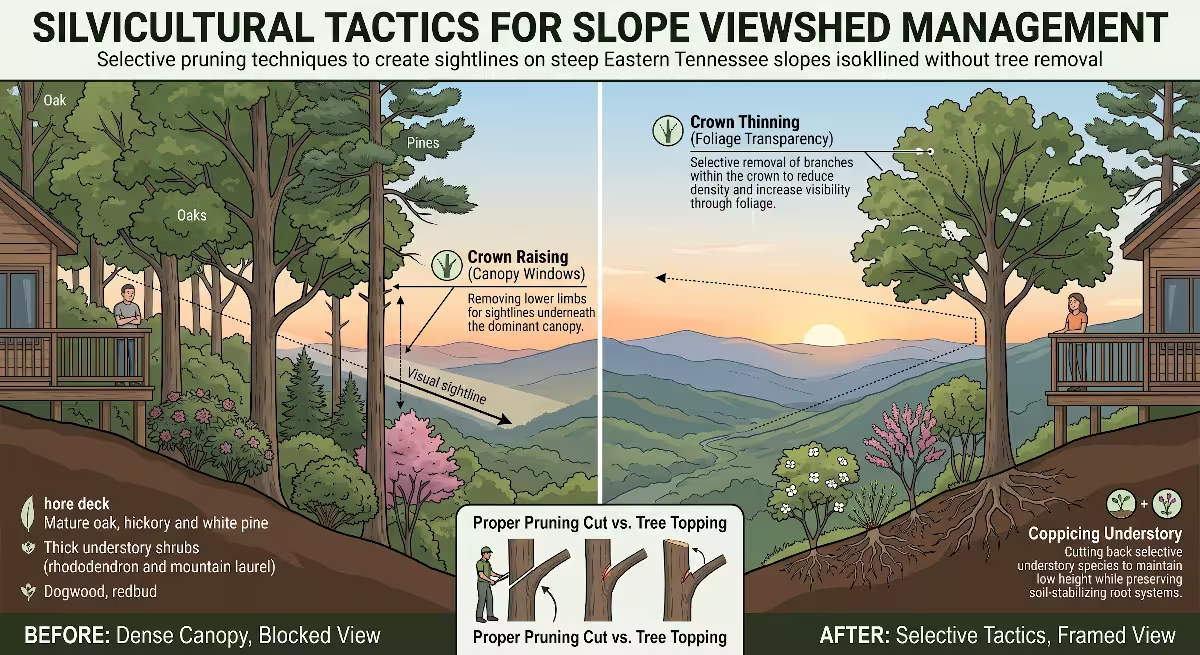
You do not need to drop a tree to see past it. Foresters, arborists, and landscape architects have developed precise pruning techniques that sculpt the forest canopy. By using specific pruning methods, you can open up clean sightlines to distant mountain ridges while leaving the tree healthy, structurally sound, and firmly rooted.
Canopy Windows: Selective Skirting and Crown Raising
The most effective way to open up an expansive view is to create a sightline beneath the forest canopy rather than over it. This technique is known as crown raising or selective skirting.
In an unmanaged mountain woods, mature trees often keep low, dead, or drooping branches that hang down into your line of sight. By cleanly pruning away these lower and mid-level limbs up to a height of fifteen, twenty, or twenty-five feet, you lift the bottom line of the forest crown.
Crown raising creates an open viewing corridor underneath the high canopy. When you look out from your living room or deck, your eye travels beneath the leafy green ceiling of the upper canopy and above the low shrubs on the ground. The high branches remain fully intact to catch rainfall, drop leaves, and drive photosynthesis, while the open space below frames the distant valley.
When performing canopy thinning through crown raising, never remove more than twenty to twenty-five percent of a tree’s total foliage in a single growing season. Pruning too many lower limbs all at once strips the tree of its energy reserves and can cause sunscald on newly exposed bark.
       BEFORE PRUNING:                        AFTER CROWN RAISING:
      (Blocked Sightline)                     (Open View Underneath)

         .---.      .---.                        .---.      .---.
        (     )    (     )                      (     )    (     )
       (       )  (       )                    (       )  (       )  ◄── Intact High Canopy
        (  |  )    (  |  )                      (     )    (     )
         \ | /      \ | /                        \   /      \   /
   ═══════\|/════════\|/══════             ═══════\ /════════\ /══════
   Home  --X-- Sightline Blocked           Home  ───────────────────► Clear View Underneath
          / \        / \                           │          │
         /   \      /   \                          │          │       ◄── Open Viewing Area
        /  |  \    /  |  \                         │          │
       *   |   *  *   |   *                       *|*        *|*      ◄── Stable Root Net
Windowing and Crown Thinning
Sometimes your view of a specific mountain peak is blocked by a small section of a tree’s central crown. In this situation, the correct approach is windowing.
Windowing is the careful, selective removal of specific secondary and tertiary branches inside the interior of the tree’s canopy. Instead of cutting down the whole tree, an arborist climbs into the crown and clips out individual branch clusters. This creates a natural, open frame through the leaves that lines up with a distant focal point, such as a river bend or a mountain summit.
Crown thinning takes this concept across a broader area. During canopy thinning, an arborist systematically removes weak, crossing, rubbing, or crowded branches throughout the entire crown. The overall shape and size of the tree remain unchanged, but the density of the foliage is reduced.
Thinning the crown lets light filter down through the branches, allowing you to see the shapes and colors of the landscape behind the tree. It also reduces wind resistance. When strong mountain windstorms hit a dense tree crown, the tree acts like a giant sail, which can tear the roots out of wet ground. A thinned canopy allows high winds to pass harmlessly through the branches, protecting the tree from windthrow and preserving the root system holding the slope.
Selective Stem Removal and Coppicing
In thick second-growth Appalachian forests, trees often grow crowded together, competing for light. Many of these stems are weak, skinny, and suppressed. When multiple trees fight for the same patch of soil, none of them develop the deep, wide root systems needed to anchor a steep slope over the long term.
In these spots, you can practice selective stem removal:
- Thinning from Below: Remove weak, leaning, or diseased trees that sit in the understory beneath dominant, healthy canopy trees. This clears visual clutter from your sightline while focusing soil nutrients and moisture into the strongest trees.
- Root Collar Preservation: When you must cut down an individual stem, never dig up or grind the stump. Cut the tree flush with the ground and leave the root collar and underground root system undisturbed. The dead roots will hold the soil in place while neighboring trees expand their root systems into the space.
- Coppicing Resilient Hardwoods: Certain native Appalachian hardwoods, like Red Maple, Eastern Redbud, and Flowering Dogwood, have the natural ability to sprout new growth from a cut stump. Coppicing means cutting the main stem low to the ground and allowing it to re-grow as a compact, multi-stemmed shrub. The root system stays alive, healthy, and anchored deep in the slope, but the top of the plant stays below your eye line. You keep the soil stability of an old, deep root system without dealing with a tall trunk that blocks your panoramic view.
V-Shaped Viewshed Corridors
One of the worst mistakes a property owner can make is cutting a wide, rectangular opening straight down a hillside. Rectangular cuts create two immediate hazards:
- Wind Funnels: A straight, wide cut creates an artificial gap that pulls in high winds. Strong storm winds funnel through the gap, picking up speed and blowing over the exposed trees along the edges of the cut.
- Water Runoff Channels: Rain falling on a wide cleared swath collects and runs straight downhill along the fall line, gouging deep erosion ruts.
Instead of a flat, open cut, design a V-shaped viewshed corridor. A V-shaped corridor starts narrow near your viewing deck or windows and flares outward as it moves down the mountain.
When you plan this corridor, do not clear-cut inside the V. Instead, stagger your work. Use crown raising on the taller trees near the bottom of the slope, practice crown thinning on the trees along the edges of the corridor, and coppice select midstory stems in the center.
This creates a stepped, natural opening that guides your eye toward the horizon while leaving a patchwork of tree crowns overhead. Wind disperses safely across the uneven canopy heights, and rain is caught by the remaining foliage before it can run downhill.
Eastern Tennessee Appalachian Floristics: Tree Species Matrix
The mountain forests around Johnson City, Kingsport, and Bristol are part of the Central and Southern Appalachian broadleaf forest region. This area is home to dozens of native tree species, each with its own root structure, wood density, growth rate, and soil-holding ability. Successful canopy thinning requires knowing which species to preserve as permanent anchors and which species can be cut back or shaped.
┌──────────────────────────────────────────────────────────────────────────┐
│              APPALACHIAN SLOPE CANOPY STRATIFICATION                     │
├──────────────────────────────────────────────────────────────────────────┤
│                                                                          │
│  [ DOMINANT OVERSTORY ] ── Height: 60-100 ft                             │
│  • White Oak (Quercus alba)       ── Deep anchor taproots                │
│  • Chestnut Oak (Quercus montana) ── Binds rocky ridge soils             │
│  • Shagbark Hickory (Carya ovata) ── Immense lateral tensile strength    │
│  Action: Retain for stability; prune with crown raising & thinning.     │
│                                                                          │
│  [ SUB-CANOPY & UNDERSTORY ] ── Height: 15-35 ft                         │
│  • Eastern Redbud (Cercis canadensis) ── Shallow, dense fiber matrix    │
│  • Flowering Dogwood (Cornus florida) ── Ideal for low coppicing         │
│  • Mountain Laurel (Kalmia latifolia) ── Surface matting; catches splash │
│  Action: Coppice or selectively thin; never grub or pull roots.         │
│                                                                          │
│  [ SLIP-PRONE PIONEER SPECIES ] ── Height: Variable                      │
│  • Black Locust, Boxelder, Tree of Heaven (Invasive)                     │
│  Action: Gradual removal; replace with deep-rooting native anchors.      │
│                                                                          │
└──────────────────────────────────────────────────────────────────────────┘
High-Anchoring Canopy Species to Retain
When planning your sightline, treat these long-lived, deep-rooting native species as irreplaceable structural anchors. They should never be clear-cut on steep terrain.
White Oak (Quercus alba)
The White Oak is one of the most structurally dependable trees in our regional forests. It sends down a massive taproot during its first years of life, followed by a wide-spreading network of lateral roots that lock deep into native clay and loam.
White Oaks grow with great strength, resist rot, and can live for hundreds of years. Their wide-spreading crowns respond exceptionally well to selective canopy thinning. Skilled arborists can easily raise the lower canopy or thin interior branches of a White Oak without harming its health.
Chestnut Oak (Quercus montana)
If your home sits on a rocky, exposed ridge or a dry upper slope, you are likely surrounded by Chestnut Oaks. This species specializes in gripping shallow, rocky, thin mountain soils where other trees fail to thrive.
Its tough, spreading roots wrap directly around sub-surface sandstone and shale, pinning the rocky mantle to the mountain face. Chestnut Oaks have thick, furrowed bark that resists damage, and their open branch structure makes them ideal candidates for crown thinning to reveal distant views.
Shagbark Hickory (Carya ovata) and Pignut Hickory (Carya glabra)
Hickories possess some of the strongest, most impact-resistant wood in North America. Below ground, they develop immense vertical taproots that drive straight down through dense clay layers.
The lateral roots of hickory have extraordinary tensile strength, acting like underground steel tie-back cables on steep hillsides. Hickories leaf out later in the spring and drop their leaves earlier in the fall than many other hardwoods, naturally opening your viewshed for a longer window each year. They should always be preserved as core anchor trees on steep grades.
Pitch Pine (Pinus rigida) and Virginia Pine (Pinus virginiana)
On dry, south-facing Appalachian slopes, native pines fill an important structural role. Unlike oaks and hickories, pines are evergreens that maintain needle canopies throughout the winter.
This means they intercept rain, catch snow, and drink groundwater during cold winter months when deciduous hardwoods are dormant. Virginia Pines have shallow, wide-spreading root mats that bind topsoil, while Pitch Pines can survive fire, drought, and heavy winds. Pruning lower limbs on native pines is an easy, clean way to create panoramic sightlines while maintaining continuous winter erosion control.
Midstory and Understory Retainers
Beneath the tall oak and hickory canopy sits the forest understory. These smaller trees and woody shrubs play a critical role in catching water drips from the high canopy and binding the top twelve inches of soil.
- Eastern Redbud (Cercis canadensis): A small, elegant native tree that blooms with bright pink-purple flowers in early spring. Redbuds have spreading, fibrous root systems that hold hillside topsoil in place. Because they rarely grow taller than twenty feet, you can easily prune or shape their upper limbs to keep them just below your primary sightline.
- Flowering Dogwood (Cornus florida): A classic Appalachian understory tree with horizontal branching. Dogwoods have dense root systems that take up water efficiently. If a dogwood sits directly in your path of view, do not dig it out. Coppice it near the base or selectively prune its horizontal branches to open a clear visual window.
- Mountain Laurel (Kalmia latifolia) and Catawba Rhododendron (Rhododendron catawbiense): These broadleaf evergreen shrubs form thick, tangled thickets on shaded mountain slopes. Their roots form an impenetrable, felt-like mat in the upper soil layers, completely stopping surface sheet erosion and mud movement. Because they stay green all winter, they are vital for year-round slope protection. Rather than tearing out a rhododendron thicket to clear a view, use hand pruners to prune out dead stems and shape the top of the shrub layer down to waist height.
Implementation Protocols: Low-Impact Viewshed Management
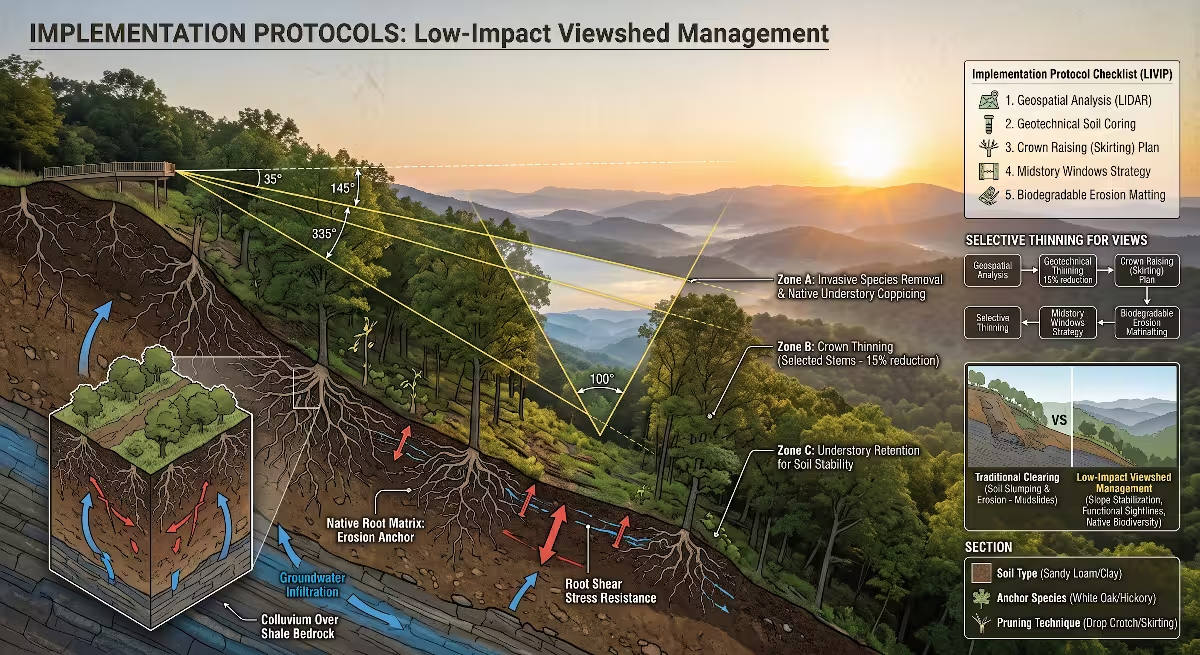
Opening a mountain viewshed safely requires a structured, step-by-step plan. Rushing into the woods with a chainsaw without an assessment often leads to permanent tree damage, lost property value, and severe slope erosion. Professional viewshed management follows a three-phase protocol.
Phase 1: Geospatial and Geotechnical Assessment
Before touching a single tree branch, you must evaluate the physical characteristics of your hillside.
- Slope Gradient Measurement: Use a simple clinometer or digital slope tool to measure the steepness of your land. Slopes under fifteen percent present low erosion risk. Slopes between fifteen and twenty-five percent require careful canopy thinning and strictly zero heavy machinery. Any slope over twenty-five or thirty percent is considered steep and fragile; on these grades, clear-cutting must never occur, and all existing root systems must be preserved.
- Soil and Substrate Identification: Check your soil type through local agricultural extension maps or a site inspection. Is your slope made of deep residual clay, loose sandy loam, or stony colluvium (loose rock fragments resting on bedrock)? Stony, colluvial soils slide easily when saturated, meaning root matrices must remain undisturbed.
- Identification of Slip Planes and Seeps: Walk the hillside after a prolonged rainstorm. Look for spots where water seeps naturally out of the cut banks, search for small tension cracks in the dirt, and watch for older trees with curved, j-shaped trunks. A j-shaped trunk indicates that the soil has been slowly creeping downhill over decades. Identify these fragile zones and mark them as no-cut areas where tree roots must be fully protected.
Phase 2: Sightline Triangulation
Great viewshed management is an exercise in applied geometry. You want to remove the absolute minimum amount of wood required to achieve your view.
- Establish Your Viewing Stations: Stand inside your home at the exact spots where you spend the most time. This might be your favorite living room chair, the kitchen island, or a specific corner of the back deck. Note your exact eye height from these locations.
- Identify the Focal Point: Pinpoint the distant geographic landmark you want to see. It could be a distant mountain peak, a rolling pasture, or a sweep of the valley floor.
- Run Sightline Rays: Work with a partner down on the slope. Using two-way radios and laser pointers or brightly colored surveying tape, sight a direct line from your viewing station to the target landmark. Have your partner mark the exact branches that intersect that sightline.
By triangulating your sightlines first, you will find that you only need to trim a few specific limbs to open up a wide view. You avoid the common mistake of cutting down a dozen healthy trees only to realize that the visual blockage was caused by three small branches on an entirely different tree.
Phase 3: Rigging and Light-Footprint Operations
Once you have identified the target limbs, you must carry out the work without damaging the slope face.
- Rope Access Arboriculture: On steep mountain terrain, heavy bucket trucks, skid-steers, and wheeled machinery must never be driven onto the slope face. Heavy tires and tracks crush the soil, destroy delicate soil structure, tear up lateral roots, and carve artificial ruts that turn into erosion gullies during the next rainstorm. All work on steep slopes should be performed by certified arborists using climbing ropes and non-invasive rigging techniques.
- Sectional Rigging and Lowering: Large limbs should not be allowed to drop freely onto a steep hillside. Falling wood gouges deep craters into the slope, stripping away topsoil and breaking understory shrubs. Experienced crews use friction brakes and rigging ropes to lower cut limbs to the ground softly and safely.
- On-Site Brush Chipping and Wood Chip Blankets: Instead of hauling cut limbs off the mountain, run the brush through a woodchipper at the top of the slope and blow the wood chips back across the hillside. Spread those chips in an even, two-to-three-inch layer over any bare ground. This wood chip blanket creates an instant, natural sponge. It cushions the impact of falling rain, stops surface sheet erosion, holds moisture for native understory plants, and slowly breaks down into rich, stable humus.
Common Questions about Canopy Thinning for Viewsheds
How do you prune trees for a view without causing erosion?
To prune trees for a view without causing erosion, use crown raising and crown thinning instead of cutting trees down. Crown raising removes the lower limbs of mature trees up to twenty or twenty-five feet, creating an open sightline beneath the high canopy. Crown thinning selectively prunes small branch clusters from the interior of the tree to allow light and distant views to pass through.
Keep all existing stumps, root systems, and low-growing native shrubs in place to protect the soil surface and anchor the slope. Never use heavy equipment on the hillside, and cover any disturbed soil with a thick layer of wood chips or organic mulch.
Does removing trees cause landslides on hillsides?
Yes, removing trees is a leading cause of hillside instability and landslides. Trees stabilize slopes by removing hundreds of gallons of water from the soil through evapotranspiration, which prevents high water pressure from building up between soil grains. Furthermore, tree root systems act as structural nets and anchor pins that hold soil layers together.
When trees are cut down, their dead root systems rot away over two to four years, causing a severe drop in soil shear strength. When hit with heavy seasonal rains, these deforested hillsides frequently experience shallow slope failures, mudslides, and rotational land slips.
       DECAY TIMELINE AFTER TREE REMOVAL

       Year 0: Tree Cut Down
       │  [████████████████████████████████] 100% Root Tensile Strength
       │  • Soil stays stable temporarily.
       ▼
       Year 1: Fine Roots Rot
       │  [████████████████████] 60% Strength
       │  • Water absorption drops; moisture increases.
       ▼
       Year 2 to 3: Structural Roots Rot  ◄── DANGER WINDOW
       │  [██████] 20% Strength
       │  • High risk of slope failure during heavy rains!
       ▼
       Year 4+: Complete Root Loss
       │  [] 0% Strength
       │  • Mechanical root reinforcement is completely gone.
What is the difference between topping a tree and canopy thinning?
Topping a tree is the harmful practice of cutting off the main trunk and upper vertical branches at an arbitrary height to lower the tree. Topping severely damages a tree’s health, leaves large open wounds that easily rot, and destroys the tree’s natural structure. In response to topping, the tree rapidly produces dense clusters of weakly attached, upright shoots called water sprouts. These shoots quickly block the view again and are prone to snapping off in strong winds.
In contrast, canopy thinning is a careful, professional method that removes select lateral branches back to their point of origin. It keeps the tree healthy, preserves its natural form, allows wind to pass through safely, and provides long-lasting views without triggering wild, dense regrowth.
Can tree roots survive after cutting down the trunk?
For most conifer species, such as Virginia Pine or White Pine, the root system dies completely once the trunk is cut down. These trees cannot produce new green shoots without existing needles to generate food, and their roots decay over several seasons.
However, many native Appalachian deciduous hardwoods, such as Red Maple, White Oak, Sweetgum, and Dogwood, can keep their root systems alive after the main trunk is cut. They do this by pushing up vigorous new shoots from the root collar or stump, a natural survival process known as stump sprouting or coppicing. If you manage these sprouts by pruning them into low, compact shrubs, the extensive underground root system remains alive, functional, and fully capable of stabilizing the hillside.
How much can you thin a tree canopy without hurting the tree?
As a general rule, you should never remove more than twenty to twenty-five percent of a living tree’s foliage in a single year. Pruning away more than that reduces the tree’s ability to produce energy through photosynthesis, which weakens its defenses against wood-boring insects, fungi, and drought.
On mature or older trees, it is safer to limit pruning to fifteen percent of the canopy per season. If your desired view requires more thinning, spread the pruning work out over two or three years. This gives the tree time to adjust, close its pruning wounds, and maintain its root health.
Long-Term Biophilic Land Stewardship
Managing a hillside forest for both views and stability is not a one-time project. It is an ongoing relationship with a living, changing ecosystem. A healthy landscape plan blends your home into the natural rhythms of the Appalachian forest, maintaining safety and scenery for decades to come.
Monitoring Successional Regrowth and Invasive Species
When you open up the forest canopy to let in light, that sunlight touches the forest floor as well as your living room windows. This extra light will trigger the growth of dormant seeds and root sprouts on the ground.
You must manage this new growth carefully:
- Encourage Native Shrubs: Protect young native plants like Spicebush, Wild Hydrangea, and Lowbush Blueberry. These plants will carpet the forest floor, intercept falling raindrops, and create a low, attractive layer of vegetation that stops erosion without growing tall enough to block your view.
- Eradicate Invasive Plants Immediately: Invasive non-native plants love sunlight and disturbed mountain soil. Watch out for Japanese Stiltgrass (Microstegium vimineum), Oriental Bittersweet (Celastrus orbiculatus), and Tree of Heaven (Ailanthus altissima). Japanese Stiltgrass is a shallow-rooted annual grass that chokes out native perennials but dies back completely in the winter, leaving bare, unprotected soil that easily washes away during winter rains. Pull or spot-treat these aggressive weeds before they take over your slope.
┌──────────────────────────────────────────────────────────────────────────┐
│             MULTI-YEAR CANOPY THINNING STEWARDSHIP CYCLE                 │
├──────────────────────────────────────────────────────────────────────────┤
│                                                                          │
│  YEAR 1: Initial Assessment & Light Pruning                              │
│  • Conduct geotechnical and sightline evaluations.                       │
│  • Perform initial crown raising (up to 15-20% foliage removal).         │
│  • Chip cut limbs on-site to create an erosion-control blanket.          │
│                                                                          │
│  YEAR 2: Understory Management & Rest                                    │
│  • Remove invasive species (Japanese Stiltgrass, Bittersweet).           │
│  • Allow anchor trees a full growing season to recover and heal wounds.  │
│  • Monitor slope during spring rains for sediment movement.              │
│                                                                          │
│  YEAR 3 to 4: Secondary Thinning & Windowing                             │
│  • Evaluate view corridors and prune secondary branches as needed.       │
│  • Coppice midstory stems that have reached eye level.                    │
│  • Replenish mulch or leaf litter across exposed soil patches.           │
│                                                                          │
│  YEAR 5+: Cyclical Maintenance                                           │
│  • Establish a regular 3-to-5-year pruning cycle with an arborist.       │
│  • Enjoy stable, panoramic views integrated with a healthy ecosystem.    │
│                                                                          │
└──────────────────────────────────────────────────────────────────────────┘
Establishing a 3-to-5-Year Pruning Cycle
A forest is never static; it is constantly growing, reaching for light, and shifting. Rather than waiting ten years until your view is completely blocked again and then resorting to aggressive, heavy cutting, set up a gentle 3-to-5-year pruning cycle.
Every three to five years, walk your slope with a certified arborist who understands both tree biology and slope mechanics. Lightly touch up the view windows, remove dead or storm-damaged limbs, prune back vigorous stump sprouts, and thin out crossing branches.
This regular, light maintenance routine keeps your sightlines clear while putting very little stress on the trees. The trees remain healthy, their root systems stay deep and strong, and your property maintains a balance between indoor comfort and outdoor ecological stability.
The True Biophilic Home
Biophilic design is about more than just looking at nature through a pane of glass; it is about living in balance with the natural systems that surround your home. A clear-cut hillside is an artificial, high-stress landscape that requires constant, expensive repairs to hold back gravity and mud.
By choosing professional canopy thinning over clear-cutting, you honor the living architecture of the Appalachian forest. You preserve the ancient oaks, resilient hickories, and dense mountain laurel that keep the hillside stable.
You protect downstream waters from silt and runoff, preserve habitats for local songbirds and wildlife, and safeguard your home from dangerous slope failures. Most importantly, you create a home where you can look out across the misty Blue Ridge valleys, knowing that the view before you rests on a solid, living, and healthy foundation.
Key Takeaways for Appalachian Slope Stewardship
- Never Clear-Cut a Slope Over 15%: Stripping all trees off a hillside leads to rotted root systems, soil saturation, and high landslide risks within two to four years.
- Prune Underneath, Not Over: Use crown raising to lift lower limbs up to twenty-five feet, creating clear visual corridors beneath the high canopy ceiling.
- Retain Deep Anchors: Preserve long-lived, deep-rooting native species like White Oak, Chestnut Oak, and Shagbark Hickory as structural slope anchors.
- Keep Living Root Systems: When taking down individual understory stems, leave the stumps in place or coppice them so their roots continue to bind the soil together.
- No Heavy Equipment on Fragile Grades: Use rope-access arborists for tree work, and cover exposed ground with wood chips to absorb rainfall energy.
- Maintain on a Regular Schedule: Keep sightlines open with light pruning every three to five years, rather than waiting for trees to become overgrown and resorting to drastic cuts.