
During a Saturday evening last fall in Johnson City, the air was crisp, and the leaves were that perfect shade of orange that only East Tennessee gets. A family was hosting a small gathering for some of their colleagues. However, as they stood there in their open-concept living area, they realized something. Their guests were all standing around the island, and right in the middle of our conversation was a pile of dirty vegetable peelings and a stack of greasy pans.
This is why you need to think about show kitchen vs. prep kitchen floor plans. For years, we have been told that the kitchen is the heart of the home. We opened up our walls and made the kitchen part of the living room. But we forgot one thing. Real cooking is messy. Real cooking involves steam, dirty dishes, and cluttered counters. When you combine your social space with your heavy cooking space, you end up feeling like you are entertaining in a workshop.
The show kitchen is the solution to this modern problem. It is a space that allows you to have that beautiful, magazine-worthy home while still being able to actually cook a meal for twenty people without losing your mind. In our area, from the hills of Kingsport to the growing neighborhoods of Johnson City, we are seeing a massive shift in how people want to live.
People want a show kitchen that stays clean, and they want a secondary space where the real work happens. It is about reclaiming the joy of hosting. It is about having a home that works for you, rather than you working for the home. Let’s look into how these floor plans work and why they are the smartest choice you can make for your custom build.
Defining the Duo: What is a Show Kitchen vs. a Prep Kitchen?
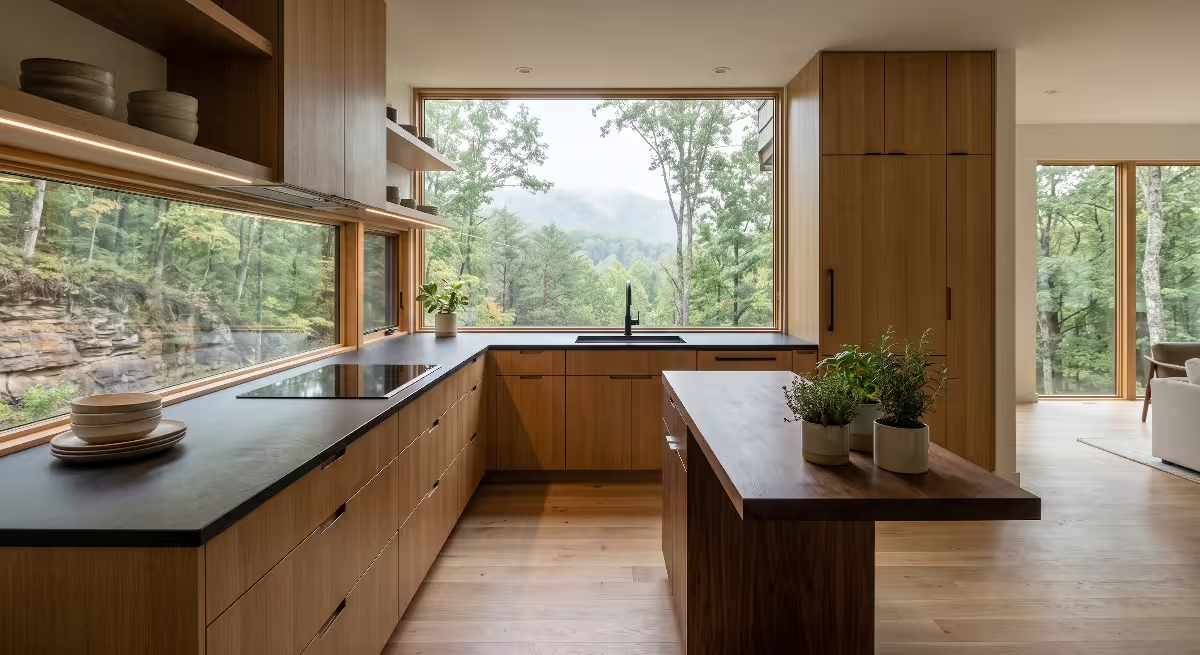
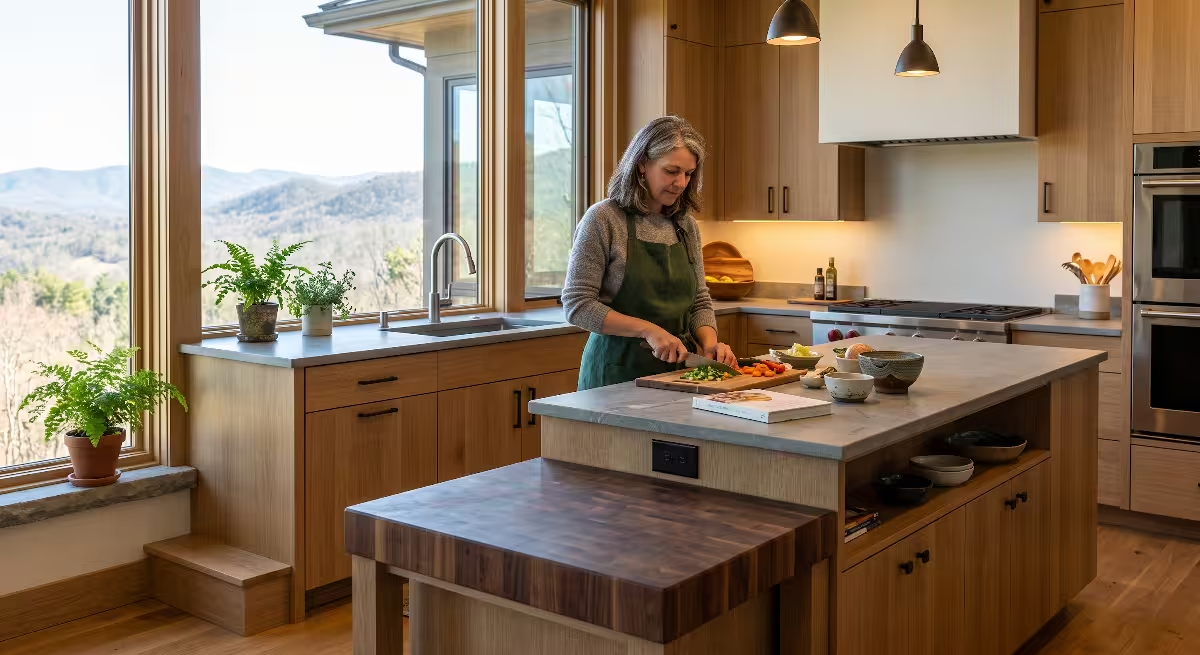
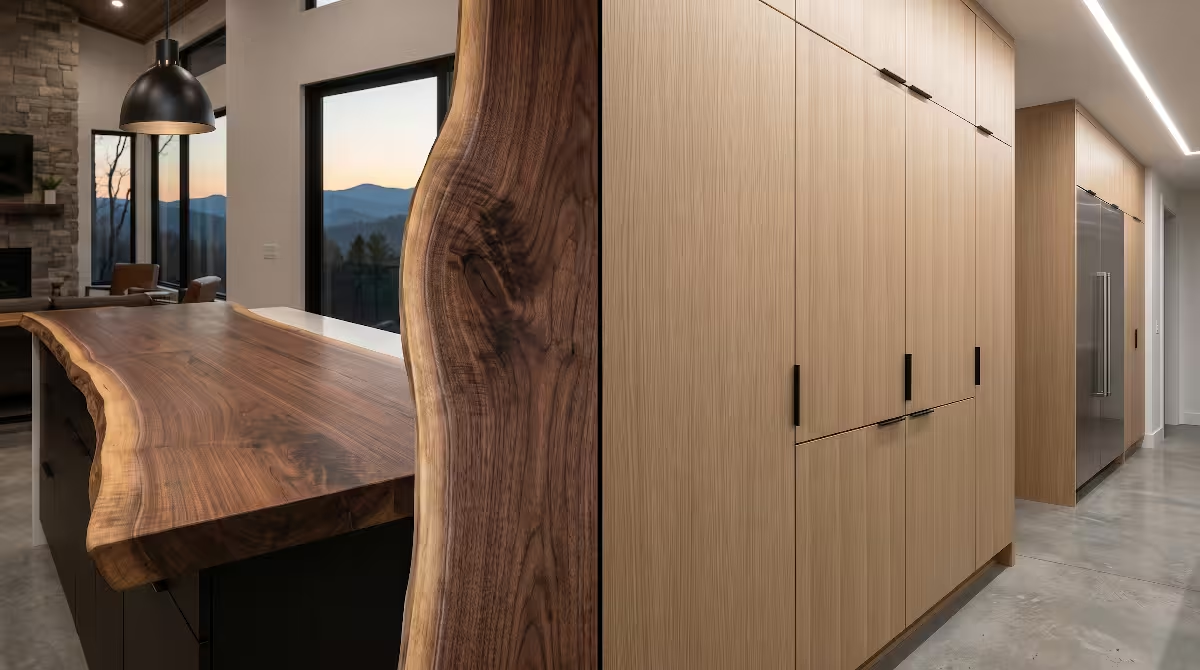
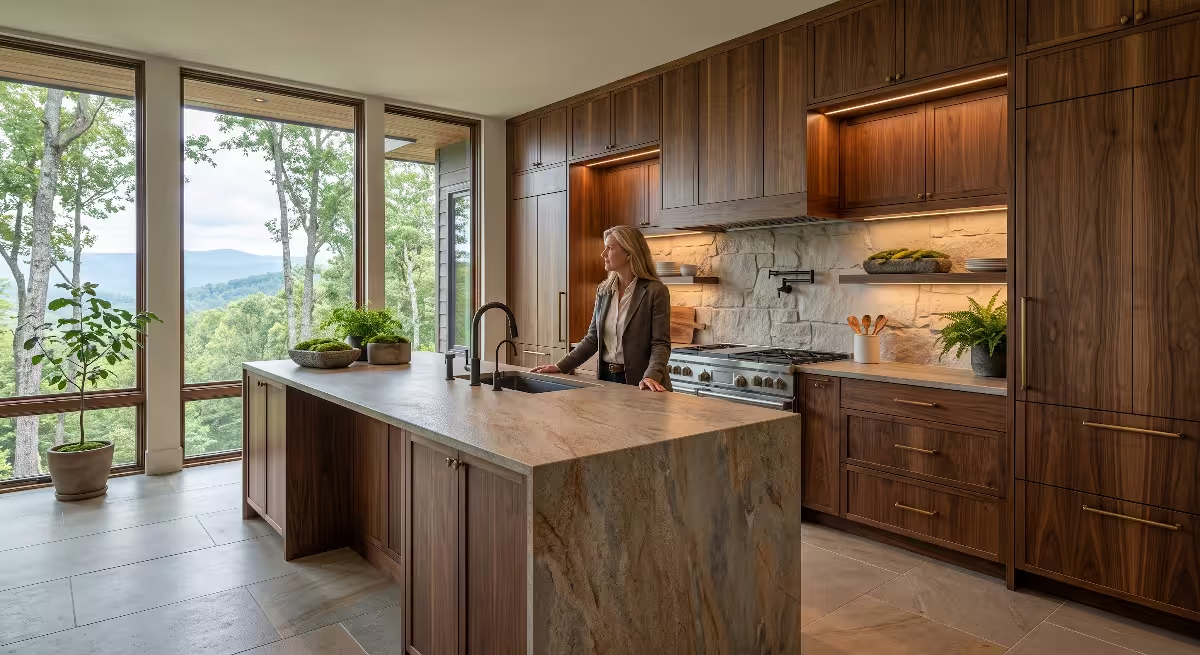
When we talk about a show kitchen, we are talking about the beautiful face of your home. Think of it as the formal dining room of the modern age, but much more useful. A show kitchen is located right in the main flow of your house. It usually features the best materials you can afford. This is where you put your waterfall marble island, your designer pendant lights, and your custom cabinetry. In a show kitchen, the goal is beauty and light social interaction. You might use it to pour wine, set out appetizers, or make a simple bowl of cereal.
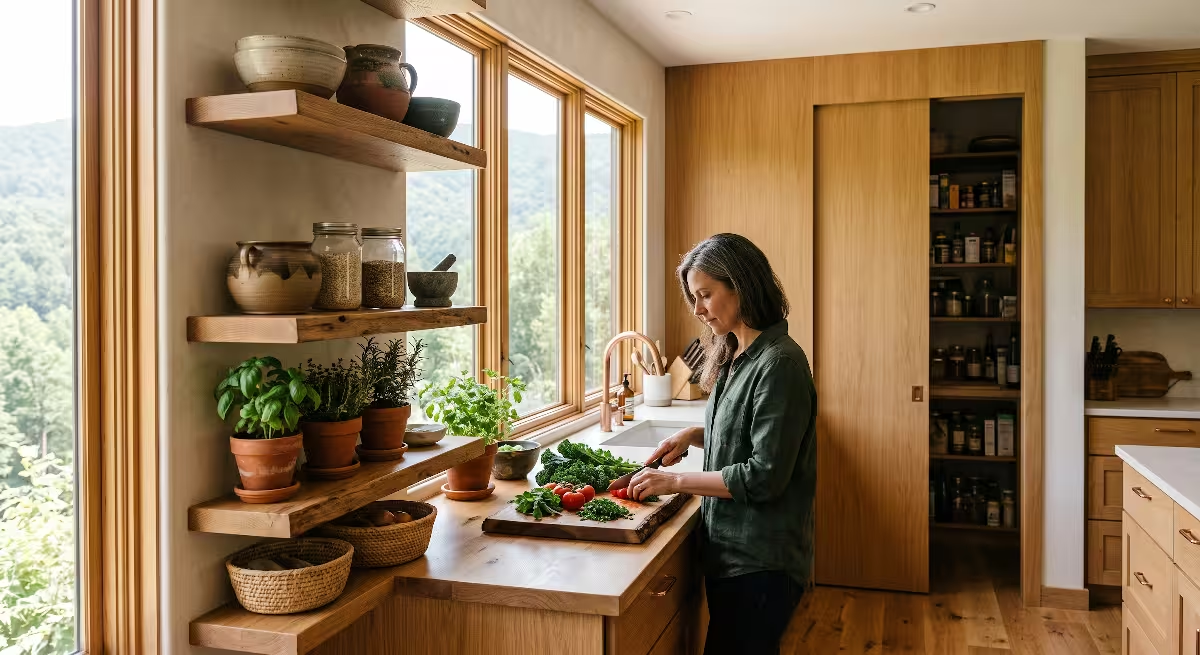
The prep kitchen, which some people call a scullery or a messy kitchen, is the muscle. It is usually a smaller room located right behind or adjacent to the show kitchen. This is where the heavy lifting happens. In a prep kitchen, you have your main sink, your dishwasher, and your everyday appliances. If you are making a Thanksgiving dinner, the turkey is being prepped and the dishes are being stacked in the prep kitchen. This allows your show kitchen to remain a clean, calm space for your family and guests to gather.
By splitting these two functions, you solve the biggest issue with open-concept living. You no longer have to choose between a clean house and a home-cooked meal. You get the best of both worlds. The show kitchen handles the style, and the prep kitchen handles the sweat.
The Layout Logic for a Show Kitchen vs. Prep Kitchen
From a builder’s perspective, the way you lay out these two rooms is the most important part of the build. You want the transition to be seamless. One common way to design show kitchen vs. prep kitchen floor plans is the “back-to-back” model. In this setup, the two kitchens share a common wall. This is very smart because it keeps all your plumbing and electrical lines in one area. This saves money during the building process and makes the home more efficient.
Another popular choice in show kitchen vs. prep kitchen floor plans is the “hidden entrance.” This is a favorite for women who want a sleek look. You can actually design your cabinetry in the show kitchen so that one of the “cupboard” doors is actually a secret passage into the prep kitchen. It looks like a wall of beautiful cabinets, but it leads to the functional heart of the home.
Traffic flow is also a major factor. You want your prep kitchen to be close to where you bring in the groceries. If you can connect the prep kitchen to the pantry or the mudroom, you make your life much easier. You can bring bags of groceries directly into the prep zone, put things away, and keep the show kitchen perfectly clear of clutter. When looking at show kitchen vs. prep kitchen floor plans, always imagine yourself walking through your daily routine. Efficiency is just as important as beauty.
Is it a Scullery, a Messy Kitchen, or a Butler’s Pantry?
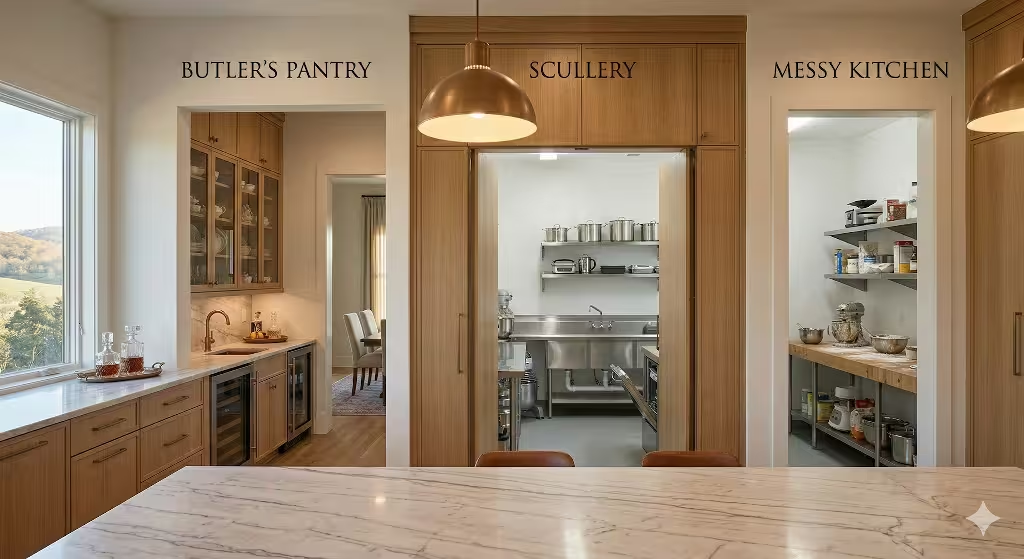
People often use different names for these spaces, and it can get a bit confusing. A scullery is an old term that has made a big comeback. Traditionally, it was a small room near the kitchen used for washing dishes and doing laundry. Today, when we say scullery, we usually mean a very high-functioning prep kitchen. It is a room that can handle almost everything a full kitchen can do.
A messy kitchen is another term you will hear quite a bit in the building industry lately. This name is very direct. It is the place where you can leave the mess. If you are a baker and you have flour everywhere, you just close the door to the messy kitchen and go enjoy your cookies in the show kitchen. It takes the pressure off the homeowner to be “perfect” all the time.
A butler’s pantry is slightly different. Traditionally, a butler’s pantry was a transition space between the kitchen and the dining room used for storing fine china and serving food. It usually didn’t have a sink or a stove. However, in modern show kitchen designs, the butler’s pantry has evolved. It often now includes a small sink or a wine fridge. While a butler’s pantry is great for storage, it doesn’t always have the full prep power of a true prep kitchen. If you do a lot of heavy cooking, you want the full functionality of a prep kitchen rather than just a pantry.
Is a Prep Kitchen Worth the Investment?
One of the questions builder’s get asked most often is about the cost. Building two kitchen spaces is obviously more expensive than building one. You have to pay for more cabinets, more countertops, and more appliances. However, you have to look at the value it adds to your life and your home’s resale value. In the Tri-Cities area, high-end buyers are specifically looking for a show kitchen that can be used for entertaining.
A home with a well-designed show kitchen and a hidden prep kitchen stands out in the market. It feels like a true luxury home. Beyond the money, there is the “sanity value.” Think about the time you spend cleaning up just so your house looks presentable for guests. With a show kitchen, that stress goes away. You can focus on your friends and family instead of the dishes in the sink.
From a technical standpoint, a prep kitchen doesn’t have to use the same expensive materials as the show kitchen. You can use a more durable, less expensive countertop in the back and save the fancy marble for the show kitchen island. This helps balance the budget while still giving you all the function you need.
2026 Design Trends for the Show Kitchen
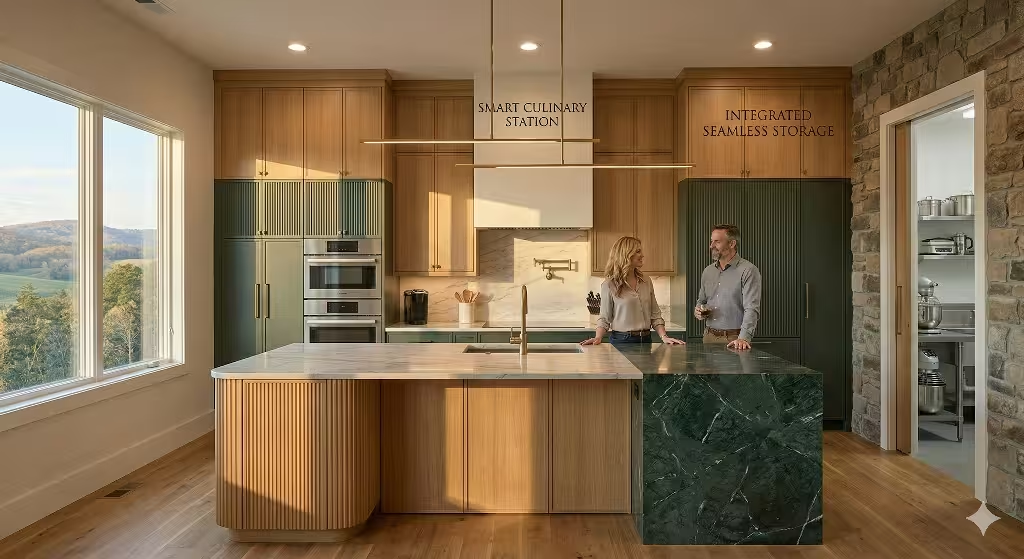
As we move through 2026, we are seeing some beautiful shifts in style. The all-white kitchen is starting to fade away. In its place, we are seeing much more warmth. Natural wood tones, like medium oak and walnut, are very popular for the show kitchen cabinets. These woods bring a sense of nature and calm into the home, which fits perfectly with our beautiful Tennessee landscape.
Another big trend for the show kitchen is the “slab backsplash.” Instead of using small tiles with lots of grout lines, people are using one large piece of stone or quartz that matches the countertop. This creates a very clean and modern look. It also makes the show kitchen much easier to wipe down.
We are also seeing a major move toward paneled appliances. This is where your refrigerator and dishwasher are covered with doors that match your cabinets. In a show kitchen, this is a game changer. It makes the room look more like a piece of furniture and less like a laboratory. It keeps the focus on the architecture and the people in the room rather than the stainless steel machines.
The Technical Side: Engineering and Legal Considerations
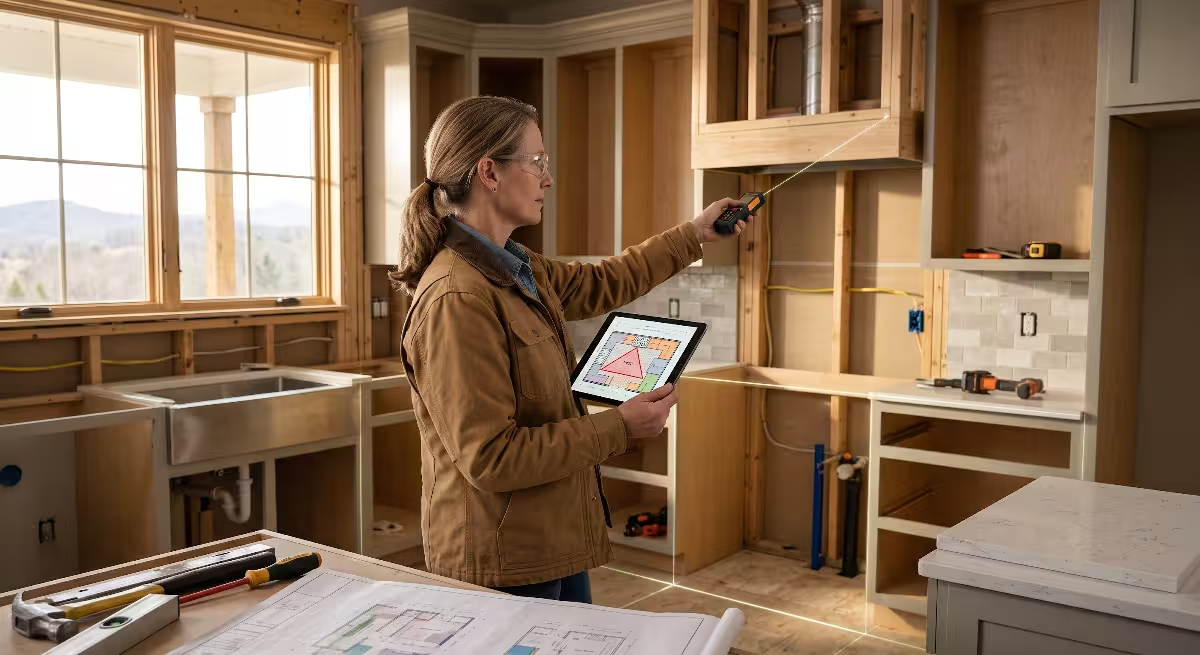
When you are planning your show kitchen and prep kitchen, you have to think about the “invisible” things. One of the most important is ventilation. If you are doing your heavy frying or searing in the prep kitchen, you need a very strong vent hood. Because prep kitchens are often smaller, the air can get smoky very quickly. You need an engineer to calculate the right “CFM” (cubic feet per minute) for your fan to make sure the air stays fresh.
Lighting is another big one. In the show kitchen, you want “layers” of light. You have your big overhead lights, your under-cabinet lights, and your pretty pendant lights. But in the prep kitchen, you need high-output task lighting. You need to be able to see exactly what you are doing when you are chopping vegetables or reading a recipe.
You also need to be aware of local building codes. In some parts of Kingsport or Johnson City, there are specific rules about having two full kitchens. Sometimes, if you put a full stove in the second kitchen, the city might classify your home as a “multi-family” dwelling. This can change your taxes or your insurance. I always tell my clients to work with a builder who knows the local Tri-Cities rules. It is much better to plan for these things early than to get a surprise during an inspection.
How Big Should a Prep Kitchen Be?
Size is a common concern. You don’t want to take up too much square footage from the rest of your house, but you need enough room to work. For a standard custom home, a prep kitchen that is about five or six feet wide and twelve feet long is usually perfect. This allows for a long counter on one side where you can line up your appliances and have plenty of room to chop and stir.
In your show kitchen, the size is usually determined by the island. Most people want an island that is at least eight to ten feet long so that guests can sit and talk while the host is in the show kitchen area. If your show kitchen is too big, it can actually feel cold. By moving some of the functions to the prep kitchen, you can keep the show kitchen at a size that feels cozy and intimate.
The “Galley” style is the most efficient for a prep kitchen. This is where you have counters on both sides with a walkway in the middle. It keeps everything within arm’s reach. In the show kitchen, you usually want an “L” shape or a “U” shape with a large central island. This layout encourages people to move around and stay social.
Interior and Exterior Integration
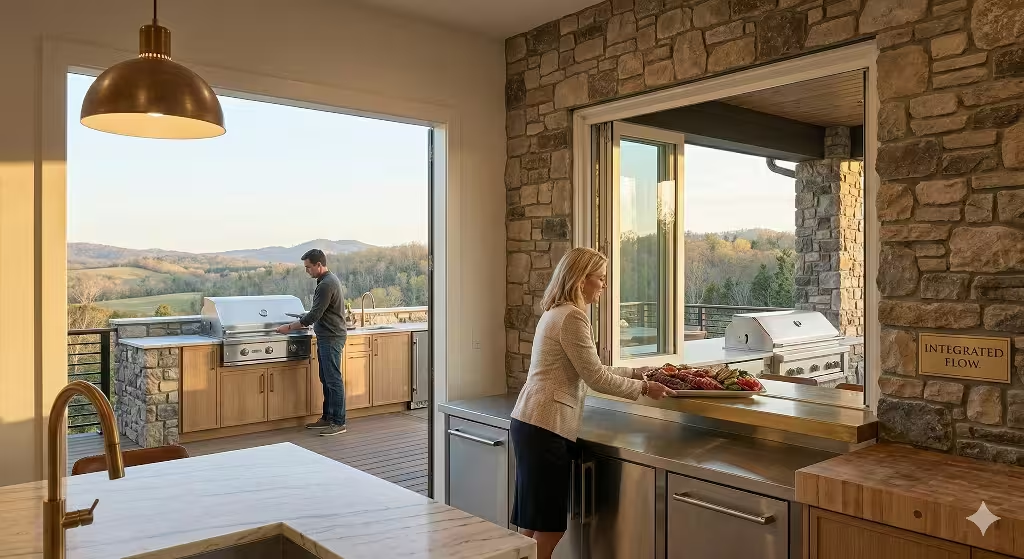
In our part of Tennessee, we love being outside. When you are designing your show kitchen vs. prep kitchen floor plans, don’t forget about your deck or patio. A very popular trend right now is to have the prep kitchen connect directly to an outdoor grilling station. You can have a “pass-through” window where you can slide plates of food from the prep kitchen right out to the person at the grill.
This keeps the mess of outdoor dining away from your show kitchen. You can prep the burgers and salads in the back, slide them outside, and keep your show kitchen looking perfect for the guests who prefer to stay in the air conditioning. It makes for a very smooth hosting experience.
Using similar materials for your show kitchen and your outdoor space also creates a nice flow. If you use a certain type of stone in your show kitchen, using a similar stone for your outdoor fireplace or kitchen wall makes the whole house feel like it was designed with a single, clear vision.
Why a Precision Approach Works for Kitchen Design
When looking at a floor plans, you need to look at the logic. Does this layout make sense? Will it work in ten years? Is it built with integrity? The show kitchen vs. prep kitchen model is a very logical way to build. It recognizes that humans are social creatures but also that life is messy.
By separating the “show” from the “work,” you are creating a home that is highly competent. You are being precise with how you use your space. You aren’t wasting the prime real estate of your living area on a stack of dirty dishes. Instead, you are giving that space the respect it deserves by keeping it beautiful.
A show kitchen is not just about showing off. It is about creating a sanctuary. It is a place where you can sit down with a cup of coffee and look at a clean, beautiful room. It gives you a sense of order in a busy world. When you combine that with a prep kitchen that is built to handle the chaos, you have a home that truly serves you.
How to Get the Best Home Building Experience
Building a custom home is a long journey. It can be stressful, but it should also be exciting. The best way to ensure you have a great experience is to do your homework early. Spend time looking at different show kitchen designs. Visit model homes and stand in the kitchens. Imagine yourself cooking a big meal. Where would you put the dirty pots? Where would your friends sit?
Communication with your builder is key. Make sure they understand that you want a show kitchen that is a dedicated social space. If they try to talk you out of a prep kitchen because it is “too much work,” stand your ground. We know that sometimes our practical needs for how a house functions are overlooked. But you are the one who will be living there. You are the one who will be hosting the holiday parties.
When you are choosing your finishes for the show kitchen, don’t be afraid to be bold. This is your chance to show your style. Use that beautiful backsplash you saw on Pinterest. Buy those high-end faucets that look like pieces of art. Because you have a prep kitchen to do the hard work, your show kitchen can be as delicate and beautiful as you want it to be.
FAQ: Common Questions About Show Kitchens
Does every home need a show kitchen?
Not every home needs one, but if you enjoy entertaining and have an open-concept floor plan, it is highly recommended. It solves the “messy kitchen” problem that haunts almost every open-plan house.
Can I add a prep kitchen to an existing home?
Yes, but it is much easier during a new build. If you are remodeling, you can often convert a large pantry or a nearby laundry room into a prep kitchen. It requires moving some plumbing, but the results are worth it.
What appliances should go in the show kitchen?
Usually, you want a beautiful range or a sleek cooktop, a small “undercounter” fridge for drinks, and maybe a microwave drawer. You want the show kitchen to be able to handle light tasks without looking cluttered.
What appliances go in the prep kitchen?
The “big” ones. Your main refrigerator, your primary dishwasher, your wall ovens, and all your small appliances like the coffee maker and toaster. This keeps the counters in your show kitchen completely clear.
How do I keep the prep kitchen from getting too hot?
Good ventilation is the secret. As an engineer, I can tell you that heat management is vital. Make sure your prep kitchen has its own air conditioning vent and a high-quality exhaust fan.
Building for the Life You Want
In the end, choosing between show kitchen vs. prep kitchen floor plans is about deciding how you want to feel in your home. Do you want to feel rushed and stressed when guests arrive? Or do you want to feel calm, knowing that the mess is tucked away behind a closed door?
In our Tri-Cities community, we value family and we value our homes. Building a show kitchen is a way to honor those values. It gives you a space to be proud of and a space to share with the people you love. Whether you are building in the shadows of the mountains in Kingsport or in a new development in Johnson City, remember that your home should be a reflection of your life.
Take the time to plan. Be precise with your choices. Demand competence from your builders. And most importantly, design a show kitchen that makes you smile every time you walk into the room. You deserve a home that is as beautiful on the outside as it is functional on the inside. Happy building!
Key Takeaways for Tri-Cities Homeowners
The show kitchen is for beauty and light social use.
The prep kitchen (or scullery) handles the heavy cooking and cleaning.
[Show kitchen vs. prep kitchen floor plans] work best when they share a plumbing wall.
Hidden doors can make the transition between the show kitchen and prep kitchen seamless.
Always check local building codes in Johnson City or Kingsport before adding a second stove.
Use more affordable materials in the prep area to save money for the show kitchen.
Building a home is like solving a complex puzzle. Each piece, from the engineering of the pipes to the color of the cabinets, has to fit perfectly. By choosing a dual-kitchen layout, you are making sure that the most important piece of the puzzle, your happiness, is right where it belongs.