

In the modern age, the conversation around home building has shifted, too. It’s no longer just about the number of bedrooms or the style of the kitchen. A new, more practical conversation is taking place about performance, long-term value, and monthly costs. This is where the concept of “green building” enters the picture.
For many, the term might bring to mind expensive solar panels or complex, futuristic designs. But in reality, building a green home in the Tri-Cities is one of the most practical, financially sound decisions a family can make today. It’s about building smarter, not just for the environment, but for your wallet. The challenge is that the path to unlocking these financial benefits—the incentives, rebates, and tax credits—can feel like a maze. The information is scattered across federal websites, state regulations, and the offices of our local power companies.
The purpose of this guide is to clear that path. We will walk through the available incentives step-by-step, starting with the big picture at the federal level and drilling down to the specific programs offered right here in Johnson City, Kingsport, Bristol, and the surrounding counties. My goal is to equip you with the knowledge to have an intelligent conversation with your builder and make choices that will pay you back for years to come. This is about transforming a complex topic into a clear financial advantage for your new home.
Defining “Green Building” in the Tri-Cities Context
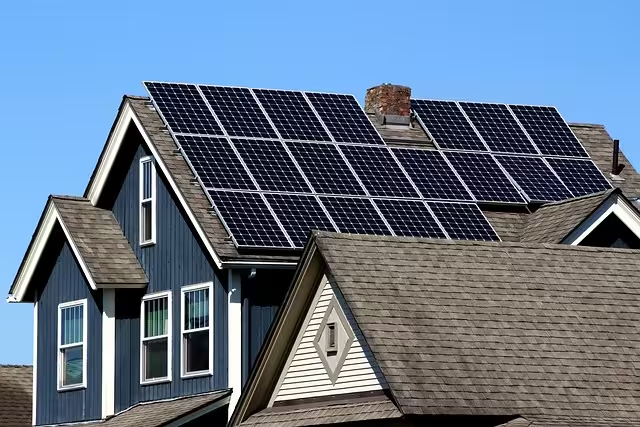
Before we can talk about getting money back, it’s essential to understand what we’re aiming for. “Green building” is a broad term, but for a home buyer in our area, it boils down to a set of practical choices that make your home more durable, less expensive to operate, and healthier to live in. Think of it as investing in the core systems of your home. These choices are generally grouped into four main pillars.
The Pillars of a Green Home
1. Energy Efficiency
This is the cornerstone of green building and where you’ll find the most significant incentives. An energy-efficient home is designed to use less power for heating, cooling, and lighting. Imagine putting on a high-quality, windproof jacket on a cold day. That jacket is like your home’s “thermal envelope.” A well-built envelope keeps the warm air inside during the winter and the hot, humid air out during our Tennessee summers.
- High R-value Insulation: The “R-value” is simply a measure of how well insulation resists heat flow. The higher the number, the better it insulates. Modern options like spray foam insulation are excellent because they not only have a high R-value but also create an airtight seal, stopping drafts and leaks that waste energy.
- High-Performance Windows: Windows are often the weakest link in a home’s envelope. Today’s best windows are double- or even triple-paned, with an invisible coating called “Low-E” (Low-Emissivity) that reflects heat. This keeps your home cooler in the summer and warmer in the winter.
- ENERGY STAR® Certified Appliances: From your refrigerator to your washing machine, choosing appliances with the blue ENERGY STAR label ensures they meet strict efficiency standards set by the U.S. Environmental Protection Agency (EPA), using significantly less energy and water than standard models.
- High-Efficiency HVAC: Your Heating, Ventilation, and Air Conditioning (HVAC) system is your home’s biggest energy user. Modern systems, especially electric heat pumps, are incredibly efficient at both heating and cooling, making them ideal for our regional climate.
While we’re fortunate to have plentiful water in our region, conserving it is still a smart practice that saves you money on both your water and energy bills (since it takes energy to heat water). This is achieved through simple, proven technologies.
- Low-Flow Fixtures: Faucets, showerheads, and toilets with the EPA’s WaterSense label use at least 20% less water than standard models without sacrificing performance.
- Efficient Irrigation: For those who want a lush lawn, smart irrigation systems use weather data to avoid watering when it’s not needed, preventing waste.
3. Sustainable Materials
This pillar is about making thoughtful choices about the physical “stuff” your home is made of. The goal is to build a home that is durable and has a lower environmental impact.
- Durability: Choosing materials like fiber cement siding or metal roofing might cost a little more upfront than traditional options, but they last much longer and require less maintenance, saving money and resources over the life of the home.
- Recycled Content: Many building products, from insulation to decking and even countertops, are now made with a high percentage of recycled materials.
- Local Sourcing: Whenever possible, using materials sourced from our region, like lumber or stone, reduces transportation costs and supports our local economy.
4. Indoor Air Quality
We spend most of our lives indoors, so the quality of the air we breathe in our homes is incredibly important for our health. A green home is designed to be a healthy home.
- Low-VOC Materials: Many paints, adhesives, and flooring materials release chemicals called Volatile Organic Compounds (VOCs) into the air, which can cause headaches and respiratory issues. Choosing low- or no-VOC options creates a much healthier living space from day one.
- Proper Ventilation: An airtight home needs a way to bring in fresh air. A mechanical ventilation system, like an Energy Recovery Ventilator (ERV), brings in fresh, filtered air while exhausting stale, indoor air. In the process, it transfers heat and humidity, so you aren’t wasting the energy you used to heat or cool the air that’s being pushed out.
By focusing on these four areas, you’re not just building a “green” house; you’re building a high-performance home. And it’s this commitment to performance that federal and local programs are willing to pay you for.
The Big Picture: Federal & State-Level Incentives
The first place to look for major financial incentives is at the federal level. Through recent legislation like the Inflation Reduction Act, the U.S. government has put significant tax credits in place to encourage homeowners to adopt clean energy and energy efficiency. A tax credit is a dollar-for-dollar reduction in the amount of income tax you owe.
Federal Energy-Efficient Home Improvement Credits
These credits are designed to help with the cost of specific upgrades that make your home more efficient. While often used for existing homes, many of these components can be part of a new build. These credits generally cover 30% of the cost, up to certain annual limits, for things like:
- High-efficiency heat pumps for heating and cooling.
- High-efficiency heat pump water heaters.
- Exterior doors and windows that meet ENERGY STAR requirements.
- Upgrades to your home’s insulation and air sealing.
Residential Clean Energy Credit
This is the most powerful federal incentive available for new home construction. This credit allows you to deduct 30% of the total cost of installing a renewable energy system from your federal income taxes, with no upper limit. This is a massive savings that can dramatically shorten the payback period for these technologies.
Systems that qualify include:
- Solar Panels (Photovoltaics): The most common choice in our area. The credit covers the panels, inverters, wiring, installation, and even battery storage systems.
- Geothermal Heat Pumps: These incredibly efficient systems use the stable temperature of the earth to heat and cool your home. While the installation cost is higher than a traditional HVAC system, this 30% credit makes it a much more accessible and financially attractive option.
Something to Note: The Residential Clean Energy Credit is a game-changer. For a client installing a $30,000 solar and battery system, this credit means they get $9,000 back directly on their taxes. It transforms a long-term investment into one with immediate, substantial financial benefits. The key is meticulous record-keeping. Every invoice and receipt must be saved and properly documented for your tax professional.
State of Tennessee Incentives
It’s important to be direct here: currently, the State of Tennessee does not offer significant state-level tax credits for green home construction that are similar to the federal programs. While the state government supports energy efficiency through various departments, it doesn’t have a broad-based rebate or credit program for individual homeowners building a new house.
This isn’t a dead end, however. It simply means that for us in the Tri-Cities, the most impactful local incentives come from our regional and municipal utility providers. This is where local knowledge becomes absolutely critical.
Hyper-Local Focus: Tri-Cities Utility & Regional Incentives
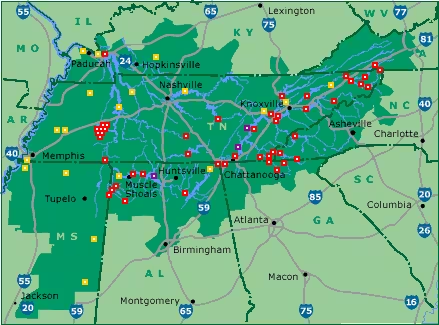
This is where the rubber meets the road for a new homeowner in Northeast Tennessee. The real, tangible rebates that you or your builder can receive often come directly from the company that provides your power. Our region is primarily served by the Tennessee Valley Authority (TVA), a federally-owned corporation that generates power and sells it to local power companies. These local companies then deliver that power to your home and manage the customer-facing incentive programs.
Tennessee Valley Authority (TVA) – The Regional Powerhouse
TVA sets the stage for most of the energy efficiency programs in our area through its TVA EnergyRight® Program. This is an umbrella initiative that provides resources, standards, and funding to local power companies to help their customers save energy and money. When you see a rebate offered from your local utility, it’s very likely a partnership with TVA.
One of their most important programs for our discussion is the New Homes Program. This program provides cash incentives directly to builders who construct homes that are significantly more energy-efficient than what standard building codes require. An efficient builder will pass these savings and benefits on to you, the home buyer. To qualify, a home must be evaluated by a certified Home Energy Rating System (HERS) Rater. This professional inspects the home’s features—like its insulation, windows, and ductwork—and provides a HERS Index Score. The lower the score, the more energy-efficient the green home is, and the larger the potential rebate from TVA.
Local Power Company Rebates & Programs
While TVA provides the framework, your direct relationship is with your local provider. Here’s a breakdown of the key players in the Tri-Cities and the types of programs they typically offer.
- BrightRidge (Serving Johnson City & Washington County)BrightRidge is very active in promoting energy efficiency through its partnership with TVA’s EnergyRight. They offer a suite of rebates and services for new homeowners. For example, they typically offer cash rebates for installing high-efficiency electric heat pumps and heat pump water heaters. They also provide valuable resources like free home energy audits and advice. When building a new home, your builder can work directly with BrightRidge to ensure the home’s design and systems qualify for these rebates, putting money directly back into the project budget.
- Bristol Tennessee Essential Services (BTES)BTES is known for its forward-thinking approach, not only in providing electricity but also in its high-speed fiber optic network. This focus on technology extends to their energy services. Like BrightRidge, BTES works with TVA to offer rebates for energy-efficient upgrades. They often have programs that incentivize smart thermostats, which learn your habits and automatically adjust the temperature to save energy. For a new build, integrating this kind of smart-home technology from the start is simple and can be subsidized by these programs. BTES also provides energy advising services to help you make the best choices for your new home’s systems.
- Holston Electric Cooperative / Kingsport Power (AEP)For those building in areas served by Kingsport Power (an AEP company) or the surrounding Holston Electric Cooperative, similar programs are in place. They are also part of the TVA EnergyRight partnership and offer rebates for weatherization, efficient HVAC systems, and water heaters. While the core offerings are similar, the specific rebate amounts and application processes can differ slightly. It’s crucial that your builder is familiar with the exact requirements of the utility that will be servicing your specific property.
Pro Tip: Your choice of builder is the single most important factor in maximizing these local incentives. An experienced Tri-Cities builder won’t be learning about these programs on your project. They will already have established relationships with the energy advisors at BrightRidge, BTES, and Holston. They will know the paperwork, the inspection requirements, and how to design the home from the architectural stage to meet the efficiency targets needed to qualify for the maximum rebates. This expertise is invaluable and ensures you don’t leave free money on the table.
Putting It All Together: A Hypothetical Tri-Cities Home
All these programs and numbers can feel abstract. Let’s make it concrete with a simple case study of a hypothetical family building their new home in the Tri-Cities.
Example: The Miller Residence in Boones Creek
- Home Details: A new 2,500-square-foot green home being built in Washington County, serviced by BrightRidge.
- Green Features: The Millers decide to invest in a high-performance home. They include:
- A rooftop solar panel system with battery backup. Cost: $30,000.
- A geothermal HVAC system. Cost: $35,000.
- The builder constructs the home to TVA’s highest efficiency standards, achieving an excellent HERS score.
- Stacking the Incentives: Here is how the Millers can “stack” multiple incentives to make these investments affordable.
- Federal Residential Clean Energy Credit (Solar): 30% of the $30,000 solar system cost.
- Savings: $9,000 tax credit.
- Federal Residential Clean Energy Credit (Geothermal): 30% of the $35,000 geothermal system cost.
- Savings: $10,500 tax credit.
- TVA/BrightRidge New Homes Rebate: Because the builder met the high-efficiency standards, they qualify for a rebate based on the home’s excellent HERS score. Let’s estimate this rebate.
- Savings: $1,500 cash rebate.
- Federal Residential Clean Energy Credit (Solar): 30% of the $30,000 solar system cost.
- Total Savings: By planning ahead, the Millers unlocked a massive financial benefit.
- Total Potential Savings: $21,000 ($9,000 + $10,500 + $1,500)
- Disclaimer: It’s very important to note that these are illustrative numbers. The final amount of any tax credit depends on your individual tax liability, and rebate amounts can change. However, this example clearly shows how combining federal and local programs can make a high-performance home a financial reality.
Commonly Asked Questions (FAQ)
When I talk with people about building a new home, some of the same excellent questions always come up. Here are direct answers to the most common ones.
- Q: Are green homes more expensive to build in the Tri-Cities?
- A: Being direct and honest is important here. Yes, there can be a higher upfront cost, often in the range of 5-10%. This extra investment goes into things like better insulation, higher-quality windows, and more efficient mechanical systems. However, this initial cost is not the whole story. As our example showed, the available incentives can offset a huge portion of that extra cost. Furthermore, you begin saving money on day one with significantly lower utility bills. Over time, the home not only pays back that initial investment but continues to save you money for as long as you live there.
- Q: What is the single best investment for energy efficiency in a new Tennessee home?
- A: Without a doubt, the best investment is in creating a superior thermal envelope. I mentioned this earlier, but it deserves repeating. Before you spend a dime on solar panels or a fancy HVAC system, you must ensure the house itself is built to hold in the air you’ve paid to heat or cool. This means investing in excellent air sealing to stop leaks, using a high-quality insulation like spray foam, and installing high-performance windows. This foundation is what makes every other energy-efficient feature in your home work effectively.
- Q: How do I find a builder familiar with green building in Johnson City/Kingsport/Bristol?
- A: Look for builders who are transparent about their process and proud of their results. Ask them directly about their experience with the TVA EnergyRight program. Ask to see the HERS scores of homes they’ve built recently. A knowledgeable builder will be able to explain these concepts clearly and show you examples of their work. Look for credentials like being an ENERGY STAR partner or having staff with certifications like LEED AP. A good builder sees energy efficiency not as an add-on, but as a core part of building a quality home.
- Q: Do solar panels work well with the weather in Northeast Tennessee?
- A: Absolutely. This is a common misconception. While we are not Arizona, we receive more than enough annual sunlight to make solar panels a very effective and financially sound investment. Modern solar panels are also highly efficient and can produce significant power even on overcast days. When you combine their energy production with the 30% federal tax credit, solar becomes one of the best investments you can make in your new home.
Conclusion: Your Next Steps to a Smarter Home
Building a new home is one of the most significant investments you will ever make. In the past, that investment was measured mostly in square footage and finishes. Today, it’s also measured in performance.
The key takeaway is that you don’t have to choose between a beautiful home and an efficient one. Thanks to a powerful combination of federal tax credits and hyper-local rebates from TVA and our Tri-Cities power companies, you can have both. These financial incentives are real, they are substantial, and they are designed to make building a high-performance home the smartest financial choice you can make.
However, these benefits are not automatic. They require careful planning from the very beginning of the design process and a knowledgeable builder who knows how to navigate the local programs. If you’re considering building a new home in the Tri-Cities, understanding how these incentives can be integrated into your budget from day one is a critical first step. Feel free to reach out to discuss how we can apply these principles to your specific project. Building a home that is comfortable, healthy, and affordable to operate is an achievable goal, and it’s the future of construction right here in our community.