

When you build a custom home, one of the biggest choices you will make is what to put on top of your house. Your roof is the first line of defense against our Tennessee weather. We get hot summers and wet winters. Sometimes we even get heavy snow or wind. Picking the right materials is about more than just how it looks. It is about how long it will last and how much it will cost over many years.
In this guide, we want to talk about the cost and lifespan of a slate or clay tile roof. These are some of the best choices you can make for a custom home. They are beautiful. They also last a very long time. However, they are heavy and can be expensive at first. I will use my engineering background to explain the technical parts in a way that is easy to understand. We will look at the math of how much you spend now versus how much you save later. Whether you are building near the Holston River or up on a ridge in Bristol, this information will help you make a smart choice.
What is a Natural Slate Roof?
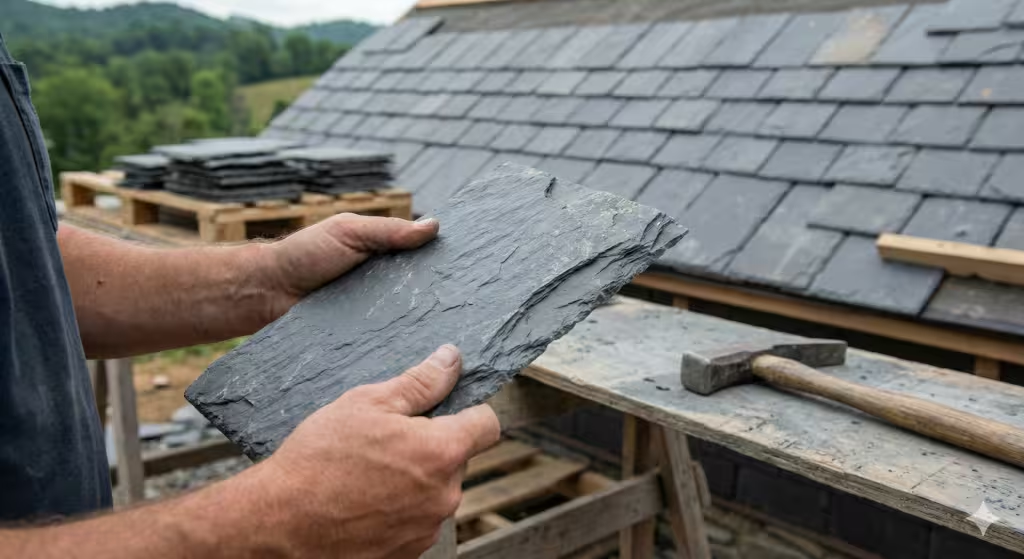
When we talk about slate, we are talking about real stone. This is rock that has been pulled out of the ground. Workers cut it into thin pieces that look like shingles. Because it is stone, it is very tough. It does not rot. It does not burn. It does not attract bugs. This makes it a top choice for people who want a roof that will last for their whole life.
In the world of custom homes, we call this the gold standard. When you see a beautiful old home in a historic part of town, it often has slate on top. This material comes in different colors like grey, black, green, and even purple. The color comes from the minerals in the rock. It never fades. The sun can beat down on it for fifty years, and it will still look the same.
Using this material is a big decision. It is not like putting up regular shingles made of oil and paper. Those shingles wear out in twenty years. Slate can last over one hundred years. Some of these roofs have lasted two hundred years. That is why people call it a forever roof. It is a legacy. You are building something that your grandkids could live under one day.
Understanding the Clay Tile Roof
A clay tile roof is a bit different. Instead of natural stone, these are made from earth and clay. The clay is shaped into a tile and then baked in a very hot oven. This process makes the tile very hard. You might have seen these on homes that look like they belong in Italy or Spain. They often have a curved shape. This is called a barrel tile.
These tiles are great for keeping a home cool. Because of their shape, air can flow under them. This helps keep your attic from getting too hot in the middle of a July afternoon. In Tennessee, our summers can be quite warm. Having a clay tile roof can actually help lower your cooling bills.
Just like slate, clay is very durable. It will not rot and it can handle fire very well. The color is baked right into the clay. This means it stays bright and beautiful for a long time. Most clay roofs will last between fifty and one hundred years. While it might not last quite as long as the best slate, it still far outlasts a standard shingle roof.
People love the look of a clay tile roof because it adds a lot of character. It makes a home stand out. It gives the house a warm and inviting feel. If you like the Mediterranean style or a classic traditional look, this is a great way to go.
Comparing the Lifespan of Slate and Clay
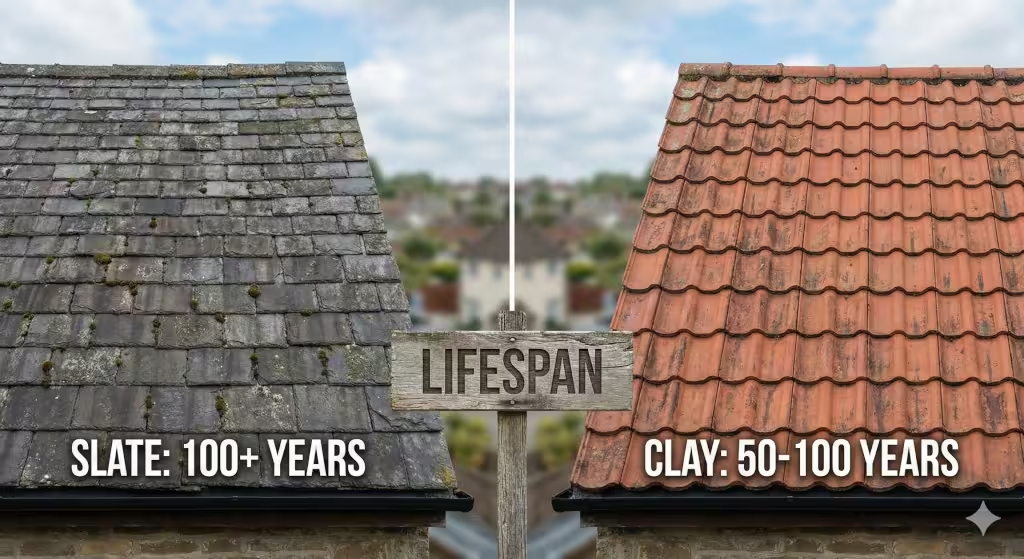
When you are spending your hard-earned money, you want to know how long things will last. A cheap roof might last fifteen years. That means in sixty years, you have to pay for four roofs. A premium tile roof lasts much longer.
Natural slate is the winner when it comes to time. If you get high-quality “hard slate,” it can last up to two hundred years. Even “soft slate” usually lasts at least seventy-five years. This means you only buy it once.
A clay tile roof is also very impressive. You can expect it to last between fifty and one hundred years. The main thing that affects clay is the weather. If we get a very cold winter where the ground freezes and thaws a lot, the clay can sometimes crack. However, modern clay tiles are made to handle this better than older ones.
If you compare these to other materials, there is no contest. Metal roofs are good and might last forty years. Asphalt shingles are common but only last about twenty years. When you choose a tile roof, you are choosing to stop worrying about your roof for the rest of your life.
Looking at the Cost of Installation
Now let us talk about the part everyone asks about first: the price. I will be direct with you. These materials are more expensive than what you see on most houses. But remember, you are buying a product that lasts five times longer.
For a natural slate roof, you can expect to pay between $10 and $30 per square foot. If you have a two thousand square foot roof, that could be $20,000 to $60,000. Why is the range so big? It depends on the type of stone you pick. Some colors and thicknesses cost more. It also depends on how steep your roof is. Working on a very steep roof is slower and costs more in labor.
A clay tile roof is usually a little cheaper than slate but still more than shingles. You might pay between $8 and $25 per square foot. For that same two thousand square foot house, the cost might be $16,000 to $50,000.
One thing to keep in mind is the labor. You cannot just hire any crew to put on a tile roof. It takes special skills. The workers have to be very careful not to break the tiles as they walk on them. They also have to make sure the waterproofing underneath is perfect. Since the tiles last so long, the layers under the tiles must be very high quality too. You do not want a one hundred year tile sitting on a ten year piece of felt paper.
Comparison Table: Slate vs. Clay Tile
| Feature | Natural Slate | Clay Tile |
| Material Type | Natural Stone | Fired Clay |
| Average Lifespan | 75 to 200+ Years | 50 to 100 Years |
| Cost per Sq. Ft. | $10 to $30 | $8 to $25 |
| Weight (per 100 sq ft) | 800 to 1,500 lbs | 600 to 1,000 lbs |
| Fire Resistance | Class A (Highest) | Class A (Highest) |
| Main Benefit | Incredible Longevity | Energy Efficiency |
| Main Drawback | Very Heavy / High Cost | Can Be Brittle |
Engineering and Structural Requirements
You cannot just take a house built for shingles and put a tile roof on it without checking the bones of the house. These materials are very heavy.
A standard shingle roof weighs about two hundred pounds for every one hundred square feet. A tile roof can weigh eight hundred to over one thousand pounds for that same space. That is a huge difference. If the wood frames under your roof are not strong enough, the roof could sag. It could even push the walls out.
When a builder works on a custom home, they plan for this from the start. We use bigger pieces of wood for the rafters. We might put the rafters closer together. If you are putting a tile roof on an existing home, you must have an expert look at it. You might need to add more support in the attic. This adds to the cost, but it is necessary for safety.
You also have to think about the “decking.” That is the wood surface the tiles sit on. For a heavy tile roof, the decking needs to be strong. It should be thick plywood or solid boards. We also use special nails and hooks to hold the tiles in place. In the Tri-Cities, we sometimes get high winds. A properly installed tile roof can handle winds over one hundred miles per hour if it is anchored correctly.
The Role of Underlayment
The tiles are what you see, but the underlayment is what keeps the water out. Think of it like a raincoat under a suit. Even though a clay tile roof is very good at shedding water, some moisture can still get through during a heavy storm.
Because a tile roof lasts for fifty or one hundred years, you need an underlayment that can keep up. You cannot use cheap paper. We often use heavy-duty synthetic materials or thick rubberized layers. These materials can last for many decades.
If you go cheap on the underlayment, you might have a leak in twenty years. Even if your tiles are still perfect, you would have to take them all off just to fix the paper underneath. That would be very expensive. My advice is always to spend the extra money on the best underlayment you can find. It protects your investment.
Maintenance for Your Tile Roof
One of the best things about a tile roof is that it does not need much work. You do not have to paint it or seal it. However, you should still keep an eye on it.
Once a year, it is a good idea to look at your roof with binoculars. Look for any tiles that might have cracked. Sometimes a big branch falls or a very large hailstone hits just right and breaks a tile. Replacing one or two tiles is easy and cheap if you catch it early. If you leave a broken tile, water can get in and rot the wood underneath.
You also want to keep your gutters clean. If the gutters get clogged, water can back up under the bottom row of tiles. This is bad for the house. In our area, we have a lot of trees. If you have oak or pine trees near your house, you might need to clean the gutters twice a year.
Finally, keep an eye out for moss or algae. In shady parts of the Tri-Cities, moss can grow on a clay tile roof. It does not usually hurt the tile, but it can trap moisture. A professional can wash it off with a gentle spray. Never let someone use a high-pressure power washer on your tiles. It can crack them or strip away the surface.
Common Questions about Tile Roofs
Can I walk on a tile roof?
It is better if you do not. Tiles are stone or clay, which means they are brittle. If you step in the middle of a tile, it might snap. Professionals know exactly where to step on the edges where the tiles overlap. If you need to get up there to clean a chimney or fix a satellite dish, it is best to call someone who has experience with this type of roof.
Does a tile roof make the house hotter?
Actually, it can make it cooler. A clay tile roof is excellent at blocking heat. The tiles are thick, so it takes a long time for the sun to heat them up. Also, the way they are shaped allows air to move underneath them. This creates a “buffer” of air that keeps the heat away from your attic. This can save you money on your electricity bill in the summer.
What happens if a tile breaks?
If a tile on your tile roof breaks, it is not a disaster. You can usually slide the broken pieces out and slide a new one in. It is always a good idea to keep a few extra tiles in your garage or shed after the roof is installed. That way, you have a perfect match ready to go if you ever need a small repair.
Is slate better than clay?
It depends on what you want. Slate lasts longer and has a very classic look. Clay is usually lighter and can be better for energy efficiency. Both are great choices. As an engineer, I like slate for its pure strength. As a homeowner, you might like the colors and styles of clay.
Alternatives: Concrete and Synthetic Tiles
Sometimes a homeowner wants the look of a tile roof but has a smaller budget. Or maybe their house cannot handle the heavy weight of real stone. In those cases, we look at alternatives.
Concrete tiles are a popular choice. They are made from a mix of cement, sand, and water. They are molded to look like clay or slate. They are very strong and last about fifty years. They cost less than natural stone or clay. However, they are still heavy, so you still need a strong house frame. One downside is that the color on concrete can fade over time.
Synthetic tiles are another option. These are made from recycled plastics and rubbers. They are very lightweight. You can often put these on a house that was built for shingles without adding any extra support. They are made to look just like real slate. They are very tough and can handle hail very well. Most synthetic tiles last about thirty to fifty years. They are a great middle ground for people who want the style of a tile roof without the high weight or price.
Why Choose a Tile Roof in the Tri-Cities?
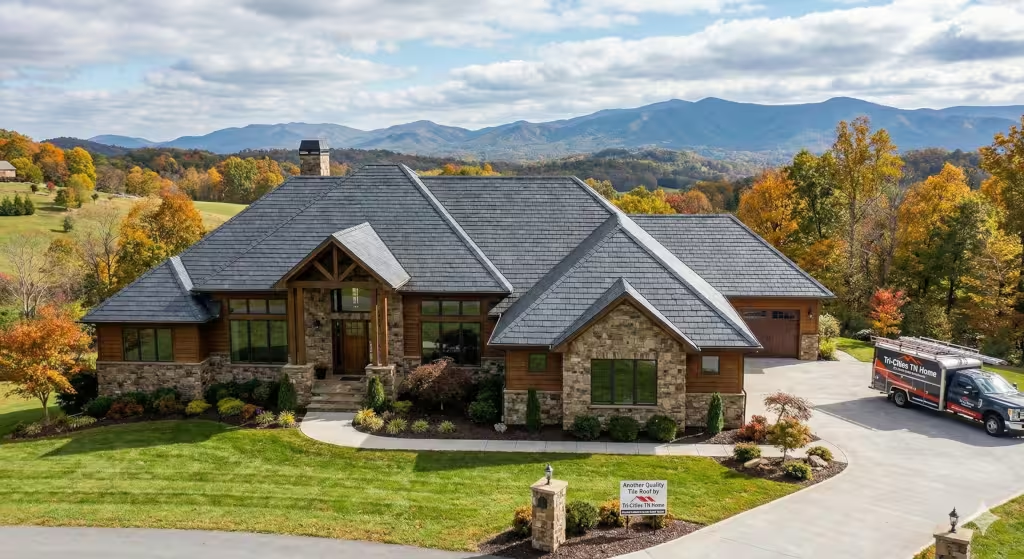
Living in East Tennessee means we deal with all four seasons. We have humidity, rain, and the occasional ice storm. A tile roof is built to handle all of this.
In our local market, homes with premium roofs tend to sell for more. When a buyer sees a slate or clay roof, they know the builder did not cut corners. It shows that the home was built with quality in mind. It gives the house a sense of permanent beauty.
If you are building your “forever home” in Johnson City, Kingsport, or Bristol, I really think you should consider these materials. Yes, the cost is higher on day one. But if you plan to stay in that home for twenty or thirty years, it pays for itself. You will not have to pay for a new roof when you are retired. You will not have to worry about leaks after a big storm.
A house is a system. The roof is the most important part of that system because it protects everything else. Investing in a high-quality tile roof is one of the best things you can do for the long-term health of your home.
Technical Specifics: Weight and Pitch
Let us get into the numbers a bit more. As I mentioned, weight is a big factor. If you choose a natural slate tile roof, you are looking at about 800 to 1,500 pounds per square. In roofing, a “square” is a 10-foot by 10-foot area. If your roof is 30 squares, that is up to 45,000 pounds of stone on your house!
The “pitch” of your roof also matters. This is how steep the roof is. Most tile roofs need a certain slope so the water runs off correctly. If your roof is too flat, water might sit between the tiles. For very flat roofs, we have to use special techniques to make them waterproof. Most people who want the look of a tile roof choose a steeper pitch because it looks more grand and helps the roof last longer.
Another thing to consider is the “headlap.” This is how much one tile overlaps the one below it. In areas with a lot of rain, we use a larger overlap. This makes it much harder for wind to blow rain up under the tiles. It’s these small technical details that make a tile roof so reliable.
The Environmental Impact
Many buyers in the Tri-Cities care about being green. If you want an eco-friendly home, a tile roof is a fantastic choice.
First, slate is just natural rock. There are no chemicals or plastics involved. When the roof eventually wears out (in a hundred years!), the slate can be crushed up and used for landscaping. It does not sit in a landfill forever.
Clay is also very natural. It is just earth that has been heated. Because these roofs last so long, you are not using up more resources every twenty years like you would with shingles. Shingles are made with oil, and millions of tons of them go into landfills every year. By choosing a tile roof, you are reducing your “footprint” on the earth.
Also, because these roofs are so good at reflecting heat, they help reduce the “heat island effect.” This is when a lot of dark roofs make a neighborhood hotter. Lighter colored clay tiles can keep your whole neighborhood a little cooler.
Selecting the Right Contractor
Because a tile roof is a specialty item, you must find the right person to install it. Around here, many companies do a great job with shingles, but only a few really know how to handle slate or clay.
When you are looking for a contractor, ask to see their past work. Go look at a house they did ten years ago. Does the roof still look straight? Are any tiles slipping? A good installer will use copper or stainless steel nails. These do not rust. If a contractor says they will use regular galvanized nails to save money, find someone else. Those nails will rust away long before the tiles are worn out.
You also want to make sure they have good insurance. Since tiles are heavy and the work is specialized, you want a company that is fully covered. Don’t be afraid to ask for their engineering plan if they are adding weight to an existing home. A professional will be happy to show you how they are making your home safe.
Final Thoughts on Value
In the end, choosing a tile roof is about value. There is a difference between “price” and “value.” The price is what you pay today. The value is what you get over the life of the home.
A cheap roof is like a cheap pair of shoes. They might look okay for a few months, but soon they hurt your feet and fall apart. A slate or clay tile roof is like a high-quality pair of leather boots. They cost more at the store, but you can wear them for years and they only get better.
When you look at your custom home, think about the legacy you want to leave. Do you want a house that needs constant repairs? Or do you want a house that stands strong against the wind and rain for a century? For me, the answer is clear. If your budget and your house frame can handle it, a tile roof is the best investment you can make.
Building a home in the Tri-Cities is a wonderful experience, and getting the roof right is a big part of that success.