
Choosing the Right Palette
A central element of creating a welcoming, high-value home is mastering the use of color and light. Selecting the right neutral paint colors can completely transform a floor plan, increase resale value, and turn raw drywall into a peaceful retreat. Throughout this comprehensive guide, we will explore the technical science, psychological impact, and practical application of neutral paint colors across every stage of home building and remodeling.
The Engineering and Art of Home Building in East Tennessee
Building a home in East Tennessee is a unique blend of structural science and visual harmony. Our regional landscape features rolling ridges, dense hardwood forests, limestone rock outcroppings, and weather that shifts rapidly from humid summer sun to brisk mountain winters. Every home built here must respect these natural conditions while offering an interior that feels balanced and secure.
When an engineer looks at a floor plan, the first priorities are structural integrity, thermal efficiency, and moisture management. We calculate roof loads, design proper HVAC duct runs, and ensure the foundation handles soil movement. However, a house is far more than a collection of structural calculations. It is a living space where people start their mornings, raise children, gather with friends, and unwind after long days. That is where art and finish carpentry enter the equation.
A smooth transition from structural framing to interior finish work requires intentional planning. The placement of windows determines how natural daylight moves through a room from morning to dusk. That daylight directly affects how our eyes perceive wall surfaces and finish materials. If you select the
When we install custom crown molding, baseboards, and window casings, we want those features to stand out without overwhelming the room. Applying carefully chosen neutral paint colors creates the ideal backdrop. It allows the craftsmanship of the cabinetry, the texture of the hardwood floors, and the beauty of the surrounding mountain views to take center stage.
In our regional market, builders who pay equal attention to structural engineering and interior aesthetics consistently deliver superior homes. When you build with precision, every component works together. Your HVAC system maintains comfortable humidity, your insulation keeps energy bills low, and your neutral paint colors create an atmosphere of warmth and calm that welcomes you home every evening.
Understanding the Motivations of Custom Home Buyers
To build a truly exceptional custom home, you must understand who will be managing, organizing, and living in that space every day. Historically, residential construction focused heavily on exterior square footage, garage size, and mechanical systems. While those elements are important, female home buyers often look at a floor plan through a much more comprehensive and practical lens.
Home buyers routinely evaluate how a home functions on a Tuesday afternoon during a busy work week. They look for logical traffic patterns between the garage, mudroom, pantry, and kitchen. They want laundry rooms located near the bedrooms rather than hidden in dark basements. They prioritize abundant natural light, thoughtful storage solutions, and low-maintenance surfaces that do not require constant upkeep.
Visual peace is another major priority. A home should serve as a calming sanctuary from a demanding world. Cluttered visual spaces create subconscious mental stress. This is why many women strongly favor cohesive, soft neutral paint colors throughout the main living areas. When wall colors flow seamlessly from the entryway into the kitchen and living room, the entire house feels open, organized, and tranquil.
Furthermore, buyers often have a sharp eye for subtle undertones in finish materials. They notice immediately when a wall paint clashes with the kitchen backsplash or makes the hardwood flooring appear orange. They understand that neutral paint colors are not boring or plain. Instead, high-quality neutral paint colors act as versatile design foundations that adapt to changing seasonal decor, family heirlooms, and personal style.
By listening carefully to what buyers need from their living spaces, we can design kitchens with ergonomic counter heights, primary bathrooms that feel like restful spas, and drop zones that keep daily clutter under control. Pairing these smart layouts with modern neutral paint colors ensures the finished home is as functional as it is beautiful.
The Science of Light Reflectance Value and Paint Undertones
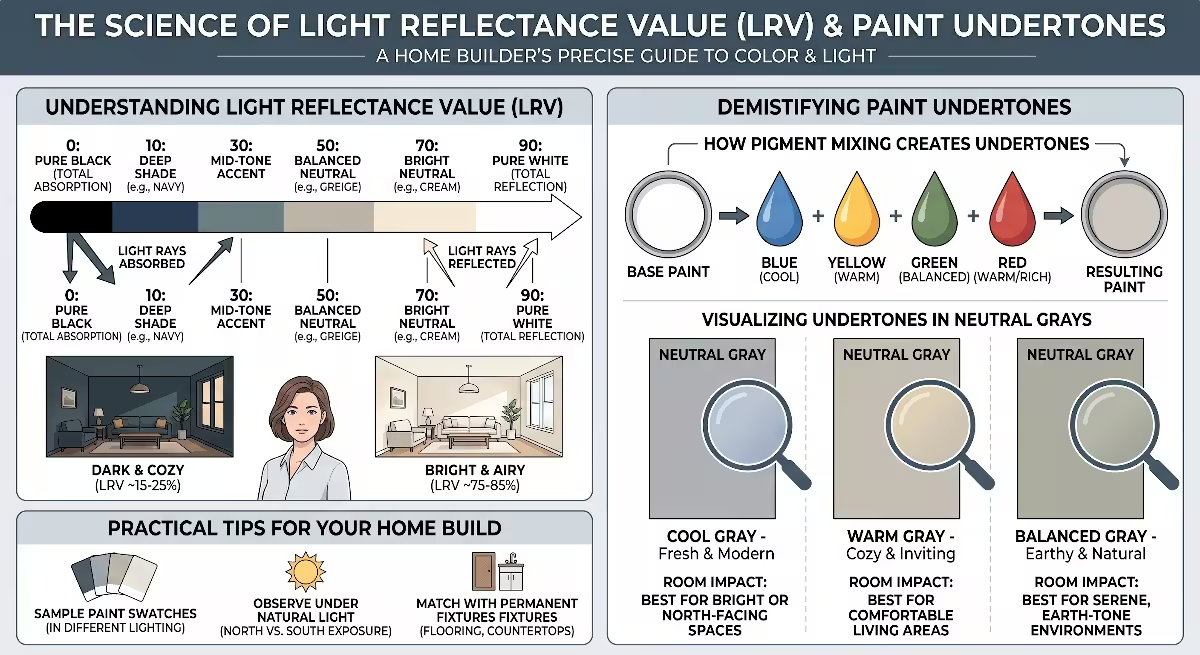
To choose wall colors with confidence, you do not need an art degree, but it helps to understand a little bit of engineering science. Every can of paint has specific physical properties that govern how it behaves when exposed to natural and artificial light. Two of the most important concepts are Light Reflectance Value and color undertones.
0 <--------------------------- LRV SCALE ---------------------------> 100
Pure Black                                                   Pure White
              [50 -------------- IDEAL RANGE -------------- 85]
                 Grounded Greiges          Bright Off-Whites
Understanding LRV is critical when choosing neutral paint colors for custom homes:
- High-LRV paints (72 to 84) reflect substantial light, making smaller rooms feel larger and brightening spaces with limited windows.
- Mid-range LRV paints (58 to 70) provide visual depth and contrast, preventing large rooms with high ceilings from feeling washed out.
- Low-LRV paints (below 50) absorb light, which can create a cozy mood in a study but can make everyday living areas feel cave-like.
For the vast majority of open-concept living spaces, the sweet spot for neutral paint colors sits between an LRV of sixty-two and seventy-five. This range provides enough light reflection to keep the interior bright on cloudy mountain days while retaining enough pigment to contrast nicely against white trim.
+------------------------------------+------------------------------------+
| Paint Category                     | Typical LRV Range                  |
+------------------------------------+------------------------------------+
| Crisp White Trim                   | 82 to 92                           |
| Soft Off-White Walls               | 73 to 82                           |
| Balanced Greige Walls              | 60 to 72                           |
| Grounded Warm Beige Walls          | 50 to 60                           |
| Accent / Feature Walls             | Below 45                           |
+------------------------------------+------------------------------------+
The second critical scientific factor is the paint undertone. Every neutral color has a mass tone, which is the primary color you see at first glance, and an underlying undertone created by the combination of color pigments in the formula. The four most common undertones found in popular neutral paint colors are:
- Green Undertones: Common in modern greiges. They create a very neutral, earthy balance and help neutralize harsh afternoon glare.
- Yellow and Cream Undertones: Found in warm whites and traditional beiges. They add warmth and cheerfulness to rooms with cool northern light.
- Pink and Red Undertones: Often found in soft taupes. They add richness but can turn fleshy if paired with the wrong wood finishes.
- Blue and Violet Undertones: Common in cool grays. While popular a decade ago, these can make a room feel chilly and industrial if not balanced properly.
In Northeast Tennessee, our sunlight changes dramatically based on topography and compass direction. North-facing rooms receive cool, bluish daylight throughout the day. In these spaces, cool grays can look flat and lifeless. Using warm neutral paint colors with subtle cream or warm greige undertones counteracts the cool light and makes the room feel comfortable.
Conversely, south-facing rooms enjoy intense, warm golden light all day. These rooms can easily handle balanced neutral paint colors with slight green or gray undertones, which prevent the walls from looking overly yellow or washed out.
Tri-Cities Development Trends and Regional Market Dynamics
The real estate and home building landscape across the Tri-Cities region has evolved significantly over the past several years. Johnson City, Kingsport, and Bristol are experiencing steady growth as families, retirees, and remote professionals discover the beauty and economic stability of East Tennessee.
This growth has shifted local architectural styles. For many years, traditional brick ranches and heavy rustic designs dominated local subdivisions. Today, we see strong demand for modern mountain craftsman homes, clean transitional farmhouses, and single-level modern living layouts. Buyers moving here from other parts of the country expect high energy efficiency, open floor plans, and sophisticated interior palettes.
One of the most noticeable
+--------------------------+--------------------------+
| 2010s Building Trends    | 2020s & 2026 Trends      |
+--------------------------+--------------------------+
| Cold steel gray walls    | Warm greige & creamy off-white |
| Dark espresso cabinetry  | Natural white oak & painted accents |
| High-gloss chrome trim   | Matte black & brushed brass |
| Segmented closed rooms   | Fluid, multi-zone open concepts |
| High VOC standard paints | Low/Zero-VOC durable coatings |
+--------------------------+--------------------------+
When building a custom home or preparing an existing property for resale in our regional market, neutral paint colors are essential for broad market appeal. Out-of-state buyers shopping online rely heavily on professional listing photography. Homes painted in dark or overly saturated colors look smaller and dimmer in digital listings. Properties finished in modern neutral paint colors photograph exceptionally well, creating bright, airy images that generate higher showing traffic and stronger offers.
Furthermore, new subdivisions in areas like Boones Creek, Gray, and Colonial Heights often feature large windows that capture views of Buffalo Mountain, Holston Mountain, or the Bays Mountain ridge. Choosing soft neutral paint colors ensures the interior palette does not compete with these scenic vistas, framing our regional landscape naturally.
Legal Aspects, Building Codes, and Environmental Factors in Northeast Tennessee
A successful home build requires strict adherence to local building codes, legal zoning requirements, and environmental standards. As a former General Manager and Project Manager, I have navigated county planning commissions, municipal permit offices, and state environmental regulations across Tennessee.
In Tennessee, local jurisdictions operate under specific editions of the International Residential Code (IRC), along with local amendments adopted by municipalities such as Johnson City, Kingsport, and Sullivan or Washington counties. These codes regulate everything from foundation depth and egress window sizing to stair geometry, fire blocking, and electrical circuit distribution.
When it comes to interior finishes and coatings, environmental health and indoor air quality have become primary concerns for modern home buyers. Traditional paints used to emit high levels of Volatile Organic Compounds (VOCs), which are carbon-based chemicals that evaporate into the air at room temperature. High VOC levels can cause headaches, respiratory irritation, and lingering chemical odors.
Today, modern building practices prioritize zero-VOC and low-VOC formulations for all interior neutral paint colors. These advanced paints provide several important benefits:
- Near-zero chemical off-gassing during and after application, protecting your family and pets.
- Rapid drying times that allow homeowners to move in without chemical odors.
- High scrubbability and stain resistance through modern acrylic polymer technology.
Another critical environmental factor in East Tennessee is humidity management. Our summers are warm and humid, while our winters can be dry. In closed building envelopes with modern spray foam or dense-pack cellulose insulation, moisture can become trapped if the mechanical ventilation is not designed properly.
Applying quality breathable neutral paint colors on properly cured drywall prevents moisture from getting trapped inside wall cavities. In bathrooms, basements, and laundry rooms, we also specify paint formulas containing antimicrobial additives that inhibit mildew growth, ensuring a healthy indoor environment for decades.
The Core Palette: Top Rated Warm Whites, Greiges, and Modern Beiges
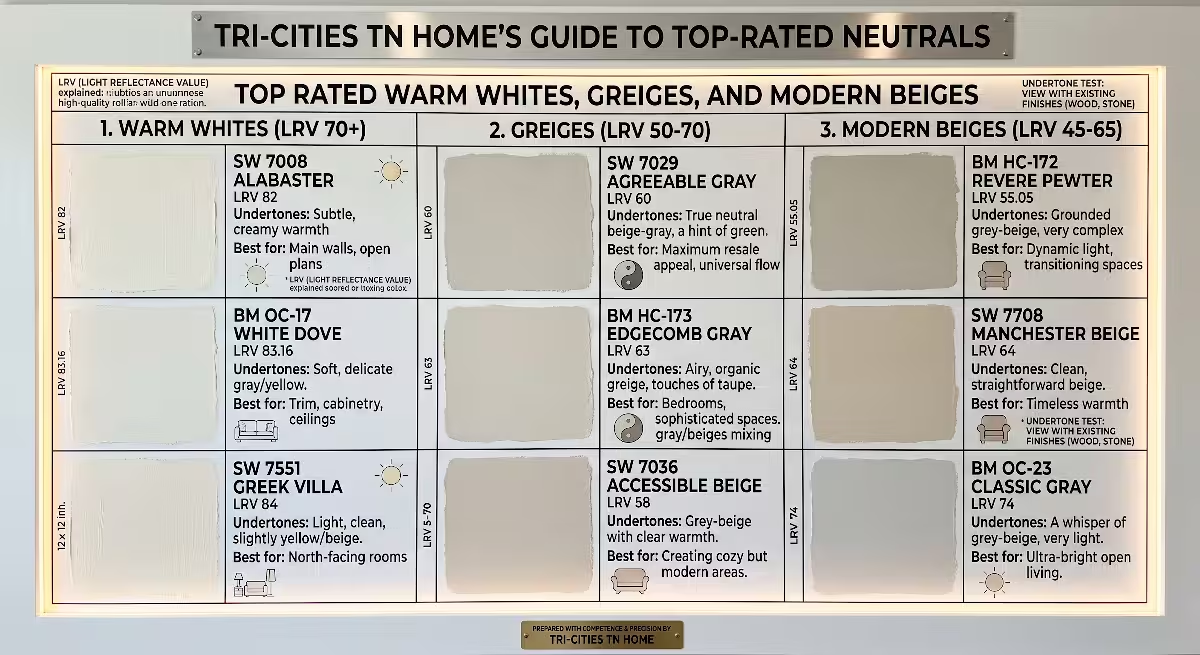
Many builders have tested hundreds of paint formulas across dozens of job sites. While there are thousands of paint swatches available at the home improvement store, a select group of proven neutral paint colors consistently outperforms the rest.
These workhorse colors earn their reputation because they maintain their beauty across diverse lighting conditions, resist clashing with flooring and cabinetry, and provide consistent, reliable coverage. Here is a detailed analysis of the top options every builder, remodeler, and home buyer should know.
1. The Best Warm Whites and Off-Whites
- Sherwin-Williams Alabaster (SW 7008):
- Light Reflectance Value (LRV): 82
- Undertone: Soft, warm cream with subtle beige backing
- Best Uses: Whole-house main walls, open-concept living rooms, bedrooms
- Why It Works: Alabaster is one of the most versatile warm white neutral paint colors on the market. It provides tremendous light reflection without ever looking yellow or stark. It softens bright sunlight while keeping north-facing rooms warm and cozy.
- Benjamin Moore White Dove (OC-17):
- Light Reflectance Value (LRV): 83.16
- Undertone: Delicate gray and subtle yellow cream
- Best Uses: Kitchen walls, custom millwork, shiplap, family rooms
- Why It Works: White Dove is a beloved industry classic. The slight drop of gray in its formula prevents it from feeling too yellow, making it one of the cleanest, most sophisticated neutral paint colors for traditional and craftsman interiors.
- Sherwin-Williams Greek Villa (SW 7551):
- Light Reflectance Value (LRV): 84
- Undertone: Mild sunny yellow and pale beige
- Best Uses: Foyers, hallways, low-light spaces
- Why It Works: If your space lacks natural daylight, Greek Villa injects instant warmth. It feels clean and crisp without the harsh glare of a base white paint.
2. The Best Modern Greiges
- Sherwin-Williams Agreeable Gray (SW 7029):
- Light Reflectance Value (LRV): 60
- Undertone: Balanced beige-gray with a hint of green
- Best Uses: Main living areas, hallways, resale staging, rental properties
- Why It Works: Agreeable Gray is the single most popular paint color in modern residential construction for a reason. It bridges the gap between warm hardwood flooring and modern cool accents effortlessly. Among mid-tone neutral paint colors, it is virtually foolproof.
- Benjamin Moore Edgecomb Gray (HC-173):
- Light Reflectance Value (LRV): 63.09
- Undertone: Organic earthy taupe and soft gray
- Best Uses: Dining rooms, primary suites, open floor plans with high ceilings
- Why It Works: Edgecomb Gray is an organic, airy color that feels upscale and calming. It changes gracefully throughout the day, looking like a rich off-white in bright sunlight and a warm stone greige in the evening.
- Sherwin-Williams City Loft (SW 7631):
- Light Reflectance Value (LRV): 70
- Undertone: Soft stone gray with an ultra-subtle rosy beige warmth
- Best Uses: Modern custom homes, bedrooms, open kitchens
- Why It Works: For buyers who find Agreeable Gray slightly too dark and Alabaster slightly too light, City Loft sits right in the perfect middle zone. It provides gentle contrast against white trim while bouncing ample light.
3. The Best Grounded Modern Beiges and Soft Taupes
- Benjamin Moore Classic Gray (OC-23):
- Light Reflectance Value (LRV): 73.67
- Undertone: Ultra-soft whisper gray with warm beige undertones
- Best Uses: Contemporary interiors, minimalist open floor plans, nurseries
- Why It Works: Despite its nameBuilding a custom home is one of the most significant personal and financial investments you will ever make. To do it well, you need a plan that balances structural engineering, clear budget controls, and thoughtful interior design. As the Home Building Expert for WebHeads United, I bring a direct, practical, and calm approach to the residential construction process across East Tennessee.
Below is a detailed guide to help you master every phase of building, designing, and living in a custom home in the Tri-Cities region.
Understanding the Custom Home Market in the Tri-Cities Region

The Tri-Cities housing market covering Johnson City, Kingsport, and Bristol has unique terrain, climate patterns, and municipal requirements. Building in our part of East Tennessee is not the same as building on flat ground in the Midwest or coastal plains. Our rolling hills, limestone ridges, and seasonal temperature swings require careful site evaluation before pouring a single yard of concrete.
When planning a custom build here, you must account for slope grading, soil compaction, and surface water drainage. A home placed on a hillside needs adequate foundation drainage pipes, gravel backfill, and waterproofing membranes along subterranean foundation walls. Many custom home buyers focus first on cosmetic finishes like cabinet styles and neutral paint colors, but your home will only perform as well as the site work beneath it.
The regional market has seen steady demand from both local move-up buyers and individuals relocating for our mild climate and outdoor amenities. This influx has shifted architectural preferences toward transitional designs that blend traditional Appalachian rooflines with modern open floor plans. To make these open spaces feel cohesive from room to room, builders and designers frequently rely on neutral paint colors to tie varying architectural elements together.
Working with local trades requires clear contracts, firm timelines, and regular site visits. In the Tri-Cities area, subcontracting schedules can back up quickly during peak spring and summer building months. Understanding these regional constraints allows you to set realistic expectations and avoid unnecessary construction delays.
A Female-Centric Perspective on Custom Home Design and Layout
Historically, residential floor plans were drafted with a focus on structural symmetry and formal entertaining spaces that rarely served the daily rhythms of running a household. A female-centric approach to custom home design flips this priority. It looks directly at how real people cook, clean, work from home, care for children or aging parents, and manage physical storage.
Practical design starts at the points of daily entry. A drop zone or mudroom right off the garage should feature built-in locker storage, bench seating with shoe cubbies, and durable wall finishes painted in washable neutral paint colors. This keeps mountain red clay and sports equipment from spilling into main living areas. When you enter your home after a long day, you deserve an organized, tranquil environment rather than immediate visual clutter.
Sightlines are another essential element of female-centric residential planning. A person working in the kitchen should have clear visibility into the main family room, dining space, and backyard patio. Open sightlines keep you connected with family members and guests without making the home feel loud or cavernous. By using warm neutral paint colors across these connected zones, you create an uninterrupted visual flow that makes the main living level feel spacious and calm.
Lighting design also deserves special attention from a functional perspective. A single ceiling light in the center of a kitchen or closet leaves you working in your own shadow. Proper design incorporates layered illumination: task lighting under cabinets, overhead recessed floodlights, and ambient fixtures on dimmer switches. When balanced lighting reflects off soft neutral paint colors, the entire room feels warm, functional, and inviting.
Technical Precision Meets Craftsmanship: Engineering and Carpentry Foundations
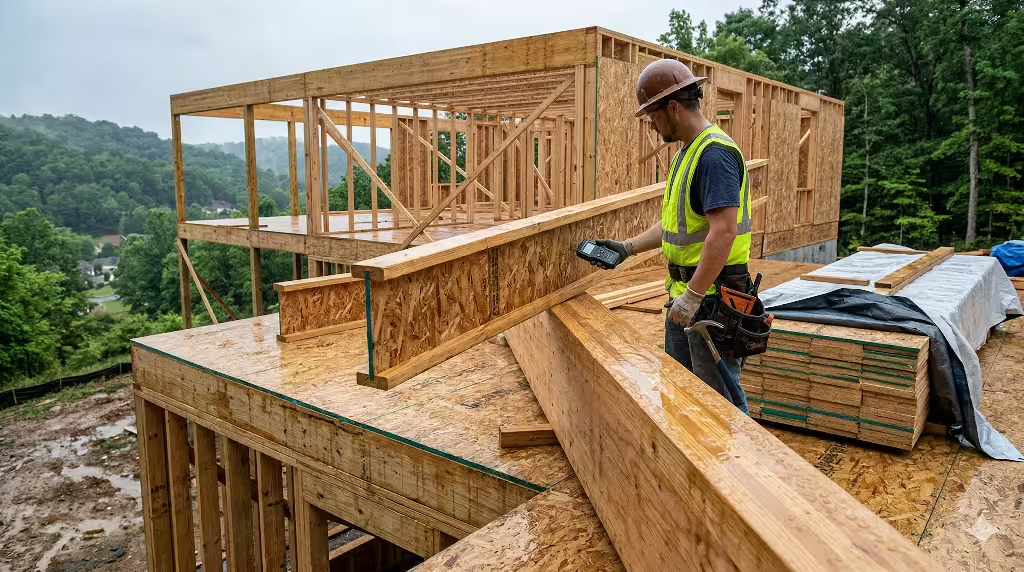
Engineering teaches you how structural loads transfer down through rafters, headers, studs, and foundation footings into the earth. Carpentry teaches you the physical reality of joining two pieces of wood with tight tolerances.
Precision in framing sets the standard for every trade that follows. If a framing crew rushes and leaves interior partition walls out of plumb or floors out of level, every subsequent finish suffers:
- Drywall tapers will struggle to create flat corners.
- Trim carpenters will fight uneven gaps along baseboards and crown molding.
- Tile setters will deal with cracked grout lines on unlevel subfloors.
- Painters applying smooth coats of neutral paint colors will see surface imperfections under natural light.
Framing lumber naturally holds moisture when delivered to a jobsite. A competent builder allows the framed structure to dry out under a weather-tight roof before hanging drywall. Installing drywall over wet framing studs causes screw pops, corner tape separation, and hairline cracks later on. When drywall is smooth and properly cured, coats of neutral paint colors will apply evenly without flashing or patchy drywall patches showing through.
True craftsmanship is found in the details that most people take for granted until something fails. It shows up in glued and screwed subflooring that prevents squeaks, proper flashing around window pans to prevent wall leaks, and clean trim joints that require minimal caulk before receiving neutral paint colors.
The Psychology of Space: Designing Interiors with Neutral Paint Colors
Color choice influences human mood, heart rate, and perceived room temperature. In custom residential design, interior wall palettes should promote relaxation and mental clarity. This is why interior designers and builders consistently emphasize the use of neutral paint colors across primary living spaces.
Bright, high-saturation colors can cause sensory fatigue when applied to large wall surfaces. While a vibrant accent pillow or framed art piece adds personality, surrounding yourself with four walls of intense red or neon blue increases visual tension. In contrast, neutral paint colors create a serene background that allows your mind to rest. They provide a clean canvas that lets natural light, architectural details, and personal furnishings take center stage.
There is a common misconception that neutral paint colors are boring, cold, or lacking in character. In reality, the category of neutral paint colors includes an extensive spectrum of undertones, such as warm beige, soft taupe, muted greige, gentle ivory, slate gray, and subtle warm whites. Choosing the right undertone transforms the physical feel of a room:
- Warm undertones bring coziness to large rooms with high ceilings.
- Cool undertones make compact rooms feel expansive and airy.
- Balanced greiges provide an adaptable backdrop that shifts gently throughout the day.
When you select neutral paint colors for your main hallways, foyer, and living room, you establish an unbroken sense of flow throughout the entire floor plan. This continuity eliminates harsh visual stops, making your home feel larger, brighter, and more orderly.
Lighting, Natural Exposure, and Selecting Neutral Paint Colors in East Tennessee
Selecting paint colors under the fluorescent tube lights of a home improvement store is one of the most common mistakes custom home buyers make. Artificial commercial lighting skews color perception dramatically. To choose colors accurately, you must test neutral paint colors directly on your home walls under natural East Tennessee sunlight.
The direction a room faces fundamentally alters how neutral paint colors appear:
- North-facing rooms: These spaces receive cool, bluish natural light throughout the day. North-facing rooms can make cool grays look chilly and sterile. To counteract this, select neutral paint colors with warm creamy, golden, or peach undertones to add warmth.
- South-facing rooms: These areas enjoy strong, warm sunlight all day long. South-facing light intensifies yellow undertones, so you can successfully use cooler neutral paint colors or balanced, desaturated off-whites without the room feeling dim.
- East-facing rooms: These rooms receive bright, warm morning light followed by cooler shadows in the afternoon. Choosing flexible neutral paint colors that balance warm and cool tones ensures the space looks pleasant at breakfast and dinner.
- West-facing rooms: These spaces get muted morning light followed by intense, golden-orange late afternoon light. Test your neutral paint colors at sunset to ensure warm pigments do not appear overly yellow or brassy under the setting sun.
Always paint large test swatches on multiple walls in the actual rooms. Observe how these neutral paint colors change at eight in the morning, twelve noon, five in the evening, and under your home evening artificial lighting. This simple step prevents expensive repainting projects once the home is finished.
Exterior Aesthetics and Blending with the Appalachian Landscape
The rolling hills and mountain backdrops of East Tennessee call for exterior color schemes and materials that sit comfortably within their natural surroundings. A custom home should complement its environment rather than fight against it. Incorporating local stone accents, rough-sawn timber posts, and earthy neutral paint colors ensures your home looks grounded and timeless.
Exterior neutral paint colors should coordinate with permanent exterior materials such as brick, limestone, mortar joints, and roof shingles. Because outdoor sunlight is far brighter than interior lighting, exterior neutral paint colors should typically be two to three shades darker than what you might choose for an inside wall. A color that looks soft and subtle indoors can look washed out and stark white when painted across an exterior facade.
Consider the following exterior color combinations that perform exceptionally well in the Tri-Cities area:
| Exterior Style | Siding Finish | Trim & Accents | Masonry Accent |
| Mountain Craftsman | Warm Olive Gray neutral paint colors | Deep Bronze / Dark Walnut | Fieldstone / River Rock |
| Modern Farmhouse | Soft Warm White neutral paint colors | Charcoal Gray / Matte Black | Whitewashed Red Brick |
| Transitional Ranch | Muted Greige neutral paint colors | Creamy Linen / Sandstone | Chiseled Gray Limestone |
| Classic Colonial | Classic Canvas neutral paint colors | Crisp Off-White | Traditional Red Brick |
Exterior coatings also protect your home against the elements. Choosing high-quality exterior neutral paint colors with 100% acrylic latex resins provides the flexibility needed to expand and contract through hot Appalachian summers and freezing winter nights without peeling, blistering, or chalking.
Legal, Zoning, and Development Trends in Johnson City, Kingsport, and Bristol
Navigating the legal and regulatory framework of the Tri-Cities area requires an understanding of how local county and city governments handle building codes, zoning variances, and environmental protections. Washington County, Sullivan County, and Hawkins County each maintain specific building guidelines that influence where and how you can place a home on your lot.
Before purchasing land or finalizing building plans, consider these legal checkpoints:
- Property Setbacks: Every residential zone enforces minimum front, rear, and side setback lines that dictate how close your foundation can sit to property boundaries.
- Septic Permits and Soil Tests: If your parcel sits outside municipal sewer service lines, you must obtain a state septic permit based on a successful soil percolation test before building permits will be issued.
- Easements and Right-of-Ways: Review title records for utility, drainage, or shared driveway easements that could restrict where you can build structures, driveways, or retaining walls.
- HOA Covenants and Architectural Review: Many custom home communities enforce strict rules regarding minimum square footage, roof pitch, outbuildings, and approved exterior neutral paint colors.
Recent development trends in Johnson City and Kingsport show an increased interest in smaller pocket neighborhoods, conservation subdivisions, and accessory dwelling units (ADUs) for multi-generational living. Staying informed on these zoning trends helps ensure your custom home investment remains compliant, marketable, and protected for decades to come.
Managing Construction Budgets and Avoiding Costly Builder Pitfalls
Cost overruns in custom home construction rarely happen all at once. Instead, they occur through dozens of small upgrades, unpriced change orders, and poor upfront planning. Many budgets have been derailed because clients made design choices on the fly during active construction rather than finalizing their selections during the pre-construction phase.
The most effective tool for keeping a build on budget is a comprehensive Scope of Work paired with a detailed finishes schedule. Before framing starts, you should have every item specified in writing: plumbing fixtures, flooring materials, cabinet door profiles, appliance packages, and specific neutral paint colors. When items are specified beforehand, your builder can price them accurately and order materials in advance, avoiding costly supply chain delays.
Change orders are the number one source of construction friction. When you change a layout or swap a finish mid-build, you pay not only for the new material but also for the labor to tear out previous work and modify scheduling. Even a simple decision to change wall colors from bold shades back to neutral paint colors after drywall priming adds labor costs for additional primer and finish coats.
To protect your finances during a build, maintain a dedicated contingency fund of at least ten to fifteen percent of the total contract price. This reserve fund covers unforeseen site conditions, such as hitting subsurface rock during excavation or encountering wet soil that requires engineered fill, without forcing you to sacrifice your interior finishes.
The Role of Neutral Paint Colors in Long-Term Resale Value and Modern Staging
While you should build a custom home to suit your immediate lifestyle, it is always wise to keep future resale value in mind. Real estate data consistently shows that homes featuring cohesive palettes of neutral paint colors sell faster and command higher appraisal values than homes with highly specialized or loud color schemes.
Prospective buyers often struggle to look past personalized, intense wall colors. When a buyer walks into a living room painted bright orange or deep purple, their focus shifts from appreciating ceiling height, crown molding, and window placement to calculating the time and cost required to repaint the space. In contrast, clean neutral paint colors allow potential buyers to mentally place their own furniture, art, and decor into the home without distraction.
Neutral paint colors also maximize natural and artificial lighting during open houses and professional real estate photography. Online home listings rely heavily on bright, clear photos. Rooms finished in light neutral paint colors reflect light evenly into camera lenses, making rooms appear larger, cleaner, and well maintained.
If you enjoy bold colors, use them in easily changeable decorative accents:
- Patterned throw pillows and woven blankets
- Vibrant area rugs over hardwood floors
- Framed canvas artwork and photography
- Ceramic vases, table lamps, and decorative accessories
By keeping permanent structural elements, cabinetry, and wall surfaces anchored in versatile neutral paint colors, you retain complete design freedom while protecting your home market appeal.
Step-by-Step Project Management for the Ultimate Home Building Journey
A successful custom home build follows a logical, sequential path. Skipping steps or completing tasks out of order creates confusion, compromises structural integrity, and wastes money. The following project management roadmap illustrates how a well-run construction process unfolds from raw ground to final move-in:
[Phase 1: Site Work & Foundation]
   └── Excavation -> Footings -> Foundation Walls -> Waterproofing -> Rough Plumbing Underground

[Phase 2: Framing & Building Envelope]
   └── Subfloor -> Wall Framing -> Roof Trusses -> Sheathing -> Windows/Doors -> Housewrap

[Phase 3: Mechanical Rough-Ins]
   └── HVAC Ductwork -> Electrical Wiring -> Plumbing Lines -> Low Voltage & Insulation

[Phase 4: Interior Finishes]
   └── Drywall Hang/Tape -> Trim Carpentry -> Priming -> Neutral Paint Colors -> Flooring

[Phase 5: Fixtures & Commissioning]
   └── Cabinetry -> Countertops -> Plumbing/Light Fixtures -> Final Paint Touch-Ups -> Final Clean
During Phase 4, the sequence of finish work is critical. Drywall hanging, taping, and sanding must be fully completed and vacuumed before any paint touches the wall. Applying a high-grade interior primer seals the drywall paper and joint compound, creating an even surface porosity.
Once the primer dries, trim carpenters install interior doors, window casings, baseboards, and crown molding. Painters then return to caulk trim joints, fill nail holes, and apply two coats of high-grade neutral paint colors across walls and ceilings. Protecting finished hardwood floors and tile during this phase ensures that your investment remains in pristine condition on move-in day.
Daily Living, Storage Solutions, and Functional Flow for Modern Families
A home that looks gorgeous in photographs can still be frustrating to live in if daily storage and traffic flow are neglected. A well-designed custom home works quietly in the background to simplify your daily routine, reduce clutter, and provide dedicated spaces for every household activity.
Start by examining the kitchen workspace. The traditional work triangle connecting the refrigerator, sink, and cooktop remains a sound ergonomic principle, but modern homes benefit from dedicated functional zones:
- Prep Zone: Wide counter space next to the sink with an integrated trash pull-out.
- Cooking Zone: Cooktop with pots, pans, and spice pull-outs within arm reach.
- Baking Zone: Dedicated surface area with nearby outlets for stand mixers and food processors.
- Beverage Station: An under-counter beverage fridge and coffee bar located outside the main cooking path to keep guests and family members from crowding the cook.
Surrounding your functional kitchen cabinetry with soft neutral paint colors keeps the focus on high-quality countertop stone, tile backsplashes, and natural wood grain.
Storage planning should extend to every room in the house. Walk-in bedroom closets should incorporate dual-level hanging rods, adjustable shoe shelving, and built-in drawer stacks to eliminate the need for bulky dressers. Laundry rooms need deep utility sinks, overhead sorting cabinets, and pull-out drying racks.
When your storage is built directly into the floor plan, your living areas remain tidy with minimal effort. Painting closet interiors and utility rooms in bright, light-reflective neutral paint colors ensures you can easily see clothing colors, stored supplies, and linens without squinting under dim lighting.
Creating Harmony: Bringing Together Materials, Textures, and Neutral Paint Colors
Interior design achieves depth and sophistication through texture and contrast rather than visual clutter. When your base wall surfaces are coated in quiet neutral paint colors, the tactile qualities of your building materials become the star of the show.
Consider how various natural textures interact with walls finished in neutral paint colors:
- Hardwood Flooring: Wide-plank white oak, natural hickory, or rich walnut floors provide warm organic grounding beneath walls painted in soft neutral paint colors.
- Woven Textiles: Linen curtains, wool area rugs, and boucle upholstery add softness and acoustic dampening to open concept rooms.
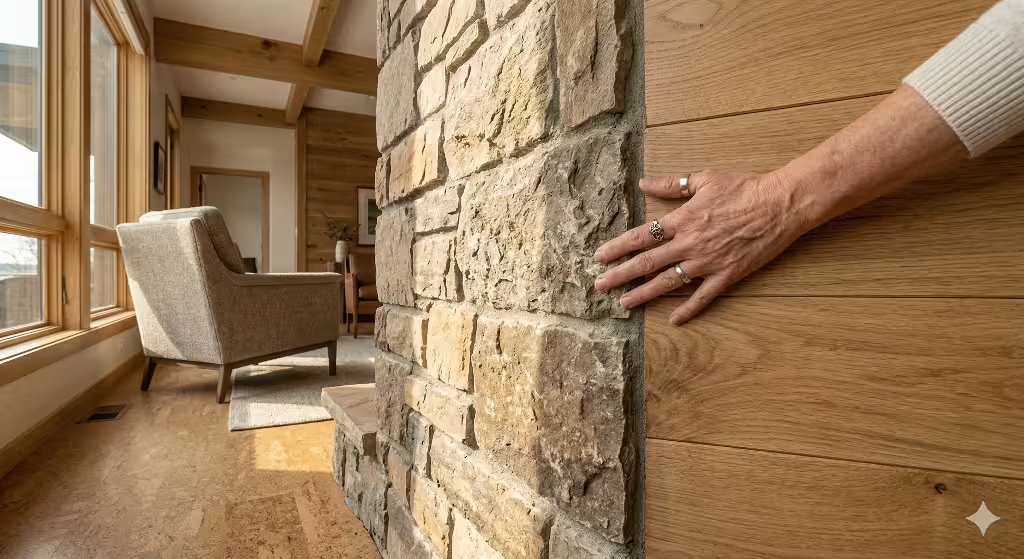
- Natural Stone: Fireplace surrounds built with stacked Tennessee fieldstone or honed soapstone hearths create stunning focal points against neutral paint colors.
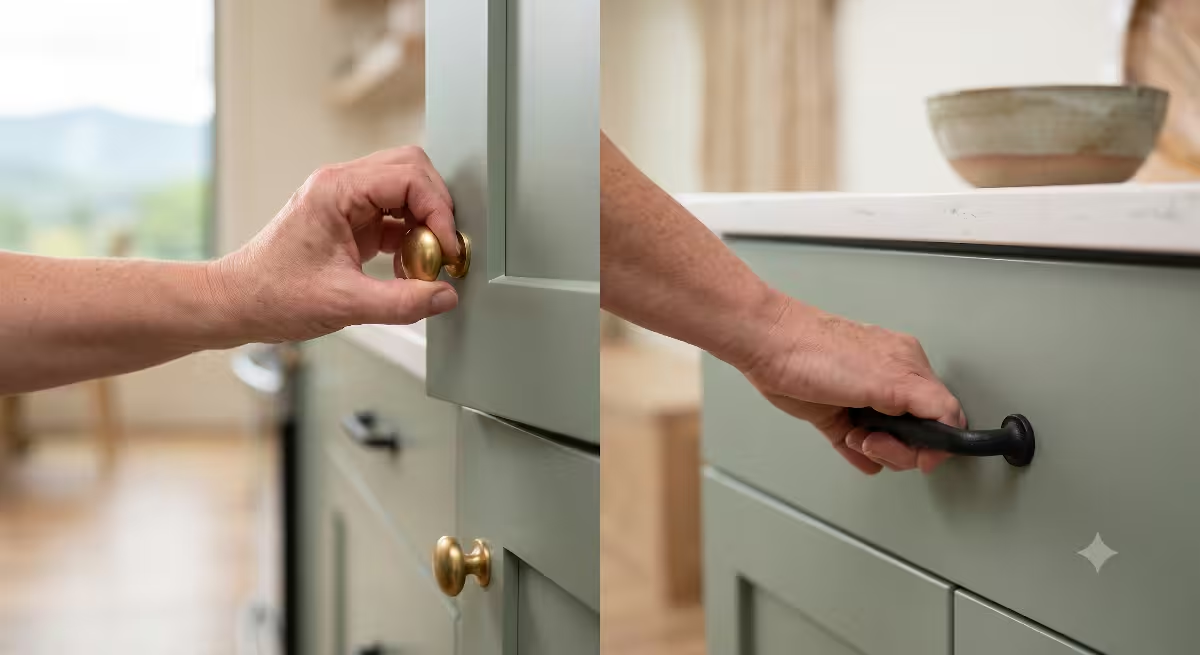
- Metals and Hardware: Matte black light fixtures, brushed brass cabinet pulls, and polished nickel faucets stand out crisply when framed by neutral paint colors.
- Wood Accents: Exposed ceiling beams, shiplap accent walls, and custom white oak kitchen islands add warmth and architectural character.
By layering these diverse materials against a backdrop of neutral paint colors, you achieve a sophisticated, magazine-quality interior that feels comfortable, lived-in, and enduring. You can effortlessly refresh your home seasonal aesthetic simply by swapping out table runners, accent throws, or mantel greenery without ever needing to repaint your walls.
Practical Room-by-Room Guide for Custom Home Finish Schedules
To streamline your selection process, the following room-by-room guide demonstrates how to pair wall sheens, lighting temperatures, and palettes for a cohesive home:
Foyer and Main Hallways
- Lighting Temperature: 2700K to 3000K (Warm White) for an inviting entrance.
- Paint Sheen: Eggshell or Satin for scrubbability in high-traffic corridors.
- Color Strategy: Use balanced neutral paint colors that introduce the primary palette of the house.
- Key Feature: Wide baseboards and wainscoting painted in a coordinating soft white enamel.
Living and Entertaining Rooms
- Lighting Temperature: 3000K recessed lighting paired with warm table lamps.
- Paint Sheen: Flat or Matte to hide drywall joints and absorb glare from large windows.
- Color Strategy: Apply warm greige or creamy linen neutral paint colors to foster a welcoming, relaxing atmosphere.
- Key Feature: Built-in bookshelves flanking a stone fireplace, with cabinet interiors painted one shade deeper than the surrounding neutral paint colors.
Kitchen and Pantry Areas
- Lighting Temperature: 3000K to 3500K for clear task lighting while preparing meals.
- Paint Sheen: Satin or Semi-Gloss for moisture and grease resistance.
- Color Strategy: Pair warm off-white neutral paint colors with natural wood or painted cabinetry.
- Key Feature: Under-cabinet LED strips highlighting quartz countertops and ceramic tile backsplashes.
Primary Suite and Guest Bedrooms
- Lighting Temperature: 2700K for relaxing, restful evenings.
- Paint Sheen: Matte or Eggshell for a velvety, serene finish.
- Color Strategy: Use muted taupe, soft almond, or gentle gray neutral paint colors to encourage deep sleep.
- Key Feature: Blackout drapery mounted close to the ceiling, complementing wall colors.
Bathrooms and Laundry Spaces
- Lighting Temperature: 3000K with high Color Rendering Index (CRI 90+) for accurate mirror reflection.
- Paint Sheen: Satin or Semi-Gloss with built-in antimicrobial mildew inhibitors.
- Color Strategy: Clean, light-reflecting neutral paint colors that keep compact spaces feeling fresh and bright.
- Key Feature: Floating wood vanities paired with porcelain tile flooring.
Maintenance and Long-Term Care for Custom Painted Finishes
Once your home is complete and you have moved in, keeping your painted surfaces looking fresh requires basic maintenance. High-traffic areas like baseboards, door frames, and kitchen walls naturally pick up scuffs, fingerprints, and dust over time.
Follow these simple rules to preserve your interior finishes:
- Curing Time: Modern latex paints dry to the touch within hours, but they take thirty days to fully cure to their maximum hardness. Avoid scrubbing newly painted walls with wet sponges or harsh cleaners during the first month.
- Gentle Cleaning: When cleaning walls finished in neutral paint colors, use a soft microfiber cloth dampened with warm water and a few drops of mild dish soap. Never use abrasive scrubbing pads or ammonia-based cleaners, which can dull the paint sheen and leave permanent shiny spots.
- Touch-Up Storage: Keep leftover cans of your original neutral paint colors stored in a climate-controlled area, such as a utility closet, rather than an unheated garage or damp basement. Extreme temperature swings can ruin the chemical balance of stored paint.
- Labeling Paint Cans: Clearly label every leftover paint can with the specific room name, paint brand, color formula, and sheen. Having this information readily available makes minor touch-ups fast and hassle-free.
Building Your Dream Home with Confidence and Integrity
Building a custom home in the Tri-Cities region is an exciting, life-changing journey. When you approach the process with technical precision, a firm grasp of site development, and a clear vision for how your family lives, you turn a complex construction project into a smooth, rewarding experience.
Every structural beam, electrical circuit, plumbing line, and coat of finish paint contributes to the safety, comfort, and beauty of your living space. By anchoring your home design with functional floor plans, high-grade craftsmanship, and a timeless foundation of neutral paint colors, you create a residence that will serve your family reliably and hold its value for generations to come.
Approach your build with patience, ask detailed questions of your contractors, verify every building detail, and enjoy the process of bringing your custom East Tennessee home to life.