Selection of cabinet hardware is often treated as purely a decorative choice. Most homeowners spend hours matching finishes to their faucets or lighting fixtures, but they rarely consider how cabinet hardware impacts physical effort and joint comfort. Choosing the right cabinet hardware shapes how easy or painful opening a heavy drawer can be. In this proven guide, we will look at the science, biomechanics, and mechanical advantage behind choosing cabinet hardware that protects your joints and maximizes your hand strength.
Biomechanics 101: How Hand Ergonomics Impact Daily Kitchen Use
To understand why certain cabinet hardware feels easier to use than others, we need to look at how the human hand works. When you open a kitchen drawer or door, your hand performs one of two main gripping actions: a precision pinch grip or a power hook grip.
Pinch Grip (Knobs) vs. Hook/Power Grip (D-Pulls)
A standard cabinet knob requires a precision pinch grip. To pull a knob, you must compress your thumb against your index and middle fingers. This action relies entirely on small muscles in your hand, such as the flexor pollicis longus in the thumb and the flexor digitorum profundus in the fingers. These tiny muscles have limited strength and tire out quickly under heavy load.
When you use a D-pull cabinet hardware design, your hand uses a hook grip or a power grip. Instead of pinching a tiny surface area, your fingers curve behind the handle bar. This allows you to engage the larger flexor digitorum superficialis muscles in your fingers along with the major muscle groups in your forearm, biceps, and shoulders.
Using a power grip with a D-pull cabinet hardware handle reduces the force needed from your individual finger joints by up to 75 percent compared to a pinch grip knob. For women, who generally have smaller hand surface areas, or anyone living with joint inflammation, shifting from a pinch grip to a power grip makes an immediate difference in daily comfort.
PINCH GRIP (Cabinet Knobs)
[ Thumb ] ──► ( Small Knob Surface ) ◄── [ Index Finger ]
* Relies on small hand muscles
* Focuses high pressure on finger joints
* Requires active pinching force to prevent slippage

HOOK / POWER GRIP (D-Pull Handles)
[ 4 Fingers Hooked Behind Bar ] ◄════ ( Pulling Force from Forearm & Arm )
* Engages large forearm and arm muscles
* Eliminates need for finger squeezing
* Distributes load evenly across whole hand
Wrist Joint Torque and Rotation
Another critical biomechanical factor is wrist alignment. Opening a heavy drawer using a cabinet knob often forces your wrist into an awkward angle. If the drawer sticks or holds heavy cookware, your wrist may twist or bend sideways. This twisting motion creates joint torque, which places stress on the delicate tendons passing through your carpal tunnel.
A well-designed D-pull cabinet hardware setup keeps your wrist in a neutral position. A neutral wrist means your hand stays in a straight line with your forearm. When your wrist remains straight, pulling force travels directly down your forearm muscles without pinching nerves or overloading your wrist joint. Choosing ergonomic cabinet hardware keeps your body aligned and protects your wrists during daily cooking activities.
Why are knobs harder to pull for people with arthritis or hand weakness?
Direct Answer: Knobs require a precision pinch grip, which forces you to squeeze a small object between your thumb and fingertips. This action concentrates heavy pressure directly on small finger joints that are frequently inflamed by arthritis. Furthermore, knobs rely entirely on friction to prevent your fingers from slipping off. A D-pull style of cabinet hardware allows you to slip your fingers behind a solid bar, using a hook grip that relies on forearm strength rather than painful finger compression.
Mechanical Advantage: Tensile Force, Leverage & Drawer Weight
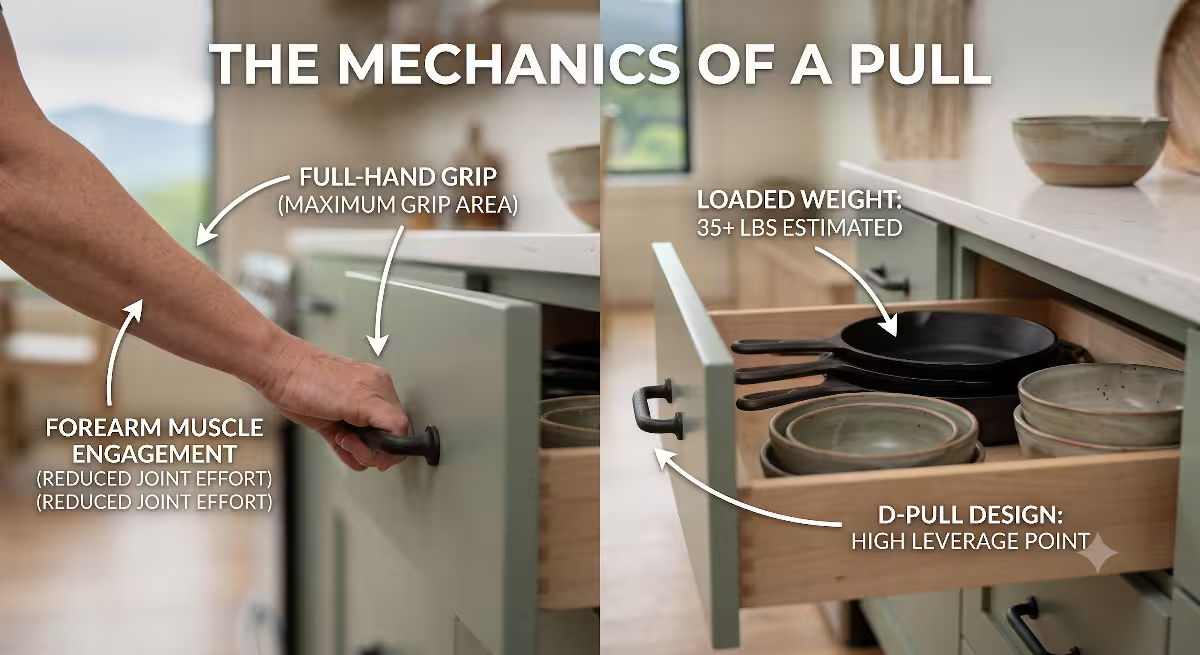
Generally kitchen drawers are simple mechanical systems. A kitchen drawer is a moving container that holds weight and creates friction against its slide rails. The mechanical force required to open a drawer depends on the total weight inside and the leverage provided by your cabinet hardware.
Tensile Force and Drawer Resistance
When a drawer is fully loaded with heavy cast iron skillets, glass baking dishes, or canned goods, it can easily weigh 30 to 50 pounds. Static friction causes the drawer to resist moving when you first pull it. To overcome this resting friction, you must apply a high initial pulling force.
If your kitchen relies on a single small cabinet hardware knob in the center of a wide drawer, all that pulling force is concentrated onto one tiny screw point and a single finger-pinch grip. If you pull slightly off-center, the drawer can bind against its side tracks, requiring even more force to open.
In contrast, a wide D-pull cabinet hardware handle provides two mounting points spaced several inches apart. This double attachment distributes pulling force across a wider area on the drawer faceplate, helping the drawer slide out smoothly without racking or jamming.
| Feature or Metric | Standard Cabinet Knob | Standard D-Pull Cabinet Hardware | Extended Appliance Pull |
| Primary Grip Type | Precision Pinch Grip | 3 to 4 Finger Hook Grip | Full Palm / Two-Hand Power Grip |
| Contact Points to Cabinet | 1 Mounting Point | 2 Mounting Points | 2 or More Heavy Mounting Points |
| Joint Strain Level | High (Small Finger Joints) | Low (Distributed to Forearm) | Minimal (Uses Shoulder & Core) |
| Best Suited For | Light upper cabinet doors | Standard drawers, pantries | Deep pot drawers, panel fridges |
| ADA Accessibility Rating | Poor (Requires Pinching) | Excellent (Closed Fist / Hook) | Excellent (Multi-Hand Operation) |
Weight Distribution Across Fasteners
From a structural standpoint, single-point cabinet hardware fasteners are far more likely to loosen over time. A single knob screw experiences rotational torque every time someone twists or tugs on it. Over months of use, this causes the screw to work loose inside the wood faceplate.
Two-point D-pull cabinet hardware uses two separate machine screws anchored into the cabinet door or drawer face. This dual-screw arrangement prevents the handle from spinning or twisting. It also splits the tensile load between two points, reducing strain on the cabinet door material and extending the life of your kitchen cabinetry.
Friction and Surface Area
Cabinet knobs rely on surface friction between your skin and the knob finish to create pull leverage. If your hands are wet, soapy, or smooth from lotion, your fingers will slip off polished cabinet hardware knobs. To compensate for this loss of traction, your brain automatically signals your fingers to pinch much harder. This subconscious squeezing creates sharp spikes in joint pressure.
A D-pull style of cabinet hardware eliminates reliance on surface friction. Because your fingers hook physically behind the metal bar, your hand cannot slip forward even if your skin is wet or soapy. Your hand effortlessly stays in place behind the cabinet hardware without requiring any extra squeezing force.
Key Specifications of an Ergonomic D-Pull
Not every pull handle on the market offers the same ergonomic benefits. When selecting cabinet hardware for ease of use, you must pay attention to specific physical dimensions. A pull handle that is too small or too shallow can be just as difficult to use as a knob.
                      PROJECTION DEPTH (CLEARANCE)
                            ┌──────────────┐
                            │  1.38" - 1.5"│
                            └──────┬───────┘
                                   │
               ┌───────────────────┴───────────────────┐
               │                                       │
    ┌──────────┴───────────────────────────────────────┴──────────┐
    │                                                             │
    │                   CENTER-TO-CENTER (CTC)                    │
    │                       4.0" to 6.0"                          │
    │                                                             │
 ═══╧═════════════════════════════════════════════════════════════╧═══
                     CABINET DRAWER OR DOOR FACE
Center-to-Center (CTC) Spacing
Center-to-center spacing (CTC) refers to the distance between the centers of the two screw holes in your cabinet hardware. Standard CTC measurements for residential cabinet hardware include 3 inches, 3.75 inches, 4 inches, 5 inches, and 6 inches.
For optimal grip strength and comfort, I recommend choosing cabinet hardware with a minimum CTC distance of 4 inches to 5 inches. A 3-inch pull handle is often too narrow to fit four adult fingers comfortably. When a handle is too short, your pinky or index finger gets squished against the mounting posts. A 5-inch or 6-inch CTC pull handle allows all four fingers to slide behind the bar comfortably, giving you full hand power.
Projection Depth (Finger Clearance)
Projection depth is the distance from the face of the cabinet door to the inside surface of the handle bar. This measurement determines how much finger clearance you have when grabbing your cabinet hardware.
Many modern minimalist pull designs feature low-profile projections of 0.75 inches to 1 inch. While these sleek styles look trim against cabinet doors, they leave very little room for your hand. A shallow projection forces you to pull using only your fingertips, which completely defeats the purpose of choosing pull handles over knobs.
For true ergonomic support, select cabinet hardware with a projection depth between 1.38 inches and 1.5 inches (35 to 38 mm). This generous clearance allows your fingers to pass freely behind the handle without scraping your knuckles against the cabinet paint.
Bar Diameter and Inner Edge Profile
The shape of the handle bar itself plays a huge role in hand comfort. When pulling a heavy drawer, the weight of the drawer presses directly against the palm side of your fingers.
Flat or Sharp-Edged Pulls: Modern square-edged cabinet hardware can cut into the soft tissue of your fingers under heavy load. These sharp edges create painful pressure points.
Round or Soft-Ovate Pulls: D-pull cabinet hardware with a softly rounded inner surface distributes pressure evenly across the skin of your fingers.
Bar Diameter: Look for a comfortable bar diameter between 3/8 inch and 1/2 inch. A handle bar that is too thin feels like a wire digging into your hand, while a bar that is too thick can be hard for smaller hands to wrap around securely.
What projection depth is best for limited hand mobility?
Direct Answer: For limited hand mobility or joint stiffness, the best cabinet hardware projection depth is between 1.38 inches and 1.5 inches. This clearance ensures that fingers can slide behind the handle bar without needing precise finger aim or forcing knuckles to drag across the cabinet surface.
Strategic Placement: Mapping Hardware by Cabinet Function & Resistance Zone
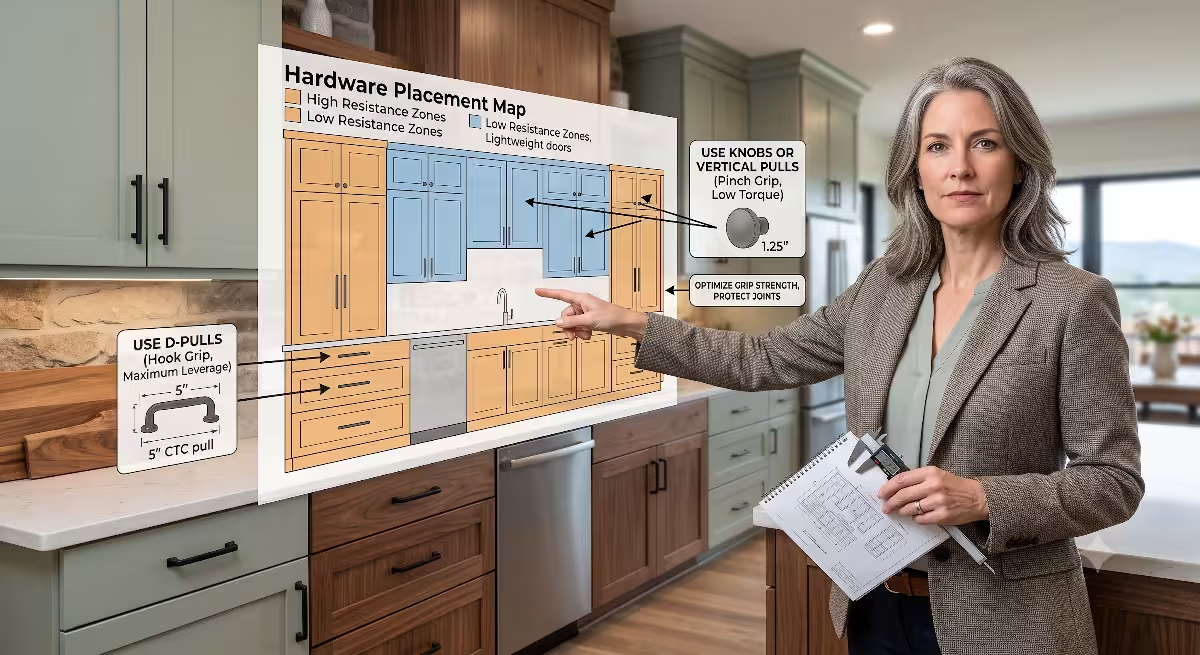
In a well-designed custom kitchen, you do not have to use the exact same style of cabinet hardware everywhere. As a builder, I like to map out hardware selections based on functional resistance zones throughout the kitchen.
Mixing Hardware Gracefully
Many homeowners worry that using different styles of cabinet hardware in the same kitchen will look mismatched. You can easily blend knobs and pulls together while maintaining a cohesive look across your home interior.
To mix cabinet hardware smoothly, stick to one consistent metal finish throughout the room. For example, pair matte black round knobs on upper wall cabinets with matching matte black D-pull cabinet hardware on lower base drawers. Keeping the material, color, and finish identical binds the design together, while the different hardware shapes handle the functional needs of each cabinet zone.
Universal Design & ADA Guidelines
Universal design is the philosophy of creating spaces that are usable by all people, regardless of age, size, or physical ability. As more homeowners choose to age in place in the Tri-Cities area, universal design principles have become a core standard in modern custom home construction.
ADA COMPLIANT HARDWARE REQUIREMENTS (Standard 309.4)
┌─────────────────────────────────────────────────────────┐
│ 1. Operable with one hand                               │
│ 2. Does NOT require tight grasping or pinching          │
│ 3. Does NOT require twisting of the wrist               │
│ 4. Requires 5 pounds of force or less to activate       │
└─────────────────────────────────────────────────────────┘
ADA Standard 309.4 Compliance for Hardware
The Americans with Disabilities Act (ADA) sets clear accessibility guidelines under Standard 309.4 for building hardware. According to these requirements, all operational hardware on doors and cabinets must satisfy four key rules:
It must be operable with one hand.
It must not require tight grasping or pinching of the fingers.
It must not require twisting of the wrist.
The force required to operate the hardware must not exceed 5 pounds.
Standard cabinet hardware knobs fail ADA compliance guidelines in high-use areas because they inherently require tight finger pinching and wrist rotation. In contrast, closed-loop D-pull cabinet hardware meets ADA standards effortlessly. A person can slide a closed fist, an open palm, or even a single finger behind a D-pull handle to operate a drawer without any pinching action.
Future-Proofing Your Custom Home
When building or remodeling a home, thinking long-term saves thousands of dollars in future modification costs. Installing ergonomic cabinet hardware during initial construction ensures your kitchen remains comfortable and accessible for decades.
Whether you are carrying a baby on one hip, holding a heavy grocery bag, or managing temporary joint recovery from a sports injury, accessible cabinet hardware benefits everyone in the household at every stage of life.
Material, Finish, and Cleaning Considerations

Beyond shape and size, the surface finish and material composition of your cabinet hardware affect daily usability and home maintenance.
Tactile Grip Qualities of Finishes
Different metal finishes provide varying amounts of skin friction. When selecting cabinet hardware, consider how the surface texture feels in your hand:
Satin Nickel and Brushed Brass: These finishes feature soft micro-textures created during the brushing process. They offer excellent tactile grip and resist slipping, making them a great choice for kitchen cabinet hardware.
Matte Black and Oil-Rubbed Bronze: Powder-coated or matte finishes offer high surface friction. They provide a non-slip grip that feels secure even if your hands are damp.
Polished Chrome and Polished Brass: Mirror-smooth finishes look brilliant, but they offer very low friction. Polished cabinet hardware can feel slick, forcing you to use extra grip effort when opening heavy drawers.
FINISH TRACTION INDEX
[ High Traction ]   Matte Black / Oil-Rubbed Bronze  (Best Non-Slip Grip)
[ Mid Traction ]    Satin Nickel / Brushed Brass     (Balanced Comfort)
[ Low Traction ]    Polished Chrome / Glass Knobs    (Slickest Surface)
Maintenance and Cleanability
Kitchens are high-mess environments where sauce splatters, flour dust, and oil droplets regularly land on surfaces. Cleaning intricate cabinet hardware knobs with deep decorative grooves can be frustrating, as grease gathers inside tight crevices.
Smooth D-pull cabinet hardware is much easier to wipe down with a damp cloth during routine kitchen cleanup. Furthermore, using wide D-pull cabinet hardware protects your cabinet door finish. When people use small knobs, their fingernails constantly brush against the painted cabinet face, causing paint chipping around the handle area over time. A D-pull handle provides enough clearance to keep hands away from painted cabinet surfaces.
Summary & Recommendation Checklist
Selecting the right cabinet hardware is one of the most effective ways to combine functional engineering with beautiful interior design. By choosing hardware that supports natural hand biomechanics, you reduce joint strain, increase leverage, and make your kitchen a joyful space to work in every day.
When shopping for your next home build or renovation, keep this handy cabinet hardware checklist with you:
[ ] Choose D-pull cabinet hardware for all drawers, base cabinets, and heavy pantry pull-outs.
[ ] Verify that center-to-center (CTC) spacing is at least 4 inches to 5 inches to fit all four fingers.
[ ] Check that projection clearance depth is at least 1.38 inches to 1.5 inches so knuckles do not scrape.
[ ] Select handle bars with rounded or smooth inner edges rather than sharp or square corners.
[ ] Look for slip-resistant finishes like satin nickel, brushed brass, or matte black for better grip traction.
[ ] Keep finish colors consistent across the room when mixing knobs on upper cabinets with pulls on lower drawers.
Taking time to evaluate cabinet hardware ergonomics ensures your custom kitchen will serve your family comfortably for a lifetime.