
Choosing the right safety system for your new house in the Tri-Cities area is a big job. Most people in the Tri-Cities do not think much about high-tech sensors. We just locked the front door and trusted our neighbors. But today, the world is different. Nowadays, technology has changed the way we build.
Buyers look at every house with a different mindset. They want to know that the bones are strong. They want to know that the systems are precise. And a lot of them are asking their builders about the choice between Hardwired vs. Wireless Home Security. It is one of the most important decisions you will make during the building process. Security is not just a gadget you buy at the store. It is part of the foundation of your family’s peace of mind.
In this article, we will explain why your choice matters. We will look at how these systems work and which one keeps your home safest. By the time we are done, you will know exactly what to tell your builder.
Security as a Structural Priority
When we build a custom home, we spend a lot of time on the floor plan. We pick out the perfect granite and the right kind of hardwood. But security should be treated just like your plumbing or your electrical wiring. You should not wait until the house is finished to think about it. If you wait, you might find yourself stuck with fewer choices. When we talk about Hardwired vs. Wireless Home Security, we are talking about how the “brain” of your home talks to the “eyes” and “ears” of the system.
A structural priority means we plan for the long term. A house in Tennessee is meant to last for decades. Your security should too. We like to think about the integrity of the system. If a system is part of the structure, it is much harder to break or bypass. For many women buying custom homes, the goal is to feel safe without having to worry about the technology every single day. You want it to work when you need it. You want it to stay out of the way when you don’t. That is why understanding Hardwired vs. Wireless Home Security is so vital from day one.
Hardwired Security: The Gold Standard of Reliability
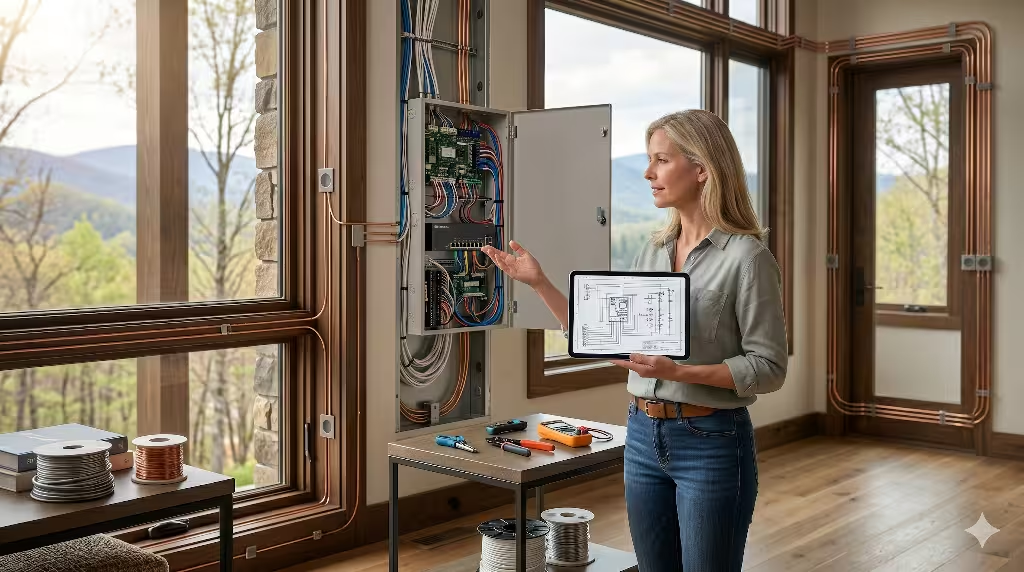
In terms of reliability, a hardwired system is the most consistent choice you can make. This system uses physical copper wires to connect every sensor and camera back to a main control panel. Think of it like the nervous system in your body. Every signal has a clear, dedicated path to follow. There is no guessing if the signal will get through. When comparing Hardwired vs. Wireless Home Security, the wired option wins on pure toughness.
One of the biggest technical parts of this is something called Power over Ethernet, or PoE. This means one single wire can give the camera power and send the video signal at the same time. This is a very clean way to build. You do not need to worry about batteries. You do not need to worry about a camera losing its connection because the internet is slow that day. The wires are hidden inside your walls. This makes them very safe from people who might want to tamper with them. In my years as a project manager, I have seen that a well-installed wired system rarely needs a repair man. It just works.
Another benefit of the hardwired approach is the lack of interference. In a busy neighborhood, there are a lot of signals flying through the air. You have cell phones, routers, and even microwaves. All of these can get in the way of a wireless signal. But a physical wire does not care about any of that. It stays steady. For anyone who values precision and competence, this is the way to go. It is the gold standard because it removes the most common points of failure. When you look at Hardwired vs. Wireless Home Security, the wired system is the one that gives you the most control over your environment.
Wireless Systems: Convenience with a Catch
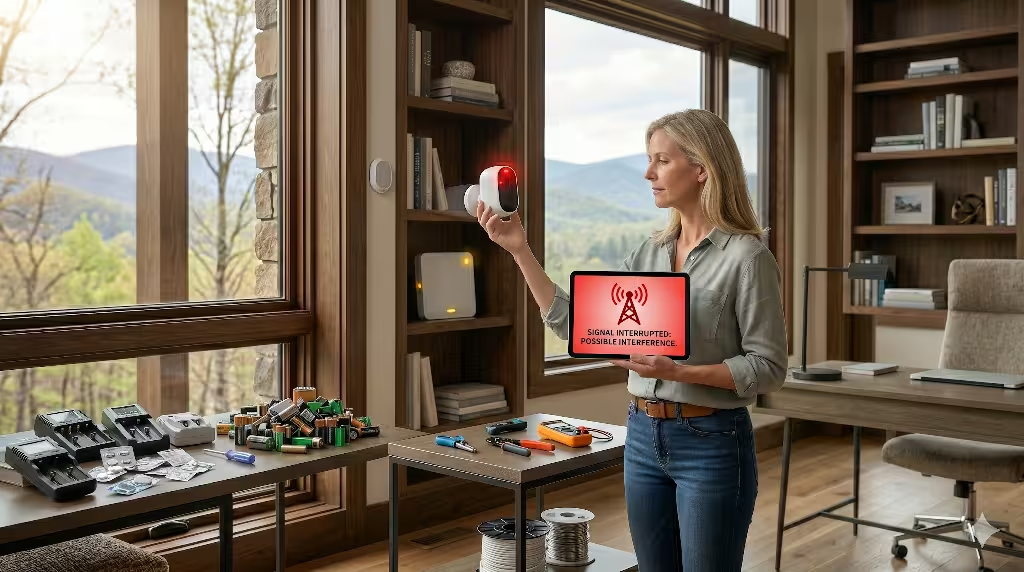
Wireless systems are very popular right now. You see them in every big box store. They are easy to buy and easy to set up. For someone who is renting an apartment or moving into an old house where they cannot open the walls, wireless is a great tool. However, for a custom home builder, there is a catch. When we look at Hardwired vs. Wireless Home Security, we have to talk about how these systems communicate. They use radio frequencies or Wi-Fi. This means the signal has to travel through the air.
The biggest catch is the battery. Wireless sensors need power to talk to the hub. This means you have to keep track of dozens of small batteries all over your house. As a busy person, I know that adding one more chore to the list is not ideal. If a battery dies in a window sensor, that window is no longer protected. You might not even know it until you check your app. This creates what we call a “mental load.” You have to remember to check the system instead of the system just taking care of you.
Another issue is signal jamming. This is something we have to take seriously in 2026. Tech-savvy intruders can use devices that create a lot of noise on the radio frequencies your system uses. If the air is full of “noise,” your wireless sensor cannot tell the hub that a door has opened. It is like trying to have a conversation in a very loud concert. You might be shouting, but the other person cannot hear you. In the debate of Hardwired vs. Wireless Home Security, this vulnerability is a big mark against wireless. While modern systems are getting better at fighting this, a physical wire can never be jammed by a radio signal.
Hardwired vs. Wireless Home Security: The Head-to-Head
To make the best choice, it helps to see the facts side by side. Let’s look at how a hardwired vs. wireless home security systems stack up in the real world. In terms of power, the hardwired system is always on. It pulls power from your home’s electrical system. It also has a big backup battery in the panel for when the power goes out. Wireless systems depend on many small batteries that can wear out at different times.
When we look at maintenance, the hardwired choice is “set it and forget it.” Once the wires are in, they stay there. Wireless systems require you to stay active. You have to update software, check battery levels, and sometimes reset the connection if your router acts up. For a home in the Tri-Cities, where we have lots of trees and hills, even your own home’s layout can block a wireless signal. Thick walls or stone fireplaces can make it hard for a wireless sensor in the back bedroom to talk to the hub in the kitchen.
Cost is another big factor. A hardwired system usually costs more to install at the start. You have to pay for the wire and the labor to run it through the attic and walls. But the parts themselves are often cheaper and last much longer. Wireless systems are cheap to buy today, but you might spend more over ten years replacing parts or paying for cloud storage. When you weigh Hardwired vs. Wireless Home Security, you are choosing between paying more now for peace of mind or paying a little bit at a time for more work.
Common Questions about Hardwired vs. Wireless Home Security
There are a lot of questions from buyers who are trying to navigate this. One common question is: “Is a wired security system better than wireless?” My answer is usually that it depends on your goals. If you are building your “forever home” in Johnson City, then yes, wired is much better. It adds value to the house and offers more reliability. But if you move every two years, a wireless system is better because you can take it with you.
Another question is: “Can wireless security systems be hacked?” The truth is that any system connected to the internet has some risk. However, wireless signals are easier to intercept than a signal inside a wire. Using strong passwords and updated software helps, but it is another thing you have to manage. In the Hardwired vs. Wireless Home Security conversation, the wired system is much harder to hack because someone would usually have to be inside your house to touch the wires.
Buyers also ask: “Do hardwired systems work when the power goes out?” Many people think that if the lights go off, the security stops. That is not true for a professional system. A hardwired panel has a large lead-acid or lithium backup battery. It can keep your sensors and sirens running for 24 hours or more. Many wireless hubs also have a backup battery, but the individual cameras might stop working if they rely on your home’s Wi-Fi, which often goes down during a power cut. This is a huge point for Hardwired vs. Wireless Home Security reliability.
Aesthetics and Mental Load
Women often think about how a house feels to live in. They want their home to be beautiful. They don’t want to see ugly white plastic boxes stuck to my hand-crafted door frames. When we choose a hardwired system during the building phase, we can hide everything. The sensors can be tiny magnets tucked inside the door itself. You won’t even see them. This keeps the design of your home looking clean and high-end. In the comparison of Hardwired vs. Wireless Home Security, the wired option is the clear winner for looks.
They also care about the mental load. As women, we often manage the schedules and the needs of the whole family. The last thing we need is an app on our phone buzzing every five minutes because a battery is at 10 percent. We want a home that supports us, not a home that gives us more work to do. A reliable hardwired system means one less thing to track. It provides a quiet sense of safety. When you choose Hardwired vs. Wireless Home Security, think about your future self. Will you be happy climbing a ladder to change a camera battery in the middle of a cold January in Tennessee? Probably not.
Security should also be easy to use for everyone in the house. A hardwired system often comes with a permanent keypad by the garage door or the master bedroom. It is always there. It never gets lost under a couch cushion like a remote or a phone might. This kind of precision and reliability is what we look for in every product we recommend. Choosing between Hardwired vs. Wireless Home Security is about making your life simpler in the long run.
Local Considerations for the Tri-Cities Area
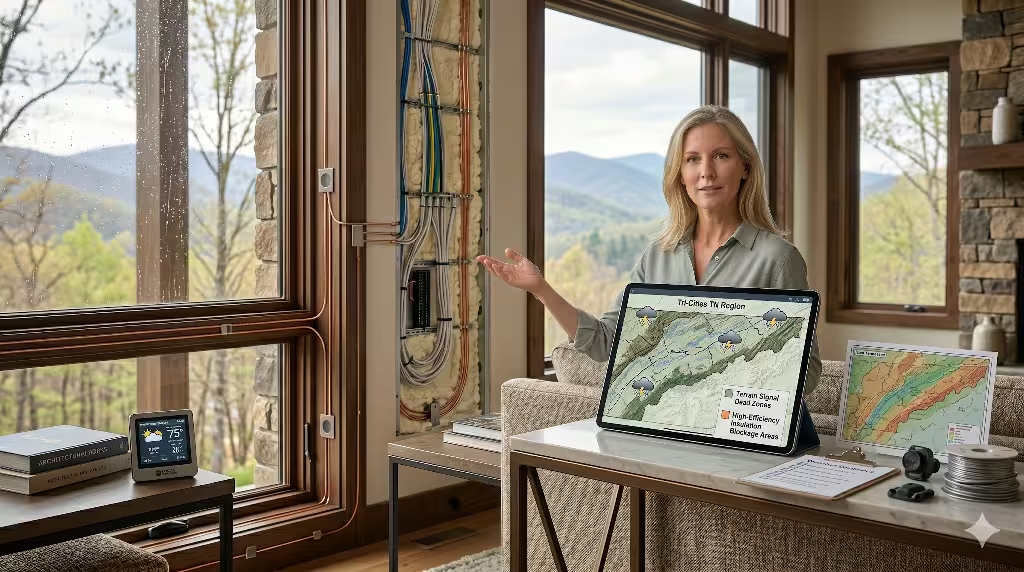
Building in East Tennessee is different than building in a flat area like Florida. We have humidity, mountains, and some pretty wild weather. In the Tri-Cities, we often have heavy rain and wind that can knock out power or internet lines. If you rely entirely on a wireless system that needs the cloud to work, you might be left without protection during a storm. This is a major factor when looking at Hardwired vs. Wireless Home Security.
Our homes here are also being built with better materials. We use energy-efficient insulation and sometimes even metal roofing or stone veneers. These materials are great for keeping your house warm, but they are terrible for wireless signals. There are some houses in Johnson City where the Wi-Fi cannot even get through to the garage because of the way the house was built. If you are building a custom home with these high-quality materials, a wireless system might struggle to stay connected. This is why we advocate for the wired approach in the Tri-Cities region.
There is also the matter of our local service providers. While we have good internet in most parts of Kingsport and Johnson City, it is not perfect. A hardwired system can record video locally to a hard drive in your house. It does not need the internet to keep a record of what happened. If a storm knocks out your cable line, a hardwired NVR (Network Video Recorder) will still be recording every move. In the battle of Hardwired vs. Wireless Home Security, local storage is a massive advantage for those of us living in the hills of Tennessee.
Understanding the Construction Phases for Security
If you decide that a hardwired system is right for you, timing is everything. There are three main phases where security comes into play. The first is the design phase. This is when you and your builder look at the blueprints. You decide where the cameras should go and which doors need sensors. This is the best time to plan for Hardwired vs. Wireless Home Security. You can make sure there is a path for the wires to travel from the basement to the attic.
The second phase is the “rough-in.” This happens after the wood frame is up but before the drywall is put on. This is when the low-voltage crew comes in to run the purple or blue wires to every corner of the house. It is a very clean process. Once the drywall goes up, those wires are safe and sound inside the walls. If you miss this window, it becomes much harder and more expensive to choose the wired side of the Hardwired vs. Wireless Home Security debate. You would have to fish wires through finished walls, which is a messy job.
The final phase is the “trim-out.” This happens after the house is painted and the floors are done. This is when the actual cameras and keypads are attached to the wires. Because the hard work was done during the rough-in, this part is very fast. The technician just clicks the devices into place. When you compare Hardwired vs. Wireless Home Security at this stage, the wired system looks like it was always meant to be there. It is part of the home’s integrity.
The Engineering of a Reliable Signal
In this section, we want to talk a bit about why wires are better from a technical view. Here you have to look at the signal-to-noise ratio. Every time you send a signal through the air, it gets weaker. It also picks up “noise” from other devices. A copper wire is shielded. This means it has a jacket that keeps the “noise” out. The signal stays strong and pure from the sensor all the way to the panel. This is the core of the Hardwired vs. Wireless Home Security reliability argument.
We also have to think about bandwidth. High-definition cameras today send a lot of data. If you have four or five 4K cameras all trying to use your Wi-Fi at once, your internet will slow down. You might see “buffering” when you try to watch a movie. But with a hardwired system, the cameras have their own private “highway” to travel on. They do not use your Wi-Fi at all. This keeps your home network fast for your family while keeping your security solid. When people ask about Hardwired vs. Wireless Home Security, they often forget how much a security system can slow down their Netflix.
Reliability also means the system can tell the difference between a real event and a glitch. Wireless systems are more prone to “false positives” or losing a heartbeat signal. This can lead to annoying alarms that go off for no reason. A hardwired system is supervised. This means the panel is constantly checking the wire to make sure it hasn’t been cut. If a wire is damaged, the system knows immediately. This level of precision is why professionals always prefer a wired foundation when discussing Hardwired vs. Wireless Home Security.
The Financial Side of Hardwired vs. Wireless Home Security Systems
Let’s talk about money. We know that building a home in the Tri-Cities is a big investment. You want to spend your money wisely. A wireless system seems cheaper because you can buy a kit for a few hundred dollars. But you have to think about the “hidden costs.” You will buy many batteries over the years. You will likely pay a monthly fee for cloud storage because most wireless cameras cannot save video locally. These fees can add up to thousands of dollars over the life of the home.
A hardwired system has a higher upfront cost for the labor of the install. However, the cameras and sensors are often cheaper to replace because they don’t need fancy battery tech inside them. Also, because you can save video to your own hard drive (an NVR), you don’t always have to pay a monthly fee just to see your own footage. In the long run, the choice of Hardwired vs. Wireless Home Security often favors the wired system for the budget-conscious homeowner.
There is also the impact on your home’s resale value. When someone buys a house in Johnson City, they look for quality. Seeing a professionally installed, hardwired security system tells a buyer that the owner cared about the details. It is a feature, like a central vacuum or a high-end HVAC system. A wireless system is something you take with you, so it adds no value to the house itself. When looking at Hardwired vs. Wireless Home Security from a real estate view, the wired system is an asset that stays with the property.
Managing the Installation Process
If you are working with a builder, you need to be direct about what you want. Some builders prefer wireless because it is easier for them. They don’t have to coordinate with a low-voltage team. But as the buyer, you have the right to ask for a better system. I suggest finding a local security expert in the Tri-Cities who can work alongside your builder. This ensures that the Hardwired vs. Wireless Home Security decision is handled by a pro.
During the build, make sure you take photos of where the wires are before the drywall goes up. This is a great tip for any part of your home building journey. If you ever want to add a camera later, you will know exactly where the wires are hidden. This kind of precision makes future upgrades a breeze. It also ensures that the integrity of the system is maintained. When you compare Hardwired vs. Wireless Home Security, the ability to plan ahead is one of the biggest perks of going with wires.
Don’t be afraid to ask technical questions. Ask what kind of wire they are using. We recommend at least CAT6 wire for cameras. It is fast and will handle the tech of the future. By being involved in the process, you ensure that your Hardwired vs. Wireless Home Security choice is one that you will be happy with for a long time. It shows competence and keeps the project on track.
Data Privacy and the Cloud
In 2026, privacy is more important than ever. Many wireless systems send your video to the cloud. This means your private life is being stored on a server owned by a big tech company. While they say it is secure, we have all seen news about data leaks. For many of the women I work with, this is a big concern. They want their home to be a private sanctuary. When we look at Hardwired vs. Wireless Home Security, the wired system offers a more private option.
A hardwired system can keep all your data inside your own four walls. You can have a recording box in your closet that holds weeks of video. You can still look at it on your phone, but the “master copy” is in your house, not in the cloud. This gives you more power over your own information. In the debate of Hardwired vs. Wireless Home Security, this is a major win for privacy. You are not relying on a third party to keep your family’s daily routines safe.
This also means that if the tech company goes out of business or changes their rules, your system still works. We have seen many “smart” gadgets stop working because the company turned off the servers. A hardwired system that you own and control is not at the mercy of a big corporation. It is about integrity and staying independent. When you weigh Hardwired vs. Wireless Home Security, think about who you want to own your data.
Why a Hybrid Approach is Sometimes Best
Sometimes, the best answer is a mix of both. We often suggest a “wired backbone.” This means we wire the most important things: the front door camera, the back patio camera, and the main entry sensors. These are the things that must work 100 percent of the time. This gives you the best of Hardwired vs. Wireless Home Security. You get the rock-solid reliability where it counts the most.
Then, we can use wireless for the “extras.” Maybe you want a sensor on a liquor cabinet or a specific drawer. Or perhaps you want a camera in the nursery that you will only need for a few years. For these things, wireless is perfect. It is flexible and easy to move around. By combining Hardwired vs. Wireless Home Security, you get a system that is both strong and adaptable. This is the kind of smart engineering I love to see in a custom home.
This hybrid model also helps with the budget. You can spend your money on the professional wiring for the exterior, which is hard to do later. Then you can add DIY wireless sensors inside as you go. It is a precise way to get exactly what you need without overspending. When you look at Hardwired vs. Wireless Home Security as a team instead of a fight, you win.
The Integrity of a Safe Home
At the end of the day, a home is more than just walls and a roof. It is where you raise your children and share meals with your friends. It is where you should feel the most relaxed. Having a security system that you can trust is a big part of that feeling. Whether you choose Hardwired vs. Wireless Home Security, the goal is the same: to protect what matters most with integrity and competence.
We have seen the peace that a good system brings. Women buyers do not want to worry about being home alone while her husband is traveling for work. This is why she put in a hardwired system with cameras so she could check from her bed. The first night it was active, she told me she finally slept through the night. She knew that the wires were there, the power was on, and the system was watching over her. Understanding the nuances of Hardwired vs. Wireless Home Security helps people find that kind of peace.
Precision matters. Whether it is the way a door closes or the way a sensor sends a signal, the details make the difference. As you move forward with your home building journey in the Tri-Cities, keep these things in mind. Don’t settle for the easy choice if it isn’t the best choice for your family. The Hardwired vs. Wireless Home Security decision is yours to make, and now you have the facts to make it well.
Final Expert Recommendation in the Hardwired vs. Wireless Home Security Debate
Our advice for anyone building a custom home is clear. Always run the wires. Even if you don’t buy the expensive cameras right away, have the builder put the wires in the walls while the house is being built. It is very cheap to do at that stage. This keeps your options open. It is the most competent way to handle the Hardwired vs. Wireless Home Security question. You are building for the future.
If you are already in a house and cannot add wires, then a high-quality wireless system is a good second choice. Just make sure you get one with a good reputation and stay on top of the battery changes. But for my new builders in Kingsport, Johnson City, and Bristol, the wired path is the one I walk every time. It offers a level of safety that wireless just cannot match yet. When we talk about Hardwired vs. Wireless Home Security, we are talking about the long-term health of your home.
Security is a complicated topic, but it is one that pays off every single day you live in your house. Remember, a house is only as good as the systems that keep it running. Choose with precision, act with integrity, and enjoy your beautiful new home.
In the end, the choice between Hardwired vs. Wireless Home Security is about your lifestyle. If you want a system that works like a professional tool, go wired. If you want something that moves with you, go wireless. But no matter what, make sure you have a plan. Safety is not an accident; it is something we build on purpose. Keep asking questions and keep looking for the best ways to make your home a haven.