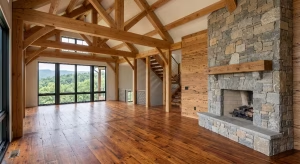
When we look at the 2026 real estate data for Northeast Tennessee, the numbers tell a clear story. In the Tri-Cities, where the landscape is as rugged as it is beautiful, the “price per square foot” metric is often a trap. To truly understand if it is worth spending more on a quality built home, we have to look past the granite countertops and into the thermal envelope and structural physics of the building.
Below is an in-depth analysis of the current market. This article is designed to give you the technical clarity needed to make a sound financial decision in today’s economy.
Is It Worth Spending More on a Quality Built Home? The 2026 Reality
Buying a house in the Tri-Cities area of Tennessee is a big deal. Whether you are looking in Johnson City, Kingsport, or Bristol, you will notice a wide range of prices. Some houses look great on the outside but are priced much lower than others. This leads many people to ask one main question: is it worth spending more on a quality built home? In 2026, the answer is more important than ever.
The real estate market has changed a lot lately. We are seeing more people move to our beautiful Appalachian hills. This means more houses are being built quickly. When houses are built fast, sometimes the small details get missed. A quality built home is not just about having a fancy kitchen. It is about how the house stands up to the weather, how much it costs to keep warm in the winter, and how long the roof lasts.
When you choose a quality built home, you are looking at the total cost of owning it over many years. You might pay more today, but you could save thousands of dollars on repairs and power bills later. This article will help you see why the “cheaper” option can often be the most expensive mistake you ever make. We will look at the science of building and the math of the local market to see if that extra money is a good investment.
The Economics of Quality vs. Cheap Construction in Tennessee
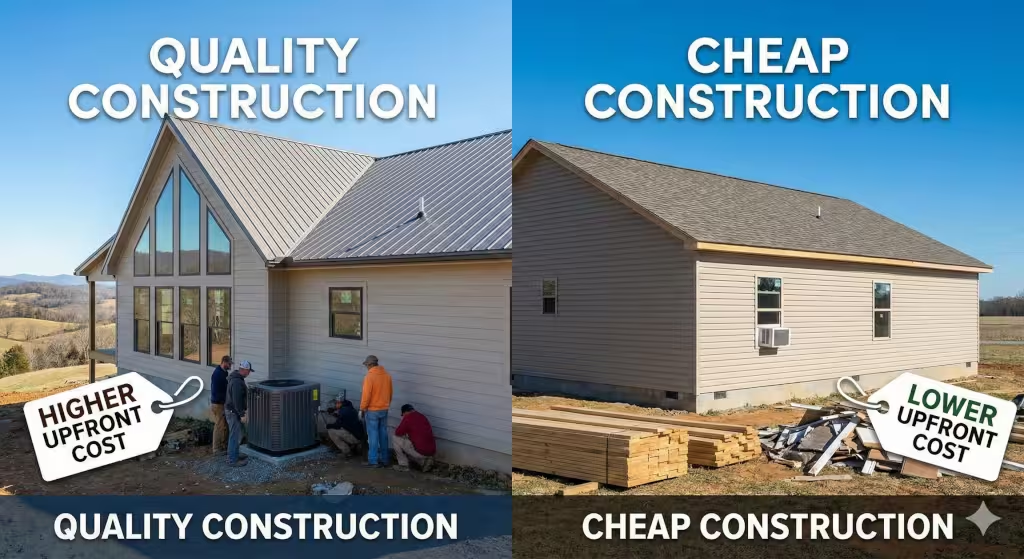
In the Tri-Cities, we have a unique climate. We get hot, sticky summers and cold, damp winters. This weather puts a lot of stress on a house. If a builder uses cheap materials to save money, the house will show it very soon. A quality built home uses materials that can handle the Tennessee humidity without rotting or warping.
Think about the difference between a basic house and a quality home like the difference between a cheap pair of boots and a high-grade pair. The cheap boots might look good for a week, but after one hike in the mud, they fall apart. A quality built home is made to last for decades. In 2026, the cost of labor and wood has gone up. This means some builders are trying to cut corners to keep prices low. They might use thinner wood or cheaper windows.
When you buy a quality built home, you are paying for better insulation and stronger frames. For example, a quality built home might have a very high R-value in the walls. This R-value tells you how well the house keeps heat inside. A house with low quality might have high power bills every month. Over ten years, those high bills add up to more than the extra money you would have spent on a quality built home at the start.
Structural Integrity and Longevity: What Is Behind the Walls?
Most people only see the paint and the flooring when they walk through a house. But the real value of a quality built home is hidden behind the drywall. The “bones” of the house are what matter most. A quality built home uses better lumber that is less likely to twist. It also uses advanced framing techniques that make the whole structure stronger against wind and storms.
In our region, we have a lot of clay in the soil. This clay can expand and shrink when it rains. If a house is not a quality built home, the foundation might crack because the builder did not prepare the ground correctly. A quality home will have a foundation that is reinforced with extra steel and has a great drainage system. This keeps your basement or crawl space dry and safe from mold.
Another key part of a quality built home is the roof. Cheap shingles might only last ten years before they start to leak. A quality built home often uses architectural shingles or metal roofing that can last 30 to 50 years. When you realize that a new roof can cost $15,000 or more, you see why a quality home is a better deal. You won’t have to worry about leaks every time a big thunderstorm rolls through the mountains.
Frequently Asked Questions about Quality Built Homes
Many buyers in the Tri-Cities have similar worries when looking for a house. Here are some of the most common questions people ask about finding a quality built home.
Does build quality really help with the resale price?
Yes, it does. In 2026, buyers are much smarter. They look at the “home health report” and utility bills before they buy. A quality built home will always sell faster and for more money because it has fewer problems. If two houses look the same but one is a quality home with lower bills, that is the one people will fight over.
How can I tell if a builder is making a quality built home?
You should look for specific signs. Check the brand of the windows. Ask about the type of insulation they use. A builder of a quality built home will be proud to show you these things. They will talk about “Building Science” and “Energy Star” ratings. If a builder only talks about the “pretty” things like paint, they might not be making a quality built home.
Is it cheaper to build new or buy an old house in Tri-Cities?
Right now, building a new quality built home can cost more upfront. But older houses in our area often need new wiring, new pipes, or new roofs. When you add those costs up, a new quality built home often ends up being the better financial choice over five to ten years.
The 2026 Tri-Cities Real Estate Landscape
The Tri-Cities area is growing fast. We have more people moving here from big cities who want a quality built home with a view. This demand has pushed prices up in Sullivan County and Washington County. Because there is so much demand, some “spec” homes are being built very fast. These are often not the same as a custom quality built home.
In 2026, the local market values “efficiency” more than ever. People are tired of paying $300 a month for electricity. A quality built home that is airtight and well-insulated is a huge selling point. The local appraisal process has also changed. Appraisers are starting to give more value to things like high-end HVAC systems and triple-pane windows. This means the extra money you put into a quality built home is recognized by the bank.
Living in the Appalachian foothills means we have steep lots. A quality home on a hill requires expert engineering. If you buy a house that was built cheaply on a slope, you could face massive bills for retaining walls later. A quality home will have these features built in correctly from day one. It is all about protecting your investment from the local terrain.
Things to Keep In Mind
When you are searching for your next place, you might see terms like “high-performance,” “custom build,” or “energy-efficient.” These are all related to a quality built home. Smart buyers look for these terms because they point to better construction. A quality built home isn’t just a label; it is a collection of high-end parts working together.
Words like “thermal bridge” or “moisture barrier” might sound technical, but they are the heart of a quality built home. A house that breathes well doesn’t get moldy. A quality built home uses a “house wrap” that lets air move but keeps water out. This is very important in the damp Tennessee climate. If a house doesn’t have a good barrier, the wood inside the walls can rot without you ever knowing.
Another term to look for is “low-VOC materials.” A quality built home often uses paints and glues that don’t release bad chemicals into the air. This makes the home healthier for your family. In 2026, health is a big part of what makes a house a quality built home. You want a place that is safe to breathe in, especially with the high pollen counts we have in the spring.
The Comfort Factor: The Intangible ROI of Better Building
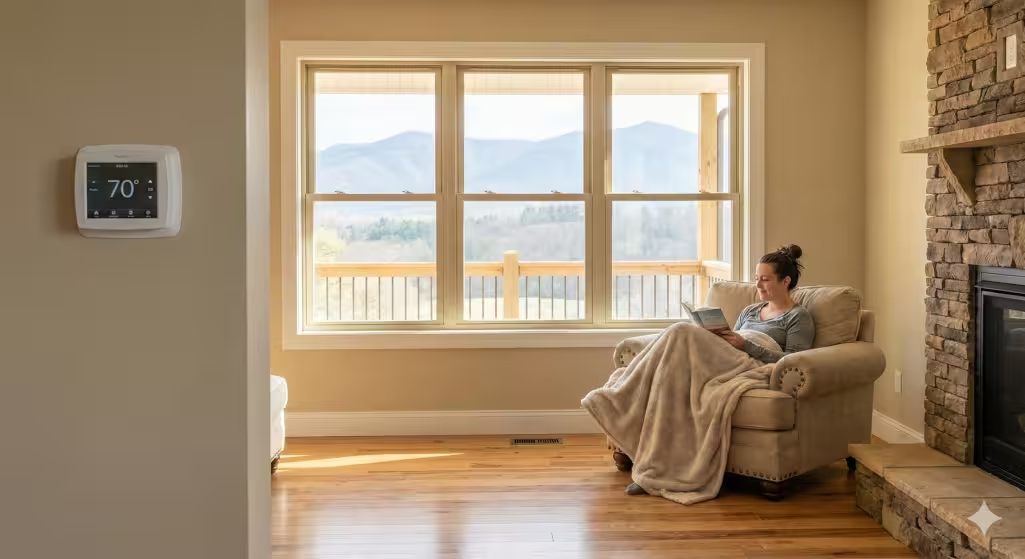
There is something you can’t see on a spreadsheet: how a quality built home feels. Have you ever been in a house where one room is freezing and the next is boiling? That is a sign of poor construction. A quality built home has “even” temperatures. This is because the ductwork is sized correctly and the insulation is tight.
A quality built home is also much quieter. If you live near a busy road like I-26 or I-81, you will notice the difference. The thick walls and better windows of a quality built home block out the sound of trucks and cars. This peace and quiet is a huge part of the “ROI” or return on investment. You can’t put a price on a good night’s sleep, but a quality built home provides it.
Even the way the floors feel matters. In a cheap house, you might hear the floor creak or feel it bounce when you walk. A quality home uses thicker subfloors and better joists. It feels solid under your feet. This sense of “sturdiness” is what people mean when they talk about a quality built home. It gives you confidence that the house is safe and well-made.
Materials That Define a Quality Built Home
To reach the level of a quality built home, the materials must be top-tier. Let’s look at the exterior. Many cheap houses use thin vinyl siding. A quality built home often uses fiber cement siding. This material is made of cement and wood fibers. It doesn’t melt in the heat, and it is very hard for fire to burn. This can even lower your home insurance costs in the Tri-Cities.
Inside a quality home, the cabinets are another big sign. Cheap cabinets use “particle board” that swells up if it gets wet. A quality home uses solid wood or high-grade plywood. The drawers will have “dovetail joints” and “soft-close” hinges. These details show that the builder cared about making a quality built home that would last for a long time.
[Image comparing standard vs energy-efficient window construction]
Windows are another major part of a quality built home. In Tennessee, the sun can be very strong. A quality built home will have windows with “Low-E” coatings. These coatings reflect the heat away in the summer but keep it in during the winter. This simple feature of a quality home can save you a fortune over thirty years. It also stops your furniture and carpets from fading in the sunlight.
The Importance of Professional Inspections
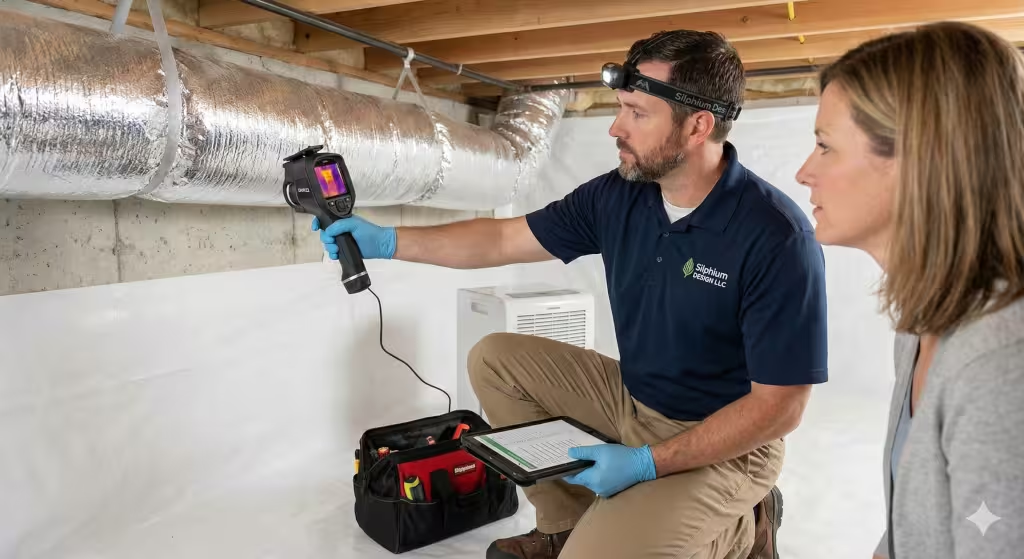
Even if you are buying a brand-new house, you should always get an inspection. A pro can tell you if a house is truly a quality built home. They look at the electrical panel, the plumbing, and the attic. Sometimes a house looks like a quality built home on the outside, but the inspector finds “cut corners” in the attic insulation.
For a quality built home in the Tri-Cities, the inspector will also check for radon. Radon is a gas that comes from the ground in our area. A quality home will often have a “radon mitigation system” already installed. This shows the builder was thinking about your health. If a house is a quality built home, the builder should be happy to let an inspector look at everything. They have nothing to hide because they did the job right.
An inspector’s report is like a grade card for a quality built home. If the report comes back with very few issues, you know you are looking at a quality built home. This gives you peace of mind before you sign the papers. It is a small price to pay to ensure you are truly getting a quality home for your family.
The Long-Term Value of Energy Efficiency
Energy efficiency is one of the biggest reasons to choose a quality home. In 2026, energy prices are not getting any lower. A quality built home uses a “smart” HVAC system that can adjust itself. This means it only runs as much as it needs to. A house that is not a quality built home might have a system that is too big or too small, which wastes money.
Many home designs now include “solar-ready” roofs. This means the house is wired so you can add solar panels easily later. Even if you don’t do it now, having a quality built home that is ready for the future adds value. People in 2026 want homes that are “future-proof.” A quality built home fits this need perfectly.
Water is also a big deal. A quality built home uses “low-flow” faucets and toilets. These save thousands of gallons of water every year. In some parts of the Tri-Cities, water rates have gone up. A quality built home helps you keep those costs under control. It is all about being efficient with every resource, which is the hallmark of a quality built home.
How Quality Built Homes Handle the Appalachian Climate
Our region gets a lot of rain. If a house is not a quality built home, that rain can cause big problems. A quality home has a complex system of gutters, “flashing,” and “drip edges.” These parts work together to move water away from the walls and foundation. In a cheap house, water might seep behind the siding and cause rot that you can’t see.
Snow is also a factor. A quality built home has a roof structure designed to hold the weight of heavy, wet snow. If a house isn’t a quality built home, the roof might sag over time. Builders of a quality built home know how to vent the attic correctly so “ice dams” don’t form. These details are what make a quality home stand out during a cold Tennessee winter.
Humidity is the “silent killer” of houses in the South. A quality built home has a “dehumidification” system or an “ERV” (Energy Recovery Ventilator). This keeps the air inside fresh but not sticky. Living in a quality built home means you won’t have that “musty” smell that many older or cheaper houses have. It keeps your home feeling crisp and clean all year long.
The Maintenance Factor: Saving Time and Stress
One of the best things about a quality built home is how little maintenance it needs. In a cheap house, you might spend every weekend fixing things. You might have to repaint the trim or fix a leaky faucet. A quality built home uses materials that stay looking new for longer. This means you get to spend your weekends hiking at Roan Mountain or boating on Boone Lake instead of doing chores.
When you buy a quality built home, you are also getting better warranties. Most builders of a quality home offer a “structural warranty” for ten years. This covers the most expensive parts of the house. If something goes wrong with a quality built home, the builder is there to fix it. This “peace of mind” is a major reason why it is worth spending more on a quality built home.
Think about your time. Your time is worth money. If a quality built home saves you 100 hours of work every year, that is a huge win. Over twenty years, a quality built home gives you back a lot of life. That is why so many people in the Tri-Cities are choosing to invest in a quality built home rather than a “fixer-upper.”
Final Verdict: Is the Extra Cost Justified in the Long Run?
After looking at all the facts, is it worth spending more on a quality built home? For most people in the Tri-Cities, the answer is a big yes. A quality home is a shield for your wealth. It protects you from rising energy costs. It protects you from expensive repairs. And it protects your family’s health and comfort.
While a quality built home might cost 15% to 20% more at first, that money comes back to you. You get it back in lower monthly bills. You get it back in a higher resale price. And you get it back in the stress you don’t have to deal with. In 2026, a quality home is not just a place to live; it is a smart financial move.
If you are looking at a house and wondering if you should pay more, look at the details. If it is a quality built home, the value is there. Don’t be fooled by cheap prices. A cheap house can become a “money pit” very fast. A quality built home, however, is a foundation for a great life in Northeast Tennessee.
Checklist for Evaluating Build Quality in North Tennessee
If you are out looking for a quality home, take this list with you. It will help you spot the difference between a great house and a cheap one.
Foundation: Look for “encapsulated” crawl spaces. A quality home will have a thick plastic liner and a dehumidifier down there.
Windows: Look for a label that says “Energy Star” and check for three panes of glass. A quality home usually has high-end windows.
Siding: Knock on the siding. Does it feel like thin plastic or solid stone/cement? A quality home feels solid.
Doors: Open and close the interior doors. A quality home uses “solid-core” doors that block sound and feel heavy.
HVAC: Check the “SEER2” rating on the outdoor unit. A quality home will have a rating of 16 or higher.
Attic: Look at the insulation. Is it thick and even? A quality home will have at least 15 inches of “blown-in” or “batt” insulation.
Electrical: Look at the breaker box. Is it neatly labeled and made by a good brand like Square D? A quality home has a tidy electrical system.
Plumbing: Look under the sinks. A quality home uses “PEX” or copper pipes and high-end valves.
Conclusion and Next Steps
Choosing a quality built home is one of the most important things you can do for your future. In the Tri-Cities, where the market is strong but the weather is tough, quality is the only way to go. You want a house that works for you, not one that you have to work for.